
USCIS Memo: Green Card Applicants May Be Forced Abroad – What Orlando Families Need to Know
A new USCIS memo could drastically change how immigrants apply for Green Cards, potentially forcing more applicants to leave the U.S. This guide explains the impact, what it means for Florida families, and how to navigate the complex process.
The immigration landscape is constantly evolving, and recent developments from U.S. Citizenship and Immigration Services (USCIS) have introduced new layers of complexity for many individuals and families seeking to secure their future in the United States. A recent memo has signaled a potential shift that could significantly impact how Green Card applications are processed, particularly for those currently residing in the U.S.
At Imigrar, your trusted immigration law firm in Orlando, Florida, we understand the anxiety and confusion that such news can generate. Our mission is to "Keep Families Together," and we are committed to providing professional, accurate, and actionable guidance to help you navigate these challenging times. We serve clients nationwide, and our team is fluent in both English and Spanish (Se Habla Español).
The reporting that sparked this guide: New USCIS Memo May Force More Green Card Applicants to Apply from Abroad, Causing Chaos and Confusion (American Immigration Council)
What This News Means for Immigrants in Orlando and Across Florida
The recent USCIS memo, as highlighted by the American Immigration Council, represents a significant policy shift that could alter the trajectory of many Green Card applications. For countless individuals and families building their lives in Orlando and throughout Florida, this news raises critical questions about their future and the viability of their immigration path.
Why this news is showing up now
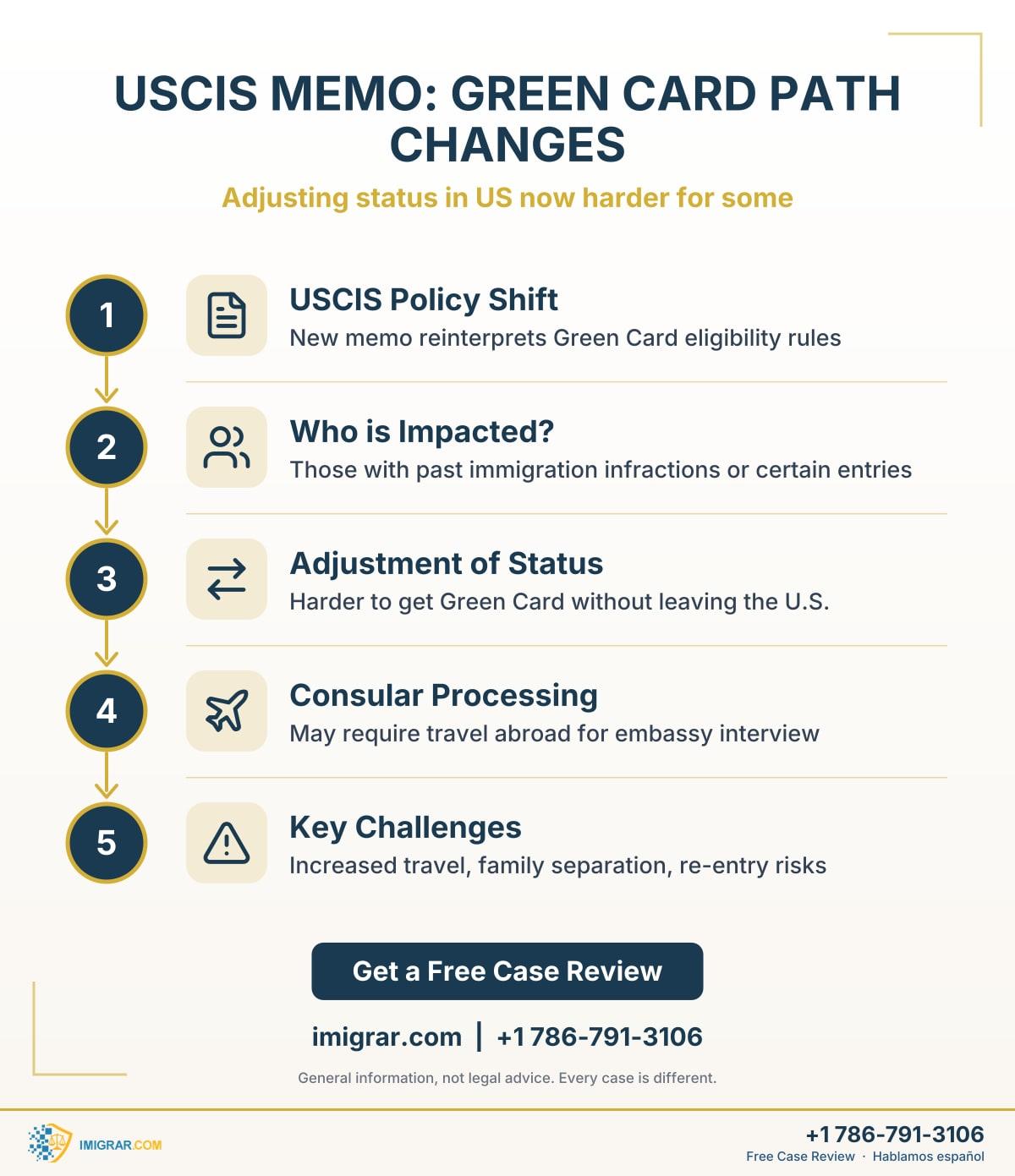
This news is gaining traction because USCIS has issued new internal guidance that reinterprets certain aspects of immigration law, particularly regarding eligibility for Adjustment of Status. Historically, many individuals who were physically present in the U.S. and met specific criteria could apply for their Green Card without having to leave the country. This process, known as Adjustment of Status, has long been a cornerstone for family-based and employment-based immigration for those already here.
The new memo, however, appears to narrow the circumstances under which an individual can adjust their status domestically. It suggests that certain past immigration infractions, even minor ones, or particular entry methods, might now render an applicant ineligible for Adjustment of Status, thereby forcing them to pursue Consular Processing from abroad. This reinterpretation creates a significant hurdle, potentially upending established expectations and adding considerable complexity to what was once a relatively straightforward path for many.
The implications are profound. It means that even if you have an approved immigrant petition (like a **Form I-130** Petition for Alien Relative), you might no longer be able to complete your Green Card process from your home in Orlando. Instead, you could be required to travel to your home country to attend an interview at a U.S. Embassy or Consulate, a process known as Consular Processing.
How it can affect Florida residents
For individuals and families residing in Florida, especially in populous areas like Orlando and along the I-4 corridor, this potential policy change carries specific challenges:
- Increased Travel Burden: Being forced to apply from abroad means significant travel expenses, including flights, accommodation, and potentially visa fees for transit countries. For families, this cost multiplies. From Orlando International Airport (MCO), international travel can be expensive and time-consuming.
- Family Separation: A core concern is the potential for prolonged family separation. If one family member must leave the U.S. for Consular Processing, they could be separated from their spouse, children, and other relatives who remain in Florida for an indefinite period, depending on processing times and potential administrative delays.
- Uncertainty and Stress: The shift introduces a high degree of uncertainty. Applicants will need to navigate foreign travel, embassy procedures, and the emotional toll of being away from home, all while their immigration future hangs in the balance. This can be particularly stressful for those with children attending schools in Orange County or with jobs in Central Florida.
- Risk of Re-entry Issues: Leaving the U.S. can trigger certain bars to re-entry, especially if an individual has accrued "unlawful presence" or has a prior deportation order. While waivers exist, the process is complex and not guaranteed. This makes travel abroad a high-stakes decision that must be made with expert legal counsel.
- Economic Impact: Beyond travel costs, there's the potential loss of income if an applicant cannot work during their time abroad. Businesses in Orlando that rely on immigrant workers could also feel the ripple effect.
Given these serious implications, understanding your specific situation and seeking immediate legal advice is paramount. The team at Imigrar is here to help you assess your options and prepare for what lies ahead.
Need Help? Our Orlando immigration team is ready to assist. Call +1 786-791-3106 for a free consultation, or message us online. Se Habla Español.
What This New USCIS Memo Is (and Why It Matters)
The recent USCIS memo, while not a change in law itself, represents a significant shift in how existing immigration statutes are interpreted and applied. This reinterpretation primarily impacts individuals who are present in the United States and wish to apply for a Green Card.
A plain-English definition
In simple terms, the new USCIS memo makes it harder for certain immigrants already in the U.S. to get their Green Card without leaving the country. Before this memo, many people could apply for Adjustment of Status (AOS), which means they could get their Green Card while staying in the U.S. The memo, however, introduces stricter interpretations of eligibility for AOS, particularly for those who may have entered without inspection, overstayed a visa, or had other minor immigration violations in the past. For these individuals, USCIS is now more likely to determine that they are ineligible for AOS and must instead go through Consular Processing (CP). This means they would have to travel back to their home country and apply for their Green Card at a U.S. Embassy or Consulate there.
This shift is critical because Consular Processing is generally more complex, time-consuming, expensive, and carries the risk of bars to re-entry, especially if the applicant has accrued "unlawful presence" in the U.S. It potentially forces family separation and adds immense stress to the immigration journey.
Key terms you need to know
Understanding the following terms is crucial to grasp the full implications of this memo:
- Green Card: Also known as a Permanent Resident Card, it allows foreign nationals to live and work permanently in the United States.
- USCIS (U.S. Citizenship and Immigration Services): The federal agency responsible for administering immigration and naturalization benefits. USCIS official website
- Department of State (DOS): The federal department responsible for U.S. foreign policy, which includes managing U.S. Embassies and Consulates abroad and overseeing Consular Processing. U.S. Department of State
- Adjustment of Status (AOS): The process by which an eligible individual already in the United States applies for lawful permanent resident status (a Green Card) without having to return to their home country for visa processing. This typically involves filing Form I-485.
- Consular Processing (CP): The process by which an eligible individual applies for an immigrant visa at a U.S. Embassy or Consulate in their home country (or another designated country) to become a lawful permanent resident. Once the visa is issued, they travel to the U.S. and become a permanent resident upon entry. This involves the National Visa Center (NVC) and the DS-260 form.
- Immigrant Petition: A petition filed by a U.S. citizen or lawful permanent resident on behalf of a foreign national relative (e.g., Form I-130, Petition for Alien Relative) or by an employer on behalf of an employee. This is the first step in many Green Card processes.
- Priority Date: The date USCIS receives an immigrant petition (e.g., Form I-130). This date determines an applicant's place in line for a Green Card, especially for categories with annual visa limits.
- Visa Bulletin: A monthly publication by the Department of State that summarizes the availability of immigrant visas for various preference categories and countries. An applicant's Priority Date must be "current" according to the Visa Bulletin before they can proceed with their Green Card application (either AOS or CP).
- Unlawful Presence: Being in the United States without permission or after the expiration of a period of authorized stay. Accruing certain amounts of unlawful presence can trigger bars to re-entry if an individual leaves the U.S.
- Inadmissibility: Specific reasons under U.S. immigration law (INA 212) that can prevent an individual from entering the U.S. or obtaining a Green Card. These can include health issues, criminal history, certain immigration violations, or security risks.
- Waiver: A request to USCIS or a consular officer to forgive certain grounds of inadmissibility. For example, a Form I-601 Application for Waiver of Grounds of Inadmissibility or a Form I-601A Application for Provisional Unlawful Presence Waiver.
The memo matters because it potentially shifts many applicants from the more convenient and less disruptive Adjustment of Status path to the more challenging Consular Processing route. This reinterpretation affects not only individuals but entire families, impacting their lives, finances, and emotional well-being. It underscores the critical need for personalized legal advice to understand how these changes apply to your specific case.
Current Immigration Law: The Foundation
To understand the impact of the new USCIS memo, it's essential to first grasp the existing legal framework for obtaining a Green Card. The primary source of U.S. immigration law is the Immigration and Nationality Act (INA), which outlines the requirements for both Adjustment of Status and Consular Processing.
At its core, the INA provides two main pathways for individuals to become lawful permanent residents:
- Adjustment of Status (INA Section 245(a)): Allows eligible individuals already in the U.S. to apply for a Green Card without leaving.
- Immigrant Visa Processing (Consular Processing, INA Section 221): Requires individuals to apply for an immigrant visa at a U.S. Embassy or Consulate abroad.
The new memo doesn't change these fundamental pathways but rather reinterprets who qualifies for the Adjustment of Status pathway, pushing more individuals toward Consular Processing by applying stricter eligibility criteria.
Federal requirements
Regardless of whether you pursue Adjustment of Status or Consular Processing, the foundational federal requirements remain:
- Approved Immigrant Petition: For most family-based or employment-based Green Cards, the process begins with a petition filed on your behalf. For family-based immigration, this is typically Form I-130, Petition for Alien Relative, filed by a U.S. citizen or lawful permanent resident relative. For employment-based, it could be Form I-140, Immigrant Petition for Alien Worker.
- Visa Availability: Your Priority Date must be current according to the Department of State's Visa Bulletin. This is particularly relevant for preference categories (e.g., adult children, siblings, most employment-based categories) where there are annual limits on the number of visas issued. Immediate relatives of U.S. citizens (spouses, unmarried children under 21, and parents) generally do not have to wait for a visa number to become current.
- Admissibility: You must be "admissible" to the United States. This means you must not fall under any grounds of inadmissibility outlined in INA Section 212. Common grounds include certain criminal convictions, health-related issues, security risks, prior immigration violations (e.g., unlawful presence, misrepresentation), and public charge concerns. If you are found to be inadmissible, you may need an approved waiver (e.g., Form I-601 or Form I-601A) to proceed.
- Financial Support: The petitioner (sponsor) must demonstrate the financial ability to support the applicant(s) and ensure they will not become a "public charge." This is typically shown through Form I-864, Affidavit of Support, demonstrating income at or above 125% of the federal poverty guidelines.
Specifics for Adjustment of Status (INA 245(a)):
To adjust status in the U.S., in addition to the above, you generally must:
- Have been lawfully admitted or paroled into the U.S. (with some limited exceptions).
- Not have violated the terms of your nonimmigrant status (e.g., worked without authorization, overstayed, except for immediate relatives of U.S. citizens who have slightly more forgiving rules regarding minor violations).
- Not be subject to certain bars to adjustment, such as engaging in terrorist activities or being in unlawful immigration status (again, with some exceptions for immediate relatives).
The new USCIS memo focuses on a stricter interpretation of "lawful admission" and other eligibility criteria for Adjustment of Status, which is why more people might be directed to Consular Processing.
Specifics for Consular Processing (INA 221):
If you are not eligible for Adjustment of Status or choose to apply from abroad, you will go through Consular Processing. This involves:
- The approved immigrant petition being sent to the National Visa Center (NVC).
- Submitting required documents and fees to the NVC.
- Attending a medical examination with an authorized panel physician in the country where you will be interviewed.
- Attending an interview at a U.S. Embassy or Consulate abroad.
Important: Leaving the U.S. for Consular Processing, especially after accruing "unlawful presence," can trigger statutory bars to re-entry (e.g., a 3-year bar for 180-365 days of unlawful presence, or a 10-year bar for more than one year of unlawful presence). This often necessitates an approved Form I-601A (Provisional Unlawful Presence Waiver) before you depart, which is a complex process in itself.
Florida-specific considerations
While immigration law is federal, practical considerations vary by location. For Florida residents, especially those in Orlando and the surrounding areas:
- Orlando USCIS Field Office: The local USCIS Field Office in Orlando handles interviews for Adjustment of Status cases for those residing in Central Florida. If your case is shifted to Consular Processing, you will no longer have an interview here, but all initial petitions and local inquiries would still go through USCIS.
- Accessibility of Legal Counsel: Having access to experienced immigration attorneys in Orlando, like Imigrar, is crucial. Our team understands the local context and can provide guidance tailored to your situation, whether you are preparing for an interview at the Orlando Field Office or strategizing for international travel.
- Travel Logistics: If Consular Processing becomes necessary, Floridians will need to plan for international travel from airports like MCO, including booking flights, securing accommodations, and understanding travel advisories for their destination country.
- Community Support: Florida has diverse immigrant communities. Understanding how these changes affect local families and having community resources can be vital during stressful times.
Navigating these federal laws and their practical implications requires deep expertise. Always refer to official sources for forms and instructions: USCIS Forms and USCIS official website.
Navigating Green Card Applications After the New Memo: A Complete Step-by-Step Guide
Given the potential for more Green Card applicants to be forced into Consular Processing, it's crucial to understand the steps involved in this pathway. This guide outlines the typical process, assuming you are filing a family-based petition (e.g., spouse or parent of a U.S. citizen) and may now need to apply from abroad. Even if Adjustment of Status is still an option for you, these initial steps are largely the same.
1) Determine Your Eligibility and Path Forward
The very first and most critical step is to understand your specific situation in light of the new USCIS memo. This involves a thorough review of your immigration history, entry method into the U.S., any past violations, and your current status.
- Consult an Immigration Attorney: This is non-negotiable. An experienced attorney can assess whether you are still eligible for Adjustment of Status or if Consular Processing is now your only viable path. They can identify potential issues like unlawful presence or other grounds of inadmissibility.
- Review Your Immigration History: Gather all documents related to your entries, exits, visa applications, and any prior immigration filings.
- Understand the Memo's Impact: Your attorney will explain how the new USCIS interpretation specifically affects your case and what risks or challenges you might face.
Required Documents for this step (for attorney review):
- Passport(s) and any previous visas
- I-94 Arrival/Departure Record (print from CBP website)
- Any prior USCIS notices or forms (e.g., I-797 approval notices, denial letters)
- Birth certificate, marriage certificate (if applicable)
- Proof of current status (e.g., EAD card, student visa documents)
2) File the Immigrant Petition (Form I-130)
This is the foundational step for most family-based Green Card applications, initiated by your U.S. citizen or lawful permanent resident relative (the petitioner).
- Petitioner's Role: The U.S. citizen or LPR files Form I-130, Petition for Alien Relative, with USCIS, demonstrating a qualifying relationship with the beneficiary (you).
- Gather Supporting Documents: Collect proof of relationship (e.g., marriage certificate, birth certificates), proof of the petitioner's U.S. citizenship or LPR status, and any necessary identity documents.
- File with USCIS: The petition is filed with the appropriate USCIS Service Center. USCIS processing times can be lengthy and vary by center. You can check current processing times on the USCIS Processing Times page.
Required Documents for Form I-130:
- Completed and signed Form I-130
- Copy of petitioner's proof of U.S. citizenship (e.g., birth certificate, passport) or LPR status (Green Card)
- Copy of beneficiary's birth certificate and passport biographic page
- Proof of bona fide relationship (e.g., marriage certificate, photos, joint financial documents, birth certificates of children)
- Any required translations of foreign documents (certified)
- Filing fee
Reminder: For spouses of U.S. citizens, you may also consider filing Form I-130A, Supplemental Information for Spouse Beneficiary.
3) Wait for Petition Approval and Priority Date to Become Current
After filing Form I-130, USCIS will review it. If approved, you will receive an I-797 Approval Notice. For immediate relatives of U.S. citizens, a visa number is always immediately available. For other family preference categories, you must wait for your Priority Date to become current according to the Visa Bulletin.
- Monitor the Visa Bulletin: If you are not an immediate relative, your attorney will help you track the monthly Visa Bulletin to see when your Priority Date becomes current.
- Maintain Records: Keep your I-797 Approval Notice safe, as it's a crucial document.
4) Initiate Consular Processing with the National Visa Center (NVC)
Once your Form I-130 is approved and your Priority Date (if applicable) is current, your case is transferred to the National Visa Center (NVC), which is part of the Department of State.
- NVC Welcome Letter: The NVC will send you (or your attorney)
Related Topics
Need Legal Assistance?
Our experienced immigration attorneys are here to help with your case. Contact Imigrar today for a free consultation and let us guide you through the legal process with confidence.
📍 Orlando, Florida • Serving clients nationwide
📧 info@imigrar.com