
New Hope for Visa Rules: How Lawmakers Can Fight for Immigrants
US lawmakers of African descent are advocating for changes to complex visa rules, offering a beacon of hope for immigrants. Understand current policies and how to navigate the system, especially for those in Florida.
At Imigrar, we understand that navigating the U.S. immigration system can be challenging, especially with evolving policies and complex regulations. Our mission is to "Keep Families Together," and we are committed to providing the most up-to-date and actionable information to help you achieve your immigration goals.
The reporting that sparked this guide
Recent news highlights a significant development in immigration advocacy: US lawmakers of African descent can help fight visa rules (University World News). This report underscores the growing recognition within Congress of the need to address restrictive and often burdensome visa regulations that impact countless individuals and families seeking to build their lives in the United States.
What This News Means for Immigrants in Orlando and Across Florida
This development signals a crucial moment for immigration reform. For immigrants and their families in Orlando, Central Florida, and throughout the nation, understanding this legislative push is vital. It represents a potential pathway to alleviating some of the long-standing challenges within the U.S. visa system.
Why this news is showing up now
The conversation around U.S. visa rules has intensified for several reasons. The current Trump administration, now in its second term, continues to implement policies focused on what it defines as "merit-based" immigration and heightened national security. This approach has led to increased scrutiny, longer processing times, and more stringent requirements across various visa categories. While the administration asserts these measures are essential for national interests, many lawmakers and advocacy groups argue that they create undue hardship, separate families, and hinder economic growth.
In this context, lawmakers of African descent, often representing communities disproportionately affected by certain visa restrictions and processing backlogs, are stepping forward. They are leveraging their voices and positions within Congress to advocate for more equitable, efficient, and humane immigration policies. This collective action is a direct response to the ongoing challenges faced by their constituents and the broader immigrant community, aiming to bring legislative solutions to the forefront.
How it can affect Florida residents
Florida is a melting pot, home to vibrant immigrant communities from across the globe, including a significant and growing population of individuals from African nations. For Central Florida residents, particularly those in Orlando, Kissimmee, and other I-4 corridor cities, the impact of current visa rules is deeply felt. Families often face agonizing waits for visa approvals, students encounter hurdles in securing educational visas, and professionals experience delays in obtaining work permits. These issues directly affect their ability to work, study, and reunite with loved ones.
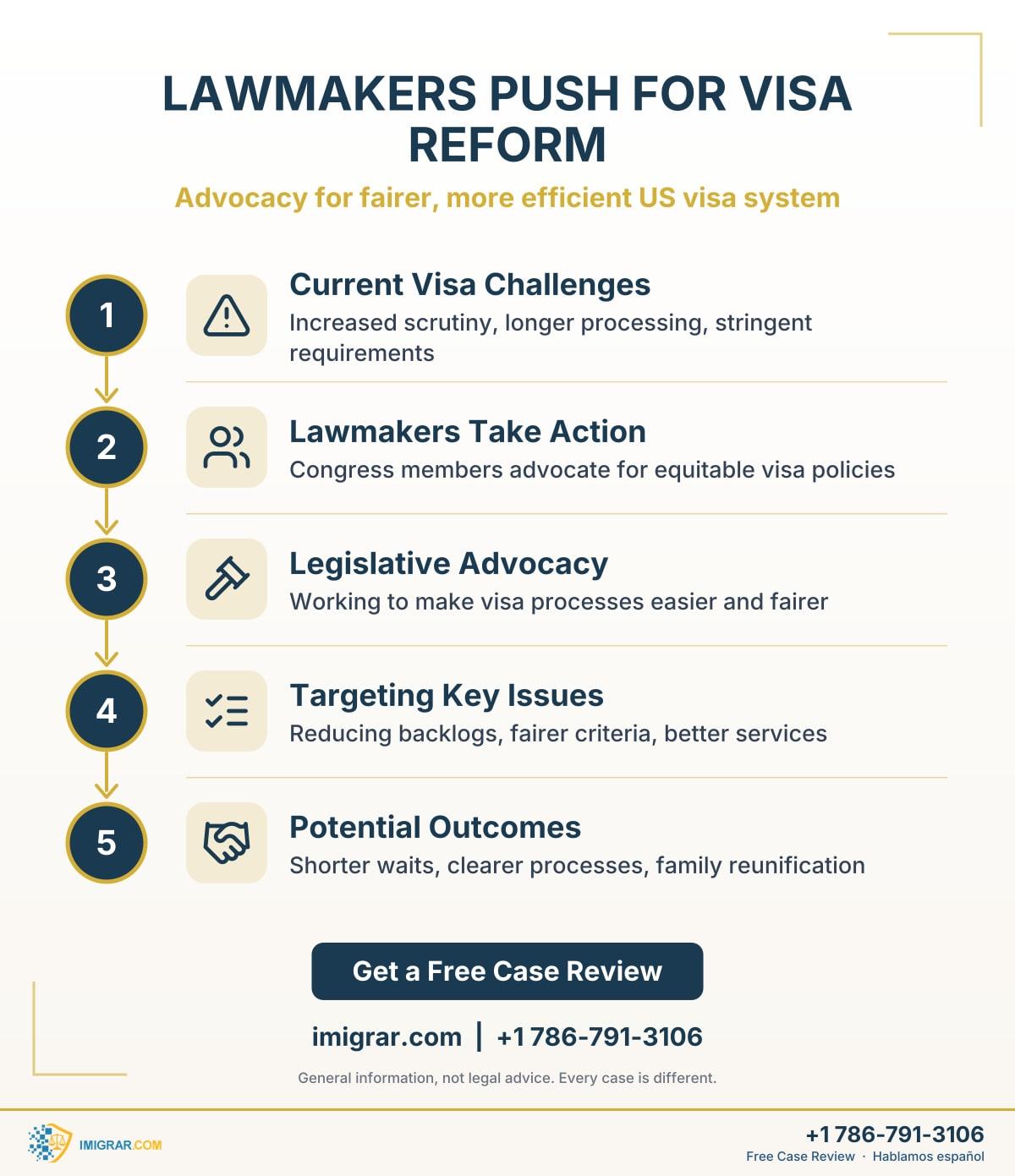
The advocacy by U.S. lawmakers to "fight visa rules" offers a glimmer of hope. If successful, their efforts could lead to:
- Streamlined Processing: Reducing backlogs and expediting the review of visa applications.
- Fairer Criteria: Modifying rules that may inadvertently discriminate or create unnecessary barriers.
- Increased Visa Availability: Potentially expanding quotas or creating new pathways for certain categories.
- Improved Consular Services: Addressing issues at U.S. Embassies and Consulates abroad that contribute to delays.
For those in Orlando navigating the complex system, this legislative push means that your concerns are being heard at the highest levels of government. While immediate changes may not occur, the momentum for reform is building, and staying informed is crucial. Imigrar is here to help you understand how these potential changes could affect your specific situation and to guide you through the current regulations.
Need Help Navigating Current Visa Rules? Our Orlando immigration team is ready to assist. Call +1 786-791-3106 for a free consultation, or message us online. Se Habla Español.
What "Fighting Visa Rules" Is (and Why It Matters)
When we talk about "fighting visa rules" in the context of the recent news, we are referring to a concerted legislative effort by members of the U.S. Congress to challenge, modify, and ultimately improve the existing framework of U.S. immigration laws and regulations pertaining to visas. This isn't about individual immigrants fighting their specific visa cases, but rather about lawmakers advocating for systemic changes that could benefit broad categories of visa applicants.
A plain-English definition
In simple terms, "fighting visa rules" means elected representatives are working within the legislative process to make it easier, fairer, and more efficient for people to obtain visas to enter or remain in the United States. This involves proposing new laws, amending existing ones, and pressuring executive agencies like U.S. Citizenship and Immigration Services (USCIS) and the Department of State to implement policies that are more responsive to the needs of immigrants and their families. The focus is on addressing current restrictions, delays, and complexities that have become particularly pronounced under the Trump administration's second term.
Key terms you need to know
Understanding the discussion around visa reform requires familiarity with several key terms:
- Visa Categories: The U.S. offers numerous types of visas, broadly categorized as immigrant visas (for permanent residence/Green Card) and nonimmigrant visas (for temporary stays, such as tourism, study, or work). Examples include F-1 visas for students, H-1B visas for skilled workers, B-2 visas for tourists, and family-based visas like the IR-1/CR-1 visa for spouses of U.S. citizens.
- Immigration and Nationality Act (INA): The foundational federal law governing nearly all U.S. immigration matters. Any significant change to visa rules typically requires amending the INA.
- Legislative Advocacy: The process of influencing lawmakers to introduce or change legislation. This is precisely what the lawmakers of African descent are engaged in.
- Consular Processing: The process of applying for an immigrant visa at a U.S. Embassy or Consulate abroad. Many visa rule challenges relate to the efficiency and fairness of this process.
- Adjustment of Status: The process by which an eligible immigrant already in the U.S. can apply for permanent resident status (a Green Card) without having to return to their home country. This is primarily handled by USCIS.
- Visa Backlogs: Long waiting lists for certain visa categories, often due to annual quotas and high demand, leading to years-long delays for applicants. These backlogs are a major target for reform efforts.
- Requests for Evidence (RFEs) and Notices of Intent to Deny (NOIDs): Common communications from USCIS or consular officers requesting more information or signaling an intent to deny an application. Increased frequency of these under current administration policies often prolongs processing.
The legislative efforts highlighted in the news matter because they have the potential to directly impact the lives of millions. Changes to visa rules could mean shorter waiting times, reduced costs, clearer application processes, and a greater chance for families to reunite and individuals to pursue opportunities in the U.S. For those in Orlando and across Florida, this could translate into a more accessible and predictable immigration journey.
Current Immigration Law: The Foundation
To understand what lawmakers are "fighting," it's essential to grasp the current immigration legal landscape. The U.S. immigration system is primarily governed by federal law, specifically the Immigration and Nationality Act (INA). This comprehensive statute, along with numerous regulations issued by federal agencies, dictates who can enter the U.S., for how long, and under what conditions. The current Trump administration's second term has continued to emphasize a stringent approach, leading to a climate where visa applicants face significant hurdles.
Federal requirements
Under the INA, visas are broadly divided into nonimmigrant (temporary) and immigrant (permanent) categories, each with distinct requirements and application processes. Here’s a look at some key aspects and forms:
- Nonimmigrant Visas: These are for temporary stays for specific purposes like tourism (B-2), business (B-1), study (F-1, M-1), temporary work (H-1B, L-1, O-1, TN), or exchange programs (J-1). The primary application form for most nonimmigrant visas sought abroad is the Form DS-160, Online Nonimmigrant Visa Application, submitted to the U.S. Department of State. Under current policies, applicants often face enhanced vetting, including social media checks and more rigorous interviews, leading to longer processing times and a higher likelihood of Requests for Evidence (RFEs) for work visas.
- Immigrant Visas (Green Cards): These lead to lawful permanent residence. The most common pathways are family-sponsored, employment-sponsored, and the Diversity Visa Lottery (DV Program).
- Family-Sponsored Immigration: U.S. citizens and lawful permanent residents (Green Card holders) can petition for certain relatives. The process typically begins with filing Form I-130, Petition for Alien Relative, with USCIS. After approval, the case moves to the National Visa Center (NVC) for consular processing abroad, or if the beneficiary is already in the U.S. and eligible, they may file Form I-485, Application to Register Permanent Residence or Adjust Status. The Trump administration has continued to scrutinize financial sponsorship and has maintained a focus on preventing individuals who might become a "public charge" from entering or remaining in the U.S., leading to more demanding financial documentation.
- Employment-Based Immigration: Employers can sponsor foreign workers for permanent residence. This usually starts with Form I-140, Immigrant Petition for Alien Worker. The administration’s "Buy American, Hire American" executive order continues to influence policy, making employment-based visas subject to intense review, particularly for those perceived to displace U.S. workers.
- Diversity Visa (DV) Program: This lottery provides up to 55,000 immigrant visas annually to individuals from countries with historically low rates of immigration to the U.S. Many African countries are eligible, making this program particularly significant for immigrants of African descent. Applicants must meet strict eligibility criteria, and the application is submitted electronically via the Electronic Diversity Visa (E-DV) Entry Form.
- Key Agencies:
- USCIS official website: Handles petitions filed within the U.S., adjustment of status, and various benefits.
- U.S. Department of State: Manages consular processing at U.S. Embassies and Consulates abroad and issues visas.
- Executive Office for Immigration Review (EOIR): Oversees immigration courts and the Board of Immigration Appeals.
Important: Under the current administration, processing times for almost all visa categories remain lengthy, and the rate of RFEs and denials for certain applications has increased. It is more critical than ever to ensure applications are meticulously prepared and fully supported by evidence.
Florida-specific considerations
While U.S. immigration law is federal, its application has practical implications for Florida residents. Florida is a hub for international business, tourism, and education, making its diverse population particularly sensitive to changes in visa rules. Many immigrants in Central Florida, including those from African nations, rely on these pathways for family reunification, employment, and educational opportunities.
- Orlando USCIS Field Office: For residents of Orange County and surrounding areas, the Orlando USCIS Field Office processes applications for adjustment of status (Form I-485), naturalization (Form N-400), and other benefits. Delays at this office can directly impact local families and individuals.
- Consular Processing Abroad: Many Florida residents have family members or employees applying for visas at U.S. Embassies and Consulates in their home countries. Challenges such as interview backlogs, limited appointments, and increased scrutiny at these posts directly affect the ability of Floridians to reunite with loved ones or bring in essential talent.
- Economic Impact: Florida's economy, particularly in sectors like hospitality, agriculture, and healthcare, relies on a diverse workforce that includes immigrants. Restrictive visa rules can impact labor availability and economic growth across the I-4 corridor and beyond.
The legislative efforts to fight visa rules aim to address these federal-level challenges, which in turn would alleviate significant burdens on Florida's immigrant communities and its economy.
Confused by Current Immigration Laws? Imigrar provides clarity and expert guidance. Contact us at +1 786-791-3106 for a free consultation. Se Habla Español.
How to Successfully Navigate the Current Visa Application Process Amidst Legislative Scrutiny: A Complete Step-by-Step Guide
While lawmakers are working to improve the visa system, you must still navigate the current rules. This guide provides a comprehensive overview of the typical visa application process, emphasizing critical steps and documents required to maximize your chances of success in the current restrictive environment.
1) Determine Your Eligibility and Select the Correct Visa Category
Before anything else, you must identify which visa category aligns with your purpose for coming to the U.S. This is the most crucial first step, as applying for the wrong visa can lead to immediate denial and wasted fees. U.S. immigration law is highly specific regarding who qualifies for each visa type.
- Action: Research thoroughly or, ideally, consult with an experienced immigration attorney to confirm your eligibility and the most appropriate visa. Consider if you need a nonimmigrant (temporary) or immigrant (permanent) visa.
- Required Documents/Information for Assessment:
- Your nationality and country of birth.
- Your educational background (degrees, transcripts).
- Your work experience (job titles, companies, dates, responsibilities).
- Your marital status and family relationships (e.g., U.S. citizen spouse, parent).
- Your financial resources and ability to support yourself.
- The specific purpose of your visit (e.g., study, work, tourism, family reunification).
2) Gather All Required Supporting Documents
Once your visa category is determined, collecting the necessary documentation is paramount. In the current administration’s environment of heightened scrutiny, a complete and well-organized submission is critical to avoid Requests for Evidence (RFEs) and delays. Every piece of evidence must directly support your claims and eligibility.
- Action: Create a comprehensive checklist based on your visa type. Collect original documents and make high-quality copies. Obtain certified translations for any documents not in English.
- Common Required Documents (varies by visa type):
- Passport: Valid for at least six months beyond your intended period of stay in the U.S.
- Birth Certificates: For yourself and any dependent family members.
- Marriage Certificate: If applicable, for spouse-based petitions.
- Divorce Decrees/Death Certificates: If applicable, to prove termination of previous marriages.
- Educational Transcripts and Diplomas: For student or employment-based visas.
- Employment Letters: From current and previous employers, detailing job duties, dates, and salary.
- Financial Statements: Bank statements, tax returns, proof of assets to demonstrate financial stability (e.g., Form I-864, Affidavit of Support for family visas).
- Police Certificates: From countries where you have lived for more than six months since age 16.
- Medical Examination Report: Completed by a USCIS-approved physician (for immigrant visas or adjustment of status, Form I-693).
- Photographs: U.S. visa-compliant passport-style photos.
- Letters of Invitation/Sponsorship: If applicable, from a U.S. petitioner, employer, or educational institution.
3) File the Appropriate Petition (If Applicable)
Many visa processes begin with a U.S. citizen, lawful permanent resident, or employer filing a petition on behalf of the applicant with USCIS. This step establishes the relationship or employment offer necessary for the visa.
- Action: The petitioner completes and submits the relevant form, along with all supporting evidence and filing fees, to the correct USCIS service center.
- Key Forms and Documents:
- Form I-130, Petition for Alien Relative: For family-sponsored immigrant visas.
- Form I-140, Immigrant Petition for Alien Worker: For employment-based immigrant visas.
- Form I-129, Petition for a Nonimmigrant Worker: For most temporary work visas (e.g., H-1B, L-1, O-1).
- Supporting evidence: Proof of relationship (birth/marriage certificates), proof of U.S. citizenship/LPR status, employer’s financial statements, job offer letters, educational credentials.
- Timeline Expectation: Processing times vary significantly by form and service center. Check USCIS Processing Times regularly.
4) Complete the Visa Application and Pay Fees
Once a petition is approved (or if no petition is required, such as for a B-2 tourist visa), the applicant proceeds with the specific visa application. This is typically done online or through a specific application packet.
- Action: For nonimmigrant visas, complete Form DS-160, Online Nonimmigrant Visa Application. For immigrant visas, once the petition is approved and forwarded to the National Visa Center (NVC), you will complete Form DS-260, Immigrant Visa Application. Pay all required government filing fees.
- Required Information/Documents:
- Approved petition receipt number (if applicable).
- Passport information.
- Personal biographical information.
- Travel history and purpose of visit.
- Security and background information.
- Digital photograph meeting U.S. visa requirements.
- Payment of application fees (e.g., I-130 fees, NVC processing fees, DS-160 fee).
- Reminder: Be truthful and accurate. Any misrepresentation can lead to severe penalties, including a permanent bar from the U.S.
5) Attend Your Biometrics Appointment and/or Interview
Most visa applicants will need to attend a biometrics appointment and/or an interview. For those applying for adjustment of status within the U.S., the biometrics appointment usually precedes an interview at a local USCIS Field Office, like the one in Orlando. For consular processing, the interview takes place at a U.S. Embassy or Consulate abroad.
- Action: Prepare thoroughly for your interview. Bring all original documents, copies, and translations. Be ready to answer questions about your application, intentions, and background.
- Required for Appointment/Interview:
- Appointment notice.
- Valid passport.
- All original supporting documents submitted with your application/petition.
- Any additional documents requested by USCIS or the consular officer.
- Warning: Under the current administration, interviews are often more extensive, and officers are trained to look for inconsistencies. Be honest and consistent in your answers.
6) Receive Your Visa or Adjustment of Status Decision
After your interview, the consular officer or USCIS adjudicator will make a decision. If approved, you will receive your visa or Green Card.
- Action: If approved for a nonimmigrant visa, your passport will be returned with the visa stamp. For immigrant visas processed abroad, you will receive an immigrant visa packet to present at the U.S. port of entry. If adjusting status in the U.S., your Green Card will be mailed to you.
- Important Post-Approval Steps:
- Pay the USCIS Immigrant Fee (for most immigrant visa recipients).
- Understand the validity period of your visa and any conditions.
- For Green Card holders, be aware of the conditions for maintaining your permanent resident status.
7) Maintain Your Legal Status and Stay Informed
Obtaining a visa or Green Card is not the final step. It is crucial to maintain your legal status and stay informed about any changes in immigration law, especially with ongoing legislative discussions about visa rules.
- Action: Adhere to all conditions of your visa. For nonimmigrant visas, do not overstay. For Green Card holders, avoid actions that could lead to abandonment of residence or removal. Regularly check USCIS official website and U.S. Department of State for updates.
- Key Maintenance Considerations:
- File taxes annually.
- Update USCIS with any change of address using Form AR-11.
- Renew your Green Card (Form I-90) before expiration.
- If considering naturalization, understand the requirements for becoming a U.S. citizen.
- Consult an attorney before any significant life changes that might impact your immigration status.
Practical Steps You Can Take Today
Even as lawmakers advocate for systemic change, there are concrete actions you can take right now to strengthen your immigration journey, particularly if you're in Orlando or Central Florida.
Actionable Checklist:
- Consult an Immigration Attorney: This is the most important step. An expert can assess your specific situation, determine the best visa pathway, and guide you through the complexities of current laws and potential legislative changes.
- Organize Your Documents: Start gathering all personal, financial, and educational documents. Create digital copies and keep physical originals safe. This proactive step saves time and reduces stress later.
- Check USCIS Processing Times: Visit USCIS Processing Times to get an estimate of how long your specific application type is taking. This helps manage expectations.
- Understand the "Public Charge" Rule (If Applicable): While specific iterations may evolve, the underlying principle of demonstrating financial self-sufficiency remains a focus for the current administration. Ensure you have robust financial documentation.
- Maintain Impeccable Records: Keep copies of everything you submit, all correspondence from USCIS or the Department of State, and records of all fees paid.
- Stay Informed (Through Reliable Sources): Follow reputable immigration news sources and official government websites for updates on policy changes or legislative developments. Be wary of misinformation.
- Prepare for Interviews: Practice answering common interview questions clearly and concisely. Ensure your answers align with your submitted application.
Document Preparation Guidance:
- Originals vs. Copies: Always submit copies unless USCIS specifically requests originals. Keep your originals safe.
- Certified Translations: Any document not in English must be accompanied by a complete and accurate English translation, certified by the translator.
- Notarization: Some documents may require notarization. Your attorney can advise on this.
- Organize & Label: Present your documents in a clear, organized manner with appropriate labels and tabs. This makes the adjudicator's job easier and reduces the chance of oversight.
Timeline Expectations:
Under the current administration, be prepared for longer processing times than you might expect. These timelines are estimates and can fluctuate significantly due to caseloads, policy changes, and individual case complexities. It's not uncommon for family-based immigrant visas to take several years, while even some nonimmigrant visas can experience significant delays. Always factor in extra time for potential RFEs or additional interviews. Patience and proactive follow-up are key.
How Imigrar Helps Immigrants in Orlando
At Imigrar, we understand the profound impact that U.S. immigration policies have on individuals and families. The news of lawmakers fighting to improve visa rules offers hope, but navigating the current system, especially with the Trump administration's ongoing strict enforcement, requires expert guidance. Our firm is dedicated to providing comprehensive and compassionate legal services to immigrants in Orlando, across Florida, and nationwide.
Our Experience and Expertise:
Our team of seasoned immigration attorneys possesses a deep understanding of the complex and ever-changing landscape of U.S. immigration law. We have extensive experience with all types of visa applications, including family-based, employment-based, student, and visitor visas, as well as adjustment of status and naturalization processes. We stay constantly updated on federal requirements, current administrative policies, and legislative developments, ensuring that our advice is always timely and accurate. We know the specific nuances of interacting with the Orlando USCIS Field Office and can provide localized support for Central Florida residents.
Personalized Guidance:
We recognize that every immigration case is unique. We take the time to listen to your story, understand your goals, and tailor a legal strategy that best fits your needs. From the initial consultation to the final decision, we are with you every step of the way, providing clear explanations, meticulous document preparation, and robust representation.
Free Consultation Offer:
To help you understand your options and the potential impact of ongoing legislative efforts, Imigrar offers a free initial consultation. This is an opportunity to discuss your case with an expert attorney, get your questions answered, and learn how we can assist you in achieving your immigration dreams. We are committed to keeping families together and helping you navigate the pathway to a secure future in the U.S.
Se Habla Español:
Our team is fully bilingual, and we are proud to serve our Spanish-speaking clients. We believe that language should never be a barrier to accessing quality legal representation. Se Habla Español.
Ready for Expert Immigration Guidance? Contact Imigrar today for your free consultation. Call us at +1 786-791-3106 or visit our website to schedule an appointment. Keep Families Together. Se Habla Español.
Frequently Asked Questions
Q: Who is primarily affected by the visa rules lawmakers are fighting?
A: While the news specifically highlights lawmakers of African descent, suggesting a focus on issues impacting African immigrants (e.g., Diversity Visa program, family reunification, consular processing delays in certain regions), the efforts to "fight visa rules" generally aim to address systemic inefficiencies and restrictions that affect a broad spectrum of immigrants. This includes individuals seeking family-based visas, employment-based visas, student visas, and those facing lengthy processing times or heightened scrutiny under the current administration's policies. Essentially, anyone navigating the U.S. visa system could potentially benefit from reforms that lead to a fairer and more efficient process.
Q: Will proposed changes affect my current visa status or Green Card application?
A: Legislative changes to visa rules, if enacted, typically do not retroactively invalidate existing visas or approved Green Card applications. However, they could potentially impact pending applications. For example, if new legislation streamlines processing or expands visa quotas, your pending application might be processed faster or become current sooner. Conversely, if a bill introduces new requirements, you might need to provide additional documentation. It's crucial to stay informed and consult with an immigration attorney like those at Imigrar to understand how any specific legislative changes might apply to your unique situation.
Q: How long does the visa application process take under current rules, and could this change?
A: Under the current Trump administration, processing times for U.S. visa applications vary significantly, ranging from a few months for some nonimmigrant visas to several years or even decades for certain family-based immigrant visas (due to visa bulletin backlogs). You can check current estimates at USCIS Processing Times and the U.S. Department of State website. If lawmakers are successful in fighting visa rules, changes could potentially include reducing backlogs, increasing visa availability, or streamlining review processes, which could lead to shorter waiting times in the future. However, significant legislative changes often take time to implement.
Q: What are the most critical documents for any visa application?
A: While specific requirements vary by visa type, universally critical documents include a valid passport (valid for at least six months beyond your intended stay), your birth certificate, and if applicable, marriage certificates or divorce decrees. For most applications, you'll also need proof of financial solvency (e.g., bank statements, tax returns, Form I-864 Affidavit of Support), detailed evidence of your purpose for visiting (e.g., job offer, school acceptance, family relationship proof via Form I-130), and police certificates if you've lived abroad. The key is to provide thorough, accurate, and consistent documentation to avoid RFEs or denials.
Q: What are the typical costs associated with a U.S. visa application?
A: Visa costs vary widely. There are government filing fees for petitions (e.g., Form I-130: $535), visa applications (e.g., Form DS-160: $185; Form DS-260: $325), and adjustment of status applications (Form I-485: $1,225, including biometrics). Additional costs may include medical examination fees (for immigrant visas), translation fees, document acquisition fees (e.g., police certificates), and attorney fees. These fees are subject to change by USCIS and the Department of State. Always budget for these expenses, and remember that professional legal assistance, while an added cost, can prevent costly mistakes.
Q: What happens if my visa application is denied?
A: A visa denial can be disheartening, but it's not always the end of the road. The reason for denial is crucial. For nonimmigrant visas, you might be able to reapply if you can address the reason for denial (e.g., provide stronger evidence of non-immigrant intent). For immigrant visa petitions or adjustment of status, a denial might be appealed, or a new application could be filed with corrected information or stronger evidence. Some denials, however, can lead to bars from future entry. It is absolutely essential to consult an immigration attorney immediately upon receiving a denial notice to understand your options, assess if an appeal or reapplication is viable, and avoid inadvertently taking actions that could harm your future immigration prospects.
Common Mistakes (and How to Avoid Them)
Navigating the U.S. immigration system is fraught with potential pitfalls. Making even a small error can lead to significant delays, costly rejections, or even a permanent bar from the U.S. Under the current administration's heightened scrutiny, avoiding these common mistakes is more critical than ever.
Mistake #1: Incomplete or Inaccurate Applications
Description: This is arguably the most frequent reason for delays and denials. It includes failing to answer all questions, providing inconsistent information across different forms, or submitting an application without all required supporting documents. The current administration is quick to issue Requests for Evidence (RFEs) for even minor omissions, significantly extending processing times.
How to Avoid: Triple-check every form. Read all instructions carefully. Create a checklist of all required documents for your specific visa category (e.g., for Form I-130 or Form I-485). Ensure all information is consistent with your passport and other official records. When in doubt, provide more information, not less. Consider hiring an attorney to review your application before submission.
Mistake #2: Missing Deadlines or Failing to Respond to RFEs/NOIDs
Description: USCIS and the Department of State operate on strict timelines. Missing a deadline for filing an application, responding to an RFE, or appearing for an interview can lead to an automatic denial or case closure. A Notice of Intent to Deny (NOID) requires a thorough and timely response, or your case will be denied.
How to Avoid: Keep a meticulous record of all deadlines. When you receive an RFE or NOID, prioritize it immediately. Do not guess what information is being requested; if unclear, seek legal advice. Provide all requested information comprehensively and within the specified timeframe. Use certified mail or trackable shipping for all correspondence to prove timely submission. For Central Florida residents, be especially diligent with mail from the Orlando USCIS Field Office.
Mistake #3: Not Seeking Legal Counsel
Description: Many individuals attempt to navigate the complex immigration system on their own to save money. While some simple cases might succeed, the intricacies of law, the constant policy changes, and the high stakes often lead to costly errors, missed opportunities, or even irreparable damage to one's immigration prospects. The current restrictive environment makes DIY immigration particularly risky.
How to Avoid: Recognize the value of professional legal expertise. An experienced immigration attorney can assess your eligibility, identify potential issues before they arise, prepare a strong application, represent you in interviews, and guide you through appeals or complex situations. This is especially true when dealing with the nuances of Trump administration policies. Imigrar offers a free consultation precisely to help you understand the benefits of legal representation and how we can keep your family together.
Mistake #4: Misrepresenting Information or Omitting Crucial Details
Description: Whether intentional or accidental, providing false information or withholding material facts (such as criminal history or previous immigration violations) can lead to severe consequences. These include visa denials, findings of inadmissibility, and even permanent bars from entering the U.S.
How to Avoid: Always be truthful and transparent in your applications and during interviews. If you have a complex history, discuss it openly and honestly with your immigration attorney. They can advise you on how to present your case accurately and whether any waivers are available. Attempting to hide information will almost always backfire, especially with the current administration's enhanced vetting procedures.
Avoid Costly Immigration Mistakes. Let Imigrar guide you with expert advice. Call our Orlando office at +1 786-791-3106 for a free consultation. Se Habla Español.
The legislative efforts by U.S. lawmakers of African descent to fight visa rules signal a potential shift towards a more equitable and efficient immigration system. While these changes may take time, understanding the current legal framework and preparing diligently are your best defenses. At Imigrar, we are committed to providing you with the knowledge and legal support necessary to navigate these complex waters. Our mission is to "Keep Families Together," and we stand ready to assist you every step of the way.
For personalized guidance and expert representation, don't hesitate to reach out to our experienced team. We serve clients in Orlando, throughout Florida, and across the nation, offering comprehensive immigration solutions.
Contact Imigrar today for a free consultation. Call us at +1 786-791-3106. Se Habla Español.
Related Topics
Need Legal Assistance?
Our experienced immigration attorneys are here to help with your case. Contact Imigrar today for a free consultation and let us guide you through the legal process with confidence.
📍 Orlando, Florida • Serving clients nationwide
📧 info@imigrar.com