
Medicare at Risk: What 300,000 Immigrants Need to Know Now
Thousands of legal immigrants face losing Medicare coverage due to a law restricting eligibility. Learn what this means for you, your options, and how Imigrar can help.
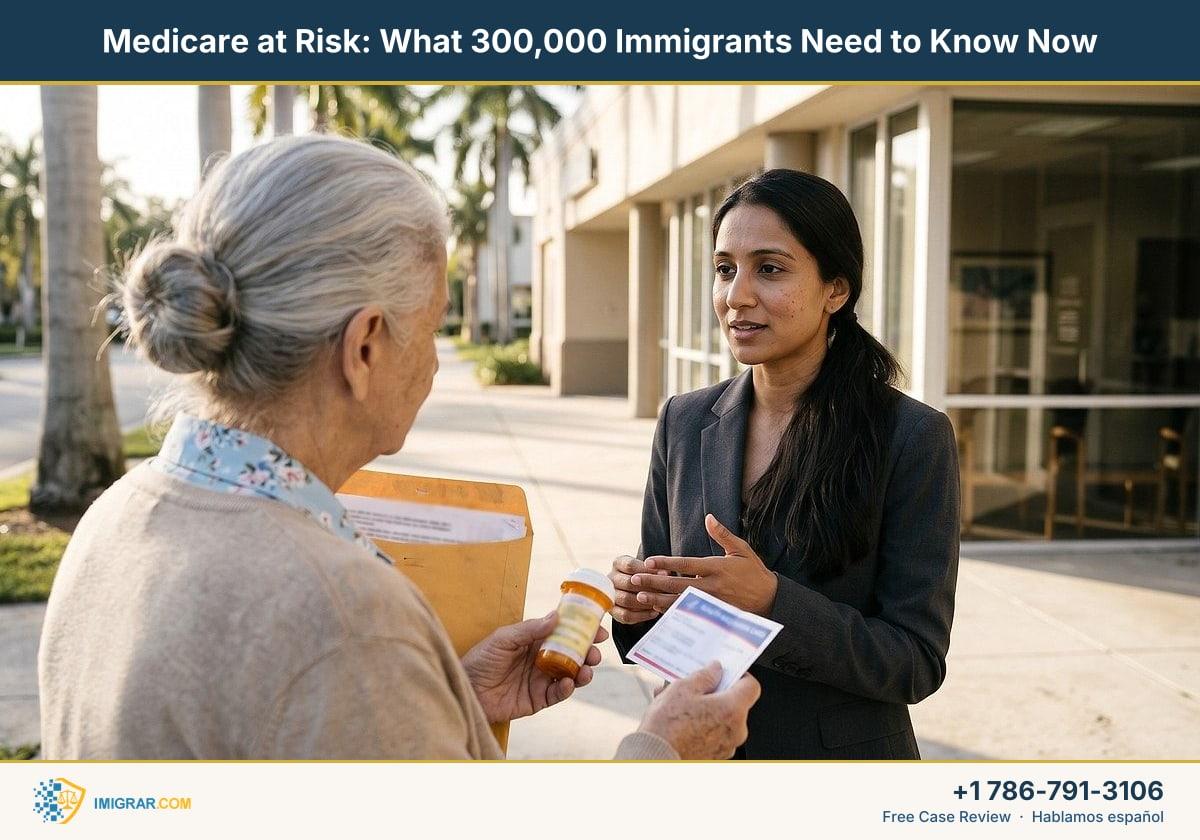
The reporting that sparked this guide: 300,000 legal immigrants told they’re losing Medicare coverage (The Washington Post)
What This News Means for Immigrants in Orlando and Across Florida
The recent report from The Washington Post has sent ripples of concern through immigrant communities nationwide, and especially here in Florida. The news that hundreds of thousands of legal immigrants are at risk of losing their Medicare coverage is not just a headline; it’s a potential crisis for families who rely on this essential health insurance program. At Imigrar, we understand the profound anxiety this situation creates, particularly for our senior community members who depend on Medicare for their healthcare needs. As your dedicated immigration law firm in Orlando, we are committed to providing clarity, support, and actionable guidance during these uncertain times.
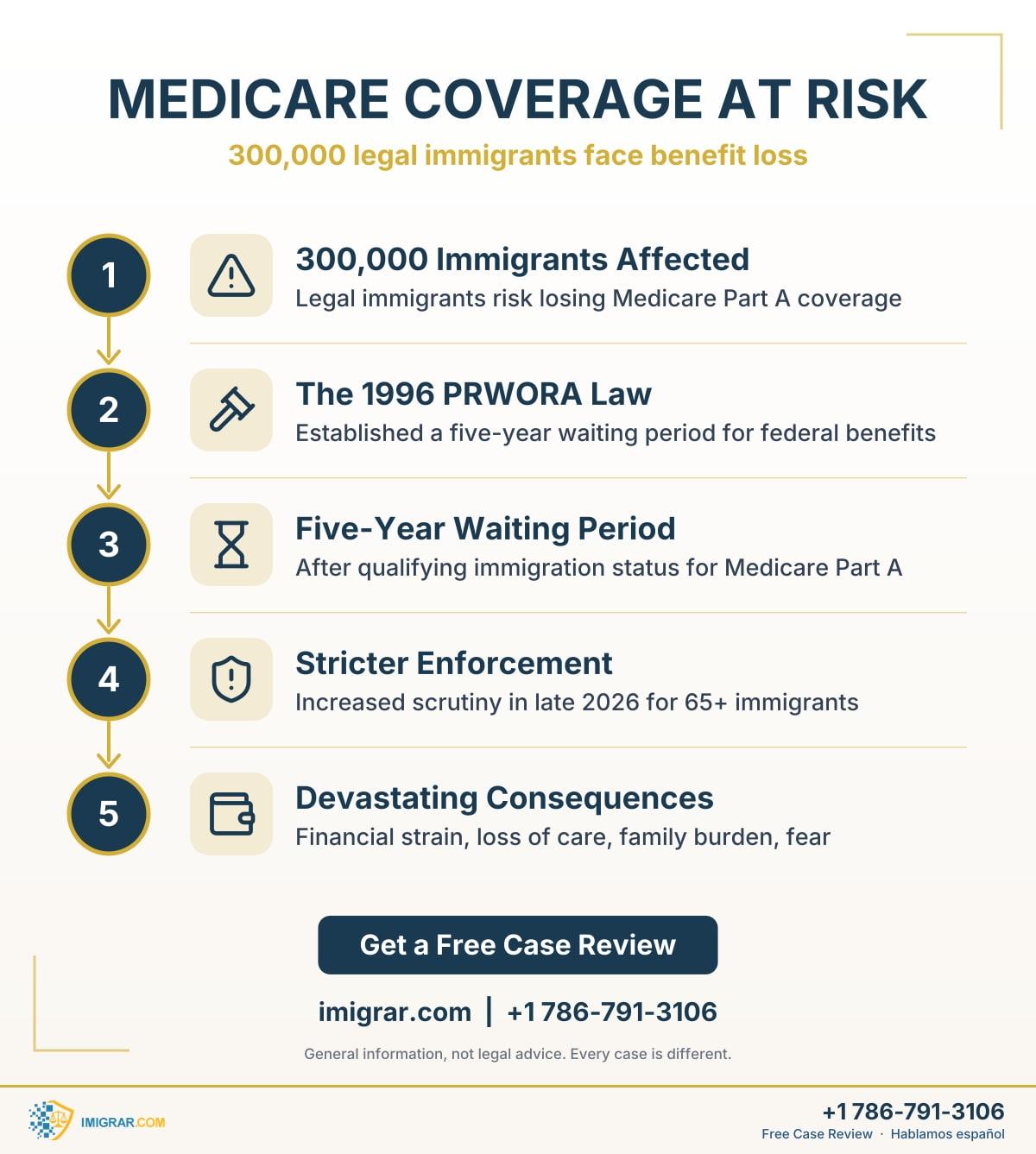
Why this news is showing up now
This isn't a brand-new law, but rather a critical juncture in its implementation and enforcement. The core of this issue stems from the Personal Responsibility and Work Opportunity Act (PRWORA) of 1996, often referred to as "welfare reform." This landmark legislation introduced a significant change: it imposed a five-year waiting period for certain qualified non-citizens to be eligible for federal means-tested public benefits, including Medicare (specifically, Medicare Part A, which covers hospital insurance). For decades, various factors—including specific exemptions, differing state interpretations, and the natural timeline of immigrants aging into eligibility—meant that many individuals were able to access Medicare without strictly adhering to this five-year rule, particularly if they had arrived before 1996 or through specific pathways.
What we are seeing now, in late 2026, is a confluence of factors bringing this restriction to the forefront. A large cohort of legal immigrants who gained their status in the late 1990s and early 2000s are now reaching the age of 65, the traditional entry point for Medicare. Simultaneously, increased scrutiny and a more uniform application of federal regulations across agencies are leading to a stricter enforcement of the five-year waiting period. This means that individuals who might have previously been deemed eligible, or who simply hadn't reached the age of eligibility until recently, are now being notified that they do not meet the federal requirements for immediate Medicare access. The 300,000 figure represents a significant population facing this direct impact, many of whom have paid taxes into the system for years and expected to receive these benefits.
How it can affect Florida residents
For immigrants residing in Florida, particularly in vibrant communities like Orlando and across the I-4 corridor, this news carries a specific weight. Florida is home to a large and diverse immigrant population, including many seniors who have contributed significantly to our state’s economy and culture. Losing Medicare coverage can have devastating consequences:
- Financial Strain: Without Medicare, the cost of healthcare, including hospital stays, doctor visits, and prescription medications, can become prohibitively expensive. Many seniors live on fixed incomes, and these costs can quickly lead to financial ruin.
- Access to Care: Losing coverage often means losing access to established doctors, specialists, and necessary treatments. This can lead to delayed care, worsening health conditions, and a reduced quality of life.
- Family Burden: The financial and emotional burden often falls on family members, who may struggle to find alternative ways to cover their loved ones' healthcare expenses. This can cause significant stress for families striving to Keep Families Together.
- Uncertainty and Fear: The sudden loss of an essential benefit like Medicare creates immense uncertainty and fear, impacting mental and emotional well-being.
Florida’s healthcare landscape, while offering some state and local programs, is not equipped to absorb the healthcare needs of 300,000 individuals suddenly without federal coverage. While Florida has programs like Medicaid, eligibility requirements are often stringent, especially for adults without dependent children, and may not fully replace the comprehensive coverage Medicare provides. For residents in Orange County and surrounding areas, understanding local resources and state-specific regulations will be crucial. This situation underscores the urgent need for accurate information and proactive legal guidance to explore all available options.
Need Help? Our Orlando immigration team is ready to assist. Call +1 786-791-3106 for a free consultation, or message us online. Se Habla Español.
What Losing Medicare Coverage Means for Immigrant Seniors (and Why It Matters)
The prospect of losing Medicare coverage is terrifying for anyone, but particularly so for immigrant seniors who may already face language barriers, cultural differences, and limited financial resources. Understanding the specifics of this situation is the first step toward finding solutions.
A plain-English definition
At its core, Medicare is the federal health insurance program for people who are 65 or older, certain younger people with disabilities, and people with End-Stage Renal Disease (permanent kidney failure requiring dialysis or a transplant). It is a vital safety net providing access to medical care that would otherwise be unaffordable for millions.
The current news refers to a restriction within this program concerning "qualified non-citizens." Essentially, if you are a legal immigrant (a "qualified non-citizen" as defined by federal law), you generally must have lived in the U.S. for at least five years (a "five-year waiting period") from the date you received your qualifying immigration status to be eligible for most federal public benefits, including Medicare Part A (hospital insurance). This rule was established by the Personal Responsibility and Work Opportunity Act (PRWORA) of 1996.
For many years, some immigrants, particularly those who became legal permanent residents before PRWORA or who fell under specific humanitarian categories, might have been able to access Medicare without strict adherence to this waiting period. The current situation highlights a more rigorous application of this five-year waiting period, leading to notices of ineligibility or termination for those who do not meet this specific criterion, even if they have paid taxes into the system for decades and are otherwise eligible by age or disability. This means that even if you're 65, a legal permanent resident, and have worked in the U.S. for many years, you might still be denied Medicare Part A if you haven't completed the five-year waiting period since obtaining your qualifying immigration status.
Key terms you need to know
Navigating immigration and healthcare laws requires understanding specific terminology. Here are some key terms relevant to this discussion:
- Medicare: The federal health insurance program primarily for people aged 65 or older. It has different parts:
- Part A (Hospital Insurance): Covers inpatient hospital stays, care in a skilled nursing facility, hospice care, and some home health care. This is the part most affected by the five-year waiting period for immigrants.
- Part B (Medical Insurance): Covers certain doctors' services, outpatient care, medical supplies, and preventive services.
- Part C (Medicare Advantage): An alternative to original Medicare, offered by private companies approved by Medicare.
- Part D (Prescription Drug Coverage): Helps cover the cost of prescription drugs.
- Qualified Non-Citizen: This is a specific legal term under federal welfare reform laws. It generally includes:
- Lawful Permanent Residents (LPRs or green card holders)
- Asylees and Refugees
- Cuban/Haitian Entrants
- Parolees for at least one year
- Conditional entrants
- Battered spouses and children
- Victims of severe forms of human trafficking (T visa holders)
- Five-Year Waiting Period: The requirement under PRWORA that many qualified non-citizens must reside in the U.S. for five years *after* obtaining their qualifying immigration status (e.g., green card) before becoming eligible for federal means-tested public benefits like Medicare Part A.
- PRWORA (Personal Responsibility and Work Opportunity Act of 1996): The federal law that established the five-year waiting period and other restrictions on immigrant eligibility for public benefits.
- Public Charge: A ground of inadmissibility and deportability for individuals who are likely to become primarily dependent on the government for subsistence. While receiving non-cash benefits like Medicare generally does not make someone a public charge, understanding this concept is crucial for immigrants. Important: The current public charge rule (effective December 23, 2022) generally excludes non-cash benefits like Medicare from consideration.
- Medicaid: A joint federal and state program that helps cover healthcare costs for people with limited income and resources. Eligibility varies significantly by state, and immigrant eligibility is also restricted by PRWORA, often with its own five-year waiting period.
- Affordable Care Act (ACA) / Healthcare.gov: A federal law that created health insurance marketplaces where individuals can purchase health plans, often with financial assistance (subsidies) based on income. Many qualified non-citizens are eligible to purchase plans through the ACA marketplace, even if they don't qualify for Medicare or Medicaid.
- CHIP (Children's Health Insurance Program): Provides low-cost health coverage to children in families who earn too much money to qualify for Medicaid but cannot afford private coverage. Some pregnant women are also covered. Immigrant children and pregnant women may also face five-year waiting periods for CHIP, depending on the state.
Current Immigration Law & Medicare Eligibility: The Foundation
To understand why 300,000 legal immigrants are facing a loss of Medicare coverage, it’s essential to look at the underlying legal framework. Immigration law and public benefits eligibility are complex and often intersect in challenging ways. This section aims to demystify the federal and state requirements that govern access to Medicare for immigrants.
Federal requirements
The primary federal law governing immigrant eligibility for most public benefits, including Medicare Part A, is the Personal Responsibility and Work Opportunity Act (PRWORA) of 1996. This act drastically changed the landscape for non-citizens seeking federal assistance. Under PRWORA, immigrants are divided into two main categories for public benefits purposes:
- "Qualified Non-Citizens": This group generally includes Lawful Permanent Residents (green card holders), asylees, refugees, Cuban/Haitian Entrants, certain parolees, and victims of trafficking or domestic violence. Even within this group, eligibility for federal means-tested benefits (which include Medicare Part A) is restricted.
- "Not Qualified Non-Citizens": This group includes individuals on temporary visas (e.g., student visas, tourist visas, H-1B visas), undocumented immigrants, and certain other categories. These individuals are generally ineligible for most federal public benefits, with very limited exceptions for emergency medical care.
For Qualified Non-Citizens, PRWORA established a crucial rule: the five-year waiting period. This means that most qualified non-citizens are barred from receiving federal means-tested public benefits, including non-emergency Medicaid and Medicare Part A, for five years from the date they gained their "qualified" immigration status. After this five-year waiting period, their eligibility often becomes similar to that of U.S. citizens, provided they meet other program-specific requirements (like age for Medicare).
There are some important exceptions to the five-year waiting period:
- Refugees and Asylees: Generally exempt from the five-year waiting period for many federal public benefits, including Medicare Part A, for the first seven years after their grant of status.
- Cuban/Haitian Entrants: Often treated similarly to refugees for benefit eligibility.
- Veterans and Active Duty Military Personnel (and their families): Qualified non-citizens who are veterans or active duty military personnel (or their spouses and unmarried dependent children) are exempt from the five-year waiting period.
- Individuals with 40 Quarters of Work: Qualified non-citizens who have worked in the U.S. for 40 qualifying quarters (approximately 10 years) are generally exempt from the five-year waiting period for federal means-tested benefits. This is a critical point for many long-term residents. You can check your work history with the Social Security Administration.
The Social Security Administration (SSA) is responsible for determining Medicare eligibility. When an individual applies for Medicare, the SSA evaluates not only their age and work history but also their immigration status and the date they achieved that status to determine if the five-year waiting period has been met. The current wave of denials and terminations indicates a more stringent application of these rules by the SSA.
While USCIS does not directly handle Medicare applications, the immigration status you hold, which USCIS grants, is the foundational piece for Medicare eligibility. Forms like Form I-485 (Application to Register Permanent Residence or Adjust Status) or Form I-130 (Petition for Alien Relative) are key to obtaining the legal status that eventually makes one eligible for Medicare (after the waiting period). You can find more information about these and other forms on the USCIS Forms page or the USCIS official website.
Florida-specific considerations
While Medicare is a federal program, state laws and policies can impact how immigrants navigate healthcare access, especially if federal benefits are denied. For Central Florida residents, understanding Florida's stance on immigrant healthcare is crucial.
- Medicaid in Florida: Florida has historically maintained some of the strictest Medicaid eligibility requirements in the nation. It is one of the states that has not expanded Medicaid under the Affordable Care Act. This means that non-pregnant, non-disabled adults without dependent children rarely qualify for Medicaid, regardless of income. For qualified non-citizens, Florida also generally imposes the five-year waiting period for Medicaid eligibility, similar to federal guidelines. Even after five years, income and asset limits are very low.
- Emergency Medicaid: Qualified and non-qualified non-citizens may be eligible for Emergency Medicaid, which covers care for true medical emergencies. However, this is not a substitute for comprehensive health insurance and only covers life-threatening conditions.
- State and Local Programs: Florida offers very few state-funded healthcare programs specifically for immigrants who do not qualify for federal benefits. Some counties, including Orange County, may have limited charity care or indigent health programs, but these are typically severely restricted by funding and eligibility. These are not robust alternatives to Medicare.
- Affordable Care Act (ACA) Marketplace: This is often the most viable alternative for qualified non-citizens in Florida who lose Medicare eligibility. Qualified non-citizens are eligible to purchase health insurance through the federal marketplace at Healthcare.gov. Depending on their income, they may qualify for premium tax credits and cost-sharing reductions, making coverage more affordable. Important: Losing Medicare eligibility due to this rule change generally qualifies as a Special Enrollment Period, allowing individuals to enroll in an ACA plan outside the regular open enrollment window.
Given Florida’s limited state-level safety net for immigrant healthcare, the impact of Medicare loss is particularly severe for Orlando residents. Proactive planning and exploring all options, especially through the ACA marketplace, become even more critical.
Need Help? Our Orlando immigration team is ready to assist. Call +1 786-791-3106 for a free consultation, or message us online. Se Habla Español.
How to Navigate Medicare Changes and Secure Healthcare: A Complete Step-by-Step Guide
If you're among the 300,000 legal immigrants affected by these Medicare eligibility changes, taking immediate and informed action is paramount. This step-by-step guide outlines the critical actions you should consider to protect your health and secure alternative coverage.
1) Understand Your Current Eligibility & Notification
The first step is to confirm your current status and understand the specifics of any notification you’ve received. Do not ignore mail from the Social Security Administration (SSA) or Medicare.
- Review all correspondence: Carefully read any letters or notices from the SSA or Medicare. These documents will explain why your coverage is being denied or terminated and the effective date of the change. Look for specific references to the five-year waiting period or your immigration status.
- Verify your immigration status and dates: Confirm the exact date you obtained your "qualified non-citizen" status (e.g., the "Resident Since" date on your green card, or the date of your asylum/refugee grant). Calculate if you have indeed completed the five-year waiting period from that date.
- Contact the SSA: If you are unclear about the notice or believe there is an error in their records, contact the Social Security Administration directly. Be prepared with your Social Security number and immigration documents.
Required Documents for this step:
- All official letters/notices from SSA or Medicare
- Your Green Card (Form I-551) or other immigration documents (e.g., asylum grant letter, visa with qualifying status)
- Social Security Card
- Proof of U.S. residence (utility bills, lease agreements)
2) Explore Alternative Health Coverage Options
If your Medicare Part A coverage is denied or terminated, you must immediately seek alternative health insurance. Relying on emergency care alone is not a sustainable or healthy option.
- Affordable Care Act (ACA) Marketplace: For many qualified non-citizens, the ACA marketplace (Healthcare.gov) is the most viable option. Losing Medicare eligibility due to these rule changes typically triggers a Special Enrollment Period, allowing you to enroll outside the annual Open Enrollment period.
- Visit Healthcare.gov and enter your zip code (e.g., for Orlando, 32801).
- Complete the application, providing accurate income and household information.
- Check if you qualify for premium tax credits or cost-sharing reductions, which can significantly lower your monthly premiums and out-of-pocket costs.
- Compare plans based on cost, coverage, and your preferred doctors.
- Medicare Part B & D: Even if you lose premium-free Medicare Part A, you may still be able to enroll in Medicare Part B (Medical Insurance) and Part D (Prescription Drug Coverage) if you pay the monthly premiums. However, this can be expensive. Investigate if you are eligible for a Medicare Savings Program to help with Part B premiums.
- Employer-Sponsored Health Plans: If you or your spouse are still working, check if an employer offers health insurance that you can enroll in.
- Private Health Insurance: You can purchase private health insurance directly from an insurance company outside the marketplace, but these plans may not offer the same consumer protections or financial assistance as ACA plans.
Required Documents for this step (for ACA):
- Proof of identity (e.g., passport, driver's license)
- Proof of immigration status (Green Card, employment authorization document)
- Social Security number
- Income information (pay stubs, tax returns, W-2s) for all household members
- Current health insurance information (if any)
3) Assess Eligibility for State & Local Programs (Florida Focus)
While Florida's safety net is limited, it’s still important to investigate any potential state or local assistance. For those in Central Florida, specifically Orlando and Orange County, this step is crucial.
- Florida Medicaid: Re-evaluate your eligibility for Florida Medicaid, especially if your income and resources are very low. Remember, Florida has strict criteria and the five-year waiting period for most qualified non-citizens still applies. However, specific situations (e.g., certain disabilities, emergency medical conditions) might qualify you.
- Orange County Health Department: Contact your local health department in Orange County. They may have information about local clinics, community health centers, or limited assistance programs for low-income residents, regardless of immigration status.
- Federally Qualified Health Centers (FQHCs): These centers provide primary care services regardless of your ability to pay and often operate on a sliding scale fee. There are several FQHCs in the Orlando area. They can be a vital resource for ongoing care.
Required Documents for this step:
- Proof of income and assets
- Proof of residency in Florida/Orange County
- Immigration documents
- Medical records (if applying for disability-related programs)
4) Review Your Immigration Status & Potential for Naturalization
Your immigration status is directly linked to your Medicare eligibility. If you are a Lawful Permanent Resident (green card holder), naturalizing to U.S. citizenship removes all immigration-based restrictions on federal benefits.
- Check your eligibility for citizenship: Most LPRs can apply for naturalization after five years of permanent residency (or three years if married to a U.S. citizen). Becoming a U.S. citizen would immediately resolve the five-year waiting period issue for Medicare.
- Gather necessary documents for naturalization: This is a complex process, but if you are eligible, it is a long-term solution.
- Consult with an immigration attorney: An attorney can help you determine your eligibility for naturalization and guide you through the process, ensuring all requirements are met.
Required Documents for Naturalization (Form N-400):
- Green Card (Form I-551)
- Passport and other travel documents
- Marriage certificate (if applicable)
- Tax returns for the past five years (or three years if married to a U.S. citizen)
- Selective Service registration (for male applicants)
- Court records for any arrests or citations
- Proof of continuous residence and physical presence
5) Seek Legal Counsel Immediately
This is perhaps the most critical step. The intricacies of immigration law, public benefits, and healthcare policy are too complex to navigate alone. An experienced immigration attorney can provide personalized advice.
- Understand your specific situation: An attorney can review your specific immigration history, the details of your Medicare notification, and determine if any exemptions apply to you (e.g., 40 quarters of work, veteran status).
- Challenge denials/terminations: If you believe your Medicare denial or termination was an error, an attorney can help you file an appeal with the SSA and represent you in the process.
- Explore all options: An attorney can identify all potential avenues for healthcare coverage and advise on the best strategy, whether it's through the ACA, state programs, or pursuing naturalization.
Required Documents for Legal Consultation:
- All immigration documents (Green Card, visas, entry/exit records)
- All correspondence from SSA, Medicare, or other government agencies
- Proof of income and work history (W-2s, tax returns, Social Security earnings statement)
- Any relevant medical records
6) Document Your Efforts and Keep Records
Throughout this process, meticulous record-keeping is essential. This can be crucial for appeals, applications for alternative coverage, or future legal proceedings.
- Create a dedicated folder: Keep all original documents, copies of applications, and correspondence in a secure, organized
Related Topics
Need Legal Assistance?
Our experienced immigration attorneys are here to help with your case. Contact Imigrar today for a free consultation and let us guide you through the legal process with confidence.
📍 Orlando, Florida • Serving clients nationwide
📧 info@imigrar.com