
USCIS Processing Times 2026: Your Guide to Faster Immigration in
Navigate USCIS processing times and updates for 2026 with Imigrar. Get expert advice on managing your immigration application, understanding delays, and keeping your family together.

Immigration journeys are often filled with anticipation, hope, and sometimes, uncertainty. One of the most common sources of anxiety for immigrants and their families is the waiting game associated with USCIS processing times. As we move through 2026, understanding the latest updates and how they impact your application is more critical than ever. At Imigrar, we understand that every day counts when you're striving to keep families together.
Need Help? Our Orlando immigration team is ready to assist. Call +1 786-791-3106 for a free consultation, or message us online. Se Habla Español.
The reporting that sparked this guide
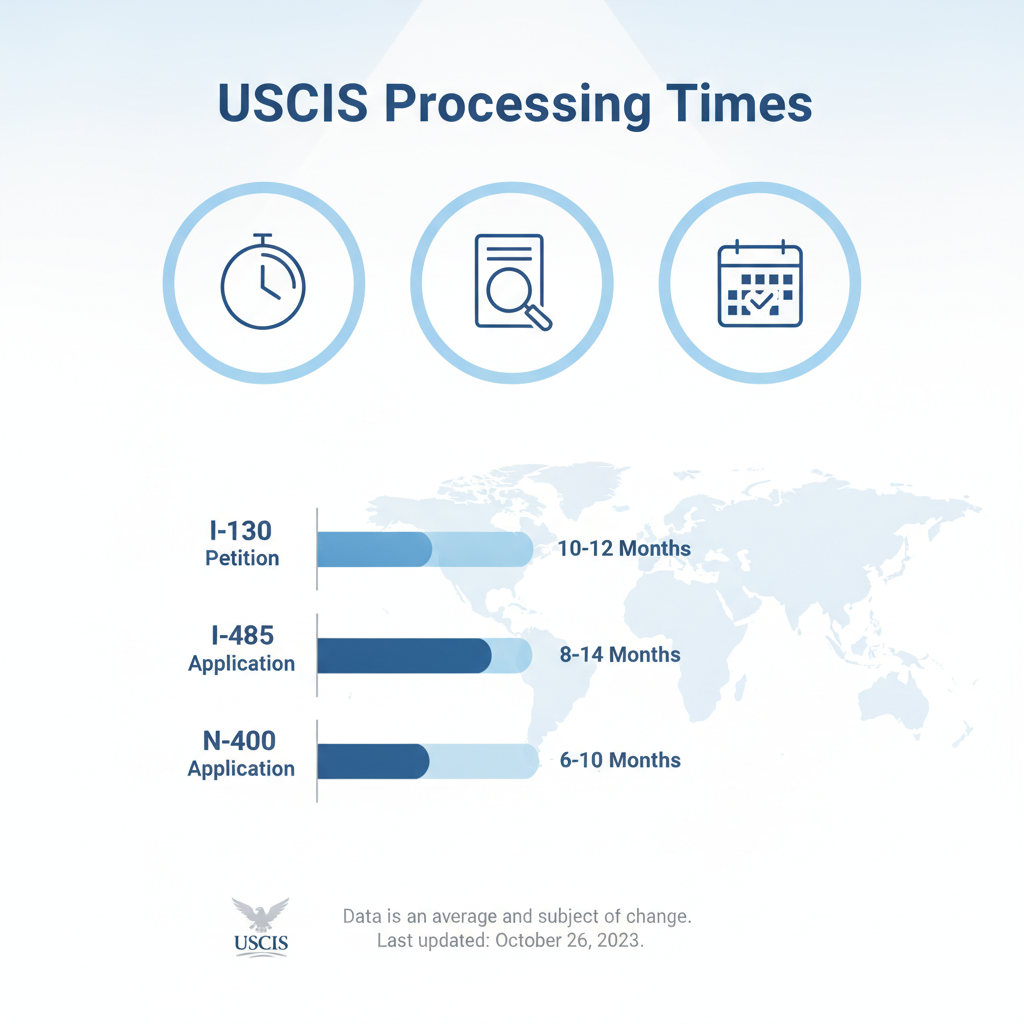
The information and guidance within this article are informed by ongoing trends and official communications regarding immigration application processing. For the latest, real-time updates directly from the source, we refer you to: USCIS Processing Times and Updates for 2026 (USCIS).
What This News Means for Immigrants in Orlando and Across Florida
The United States Citizenship and Immigration Services (USCIS) is the federal agency responsible for administering the country's lawful immigration system. Their processing times are dynamic, influenced by a multitude of factors, and directly impact the lives of millions. For immigrants living in Orlando, across Florida, and indeed nationwide, these updates are not just statistics; they are timelines that dictate when families can reunite, when individuals can start new jobs, and when dreams can finally become a reality.
Why this news is showing up now
USCIS processing times are under constant scrutiny and public attention, especially as the agency continues to grapple with backlogs and evolving operational strategies. News regarding processing times typically emerges for several key reasons:
- Budgetary Cycles and Staffing: USCIS is largely fee-funded. Fluctuations in fee revenue, combined with congressional appropriations, directly affect staffing levels and the resources available to process applications. Updates often reflect changes in these areas.
- Policy Shifts: New presidential administrations or legislative changes can introduce new priorities, forms, or review processes that impact processing efficiency. For instance, increased vetting procedures or changes in interview requirements can slow down certain application types.
- Caseload Volume: Immigration trends, global events, and economic conditions can lead to surges or dips in application submissions. A higher volume of applications, particularly for popular categories like family petitions or naturalization, can naturally extend processing times.
- Technological Upgrades: USCIS is continually working to modernize its systems. While intended to improve efficiency long-term, the implementation phases of new technologies can sometimes cause temporary delays or require adjustments that are reflected in processing times.
- Service Center and Field Office Performance: Performance varies across the different USCIS Service Centers (which handle mail-in applications) and Field Offices (which handle interviews and local services). Updates may highlight specific improvements or challenges in particular locations, like the Orlando USCIS Field Office.
As of late 2026, we continue to see USCIS striving to reduce backlogs accumulated during previous years, implementing strategies to streamline processes, and adjusting to the ongoing demand for immigration benefits. These efforts, combined with the factors listed above, are why processing time updates remain a constant and critical topic.
How it can affect Florida residents
For individuals and families residing in Florida, especially within the greater Orlando area and along the I-4 corridor, USCIS processing times have distinct local impacts:
- Orlando Field Office Impact: Many applications, particularly those requiring interviews for Adjustment of Status (Form I-485), naturalization (Form N-400), or certain family-based petitions, are handled by the Orlando USCIS Field Office. Longer processing times here can mean extended waits for local residents to finalize their immigration status.
- Economic Implications: Delays in obtaining work authorization (Form I-765) or green cards can prevent individuals from starting jobs, contributing to Florida's economy, or advancing their careers. This is particularly relevant in a growing metropolitan area like Orlando, which relies on a diverse workforce.
- Family Separation and Uncertainty: For families awaiting approval of petitions like Form I-130 (Petition for Alien Relative), extended processing times mean prolonged separation or continued uncertainty about their future together in the U.S. This can be emotionally taxing and disrupt family planning.
- Travel Restrictions: Applicants waiting for travel documents (Form I-131, Advance Parole) may face restrictions on international travel, impacting visits to family abroad or critical personal matters.
- Planning Challenges: Long and unpredictable processing times make it difficult for immigrants to plan their lives, whether it's enrolling in schools, making major financial decisions, or simply feeling secure in their new community in Orange County.
Understanding these impacts is the first step in navigating the system effectively. At Imigrar, we specialize in guiding Florida residents through these challenges, helping them understand what to expect and how to proactively manage their immigration cases.
What USCIS Processing Times Are (and Why They Matter)
When you submit an immigration application to USCIS, it enters a queue. The "processing time" refers to the period USCIS estimates it will take to make a decision on your case, from the date they receive your application to the date they issue a decision, send a Request for Evidence (RFE), or schedule an interview. These times are not guarantees but rather averages or ranges based on historical data.
A plain-English definition
Think of it like this: when you order something online, the company gives you an estimated delivery window. USCIS processing times are similar – they're the agency's best guess for how long it will take to "deliver" a decision on your immigration case. These estimates can change based on how many "orders" (applications) they receive, how many staff they have, and how complex each "order" is. For an immigrant, this window determines when they can expect to move forward with their life, whether it's getting a green card, becoming a citizen, or bringing a family member to the U.S.
Key terms you need to know
Navigating USCIS processing times requires understanding specific terminology:
- Receipt Date: The date USCIS officially receives your application. This is typically the start date for calculating processing times. You'll find this on your Form I-797C, Notice of Action.
- Priority Date: For certain visa categories (especially family-sponsored and employment-based green cards), this is the date your petition (e.g., Form I-130 or Form I-140) was filed and received by USCIS. It determines your place in line for an immigrant visa once one becomes available according to the Visa Bulletin.
- Current Date: This refers to when a visa number is available for your category and country of chargeability, as indicated in the Visa Bulletin. Your Priority Date must be earlier than the Current Date for you to proceed with an Adjustment of Status or Consular Processing.
- Estimated Completion Date: Some USCIS online tools might provide a more specific estimate based on your individual case.
- Service Center: USCIS has several Service Centers (e.g., Nebraska, Texas, California, Vermont, Potomac) that process mailed applications. The specific Service Center handling your case can affect processing times.
- Field Office: These local offices (like the Orlando USCIS Field Office) handle interviews, biometrics appointments, and some local filings. Their workloads also impact processing times.
- Adjustment of Status (AOS): The process of applying for a green card from within the United States (using Form I-485).
- Consular Processing: The process of applying for an immigrant visa through a U.S. embassy or consulate abroad. This involves the National Visa Center (NVC).
- Request for Evidence (RFE): A notice from USCIS requesting additional documents or information to support your application. Receiving an RFE will pause your processing time until you respond.
- Notice of Intent to Deny (NOID): A notice from USCIS indicating their intent to deny your application unless you provide specific information or clarification. This is a serious notice requiring prompt and thorough response.
- Case Inquiry (e-Request): A formal request for information about your case status, typically made when your application has exceeded the posted normal processing times.
- Expedite Request: A request to USCIS to speed up the processing of your application due to urgent circumstances.
Understanding these terms empowers you to track your case more effectively and communicate clearly with USCIS or your legal representative. This knowledge is crucial for anyone navigating the immigration system, whether they are in Central Florida or anywhere else in the nation.
Current Immigration Law: The Foundation
USCIS processing times are not arbitrary; they are governed by federal immigration laws, regulations, and agency policies. The overarching legal framework for immigration in the U.S. is the Immigration and Nationality Act (INA). While the INA doesn't directly dictate specific processing times, it sets the categories, criteria, and procedures that USCIS must follow, which inherently influences how long cases take.
Federal requirements
The INA establishes the various visa categories (e.g., family-based, employment-based, humanitarian), eligibility requirements, and the multi-step processes for obtaining immigration benefits. For example:
- Numerical Limitations: Many visa categories, particularly family-sponsored and employment-based visas, are subject to annual numerical limits set by Congress (INA §201, §203). This creates backlogs and the concept of Priority Dates and the Visa Bulletin, which directly extends the overall wait time for certain applicants, regardless of how fast USCIS processes individual petitions.
- Admissibility and Eligibility: The INA outlines extensive grounds of inadmissibility (INA §212) and deportability (INA §237). USCIS must thoroughly vet every applicant against these criteria, which can involve background checks, interviews, and requests for additional evidence, all of which contribute to processing times.
- Form Requirements: Each immigration benefit requires specific forms (e.g., Form I-130 for family petitions, Form I-485 for Adjustment of Status, Form I-765 for Employment Authorization, Form N-400 for Naturalization). These forms are designed to collect the necessary information to determine eligibility under the INA. Incomplete or incorrect forms are a major cause of delays.
- Biometrics and Interviews: For many applications, biometrics appointments (fingerprints, photos, signature) and interviews are mandatory steps to verify identity and confirm eligibility. These logistical steps, especially scheduling, directly impact the timeline.
USCIS is also bound by regulations in the Code of Federal Regulations (CFR), which provide more detailed rules for implementing the INA. For instance, specific regulations govern the procedures for filing certain forms, responding to RFEs, and appealing adverse decisions. Congress often mandates that USCIS strive for efficient processing, but the agency's ability to meet these goals is often constrained by funding and caseload.
For official information on immigration laws and regulations, always refer to the USCIS official website.
Florida-specific considerations
While immigration law is federal, its application has local nuances. Florida does not have its own immigration laws separate from federal law. However, how federal laws and USCIS processing affect Florida residents can vary:
- Local Field Office Workload: The Orlando USCIS Field Office (and other Florida field offices like Miami or Tampa) has its own specific workload and staffing levels. This means that processing times for interview-based applications (like Adjustment of Status or Naturalization) can differ from other parts of the country.
- Community Impact: Florida has a large and diverse immigrant population. Consequently, the demand for certain immigration services, such as family-based petitions and asylum claims, can be higher in areas like Orlando and South Florida, potentially affecting local processing queues.
- State-Level Policies (Indirect Impact): While Florida cannot pass its own immigration laws, state-level policies (e.g., regarding driver's licenses for non-citizens, or cooperation with federal immigration enforcement) can indirectly affect the lives of immigrants while they await USCIS decisions, though they do not change USCIS processing times directly.
- Access to Legal Services: In a state with a high immigrant population like Florida, there's a greater availability of experienced immigration attorneys who understand the local nuances and can help navigate the federal system more effectively.
Understanding the interplay between federal law and local realities is key. Imigrar, based in Orlando, is uniquely positioned to assist clients in Central Florida and beyond with these specific challenges.
Navigating complex USCIS updates requires expert guidance. Don't face it alone. Contact Imigrar today for a free consultation. Call +1 786-791-3106. Se Habla Español.
How to Understand and Navigate USCIS Processing Times: A Complete Step-by-Step Guide
The key to managing expectations and taking proactive steps in your immigration journey is to understand how to access and interpret USCIS processing time information. This guide will walk you through the essential steps.
1) Understanding the USCIS Processing Times Tool
Your first stop should always be the official USCIS website, specifically their processing times page. This is where you'll find the most up-to-date estimates.
- Access the Tool: Visit USCIS Processing Times.
- Select Your Form: Use the dropdown menu to select the specific form you filed (e.g., Form I-130, Form I-485, Form N-400).
- Select Your Form Category: Some forms have multiple categories (e.g., Form I-130 has different categories for immediate relatives vs. preference categories). Choose the one that applies to your petition.
- Select Your Field Office or Service Center: This is critical. For most applications, it will be one of the five Service Centers (California, Nebraska, Potomac, Texas, Vermont). If your case involves an interview, such as Adjustment of Status or Naturalization, you'll select the Field Office that has jurisdiction over your residence (e.g., Orlando USCIS Field Office).
Reminder: The processing times shown are estimates based on the completion of 80% of cases within that type during the last six months. This means 20% of cases could take longer.
2) Finding Your Case Type and Field Office/Service Center
Knowing where your application is being processed is crucial for accurate processing time checks.
- Check Your Receipt Notice (Form I-797C): Your official receipt notice from USCIS (Form I-797C, Notice of Action) will clearly state which Service Center is processing your application. Look for the "LIN," "EAC," "WAC," "SRC," or "VSC" prefixes in your receipt number, which correspond to the Nebraska, Vermont, California, Texas, and Potomac Service Centers, respectively.
- For Interview-Based Cases: If your case requires an interview (e.g., Form I-485, Form N-400), it will eventually transfer to your local Field Office. The Field Office is determined by your residential address. For Central Florida residents, this is typically the Orlando USCIS Field Office. You can find your local field office by entering your zip code on the USCIS website.
Important: Sometimes, cases are transferred between Service Centers or from a Service Center to a Field Office. Always refer to your latest notice from USCIS for the most accurate information.
3) Interpreting the Posted Times
Once you've selected your form, category, and location, you'll see a range of dates or months. For example, it might say "Processing Time: 10.5 Months to 16.5 Months" or "As of: May 01, 2025."
- Understanding the Range: This indicates that most cases of that type, filed within that timeframe, are currently being processed within that range. If your Receipt Date falls within the "receipt date for a case inquiry" date, it means your case is still within normal processing times.
- "Receipt Date for a Case Inquiry": This is a critical date. If your Receipt Date is *earlier* than this "receipt date for a case inquiry" date, it means your case has likely exceeded normal processing times, and you may be eligible to submit an inquiry.
- Visa Bulletin for Priority Dates: For numerically limited categories, you must also consult the U.S. Department of State's Visa Bulletin monthly. Your Priority Date must be "current" for your specific visa category and country of chargeability before your Adjustment of Status (Form I-485) or immigrant visa application can be approved. The USCIS processing times only tell you how long it takes to process the *petition* (e.g., Form I-130), not how long until a visa number is available.
4) Monitoring Your Case Status
Beyond checking the general processing times, you can track your individual case status.
- USCIS Online Case Status Tool: Go to USCIS Case Status Online. Enter your 13-digit receipt number (found on your Form I-797C). This will show you the latest update on your specific application.
- Create a USCIS Online Account: If you filed online or linked your paper-filed case, you can create a USCIS online account. This allows you to view your case history, receive updates, respond to RFEs, and communicate with USCIS more directly.
- Subscribe to Updates: Within your online account, you can often subscribe to email or text notifications for your case.
5) When to Submit an Inquiry (Outside Normal Processing Times)
If your case has exceeded the posted processing times (meaning your Receipt Date is *before* the "receipt date for a case inquiry" on the USCIS processing times tool), you can submit an inquiry.
- Online e-Request: The easiest way is to use the USCIS e-Request tool. You will need your receipt number, case type, and filing date.
- Call the USCIS Contact Center: You can call 1-800-375-5283. Be prepared for potentially long wait times. Have all your case information ready.
- Contact Your Congressional Representative: If an e-Request doesn't yield results, or if your case is significantly delayed, your U.S. Senator or Representative can often assist by making an inquiry on your behalf. This is especially helpful for cases handled by the Orlando USCIS Field Office.
Warning: Do not submit an inquiry if your case is still within the normal processing times. This can overwhelm the system and will not speed up your case.
6) Expedite Requests: Criteria and Process
In certain urgent situations, you may be able to request that USCIS expedite the processing of your application. USCIS grants these requests on a case-by-case basis and requires compelling reasons.
- Criteria for Expedite Requests:
- Severe financial loss to a company or person (e.g., imminent job loss, foreclosure).
- Urgent humanitarian reasons (e.g., critical medical treatment abroad, life-threatening situation for a family member).
- Compelling U.S. government interest (e.g., national security, urgent public health).
- Clear USCIS error.
- How to Request:
- Call the USCIS Contact Center (1-800-375-5283) and explain your situation.
- Be prepared to provide evidence supporting your expedite request (e.g., letters from employers, medical documentation, financial statements).
- If USCIS asks for evidence, you'll typically send it to the Service Center or Field Office processing your case (e.g., Orlando USCIS Field Office).
Important: Expedite requests are rarely granted and require strong, verifiable evidence. Consulting an experienced attorney is highly recommended before submitting an expedite request.
7) What to Do If Your Case is Stalled or Denied
Even with careful planning, cases can face unexpected stalls or denials. Knowing your options is vital.
- For Stalled Cases: Beyond inquiries, if your case is significantly delayed without explanation, a legal professional might advise a Writ of Mandamus. This is a federal lawsuit compelling USCIS to take action on your case if they have unduly delayed it.
- For Denied Cases:
- Motion to Reopen (MTR): If the denial was based on procedural errors or new facts, you might file Form I-290B, Notice of Appeal or Motion, requesting USCIS to reopen your case.
- Motion to Reconsider (MTR): If the denial was based on an incorrect application of law or policy, you might file Form I-290B, asking USCIS to reconsider its decision.
- Appeal: For some denials, you can appeal to the Administrative Appeals Office (AAO) or the Board of Immigration Appeals (BIA), depending on the case type. This also uses Form I-290B.
- Refile: In some situations, especially if the denial was due to an unfixable error or a change in circumstances, refiling a new application might be the best option.
Warning: Denials have serious implications for your immigration status. Seek immediate legal counsel from an immigration attorney if your application is denied.
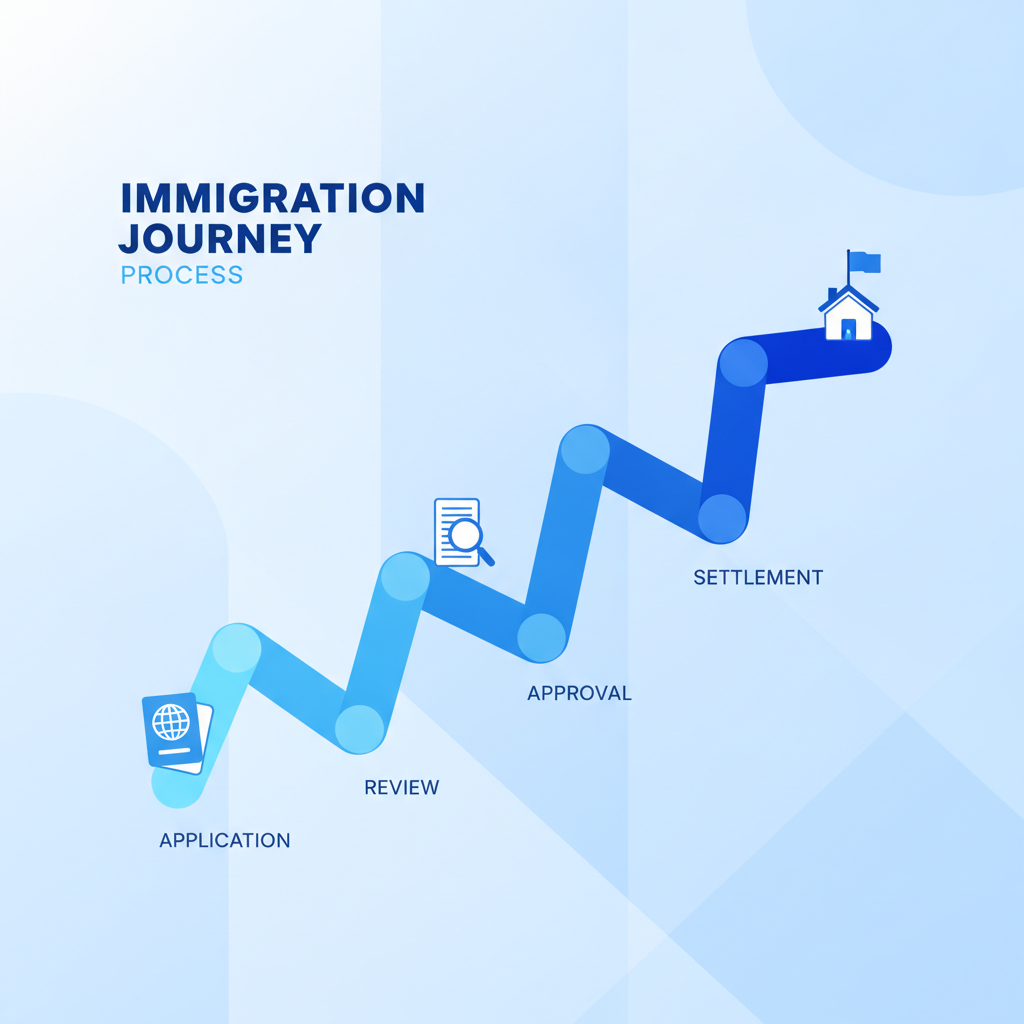
Practical Steps You Can Take Today
While you can't control USCIS processing times, you can take proactive steps to ensure your application moves as smoothly as possible and to manage your expectations.
- Consult an Immigration Attorney: This is the most crucial step. An experienced attorney, like those at Imigrar in Orlando, can assess your case, advise on the best strategy, prepare accurate applications, respond to RFEs, and advocate for you with USCIS. They understand the nuances of the Orlando USCIS Field Office procedures and nationwide policies.
- Organize and Prepare All Documents Meticulously:
- Gather all required original documents and copies well in advance.
- Ensure all forms are filled out completely and accurately, with no blanks (unless instructed).
- Obtain certified translations for any foreign language documents.
- Keep a complete copy of everything you submit to USCIS for your records.
- Stay Informed and Track Your Case:
- Regularly check the USCIS Processing Times tool for your specific form and location.
- Use the USCIS Case Status Online tool to monitor your individual application.
- Sign up for a USCIS online account for direct updates and communication.
- Be Prepared for RFEs and Interviews:
- If you receive an RFE, respond promptly and provide all requested information clearly.
- If an interview is required (e.g., for Form I-485 or Form N-400 at the Orlando USCIS Field Office), prepare thoroughly with your attorney. Gather all original documents you submitted, plus any new relevant evidence.
- Maintain Your Status: If you are in the U.S. on a nonimmigrant visa while awaiting an Adjustment of Status, ensure you maintain your underlying nonimmigrant status until your green card is approved, or until your Adjustment of Status application is properly filed and acknowledged.
- Plan for Potential Delays: Assume your case might take longer than the average. This helps manage expectations and allows you to plan for contingencies, such as renewing work permits (Form I-765) or travel documents (Form I-131) well before they expire.
Document preparation guidance
The quality of your submitted documents can significantly impact processing times. Here’s how to ensure your documentation is stellar:
- Completeness is Key: Any missing document will lead to an RFE, adding months to your processing time. Use USCIS checklists for each form (USCIS Forms).
- Accuracy and Consistency: Ensure all information across all forms and supporting documents is consistent (e.g., names, dates of birth, addresses). Discrepancies can trigger suspicion and further review.
- Clear Copies: Submit clear, legible copies of all required documents unless originals are specifically requested (e.g., original medical exam results). Keep your originals safe.
Related Topics
Need Legal Assistance?
Our experienced immigration attorneys are here to help with your case. Contact Imigrar today for a free consultation and let us guide you through the legal process with confidence.
📍 Orlando, Florida • Serving clients nationwide
📧 info@imigrar.com