
TPS Extension News: What It Means for Florida Families
Recent TPS extensions offer a critical lifeline for immigrants in Florida. Understand eligibility, re-registration, and how Imigrar can help keep your family together.

The reporting that sparked this guide:
TPS (Temporary Protected Status) Extension News (Legal News)
What This News Means for Immigrants in Orlando and Across Florida
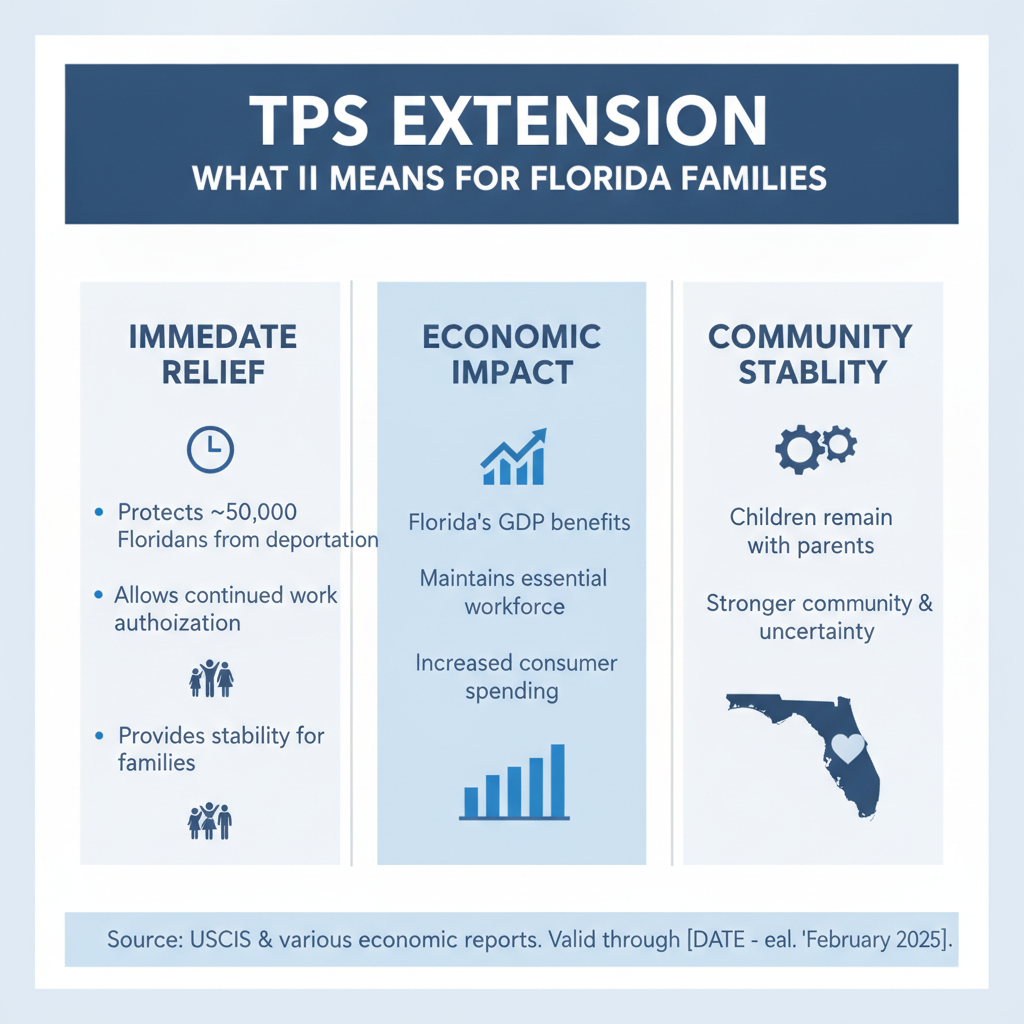
As of November 10, 2026, the landscape of immigration policy continues its dynamic shifts, with recent announcements regarding Temporary Protected Status (TPS) extensions taking center stage. For hundreds of thousands of individuals and families who have sought refuge and built lives in the United States, these updates are not just headlines; they are critical lifelines that determine their ability to live and work legally, free from the constant threat of deportation. Here at Imigrar, we understand the profound impact these decisions have, especially for our vibrant immigrant communities in Orlando and throughout Florida.
Why this news is showing up now
Temporary Protected Status (TPS) is a humanitarian immigration benefit granted by the Secretary of Homeland Security to eligible nationals of certain countries who are already in the United States. A country may be designated for TPS due to ongoing armed conflict, environmental disaster (such as an earthquake or hurricane), or other extraordinary and temporary conditions that prevent its nationals from safely returning. The recent news cycle is ablaze with updates because, by law, the Secretary of Homeland Security must regularly review conditions in designated countries to determine whether the designation should be extended, terminated, or re-designated.
These reviews often lead to announcements of extensions for existing TPS designations, sometimes accompanied by re-designations that expand eligibility to individuals who arrived later, or even new designations for countries facing fresh crises. For example, recent extensions for countries like El Salvador, Honduras, Nicaragua, and Haiti, and the ongoing review of Venezuela's status, reflect the U.S. government's assessment of persistent instability and danger in these nations. These decisions typically come with specific re-registration periods, which are crucial for current TPS holders to maintain their status and work authorization.
How it can affect Florida residents
Florida is home to one of the largest and most diverse immigrant populations in the United States. Our state, particularly Central Florida with its major metropolitan hub in Orlando, has significant communities from many TPS-designated countries. For instance, the Haitian community in Florida is substantial, as are communities from Central and South American nations. Therefore, any news regarding TPS extensions directly affects a considerable portion of Florida's workforce, families, and local economies.
For current TPS holders in Florida, an extension means continued legal presence, work authorization through an updated Employment Authorization Document (EAD or Form I-765), and the ability to plan for their families' futures without immediate fear of deportation. This stability allows them to continue contributing to our state’s economy, raising their children, and embedding themselves further into the fabric of our communities. For those who may become newly eligible under a re-designation, it opens a pathway to legal status that previously did not exist. The ability to work legally also means increased tax contributions, reduced reliance on public services, and overall economic growth for cities like Orlando and counties like Orange County.
Important: Missing a re-registration deadline or failing to understand new eligibility criteria can have severe consequences, including loss of status and potential deportation. This is why staying informed and seeking expert legal guidance is paramount for all affected individuals and families in Florida.
Need Help Navigating TPS Extensions? The complexities of immigration law can be daunting. Our Orlando immigration team at Imigrar is ready to assist you. Call +1 786-791-3106 for a free consultation to understand your options, or message us online. Se Habla Español.
What Temporary Protected Status (TPS) Is (and Why It Matters)
Temporary Protected Status (TPS) is a form of humanitarian relief provided under U.S. immigration law. It offers a temporary legal status to foreign nationals in the United States who cannot safely return to their home countries due to specific, extraordinary conditions. Unlike asylum or refugee status, TPS is temporary, though it can be extended repeatedly if the conditions in the home country do not improve.
A plain-English definition
Imagine your home country becomes unsafe – perhaps due to a devastating natural disaster like a massive earthquake or hurricane, an ongoing civil war, or other widespread, temporary crises. If you are already in the U.S. when this happens, the U.S. government might decide it's too dangerous for you to return. In such cases, they can grant Temporary Protected Status (TPS). This status allows you to live and work legally in the United States for a specific period, typically 6, 12, or 18 months, which can be extended if the conditions in your home country persist. It’s a temporary safe haven, designed to protect you from being forced back into dangerous circumstances.
Crucially, TPS is not a path to a green card or permanent residency on its own. However, holding TPS can, in some cases, provide a foundation for pursuing other immigration benefits, especially if you later become eligible for an Adjustment of Status through a family petition or employment-based visa, or if you can gain parole for overseas travel to re-enter and then adjust status. This is a complex area, and legal advice is always recommended.
Key terms you need to know
Understanding the terminology associated with TPS is vital for anyone affected by these designations:
- Designation: This is the initial act by the Secretary of Homeland Security to identify a country as eligible for TPS due to specified conditions. Once designated, nationals of that country residing in the U.S. can apply for TPS.
- Extension: When the conditions in a TPS-designated country continue to meet the statutory requirements, the Secretary of Homeland Security can extend the TPS designation for an additional period (e.g., 6, 12, or 18 months). Current TPS holders must re-register during a specific window to maintain their status.
- Re-designation: Sometimes, when a country's TPS status is extended, the Secretary also decides to "re-designate" the country. A re-designation often means that individuals who arrived in the U.S. after the initial designation date but before the new re-designation date may now be eligible to apply for TPS. This expands the pool of eligible applicants.
- Termination: If the Secretary determines that the conditions in the designated country have improved sufficiently, the TPS designation can be terminated. This means that TPS holders would eventually lose their protected status and would need to find other legal avenues to remain in the U.S. or face deportation.
- Eligibility Criteria: These are the specific requirements an individual must meet to be granted TPS. They include continuous physical presence in the U.S. since a certain date, continuous residence in the U.S. since a certain date, and not having committed certain crimes.
- Employment Authorization Document (EAD): Also known as a work permit, this document (Form I-765) allows TPS holders to legally work in the United States. Extensions of TPS usually come with automatic extensions of EADs for a period, followed by the need to apply for a new EAD.
- Travel Authorization (Advance Parole): TPS holders can apply for Advance Parole (Form I-131) to travel outside the U.S. and return legally. Traveling without Advance Parole can lead to the termination of your TPS status and make it impossible to re-enter the U.S.
- Re-registration Period: This is a specific, limited window of time (often 60 days) during which current TPS beneficiaries must file their applications to extend their status and work authorization. Missing this deadline can result in the loss of TPS.
Understanding these terms is the first step toward effectively managing your immigration status and ensuring compliance with USCIS requirements. For those in Orlando and the wider Central Florida region, staying informed is key.
Current Immigration Law: The Foundation of TPS
The legal basis for Temporary Protected Status (TPS) is found in the Immigration and Nationality Act (INA), specifically Section 244. This section grants the Secretary of Homeland Security the authority to designate a foreign country for TPS. The law outlines the conditions under which a country can be designated and the criteria individuals must meet to be eligible for the status.
The INA specifies three primary grounds for designation:
- Ongoing armed conflict: Requiring individuals to return would pose a serious threat to their personal safety.
- Environmental disaster: Such as an earthquake, flood, drought, or epidemic, which substantially disrupts living conditions, and the foreign state is unable to handle the return of its nationals adequately.
- Extraordinary and temporary conditions: Other unusual and temporary conditions in the foreign state that prevent its nationals from safely returning.
These legal frameworks are crucial because they govern every aspect of TPS, from initial designation to extensions, re-designations, and terminations. Any change in a country's TPS status is a direct reflection of the U.S. government's assessment against these statutory requirements.
Federal requirements for TPS Eligibility
To be eligible for TPS, individuals must meet several federal requirements:
- Nationality: Be a national of a country designated for TPS, or a person without nationality who last habitually resided in that designated country.
- Continuous Physical Presence (CPP): Have been continuously physically present in the United States since the effective date of the most recent designation or re-designation for the country.
- Continuous Residence (CR): Have been continuously residing in the United States since the date specified for the country's designation or re-designation. Brief, casual, and innocent departures do not break continuous residence.
- Admissibility: Meet the general admissibility requirements for immigration to the U.S. This means not having certain criminal convictions (felonies or two or more misdemeanors), not having engaged in persecution, or being subject to certain other mandatory bars to eligibility.
- Timely Application: File the application for TPS (Form I-821) within the registration period announced by USCIS for the specific country. For re-registrants, this means filing within the designated re-registration window.
Warning: Certain criminal offenses, national security grounds, or other bars can make an individual ineligible for TPS, even if they meet all other criteria. It is critical to disclose all relevant information to USCIS and consult with an attorney to assess potential inadmissibility issues.
Florida-specific considerations
While TPS is a federal immigration program and there are no Florida-specific laws governing its eligibility or process, the implications for Florida residents are significant. Florida's large and diverse immigrant population means that a substantial number of individuals and families are directly impacted by TPS decisions. For example, the state's proximity to the Caribbean and Latin America means that many residents are from countries frequently designated for TPS, such as Haiti, Honduras, and Venezuela.
For Central Florida residents, particularly those in Orlando and surrounding counties like Orange County, the Orlando USCIS Field Office plays a vital role in the TPS application process. This office handles interviews, biometrics appointments, and other local services related to immigration applications. Understanding the local USCIS procedures and potential processing times for the Orlando office is crucial for applicants in the I-4 corridor region.
Moreover, the influx of TPS holders contributes significantly to Florida's economy, particularly in sectors like hospitality, agriculture, and construction. The stability provided by TPS allows these individuals to work legally, pay taxes, and support local businesses, reinforcing the economic fabric of communities from Miami to Jacksonville, and especially in growth centers like Orlando.
You can find more detailed information and forms on the USCIS official website.
How to Apply for TPS (or Re-Register): A Complete Step-by-Step Guide
Whether you are applying for Temporary Protected Status (TPS) for the first time or re-registering to extend your current status, the process requires meticulous attention to detail. This step-by-step guide will walk you through the essential components of a successful application.
1) Determine Your Eligibility and Country's Status
Before initiating any paperwork, confirm that your country is currently designated for TPS and that you meet the individual eligibility criteria. USCIS periodically publishes Federal Register notices announcing designations, extensions, and re-registrations. These notices specify the eligibility dates (e.g., continuous residence and continuous physical presence dates) and the re-registration window.
- Check Your Country's Status: Visit the USCIS TPS webpage to verify the current designation status, dates, and deadlines for your country (e.g., El Salvador, Honduras, Haiti, Nicaragua, Venezuela, etc.).
- Review Individual Eligibility: Ensure you meet the continuous residence and continuous physical presence requirements. Critically, assess if any criminal history or other inadmissibility grounds might affect your eligibility.
- First-time Applicant vs. Re-registrant: Understand if you are applying for the first time (initial registration) or re-registering to extend your existing TPS. The forms are generally the same, but the context and required supporting documents may vary slightly.
Reminder: For re-registrants, filing within the specific re-registration window is paramount. Missing this deadline can lead to loss of status.
2) Gather Required Documents
A complete application package is essential. Start collecting these documents well in advance:
- Proof of Identity and Nationality:
- Passport or birth certificate with photo identification.
- National identity document from your country of origin with your photograph and/or fingerprint.
- Any available immigration document showing your nationality.
- Proof of Entry into the U.S. (if applicable):
- Copy of I-94, Arrival/Departure Record.
- Entry stamps in your passport.
- Other documents showing your date of entry.
- Proof of Continuous Residence (CR) and Continuous Physical Presence (CPP) in the U.S.:
- Employment records (pay stubs, W-2 forms, letters from employers).
- Rent receipts, utility bills, mortgage statements.
- School records (transcripts, report cards).
- Medical records (hospital bills, doctor's notes).
- Bank statements.
- Affidavits from friends, relatives, or employers attesting to your presence.
- Birth certificates of children born in the U.S.
- Any other dated documents showing your presence in the U.S. from the specified dates.
- Photographs: Two identical passport-style photos.
- Previous Immigration Documents (for re-registrants):
- Copy of previous Form I-797, Approval Notice for TPS.
- Copy of previous Employment Authorization Document (EAD).
- Criminal Records (if applicable):
- Certified copies of all arrest records, court dispositions, and sentencing information, even if charges were dismissed or expunged.
Important: All documents not in English must be accompanied by a complete English translation certified by the translator. Keep copies of everything you submit!
3) Complete and Sign USCIS Forms
You will primarily need to complete these forms:
- Form I-821, Application for Temporary Protected Status: This is the core application for TPS. Fill out every section accurately and completely. Do not leave any questions blank; if a question doesn't apply, write "N/A."
- Form I-765, Application for Employment Authorization: If you wish to work legally in the U.S., you must file this form along with or after your Form I-821. Ensure you use the correct eligibility category (e.g., (c)(10) for TPS applicants/re-registrants).
- Form I-131, Application for Travel Document (Optional): If you anticipate needing to travel outside the U.S. and return, you must apply for Advance Parole using this form. Traveling without Advance Parole can jeopardize your TPS status.
Reminder: Ensure all forms are signed in blue ink. Unsigned forms will be rejected.
4) Prepare Your Application Packet
Organize your application packet meticulously. USCIS prefers applications to be organized in a specific way to facilitate processing.
- Cover Letter: Include a cover letter listing all the forms and supporting documents enclosed. This acts as a checklist for USCIS.
- Payment: Include the correct filing fees via check, money order, or Form G-1450 for credit card payment.
- Form I-821: No fee for initial filing or re-registration.
- Form I-765: Required fee (check USCIS Fees for current amounts).
- Form I-131: Required fee.
- Biometrics Fee: Required for applicants 14 years and older.
- Fee Waivers: If you cannot afford the fees, you may apply for a fee waiver using Form I-912, Request for Fee Waiver. Include supporting documentation for your financial hardship.
- Order of Documents: Typically, place the cover letter on top, followed by the payment, then the primary forms (I-821, I-765, I-131), and finally the supporting documents, often separated by tabs or dividers.
5) Submit Your Application to USCIS
Mail your complete application packet to the correct USCIS lockbox facility. The mailing address depends on your state of residence and the specific forms you are filing. Always check the "Where to File" section on the USCIS Forms page for each form (Form I-821, Form I-765, Form I-131).
- Use a Trackable Mail Service: Send your application via Certified Mail with a return receipt, FedEx, UPS, or a similar service. This provides proof of mailing and delivery.
- Keep a Copy: Make a complete copy of your entire application packet, including all forms, documents, and the payment method, before mailing it.
Once USCIS receives your application, they will send you a Form I-797C, Notice of Action, acknowledging receipt. This notice will contain your receipt number, which you can use to track your case status online.
6) Attend Biometrics Appointment (if required)
After USCIS processes your application, they will typically send you an appointment notice for a biometrics services appointment at an Application Support Center (ASC). This appointment is mandatory for most applicants aged 14 and older.
- Attend on Time: Arrive at your scheduled appointment time with your appointment notice and a valid photo ID.
- Purpose of Biometrics: At the ASC, USCIS will collect your fingerprints, photograph, and signature. This information is used for background checks and identity verification.
- Reschedule if Necessary: If you cannot attend your appointment, follow the instructions on the notice to reschedule. Failure to attend without rescheduling can lead to your application being denied.
For those in Central Florida, your biometrics appointment will likely be at an ASC convenient to the Orlando area.
7) Monitor Your Application Status and Respond to RFEs
The processing of TPS applications can take several months. It is crucial to monitor your case status and be prepared to respond to any requests from USCIS.
- Check Status Online: Use your receipt number on the USCIS Case Status Online tool.
- Processing Times: Check the USCIS Processing Times page for estimates, but be aware these are only averages and can vary significantly.
- Request for Evidence (RFE): USCIS may send an RFE if they need additional information or documents to make a decision. Respond promptly and completely to RFEs by the deadline provided. Failure to respond can result in denial.
- Interview: While not always required for TPS, USCIS may request an interview. If so, prepare thoroughly with your attorney.
- Decision: You will receive a written decision by mail. If approved, you will get an approval notice and, if requested, your new Employment Authorization Document (EAD) and/or Advance Parole document.
Important: Keep your address updated with USCIS by filing Form AR-11, Alien's Change of Address Card, within 10 days of moving. Missing important notices due to an outdated address can severely impact your case.
Applying for TPS? Don't Go It Alone. The attorneys at Imigrar in Orlando have extensive experience with TPS applications and re-registrations. Let us guide you through every step. Call us at +1 786-791-3106 for a free consultation. Se Habla Español.

Practical Steps You Can Take Today
The news of TPS extensions is a call to action for many. Proactive preparation can significantly improve your chances of a smooth application or re-registration process. Here are actionable steps you can take starting today:
Actionable Checklist
- Verify Your Country's Status and Deadlines: Immediately check the USCIS TPS webpage or the latest Federal Register notice for your country's specific re-registration window, eligibility dates, and any new announcements. For example, if you are from Haiti, ensure you know the current re-registration period.
- Start Gathering Documents NOW: Don't wait until the last minute. Begin collecting all necessary proof of identity, nationality, continuous residence, and continuous physical presence. This includes old utility bills, school records, employment letters, and medical records.
- Consult an Immigration Attorney: This is perhaps the most crucial step. An experienced immigration attorney, like those at Imigrar in Orlando, can assess your eligibility, identify potential issues (like criminal history), help you gather documents, prepare your application, and ensure it's filed correctly and on time.
- Understand All Associated Fees and Fee Waivers: Determine the total cost of filing fees for Form I-821, Form I-765, Form I-131 (if applicable), and the biometrics fee. If you face financial hardship, prepare to submit Form I-912, Request for Fee Waiver, with supporting evidence.
- Keep Meticulous Records: Create a well-organized file for all original documents, copies of submitted forms, USCIS notices, and any correspondence. This will be invaluable if you need to refer back to your application or respond to an RFE.
- Update Your Address with USCIS: If you have moved recently, ensure your address is current with USCIS by filing Form AR-11 online or by mail. This prevents crucial notices from being sent to the wrong address.
- Review Your Criminal History (if any): Be transparent about any arrests or convictions, no matter how minor. An attorney can help you understand the implications and whether waivers might be available.
- Stay Informed: Regularly check the USCIS website and reputable legal news sources for any further updates regarding TPS for your country.
Document Preparation Guidance
Organizing your documents correctly is as important as having them. Here’s how to approach it:
- Chronological Order: For proof of continuous residence and physical presence, arrange documents in chronological order, from earliest to latest. This helps USCIS easily track your timeline.
- Label Clearly: Use sticky notes or tabs to label different categories of documents (e.g., "Proof of Identity," "CR/CPP Documents - Year 2018," "Employment Authorization").
- Make Copies: Submit copies, not originals, unless USCIS specifically requests an original document. Keep your original documents safe.
- Translations: Ensure all non-English documents are accompanied by a certified English translation.
Related Topics
Need Legal Assistance?
Our experienced immigration attorneys are here to help with your case. Contact Imigrar today for a free consultation and let us guide you through the legal process with confidence.
📍 Orlando, Florida • Serving clients nationwide
📧 info@imigrar.com