
DACA Renewal Guide 2026: Updates & Steps for Florida Residents
Stay informed on DACA updates for 2026. This guide provides step-by-step DACA renewal instructions, eligibility, and vital legal insights for Orlando and Florida residents.

The landscape of U.S. immigration law is constantly shifting, and few programs exemplify this more than the Deferred Action for Childhood Arrivals (DACA). For hundreds of thousands of young people across the nation, and a significant population right here in Florida, DACA has provided a lifeline—granting temporary protection from deportation and the ability to work legally. As of 2026, the program continues to operate under strict judicial scrutiny, making accurate, up-to-date information more crucial than ever, especially regarding renewals.
At Imigrar, our mission is to Keep Families Together by providing expert legal guidance to immigrants in Orlando, across Florida, and nationwide. We understand the anxiety and uncertainty that DACA recipients and their families face. This comprehensive guide is designed to empower you with the latest information on DACA, its current status, and a detailed, step-by-step process for renewal, ensuring you can protect your deferred action and work authorization.
The reporting that sparked this guide: DACA Program Updates and Renewal Information (USCIS)
What This News Means for Immigrants in Orlando and Across Florida
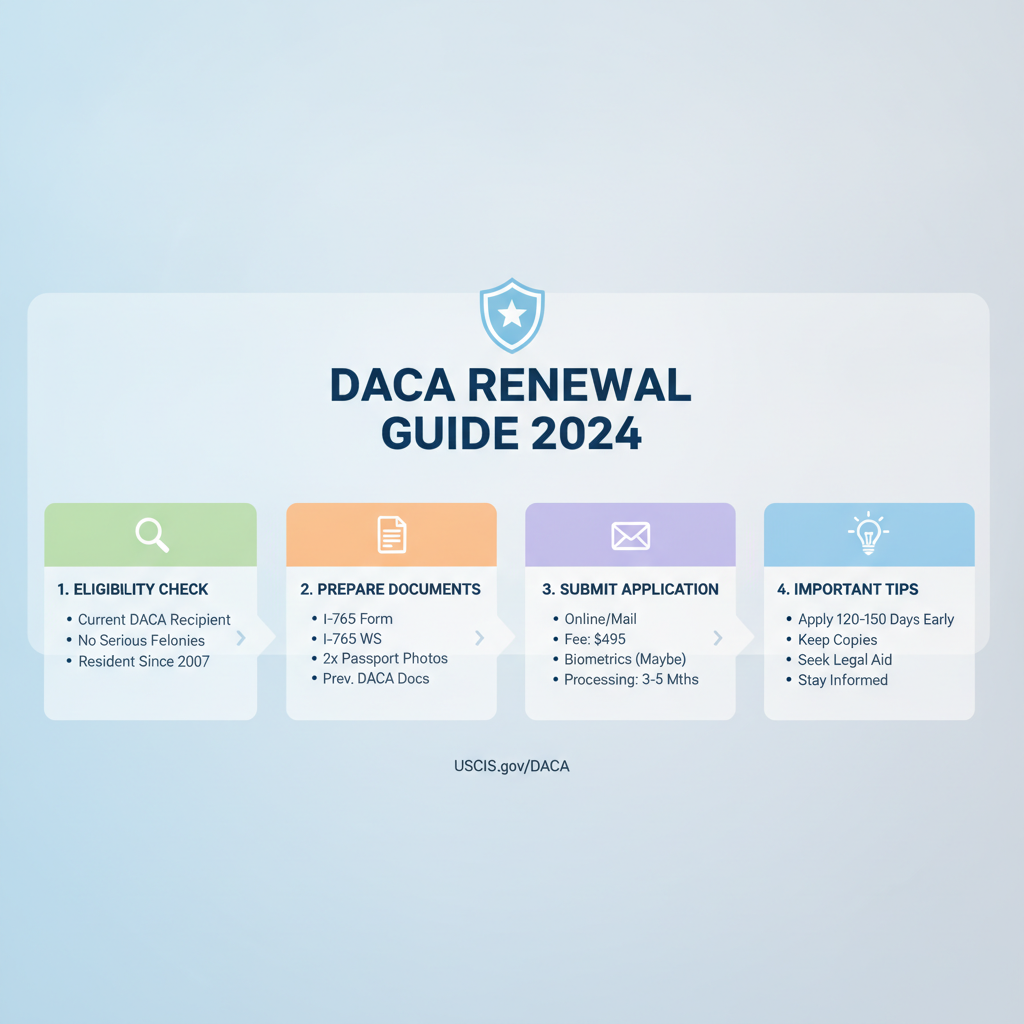
Why this news is showing up now
DACA is a program born out of executive action in 2012, not an act of Congress. This fundamental aspect has made it the subject of relentless legal and political challenges since its inception. As of November 2026, DACA remains in a precarious state due to ongoing litigation, particularly the case of *Texas v. United States*. This legal battle has resulted in federal court orders that have significantly impacted the program. While the Department of Homeland Security (DHS) has attempted to formalize DACA through agency rulemaking, these efforts have been challenged, and the courts have maintained an injunction preventing USCIS from approving any *new* DACA applications.
The news cycle around DACA is constant because the program's very existence hangs in the balance, subject to court decisions, potential legislative actions (which have yet to materialize), and administrative policy changes. Every few months, there are updates from the courts, statements from government officials, or reports on the experiences of DACA recipients, all contributing to a continuous stream of information—and often, misinformation. For the over 600,000 active DACA recipients nationwide, and their families, staying informed is not just helpful; it's essential for their livelihood and peace of mind.
How it can affect Florida residents
Florida is home to a substantial DACA population. Thousands of young people in cities like Orlando, Miami, Tampa, and throughout Central Florida rely on DACA to work, pursue higher education, and contribute to their communities without fear of deportation. The ongoing legal uncertainty creates immense stress for these individuals and their families. The injunction against new applications means that younger siblings or friends who meet DACA's original criteria but were too young to apply before the injunction cannot currently benefit from the program, creating a generation divide.
For current DACA recipients in Florida, the primary impact is the absolute necessity of timely and accurate renewals. Any lapse in DACA status could lead to serious consequences, including loss of employment authorization and increased risk of deportation. Florida's own state-level immigration policies can also interact with DACA status, sometimes creating additional complexities. While DACA is a federal program, state laws regarding professional licensing, in-state tuition, and even driver's licenses can be influenced by one's immigration status. Therefore, Florida residents with DACA must not only monitor federal updates but also understand the local implications. The Orlando USCIS Field Office and other local immigration services often experience heavy demand, making efficient and correct application procedures vital.
Need Help Navigating DACA Renewals? Don't risk your status. Our Orlando immigration team at Imigrar is ready to assist you with accurate and timely DACA renewal applications. Call +1 786-791-3106 for a free consultation, or message us online. Se Habla Español.
What DACA Is (and Why It Matters)
A plain-English definition
DACA, or Deferred Action for Childhood Arrivals, is a U.S. immigration policy established in 2012 by the Obama administration. It allows certain undocumented immigrants who came to the United States as children to receive a renewable two-year period of deferred action from deportation and eligibility for a work permit. Essentially, "deferred action" means the government agrees to postpone any deportation proceedings against you for a specific period. It is important to understand that DACA is *not* a pathway to U.S. citizenship or lawful permanent residency (a Green Card). It provides temporary protection and work authorization, allowing recipients to live and work in the U.S. without immediate fear of removal, but it does not change their underlying immigration status.
For many young individuals, often referred to as DREAMers (a term originating from the proposed DREAM Act legislation), DACA has been transformative. It has allowed them to pursue higher education, build careers, open businesses, and contribute significantly to the American economy and society. Without DACA, these individuals would face constant fear of deportation to countries they may barely remember, unable to legally work or drive, and forced to live in the shadows.
Key terms you need to know
Understanding the following terms is crucial for anyone involved with DACA:
- Deferred Action: This is an exercise of prosecutorial discretion to defer removal action against an individual. It does not confer lawful status, but it means that for a specified period, the individual is not subject to deportation proceedings. This is the core benefit of DACA.
- Employment Authorization Document (EAD): Often referred to as a "work permit," this document (Form I-766) is issued by USCIS to individuals authorized to work in the U.S. DACA recipients are eligible for an EAD, which is valid for two years and must be renewed alongside their deferred action.
- Advance Parole: This is a travel document (Form I-512L) that allows certain non-citizens to travel abroad and return to the U.S. without jeopardizing their immigration status. For DACA recipients, Advance Parole has historically been available for humanitarian, educational, or employment purposes. However, due to ongoing legal challenges, the issuance of Advance Parole for DACA recipients has become extremely restricted and risky. It is **critical** to consult with an immigration attorney before considering applying for or traveling with Advance Parole if you are a DACA recipient.
- USCIS (U.S. Citizenship and Immigration Services): This is the federal agency within the Department of Homeland Security (DHS) responsible for administering the country's lawful immigration system, including processing DACA applications and renewals. You will interact primarily with USCIS for DACA-related matters.
- DREAMer: A term used to describe young undocumented immigrants who were brought to the U.S. as children. It originates from the "Development, Relief, and Education for Alien Minors (DREAM) Act," a legislative proposal that would have provided a pathway to legal status for these individuals. While DACA is a form of temporary relief, it is not the DREAM Act, but the terms are often used interchangeably in public discourse.
- Injunction: A judicial order that either requires a person or entity to do something or refrain from doing something. In the context of DACA, federal court injunctions have prevented USCIS from approving new DACA applications since July 2021.
- Continuous Residence: A requirement for DACA eligibility, meaning the applicant has resided in the U.S. continuously since a specific date (June 15, 2007, for initial applicants, and since their last DACA approval for renewals). Brief, casual, and innocent absences from the U.S. may not break continuous residence, but any significant travel should be reviewed by an attorney.
Current Immigration Law: The Foundation
It is crucial to understand that DACA is not a federal statute enacted by Congress but rather an exercise of prosecutorial discretion by the executive branch. This distinction is at the heart of the ongoing legal challenges. DACA was established through a memorandum issued by the Secretary of Homeland Security in 2012, outlining specific criteria for individuals to request deferred action.
Federal requirements
The legal framework for DACA is found in administrative policy rather than the Immigration and Nationality Act (INA), codified at 8 U.S.C. § 1101 et seq. While the INA sets forth the broader immigration laws, DACA operates as a discretionary program *outside* the direct provisions of federal statute. This makes it vulnerable to political and judicial review.
As of November 2026, the key federal requirements and limitations for DACA are:
- No New Applications: Due to federal court injunctions, USCIS is *not* accepting or processing initial DACA requests (i.e., from individuals who have never been granted DACA before). This restriction has been in place since July 2021, following a ruling in *Texas v. United States*.
- Renewals Are Processed: USCIS *is* currently accepting and processing DACA renewal requests from individuals who have previously been granted DACA. This is a critical distinction and the primary focus for existing DACA recipients.
- Eligibility for Renewal: To renew DACA, you must meet the following criteria:
- You must have previously received DACA.
- You must not have departed the United States on or after August 15, 2012, without first obtaining Advance Parole.
- You must have continuously resided in the United States since you submitted your most recent DACA request that was approved.
- You must not have been convicted of a felony, a significant misdemeanor, or three or more other misdemeanors, and not otherwise pose a threat to national security or public safety.
- Required Forms: For DACA renewal, you must submit:
- Form I-821D, Consideration of Deferred Action for Childhood Arrivals
- Form I-765, Application for Employment Authorization
- Form I-765WS, Worksheet for Form I-765
It is essential to always use the most current versions of these forms, which can be found on the USCIS Forms page. USCIS fees are also subject to change, so verify the correct amount on the USCIS official website before submitting your application.
Florida-specific considerations
While DACA is a federal program, its impact and the experience of DACA recipients can vary significantly by state. In Florida, a large and diverse state, there are several important considerations:
- In-State Tuition: Florida allows DACA recipients to qualify for in-state tuition at public colleges and universities, provided they meet specific residency requirements. This is a significant benefit, as out-of-state tuition can be prohibitively expensive.
- Driver's Licenses: DACA recipients in Florida are eligible to apply for a Florida driver's license, as their EAD (work permit) serves as proof of legal presence and identity. This is vital for daily life, employment, and navigating the state's extensive road network, including the I-4 corridor.
- Professional Licensing: The ability for DACA recipients to obtain professional licenses (e.g., for nursing, teaching, engineering) varies by profession and state. Florida generally allows DACA recipients with EADs to pursue these licenses, but it's crucial to verify requirements with the specific licensing board.
- Political Climate: Florida has a complex and often stringent stance on immigration issues. While DACA is federal, state legislation can sometimes create a challenging environment for immigrant communities. Staying informed about state-level policies and knowing your rights is paramount for DACA recipients in Orlando and across Florida.
- Local Resources: Central Florida, including Orange County, has various non-profit organizations and community groups that offer support, resources, and sometimes legal clinics for DACA recipients. Imigrar also serves as a vital resource for legal counsel and assistance in navigating these complexities.

How to Renew Your DACA: A Complete Step-by-Step Guide
Renewing your DACA is a critical process that requires meticulous attention to detail and timely submission. Given the current legal landscape, any lapse in your DACA status can have severe consequences. Follow this comprehensive guide to ensure a smooth renewal process.
1) Understand Your Eligibility for Renewal
Before you begin, confirm you meet the criteria for DACA renewal. This is the **most important** initial step.
- You must have previously been granted DACA. USCIS will not process initial DACA applications.
- You must not have departed the United States on or after August 15, 2012, without first obtaining Advance Parole.
- You must have continuously resided in the United States since you submitted your most recent DACA request that was approved.
- You must not have been convicted of a felony, a significant misdemeanor, or three or more other misdemeanors, and not otherwise pose a threat to national security or public safety.
Reminder: Even minor legal issues since your last DACA approval can impact your eligibility. If you have any concerns about your criminal history or continuous residence, consult with an experienced immigration attorney immediately.
2) Gather Required Documents
Having all your documents ready before filling out the forms will streamline the process. Organize them carefully.
- Current and Previous DACA Documentation:
- Copy of your most recent Employment Authorization Document (EAD) (front and back).
- Copy of your most recent Form I-821D approval notice.
- Copy of your most recent Form I-765 approval notice.
- Proof of Continuous Residence (since your last DACA approval):
- Pay stubs, employment records.
- School records (transcripts, report cards).
- Medical records.
- Rental agreements, utility bills.
- Bank statements.
- Passport entry stamps (if you traveled with Advance Parole).
- Any other official documents showing your physical presence in the U.S.
Note: While USCIS *may* not require extensive proof of continuous residence if you haven't left the U.S. or had any issues, it's always wise to have it ready, especially if there were any changes to your address or employment.
- Passport-Style Photographs: Two identical, unmounted, color photographs taken within 30 days of filing. They must meet specific USCIS requirements (e.g., white background, no glasses). Write your name and A-number lightly on the back of each photo.
- Fees: A check or money order for the total filing fees (currently $495, which includes the Form I-821D fee and the Form I-765 fee). Make it payable to "U.S. Department of Homeland Security." Do not send cash.
3) Complete the Forms Accurately
This is where precision is paramount. Any errors or omissions can lead to delays or even denial. Use the most current versions of the forms available on the USCIS Forms page.
- Form I-821D, Consideration of Deferred Action for Childhood Arrivals:
- Fill out every section completely and accurately. If a question does not apply to you, write "N/A" (not applicable) or "None."
- Pay close attention to Part 1, Information About You, ensuring your name, address (if you moved, ensure you've also filed Form AR-11, Change of Address), and A-number are correct.
- In Part 3, check "Yes" for "I am requesting DACA renewal."
- Review the eligibility criteria in Part 4 carefully.
- Sign and date the form. An unsigned form will be rejected.
- Form I-765, Application for Employment Authorization:
- Again, complete all sections.
- For Question 27, "Eligibility Category," enter (c)(33). This is the specific category for DACA recipients.
- Sign and date the form.
- Form I-765WS, Worksheet for Form I-765:
- This form helps USCIS determine if you have an economic need to work. Provide accurate information about your income, expenses, and assets.
- This form does not require a signature.
Warning: Never leave blank spaces. If a question doesn't apply, write "N/A." If the answer is zero, write "None" or "0." Use black ink. If you need more space, attach a separate sheet, clearly indicating the form part and item number it refers to, and write your A-number at the top.
4) Prepare Your Application Packet
Organizing your submission correctly can prevent processing delays.
- Stacking Order: While USCIS does not mandate a specific order, a commonly accepted and clear order is:
- Check or Money Order for Fees (clipped to the top).
- Two passport-style photos (placed in a small envelope and clipped to Form I-765).
- Form I-821D (completed and signed).
- Form I-765 (completed and signed).
- Form I-765WS (completed).
- Copy of your most recent EAD (front and back).
- Copy of your most recent Form I-821D approval notice.
- Copy of your most recent Form I-765 approval notice.
- Any additional supporting documentation (e.g., detailed proof of continuous residence if needed, criminal record dispositions if applicable).
- Make Copies: Make a complete copy of your entire application packet for your records before mailing it. This includes all forms, documents, and the check/money order.
Overwhelmed by DACA Renewal Paperwork? Let Imigrar's experienced team handle the complexities for you. We ensure your forms are accurate and submitted on time. Contact us at +1 786-791-3106 for a free consultation. Se Habla Español.
5) Mail Your Application to USCIS
Timely submission is paramount to avoid a lapse in your DACA and EAD.
- Filing Window: USCIS recommends filing your DACA renewal request 120 to 150 days before your current DACA and EAD expire. Filing too early (more than 150 days) may result in rejection, and filing too late risks a gap in your work authorization.
- USCIS Lockbox Address: The correct mailing address depends on your state of residence. Always verify the most current "Direct Filing Addresses for Form I-821D" on the USCIS official website. For Florida residents, it typically goes to a specific USCIS Lockbox (e.g., Chicago Lockbox).
- Shipping Method: Send your application via certified mail with a return receipt requested. This provides proof of mailing and delivery, which can be invaluable if there are any issues.
6) Attend Biometrics Appointment (if required)
After USCIS accepts your application, you
Related Topics
Need Legal Assistance?
Our experienced immigration attorneys are here to help with your case. Contact Imigrar today for a free consultation and let us guide you through the legal process with confidence.
📍 Orlando, Florida • Serving clients nationwide
📧 info@imigrar.com