
Green Card Interview Success: Your Expert Preparation Guide for
Facing your Green Card interview in Orlando? This comprehensive guide from Imigrar provides step-by-step preparation tips, required documents, and expert advice to ensure your success in 2026.

The journey to obtaining a Green Card, or lawful permanent residence in the United States, is a significant milestone for countless individuals and families. For many, the final hurdle before receiving that coveted status is the Green Card interview. This interview, conducted by a U.S. Citizenship and Immigration Services (USCIS) officer, is a crucial step designed to verify the information in your application, confirm your eligibility, and ensure all legal requirements are met. It can feel daunting, but with the right preparation, it’s a hurdle you can clear with confidence.
Feeling Anxious About Your Green Card Interview? Don't face it alone. Our Orlando immigration team at Imigrar specializes in preparing clients for successful interviews. Call +1 786-791-3106 for a free consultation, or message us online. Se Habla Español.
The reporting that sparked this guide:
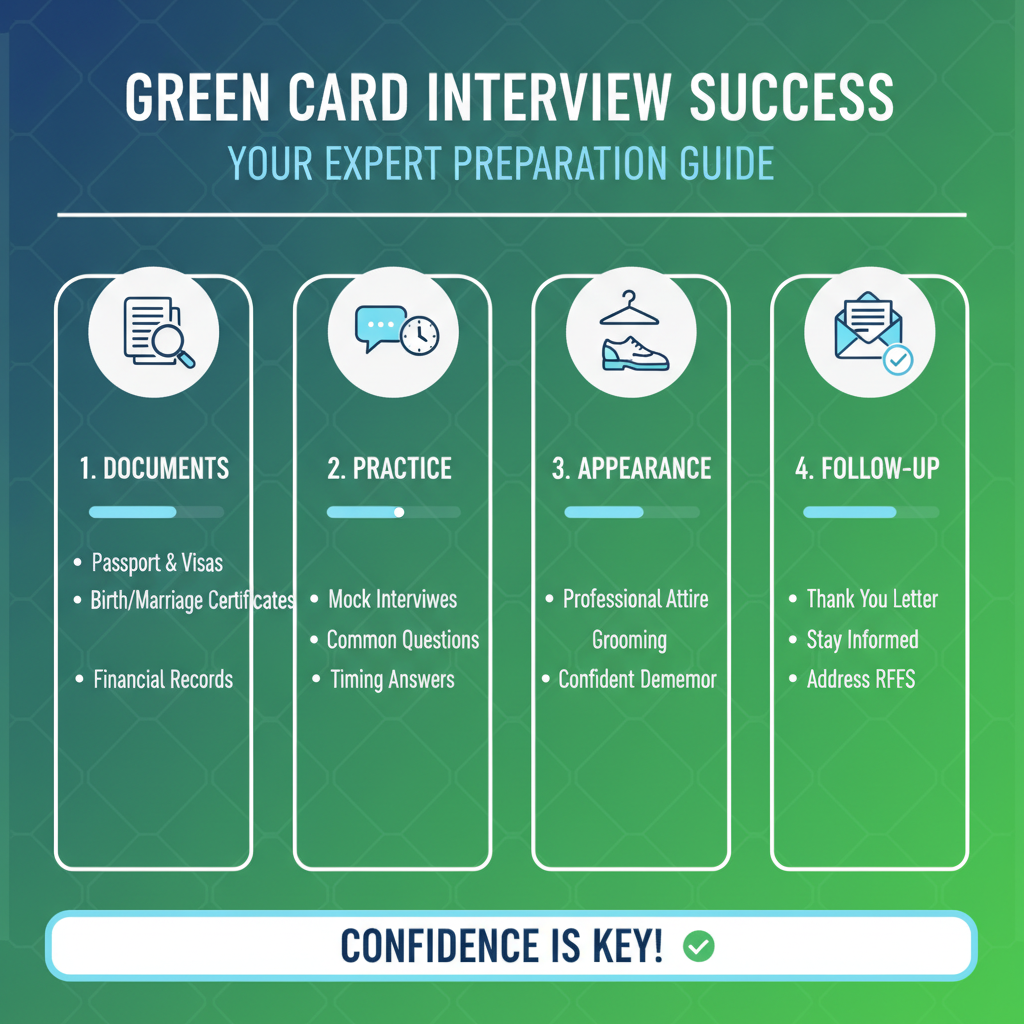
The ongoing importance of thorough preparation for immigration processes, especially the Green Card interview, is a recurring theme in immigration law discussions. This guide is inspired by the continuous focus on client readiness and the need for accurate, up-to-date information, as highlighted in general Green Card Interview Preparation Tips (Immigration Law) news and discussions.
What This News Means for Immigrants in Orlando and Across Florida
As of November 9, 2026, the landscape of immigration interviews continues to evolve, with USCIS emphasizing integrity and comprehensive review. For individuals and families in Orlando, Central Florida, and throughout the Sunshine State, understanding these trends and preparing effectively is more critical than ever.
Why this news is showing up now
The Green Card interview has always been a cornerstone of the immigration process, but its prominence in current discussions reflects several factors:
- Increased Scrutiny: USCIS continues to focus on preventing fraud and ensuring the integrity of the immigration system. This means officers are often more thorough in their questioning and document review.
- Processing Efficiencies: While processing times fluctuate, USCIS is constantly refining its interview procedures. Staying informed about current expectations helps applicants navigate these changes.
- Digital Transformation: As USCIS moves towards more digital processes, the interview remains a critical in-person interaction, making its preparation even more significant as a final human touchpoint.
- Applicant Preparedness: A common thread in legal and news circles is the direct correlation between an applicant's level of preparation and the smoothness of their interview process, reducing the need for Requests for Evidence (RFEs) or follow-up.
How it can affect Florida residents
Florida, a state with a vibrant and diverse immigrant population, sees a high volume of Green Card applications. For residents in Orlando and surrounding areas like Orange County, Kissimmee, and along the I-4 corridor, these trends have specific implications:
- Orlando USCIS Field Office: Most Adjustment of Status interviews for Central Florida residents are conducted at the Orlando USCIS Field Office. Familiarity with this office's procedures, common interview types (e.g., marriage-based, family-based, employment-based), and officer tendencies can be a significant advantage.
- Diverse Case Types: Florida's population means a wide array of Green Card categories are processed. Whether you're applying through a spouse, a family member, or an employer, the core principles of interview preparation remain, but specific evidence will vary.
- Language Access: While USCIS provides interpreters, being fully prepared, especially if English is not your first language, is crucial. Imigrar offers services in English and Spanish (Se Habla Español) to bridge this gap.
- High Volume, High Stakes: Given the sheer number of applications, officers are often under pressure to conduct interviews efficiently. Being organized and articulate can help expedite your process and leave a positive impression.
Understanding these dynamics empowers you to approach your Green Card interview not just as a formality, but as a critical opportunity to present your case clearly and confidently.
What a Green Card Interview Is (and Why It Matters)
For many, the Green Card interview is the final, in-person assessment before a decision is made on their application for permanent residency. It’s a moment that can feel intimidating, but understanding its purpose demystifies the process considerably.
A plain-English definition
Simply put, a Green Card interview is a meeting with a U.S. Citizenship and Immigration Services (USCIS) officer who reviews your application for permanent residence. Think of it as a conversation where the officer aims to:
- Verify Information: Confirm the accuracy of all details provided in your application forms (like Form I-485, Form I-130, etc.) and supporting documents.
- Assess Eligibility: Determine if you meet all the legal requirements for a Green Card under the specific category you applied for (e.g., marriage to a U.S. citizen, employment sponsorship, family petition).
- Detect Fraud: Ensure that your application is genuine and that you are not attempting to obtain a Green Card through misrepresentation or fraudulent means. This is particularly relevant in marriage-based cases, where officers look for bona fide relationships.
- Confirm Admissibility: Check for any issues that might make you inadmissible to the U.S., such as certain criminal convictions, past immigration violations, or health-related concerns.
The interview is your opportunity to present yourself and your case clearly, honestly, and comprehensively. It's a critical step because a positive outcome leads to your Green Card, while an unprepared or poorly handled interview can lead to delays, Requests for Evidence (RFEs), or even denial.
Key terms you need to know
Navigating the immigration process requires understanding some specific terminology. Here are key terms relevant to your Green Card interview:
- Adjustment of Status (AOS): This refers to the process of applying for a Green Card from within the United States. If you are already in the U.S. and eligible, you file Form I-485. This is the primary process that requires an interview at a USCIS field office like the one in Orlando.
- Consular Processing: If you are applying for a Green Card from outside the U.S., you go through Consular Processing, which involves an interview at a U.S. embassy or consulate in your home country. This guide primarily focuses on Adjustment of Status interviews.
- Petitioner: The U.S. citizen or lawful permanent resident who files an immigrant petition (like Form I-130) on behalf of an eligible family member or, in some employment-based cases, the employer.
- Beneficiary: The immigrant who is seeking the Green Card based on the petition filed by the petitioner.
- Sponsor: For most family-based and some employment-based Green Cards, a U.S. citizen or lawful permanent resident must act as a financial sponsor by filing Form I-864, Affidavit of Support.
- Priority Date: This is the date USCIS receives your immigrant petition (e.g., Form I-130 or Form I-140). It determines your place in the visa queue, especially for categories with annual numerical limits. Your interview will typically be scheduled once your priority date becomes current.
- Affidavit of Support (Form I-864): A legally binding contract where a sponsor agrees to financially support the immigrant beneficiary to prevent them from becoming a "public charge." This form is thoroughly reviewed during the interview.
- USCIS Field Office: The local office where your interview will be conducted if you are adjusting status in the U.S. For Central Florida residents, this is the Orlando USCIS Field Office.
- Request for Evidence (RFE): A letter from USCIS asking for additional documents or information to support your application. An RFE can delay your case and often follows an interview if the officer feels more proof is needed.
Understanding these terms will help you comprehend the legal framework of your application and better prepare for the questions you might face during your interview. Being knowledgeable demonstrates your commitment and seriousness about your immigration journey.
Overwhelmed by Immigration Terminology? Imigrar breaks down complex legal jargon into clear, actionable advice. Let us guide you. Call +1 786-791-3106 for a free consultation, or message us online. Se Habla Español.
Current Immigration Law: The Foundation
Your Green Card interview is conducted within the strict framework of U.S. immigration law. Understanding the legal basis for your application is key to presenting a strong case.
The primary legal authority governing Green Cards is the Immigration and Nationality Act (INA). Specific sections of the INA dictate who is eligible for permanent residence and under what conditions. Most Green Card interviews for individuals in the U.S. fall under the provisions for Adjustment of Status, primarily INA § 245, which outlines the eligibility requirements for someone already present in the U.S. to adjust their nonimmigrant status to that of a lawful permanent resident. For those applying from abroad, INA § 203 details immigrant visa categories and preferences.
Federal requirements
Regardless of your specific Green Card category, several federal requirements are universal:
- Admissibility: You must be "admissible" to the United States. This means you must not fall under any grounds of inadmissibility, which include certain health-related issues, criminal records, security concerns, prior immigration violations, or being likely to become a "public charge." If you have any potential inadmissibility issues, you might need to apply for a waiver (e.g., Form I-601, Application for Waiver of Grounds of Inadmissibility).
- Valid Immigrant Petition: You must have an approved immigrant petition (e.g., Form I-130, Petition for Alien Relative; Form I-140, Immigrant Petition for Alien Worker; or Form I-360, Petition for Amerasian, Widow(er), or Special Immigrant) that forms the basis of your Green Card application.
- Lawful Entry and Maintenance of Status (for AOS): For Adjustment of Status, you generally must have been inspected and admitted or paroled into the U.S. and, in most cases, maintained a lawful nonimmigrant status. Immediate relatives of U.S. citizens (spouses, unmarried children under 21, and parents) are often exempt from the "maintenance of status" requirement, but unlawful presence can still be a concern for other categories.
- Financial Support: For most family-based and some employment-based Green Cards, a U.S. citizen or lawful permanent resident must submit Form I-864, Affidavit of Support, demonstrating they can financially support the immigrant and that the immigrant will not become a public charge.
- Medical Examination: You must undergo a medical examination by a USCIS-approved civil surgeon and submit Form I-693, Report of Medical Examination and Vaccination Record, in a sealed envelope.
These requirements are meticulously reviewed during your interview. Any inconsistencies or missing information can raise red flags and lead to delays.
Florida-specific considerations
While immigration law is federal, the practical application often has local nuances. For Florida residents, particularly those in the Orlando area, the key considerations revolve around the local USCIS field office and its operational specifics:
- Orlando USCIS Field Office Jurisdiction: If you reside in Central Florida, your Adjustment of Status interview will almost certainly be scheduled at the Orlando Field Office. Understanding the local office's typical processing times and interview procedures can be helpful. You can check USCIS Processing Times for the Orlando office specifically.
- High Volume of Cases: Florida is a major hub for immigration. This means the Orlando office processes a high volume of cases, which can sometimes impact scheduling and the speed of decisions.
- Common Interview Types: Given Florida's demographics, marriage-based Green Card interviews (based on Form I-130 and Form I-485) are very common. Officers are highly trained to identify genuine relationships, and thorough documentation of your shared life is paramount.
- Access to Legal Counsel: Having an experienced immigration attorney in Orlando, like those at Imigrar, who are familiar with the local field office and its officers, can provide an invaluable advantage.
Always refer to the USCIS official website for the most current forms, instructions, and policy updates. The law is dynamic, and staying informed is crucial.
How to Prepare for Your Green Card Interview: A Complete Step-by-Step Guide
The Green Card interview is often the final hurdle before achieving permanent residency. Proper preparation is not just recommended; it's essential for success. Here’s a detailed, step-by-step guide to help you navigate this critical stage with confidence.
1) Understand Your Case Type and Interview Purpose
Before you even begin gathering documents, you must fully understand the basis of your Green Card application. The type of Green Card you applied for (e.g., marriage-based, family-based, employment-based) dictates the specific questions and evidence the officer will focus on.
- Marriage-Based (Spouse of U.S. Citizen/LPR): The primary goal of the officer is to determine if your marriage is bona fide (real, not entered into solely for immigration purposes). Expect questions about your relationship timeline, how you met, daily life, shared finances, and future plans. Both spouses typically attend.
- Family-Based (Other Relatives): The interview will verify the familial relationship (parent-child, sibling, etc.) and ensure the petitioner can financially support the beneficiary.
- Employment-Based: The focus will be on your qualifications for the job, the employer's continued need for your services, and the validity of the job offer.
Reminder: Review the specific forms you filed (e.g., Form I-130, Form I-485, Form I-140) and their instructions to reinforce your understanding of your case's legal requirements.
2) Gather All Required Documents (Originals & Copies)
This is arguably the most critical step. You must bring originals of *every* document you submitted with your application, plus clear copies. Organize them meticulously in a binder with tabs for easy access. Do not wait until the last minute!
- Personal Identification & Travel Documents:
- Valid Passport (beneficiary and petitioner, if applicable)
- Birth Certificates (beneficiary and petitioner)
- Marriage Certificate (if applicable, for marriage-based cases)
- Divorce Decrees or Death Certificates for any prior marriages (beneficiary and petitioner)
- Important: Bring all past and current I-94 arrival/departure records.
- Application Forms:
- Copies of all forms filed with USCIS, including:
- Form I-130 and I-130A (Petition for Alien Relative & Supplemental Information for Spouse Beneficiary)
- Form I-485 (Application to Register Permanent Residence or Adjust Status)
- Form I-765 (Application for Employment Authorization)
- Form I-131 (Application for Travel Document)
- Form I-864 (Affidavit of Support) and all supporting financial documents
- Form I-693 (Report of Medical Examination and Vaccination Record) – **Crucially, this must be in a sealed envelope if you haven't submitted it already.** Do NOT open it.
- Interview Appointment Notice (Form I-797C)
- Copies of all forms filed with USCIS, including:
- Financial Documents (for Sponsor/Petitioner):
- Copies of federal income tax returns for the past three years (including all W-2s, 1099s, and schedules).
- Recent pay stubs or employment verification letter.
- Bank statements, proof of assets.
- Relationship Evidence (Critical for Marriage-Based Cases):
- Joint bank accounts, credit card statements.
- Joint leases, mortgages, property deeds.
- Utility bills in both names.
- Joint health, life, or auto insurance policies.
- Photos together (dated, with family/friends, from different times/events).
- Children's birth certificates (if applicable).
- Affidavits from friends/family attesting to the bona fides of your marriage.
- Correspondence (letters, emails, text messages, social media posts) showing ongoing relationship.
- Travel itineraries, flight tickets from shared trips.
- Police Records & Court Documents: If you have any arrests, citations, or convictions, bring certified copies of all court dispositions, even if charges were dismissed or expunged.
- English Translations: Any document not in English must be accompanied by a certified English translation.
Warning: Failure to bring required originals or copies will almost certainly lead to delays or an RFE.
3) Review Your Application Forms Thoroughly
You must be intimately familiar with every answer you provided on your Form I-485, Form I-130, and any other submitted forms. The interviewing officer will compare your verbal answers to the written information.
- Read through each form line by line.
- Highlight any potentially confusing or sensitive questions.
- Ensure consistency between your answers and your spouse's (if applicable).
- Important: If any information has changed since you filed (e.g., new address, new job, new child), be prepared to explain and provide updated documentation.
4) Practice Answering Potential Questions
Role-playing with a friend, family member, or better yet, an immigration attorney, can significantly boost your confidence. Practice speaking clearly and concisely. Anticipate questions based on your case type.
- General Questions: Name, date of birth, place of birth, parents' names, addresses, past immigration history, criminal history, questions from Part 8 of Form I-485 (inadmissibility questions).
- Marriage-Based Questions: How you met, first date, proposal, wedding details, daily routine, shared meals, who does chores, family interactions, financial responsibilities, future plans, arguments.
- Employment-Based Questions: Job duties, salary, company information, specific skills.
- Key: Always tell the truth. If you don't know an answer, say "I don't know" rather than guessing.
5) Dress Professionally and Arrive Early
First impressions matter. While not a job interview, presenting yourself respectfully shows seriousness and respect for the process.
- Dress Code: Business casual is generally appropriate. Avoid overly casual attire.
- Punctuality: Aim to arrive at the Orlando USCIS Field Office at least 30-45 minutes before your scheduled appointment. This allows time for parking, security checks, and finding your waiting area. Being late can lead to cancellation and significant delays.
6) What to Expect on Interview Day
Knowing the typical flow can reduce anxiety.
- Check-in: Present your appointment notice and government-issued ID. You'll likely receive a number.
- Waiting Area: Be prepared to wait, sometimes for an hour or more.
- The Oath: When called, you and your attorney (if present) will go to the officer's office. The officer will ask you to raise your right hand and swear to tell the truth.
- Questions and Document Review: The officer will review your documents, ask questions, and take notes. They may ask for specific originals or copies.
- Interpreter: If you requested one or the officer determines one is needed, a USCIS-provided interpreter will be present. You cannot bring your own interpreter unless specifically allowed by USCIS.
- Decision: Sometimes the officer can make a decision on the spot, but more often, they will say they need to review the case further. You might receive a decision notice by mail, or an RFE if more information is needed.
7) Follow-Up After the Interview
Your responsibility doesn't necessarily end when you leave the office.
- Request for Evidence (RFE): If you receive an RFE, respond promptly and thoroughly with all requested documents. This is where professional legal help is crucial.
- Decision Notice: You will receive a decision notice by mail. If approved, congratulations! If denied, consult with an attorney immediately to understand your options, which may include appealing the decision or refiling.
By meticulously following these steps, you significantly increase your chances of a smooth and successful Green Card interview experience in Orlando.

Practical Steps You Can Take Today for Interview Success
Preparation for your Green Card interview isn't a one-day task; it's a process. Here are actionable steps you can start taking right now to build a strong foundation for success.
Actionable Checklist for Green Card Interview Preparation:
- Organize Your Documents: Create a physical binder and digital folder for all your application documents. Use tab dividers for different categories (e.g., "Personal IDs," "Forms," "Financial," "Relationship Evidence"). Ensure you have both originals and copies.
- Review Your Application Forms: Sit down with your filed Form I-485, Form I-130, and other supporting forms. Read every question and confirm your answers. Highlight any areas where you might need to provide additional context or updates.
- Start Gathering Relationship Evidence (Marriage-Based): If applying through marriage, begin collecting photos, joint bills, bank statements, leases, and other proof of your shared life *now*. Don't wait until you get the interview notice. This evidence should show continuity over time.
- Update Your Medical Exam (if needed): If you submitted Form I-693 more than two years ago, or if your interview is scheduled more than a year after your exam, you might need a new one or an update. Consult your attorney or USCIS instructions.
- Consult with an Immigration Attorney: This is perhaps the most important step. Schedule a consultation with Imigrar. An attorney can review your entire case, identify
Related Topics
Need Legal Assistance?
Our experienced immigration attorneys are here to help with your case. Contact Imigrar today for a free consultation and let us guide you through the legal process with confidence.
📍 Orlando, Florida • Serving clients nationwide
📧 info@imigrar.com