
Orlando Guide: Family-Based Immigration Petitions in 2026
Navigate family-based immigration in Orlando and across the U.S. with Imigrar's expert guide. Learn eligibility, steps, and how to keep families together.
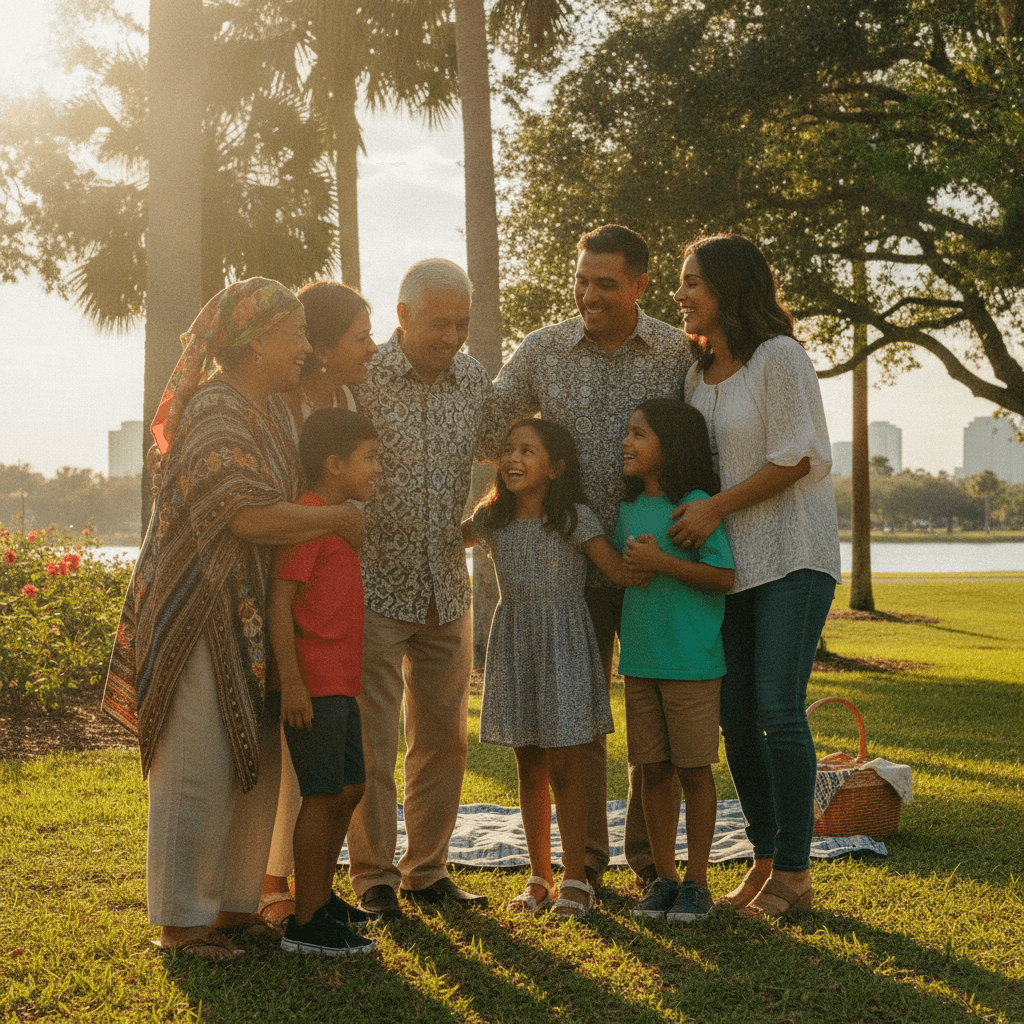
In the intricate world of immigration law, few pathways are as vital and emotionally charged as family-based petitions. For many, the dream of a new life in the United States is inextricably linked to the ability to reunite with loved ones. At Imigrar, we understand this deeply – it’s why our tagline is “Keep Families Together.”
Need Help? Our Orlando immigration team is ready to assist. Call +1 786-791-3106 for a free consultation, or message us online. Se Habla Español.
The reporting that sparked this guide
The ongoing conversation around family reunification and the process of sponsoring relatives for U.S. residency is a constant in immigration news. This comprehensive guide is inspired by the continuous reporting on the subject, highlighting the critical need for clear, accurate, and actionable information for families navigating these complex waters. You can find more general immigration news at: Family-Based Immigration Petition Guide (Immigration).
What This News Means for Immigrants in Orlando and Across Florida
For immigrants and their families residing in Orlando, Central Florida, and throughout the Sunshine State, the topic of family-based immigration is always relevant. Florida is a melting pot of cultures and nationalities, making family reunification a central pillar of our community's growth and well-being. Understanding the current landscape of family petitions is not just about legal compliance; it's about securing futures and maintaining the fabric of our diverse society.
Why this news is showing up now
While the concept of family-based immigration has been a cornerstone of U.S. law for decades, its practical application is constantly evolving. News about family petitions frequently arises due to several factors:
- Policy Changes and Updates: Even small administrative changes by U.S. Citizenship and Immigration Services (USCIS) or the U.S. Department of State can significantly impact processing times, required documentation, or eligibility criteria. These changes are often announced and then discussed in the news.
- Processing Backlogs and Wait Times: The volume of applications often outpaces the capacity of immigration agencies, leading to backlogs. When these delays become particularly acute, they naturally draw media attention and concern from affected families.
- Visa Bulletin Movements: The monthly Visa Bulletin, published by the U.S. Department of State, determines when immigrant visas become available for family preference categories. Fluctuations in these dates directly impact millions of applicants and are closely watched by immigration news outlets.
- High Demand: Family-based immigration remains one of the most common pathways to legal permanent residency. Its consistent high demand ensures it's always a topic of discussion among immigrant communities and legal professionals.
- Focus on Family Reunification: There's a perpetual public and political discourse around the importance of keeping families together, which keeps family immigration petitions in the spotlight.
How it can affect Florida residents
Florida, particularly the Orlando area, is home to a vast and diverse immigrant population. This means:
- High Volume of Applicants: With a significant number of foreign-born residents, many families in Florida are either sponsoring relatives or being sponsored themselves. This high volume can sometimes lead to longer processing times at local offices like the Orlando USCIS Field Office.
- Local Resources and Expertise: The prevalence of family-based immigration means there’s a strong network of legal professionals, community organizations, and support services dedicated to assisting families. However, it also means navigating a crowded landscape where expert guidance, like that offered by Imigrar, becomes invaluable.
- Economic and Social Impact: Successful family reunification strengthens local communities and economies. When families are able to legally unite, they contribute to the workforce, pay taxes, and enrich the cultural tapestry of areas like Orange County and along the I-4 corridor. Conversely, delays or denials can cause significant stress and instability for Florida families.
- Bilingual Needs: Given Florida's large Spanish-speaking population, the ability to access information and legal services in both English and Spanish (Se Habla Español) is critical for effective communication and understanding.
Staying informed about family-based immigration is not just a recommendation; it's a necessity for those looking to build a secure future in Florida. This guide aims to provide that clarity.
What Family-Based Immigration Petitions Are (and Why It Matters)
At its core, family-based immigration is the process by which a U.S. citizen or lawful permanent resident (Green Card holder) can sponsor certain eligible family members to come to the United States and obtain legal permanent residency (a Green Card). This pathway is designed to promote family unity and is a cornerstone of U.S. immigration policy.
A plain-English definition
Simply put, a family-based immigration petition is a formal request to the U.S. government, usually USCIS, asking permission for a foreign national relative to come to or remain in the United States permanently. The U.S. citizen or Green Card holder is the "petitioner," and the foreign national relative is the "beneficiary." The goal is for the beneficiary to receive a Green Card, allowing them to live and work permanently in the U.S. without fear of deportation.
Key terms you need to know
Navigating family-based immigration requires understanding specific terminology:
- Petitioner: The U.S. citizen or lawful permanent resident (Green Card holder) who files the immigration petition on behalf of their relative.
- Beneficiary: The foreign national relative for whom the petition is filed, seeking a Green Card.
- Immediate Relative (IR): This category includes spouses of U.S. citizens, unmarried children under 21 of U.S. citizens, and parents of U.S. citizens (if the citizen is 21 or older). Important: There is no annual limit on the number of visas for Immediate Relatives, meaning they do not have to wait for a visa to become available once the petition is approved.
- Family Preference Categories (FPC): These categories apply to other relatives of U.S. citizens and lawful permanent residents. They are subject to annual numerical limits, which often means long waiting periods. These categories include:
- First Preference (F1): Unmarried sons and daughters (21 years of age or older) of U.S. citizens.
- Second Preference (F2A): Spouses and children (unmarried, under 21) of lawful permanent residents.
- Second Preference (F2B): Unmarried sons and daughters (21 years of age or older) of lawful permanent residents.
- Third Preference (F3): Married sons and daughters of U.S. citizens.
- Fourth Preference (F4): Brothers and sisters of U.S. citizens (if the citizen is 21 years of age or older).
- Priority Date: For Family Preference Categories, this is the date USCIS receives your Form I-130 petition. It determines your place in line for an immigrant visa. You can only proceed with the Green Card application once your Priority Date becomes "current" according to the Visa Bulletin.
- Adjustment of Status (AOS): The process of applying for a Green Card while physically present in the United States. This is typically for beneficiaries who entered the U.S. legally and maintain a valid non-immigrant status, or are Immediate Relatives of U.S. citizens.
- Consular Processing (CP): The process of applying for an immigrant visa at a U.S. embassy or consulate abroad. This is for beneficiaries who are outside the U.S. or are ineligible for Adjustment of Status.
- Affidavit of Support (Form I-864): A legally binding document signed by the petitioner (sponsor) to accept financial responsibility for the beneficiary. This ensures the immigrant will not become a public charge.
Current Immigration Law: The Foundation of Family Petitions
The legal framework for family-based immigration is primarily established under the Immigration and Nationality Act (INA). This complex body of law dictates who can petition for whom, the categories of relatives, and the annual limits on visas.
Federal requirements
The core of family-based immigration is codified in Sections 201 and 203 of the INA. These sections define the categories of immigrants and the numerical limitations:
- U.S. Citizens can petition for:
- Spouses (Immediate Relative)
- Unmarried children under 21 (Immediate Relative)
- Parents (if the U.S. citizen is 21 or older) (Immediate Relative)
- Unmarried sons and daughters 21 or older (First Preference)
- Married sons and daughters of any age (Third Preference)
- Brothers and sisters (if the U.S. citizen is 21 or older) (Fourth Preference)
- Lawful Permanent Residents (Green Card holders) can petition for:
- Spouses (Second Preference, F2A)
- Unmarried children under 21 (Second Preference, F2A)
- Unmarried sons and daughters 21 or older (Second Preference, F2B)
Important: Lawful Permanent Residents cannot petition for parents, married children, or siblings. If a Green Card holder becomes a U.S. citizen while a petition for one of these relatives is pending, the petition can often be upgraded to the appropriate U.S. citizen category.
All petitioners must demonstrate that they can financially support the beneficiary at 125% of the federal poverty guidelines. This is done through the Affidavit of Support (Form I-864).
The primary form used to start this process is Form I-130, Petition for Alien Relative. This form establishes the qualifying relationship between the petitioner and the beneficiary. For those adjusting status in the U.S., Form I-485, Application to Register Permanent Residence or Adjust Status, is critical. For those applying abroad, Form DS-260, Immigrant Visa Electronic Application, is used. You can find all official forms and instructions on the USCIS official website.
Florida-specific considerations
While immigration law is federal, certain aspects can have local relevance:
- Local USCIS Field Office: The Orlando USCIS Field Office serves applicants in Central Florida. This office handles interviews for Adjustment of Status applications and naturalization. Understanding its procedures, wait times, and specific requirements for appointments can be crucial for local residents.
- State ID and Driver's Licenses: While not directly related to federal immigration law, Florida state laws dictate how immigrants can obtain driver's licenses or state identification cards once they achieve legal status. Familiarity with these processes is important for new residents.
- Access to Legal Aid: Florida has a robust network of immigration attorneys and non-profit organizations. For residents of Orange County and the surrounding areas, accessing experienced legal counsel like Imigrar is essential to navigate the complexities.
- Language Services: With a significant Spanish-speaking population, the availability of legal services in Spanish (Se Habla Español) is not just a convenience but often a necessity for effective communication and understanding of legal processes.
How to File a Family-Based Immigration Petition: A Complete Step-by-Step Guide
The process of sponsoring a family member for a Green Card is multi-faceted and requires meticulous attention to detail. Here���s a step-by-step guide to help you understand the journey:
1) Determine Eligibility and Category
Before filing any forms, the first crucial step is to determine if you (the petitioner) are eligible to sponsor your relative (the beneficiary) and, if so, which category they fall into. This dictates the forms, fees, and potential waiting times.
- Action:
- Confirm your immigration status (U.S. Citizen or Lawful Permanent Resident).
- Verify your relationship with the beneficiary and ensure it falls within one of the eligible categories (Immediate Relative or Family Preference).
- Gather preliminary proof of relationship (e.g., birth certificates, marriage certificates).
- Required Documents (Initial Assessment):
- Petitioner’s proof of U.S. citizenship (U.S. passport, birth certificate, naturalization certificate) or Green Card (Form I-551).
- Beneficiary’s birth certificate.
- Marriage certificates (if applicable, for spouses or married children).
- Divorce decrees or death certificates for any prior marriages of both petitioner and beneficiary.
2) File Form I-130, Petition for Alien Relative
This is the foundational step. The petitioner files Form I-130 with USCIS to establish the qualifying relationship between themselves and the beneficiary.
- Action:
- Complete Form I-130 accurately and thoroughly.
- Gather all required supporting documentation to prove the relationship.
- Pay the filing fee. As of 2026, fees are subject to change, so always check the USCIS forms and fees page.
- Mail the completed petition and supporting documents to the correct USCIS lockbox facility.
- Required Documents (for Form I-130):
- Completed and signed Form I-130.
- Proof of U.S. citizenship or Green Card status for the petitioner.
- Proof of the qualifying relationship:
- For spouses: Marriage certificate, joint financial documents, photos, affidavits from friends/family attesting to the bona fide marriage.
- For children: Beneficiary’s birth certificate showing petitioner as parent.
- For parents: Petitioner’s birth certificate showing beneficiary as parent.
- For siblings: Petitioner’s and beneficiary’s birth certificates showing common parent(s).
- Passport-style photos of both petitioner and beneficiary.
- G-1145, E-Notification of Application/Petition Acceptance (optional, but recommended for email/text alerts).
- Copy of the filing fee payment (check or money order).
3) Wait for Petition Approval & Priority Date (if applicable)
After filing, USCIS will send a receipt notice (Form I-797C, Notice of Action) confirming receipt of your petition. They will then review the petition. If it's for a Family Preference Category, this is when your Priority Date is established.
- Action:
- Monitor your mail for notices from USCIS.
- For Family Preference Categories, regularly check the U.S. Department of State's Visa Bulletin to see when your Priority Date becomes current.
- Warning: Processing times can vary significantly based on the service center and caseload. Check USCIS Processing Times for current estimates.
- Timeline Expectation:
- Immediate Relative petitions generally process faster (months to a little over a year for I-130 approval).
- Family Preference Categories can take several years, often many years, due to annual visa limits.
4) Choose Path: Adjustment of Status (in U.S.) or Consular Processing (abroad)
Once the Form I-130 is approved, the beneficiary can proceed to apply for their Green Card. The path depends on whether the beneficiary is in the U.S. and eligible for Adjustment of Status, or if they are abroad.
- Action (Adjustment of Status - AOS):
- If the beneficiary is in the U.S., entered legally, and is an Immediate Relative, or if their Priority Date is current for a Family Preference Category, they may file Form I-485, Application to Register Permanent Residence or Adjust Status.
- This can often be filed concurrently with Form I-130 for Immediate Relatives.
- Action (Consular Processing - CP):
- If the beneficiary is outside the U.S., or is in the U.S. but ineligible for AOS, their approved petition is sent to the National Visa Center (NVC).
- The NVC will notify the beneficiary when their Priority Date is current (if applicable) and provide instructions for submitting documentation and fees for consular processing.
5) File Application for Green Card (Form I-485 for AOS or DS-260 for CP)
This is the actual application for permanent residency.
- For Adjustment of Status (in U.S.):
- Action: File Form I-485 along with supporting documents and fees. Often, ancillary applications like Form I-765 (Employment Authorization Document - EAD) and Form I-131 (Advance Parole for travel) are filed concurrently.
- Required Documents (for Form I-485):
- Completed and signed Form I-485.
- Copy of Form I-130 approval notice (if filed separately).
- Two passport-style photos.
- Copy of birth certificate.
- Copy of passport biographical page, visa, and Form I-94 (Arrival/Departure Record).
- Medical examination report (Form I-693) from a civil surgeon.
- Form I-864, Affidavit of Support, from the petitioner/sponsor, with supporting financial documents (tax returns, W-2s, employment verification letter).
- G-325A Biographic Information (if applicable).
- Certified copies of court and police records, if any arrests or convictions.
- Filing fees for Form I-485, biometrics, and any concurrent applications (e.g., I-765, I-131).
- For Consular Processing (abroad):
- Action: Pay fees to NVC, complete Form DS-260 (Immigrant Visa Electronic Application), and submit all required civil and financial documents to the NVC.
- Required Documents (for NVC & DS-260):
- Confirmation page of submitted Form DS-260.
- Passport valid for at least six months beyond the intended date of entry.
- Birth certificates for all applicants.
- Marriage certificate (if applicable).
- Police certificates from all countries lived in for specified periods.
- Court and prison records (if applicable).
- Military records (if applicable).
- Form I-864, Affidavit of Support, with supporting financial documents.
- Divorce decrees or death certificates for prior marriages (if applicable).
- Medical examination from an NVC-approved panel physician.
- Two passport-style photos.
6) Attend Biometrics & Interview
Whether pursuing AOS or CP, a biometrics appointment and an interview are standard parts of the process.
- For Adjustment of Status (in U.S.):
- Action: Attend a biometrics appointment at a local Application Support Center (ASC) to provide fingerprints, photos, and signatures. Later, attend an interview at a USCIS field office (e.g., the Orlando USCIS Field Office) with the petitioner.
- Important: Bring all original documents submitted with your application, plus any additional documents requested by USCIS.
- For Consular Processing (abroad):
- Action: The NVC schedules the interview at the U.S. embassy or consulate in the beneficiary's home country. The beneficiary attends a medical exam with a panel physician prior to the interview.
- Important: The beneficiary must bring all original civil documents, medical exam results, and photos to the interview.
7) Receive Decision & Green Card
The final step is the decision on your application.
- Action:
- If approved, the beneficiary will receive a welcome notice and their Green Card will be mailed. For consular processing, the immigrant visa is stamped in their passport, allowing entry to the U.S., and the Green Card is mailed after entry.
- Reminder: Keep copies of all submitted documents and notices.
- Post-Approval:
- Upon receiving the Green Card, understand the conditions of permanent residency, including renewal processes and eligibility for naturalization in the future.
Overwhelmed by the steps? Don't navigate this complex journey alone. Imigrar is here to simplify the process for families in Orlando and nationwide. Call +1 786-791-3106 for your free consultation. Se Habla Español.
Practical Steps You Can Take Today for Your Family Petition
Starting the family petition process can feel daunting, but there are immediate, practical steps you can take to prepare and increase your chances of success.
Actionable Checklist:
- Verify Eligibility: Double-check your relationship and immigration status against USCIS requirements. Are you a U.S. citizen or LPR? Is your relative in an eligible category?
- Gather Core Documents: Start collecting birth certificates, marriage certificates, divorce decrees, and passports for both the petitioner and beneficiary. Ensure they are originals or certified copies.
- Review Financial Standing: As the petitioner, you must meet the financial sponsorship requirements (125% of the federal poverty guidelines). Gather recent tax returns (last 3 years), W-2s, and employment verification letters.
- Check Visa Bulletin (if applicable): If your relative falls under a Family Preference Category, begin monitoring the Visa Bulletin to understand potential wait times.
- Consult an Immigration Attorney: This is perhaps the most crucial step. An expert can assess your specific situation, identify potential issues, and guide you through the entire process. Imigrar offers free consultations to help you get started.
- Organize Records: Create a dedicated physical and digital folder for all immigration documents. Keep everything meticulously organized.
Document Preparation Guidance:
- Originals vs. Copies: Generally, USCIS requires copies of supporting documents, but you should always keep the originals. For interviews, you must bring all originals.
- Certified Translations: Any document not in English must be accompanied by a complete and accurate English translation, certified by the translator. The certification must include a statement that the translator is competent to translate from the foreign language into English and that the translation is complete and accurate.
- Affidavits: For proving bona fide marriages or other relationships where documentary evidence might be scarce, sworn affidavits from individuals who have personal knowledge of the relationship can be helpful.
- Photographs: Ensure all passport-style photos meet USCIS specifications (2x2 inches, white background, taken within the last 6 months, no glasses, etc.).
Timeline Expectations:
Understanding timelines is vital for managing expectations. Immigration processes are rarely quick.
- I-130 Processing: For Immediate Relatives, Form I-130 approval can take several months to over a year. For Family Preference Categories, it can also take several months, but this is just the first step.
- Visa Availability: For Family Preference Categories, the longest wait is often for a visa number to become available, which can range from a few years to over two decades, depending on the category and country of origin.
- Adjustment of Status (AOS): After I-130 approval and visa availability (if applicable), AOS processing for the Green Card can take another 1-2 years, including biometrics and interview.
- Consular Processing (CP): Once the NVC stage is complete and the visa is current, the interview at the embassy/consulate typically occurs within a few months.
Reminder: Always check the USCIS Processing Times website for the most current estimates, as
Related Topics
Need Legal Assistance?
Our experienced immigration attorneys are here to help with your case. Contact Imigrar today for a free consultation and let us guide you through the legal process with confidence.
📍 Orlando, Florida • Serving clients nationwide
📧 info@imigrar.com