
TPS Extension Updates 2026: A Critical Guide for Immigrants in
Stay informed on the latest Temporary Protected Status (TPS) extensions. This comprehensive guide from Imigrar, your Orlando immigration law firm, breaks down what recent news means for you, how to navigate the re-registration process, and crucial deadlines to protect your status.

Here at Imigrar, an immigration law firm based in Orlando, Florida, we understand that news about immigration policy can be confusing, stressful, and often overwhelming. Our mission is to "Keep Families Together" by providing clear, actionable guidance to immigrants and their loved ones across the nation, including our vibrant community here in Central Florida. Today, we delve into the latest updates regarding Temporary Protected Status (TPS) extensions – a critical topic for many families.
Feeling overwhelmed by TPS updates? Don't navigate the complexities alone. Our experienced Orlando immigration team at Imigrar is here to help. Call +1 786-791-3106 for a free consultation to understand your options, or message us online. Se Habla Español.
The reporting that sparked this guide
Recent reports from various legal news outlets highlight the ongoing process of the Department of Homeland Security (DHS) reviewing and announcing extensions and, in some cases, re-designations of Temporary Protected Status for several countries. This cyclical news, which frequently appears in immigration law circles, directly impacts hundreds of thousands of individuals living and working legally in the United States. While specific countries and their deadlines vary with each announcement, the underlying process and the importance of timely action remain constant. This guide aims to demystify these updates and provide a clear path forward for those affected.
TPS (Temporary Protected Status) Extension News (Legal News)
What This News Means for Immigrants in Orlando and Across Florida
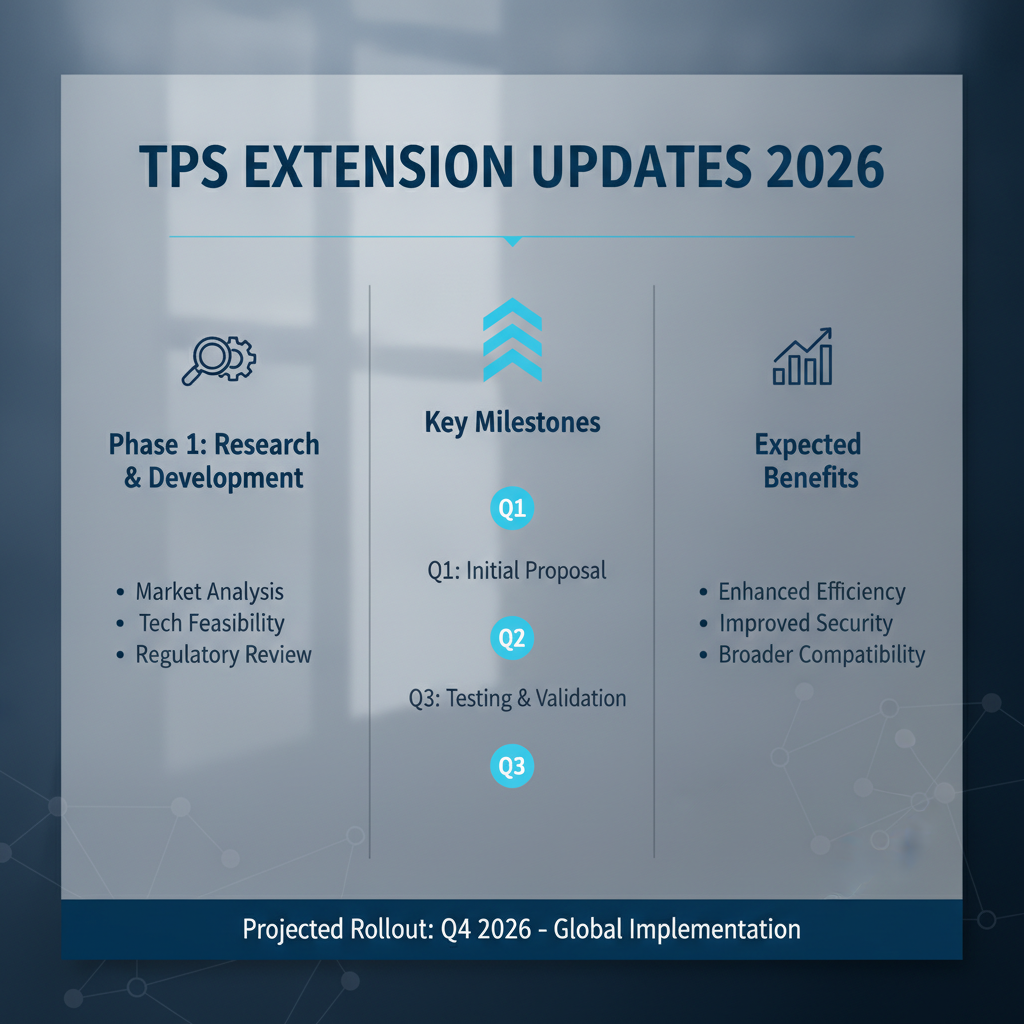
For individuals and families holding TPS status, or those who might be newly eligible, these announcements are not just headlines; they are direct indicators of their future. Understanding the implications is paramount, especially for the diverse immigrant communities thriving across Florida.
Why this news is showing up now
The United States government, specifically the Secretary of Homeland Security, has the authority under Section 244 of the Immigration and Nationality Act (INA) to designate a foreign country for TPS due to conditions that temporarily prevent the country's nationals from returning safely, or, in certain circumstances, where the country is unable to handle the return of its nationals adequately. These conditions often include ongoing armed conflict, environmental disaster, or other extraordinary and temporary conditions.
However, TPS designations are not permanent. The Secretary of Homeland Security is required to review country conditions at least 60 days before the expiration of a country's TPS designation. Based on this review, the Secretary can:
- Extend the existing designation for 6, 12, or 18 months.
- Re-designate the country for TPS, which can allow new eligible individuals to apply.
- Terminate the designation, which signals that conditions in the country have improved sufficiently for safe return.
Therefore, the "news" you are seeing now is part of this regular, mandated review process. As of October 18, 2026, several countries have existing TPS designations nearing their expiration, prompting the DHS to issue these critical updates. Each announcement comes with specific re-registration periods and eligibility criteria, making it vital for individuals to pay close attention to the details concerning their country of nationality.
How it can affect Florida residents
Florida, particularly Central Florida and the Orlando metropolitan area, is home to a significant number of immigrants from various TPS-designated countries. This makes TPS extension news particularly impactful for our community. Here's how these updates can affect you if you reside in Florida:
- Continued Legal Presence: An extension of TPS means eligible individuals can continue to live and work legally in the U.S. without fear of deportation for the duration of the extension. This stability is crucial for families, employment, and community integration.
- Employment Authorization: Most TPS extensions come with an automatic extension of Employment Authorization Documents (EADs), often referred to as work permits. This allows you to continue working legally without interruption, which is vital for maintaining livelihoods in Orlando and beyond. However, specific instructions for EAD extensions must be followed, including checking the Federal Register notice for your country.
- Travel Authorization: While TPS does not grant permanent resident status, it does allow individuals to apply for travel authorization (Advance Parole). An extension of TPS ensures that this possibility remains available, allowing for necessary travel for family emergencies or other urgent matters.
- Re-registration Deadlines: Every extension comes with a specific re-registration period. Missing this window, even by a single day, can lead to the loss of your TPS status and potentially place you in removal proceedings. For Central Florida residents, this means being acutely aware of the deadlines announced by USCIS.
- Local USCIS Impact: The Orlando USCIS Field Office, along with other offices across the state, processes applications related to TPS. An influx of re-registration applications can affect local processing times, making early and accurate filing even more critical.
- Community Stability: For Orlando's diverse neighborhoods, TPS extensions contribute to the overall stability and well-being of thousands of families. It allows parents to continue supporting their children, students to complete their education, and community members to contribute economically and culturally without the constant threat of uncertainty.
Important: The specifics of each TPS designation, extension, or re-designation are unique. It is crucial to consult the official Federal Register notice published by DHS for your specific country to understand the exact dates and requirements. Relying on unofficial sources can lead to critical errors.
Worried about your TPS status or upcoming deadlines? Imigrar's Orlando-based legal team specializes in navigating complex immigration matters. Don't risk losing your status – call us today at +1 786-791-3106 for a free consultation. Se Habla Español.
What Temporary Protected Status (TPS) Is (and Why It Matters)
Temporary Protected Status (TPS) is a humanitarian immigration benefit that offers a temporary haven to foreign nationals in the United States who cannot safely return to their home countries due to specific, extraordinary conditions. It's a lifeline for many, providing stability and protection when their homelands are in crisis.
A plain-English definition
Imagine your home country is experiencing a major crisis – maybe a devastating natural disaster, an ongoing civil war, or another severe emergency. Because it's unsafe for you to return, the U.S. government decides to grant you "Temporary Protected Status." This means you can stay in the U.S. legally for a set period, usually 6 to 18 months, and you can also apply for a work permit and travel authorization. It's temporary because the U.S. government expects the conditions in your home country to improve eventually. If the crisis continues, your TPS status can be extended, sometimes multiple times. It's not a path to a green card, but it offers crucial protection from deportation and the ability to work legally while you're here.
Key terms you need to know
Navigating immigration law often involves understanding specific terminology. Here are some key terms related to TPS:
- Designation: This is the initial act by the Secretary of Homeland Security to grant TPS to nationals of a specific country. A country is "designated" when it meets the statutory criteria under INA Section 244(b).
- Re-designation: Sometimes, when an existing TPS designation is reviewed, the Secretary may decide that conditions have worsened or changed in such a way that it warrants a "re-designation." A re-designation allows individuals who arrived in the U.S. after the initial designation date, but before the re-designation date, to apply for TPS, provided they meet all other eligibility criteria.
- Extension: This is the most common outcome of a TPS review. An extension means the current TPS designation for a country is prolonged for an additional period (e.g., 6, 12, or 18 months) because the unsafe conditions persist. Existing TPS holders must re-register during the specified window to maintain their status.
- Termination: If the Secretary determines that the conditions that led to the TPS designation no longer exist, the designation can be "terminated." This means TPS protection will end on a specified date, and individuals will revert to their previous immigration status (if any), or become subject to removal proceedings.
- Eligibility Requirements: The specific criteria an individual must meet to be granted TPS. These typically include continuous physical presence in the U.S. since a certain date, continuous residence in the U.S. since a certain date, and not having certain criminal convictions or other disqualifying factors.
- Employment Authorization Document (EAD): Also known as a work permit, this document allows TPS beneficiaries to work legally in the U.S. It is typically applied for using Form I-765.
- Advance Parole: This is a travel document that allows a non-citizen to travel abroad and return to the U.S. without invalidating their current non-immigrant status or TPS. It is applied for using Form I-131. Traveling without Advance Parole can have severe consequences, including being unable to re-enter the U.S.
- Re-registration Period: This is a specific window of time (usually 60 days, but can vary) during which current TPS beneficiaries must submit their application to extend their TPS and EAD. Missing this deadline is a common mistake that can lead to loss of status.
- Federal Register Notice: The official daily publication for rules, proposed rules, and notices of federal agencies and organizations. All TPS designations, extensions, and terminations are announced in the Federal Register, providing crucial dates and instructions.
Current Immigration Law: The Foundation of TPS
Temporary Protected Status is a statutory creation, meaning it is established directly by law. The legal framework for TPS is found primarily in the Immigration and Nationality Act (INA).
Federal requirements
The authority for TPS stems from Section 244 of the Immigration and Nationality Act (INA), 8 U.S.C. § 1254a. This section outlines the conditions under which the Secretary of Homeland Security may designate a foreign country for TPS, as well as the eligibility requirements for individuals seeking this protection.
Under INA Section 244(b), a country may be designated for TPS if:
- There is an ongoing armed conflict within the state, posing a serious threat to the personal safety of nationals if they were to return.
- There has been an earthquake, flood, drought, epidemic, or other environmental disaster in the state resulting in a substantial, but temporary, disruption of living conditions, and the foreign state is unable to handle adequately the return of its nationals.
- There are extraordinary and temporary conditions in the foreign state that prevent nationals from returning safely, unless the Secretary finds that allowing them to remain in the U.S. would be contrary to the national interest.
To be eligible for TPS, an individual must generally meet the following federal requirements:
- Be a national of a country designated for TPS (or a person without nationality who last habitually resided in that country).
- Have been continuously physically present (CPP) in the U.S. since the effective date of the most recent designation or re-designation.
- Have been continuously residing (CR) in the U.S. since the date specified by the Secretary for the country's designation.
- Not have been convicted of any felony or two or more misdemeanors committed in the U.S.
- Not be found inadmissible under certain grounds (e.g., related to security, terrorism, or certain criminal offenses).
- Not be subject to any of the mandatory bars to asylum.
- Register for TPS within the initial registration period or any extension of that period.
Individuals must prove their continuous physical presence and continuous residence through various documents, which we will detail later. The burden of proof rests with the applicant.
Florida-specific considerations
While TPS is a federal program, its implementation has practical implications for Florida residents:
- USCIS Field Offices: Applications are filed nationally, but if an interview is required (which is rare for TPS re-registration but possible for initial applications or complex cases), it would typically be scheduled at your local USCIS Field Office. For Central Florida residents, this is the Orlando USCIS Field Office located at 6680 Corporate Centre Blvd, Orlando, FL 32822.
- State IDs and Driver's Licenses: With a valid TPS status and an EAD, individuals can apply for Florida driver's licenses or state identification cards through the Florida Department of Highway Safety and Motor Vehicles (FLHSMV). This is crucial for mobility along the I-4 corridor and throughout Orange County.
- Access to Services: TPS status allows individuals to access certain state and local services that might otherwise be unavailable to undocumented immigrants. This includes some educational opportunities and healthcare services, though it does not generally qualify for federal means-tested public benefits.
- Legal Support: Given Florida's large immigrant population, there are numerous organizations, including Imigrar, that specialize in providing legal assistance for TPS applications. Access to knowledgeable legal counsel in your area is invaluable.
To apply for or re-register for TPS, you will primarily use the following USCIS forms:
- Form I-821, Application for Temporary Protected Status: This is the core application form for TPS.
- Form I-765, Application for Employment Authorization: Used to request an EAD (work permit).
- Form I-131, Application for Travel Document: Used to request Advance Parole if you need to travel outside the U.S. and return.
You can find these forms and detailed instructions on the USCIS Forms page. Always download the latest version of the forms directly from the official website to ensure you are using the correct edition.
For more detailed information on TPS, including specific country designations and requirements, always refer to the USCIS official website.
How to Re-register for TPS or Apply for Initial TPS: A Complete Step-by-Step Guide
Whether you are re-registering for an existing TPS designation or applying for the first time under a new designation or re-designation, the process requires careful attention to detail and strict adherence to deadlines. This guide will walk you through the essential steps.
1) Determine Your Eligibility and Gather Essential Information
Before you begin, confirm that your country of nationality (or last habitual residence) is currently designated for TPS, or has been extended/re-designated, and that you meet all individual eligibility criteria. Check the latest Federal Register notice for your country’s specific dates, including the continuous physical presence (CPP) and continuous residence (CR) dates.
Required Information/Documents:
- Country-Specific Federal Register Notice: This is your primary source for deadlines and requirements.
- Proof of Nationality:
- Copy of passport (biographic page)
- Copy of birth certificate with photo identification
- Any national identity document from your country
- Proof of Identity:
- Copy of government-issued photo ID (e.g., driver's license, state ID)
- Passport or other national identity document
- Previous Immigration Records (if applicable):
- Copies of any previous immigration applications, notices, or decisions (e.g., I-94 arrival/departure record, previous EADs, asylum application receipts).
Warning: Ensure you meet the continuous physical presence and continuous residence requirements. Brief, casual, and innocent departures from the U.S. may not break continuous physical presence, but any significant travel outside the U.S. can jeopardize your eligibility. Consult an attorney if you have traveled internationally since your initial entry.
2) Gather Proof of Continuous Residence (CR) and Continuous Physical Presence (CPP)
This is often the most challenging part of the application. You must provide evidence that you have been continuously residing in the U.S. since the specified CR date and continuously physically present since the CPP date. USCIS will look for documents spanning the entire period.
Required Documents (provide as many as possible, covering the entire period):
- Employment Records: Pay stubs, W-2 forms, employment letters, tax returns.
- Rent Receipts, Utility Bills: Electricity, water, gas, internet bills in your name.
- School Records: Transcripts, enrollment letters, report cards.
- Medical Records: Hospital bills, doctor's notes, vaccination records.
- Bank Statements: Showing regular transactions.
- Affidavits: Sworn statements from individuals who know you and can attest to your residence and presence in the U.S. (e.g., neighbors, landlords, employers, religious leaders).
- Receipts for money transfers: To or from your home country.
- Birth certificates of children born in the U.S.
- Any dated correspondence: Mail addressed to you at your U.S. address.
Tip: Organize these documents chronologically and create an index for easy review. Provide copies, not originals, unless specifically requested by USCIS.
3) Complete and Prepare All Necessary Forms
Carefully fill out the required forms. Accuracy is paramount. Use black ink and write legibly if completing by hand, or type directly into the PDF forms. Ensure all questions are answered, even if with "N/A" (not applicable).
Required Forms:
- Form I-821, Application for Temporary Protected Status: This is mandatory for all TPS applicants and re-registrants.
- Form I-765, Application for Employment Authorization: If you want to work legally in the U.S., you must file this form. Even if your EAD is automatically extended, filing this form for a new card is recommended.
- Form I-131, Application for Travel Document: If you plan to travel outside the U.S. and return, you must apply for Advance Parole. Filing this is optional but highly recommended if you anticipate international travel.
Reminder: Always use the latest version of the forms available on the USCIS Forms website. Incorrect versions will be rejected.
4) Calculate and Prepare Filing Fees (or Fee Waiver Request)
Each form has an associated fee. Check the USCIS website or the form instructions for the most current fee schedule. Fees are subject to change.
Required Payments:
- Form I-821 Filing Fee: (Currently $50, but check USCIS Fee Schedule).
- Biometrics Services Fee: (Currently $85, for applicants 14 years or older. This is generally required for re-registration and initial applications).
- Form I-765 Filing Fee: (Currently $410, but check USCIS Fee Schedule).
- Form I-131 Filing Fee: (Currently $575, but check USCIS Fee Schedule).
Fee Waivers: If you cannot afford the fees, you may be eligible for a fee waiver by filing Form I-912, Request for Fee Waiver. You must submit strong evidence of your inability to pay, such as proof of receiving means-tested benefits, household income below 150% of the poverty level, or financial hardship.
Payment Method: Pay by money order, personal check, cashier’s check, or credit card using Form G-1450, Authorization for Credit Card Transactions. Make checks payable to "U.S. Department of Homeland Security." Do not send cash.
5) Assemble Your Application Package and Submit
Organize your application package neatly. It's recommended to include a cover letter listing all the forms and supporting documents you are submitting. Make a complete copy of the entire package for your records before mailing.
Submission Checklist:
- Cover Letter: (Optional, but recommended) listing contents.
- Payment: Check, money order, or Form G-1450.
- Form I-821 (signed and dated).
- Form I-765 (signed and dated, if requesting EAD).
- Form I-131 (signed and dated, if requesting Advance Parole).
- Form I-912 (if requesting fee waiver, with supporting evidence).
- Supporting Documents: Copies of proof of nationality, identity, CR, CPP, and any other required evidence. Organize them according to the forms.
Mailing Address: Send your application to the correct USCIS Lockbox Facility. The address depends on your country of nationality and the type of application. Always check the "Where to File" section in the instructions for Form I-821 or on the USCIS website. Use a mailing service that provides tracking (e.g., USPS Certified Mail, FedEx, UPS) to confirm delivery.
6) Attend Your Biometrics Appointment (if required)
After USCIS accepts your application, you will typically receive a notice (Form I-797C, Notice of Action) scheduling you for a biometrics appointment at an Application Support Center (ASC). This appointment is for collecting your fingerprints, photograph, and signature.
What to Bring:
- Your appointment notice.
- A valid photo identification (e.g., passport, state ID).
Important: Do not miss this appointment. If you have a legitimate reason to reschedule, follow the instructions on the notice immediately. Failure to attend can lead to denial of your application.
7) Monitor Your Application Status and Keep Records
Once your application is filed, you will receive a receipt notice (Form I-797C) with a receipt number. You can use this number to track the status of your application online via the USCIS Case Status Online tool.
Actions to Take:
- Check Processing Times: Regularly check the USCIS Processing Times page for the estimated wait for Form I-821 and I-765 at your service center.
- Respond to RFEs: If USCIS sends a Request for Evidence (RFE), respond promptly and thoroughly with the requested documents.
- Keep Copies: Maintain a complete copy of everything you submit, as well as all notices received from USCIS.
- Update Address: If you move, you must notify USCIS of your new address within 10 days by filing Form AR-11, Alien's Change of Address Card, and updating your address online.
Following these steps meticulously will significantly increase your chances of a successful TPS re-registration or initial application. If any part of this process seems unclear or overwhelming, professional legal assistance is highly recommended.

Practical Steps You Can Take Today to Secure Your TPS
The sooner you act, the better. Procrastination can lead to missed deadlines and potential loss of your protected status. Here’s an actionable checklist to guide you:
- Verify Your Country's Status and Deadlines: Immediately check the USCIS TPS webpage and the Federal Register for the latest announcements regarding your country. Note the exact re-registration window, and the Continuous Physical Presence (CPP) and Continuous Residence (CR) dates.
- Start Gathering Documents NOW: Don't wait until the last minute. Begin collecting all necessary proofs of identity, nationality, and especially your evidence of continuous residence and physical presence in the U.S. (utility bills, pay stubs, school records, etc.). The more evidence you
Related Topics
Need Legal Assistance?
Our experienced immigration attorneys are here to help with your case. Contact Imigrar today for a free consultation and let us guide you through the legal process with confidence.
📍 Orlando, Florida • Serving clients nationwide
📧 info@imigrar.com