
Orlando Family Petition Guide 2026: Keep Families Together
Navigate family-based immigration in 2026 with Imigrar's expert guide. Learn how to petition for loved ones, understand requirements, and keep your family together in Orlando, Florida.
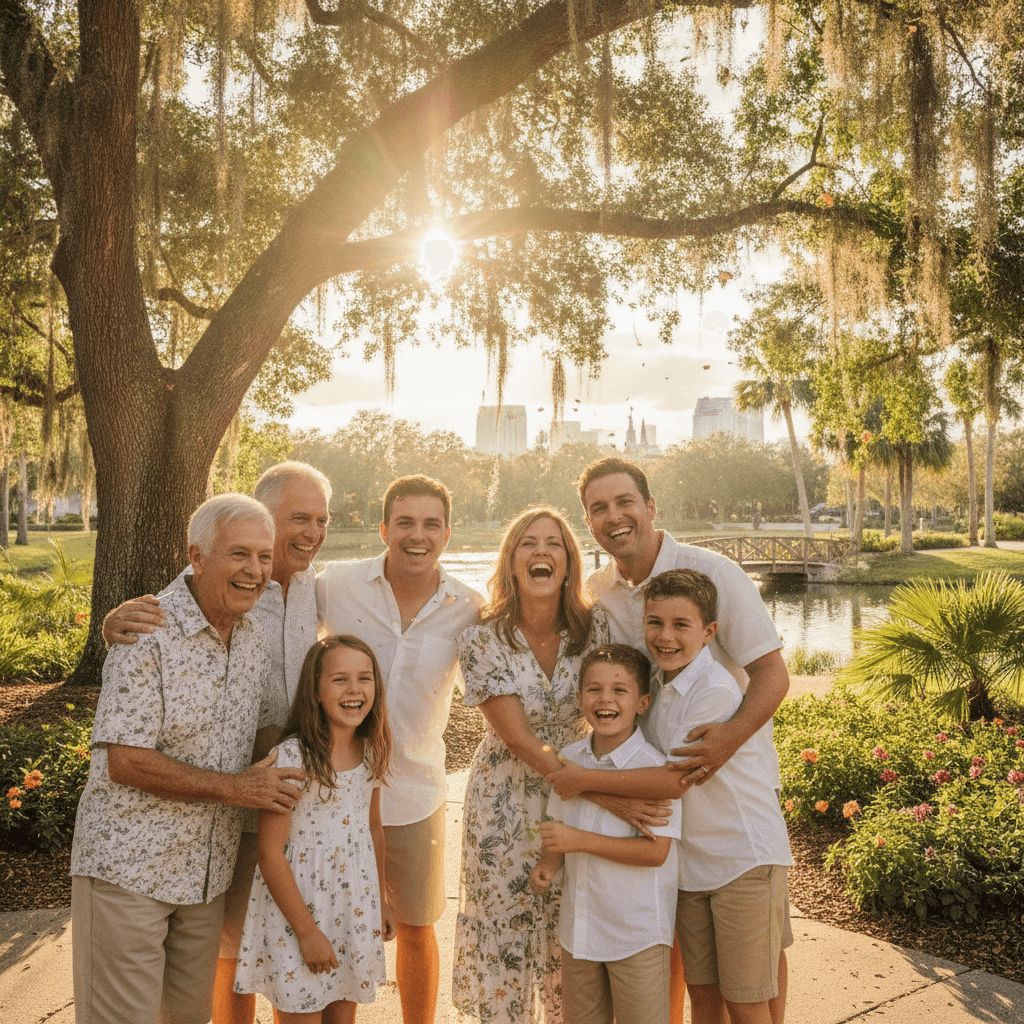
At Imigrar, we understand that nothing is more important than keeping your family together. For countless individuals and families in Orlando, throughout Florida, and across the nation, family-based immigration petitions are the cornerstone of achieving this dream. Navigating the complex landscape of U.S. immigration law can be daunting, but with the right guidance, clarity and success are within reach.
Need Help? Our Orlando immigration team is ready to assist. Call +1 786-791-3106 for a free consultation, or message us online. Se Habla Español.
The reporting that sparked this guide
The continuous conversation around immigration law, particularly concerning family reunification, remains a prominent topic in national news and community discussions. The complexities and constant evolution of these laws mean that reliable, up-to-date information is always in high demand. This comprehensive guide is inspired by the ongoing public interest and reporting on the subject, such as that found by searching "Family-Based Immigration Petition Guide (Immigration)" on major news platforms.
What This News Means for Immigrants in Orlando and Across Florida
For families striving to reunite in the United States, understanding the latest in family-based immigration is not just helpful; it's essential. This ongoing focus in the news underscores the importance of staying informed and seeking professional advice.
Why this news is showing up now
Family-based immigration is a perennial topic because it forms the bedrock of legal immigration to the United States. Unlike other immigration pathways which might fluctuate with economic cycles or specific policy initiatives, the desire for families to be together is constant. News outlets frequently cover family immigration due to:
- Ongoing demand: Millions of petitions are filed each year, creating a continuous stream of applicants seeking information.
- Processing time fluctuations: USCIS processing times can vary significantly, leading to public concern and news coverage about delays or improvements. As of October 17, 2026, these times are a critical concern for many.
- Policy discussions: While the core laws remain stable, there are always legislative proposals or administrative changes that could impact family reunification, keeping the topic in the public eye.
- Human interest stories: The personal journeys of families navigating the immigration system often capture public attention, highlighting both the challenges and successes.
How it can affect Florida residents
Florida, with its vibrant and diverse population, is home to a significant number of immigrants and their families. This makes understanding family-based immigration particularly crucial for residents in Orlando and across the state:
- High immigrant population: Florida is one of the top states for immigration, meaning a large segment of the population is directly impacted by these laws. Many families in Orlando have relatives abroad they wish to petition for.
- Local USCIS presence: The Orlando USCIS Field Office serves a wide area of Central Florida, handling numerous adjustment of status interviews and other immigration services. Understanding federal guidelines is key for successful interactions at this local level.
- Community impact: Successful family reunification strengthens local communities, contributing to Florida's economy and cultural richness. Conversely, delays or denials can cause significant hardship for families in Orange County and beyond.
- Access to legal resources: The constant news on immigration highlights the need for reliable legal counsel. Florida residents, especially those along the I-4 corridor, need to know where to find expert assistance to navigate these complex processes effectively.
What Family-Based Immigration Is (and Why It Matters)
Family-based immigration is the primary pathway for U.S. citizens and lawful permanent residents to help eligible family members obtain a green card and permanently reside in the United States. It's built on the principle of family unity, which is a cornerstone of American values.
A plain-English definition
At its core, family-based immigration is a system that allows a qualifying relative who is either a U.S. Citizen (USC) or a Lawful Permanent Resident (LPR) (someone holding a green card) to sponsor certain family members to come to live permanently in the United States. This process typically begins with the sponsor filing a petition with U.S. Citizenship and Immigration Services (USCIS) to establish the qualifying family relationship. Once approved, the sponsored family member can then apply for a green card, either from within the U.S. (Adjustment of Status) or from their home country (Consular Processing).
The goal, as our tagline at Imigrar states, is to "Keep Families Together." It provides a legal framework for spouses, children, parents, and siblings to reunite and build new lives in America.
Key terms you need to know
Navigating immigration law requires understanding specific terminology. Here are some essential terms related to family-based petitions:
- Petitioner: The U.S. citizen or lawful permanent resident who files the immigration petition for their relative.
- Beneficiary: The foreign national family member for whom the petition is filed, seeking to immigrate to the U.S.
- Green Card: Officially known as a Permanent Resident Card, it grants an individual Lawful Permanent Resident (LPR) status, allowing them to live and work permanently in the United States.
- U.S. Citizen (USC): An individual who is a citizen of the United States by birth or naturalization. USCs have broader petitioning rights than LPRs.
- Lawful Permanent Resident (LPR): An individual who has been granted the privilege of permanently residing in the United States. Also known as a "green card holder."
- Immediate Relative: A specific category of family members that includes spouses of USCs, unmarried children under 21 of USCs, and parents of USCs (if the USC is at least 21 years old). This category has an unlimited number of visas available each year, meaning no wait time for a visa number once the petition is approved.
- Preference Category: Other categories of family members who are not "Immediate Relatives." These categories have annual numerical limits on visas, leading to potential wait times. Examples include unmarried sons and daughters (21 or older) of USCs, spouses and children of LPRs, married sons and daughters of USCs, and brothers and sisters of USCs.
- Priority Date: The date USCIS receives a properly filed immigration petition (usually Form I-130). This date determines a beneficiary's place in the visa queue for preference categories.
- Visa Bulletin: A monthly publication from the U.S. Department of State that lists the cutoff dates for immigrant visas in the preference categories. A beneficiary can only apply for a green card when their Priority Date becomes "current" according to the Visa Bulletin. You can find it at the U.S. Department of State website.
- Adjustment of Status (AOS): The process of applying for a green card from within the United States. This is generally available if the beneficiary is already present in the U.S. legally and meets certain eligibility criteria.
- Consular Processing: The process of applying for an immigrant visa at a U.S. embassy or consulate abroad. This path is for beneficiaries living outside the U.S. or those ineligible for Adjustment of Status.
- Affidavit of Support (Form I-864): A legally binding document signed by the petitioner (and sometimes a joint sponsor) to demonstrate their financial ability to support the beneficiary and prevent them from becoming a public charge.
Need Help? Our Orlando immigration team is ready to assist. Call +1 786-791-3106 for a free consultation, or message us online. Se Habla Español.
Current Immigration Law: The Foundation
The framework for family-based immigration is primarily established by the Immigration and Nationality Act (INA), specifically sections related to immigrant visas based on family relationships (e.g., INA 201, 203). These laws dictate who can petition for whom and under what conditions.
Federal requirements
The core requirements for family-based petitions are set at the federal level by USCIS, an agency of the Department of Homeland Security. There are no state-specific immigration laws that alter these fundamental federal requirements.
Who Can Petition:
- U.S. Citizens (USC): Can petition for their spouses, unmarried children under 21, parents (if the USC is at least 21), unmarried sons and daughters (21 or older), married sons and daughters of any age, and brothers and sisters (if the USC is at least 21).
- Lawful Permanent Residents (LPR): Can petition for their spouses and unmarried sons and daughters of any age.
Beneficiary Eligibility:
The beneficiary must fit into one of the designated family categories and must not be inadmissible to the U.S. for reasons such as certain criminal convictions, health issues, or previous immigration violations. The petitioner must establish a legitimate family relationship with the beneficiary through documentary evidence.
Financial Sponsorship (Affidavit of Support):
Almost all family-based immigrants require a financial sponsor. The petitioner must complete and sign Form I-864, Affidavit of Support, promising to financially support the immigrant if needed. The petitioner must demonstrate income at or above 125% of the federal poverty guidelines for their household size. If the petitioner's income is insufficient, a joint sponsor can be used.
Key USCIS Forms:
- Form I-130, Petition for Alien Relative: This is the initial form filed by the petitioner to establish the family relationship.
- Form I-485, Application to Register Permanent Residence or Adjust Status: This form is filed by the beneficiary if they are applying for a green card from within the U.S. (Adjustment of Status).
- Form I-864, Affidavit of Support: Filed by the petitioner (and any joint sponsor) to demonstrate financial capability.
- Form I-765, Application for Employment Authorization: Often filed concurrently with Form I-485 to allow the beneficiary to work while their green card application is pending.
- Form I-131, Application for Travel Document: Often filed concurrently with Form I-485 to allow the beneficiary to travel internationally while their green card application is pending (Advance Parole).
You can find all official forms and detailed instructions on the USCIS Forms page or the main USCIS official website.
Florida-specific considerations
While the laws governing family-based immigration are federal, living in Florida brings certain practical considerations:
- Local USCIS Offices: The Orlando USCIS Field Office, located at 5449 Forbes Pl, Orlando, FL 32812, handles interviews for Adjustment of Status applicants residing in Central Florida. Knowing its procedures and typical wait times for interviews is important.
- Cultural Diversity: Florida's diverse communities, including those in Orlando, mean that petitioners and beneficiaries come from a wide range of backgrounds, potentially requiring document translation services or culturally sensitive legal advice.
- State-Level Support (or lack thereof): While Florida does not have its own immigration laws that directly impact federal family petitions, the state's general political climate and available social services can indirectly affect immigrants. It's important to rely on federal immigration law and legal experts.
Reminder: Immigration law is federal. Your rights and responsibilities in a family petition are determined by U.S. federal law, not Florida state law. However, local legal counsel with knowledge of the Orlando area's specific needs can be invaluable.

How to Petition for a Family Member: A Complete Step-by-Step Guide
The process of sponsoring a family member for a green card can be complex and lengthy, but breaking it down into manageable steps makes it more understandable. Here’s a detailed guide to help you navigate this journey.
1) Determine Eligibility and Category
The very first step is to establish who can petition for whom, which dictates the immigration category and significantly impacts processing times. This is a critical foundational step.
- Petitioner's Status: Are you a U.S. Citizen (USC) or a Lawful Permanent Resident (LPR)? Your status determines which relatives you can sponsor.
- Relationship: What is your relationship to the beneficiary?
- Immediate Relatives (IR): Spouses of USCs, unmarried children under 21 of USCs, and parents of USCs (if the USC is at least 21). This category has no numerical limit on visas, meaning no wait based on the Visa Bulletin once the Form I-130 is approved.
- Family Preference Categories:
- First Preference (F1): Unmarried sons and daughters (21 or older) of USCs.
- Second Preference (F2A): Spouses and unmarried children (under 21) of LPRs.
- Second Preference (F2B): Unmarried sons and daughters (21 or older) of LPRs.
- Third Preference (F3): Married sons and daughters of USCs.
- Fourth Preference (F4): Brothers and sisters of USCs (if the USC is at least 21).
- Beneficiary's Location: Is your family member currently in the U.S. or abroad? This determines whether they will undergo Adjustment of Status or Consular Processing.
Required Documents for Step 1 (for initial assessment):
- Proof of petitioner's U.S. citizenship (U.S. birth certificate, naturalization certificate, U.S. passport) OR proof of LPR status (green card copy).
- Proof of relationship (e.g., birth certificate showing parent-child relationship, marriage certificate for spouses).
- Any prior divorce decrees or death certificates to establish legal termination of previous marriages (if applicable).
2) File Form I-130, Petition for Alien Relative
Once eligibility is confirmed, the petitioner initiates the process by filing Form I-130 with USCIS. This form establishes the legal family relationship between the petitioner and the beneficiary.
- Complete Form I-130: Fill out the form accurately and completely. Any errors or omissions can cause delays or even denial.
- Gather Supporting Documents: Collect all necessary evidence to prove the relationship and the petitioner's status.
- Pay Filing Fee: As of October 17, 2026, the filing fee for Form I-130 is typically $535, but always check the USCIS official website for the most current fees.
- Mail to USCIS: Send the completed form, supporting documents, and fee to the correct USCIS lockbox facility. The specific address depends on where you live and whether you are filing other forms concurrently.
Required Documents for Step 2 (Form I-130 package):
- Completed and signed Form I-130.
- Copy of petitioner's proof of U.S. citizenship (e.g., U.S. passport biographic page, birth certificate, naturalization certificate) OR LPR status (copy of green card, front and back).
- Proof of relationship:
- For spouses: Marriage certificate, divorce decrees from prior marriages (if any), joint bank statements, utility bills, photos, affidavits from friends/family attesting to the marriage.
- For children: Beneficiary's birth certificate showing petitioner as parent, marriage certificate of parents (if applicable).
- For parents: Petitioner's birth certificate showing beneficiary as parent, marriage certificate of parents (if applicable).
- For siblings: Petitioner's and beneficiary's birth certificates showing at least one common parent, marriage certificates if parents' names changed.
- Passport-style photos of both petitioner and beneficiary.
- Payment for the filing fee (check, money order, or credit card via Form G-1450).
3) Wait for I-130 Approval and Priority Date
Once USCIS receives your Form I-130, they will send a receipt notice (**Form I-797C**), which includes your Priority Date. This date is crucial for preference categories.
- I-130 Processing: USCIS will review your petition. Processing times vary significantly based on the service center and the relationship category. You can check current processing times on the USCIS Processing Times page.
- Immediate Relatives: If the beneficiary is an Immediate Relative, there is no visa quota wait. Once the Form I-130 is approved, the beneficiary can proceed to the next step, either Adjustment of Status (if in the U.S.) or Consular Processing (if abroad).
- Preference Categories: For preference categories, the beneficiary must wait for their Priority Date to become "current" in the U.S. Department of State Visa Bulletin. This could take several years, depending on the country of birth and the category.
- I-130 Approval Notice: If approved, USCIS will send an approval notice (**Form I-797**). If denied, they will provide reasons, and you may have options to appeal or refile.
Warning: Do not proceed to the next step for preference categories until your Priority Date is current, or you risk denial and potential immigration consequences.
4) Apply for a Green Card (Adjustment of Status or Consular Processing)
Once the Form I-130 is approved and a visa number is available (or immediately for Immediate Relatives), the beneficiary can apply for their green card.
Option A: Adjustment of Status (if in the U.S.)
If the beneficiary is physically present in the United States and entered legally, they may be eligible to file Form I-485 to adjust their status to a permanent resident. For Immediate Relatives, this can often be filed concurrently with Form I-130.
- File Form I-485 and Supporting Forms: This is a substantial application package.
- Attend Biometrics: USCIS will schedule an appointment at an Application Support Center (ASC) to collect fingerprints and photos.
- Interview: Most Adjustment of Status applicants will be interviewed by a USCIS officer at a local field office, such as the Orlando USCIS Field Office for Central Florida residents.
Required Documents for Adjustment of Status (Form I-485 package):
- Completed and signed Form I-485.
- Copy of Form I-130 approval notice (if not filed concurrently).
- Copy of beneficiary's birth certificate (with certified translation if not in English).
- Copy of beneficiary's passport, visa, and I-94 arrival record.
- Two U.S. passport-style photos of the beneficiary.
- Completed Form I-864, Affidavit of Support, from the petitioner (and any joint sponsor), along with supporting financial documents (tax returns, W-2s, pay stubs).
- Completed Form I-693, Report of Medical Examination and Vaccination Record, sealed in an envelope by a USCIS-approved civil surgeon.
- Form I-765 (Employment Authorization) and Form I-131 (Travel Document) if desired (often filed concurrently).
- Certified copies of any court records if the beneficiary has ever been arrested or convicted of a crime.
- Payment for the filing fees (Form I-485, Form I-765, Form I-131 – check USCIS for current fees).
Option B: Consular Processing (if abroad or ineligible for AOS)
If the beneficiary is outside the U.S. or cannot adjust status, their case will be processed through a U.S. embassy or consulate in their home country. After Form I-130 approval, the case is transferred to the National Visa Center (NVC).
- NVC Processing: The NVC will contact the beneficiary and petitioner to submit additional forms (e.g., DS-260, Immigrant Visa Application) and civil documents, along with fees.
- Medical Exam: The beneficiary will undergo a medical examination by an authorized physician in their country.
- Interview: The beneficiary attends an interview at the U.S. embassy or consulate.
Required Documents for Consular Processing (NVC/Consulate stage):
- Completed Form DS-260, Immigrant Visa Application.
- Copy of Form I-130 approval notice.
- Benef
Related Topics
Need Legal Assistance?
Our experienced immigration attorneys are here to help with your case. Contact Imigrar today for a free consultation and let us guide you through the legal process with confidence.
📍 Orlando, Florida • Serving clients nationwide
📧 info@imigrar.com