


The immigration landscape is constantly evolving, bringing both challenges and opportunities for individuals and families seeking safety and stability in the United States. At Imigrar, an immigration law firm based in Orlando, Florida, we are committed to keeping our community informed about critical updates that impact their lives. Today, we delve into significant news regarding Temporary Protected Status (TPS) extensions, a vital lifeline for many immigrants across Florida and nationwide.
Need Help Navigating TPS Extensions? Our Orlando immigration team is ready to assist you with comprehensive legal guidance. Call +1 786-791-3106 for a free consultation, or message us online. Se Habla Español.
The reporting that sparked this guide
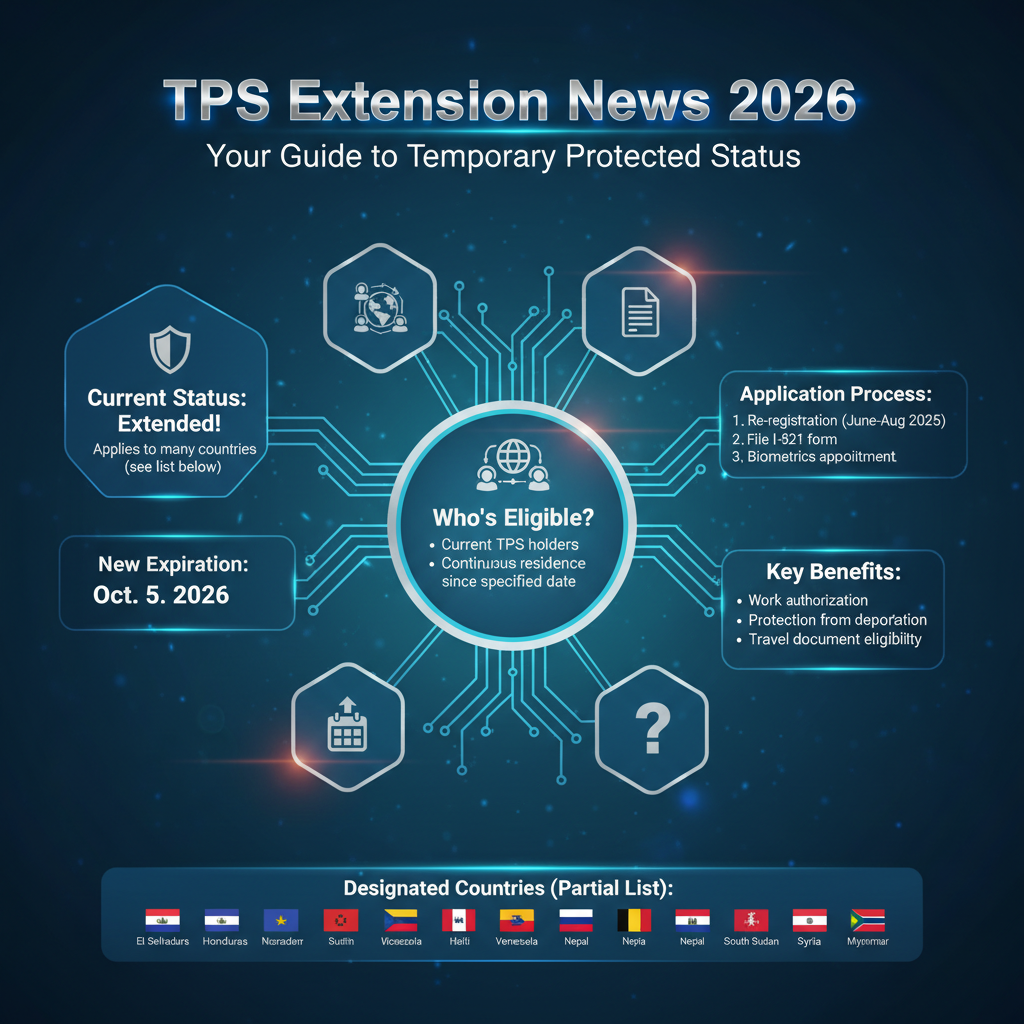
Recent developments regarding TPS have generated significant discussion and concern within immigrant communities. The continuous review and often extension of Temporary Protected Status for various designated countries are crucial updates that directly affect the lives and futures of hundreds of thousands of individuals. Our insights today are prompted by ongoing TPS (Temporary Protected Status) Extension News (Legal News), which highlights the Department of Homeland Security's (DHS) decisions impacting designated countries. These decisions, typically announced through the Federal Register, signal critical deadlines and requirements for current TPS beneficiaries and, in some cases, new applicants.
What This News Means for Immigrants in Orlando and Across Florida
The news of TPS extensions, redesignations, or even potential terminations sends ripples through immigrant communities. For many, TPS is not just a legal status; it is a shield against deportation, a pathway to legal employment, and a foundation upon which families build their lives. Understanding these announcements is paramount.
Why this news is showing up now
Temporary Protected Status is, by its very nature, temporary. The Secretary of Homeland Security continually reviews conditions in designated countries to determine whether the extraordinary circumstances that led to the initial designation (or redesignation) still exist. These conditions can include ongoing armed conflict, environmental disasters (like earthquakes or hurricanes), or other extraordinary and temporary conditions that prevent nationals from safely returning to their home country. As of February 16, 2026, many existing TPS designations are approaching their expiration dates, necessitating a decision from DHS on whether to extend, redesignate, or terminate the status for nationals of those countries. These decisions are often made several months in advance of the expiration date to allow beneficiaries ample time to prepare and file their re-registration applications. The process involves comprehensive assessments, inter-agency consultations, and public interest considerations, culminating in formal announcements published in the Federal Register and on the USCIS official website.
How it can affect Florida residents
Florida is home to one of the largest and most diverse immigrant populations in the United States. Communities across the state, including the vibrant Central Florida region and cities like Orlando, have significant populations from countries currently designated for TPS. For these residents, an extension means continued protection from deportation, the ability to work legally with an Employment Authorization Document (EAD), and a sense of temporary stability while their home country remains unsafe. Conversely, a failure to extend or a termination could lead to immense uncertainty, the loss of work authorization, and the looming threat of removal proceedings. For families where some members hold TPS and others do not, these announcements can be particularly stressful, impacting financial stability, access to healthcare, and educational opportunities. The Orlando USCIS Field Office, while not processing TPS applications directly, plays a role in biometrics appointments for local residents, making these federal decisions very real and tangible at the local level. Ensuring you understand these changes and act swiftly is crucial for maintaining your status and protecting your family.
What Temporary Protected Status (TPS) Is (and Why It Matters)
Temporary Protected Status (TPS) is a humanitarian immigration benefit provided by the United States government. It offers temporary protection from deportation and the ability to work legally in the U.S. to foreign nationals from certain countries experiencing severe conditions that make it unsafe for their citizens to return home.
A plain-English definition
Imagine your home country is going through a devastating natural disaster, a brutal civil war, or some other extraordinary crisis. If the U.S. government determines that it's too dangerous for you to return, they might grant you Temporary Protected Status. This means you can live and work legally in the U.S. for a specific period, usually 6 to 18 months, which can then be extended if the crisis continues. It's a temporary haven, not a path to a Green Card, but it provides crucial stability and peace of mind during difficult times.
Key terms you need to know
- Designated Country: A foreign state whose nationals may be eligible for TPS due to ongoing armed conflict, environmental disaster, or other extraordinary and temporary conditions. Examples include Haiti, El Salvador, Honduras, Nicaragua, Venezuela, and Afghanistan, among others.
- Redesignation: When the Secretary of Homeland Security determines that a country already designated for TPS continues to meet the criteria, but new individuals who arrived in the U.S. after the initial designation date can now also apply. This typically updates the continuous residence and continuous physical presence dates.
- Extension: When the Secretary of Homeland Security decides that the conditions in a designated country still warrant TPS, and the existing designation period is prolonged, usually for another 6, 12, or 18 months. This primarily benefits existing TPS holders who must re-register.
- Eligibility Criteria: The specific requirements an individual must meet to be granted TPS, including nationality, continuous physical presence (CPP), continuous residence (CR) in the U.S. since a specified date, and passing background checks.
- Employment Authorization Document (EAD): Also known as a work permit, this card (Form I-765) allows TPS beneficiaries to legally work in the United States.
- Advance Parole: A travel document (Form I-131) that allows certain non-citizens, including TPS holders, to travel outside the U.S. and return without jeopardizing their immigration status.
- Form I-821: The primary application form for Temporary Protected Status.
- Continuous Physical Presence (CPP): Refers to the requirement that an applicant must be physically present in the U.S. for a specified period without significant absences.
- Continuous Residence (CR): Refers to the requirement that an applicant must have maintained residence in the U.S. for a specified period.
TPS matters because it offers a critical humanitarian safety net. It allows individuals to escape dangerous conditions, contribute to the U.S. economy, and live without the immediate fear of deportation. For many, it's the only form of legal status available, providing a temporary bridge to safety and stability.
Confused about TPS eligibility or re-registration? Don't risk your status. Contact Imigrar today for expert legal advice. Call +1 786-791-3106 or reach out online. Se Habla Español.
Current Immigration Law: The Foundation of TPS
Temporary Protected Status is authorized by Section 244 of the Immigration and Nationality Act (INA). This federal law grants the Secretary of Homeland Security the authority to designate a foreign country for TPS. The decision to designate a country is based on specific statutory criteria, ensuring that this humanitarian relief is applied under appropriate circumstances.
Federal requirements
Under INA Section 244, the Secretary of Homeland Security may designate a country for TPS if:
- There is an ongoing armed conflict within the state, making return unsafe.
- There has been an earthquake, flood, drought, epidemic, or other environmental disaster in the state resulting in a substantial, but temporary, disruption of living conditions, and the foreign state is unable to handle the return of its nationals adequately.
- There are extraordinary and temporary conditions in the foreign state that prevent nationals from safely returning, provided that granting TPS is not contrary to the U.S. national interest.
For an individual to be eligible for TPS, they must generally:
- Be a national of a designated country (or a person without nationality who last habitually resided in that designated country).
- Have been continuously physically present (CPP) in the U.S. since the effective date of the most recent designation or redesignation.
- Have been continuously residing (CR) in the U.S. since the date specified for the most recent designation or redesignation.
- Not be inadmissible under specific grounds, including certain criminal and security-related grounds.
- Not have been convicted of any felony or two or more misdemeanors committed in the U.S.
- Not be subject to any of the mandatory bars to asylum.
Applicants must demonstrate their eligibility and provide all required supporting documentation. The law is federal, meaning the core requirements apply uniformly across the United States. For detailed information and official guidance, always refer to the USCIS official website.
Florida-specific considerations
While TPS is a federal program, its impact and application are deeply felt at the state and local levels. Florida, with its diverse immigrant communities and proximity to many TPS-designated countries, has a particularly large population of TPS beneficiaries. For residents in Orlando and Central Florida, understanding the specific dates for continuous residence and continuous physical presence for their country's designation is critical. Although applications are filed nationally, local resources such as community organizations and legal aid groups often provide invaluable assistance. Furthermore, any changes to TPS can have ripple effects on local economies, schools, and social services. It's important for Florida residents to stay informed about federal announcements and seek local legal counsel when necessary, especially if they have questions about their specific circumstances or interactions with local law enforcement, although TPS is a federal protection.
The primary USCIS forms relevant to TPS are: Form I-821, Application for Temporary Protected Status, and Form I-765, Application for Employment Authorization. If a TPS holder wishes to travel outside the U.S., they would also need to apply for Advance Parole using Form I-131, Application for Travel Document. These forms, along with their instructions and filing fees, can be found on the USCIS Forms page.
How to Re-register for TPS: A Complete Step-by-Step Guide
If your country's TPS designation has been extended, re-registration is typically mandatory to maintain your protected status. Missing the re-registration window can have severe consequences, including the loss of your TPS and work authorization. Follow this guide carefully.
1) Determine Your Eligibility and Deadline
The first and most crucial step is to confirm that your country's TPS designation has indeed been extended and to understand the specific re-registration window. Each extension announcement will specify the new expiration date for TPS and EADs, as well as the re-registration period, which is typically a 60-day window. You must meet the continuous physical presence (CPP) and continuous residence (CR) requirements from your country's initial or most recent designation date. Review the official Federal Register notice or USCIS official website for the latest information specific to your country. Important: Mark your calendar with the deadline immediately!
- Required Documents for this step (for verification):
- Previous TPS approval notice (Form I-797)
- Current EAD card
- Federal Register notice or USCIS announcement for your country
2) Gather Required Documents
To re-register, you will need to prove your identity, nationality, and continued residence in the U.S. since your initial TPS application. Even if you submitted these documents before, it's wise to have them organized. While USCIS typically does not require all previous supporting documents for a re-registration, they may request them, especially if there have been changes or if your initial application was incomplete.
- Required Documents for re-registration:
- Proof of identity and nationality (e.g., passport, birth certificate with photo ID, national identity card from your country).
- Proof of continuous residence in the U.S. since the designated date (e.g., utility bills, rent receipts, school records, employment records, medical records, bank statements, affidavits).
- Proof of continuous physical presence in the U.S. (same types of documents as CR).
- Marriage certificate (if applicable, for name change).
- Previous TPS approval notice (Form I-797).
- Current Employment Authorization Document (EAD).
3) Complete and File Form I-821 (and Form I-765)
You must file Form I-821, Application for Temporary Protected Status. If you want to continue working legally, you must also file Form I-765, Application for Employment Authorization. It is highly recommended to file both forms together. Ensure you use the latest version of each form, available on the USCIS Forms page. Read instructions carefully, answer all questions truthfully, and sign all forms. Incomplete applications can lead to delays or denials.
- Fees:
- Form I-821: No fee for re-registration.
- Form I-765: Required fee (check current fee schedule on USCIS website).
- Biometrics Fee: Required for applicants aged 14 and older (check current fee schedule).
- Fee Waivers: If you cannot afford the fees, you may be eligible for a fee waiver by filing Form I-912, Request for Fee Waiver. Provide supporting documentation for your financial hardship.
- Filing Address: Submit your forms and supporting documents to the USCIS lockbox facility specified in the Federal Register notice for your country. Do NOT send them to the Orlando USCIS Field Office, as they do not process these applications.
4) Attend Biometrics Appointment
After filing, USCIS will send you a notice to appear for a biometrics appointment at an Application Support Center (ASC). This appointment is mandatory for applicants aged 14 and older. During this appointment, USCIS will collect your fingerprints, photograph, and signature. These are used for background checks and to create your EAD. Warning: Missing this appointment without rescheduling can lead to your application being denied.
- Required Documents for Biometrics:
- Appointment notice (Form I-797C, Notice of Action).
- Valid photo identification (e.g., passport, driver's license).
5) Respond to Requests for Evidence (RFE) or Notices of Intent to Deny (NOID)
USCIS may send you a Request for Evidence (RFE) if they need more information or clarification on your application or supporting documents. A Notice of Intent to Deny (NOID) indicates that USCIS intends to deny your application unless you provide compelling evidence to overcome their concerns. It is critical to respond to RFEs and NOIDs promptly and thoroughly within the specified timeframe. Failure to respond adequately will likely result in a denial.
- Actionable Advice: If you receive an RFE or NOID, consult with an experienced immigration attorney immediately to ensure your response is comprehensive and addresses all concerns.
6) Await Decision and Receive New EAD
After your biometrics appointment and any responses to RFEs, USCIS will process your application. Processing times can vary significantly. You can check current processing times for Form I-821 and Form I-765 on the USCIS Processing Times website. Once approved, you will receive an approval notice (Form I-797) and your new Employment Authorization Document (EAD) card in the mail. The new EAD will reflect the extended validity period of your TPS.
- Important: If your current EAD expires before you receive your new one, USCIS often issues automatic extensions for EADs based on TPS re-registration filings for specific countries. Check the Federal Register notice or USCIS website for details on automatic EAD extensions for your country.
Practical Steps You Can Take Today
Proactive preparation is key to a smooth TPS re-registration process. Don't wait until the last minute!
Actionable Checklist:
- Verify Your Country's Status: Immediately check the USCIS official website and the Federal Register for the latest announcements regarding TPS extensions, redesignations, or terminations for your country. Note all deadlines.
- Consult an Immigration Attorney: Even if you've re-registered before, legal advice is invaluable. An attorney can help you understand specific requirements, identify potential issues, and ensure your application is complete and accurate.
- Organize Existing Immigration Documents: Gather all previous TPS approval notices, EADs, travel documents (if applicable), and any other immigration-related paperwork. Keep originals safe and make copies for your records and for submission.
- Start Gathering Proof of Residence/Presence: Begin collecting documents that demonstrate your continuous residence and continuous physical presence in the U.S. since the required dates. This includes utility bills, bank statements, school records, medical records, employment records, and tax documents.
- Set Reminders for Deadlines: Mark the re-registration window and all deadlines prominently on your calendar. Create digital reminders on your phone or computer.
- Save Money for Fees: If you anticipate needing to pay the Form I-765 and biometrics fees, start setting aside funds. If you believe you qualify for a fee waiver, begin gathering documents to support your Form I-912 application.
- Update Your Address with USCIS: If you've moved since your last application, file Form AR-11, Alien's Change of Address Card online or by mail within 10 days of moving. This ensures you receive all notices from USCIS.
Document Preparation Guidance:
- Copies, Not Originals: Always submit copies of supporting documents unless USCIS specifically requests originals. Keep your originals in a safe place.
- Translations: Any document not in English must be accompanied by a complete English translation certified by a translator who is competent in both English and the foreign language, and who has attested that the translation is accurate and complete.
- Organize Clearly: Use cover letters and tabs to organize your application package, making it easy for USCIS officers to review.
Timeline Expectations:
While the re-registration window is typically 60 days, USCIS processing times can vary significantly. After filing, it can take several months to receive your EAD. Always check the USCIS Processing Times page for the most up-to-date estimates. Be prepared for potential delays and plan accordingly, especially if your EAD is set to expire soon.
Your TPS is too important to risk. For personalized assistance with your TPS re-registration in Orlando or anywhere in Florida, contact Imigrar. We're here to help. Call +1 786-791-3106 for a free consultation. Se Habla Español.
How Imigrar Helps Immigrants in Orlando and Nationwide
At Imigrar, our mission is "Keep Families Together." We understand the profound impact that immigration laws, especially programs like TPS, have on individuals and their loved ones. Based in Orlando, Florida, we serve clients not only across the Sunshine State but nationwide, offering comprehensive and compassionate legal support.
Our experienced immigration attorneys possess in-depth knowledge of Temporary Protected Status regulations, re-registration procedures, and the complex interplay of TPS with other immigration benefits. We regularly monitor updates from the USCIS official website, the Department of Homeland Security, and the U.S. Department of State to ensure our advice is always current and accurate. Whether you are re-registering for TPS, considering applying for Advance Parole, or exploring other pathways to permanent residency, our team is equipped to guide you every step of the way.
We assist clients with:
- Determining eligibility for TPS re-registration or initial application.
- Thorough preparation and filing of Form I-821 and Form I-765.
- Gathering and organizing all necessary supporting documents.
- Preparing and filing Form I-912, Request for Fee Waiver, if applicable.
- Responding to Requests for Evidence (RFEs) or Notices of Intent to Deny (NOIDs).
- Applying for Advance Parole (Form I-131) for necessary travel.
- Exploring potential avenues for adjustment of status or other immigration relief.
We pride ourselves on clear communication and personalized attention. We know that every case is unique, and we take the time to understand your specific situation, answer your questions, and develop a tailored legal strategy. Our firm is fluent in both English and Spanish, so you can communicate comfortably and clearly. Se Habla Español.
We offer a free consultation to discuss your TPS situation. This no-obligation meeting allows us to assess your needs and explain how we can help you navigate the complexities of immigration law, ensuring your family stays together and secure.

Frequently Asked Questions About TPS Extensions
Q: What if my country is extended, but I didn't have TPS before?
A: If your country's TPS designation is *extended* (as opposed to *redesignated*), it generally only benefits those who already have TPS. New applicants are typically not eligible unless the country is *redesignated*. A redesignation updates the continuous residence and continuous physical presence dates, allowing new individuals who meet the updated criteria to apply for TPS for the first time. Always check the specific Federal Register notice for your country to see if it's an extension or a redesignation.
Q: Can I travel outside the U.S. if I have TPS?
A: Yes, but only with an approved Advance Parole document (Form I-131, Application for Travel Document) before you leave the U.S. Traveling without Advance Parole can lead to your TPS being terminated and may prevent you from re-entering the United States. Even with Advance Parole, travel is not without risks, and it's always advisable to consult an immigration attorney before planning international travel.
Q: Does TPS lead to a Green Card or permanent residency?
A: No, TPS itself does not directly lead to a Green Card or permanent residency. It is a temporary humanitarian status. However, some TPS beneficiaries may be eligible for other immigration benefits, such as Adjustment of Status, if they have an eligible family petition (e.g., through a U.S. citizen spouse or parent) or another qualifying pathway. It is crucial to consult an immigration attorney to explore these options, as the rules for adjusting status while on TPS can be complex.
Q: What documents do I need for TPS re-registration?
A: For re-registration, you typically need your previous TPS approval notice, current EAD, proof of identity and nationality (e.g., passport), and proof of continuous residence and physical presence in the U.


