


As an immigrant or family member navigating the complex U.S. immigration system, few things cause more anxiety than the wait. The U.S. Citizenship and Immigration Services (USCIS) processing times are a critical component of every application, dictating the duration of your journey towards a green card, citizenship, or other immigration benefits. At Imigrar, we understand this deeply, and our mission is to "Keep Families Together" by providing clear, actionable guidance.
Today, on February 15, 2026, we’re addressing the latest USCIS processing time updates. These updates are a constant, dynamic factor in immigration, and understanding them is crucial for anyone with an active or prospective application.
The reporting that sparked this guide:
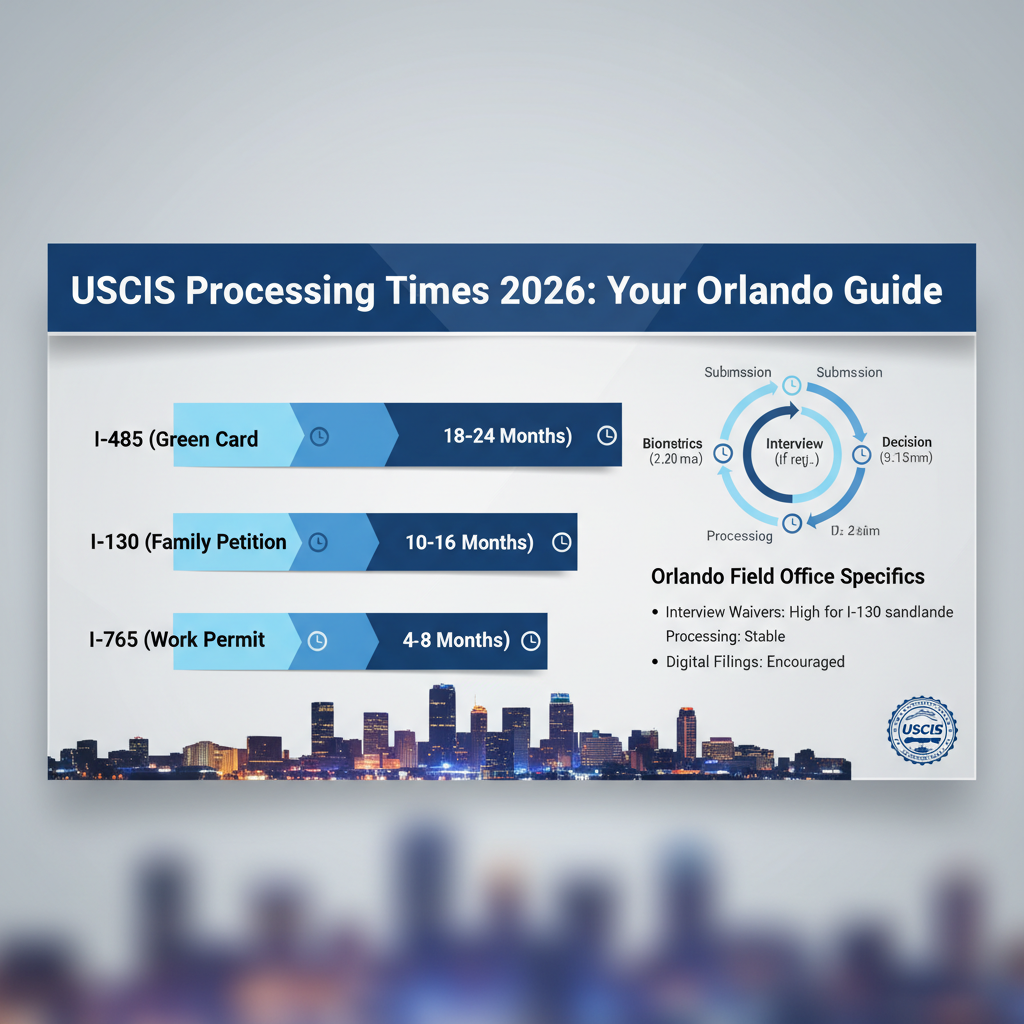
USCIS Processing Times and Updates for 2026 (USCIS)
What This News Means for Immigrants in Orlando and Across Florida
The news of updated USCIS processing times is not just a statistic; it’s a direct reflection of the journey many individuals and families in Orlando, Central Florida, and throughout the Sunshine State are undertaking. These updates can signal hope, or they can mean extended periods of uncertainty, impacting everything from employment to family reunification.
Why this news is showing up now
USCIS regularly updates its processing times data, typically on a monthly basis. The reporting you see now regarding "2026 updates" is a continuous cycle of the agency publishing the most current estimated timeframes for various forms processed at its Service Centers and Field Offices. These updates are influenced by several factors, including:
- Volume of applications: An increase in filings for specific forms (e.g., Form I-130 for family petitions, Form I-485 for Adjustment of Status) can naturally extend wait times.
- Staffing levels: USCIS's ability to process cases is directly tied to its personnel and resources.
- Policy changes: New immigration policies or directives can sometimes shift priorities or introduce additional steps, affecting processing speeds.
- Technological advancements: While intended to streamline, implementation of new systems can sometimes cause temporary adjustments.
- National and global events: Events like the COVID-19 pandemic have demonstrated how external factors can significantly impact USCIS operations, leading to backlogs and delays that can take years to resolve.
As we move through 2026, USCIS continues to adjust to these factors, making regular checks of their processing times page an absolute necessity for all applicants.
How it can affect Florida residents
For immigrants residing in Florida, particularly in the bustling Orlando area and along the I-4 corridor, these processing time updates have very tangible implications:
- Orlando USCIS Field Office: If your case requires an interview or is processed locally, the specific wait times for the Orlando USCIS Field Office will directly impact you. For instance, an interview for Adjustment of Status or Naturalization (Form N-400) will be scheduled based on the local office's capacity.
- Travel and Work Authorization: Delays in processing Form I-765 (Application for Employment Authorization) or Form I-131 (Application for Travel Document) can severely impact an individual's ability to work legally or travel internationally, affecting livelihoods and family plans.
- Family Reunification: For those sponsoring family members, longer processing times for forms like Form I-130 (Petition for Alien Relative) mean extended periods of separation from loved ones, which can be particularly agonizing.
- Uncertainty and Stress: Prolonged waits, especially when processing times fluctuate, create immense stress for individuals and families. Planning for the future, making career decisions, or even deciding where to live can become incredibly difficult without a clear timeline.
- Expiration of Status/Documents: For some, delays can push applications too close to the expiration of their current legal status or documents, requiring careful planning for extensions or bridge applications.
Understanding these impacts is the first step. The next is taking proactive measures to mitigate potential delays and ensure your application is as strong as possible.
Need Help? Our Orlando immigration team is ready to assist. Call +1 786-791-3106 for a free consultation, or message us online. Se Habla Español.
What USCIS Processing Times Are (and Why They Matter)
Navigating the U.S. immigration system can feel like moving through a maze with an ever-changing clock. USCIS processing times are essentially that clock, providing an estimate of how long it will take USCIS to process a particular type of application or petition.
A plain-English definition
Think of USCIS processing times as the estimated waiting period from the moment USCIS receives your application until they make a decision on it. This isn't a guaranteed timeframe, but rather an average based on historical data for similar cases. It's important to understand that these times can vary significantly depending on the type of form, the specific USCIS Service Center or Field Office handling your case, and various other factors we discussed earlier.
For example, if you file a Form I-765 (Application for Employment Authorization), the processing time listed might be "5 to 9 months." This means, on average, USCIS is currently taking between five and nine months to process that form at the specific center that handles it. Your individual case might be faster or slower, but it gives you a general expectation.
Key terms you need to know
To accurately understand and track your application, it's essential to be familiar with several key terms:
- Receipt Date: This is the date USCIS officially received your application. It's crucial because processing times are typically calculated from this date. You'll find it on your Form I-797C, Notice of Action.
- Notice Date: The date USCIS issued a notice, such as a receipt notice or an approval notice.
- Processing Time Range: USCIS provides a range (e.g., "X to Y months") rather than a single number, reflecting the variability in case processing.
- Case Inquiry Date: This is the earliest date you can contact USCIS to inquire about your case if it has gone beyond the normal processing time. USCIS typically provides this date on its processing times page.
- Service Center: USCIS has several Service Centers (e.g., California, Nebraska, Texas, Vermont) that process various types of applications, primarily mail-based. The specific Service Center handling your case will be indicated on your receipt notice.
- Field Office: These are local USCIS offices (like the Orlando USCIS Field Office) that handle interviews, naturalization ceremonies, and some local filings. The processing times for Field Offices are often for interview-based applications.
- Priority Date: For certain visa categories (especially family-sponsored and employment-based green cards), this is the date your petition (usually Form I-130 or Form I-140) was filed and officially received by USCIS. It determines your place in the visa queue and is crucial for understanding when a visa number might become available to you, as indicated in the Visa Bulletin published by the U.S. Department of State.
- Adjustment of Status (AOS): The process of applying for lawful permanent resident status (a Green Card) while physically present in the United States, typically using Form I-485.
- Consular Processing: The process of applying for a Green Card through a U.S. embassy or consulate in your home country.
- Request for Evidence (RFE): A letter from USCIS asking for additional documents or information to support your application. Responding promptly and thoroughly is critical.
- Notice of Intent to Deny (NOID): A letter from USCIS indicating their intention to deny your application unless you provide specific information or explanation within a given timeframe. This is a serious notice requiring immediate attention.
- Biometrics Appointment: An appointment at an Application Support Center (ASC) where USCIS collects fingerprints, photographs, and signatures for background checks.
Understanding these terms empowers you to better track your application and communicate effectively with USCIS or your legal representative.
Current Immigration Law: The Foundation of Processing Times
USCIS processing times are not arbitrary; they are a direct consequence of the legal framework governing immigration in the United States. The bedrock of U.S. immigration law is the Immigration and Nationality Act (INA), which dictates everything from who is eligible for certain benefits to the procedures for applying and the governmental bodies responsible for processing those applications.
Federal requirements
The INA and its accompanying regulations (primarily found in Title 8 of the Code of Federal Regulations) establish the criteria for various immigration benefits. For example:
- Family-Based Petitions: Sections 201, 203, and 204 of the INA outline the categories for family-sponsored immigrants (e.g., U.S. citizens petitioning spouses, children, parents, siblings; permanent residents petitioning spouses and unmarried children). Processing for these forms, like Form I-130, Petition for Alien Relative, is heavily influenced by annual visa quotas and the applicant's Priority Date.
- Employment-Based Petitions: Sections 203(b) and 204 of the INA govern employment-based immigration, with different "preferences" based on skill level and job requirements. Forms such as Form I-140, Immigrant Petition for Alien Worker, fall under this category.
- Adjustment of Status: INA Section 245 allows certain eligible individuals already in the U.S. to apply for lawful permanent resident status using Form I-485, Application to Register Permanent Residence or Adjust Status, without having to leave the country. The requirements for eligibility are stringent and must be met at the time of filing and adjudication.
- Naturalization: INA Section 316 details the requirements for becoming a naturalized U.S. citizen, including continuous residence, physical presence, good moral character, and an understanding of U.S. history and government. These are assessed during the processing of Form N-400, Application for Naturalization.
Each form and application type has specific federal requirements for supporting documentation, eligibility, and filing procedures. USCIS must adhere to these laws and regulations, which often involve extensive background checks, inter-agency coordination, and thorough review processes. These statutory obligations are a primary reason why processing times can be lengthy.
You can find detailed information on forms, laws, and policies directly on the USCIS official website.
Florida-specific considerations
While immigration law is federal, its application and impact are felt locally. For Florida residents, particularly those in Orange County and surrounding areas, several factors influence their experience with USCIS processing:
- Orlando USCIS Field Office Workload: The local Field Office handles interviews for Form I-485 (Adjustment of Status), Form N-400 (Naturalization), and other applications requiring in-person interaction. The volume of applications in a high-growth state like Florida directly impacts the scheduling and processing times at this local office.
- Application Support Centers (ASCs): Florida has several ASCs for biometrics appointments. While these appointments are generally scheduled efficiently, any backlogs can cause slight delays in the overall processing timeline, as biometrics must be completed before background checks can proceed.
- Local Legal Resources: Access to experienced immigration attorneys in Orlando, like those at Imigrar, can significantly impact the success and efficiency of your application. While lawyers cannot speed up USCIS processing times directly, they can ensure your application is perfectly prepared, reducing the likelihood of RFEs or denials that cause further delays.
- Economic and Demographic Trends: Florida's diverse population and dynamic economy mean a steady stream of various immigration applications, from family petitions to employment-based visas and humanitarian relief. This consistent demand contributes to the overall workload of USCIS resources allocated to the state.
Understanding these local nuances, combined with federal law, is key to managing expectations and preparing effectively for your immigration journey.
Need expert guidance on your immigration case? Imigrar's team in Orlando understands the complexities of USCIS processing times. Call us today at +1 786-791-3106 for a free consultation. Se Habla Español.
How to Navigate USCIS Processing Times: A Complete Step-by-Step Guide
While you cannot directly control USCIS processing speeds, you can proactively manage your application process to minimize delays and stay informed. Here’s a detailed guide:
1) Understand Your Application Type and Category
Before you even begin, know exactly what you’re applying for and under which category. Different forms have different requirements and different processing pathways. For instance, a family-sponsored petition by a U.S. citizen for an immediate relative (spouse, unmarried child under 21, parent) typically has a different processing speed than one for a preference category (e.g., married children, siblings) due to visa availability.
- Required Information:
- Your specific Form number (e.g., Form I-130, Form I-485, Form N-400, Form I-765, Form I-131).
- The immigration category you fall under (e.g., IR-1 Spouse of U.S. Citizen, F2A Spouse/Child of LPR, EB-1, Asylum).
- The USCIS Service Center or Field Office where your application will be or was filed (found on your Form I-797C, Notice of Action).
2) Find Your Current Processing Times
This is your primary tool for managing expectations. USCIS updates its processing times page monthly.
- Required Information:
- Go to the USCIS Processing Times page.
- Select your Form number.
- Select the Service Center or Field Office handling your case. If you're unsure, check your Form I-797C receipt notice. For Orlando residents, this might be the Orlando USCIS Field Office for interviews, or one of the Service Centers for initial processing.
- Note the "Receipt date for a case inquiry" – this is the earliest date you can contact USCIS if your case is outside normal processing times.
- Practical Tip: Bookmark the specific page for your form and office, and check it regularly, ideally once a month.
3) Check Your Case Status Regularly
The USCIS "Case Status Online" tool provides real-time updates on your application's progress.
- Required Information:
- Your 13-character receipt number (e.g., EAC, WAC, LIN, SRC, NBC, MSC followed by 10 numbers), found on your Form I-797C, Notice of Action.
- Visit the USCIS Case Status Online page.
- Enter your receipt number and click "Check Status."
- What to Look For: Updates on receipt, biometrics appointment scheduling, RFE issuance, interview scheduling, and final decisions.
- Important: Set up an online account with USCIS to receive email notifications when your case status changes.
4) Respond to RFEs and NOIDs Promptly and Thoroughly
If USCIS needs more information, they will send an RFE (Request for Evidence) or, in more serious cases, a NOID (Notice of Intent to Deny). These are critical moments in your application process.
- Required Documents/Actions:
- Read the RFE/NOID carefully and completely.
- Gather ALL requested documents. Do not assume anything.
- Provide clear, organized, and complete responses. If an original document is requested, send it (and keep a copy for yourself). Otherwise, send copies.
- Include the RFE/NOID cover sheet on top of your response package.
- Mail your response well before the deadline, typically 30 to 90 days from the date of the notice. Missing the deadline can lead to denial.
- Recommendation: Consult with an immigration attorney immediately upon receiving an RFE or NOID. An attorney can help you understand the request and prepare the strongest possible response.
5) File an Inquiry or Service Request (If Applicable)
If your case has gone beyond the "Receipt date for a case inquiry" listed on the USCIS processing times page, you may be eligible to submit an inquiry.
- Required Information:
- Your Receipt number.
- The Form number and filing date.
- Proof that your case is outside the normal processing times (check the USCIS Processing Times page).
- Submit an "Outside Normal Processing Times" service request online via your USCIS account or by calling the USCIS Contact Center.
- Note: Do not submit an inquiry before your case is outside the normal processing times, as it will likely not be reviewed.
6) Prepare for Your Interview (If Required)
Many applications, especially Form I-485 for Adjustment of Status and Form N-400 for Naturalization, require an interview at a local Field Office, such as the Orlando USCIS Field Office.
- Required Documents/Actions:
- Review your entire application package.
- Gather ALL original documents that were submitted as copies with your application (e.g., birth certificates, marriage certificates, passports, divorce decrees, police clearances).
- Bring any additional supporting evidence that has become available since you filed (e.g., new employment letters, updated tax returns, additional marriage evidence).
- Bring your interview notice.
- Dress professionally and arrive early.
- Recommendation: Consider having an attorney accompany you to the interview, especially if your case has complexities. This is highly recommended for Central Florida residents who want peace of mind.
7) Seek Legal Counsel from Imigrar
Navigating these steps can be overwhelming, especially with language barriers or complex legal situations. An experienced immigration attorney can provide invaluable assistance at every stage.
- Required Action:
- Contact Imigrar for a free consultation.
- Provide details about your case, including form numbers, filing dates, and any notices received.
- Benefits: An attorney can help you prepare accurate applications, respond to RFEs, prepare for interviews, and advocate on your behalf with USCIS, potentially preventing delays or denials.
Practical Steps You Can Take Today
While patience is often the name of the game with USCIS, there are concrete actions you can take to put yourself in the best possible position and manage the waiting period effectively. For those in Orlando and across Florida, proactive management is key.
Actionable Checklist (5+ items):
- Organize Your Documents Meticulously: Create a physical and digital file for your immigration application. Keep copies of everything you submit to USCIS, including your original application, supporting documents, receipt notices (Form I-797C), and any correspondence.
- Regularly Check Processing Times: Make it a habit to visit the USCIS Processing Times page once a month. This helps you manage expectations and identify when your case might be outside normal processing.
- Monitor Your Case Status Online: Sign up for a USCIS online account and link your case using your receipt number. This allows you to receive email updates and track your case's progress 24/7.
- Inform USCIS of Address Changes Immediately: If you move, even within Orlando or from Orlando to another part of Florida, file Form AR-11, Alien’s Change of Address Card, online or by mail within 10 days of moving. Failure to do so can result in missed notices, RFEs, or even denial.
- Save All Correspondence: Keep every letter, notice, and email from USCIS. These documents contain important information and receipt numbers crucial for inquiries or future applications.
- Prepare for Potential RFEs: Anticipate what additional evidence USCIS might request. For instance, if you filed a marriage-based green card, continue to gather joint documents (bank statements, utility bills, photos) even after filing.
- Consult with an Immigration Attorney: If you haven't already, schedule a consultation with an experienced immigration lawyer. They can review your case, provide tailored advice, and help you strategize for potential delays or challenges.
Document Preparation Guidance
- Copies, Not Originals (Unless Requested): For initial filings, always submit copies of supporting documents unless USCIS specifically requests an original. Keep your originals safe.
- Organize and Label: When submitting documents, organize them logically. Use cover sheets for each section (e.g., "Exhibit A: Birth Certificate," "Exhibit B: Marriage Certificate"). This helps USCIS officers quickly find information.
- Translate Foreign Documents: Any document not in English must be accompanied by a complete and certified English translation. The translator must certify that they are competent to translate and that the translation is accurate.
- Keep a Master File: Create a comprehensive file with copies of every single document you’ve ever submitted to USCIS, plus all correspondence you’ve received. This is your personal reference for any future inquiries or interviews.
Timeline Expectations
Understanding USCIS processing times means understanding that they are estimates, not guarantees. Here's what to expect:
- Variability: Processing times can fluctuate month-to-month and vary significantly by form type, Service Center, and Field Office.
- Initial Receipt: You should receive a Form I-797C, Notice of Action (receipt notice) within 2-4 weeks of filing, confirming USCIS has received your application and providing your receipt number.
- Biometrics Appointment: Typically scheduled within 4-8 weeks after your receipt notice, though this can vary. For those in Central Florida, this will be at a local Application Support Center.
- RFEs/NOIDs: These can be issued at any point during the process. Respond within the given timeframe, usually 30 to 90 days.
- Interviews: For cases requiring an interview (e.g., Form I-485, Form N-400), you will receive a notice with the date, time, and location (e.g., Orlando USCIS Field Office) several weeks in advance.
- Final Decision: After all steps are complete, a final decision can take anywhere from a few weeks to several months, depending on the complexity of your case and the workload of the adjudicating officer.
- Post-Decision: If approved, you will receive an approval notice (Form I-797) and your benefit document (e.g., Green Card, Naturalization Certificate) by mail.
Warning: Never make irreversible plans (like quitting a job, selling property, or booking international travel) based solely on estimated processing times. Always wait for official approval and receipt of your physical document.
Feeling overwhelmed by USCIS processing times? Let Imigrar guide you. Our Orlando-based legal team is here to help keep your family together. Call +1 786-791-3106 for a free consultation. Se Habla Español.
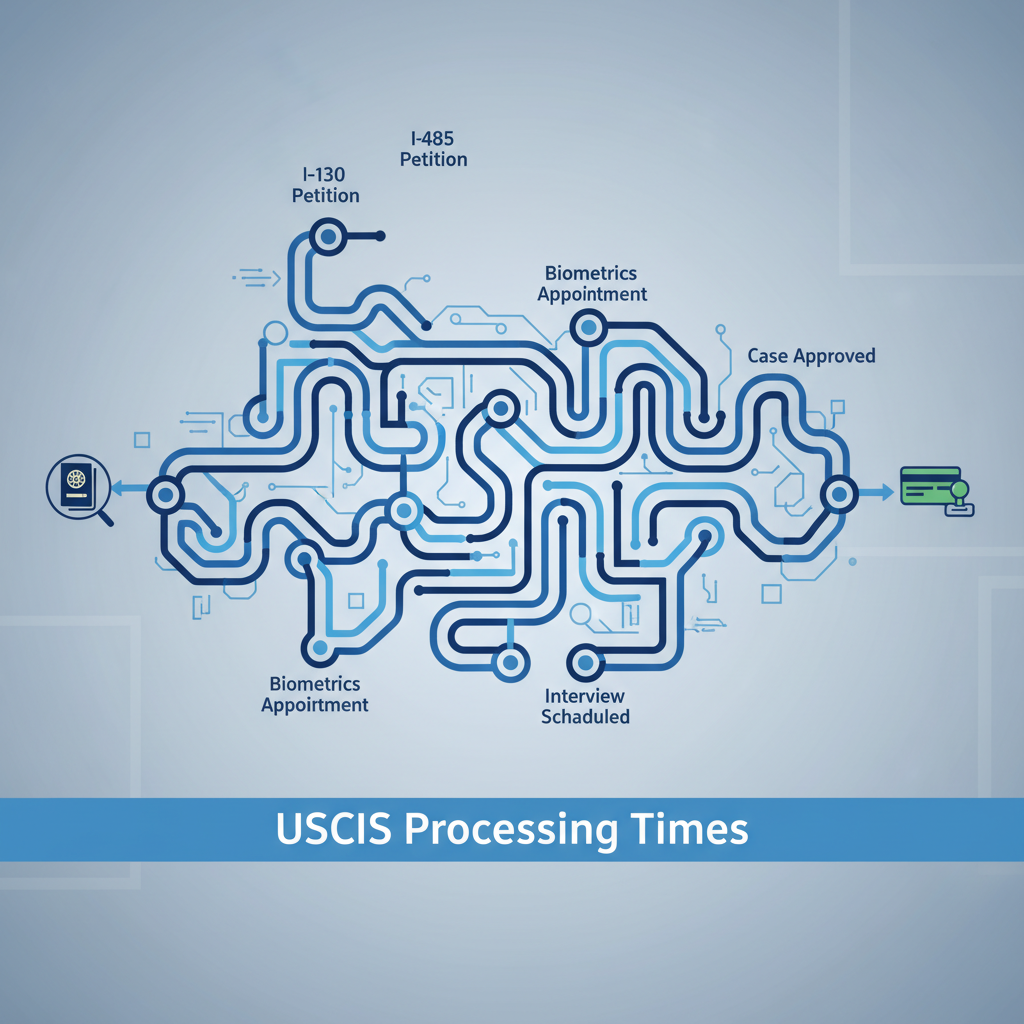
How Imigrar Helps Immigrants in Orlando Navigate Processing Delays
At Imigrar, we understand that


