
Navigating USCIS Processing Times and Updates for 2026: Your
Understand the latest USCIS processing time updates for 2026 and how they impact immigrants in Orlando and nationwide. Get practical advice, timelines, and expert guidance from Imigrar.

The immigration journey can often feel like a marathon, not a sprint. One of the most common sources of anxiety and uncertainty for immigrants and their families is the fluctuating nature of U.S. Citizenship and Immigration Services (USCIS) processing times. As we move towards 2026, understanding these updates and how they impact your application is more crucial than ever.
At Imigrar, an immigration law firm based in Orlando, Florida, we are committed to helping you navigate these complexities. Our mission is to "Keep Families Together," and that includes providing clear, accurate, and actionable information to empower you through every step of your immigration process. Whether you're in Central Florida, the I-4 corridor, or anywhere across the nation, our expert team is here to assist.
Need Help? Our Orlando immigration team is ready to assist. Call +1 786-791-3106 for a free consultation, or message us online. Se Habla Español.
The reporting that sparked this guide:
USCIS Processing Times and Updates for 2026 (USCIS)
What This News Means for Immigrants in Orlando and Across Florida
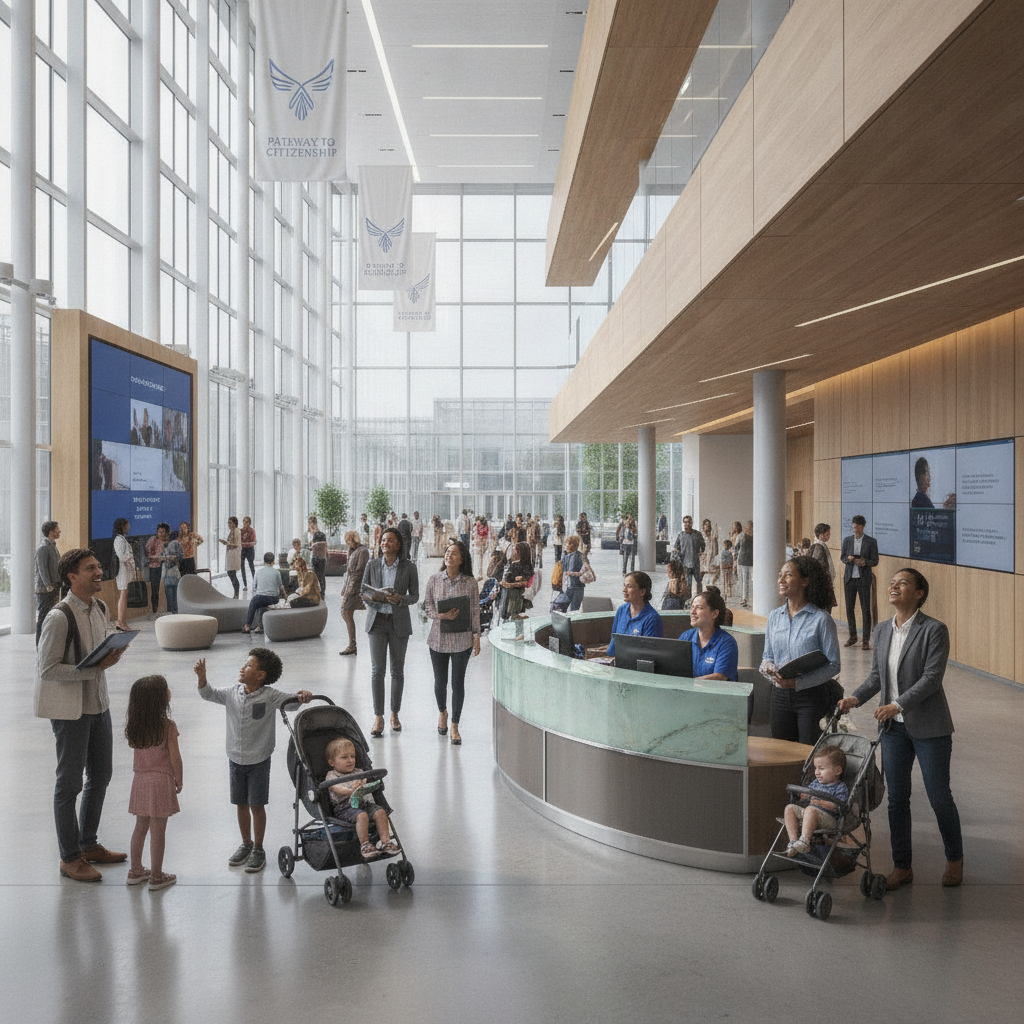
The ongoing adjustments to USCIS processing times are not just bureaucratic updates; they are deeply personal for thousands of individuals and families. These changes directly influence when you can reunite with loved ones, start a new job, or finally feel secure in your immigration status. For immigrants in Orlando, across Florida, and indeed nationwide, staying informed is the first step toward managing expectations and planning for the future.
Why this news is showing up now
USCIS processing times are dynamic, constantly shifting due to a multitude of factors. These include:
- Application Volume: Fluctuations in the number of applications received for various forms (e.g., Form I-130, Form I-485, Form N-400) directly impact how long it takes to process them. High demand often leads to longer waits.
- Resource Allocation: USCIS's budget, staffing levels, and technological capabilities play a significant role. Investment in new systems or hiring more adjudicators can shorten times, while budget cuts or hiring freezes can lengthen them.
- Policy Changes: New immigration policies or changes in existing regulations can alter the review process, requiring new procedures or additional scrutiny, which in turn affects processing speed.
- Backlogs: The lingering effects of previous years' backlogs, exacerbated by global events and administrative challenges, continue to impact current processing times. USCIS is continually working to reduce these, but it's a monumental task.
- Adjudication Complexity: Some cases are inherently more complex, requiring more evidence, interviews, or background checks, thus taking longer to process.
The updates we see now reflect USCIS's ongoing efforts to provide greater transparency and manage public expectations as they work through their immense caseload leading into 2026. These aren't isolated incidents but rather a continuous reflection of the agency's operational realities.
How it can affect Florida residents
Florida is home to one of the largest and most diverse immigrant populations in the United States. For residents of Orlando and the broader Central Florida area, these processing time updates have specific implications:
- Orlando USCIS Field Office: The processing times for applications handled by the Orlando Field Office (such as interviews for Adjustment of Status or naturalization) are crucial. Delays here can mean longer waits for green cards or U.S. citizenship for many in Orange County and surrounding areas.
- Family-Based Petitions: Many Florida families are awaiting approval of Form I-130, Petition for Alien Relative. Delays in these petitions can prolong family separation, creating immense emotional and financial strain.
- Employment Authorization: For those seeking work permits (Form I-765), delays can mean an inability to work or renew existing authorization, directly impacting livelihoods along the I-4 corridor and across the state.
- Travel Plans: Applications for Advance Parole (Form I-131), essential for those awaiting green cards to travel internationally, can also be affected, potentially disrupting urgent family visits or business trips.
- Planning and Uncertainty: Longer or unpredictable processing times make it difficult for individuals and families to plan their lives, whether it's buying a home, enrolling in school, or making career decisions in Florida.
Understanding these impacts is the first step toward proactive planning. Imigrar is deeply familiar with the challenges faced by Florida's immigrant communities and offers tailored guidance to help you navigate these often-frustrating delays.
What USCIS Processing Times Are (and Why They Matter)
When you submit an immigration application to USCIS, one of the first questions on your mind is "How long will this take?" The answer lies in understanding "processing times."
A plain-English definition
USCIS Processing Times refer to the period it takes for U.S. Citizenship and Immigration Services to process an application or petition from the date they receive it until they make a decision. These times are estimates, not guarantees, and they can vary significantly based on the form type, the specific USCIS Service Center or Field Office handling your case, and various other factors.
Think of it like a queue at a government agency. When you submit your application, you get in line. The processing time tells you how long people currently at the front of that line had to wait. It's a moving target because the length of the line, the speed of the processing agents, and the complexity of the cases all change over time.
Key terms you need to know
Navigating USCIS processing times requires familiarity with several important terms:
- Receipt Date: This is the date USCIS officially receives your application. You'll find this on your Form I-797, Notice of Action. Your processing time starts from this date.
- Priority Date: Primarily relevant for family-sponsored and employment-based visas that are numerically limited. This is the date your petition (e.g., Form I-130 or Form I-140) was properly filed with USCIS. Your green card application (Form I-485) cannot be approved until your Priority Date becomes "current" according to the U.S. Department of State Visa Bulletin.
- Processing Time Range: USCIS typically provides a range (e.g., "5 to 12 months"). This indicates that 80% of cases for that specific form type at that specific office are being completed within that timeframe.
- Service Center: USCIS has several Service Centers (e.g., California, Nebraska, Texas, Vermont) that primarily handle mail-in applications for various forms. Your Form I-797 will indicate which Service Center is processing your case.
- Field Office: These are local USCIS offices (like the Orlando USCIS Field Office) that handle in-person interviews, biometrics appointments, and some local adjudications, particularly for Adjustment of Status and naturalization applications.
- Visa Bulletin: A monthly publication by the U.S. Department of State that provides updated priority dates for numerically limited immigrant visas. If your visa category is "current," you can proceed with your green card application (if adjusting status) or have your visa issued (if consular processing).
- Adjustment of Status (AOS): The process of applying for lawful permanent resident status (a green card) while physically present in the United States, typically using Form I-485.
- Consular Processing: The process of applying for an immigrant visa at a U.S. embassy or consulate abroad, often after an approved Form I-130 or Form I-140.
- Request for Evidence (RFE): A notice from USCIS asking for additional documents or information to support your application. Responding promptly and thoroughly is critical.
- Notice of Intent to Deny (NOID): A notice from USCIS indicating their intent to deny your application unless you provide compelling evidence to overcome their concerns.
Understanding these terms is vital because they directly influence how you track your application and what actions you might need to take. Delays can mean prolonged separation from family, inability to work, or the continuation of an uncertain legal status. This is why staying informed and proactive is so important.
Need Help? Our Orlando immigration team is ready to assist. Call +1 786-791-3106 for a free consultation, or message us online. Se Habla Español.
Current Immigration Law: The Foundation
All USCIS processing, including the determination of processing times, operates within the framework of U.S. immigration law. The primary legal statute governing immigration is the Immigration and Nationality Act (INA), codified in Title 8 of the U.S. Code.
Federal requirements
The INA establishes the categories for obtaining visas and green cards, the eligibility criteria, and the procedures for application and adjudication. USCIS's role is to administer these laws and regulations. Key aspects relevant to processing times include:
- Statutory Caps: Many visa categories, particularly family-sponsored (beyond immediate relatives) and employment-based visas, are subject to annual numerical limitations set by Congress. This creates visa backlogs and priority dates, directly impacting wait times, even if an application is otherwise processed quickly. Sections 201-203 of the INA address these numerical limitations and preference categories.
- Adjudication Standards: The INA and subsequent regulations dictate the evidence required for each application type and the standards for approval. For example, Form I-485 for Adjustment of Status requires demonstrating eligibility for a green card, admissibility to the U.S., and no bars to adjustment.
- Security Checks: Federal law mandates thorough background and security checks for all immigration applicants. These checks, conducted by various federal agencies, can sometimes contribute to processing delays, particularly if there are name commonalities or complex histories.
- Administrative Procedure Act (APA): While not specific to immigration, the APA governs how federal agencies, including USCIS, must create and implement regulations, ensuring due process and transparency in their operations. This affects how USCIS can change procedures or processing standards.
- Specific Forms and Regulations: Each USCIS form (e.g., Form I-130, Form I-485, Form N-400, Form I-765, Form I-131) is governed by specific sections of the INA and corresponding federal regulations (found in 8 CFR - Code of Federal Regulations). These regulations detail the eligibility requirements, required documentation, and processing procedures.
For example, the process for obtaining a family-based green card involves an approved Form I-130, Petition for Alien Relative (INA Section 204), followed by either Adjustment of Status via Form I-485 (INA Section 245) or consular processing (INA Section 222). Naturalization through Form N-400 is governed by INA Section 316. Understanding these legal foundations helps demystify why certain documents are required or why some processes take longer than others.
For official information and forms, always refer to the USCIS official website.
Florida-specific considerations
While immigration law is federal, certain aspects can interact with state-specific considerations in Florida:
- Local USCIS Field Office: The Orlando USCIS Field Office is a critical point of contact for many Central Florida residents. The efficiency and workload of this specific office can influence interview scheduling and local adjudication times for applications like Form I-485 and Form N-400. Knowledge of the Orlando office's typical processing patterns can be invaluable.
- State-Level Policies: While Florida cannot dictate federal immigration law, state policies can affect immigrants in other ways. For example, policies regarding driver's licenses for non-citizens, access to certain state benefits, or occupational licensing can be influenced by an individual's federal immigration status, which in turn is affected by USCIS processing times.
- Refugee and Asylum Seekers: Florida has a significant population of asylum seekers and refugees. Processing times for asylum applications (Form I-589) and subsequent Adjustment of Status can be uniquely lengthy and are often handled by specific USCIS Asylum Offices, though interviews might occur at Field Offices.
- Community Resources: Florida's diverse immigrant communities, particularly in areas like Orlando and Miami, have various non-profit organizations and legal aid groups that support immigrants. These resources can be helpful, but they don't expedite federal processing.
Reminder: No state law can override federal immigration law. However, understanding the interplay between federal processing and local realities is key to a comprehensive immigration strategy in Florida.
How to Navigate USCIS Processing Times: A Complete Step-by-Step Guide
Managing the uncertainty of USCIS processing times requires a methodical approach. Here's a step-by-step guide to help you stay informed and proactive.
1) Understand Your Application and Service Center/Field Office
Before you can track your case, you need to know what you're tracking. Your Form I-797, Notice of Action (the receipt notice you received after filing) is your most important document here. It contains vital information:
- Receipt Number: A 13-character code (e.g., EAC, WAC, LIN, SRC, NBC, IOE) that uniquely identifies your case.
- Form Type: The specific USCIS form you filed (e.g., Form I-130, Form I-485, Form N-400).
- Filing Date/Receipt Date: The date USCIS officially received your application.
- Service Center or Field Office: The specific USCIS office (e.g., Nebraska Service Center, Orlando Field Office) that is processing your application. This is crucial as processing times vary by office.
Required Documents for this step:
- Form I-797, Notice of Action (Receipt Notice)
- A copy of the specific application form you filed (e.g., Form I-130)
Important: Keep your Form I-797 in a safe place. You'll need the receipt number for all future inquiries.
2) Check Official USCIS Processing Times Online
USCIS provides an online tool to check current processing times. This should be your primary source of information.
How to Check:
- Go to the official USCIS Processing Times page.
- Select the form number (e.g., I-130, I-485).
- Select the form category (e.g., I-130: Family-based petition, F2A spouses and children of LPRs).
- Select the Service Center or Field Office that is processing your application (as indicated on your Form I-797). For Orlando residents, this might be the Orlando Field Office for some applications like Form I-485 interviews or Form N-400 naturalization cases, while other applications might be at a Service Center.
- Click "Get Processing Time."
The page will display a range (e.g., "5.5 months to 12 months"). This means that 80% of cases for that form and office are completed within that timeframe. It will also show the "receipt date for a case inquiry," which is the date by which you can inquire about your case if it's taking longer than expected.
Required Documents for this step:
- Your Receipt Number (from Form I-797) is helpful to have, but not strictly required for *checking* the general times.
3) Interpret the Processing Times and Your Priority Date
Understanding the numbers is key:
- Comparing Your Receipt Date: If your Receipt Date is *before* the "receipt date for a case inquiry" listed on the USCIS processing times page, your case is likely outside normal processing times, and you can submit an inquiry.
- Understanding Priority Dates (if applicable): If you are applying for a green card through a numerically limited category (most family-based preference categories and all employment-based categories), your Priority Date is critical. Even if your initial petition (e.g., Form I-130) is approved quickly, you cannot proceed with Adjustment of Status (Form I-485) or consular processing until your Priority Date becomes "current" on the U.S. Department of State Visa Bulletin. The Visa Bulletin is updated monthly and can be highly unpredictable.
Example: If the USCIS processing tool shows "Receipt date for a case inquiry: January 1, 2025" for Form I-485 at the Orlando Field Office, and your Form I-485 receipt date is December 1, 2024, your case is within the normal processing window. If your receipt date was December 1, 2023, you are outside the normal processing time and can make an inquiry.
Required Documents for this step:
- Your Receipt Date (from Form I-797)
- Your Priority Date (from Form I-797 for the underlying petition, if applicable)
- The latest U.S. Department of State Visa Bulletin (if your category is numerically limited)
4) What to Do If Your Case is Outside Normal Processing Times
If your case's Receipt Date is earlier than the "receipt date for a case inquiry" on the USCIS processing times page, you are eligible to submit an inquiry:
- Submit an "Outside Normal Processing Times" Service Request: You can do this online through your USCIS account or by calling the USCIS Contact Center (1-800-375-5283). Be prepared to provide your receipt number and details of your application. USCIS aims to respond to these inquiries within 30 days.
- Check Case Status Online: Regularly check your case status using your Receipt Number on the USCIS website. This provides real-time updates on your application's progress.
Required Documents for this step:
- Your Receipt Number (from Form I-797)
- Details of your application (form type, filing date, Service Center/Field Office)
5) Following Up and Expedite Requests
If your service request doesn't yield results or if you have an urgent need, there are further steps:
- Contact USCIS Again: If 30 days pass after your service request without a substantive response, you can call the USCIS Contact Center again.
- Congressional Inquiry: Your U.S. Senator or Representative can submit an inquiry on your behalf. This can sometimes prompt USCIS to review your case, though it doesn't guarantee faster processing.
- Expedite Requests: In specific, urgent situations, you may be able to request an expedited processing of your application. Grounds for expedited processing include:
- Severe financial loss to a company or individual.
- Urgent humanitarian reasons.
- Compelling U.S. government interests.
- Clear USCIS error.
- Mandamus Lawsuit (Last Resort): In extreme cases of unreasonable delay, and after exhausting all administrative remedies, a "Writ of Mandamus" lawsuit can be filed in federal court to compel USCIS to make a decision on your case. This is a complex legal action and should only be pursued with experienced legal counsel.
Required Documents for this step:
- All previous correspondence with USCIS (receipts, service request confirmations)
- Proof of urgent need for expedite requests (e.g., medical records, eviction notices, employer letters for financial hardship)
6) Prepare for Interviews and RFEs
Even while waiting, be prepared:
- Interviews: If your application requires an interview (common for Form I-485 and Form N-400 at the Orlando USCIS Field Office), ensure you have all original documents and are ready to answer questions about your application.
- RFEs: If you receive a Request for Evidence (RFE), respond promptly and thoroughly. Failure to do so can lead to denial. Gather all requested documents, ensure translations are certified, and submit them before the deadline.
Required Documents for this step:
- All original documents submitted with your application
- Any additional documents requested in an RFE
- Translation certificates for non-English documents

Practical Steps You Can Take Today
While you can't control USCIS processing times, you can control how well prepared and proactive you are. Here are practical steps to take:
Actionable Checklist:
- Keep Copies of Everything: Make a copy of every single document you send to USCIS and every document you receive from them. Organize these copies meticulously in a physical and/or digital folder.
- Respond Promptly to RFEs/NOIDs: If USCIS sends a Request for Evidence (RFE) or a Notice of Intent to Deny (NOID), respond immediately and comprehensively. These usually have strict deadlines (e.g., 90-day window).
- Update Your Address: If you move, even within Orlando or Florida, update your address with USCIS within 10 days of moving using USCIS's online change of address tool. Failure to do so can result in missed notices and potential denial.
- Monitor Official USCIS Channels: Regularly check the official USCIS Processing Times page and your USCIS online account for updates.
- Consult an Attorney Early: Don't wait until you're outside normal processing times or receive an RFE. An experienced immigration attorney can help you prepare a robust application, track your case, and intervene with USCIS if necessary.
- Understand Your Priority Date: If your visa category is numerically limited, know your Priority Date and monitor the Visa Bulletin monthly. This dictates when your green card can be approved.
- Be Patient but Proactive: Immigration processes take time. While patience is required, don't be passive. Stay informed and follow up when appropriate.
- Prepare for Biometrics: Be ready for your biometrics appointment (fingerprints, photos, signature) and attend it as scheduled. This is a critical step for most applications.
Document Preparation Guidance:
- Organize: Create a logical system for your documents. Label folders clearly.
- Copy: Always send copies, never originals, unless specifically requested. Bring originals to interviews.
- Translate: Any document not in English must be accompanied by a complete and certified English translation. The translator must provide a certification that they are competent to translate and that the translation is accurate.
- Photographs: Ensure all photographs meet USCIS specifications (e.g., size, background, recent).
- Proofread: Double-check all forms for accuracy and completeness before submission. Even a minor error can lead to an RFE and delay.
Timeline Expectations:
Warning: USCIS processing times are always estimates. They can change without notice and vary widely based on the specific form, Service Center, and individual case circumstances. While you should monitor them, do not base critical life decisions solely on these estimates. Always build in extra time for potential delays.
For example, Form I-765 (Employment Authorization) processing times can range from a few months to over a year, significantly impacting an applicant's ability to work. Similarly, Form N-400 (Naturalization) can take anywhere from 6 months to 2 years or more, affecting when you can become a U.S. citizen and vote.
Related Articles
You may also be interested in:
-
H-1B Visa Lottery FY2027: Navigating New Rules for Tech Talent &
The H-1B visa lottery for Fiscal Year 2027 brought significant changes to how registrations are selected. Understand what these new, beneficiary-centr...
-
Green Card Interview Prep: Your Ultimate 2026 Guide by Imigrar
Preparing for your Green Card interview can be stressful. This 2026 guide from Imigrar, Orlando's trusted immigration firm, offers expert tips, step-b...
-
H-1B Visa Lottery Changes FY2027: What Immigrants Need to Know
Understand the critical H-1B visa lottery changes for FY2027. Imigrar guides you through new rules, deadlines, and how these updates impact your U.S. ...
-
TPS Extension Updates 2026: A Critical Guide for Immigrants in
Stay informed on the latest Temporary Protected Status (TPS) extensions. This comprehensive guide from Imigrar, your Orlando immigration law firm, bre...
Related Topics
Need Legal Assistance?
Our experienced immigration attorneys are here to help with your case. Contact Imigrar today for a free consultation and let us guide you through the legal process with confidence.
📍 Orlando, Florida • Serving clients nationwide
📧 info@imigrar.com