
Naturalization Test 2026: Navigating Upcoming Citizenship Changes
Major changes to the U.S. naturalization test are coming in 2026. Learn what to expect, how to prepare, and how Imigrar can help you achieve U.S. citizenship.
Here at Imigrar, we understand that the journey to U.S. citizenship is one of the most significant steps an immigrant can take. It’s a path to security, opportunity, and the ability to truly call America home. Our tagline, "Keep Families Together," reflects our core mission, and we know that achieving citizenship is often central to that goal.
As expert immigration legal content writers for Imigrar, based right here in Orlando, Florida, we continuously monitor the immigration landscape to provide our clients with the most up-to-date and accurate information. Today, we're addressing a crucial development that will impact countless individuals hoping to naturalize: significant changes to the U.S. Naturalization Test anticipated in 2026.
Understanding these upcoming changes is vital for anyone planning to apply for U.S. citizenship. While the exact implementation date and final details are still being solidified, the time to prepare is now. Our goal with this comprehensive guide is to provide you with everything you need to know, from the current requirements to actionable steps you can take today, ensuring you are well-prepared for your citizenship journey.
Need Help Navigating Naturalization? Don't face the upcoming changes alone. Our Orlando immigration team is ready to assist. Call +1 786-791-3106 for a free consultation, or message us online. Se Habla Español.
The reporting that sparked this guide
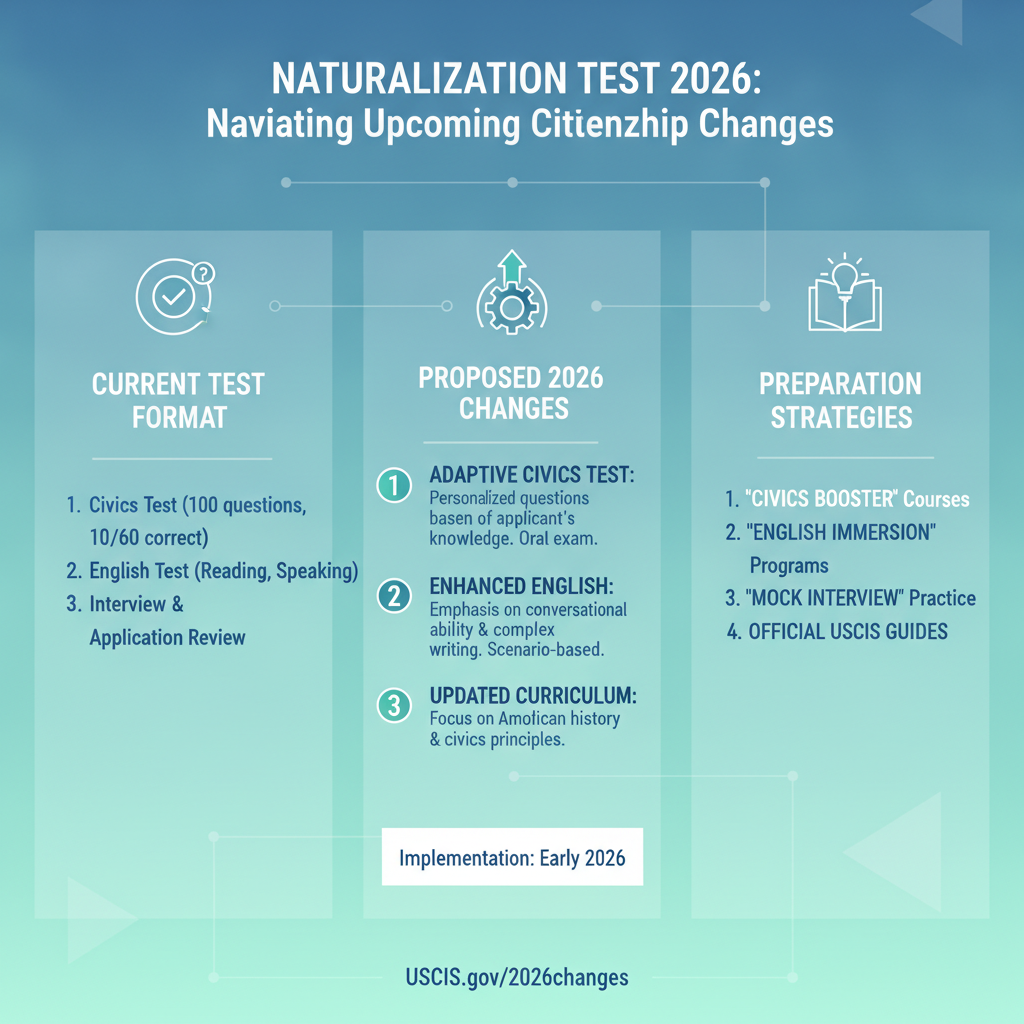
Naturalization Test Changes Coming in 2026 (Citizenship)
What This News Means for Immigrants in Orlando and Across Florida
The announcement of impending changes to the U.S. Naturalization Test in 2026 is significant for every lawful permanent resident (LPR) aspiring to become a U.S. citizen, especially those residing in Orlando, Central Florida, and throughout the state. It signals a need for proactive preparation and a careful understanding of the evolving requirements.
Why this news is showing up now
U.S. Citizenship and Immigration Services (USCIS) periodically reviews and updates the naturalization test to ensure it remains a relevant and effective measure of an applicant's knowledge of U.S. history, government, and civics. These reviews are designed to reflect current educational best practices and to ensure that new citizens possess a foundational understanding of American principles.
The current discussion around 2026 changes follows a pattern of USCIS evaluating its processes. For instance, a revised test was implemented in late 2020 but was subsequently reverted to the 2008 version in early 2021 due to concerns about its complexity and potential barriers to naturalization. This history underscores USCIS's commitment to finding the right balance for the test. The current round of proposed changes has undergone a public comment period, allowing stakeholders and the public to provide feedback. As of November 2026, the final rules and an exact implementation date are eagerly awaited, making it a trending topic in immigration discussions. The goal is to ensure the test is fair, effective, and prepares new citizens for civic engagement.
How it can affect Florida residents
While naturalization is a federal process, the impact of these changes will be felt directly by Florida residents, particularly those who will be interviewed at the Orlando USCIS Field Office or other field offices across the state, such as in Tampa or Miami. Here's how:
- Uniform Application: The new test, once implemented, will apply uniformly nationwide. This means that whether you file your application from Orlando, Miami, or any other city in Florida, you will be subject to the same updated test questions and format if your interview falls on or after the effective date.
- Preparation Strategy: For Central Florida residents, especially those nearing their eligibility for naturalization, understanding the nature of these changes is paramount. It means that simply memorizing the current 100 civics questions might not be sufficient. A more comprehensive understanding of U.S. civics and history, coupled with strong English language skills, will be critical.
- Local Resources: The Orlando immigration community, including organizations and legal firms like Imigrar, will be at the forefront of disseminating information and providing tailored preparation resources. Our local expertise means we understand the specific needs and concerns of applicants in Orange County and surrounding areas.
- Timely Filing: Depending on the final effective date, some individuals might consider expediting their naturalization application if they are already eligible and prefer to take the current test. However, this decision should be made carefully and ideally with legal counsel.
For anyone in Florida, especially those along the I-4 corridor considering naturalization, staying informed about these changes is not just advisable—it's essential for a successful outcome. Imigrar is here to guide you through every step, ensuring you’re prepared for whatever the new test brings.
What Naturalization Test Changes Are (and Why They Matter)
Naturalization is the process by which a foreign-born individual voluntarily becomes a U.S. citizen. It’s a momentous occasion, representing the culmination of years of living and contributing to American society. A key component of this process for most applicants is passing the Naturalization Test, which assesses an applicant’s knowledge of English and U.S. civics.
A plain-English definition
The "Naturalization Test Changes Coming in 2026" refers to anticipated modifications to the content and possibly the format of the civics portion of the U.S. citizenship test, and potentially the English speaking assessment. Instead of simply updating the list of 100 civics questions, USCIS is exploring a more fundamental shift. The new test is expected to move beyond simple recall, incorporating more scenario-based questions that require applicants to demonstrate a practical understanding of civics principles rather than just memorization. Additionally, the English speaking portion might become more integrated into the interview, with the USCIS officer assessing language proficiency through natural conversation about the applicant's life and application, rather than through distinct, separate questions.
These changes matter because they reflect a desire to ensure new citizens have a deeper, more functional grasp of American governance and values. For applicants, it means preparation will need to be more thorough and conceptual, focusing on understanding rather than just rote learning.
Key terms you need to know
To navigate the naturalization process, especially with upcoming changes, it's crucial to understand the terminology:
- Naturalization: The legal process by which a non-U.S. citizen voluntarily becomes a U.S. citizen.
- USCIS (U.S. Citizenship and Immigration Services): The federal agency responsible for administering the country's lawful immigration system, including processing naturalization applications and administering the test. Its official website is a critical resource: USCIS official website.
- Lawful Permanent Resident (LPR) / Green Card Holder: An individual who has been granted the privilege of permanently residing in the United States. This is generally a prerequisite for naturalization.
- Form N-400, Application for Naturalization: The primary application form used to apply for U.S. citizenship.
- Civics Test: One of two parts of the naturalization test, assessing an applicant's knowledge of U.S. government, history, and geography. This is the part expected to see the most significant changes in 2026.
- English Test: The second part of the naturalization test, which assesses an applicant's ability to read, write, and speak English. This also may see modifications, particularly in the speaking component.
- Continuous Residence: A requirement for naturalization, meaning an applicant must have maintained residence in the U.S. for a specified period (typically 5 years, or 3 years if married to a U.S. citizen) without prolonged absences.
- Physical Presence: A requirement that an applicant must have actually been physically present in the U.S. for a certain cumulative period within their continuous residence.
- Good Moral Character: A fundamental eligibility requirement, meaning an applicant must demonstrate adherence to community standards of morality. Certain criminal offenses or unlawful actions can disqualify an applicant.
- Oath of Allegiance: The final step in the naturalization process, where an applicant formally pledges loyalty to the United States and renounces allegiance to any foreign state.
- Exemptions/Waivers: Certain applicants may be exempt from parts of the English or civics test based on age, length of permanent residence, or medical conditions. For example, the "50/20" and "55/15" rules exempt certain older applicants from the English test, and the "65/20" rule offers a simpler civics test. Medical waivers (**Form N-648, Medical Certification for Disability Exceptions**) are available for those with qualifying physical or mental impairments.
Understanding these terms will empower you to better comprehend the naturalization process and the implications of the upcoming test changes. Imigrar is here to simplify these concepts and provide clarity for your journey to citizenship.
Current Immigration Law: The Foundation for Naturalization
While the naturalization test is evolving, the fundamental legal framework for obtaining U.S. citizenship remains rooted in federal immigration law. Understanding this foundation is crucial before delving into the specifics of the test itself.
Federal requirements
The eligibility requirements for naturalization are primarily outlined in the **Immigration and Nationality Act (INA)**, specifically Section 312, which addresses the English language and civics knowledge requirements, and other sections covering general eligibility. To become a U.S. citizen, most applicants must meet the following federal criteria:
- Age: Be at least 18 years old at the time of filing **Form N-400**.
- Lawful Permanent Residence: Be a lawful permanent resident (Green Card holder) for at least 5 years. This period is shortened to 3 years if you are married to a U.S. citizen and have been living in marital union with your spouse for that entire period, and your spouse has been a U.S. citizen for at least 3 years.
- Continuous Residence: Have resided continuously in the U.S. for at least 5 years (or 3 years, if applicable) immediately preceding the date of filing your **Form N-400**. Absences from the U.S. of 6 months or more can break continuous residence.
- Physical Presence: Have been physically present in the U.S. for at least half of the required continuous residence period (e.g., 30 months out of 5 years, or 18 months out of 3 years).
- Residence in State/USCIS District: Reside for at least 3 months immediately preceding the filing of **Form N-400** in the state or USCIS district where you file your application. For Orlando residents, this would typically be the Orlando USCIS Field Office district.
- Good Moral Character: Demonstrate good moral character for the statutory period (5 or 3 years) leading up to your application and until you take the Oath of Allegiance. This is a broad requirement that can be impacted by criminal history, tax issues, or other legal infractions.
- Attachment to the Constitution: Demonstrate an attachment to the principles and ideals of the U.S. Constitution. This is assessed through your answers during the interview and the Civics Test.
- English and Civics Knowledge: Be able to read, write, and speak basic English and have a knowledge and understanding of U.S. history and government (civics). This is where the Naturalization Test comes in. (Exemptions apply for certain age and disability categories).
All these requirements are fundamental and remain in place regardless of changes to the naturalization test. USCIS provides detailed guidance on these requirements on its official website: USCIS official website.
Florida-specific considerations
While the naturalization requirements are federal, the application process is administered at the local level through USCIS Field Offices. For applicants in Orlando and Central Florida, your application will typically be processed by the Orlando USCIS Field Office, located at 6650 Corporate Centre Blvd, Orlando, FL 32822. Key Florida-specific considerations include:
- Jurisdiction: Your place of residence for the last three months determines which USCIS Field Office has jurisdiction over your case. For residents of Orange County and surrounding Central Florida areas, this will generally be the Orlando office.
- Processing Times: Processing times can vary by field office. It's essential to check the current processing times for the Orlando USCIS Field Office. You can do this on the USCIS website: USCIS Processing Times.
- Local Legal Counsel: Having an immigration attorney familiar with the nuances of the Orlando USCIS Field Office and local judicial district can be a significant advantage. Imigrar's team in Orlando has extensive experience assisting clients with naturalization applications in this region.
- Community Resources: Florida has a vibrant immigrant community, and various non-profit organizations and community centers in Orlando offer English language classes and civics preparation courses that can be invaluable, especially with the upcoming test changes.
Understanding both the overarching federal laws and the localized procedural aspects is key to a smooth naturalization process. Imigrar is dedicated to providing comprehensive support to Florida residents on their path to citizenship.
Worried About the New Test? Get expert legal guidance from Imigrar. We'll help you understand the requirements and prepare effectively. Call +1 786-791-3106 for a free consultation. Se Habla Español.

How to Navigate the Naturalization Process (Before and After the 2026 Changes): A Complete Step-by-Step Guide
The naturalization process involves several critical steps, each requiring careful attention to detail. While the test itself is changing, the overall application journey largely remains the same. Here’s a comprehensive guide to help you through it.
1) Determine Your Eligibility
Before you even think about filing, you must confirm you meet all the foundational requirements for naturalization. This is the most crucial first step, as applying when ineligible can lead to denial and potential complications.
- Check your Green Card Status: Ensure you are a lawful permanent resident (LPR).
- Calculate Continuous Residence: Confirm you have met the 5-year or 3-year (for spouses of U.S. citizens) continuous residence requirement immediately preceding your application. Be mindful of any lengthy trips outside the U.S. (generally over 6 months).
- Calculate Physical Presence: Verify you have been physically present in the U.S. for at least half of your continuous residence period (e.g., 30 months out of 5 years).
- Good Moral Character Assessment: Review your personal history for any issues that might affect your good moral character, such as arrests, criminal convictions (even minor ones), tax issues, or failure to pay child support. It is **Important:** to be honest and consult an attorney if you have any concerns in this area.
- Age and State Residence: Confirm you are 18 years or older and have resided in your current state (e.g., Florida) for at least 3 months.
Required Documents for Eligibility Check (Internal Review):
- Your Green Card (Form I-551)
- Marriage certificate (if applying under the 3-year rule)
- Records of all entries and exits from the U.S. (passport stamps, travel itineraries)
- Any court dispositions or police reports related to arrests or convictions
- Tax returns for the past 5 years (or 3 years)
2) Prepare and File Form N-400
Once you've confirmed your eligibility, the next step is to meticulously complete **Form N-400, Application for Naturalization**. This form is extensive and requires detailed personal, residential, employment, marital, and travel history, as well as questions about your good moral character and attachment to the U.S. Constitution.
- Gather Supporting Documents: Collect all necessary documents as listed in the **Form N-400** instructions.
- Complete the Form Accurately: Fill out every section completely and truthfully. Inaccuracies or omissions can cause significant delays or lead to a denial.
- Pay the Filing Fee: The current filing fee for **Form N-400** is $725 (as of November 2026), which includes the biometrics fee. Check the USCIS website for the most current fee schedule. If you meet certain income guidelines, you may be eligible for a fee waiver using **Form I-912, Request for Fee Waiver**.
- Assemble Your Application Packet: Organize your **Form N-400**, supporting documents, and fee payment (or waiver request) exactly as specified in the USCIS instructions.
- Mail Your Application: Send your complete application to the correct USCIS lockbox facility based on your state of residence. For Florida residents, this is typically the USCIS Dallas Lockbox.
Required Documents for Filing Form N-400 (to
Related Topics
Need Legal Assistance?
Our experienced immigration attorneys are here to help with your case. Contact Imigrar today for a free consultation and let us guide you through the legal process with confidence.
📍 Orlando, Florida • Serving clients nationwide
📧 info@imigrar.com