
TPS Extension Updates: A Guide for Florida Immigrants (2026)
Stay informed on the latest Temporary Protected Status (TPS) extensions. This comprehensive guide covers eligibility, the application process, and what recent news means for immigrants in Orlando and nationwide.
The landscape of U.S. immigration law is constantly evolving, and for many, staying updated on critical changes is paramount to maintaining their status and building a secure future. At Imigrar, we understand the anxieties and hopes that come with every new announcement, especially concerning programs as vital as Temporary Protected Status (TPS).
Today, as of October 31, 2026, we’re addressing the latest news regarding TPS extensions, providing clarity, guidance, and actionable steps for individuals and families in Orlando, across Florida, and nationwide.
Our commitment is simple: "Keep Families Together." This guide reflects that promise, offering a detailed look at what TPS extensions mean for you, how to navigate the process, and how our expert team can help.
Need Help? Our Orlando immigration team is ready to assist. Call +1 786-791-3106 for a free consultation, or message us online. Se Habla Español.
The reporting that sparked this guide:
TPS (Temporary Protected Status) Extension News (Legal News)
What This News Means for Immigrants in Orlando and Across Florida
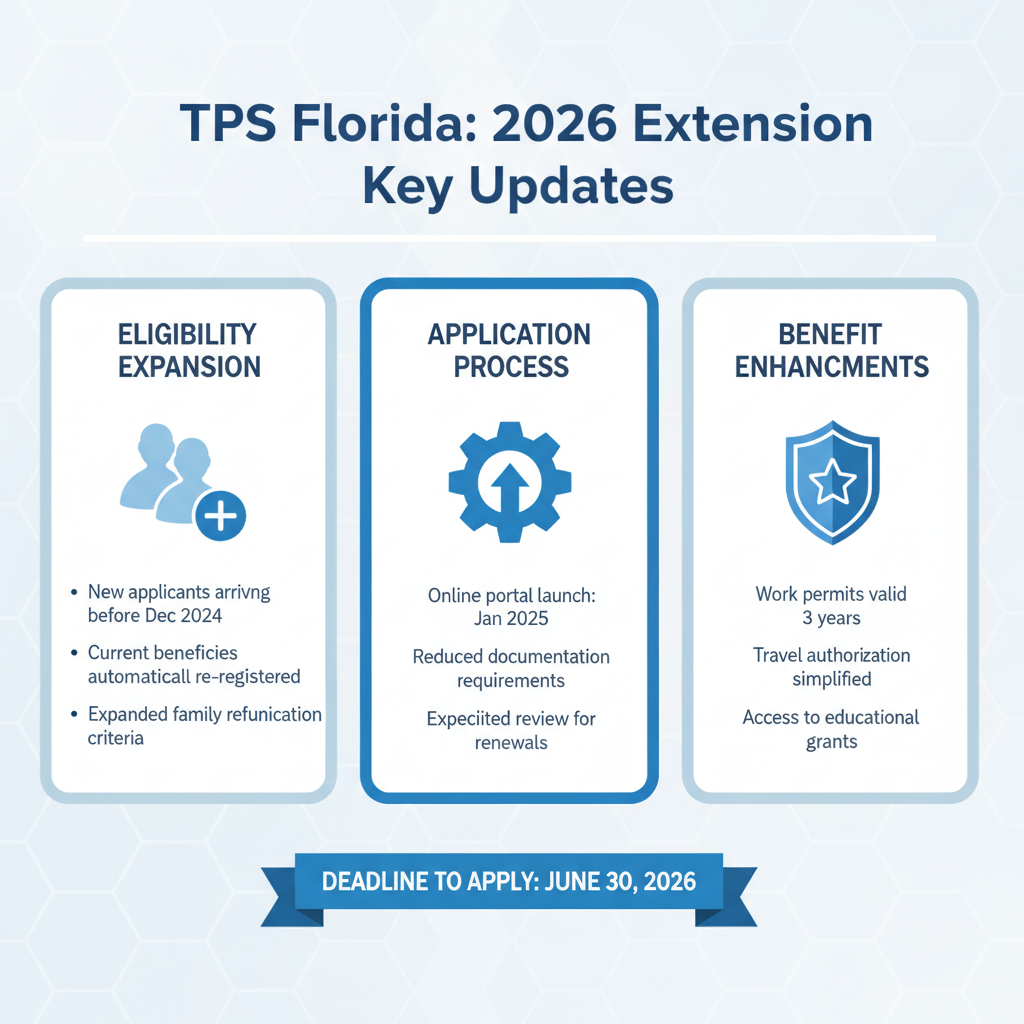
Recent reports concerning Temporary Protected Status (TPS) extensions are more than just legal bulletins; they are lifelines for thousands of individuals and families. For those who have built lives, careers, and communities here in the United States, particularly in vibrant areas like Orlando and Central Florida, these extensions offer continued hope and stability. Understanding the implications of this news is the first step toward securing your future.
Why this news is showing up now
The cycle of TPS designations and extensions is a dynamic process, inherently tied to the ever-changing conditions in designated countries. The Secretary of Homeland Security (DHS) is authorized under the Immigration and Nationality Act (INA) Section 244 to designate a country for TPS when extraordinary and temporary conditions prevent its nationals from returning safely. These conditions can include ongoing armed conflict, environmental disaster, or other extraordinary and temporary conditions. Periodically, DHS reviews these designations to determine if the conditions persist. When they do, DHS typically announces an extension of TPS for that country, often accompanied by a re-registration period.
Therefore, recent news of TPS extensions reflects the U.S. government's assessment that the humanitarian, political, or environmental crises in certain designated countries continue to make safe return impossible or exceptionally difficult for their nationals. These announcements are crucial because they typically open a specific window for current TPS holders to re-register and for some initial applicants (if the country is newly designated or re-designated with an expanded eligibility window) to apply for the first time. The ongoing nature of these global challenges means that such news is a recurring, vital part of immigration legal updates.
How it can affect Florida residents
Florida is home to one of the largest and most diverse immigrant populations in the United States. Cities like Orlando, with its robust tourism and service industries, have become a beacon for individuals and families seeking new opportunities and safety. Consequently, news of TPS extensions has a profound and direct impact on thousands of Floridians.
For current TPS beneficiaries in Florida, an extension means:
- Continued Protection from Deportation: This is perhaps the most significant benefit, allowing individuals to remain lawfully in the U.S. without fear of removal.
- Continued Work Authorization: An extension typically comes with an automatic extension or eligibility to apply for a new Employment Authorization Document (EAD), enabling individuals to continue working legally and support their families. This is vital for the economic stability of many households in Orange County and beyond.
- Eligibility for Travel Authorization: With an extended TPS status, beneficiaries may continue to apply for Advance Parole (travel authorization), allowing them to travel outside the U.S. and return lawfully.
- Family Stability: Knowing that their status is extended allows families to plan for the future, maintain their homes, and ensure their children continue their education without disruption. For many along the I-4 corridor, this stability is invaluable.
For those who might become eligible under a new designation or re-designation, these announcements represent a potential pathway to legal status and protection they may not have had before. Given Florida's diverse communities, including significant populations from various TPS-designated countries, staying abreast of these updates is not just a legal formality but a matter of daily life and long-term security.
What Temporary Protected Status (TPS) Is (and Why It Matters)
Understanding Temporary Protected Status (TPS) is crucial for anyone whose home country has been designated for this program. It's a humanitarian relief program designed to offer temporary refuge to individuals who cannot safely return to their homelands due to specific, extraordinary circumstances.
A plain-English definition
Imagine your home country is experiencing a severe crisis – perhaps a civil war, a devastating earthquake, or an epidemic. If you are already in the United States when such a crisis occurs, the U.S. government might decide it's unsafe for you to return. In such a scenario, the Secretary of Homeland Security can designate your country for Temporary Protected Status (TPS). This status allows eligible nationals of that country (and sometimes individuals without nationality who last habitually resided there) to live and work legally in the U.S. for a temporary period.
Important: TPS is not a path to a Green Card or permanent residency on its own. It is, as the name suggests, temporary. However, it provides vital protection from deportation and allows beneficiaries to obtain work authorization and, in some cases, travel authorization.
Key terms you need to know
Navigating immigration law requires familiarity with specific terminology. Here are some key terms related to TPS:
- Temporary Protected Status (TPS): The immigration status granted by the U.S. government that allows eligible foreign nationals from certain designated countries to remain in the U.S. for a temporary period due to unsafe conditions in their home country.
- Designated Country: A country officially recognized by the Secretary of Homeland Security as facing conditions (such as armed conflict, environmental disaster, or other extraordinary and temporary circumstances) that prevent its nationals from returning safely. The list of designated countries can change, and designations are typically for periods of 6, 12, or 18 months, subject to extension.
- Eligibility Criteria: The specific requirements an individual must meet to be granted TPS. These typically include continuous physical presence (CPP) and continuous residence (CR) in the U.S. since a specific date, nationality of a designated country, and not being inadmissible under certain grounds (e.g., certain criminal offenses).
- Employment Authorization Document (EAD): Also known as a work permit, this document (Form I-765) allows TPS beneficiaries to work legally in the United States.
- Travel Authorization (Advance Parole): A document (Form I-131) that allows a TPS beneficiary to travel outside the U.S. and return lawfully without jeopardizing their TPS status. Traveling without Advance Parole can lead to serious immigration consequences.
- Re-registration Period: A specific timeframe (usually 60 days) announced by USCIS during which current TPS beneficiaries must file a new application to extend their status if their country's designation is extended. Missing this period can lead to loss of TPS.
- Continuous Physical Presence (CPP): A requirement that an applicant has been physically present in the U.S. since a specific date set by DHS for their country's TPS designation.
- Continuous Residence (CR): A requirement that an applicant has maintained residence in the U.S. since a specific date set by DHS for their country's TPS designation.
Understanding these terms is fundamental to comprehending your rights and responsibilities under the TPS program. For residents of Orlando and Central Florida, many of whom rely on their TPS status for stability, being well-informed is a powerful tool.
Current Immigration Law: The Foundation of TPS
Temporary Protected Status (TPS) is a federal program established under the Immigration and Nationality Act (INA). It’s not a standalone policy but a specific provision within the broader framework of U.S. immigration law. Understanding its legal basis is key to appreciating its purpose and limitations.
The authority to grant TPS is found in Section 244 of the Immigration and Nationality Act (INA), 8 U.S.C. § 1254a. This section empowers the Secretary of Homeland Security (formerly the Attorney General) to designate a foreign country for TPS. The designation can be made if conditions in that country fall into one of three categories:
- Ongoing armed conflict (e.g., civil war), making return unsafe.
- An environmental disaster (e.g., earthquake, hurricane, tsunami, volcanic eruption) resulting in substantial, but temporary, disruption of living conditions, and the foreign government is unable to handle the return of its nationals adequately.
- Other extraordinary and temporary conditions in the foreign country that prevent nationals from returning safely.
Once a country is designated, the Secretary also sets the specific eligibility dates for continuous physical presence (CPP) and continuous residence (CR) in the U.S. for that designation. These dates are critical, as they determine who qualifies for TPS under that particular designation.
Need Help? Our Orlando immigration team is ready to assist. Call +1 786-791-3106 for a free consultation, or message us online. Se Habla Español.
Federal requirements
To be eligible for TPS under federal law, applicants must generally meet several key requirements:
- Nationality: Be a national of a country designated for TPS, or a person without nationality who last habitually resided in that designated country.
- Continuous Physical Presence (CPP): Have been continuously physically present in the United States since the effective date of the most recent TPS designation for their country. Brief, casual, and innocent trips abroad do not break CPP.
- Continuous Residence (CR): Have been continuously residing in the United States since the date specified for their country’s TPS designation.
- Timely Filing: Apply for TPS during the initial registration period or the re-registration period for extensions. There are very limited exceptions for late filing.
- Admissibility: Not be inadmissible under certain grounds. This is a critical point. Certain criminal offenses (felonies or two or more misdemeanors), persecution of others, or engaging in terrorist activity can be bars to TPS eligibility. Applicants must also not be subject to mandatory bars to asylum.
- Security Checks: Pass all required security and background checks.
It’s important to note that while TPS provides protection from removal and work authorization, it does not automatically lead to permanent residency. However, in some cases, TPS status can be a stepping stone if an individual becomes eligible for another immigration benefit (e.g., through marriage to a U.S. citizen, especially if they were "inspected and admitted" upon entry, which can be a complex legal determination).
Florida-specific considerations
While TPS is a federal program, its implementation and impact are felt locally. There are no Florida-specific state laws regarding TPS that would alter federal eligibility criteria or benefits. However, for residents of Orlando and Central Florida, understanding the local context is vital:
- Access to Legal Services: Florida has a large and diverse immigrant community, and consequently, a robust network of immigration legal services. Firms like Imigrar, based in Orlando, specialize in federal immigration law and can provide tailored advice for individuals in the region.
- USCIS Field Offices: If your case requires an in-person interview or biometric services, you would typically interact with the USCIS Application Support Center (ASC) or the Orlando USCIS Field Office, located at 6700 Forum Drive, Orlando, FL 32821. Knowing the local facilities can help manage expectations regarding appointments.
- Community Support: Central Florida is home to numerous community organizations that support immigrant populations. These organizations can be valuable resources for information, language assistance, and connecting with legal aid.
- Economic Impact: TPS beneficiaries contribute significantly to Florida's economy, particularly in sectors like hospitality, agriculture, and construction. The continuation of their work authorization through TPS extensions is crucial for both individual families and the state's economy.
All TPS applications and re-registrations are processed through U.S. Citizenship and Immigration Services (USCIS). You will need to file specific forms with USCIS to apply for or re-register for TPS, including:
- Form I-821, Application for Temporary Protected Status
- Form I-765, Application for Employment Authorization (if you need a work permit)
- Form I-131, Application for Travel Document (if you plan to travel outside the U.S. and need Advance Parole)
You can find these forms and detailed instructions on the USCIS Forms page. For the most up-to-date information and resources, always refer to the USCIS official website.

How to Apply for or Re-register for TPS: A Complete Step-by-Step Guide
Applying for or re-registering for Temporary Protected Status (TPS) can be a complex process. Accuracy, completeness, and timely submission are paramount. This detailed guide will walk you through each step, ensuring you have the information you need to navigate the process successfully. While this guide provides comprehensive information, we strongly recommend consulting with an experienced immigration attorney, especially given the complexities and potential pitfalls.
1) Determine Your Eligibility and Designated Country Status
Before you begin any paperwork, the first and most critical step is to confirm your eligibility. This involves two main components:
- Is Your Country Designated for TPS? Check the USCIS website for the most current list of designated countries and the specific dates associated with that designation (e.g., the "date of entry" requirement and "continuous residence" date). If your country is not designated, or if you arrived after the specified date, you generally won't be eligible.
- Do You Meet Individual Eligibility Criteria?
- Nationality: Are you a national of the designated country, or a person without nationality who last habitually resided there?
- Continuous Residence (CR): Can you prove you have been residing in the U.S. since the designated date?
- Continuous Physical Presence (CPP): Can you prove you have been physically present in the U.S. since the designated date?
- Admissibility: Do you have any criminal history or other grounds of inadmissibility that might bar you from TPS? Even minor infractions can pose a problem.
Required Documents for Step 1 (for initial assessment):
- Your passport or birth certificate showing nationality.
- Any documents showing your date of entry into the U.S. (e.g., I-94 arrival/departure record, entry stamp in passport).
- A preliminary list of your residences and employment history in the U.S. since the designated CR date.
2) Gather All Necessary Documentation
This is often the most time-consuming step. USCIS requires extensive documentation to prove your identity, nationality, continuous residence, and continuous physical presence. Organize your documents meticulously.
- Proof of Identity and Nationality:
- Passport (current or expired).
- Birth certificate with photo identification.
- National identity document from your country of origin bearing a photo and/or fingerprint (if available).
- Any other official documents establishing nationality.
- Proof of Entry and Continuous Residence (CR): These documents must cover the entire period from the designated CR date to the present. The more evidence, the better.
- Official Records: I-94 arrival/departure record, entry stamps in your passport.
- Residential: Lease agreements, mortgage statements, utility bills (electricity, water, gas, internet), property deeds, rent receipts.
- Employment: Pay stubs, W-2 forms, employment letters, employer verification letters, tax returns.
- Educational: School records, transcripts, diplomas, letters from educational institutions.
- Financial: Bank statements, credit card statements, money transfer receipts.
- Medical: Medical records, hospital bills, prescription records.
- Other: Affidavits from credible witnesses, church records, car registration/insurance, membership cards.
- Proof of Continuous Physical Presence (CPP): Often overlaps with CR documents, but emphasizes physical presence. Maintain a log of any trips outside the U.S., no matter how short.
- Two Passport-Style Photos: Must meet USCIS specifications (2x2 inches, white background, taken within 30 days of filing).
- Evidence of Any Criminal History: Even if you believe a record is minor or expunged, you *must* disclose it. Obtain certified copies of court dispositions for all arrests, citations, or convictions. Failure to disclose can lead to severe penalties.
Warning: Do not submit original documents unless specifically requested by USCIS. Always send copies. Keep a complete set of copies for your own records.
3) Complete and File Required USCIS Forms
This step involves accurately completing the necessary forms. Read all instructions carefully before filling them out.
- Form I-821, Application for Temporary Protected Status: This is the primary form for TPS. Fill out every section completely and accurately. If a section does not apply, write "N/A" (not applicable).
- Form I-765, Application for Employment Authorization: If you wish to work legally in the U.S., you must file this form. For TPS applicants, the eligibility category is typically (c)(19).
- Form I-131, Application for Travel Document (Advance Parole): If you anticipate needing to travel outside the U.S. while your TPS application is pending or while you hold TPS status, you must apply for Advance Parole. Traveling without it can terminate your TPS status and make you inadmissible.
Important: Sign all forms in blue ink. Any unsigned form will be rejected and returned, delaying your application significantly. Double-check all dates, names, and addresses for consistency across all forms and supporting documents.
4) Pay Filing Fees (or Request a Fee Waiver)
There are fees associated with TPS applications and related benefits. These fees can change, so always check the USCIS Forms page for the latest fee schedule.
- Form I-821 Fee: There is no fee for filing Form I-821 for initial registration or re-registration, but there is a biometric services fee.
- Biometric Services Fee: This fee is mandatory for applicants aged 14 to 79 and covers fingerprinting and background checks.
- Form I-765 Fee: There is a fee for filing Form I-765 unless you are eligible for a fee waiver.
- Form I-131 Fee: There is a fee for filing Form I-131 unless you are eligible for a fee waiver.
Fee Waivers: If you cannot afford the fees, you may be eligible to apply for a fee waiver by filing Form I-912, Request for Fee Waiver. You must provide clear evidence of your inability to pay, such as proof of public benefits, household income below 150% of the Federal Poverty Guidelines, or financial hardship. If requesting a fee waiver for **Form I-765** or **Form I-131**, you must submit **Form I-912** with your application packet.
Payment Method: Fees are typically paid by check, money order, or credit card using Form G-1450, Authorization for Credit Card Transactions. Make checks payable to "U.S. Department of Homeland Security."
5) Attend Biometrics Appointment
After USCIS accepts your application, you will receive an appointment notice (Form I-797C, Notice of Action) for a biometrics appointment at an Application Support Center (ASC). For Central Florida residents, this might be the Orlando ASC.
- What to Bring: Your appointment notice, a valid photo ID (e.g., passport, state ID), and a copy of your application forms.
- What Happens: At the ASC, your fingerprints, photograph, and signature will be taken. This information is used for background and security checks.
- Important: Attend your appointment on time. Failure to attend without rescheduling can lead to denial of your application. If you need to reschedule, follow the instructions on your appointment notice immediately.
6) Respond to RFEs and Monitor Your Case Status
USCIS may send you a Request for Evidence (RFE) if they need more information or clarification regarding your application. This is common and not necessarily a sign of a problem.
- Responding to RFEs: Respond promptly and thoroughly to all RFEs by the deadline provided. Failure to respond can lead to denial. Provide exactly what is requested, and make sure to include the RFE cover sheet.
- Monitoring Case Status: You can track the status of your application online using the receipt number provided on your Form I-797C. Visit USCIS Processing Times and the "Case Status Online" tool on the USCIS website.
- Processing Times: Be aware that processing times can vary significantly depending on the volume of applications and the specific USCIS service center. Patience is key.
7) Receive Decision and Understand Next Steps
Eventually, you will receive a decision notice from USCIS.
- Approval: If approved, you will receive an approval notice for your Form I-821 and, if applicable, your new Employment Authorization Document (EAD) and/or Travel Document (Advance Parole). Keep these documents
Related Topics
Need Legal Assistance?
Our experienced immigration attorneys are here to help with your case. Contact Imigrar today for a free consultation and let us guide you through the legal process with confidence.
📍 Orlando, Florida • Serving clients nationwide
📧 info@imigrar.com