
H-1B Lottery Changes FY2027: New Rules & What Orlando Immigrants
Major H-1B visa lottery changes for FY2027 are here! Understand the new rules, beneficiary-centric registration, increased anti-fraud measures, and how to prepare your application. Imigrar keeps families together.

The reporting that sparked this guide: H-1B Visa Lottery Changes for FY2027 (Legal News)
What This News Means for Immigrants in Orlando and Across Florida
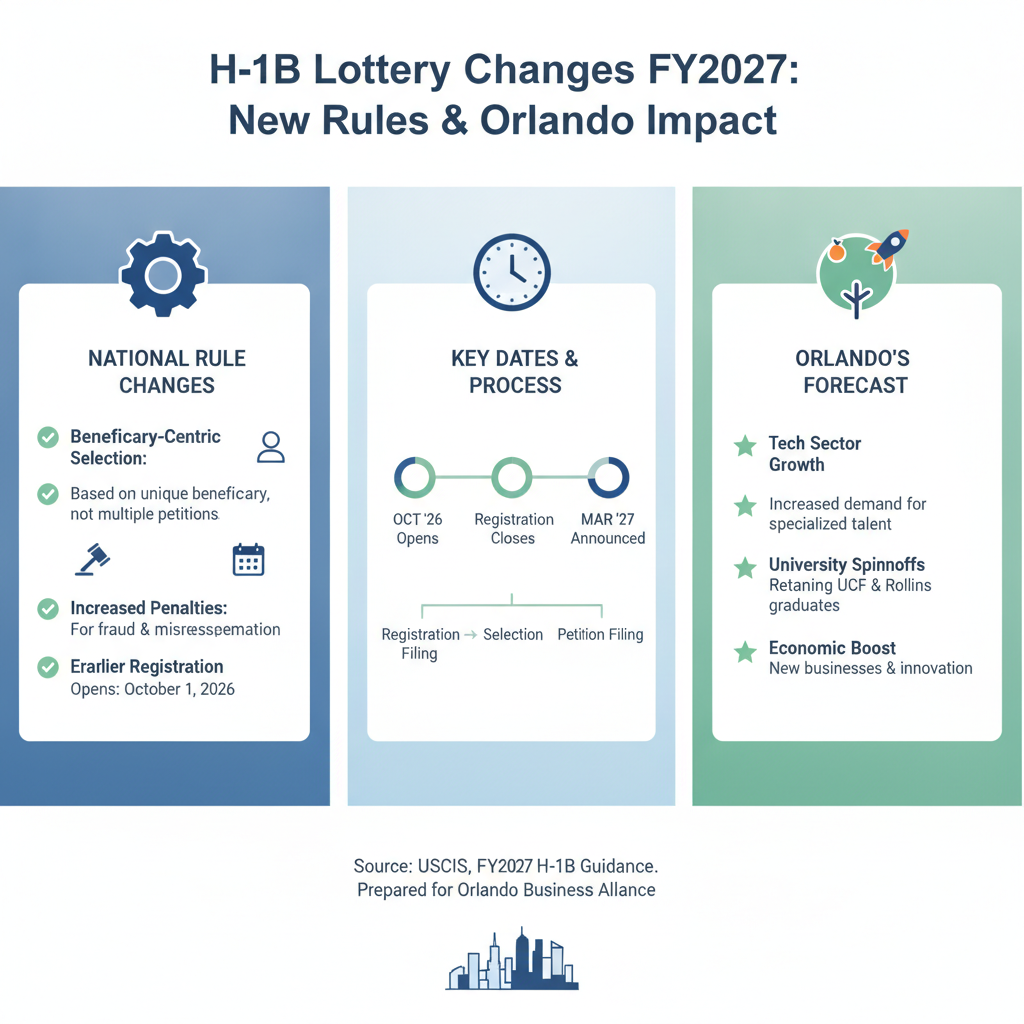
The H-1B visa program is a cornerstone of the U.S. economy, enabling American companies to hire highly skilled foreign professionals in specialty occupations. For the tech hubs, healthcare systems, and booming tourism industries of Florida, particularly in vibrant cities like Orlando, the H-1B visa is crucial for filling critical talent gaps. News of significant changes to the H-1B visa lottery for Fiscal Year 2027 (FY2027) sends ripples of anticipation and concern through immigrant communities, employers, and legal professionals alike. At Imigrar, we understand these concerns and are committed to providing clarity and strategic guidance to immigrants and their families.
Why this news is showing up now
Immigration policy, especially concerning high-demand visas like the H-1B, is constantly evolving. The U.S. Citizenship and Immigration Services (USCIS) typically announces proposed and final rule changes well in advance of the new fiscal year to allow petitioners and beneficiaries ample time to prepare. As of today, October 29, 2026, we are on the cusp of the FY2027 H-1B lottery registration period, which traditionally opens in early March of the calendar year that precedes the fiscal year. This means that any new rules for FY2027, which begins October 1, 2027, would have been finalized and announced in late 2026 or early 2027. These timely announcements are critical because they dictate the eligibility criteria, application procedures, and integrity measures for the upcoming lottery, directly impacting thousands of hopeful applicants and their sponsoring employers.
How it can affect Florida residents
Florida, known for its dynamic economy, is a significant beneficiary of the H-1B program. Orlando, in particular, is a growing hub for technology, simulation, aerospace, and biomedical industries, all of which heavily rely on specialized talent that the H-1B visa attracts. Universities like the University of Central Florida (UCF) produce highly skilled graduates, many of whom seek to remain in the U.S. on an H-1B visa. The new H-1B lottery changes for FY2027 will directly impact:
- Graduates of Florida universities: Many international students on F-1 visas (often with Optional Practical Training, or OPT) aspire to transition to H-1B status to continue their careers in Florida. Changes can alter their path to long-term employment.
- Florida-based employers: Tech companies, healthcare providers, engineering firms, and even some large tourism entities in Orlando and across the I-4 corridor depend on H-1B workers to maintain competitiveness and fill specialized roles. New rules could affect their hiring strategies and operational costs.
- Immigrant families in Florida: For many, the H-1B visa is a critical step towards establishing a stable life and potentially pursuing permanent residency in the U.S. Any shift in the lottery process or eligibility criteria can have profound implications for families who call Florida home.
Understanding these changes is not just about compliance; it's about securing futures and maintaining the integrity of Florida's diverse workforce. Imigrar is here to help you navigate these complex new regulations.
Need Help Navigating H-1B Changes? The new FY2027 rules can be complex. Our Orlando immigration team at Imigrar is ready to assist you and your employer. Call +1 786-791-3106 for a free consultation, or message us online. Se Habla Español.
What H-1B Visa Lottery Changes for FY2027 Is (and Why It Matters)
The H-1B visa program allows U.S. employers to temporarily employ foreign workers in specialty occupations. These occupations generally require a bachelor's degree or higher in a specific field. Due to overwhelming demand, the number of H-1B visas issued annually is capped by Congress, currently at 85,000—65,000 for the regular cap and an additional 20,000 for those with a U.S. master's degree or higher (the "U.S. Master's Cap"). Because demand far exceeds supply, USCIS conducts a lottery to select petitions from the pool of eligible registrations. The USCIS official website is your primary source for all official updates.
A plain-English definition
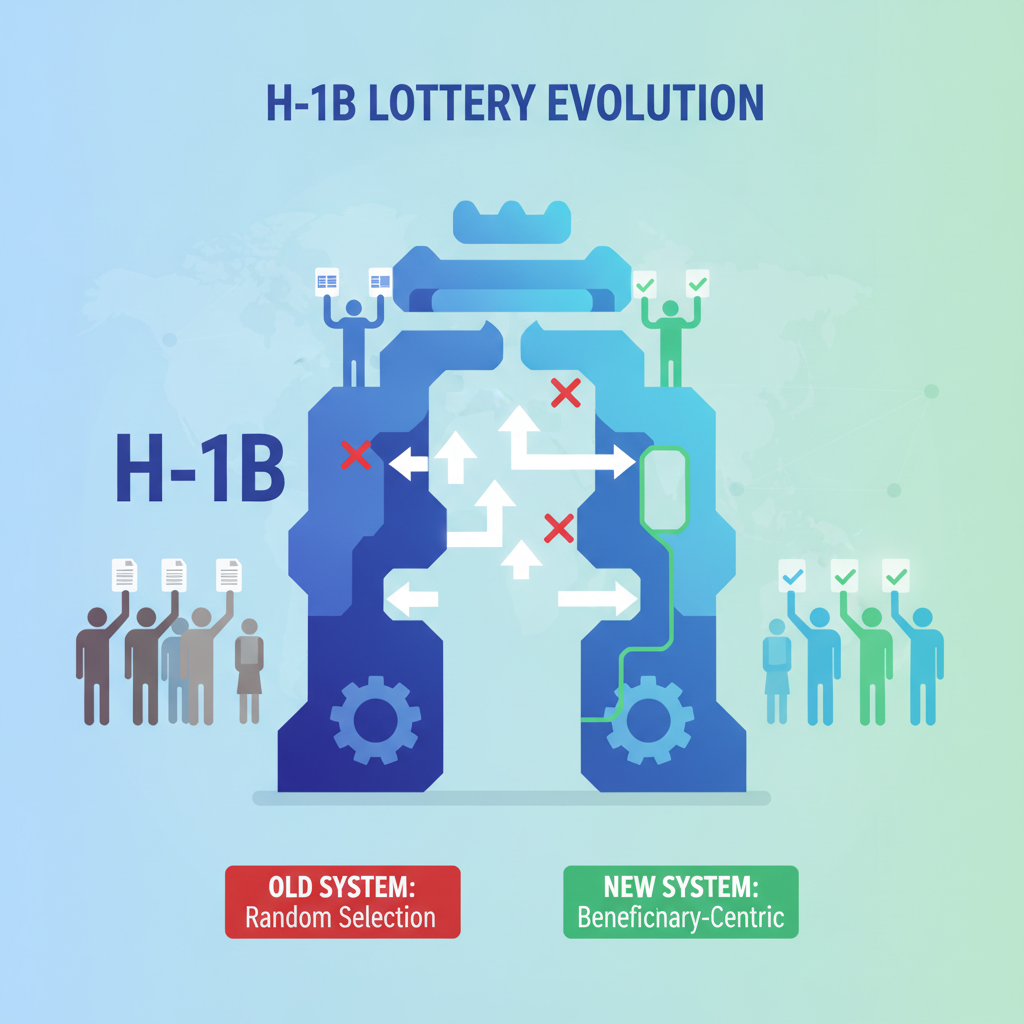
For FY2027, USCIS has implemented significant changes to the H-1B lottery process, primarily aimed at enhancing the integrity of the program and reducing fraud. The most impactful change is the shift to a beneficiary-centric lottery selection process. Previously, an employer could submit multiple registrations for the same foreign national if they had multiple job offers. This practice, while legal, led to concerns about unfair advantages and potential abuse. Under the new FY2027 rules, each unique beneficiary (the foreign national seeking the visa) can only have *one* registration submitted on their behalf in a given fiscal year's lottery, regardless of how many employers offer them a job. If a beneficiary has multiple offers, only one employer can submit a registration for them. This means the lottery selection is now based on the unique passport or travel document number of the beneficiary, not on the number of employers registering for them.
Furthermore, USCIS is increasing its focus on anti-fraud measures. This includes enhanced scrutiny of employer-employee relationships, site visits, and stricter penalties for fraudulent registrations or petitions. The goal is to ensure that only legitimate job offers and qualified beneficiaries are selected, thereby preserving the program's integrity and fairness for all applicants.
These changes are critical because they aim to level the playing field, making the lottery fairer for all eligible individuals and employers. They also underscore the importance of meticulous preparation and strict adherence to USCIS guidelines to avoid disqualification or delays.
Key terms you need to know
Navigating the H-1B process requires understanding specific terminology. Here are some essential terms:
- H-1B Cap: The congressionally mandated limit on the number of H-1B visas issued each fiscal year (currently 85,000, including the Master's Cap).
- Cap-Subject: Refers to H-1B petitions that are subject to the annual cap. Most H-1B petitions fall into this category.
- Cap-Exempt: Certain employers (e.g., institutions of higher education, non-profit research organizations) or certain types of employment are exempt from the annual cap.
- Specialty Occupation: An occupation that requires theoretical and practical application of a body of highly specialized knowledge, and a bachelor's degree or higher in the specific specialty (or its equivalent) as a minimum for entry into the occupation in the U.S.
- Beneficiary: The foreign national worker who is seeking the H-1B visa.
- Petitioner: The U.S. employer who is sponsoring the foreign national for the H-1B visa.
- Lottery Registration: The initial electronic submission to USCIS by a prospective H-1B petitioner (employer) on behalf of a beneficiary during a specific registration period. This is the stage where the lottery takes place.
- DHS (Department of Homeland Security): The federal department that oversees USCIS.
- USCIS (U.S. Citizenship and Immigration Services): The government agency responsible for adjudicating immigration benefits, including H-1B petitions.
- DOL (Department of Labor): The federal department responsible for ensuring compliance with labor laws, including the **Labor Condition Application (LCA)** process for H-1B visas.
- LCA (Labor Condition Application), Form ETA-9035: A form filed with the DOL by the employer, attesting that they will pay the H-1B worker at least the prevailing wage for the occupation in the area of employment, and that the employment will not adversely affect the working conditions of U.S. workers. This must be certified before filing an H-1B petition.
- Form I-129, Petition for a Nonimmigrant Worker: The primary form filed by the employer with USCIS after an H-1B registration is selected in the lottery.
Current Immigration Law: The Foundation
The H-1B visa program is rooted in federal immigration statutes and regulations. Understanding these foundational laws is crucial for comprehending the recent changes and ensuring compliance. The primary legal basis for the H-1B visa is found within the Immigration and Nationality Act (INA) and its corresponding regulations in the Code of Federal Regulations (CFR).
Federal requirements
The H-1B visa program is governed primarily by:
- Immigration and Nationality Act (INA) §101(a)(15)(H)(i)(b): This section defines the H-1B nonimmigrant classification.
- INA §214(g): This section establishes the annual numerical limitations (the "cap") for H-1B visas.
- 8 Code of Federal Regulations (CFR) Part 214.2(h): These regulations provide detailed rules for the H-1B classification, including eligibility criteria, petitioning procedures, and conditions of stay.
Key federal requirements for an H-1B petition include:
- Specialty Occupation: The job offered must meet the definition of a specialty occupation, meaning it requires a bachelor's degree or its equivalent in a specific field. The beneficiary must possess this degree or its equivalent.
- Employer-Employee Relationship: A valid employer-employee relationship must exist between the petitioning U.S. employer and the H-1B beneficiary. USCIS scrutinizes this to ensure the employer has the right to control the beneficiary's work.
- Prevailing Wage: The employer must agree to pay the H-1B worker at least the prevailing wage for the occupation in the geographic area of employment, or the actual wage paid to other employees with similar experience and qualifications, whichever is higher. This is attested to in the **Labor Condition Application (LCA)**, **Form ETA-9035**, certified by the DOL.
- Educational Qualifications: The beneficiary must hold a U.S. bachelor's or higher degree, or its foreign equivalent, or hold an unrestricted state license, or have work experience equivalent to a bachelor's degree.
All petitions are filed using **Form I-129, Petition for a Nonimmigrant Worker**, along with various supplements and supporting documentation. For up-to-date forms and instructions, always refer to the USCIS Forms page.
Florida-specific considerations
While there are no specific Florida state laws governing H-1B visas (it's a federal program), the economic landscape and professional needs of Florida significantly influence the demand for these visas. For Central Florida residents and employers, understanding the local context is vital:
- High Demand Industries: Orlando's thriving tech sector (e.g., simulation, software development), advanced manufacturing, healthcare (e.g., Orlando Health, AdventHealth), and hospitality management often seek H-1B professionals. This means high competition for the limited visas.
- Local Workforce Impact: The H-1B program allows Florida businesses to access global talent, which can foster innovation and economic growth. However, compliance with prevailing wage requirements is crucial to protect the wages and working conditions of the U.S. workforce in Orange County and surrounding areas.
- University Talent Pool: Graduates from institutions like the University of Central Florida (UCF), the University of Florida, and Florida State University often seek H-1B sponsorship from Florida employers. Their success in the lottery directly impacts the retention of skilled talent within the state.
- Orlando USCIS Field Office: While H-1B petitions are generally processed by USCIS Service Centers, local field offices may conduct site visits to verify employment conditions and employer legitimacy. This is particularly relevant with the increased anti-fraud measures for FY2027.
Reminder: Employers in Florida must ensure they comply with all federal H-1B regulations, including those pertaining to the LCA and prevailing wage, to avoid potential penalties from the DOL.
How to Navigate the New H-1B Lottery Process for FY2027: A Complete Step-by-Step Guide
The H-1B lottery for FY2027 introduces new complexities, particularly with the beneficiary-centric registration. Here’s a detailed guide to help you prepare and navigate the process.
1) Employer and Beneficiary Preparation
The journey begins long before the lottery registration window opens. Both the employer (petitioner) and the foreign national (beneficiary) must undertake significant preparatory steps.
- Employer Vetting: The U.S. employer must confirm they have a legitimate job offer in a specialty occupation and are prepared to sponsor the H-1B. They must verify their legal entity, Employer Identification Number (EIN), and ability to pay the required wages.
- Job Description Review: Ensure the job duties clearly demonstrate a "specialty occupation" requiring at least a bachelor's degree in a specific field.
- Beneficiary Credential Evaluation: The foreign national's academic credentials (degrees, transcripts) must be thoroughly evaluated to ensure they are equivalent to a U.S. bachelor's or higher degree. If the degree is from a foreign institution, a professional credential evaluation is mandatory.
- Anti-Fraud Compliance: Employers must be prepared for increased scrutiny regarding the legitimacy of the job offer and the employer-employee relationship, especially given the new anti-fraud focus for FY2027.
Required Documents (Preparation Phase):
- Beneficiary's comprehensive resume/CV
- Beneficiary's academic transcripts (undergraduate and graduate)
- Copies of all diplomas/degree certificates
- Foreign credential evaluations (if applicable)
- Professional licenses (if applicable)
- Beneficiary's passport biographical page copy
- Employer's EIN
- Detailed job offer letter and job description
Important: Start gathering these documents immediately. Delays in obtaining foreign transcripts or credential evaluations can jeopardize your chances.
2) H-1B Lottery Registration (Early March 2027)
This is the critical phase where employers submit electronic registrations for the lottery. For FY2027, the beneficiary-centric approach is paramount.
- Registration Window: USCIS typically opens the electronic registration period for approximately two weeks in early March (e.g., March 1-17, 2027, for FY2027). It is crucial to register within this timeframe.
- Beneficiary-Centric Submission: Each unique beneficiary, identified by their valid passport or travel document number, can only have ONE registration submitted on their behalf. If a beneficiary has multiple job offers, they must choose one employer to register for them. Multiple registrations for the same beneficiary will lead to disqualification of all registrations for that beneficiary.
- Online Account: Employers (or their authorized legal representatives) must use a USCIS online account to submit registrations.
- Registration Fee: For FY2027, the registration fee, which was $10, is expected to be significantly higher due to recent fee rule changes. While the exact fee for FY2027 will be confirmed by USCIS, it could be in the range of $215. This fee must be paid for each registration submitted.
Required Information (Registration Phase):
- Employer's legal name, EIN, and address
- Employer's authorized signatory information
- Beneficiary's full legal name, date of birth, country of birth, country of citizenship
- Beneficiary's gender
- Beneficiary's passport number or travel document number
- Beneficiary's highest level of education
- Whether the beneficiary qualifies for the U.S. Master's Cap
Don't Risk Disqualification! The new beneficiary-centric rules for the H-1B lottery are strict. Let Imigrar ensure your registration is compliant and accurate. Contact our Orlando team at +1 786-791-3106 for expert guidance. Se Habla Español.
3) Lottery Selection and Notification (Late March 2027)
After the registration period closes, USCIS conducts the lottery and notifies selected registrants.
- Selection Process: USCIS randomly selects the required number of registrations to meet the H-1B cap, first for the U.S. Master's Cap, then for the regular cap. The new beneficiary-centric system ensures each individual has an equal chance.
- Notification: USCIS typically announces selections via electronic notifications to the USCIS online accounts of the registrants. The status of the registration will change from "Submitted" to "Selected," "Not Selected," or "Denied."
- Notice of Action: If selected, USCIS will issue a **Form I-797C, Notice of Action**, which confirms selection and provides instructions for filing the H-1B petition.
Reminder: Keep your USCIS online account credentials secure and monitor your account closely during this period.
4) Petition Filing (April 1, 2027 - June 30, 2027)
If your registration is selected, the employer can proceed with filing the full H-1B petition with USCIS.
- Filing Window: The earliest an H-1B cap-subject petition can be filed is April 1, 2027. USCIS provides a specific filing window (usually 90 days) during which selected petitions must be submitted. This window will be stated on the **Form I-797C**.
- Labor Condition Application (LCA): Before filing **Form I-129**, the employer must file and have certified an **LCA (Form ETA-9035)** with the U.S. Department of Labor (DOL). This process can take 7-10 business days, so it should be initiated immediately upon lottery selection.
- Comprehensive Petition Packet: The petition packet includes **Form I-129, Petition for a Nonimmigrant Worker**, along with numerous supporting documents and fees.
Related Topics
Need Legal Assistance?
Our experienced immigration attorneys are here to help with your case. Contact Imigrar today for a free consultation and let us guide you through the legal process with confidence.
📍 Orlando, Florida • Serving clients nationwide
📧 info@imigrar.com