
DACA Updates & Renewal Guide 2026: Protecting Your Status in
Navigating DACA in 2026? This comprehensive guide covers the latest USCIS updates, renewal process, eligibility, and how Imigrar helps DACA recipients in Florida. Keep your status secure.

As an immigration law firm dedicated to keeping families together, Imigrar understands the deep concern and uncertainty many DACA recipients and their families face. The Deferred Action for Childhood Arrivals (DACA) program, while a lifeline for hundreds of thousands, remains a subject of ongoing legal and political debate. For DACA recipients across the nation, especially here in Orlando and throughout Florida, staying informed about the latest updates and understanding the renewal process is not just important—it's critical for maintaining stability and planning your future.
This guide is crafted to provide professional, accurate, and actionable information based on the most recent updates from USCIS and the current legal landscape as of October 29, 2026. Our goal is to empower you with the knowledge needed to navigate your DACA renewal with confidence.
Need Help with Your DACA Renewal? Don't risk your status. Our Orlando immigration team is ready to assist. Call +1 786-791-3106 for a free consultation, or message us online. Se Habla Español.
NEWS SOURCE REFERENCE SECTION
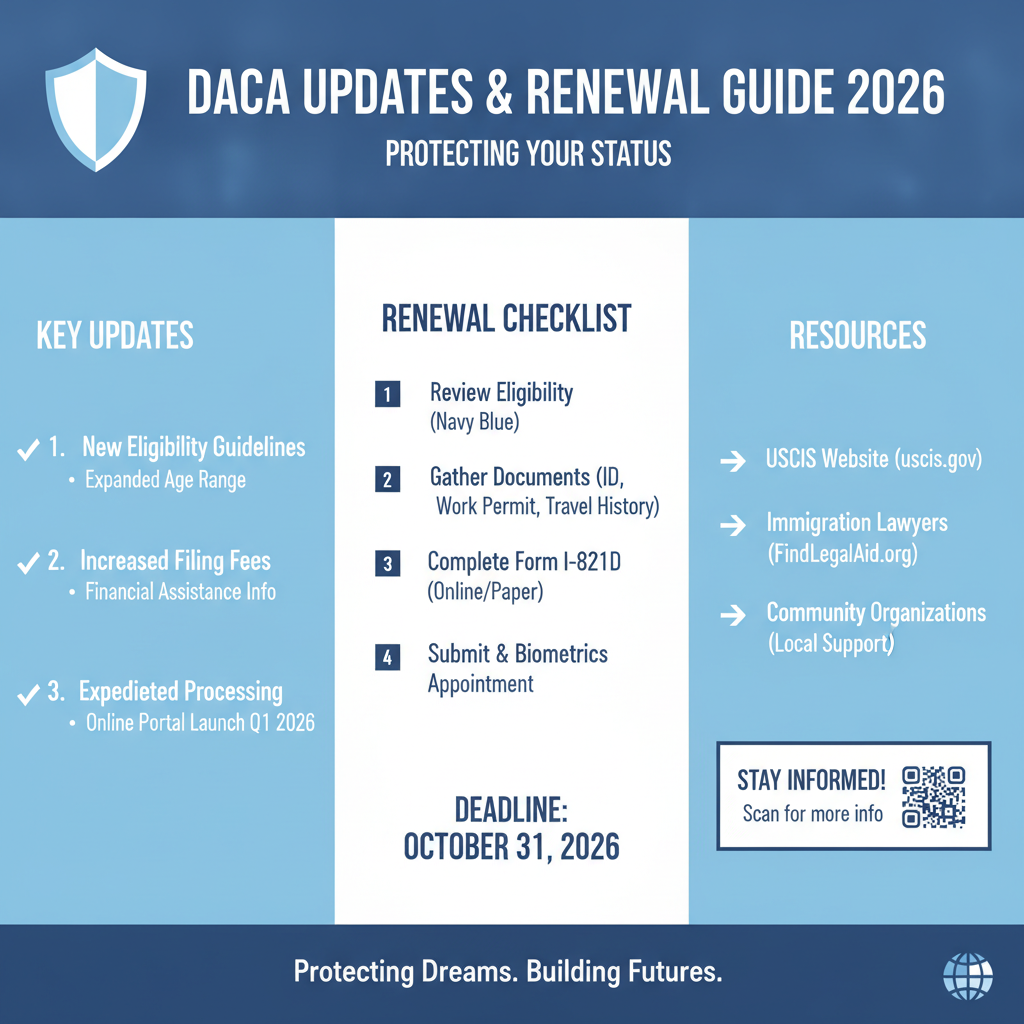
The reporting that sparked this guide: DACA Program Updates and Renewal Information (USCIS)
What This News Means for Immigrants in Orlando and Across Florida
For hundreds of thousands of individuals who came to the United States as children, DACA has provided a crucial, albeit temporary, reprieve from the threat of deportation and the ability to work legally. As of late 2026, the DACA program continues to operate under significant legal constraints, primarily impacting who can apply and under what circumstances. Understanding these nuances is vital for anyone whose life is touched by DACA.
Why this news is showing up now
The DACA program has been under constant scrutiny and litigation since its inception in 2012. As of October 29, 2026, the program's current status is largely shaped by court decisions stemming from the case of Texas v. United States. In 2021, a federal judge in the Southern District of Texas ruled DACA unlawful, halting new initial applications. This decision was largely upheld by the Fifth Circuit Court of Appeals in 2022, which then sent the case back to the lower court to review the "final rule" DACA regulation implemented by the Department of Homeland Security (DHS).
The "final rule" (87 FR 53152), which officially went into effect on October 31, 2022, aimed to codify DACA into federal regulation, largely mirroring the original 2012 memo. However, the existing injunction from the Southern District of Texas prevents USCIS from approving any new initial DACA requests. This means that while DACA is technically a federal regulation, its implementation for new applicants is blocked. The legal challenges are ongoing, with appeals and further judicial review expected. This constant flux means that DACA recipients must remain vigilant about renewal processes and any potential changes to the program's scope or existence. Each court ruling, each policy adjustment, sends ripples through the immigrant community, necessitating updated guidance and clear information.
How it can affect Florida residents
Florida is home to a significant population of DACA recipients, with estimates placing tens of thousands in the state. For Central Florida residents, including those in Orlando, Orange County, and along the I-4 corridor, the ongoing legal battles and renewal requirements have direct, tangible impacts:
- Employment Stability: DACA provides work authorization, allowing recipients to hold jobs and contribute to Florida's economy. A lapse in DACA status due to a missed renewal or denial can lead to job loss, impacting families and local businesses. Many DACA recipients are integral to various industries in Orlando, from hospitality to healthcare.
- Educational Opportunities: While DACA doesn't automatically grant in-state tuition, many Florida colleges and universities have policies that allow DACA recipients to pursue higher education. Maintaining DACA status is often a prerequisite for accessing these opportunities and continuing studies.
- Driver's Licenses: In Florida, DACA recipients are generally eligible to obtain a driver's license. The expiration of DACA can lead to the loss of driving privileges, severely impacting daily life, commuting to work or school, and overall independence in a state heavily reliant on personal transportation.
- Uncertainty and Mental Health: The constant legal back-and-forth creates immense stress and anxiety for DACA recipients and their families. This uncertainty can affect long-term planning, career choices, and overall well-being. Knowing the precise steps for renewal and having access to legal counsel can significantly alleviate this burden.
- Local Community Impact: DACA recipients are deeply integrated into Florida's communities. Their ability to work, study, and participate fully directly benefits the state's social and economic fabric. Any disruption to the DACA program disproportionately affects these communities, including those in the vibrant Orlando area.
Given the current climate, proactive DACA renewal is paramount. Imigrar is committed to providing the Orlando and wider Florida community with the most current information and robust legal support to navigate these challenges.
What DACA Is (and Why It Matters)
The Deferred Action for Childhood Arrivals (DACA) program is a critical immigration policy that has impacted the lives of hundreds of thousands of young people across the United States. Understanding its core components and significance is essential for anyone involved with the program.
A plain-English definition
Deferred Action for Childhood Arrivals (DACA) is a U.S. immigration policy established in June 2012 by the Obama administration. It provides eligible undocumented immigrants who came to the United States as children with two key benefits:
- Deferred Action: This means the government agrees to "defer" (postpone) any deportation action against an individual for a renewable period, typically two years. It's a temporary protection from removal.
- Employment Authorization: DACA recipients are eligible to apply for an Employment Authorization Document (EAD), commonly known as a work permit. This allows them to legally work in the U.S.
It's crucial to understand what DACA is NOT: it is not a path to U.S. citizenship, nor does it provide a green card or any permanent legal status. It is a temporary, discretionary measure that provides a measure of stability and opportunity for young people who grew up in the U.S. and consider it their home.
Key terms you need to know
Navigating the DACA process involves understanding specific terminology. Here are some key terms:
- Deferred Action: As mentioned, this is the temporary halt on deportation proceedings. It doesn't grant legal status but offers protection from removal.
- Employment Authorization Document (EAD): Also known as a "work permit," this is the card issued by USCIS that proves your legal authorization to work in the U.S. It typically has a validity period of two years for DACA recipients.
- USCIS: Stands for U.S. Citizenship and Immigration Services. This is the federal agency within the Department of Homeland Security (DHS) responsible for administering DACA applications and renewals. You will interact with USCIS for all DACA-related filings.
- Dreamers: This is a widely used, informal term for young undocumented immigrants who were brought to the U.S. as children. While "Dreamer" often refers to those eligible for the DREAM Act (which DACA is not), it has become synonymous with DACA recipients.
- Renewal: The process of extending your DACA status and EAD for another two-year period. This is the primary focus of this guide, as new initial applications are currently paused.
- Advance Parole (Form I-131): A travel document that allows certain non-citizens, including some DACA recipients, to travel outside the U.S. and lawfully return. However, as of late 2026, USCIS has significantly restricted the issuance of Advance Parole for DACA recipients, typically limiting it to urgent humanitarian, educational, or employment purposes. International travel without valid Advance Parole will likely result in inability to re-enter the U.S. and loss of DACA status.
- Final Rule: Refers to the DACA regulation published by DHS in August 2022 (effective October 31, 2022). This rule aimed to codify the DACA policy, solidifying the program's requirements and processes. Despite this, its implementation for new applications remains blocked by court order.
- Biometrics Appointment: A required appointment at an Application Support Center (ASC) where USCIS collects your fingerprints, photograph, and signature. This data is used for background checks and identity verification.
- Request for Evidence (RFE): A letter from USCIS asking for additional documents or information to support your application. Responding promptly and accurately to an RFE is crucial.
Understanding these terms will help you better comprehend the DACA renewal process and any communications you receive from USCIS.
Confused by DACA Terminology or Legal Updates? Our bilingual team at Imigrar can clarify your concerns. Call +1 786-791-3106 for expert guidance and a free consultation. Se Habla Español.
Current Immigration Law: The Foundation of DACA
While DACA is not enshrined in statute by Congress, it derives its authority from the executive branch's prosecutorial discretion under existing immigration laws. The current legal framework for DACA is complex, involving executive memos, federal regulations, and ongoing court injunctions.
The **Immigration and Nationality Act (INA)** serves as the overarching body of U.S. immigration law. DACA itself is an exercise of prosecutorial discretion granted to DHS under the INA, allowing the agency to prioritize enforcement actions. The program was initially established via a memorandum from then-Secretary of Homeland Security Janet Napolitano in June 2012. This memo outlined the criteria for deferred action for certain young undocumented immigrants.
In 2022, DHS published a **Final Rule** regarding DACA (87 FR 53152, effective October 31, 2022). This rule codified the DACA program into federal regulation, largely preserving the eligibility requirements and processes established in 2012. The intent was to provide DACA with a more robust legal footing against challenges. However, the federal court's injunction from the Southern District of Texas, which was affirmed in part by the Fifth Circuit Court of Appeals, continues to prevent USCIS from granting **initial** DACA requests. The case has been remanded, meaning the lower court is reviewing the legality of the final rule itself, keeping DACA's long-term future uncertain.
For now, DACA renewals are still being processed by USCIS, but no new applications are accepted.
Federal requirements for DACA renewal
To be eligible for DACA renewal, you must continue to meet the original DACA criteria and have not been disqualified by certain actions. The federal requirements, as outlined by USCIS, include:
- You must have received DACA previously.
- You must have continuously resided in the United States since June 15, 2007, up to the present time. Brief, innocent departures (with Advance Parole) do not break continuous residence, but unauthorized travel outside the U.S. does.
- You must not have departed the United States on or after August 15, 2012, without first obtaining Advance Parole.
- You must not have been convicted of a felony, a significant misdemeanor, or three or more other misdemeanors.
- You must not otherwise pose a threat to national security or public safety.
Important: USCIS defines a "significant misdemeanor" as an offense for which the maximum term of imprisonment is one year or less, but greater than five days, and a sentence was imposed, OR, regardless of the sentence imposed, an offense involving domestic violence, sexual abuse or exploitation, burglary, unlawful possession or use of a firearm, drug distribution or trafficking, or driving under the influence. Any felony conviction, regardless of when it occurred, will disqualify you from DACA renewal.
Florida-specific considerations
While DACA is a federal program, its impact and certain ancillary benefits are often shaped by state laws and policies. For DACA recipients in Florida, there are specific considerations:
- Driver's Licenses: The Florida Department of Highway Safety and Motor Vehicles (FLHSMV) generally issues driver's licenses to individuals with valid DACA and EADs. Maintaining your DACA status is crucial for renewing your Florida driver's license.
- In-State Tuition: Florida state colleges and universities have varying policies regarding in-state tuition for DACA recipients. While DACA itself does not confer eligibility for in-state tuition, some institutions may offer it based on other criteria or state legislative actions. It's essential to check with individual educational institutions.
- Local USCIS Presence: While DACA renewal applications are primarily sent to a USCIS Lockbox facility (e.g., Dallas Lockbox for Florida residents), the Orlando USCIS Field Office may handle certain local inquiries or biometrics appointments for residents of Orange County and surrounding areas. This office is located at 6680 Corporate Centre Blvd, Orlando, FL 32822.
- Legal Support: Given Florida's large immigrant community, particularly along the I-4 corridor connecting Orlando to Tampa, there are many legal resources available. Imigrar specializes in providing tailored support for DACA recipients navigating renewals.
To ensure you have the most up-to-date forms and information, always refer to the USCIS official website. The forms central to DACA renewal are Form I-821D (Consideration of Deferred Action for Childhood Arrivals) and Form I-765 (Application for Employment Authorization), along with the Form I-765 Worksheet.

How to Renew Your DACA: A Complete Step-by-Step Guide
Renewing your DACA is a critical process that requires careful attention to detail and adherence to specific timelines. Missing a step or deadline could result in a lapse in your work authorization and protection from deportation. Follow this comprehensive guide to ensure a smooth renewal process.
1) Determine Your Eligibility and When to Apply
Before beginning the renewal process, confirm your continued eligibility. Review the federal requirements mentioned above. Have you maintained continuous residence? Have you traveled outside the U.S. without Advance Parole? Have you had any new arrests or convictions since your last DACA approval?
When to Apply: USCIS strongly recommends filing your DACA renewal application **120 to 150 days** (approximately 4 to 5 months) before your current DACA and Employment Authorization Document (EAD) expire. This window allows sufficient time for processing and helps prevent a lapse in your status.
- Warning: Do NOT file your application more than 150 days before your DACA/EAD expires, as USCIS may reject it.
- Warning: Filing less than 120 days before expiration significantly increases the risk of your DACA
Related Topics
Need Legal Assistance?
Our experienced immigration attorneys are here to help with your case. Contact Imigrar today for a free consultation and let us guide you through the legal process with confidence.
📍 Orlando, Florida • Serving clients nationwide
📧 info@imigrar.com