
Naturalization Test 2026: Preparing for New Civics & English
Major changes to the U.S. Naturalization Test are coming in 2026. Learn what these new civics and English requirements mean for your citizenship journey. Imigrar helps you prepare.

The reporting that sparked this guide: Naturalization Test Changes Coming in 2026 (Citizenship)
What This News Means for Immigrants in Orlando and Across Florida
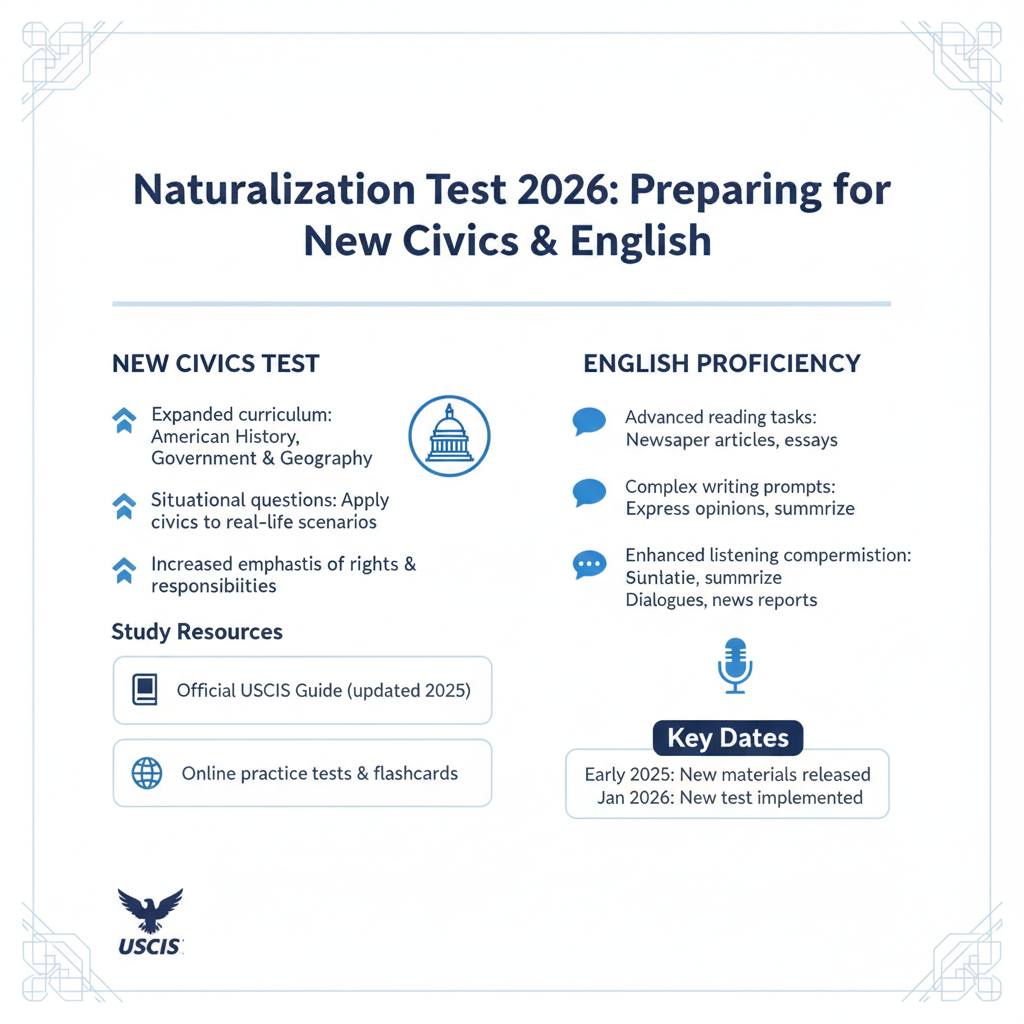
For millions of aspiring U.S. citizens, the path to naturalization is a journey marked by dedication, perseverance, and a deep understanding of American civics and culture. As we approach late 2026, significant updates to the U.S. Naturalization Test are on the horizon, bringing with them new civics questions and potentially revised English language requirements. This isn't just a procedural tweak; it's a recalibration of how future citizens will demonstrate their knowledge and commitment to the United States.
At Imigrar, we understand that news of changes can be daunting. Our mission is to keep families together by providing clear, accurate, and actionable guidance through every step of the immigration process. These upcoming changes, while designed to modernize the test, require careful preparation and a thorough understanding of the new expectations. Whether you're just starting your naturalization journey or have been preparing for years, this comprehensive guide will equip you with the knowledge you need to navigate the evolving landscape of U.S. citizenship.
Why this news is showing up now
The United States Citizenship and Immigration Services (USCIS) regularly reviews and updates its processes to ensure they remain relevant, fair, and effective. The Naturalization Test, in particular, has seen revisions over the years, aiming to better assess an applicant's understanding of U.S. history, government, and civic principles. The current push for changes in 2026 stems from a period of public feedback and internal review by USCIS, which sought to enhance the test's integrity and effectiveness.
Historically, the civics portion of the test has been a list of 100 questions, from which an applicant is asked 10, needing to answer 6 correctly. While this format tests factual recall, there's been a desire to encourage a deeper, more conversational understanding of American principles. The proposed changes, which are now being finalized for implementation in late 2026 or early 2027, aim to shift the emphasis towards a more interactive assessment that evaluates critical thinking and comprehension, rather than just memorization. This ensures that new citizens are not only familiar with facts but can also articulate the meaning and importance of those facts within the broader context of American democracy. The finalized changes are expected to be published by USCIS well in advance of their effective date, providing ample time for applicants and legal representatives to prepare.
How it can affect Florida residents
For immigrants residing in Florida, particularly those in the vibrant and diverse communities of Orlando, Kissimmee, and throughout Central Florida, these upcoming changes are particularly relevant. Florida has one of the largest immigrant populations in the U.S., and thousands of residents apply for naturalization annually. The Orlando USCIS Field Office, located at 5449 Forbes Pl, Orlando, FL 32812, is a key processing center for many of these applications.
The impact will primarily be on how you prepare for the test. If you file your Form N-400, Application for Naturalization, before the effective date of the new test, you will likely take the current version. However, if your application is filed on or after the effective date, or if your interview is scheduled after the transition, you will be subject to the new test format. This creates a critical window for applicants to understand which test they will face and to adjust their preparation strategies accordingly.
Important: Staying informed is paramount. For those along the I-4 corridor from Tampa to Daytona, or residents of Orange County and surrounding areas, access to accurate information and expert legal guidance will be crucial to navigating this transition smoothly. Imigrar is strategically located in Orlando to serve these communities, offering personalized assistance to ensure you are fully prepared for the specific test you will encounter.
Navigating the New Naturalization Test? Don't face the upcoming changes alone. Our Orlando immigration team is ready to assist you in understanding the new requirements and preparing your application. Call +1 786-791-3106 for a free consultation, or message us online. Se Habla Español.
What Naturalization Test Changes Are (and Why They Matter)
The Naturalization Test is a critical component of the U.S. citizenship application process. It assesses an applicant's knowledge of U.S. history and government (the civics test) and their ability to read, write, and speak English (the English test). The upcoming changes in 2026 focus primarily on the civics portion, with potential refinements to how English proficiency is assessed, though the core English components remain largely consistent.
A plain-English definition
Simply put, the "Naturalization Test Changes Coming in 2026" refer to the updated format and content for the civics portion of the U.S. citizenship examination, and potentially the English language assessment, which USCIS plans to implement. Instead of merely memorizing answers to a fixed set of questions, the new civics test is expected to be more interactive and scenario-based. This means applicants might be asked to explain concepts, discuss historical events, or apply civic principles to hypothetical situations, rather than just reciting facts. The goal is to ensure a deeper comprehension of American values and governmental structure.
For example, instead of just stating "Who is the Chief Justice of the United States now?", an applicant might be asked to "Explain the role of the Supreme Court in the U.S. government and provide an example of a recent decision, if you know one." This shifts the focus from rote learning to demonstrating a functional understanding.
Key terms you need to know
- Naturalization: The process by which a foreign citizen or national becomes a citizen of the United States.
- Civics Test: The portion of the naturalization interview that assesses an applicant's knowledge of U.S. history, government, and civics.
- English Test: The portion of the naturalization interview that assesses an applicant's ability to read, write, and speak English.
- Form N-400: The official application form for naturalization. Filing this form initiates the citizenship process.
- USCIS (U.S. Citizenship and Immigration Services): The government agency responsible for administering immigration and naturalization benefits. You can find official information and resources on the USCIS official website.
- Oath of Allegiance: The final step in the naturalization process, where an applicant formally pledges loyalty to the United States.
- Exemptions/Waivers: Certain applicants may be exempt from the English test or specific civics requirements based on age, time as a permanent resident, or medical conditions. These exemptions are expected to remain in place under the new test format.
- Civic Integration: The process by which immigrants become active and engaged members of their new society, understanding its laws, customs, and civic responsibilities. The new test aims to better measure this.
Understanding these terms is fundamental to grasping the naturalization process and the implications of the upcoming test changes. The shift towards a more comprehensive assessment underscores the importance of not just knowing facts, but truly understanding the fabric of American society.
Current Naturalization Law: The Foundation
To understand the upcoming changes, it’s essential to first grasp the existing legal framework for U.S. naturalization. The foundation of U.S. immigration law is the Immigration and Nationality Act (INA). Specifically, naturalization requirements are primarily outlined in Chapter 2 of Title III of the INA, particularly sections 310 through 336.
Federal requirements
The INA sets forth the general eligibility requirements for naturalization. These include:
- Age: Generally, applicants must be at least 18 years old at the time of filing Form N-400.
- Lawful Permanent Residence: Applicants must be lawful permanent residents (green card holders) for a specified period, typically:
- Five years: For most applicants.
- Three years: If married to a U.S. citizen and meet other requirements (living in marital union with the U.S. citizen spouse for the entire three-year period).
- Less than three years: For certain military personnel or others qualifying under special provisions.
- Continuous Residence: Applicants must have maintained continuous residence in the U.S. for at least half of the required permanent residence period (e.g., 2.5 years out of 5 years).
- Physical Presence: Applicants must have been physically present in the U.S. for at least half of the continuous residence period.
- Residence in USCIS District or State: Applicants must have resided for at least three months in the state or USCIS district where they apply. For those in Orlando, this means living in Florida for at least three months before filing.
- Good Moral Character: Applicants must demonstrate good moral character for the statutory period (typically 3 or 5 years immediately preceding the filing of Form N-400 and up to the Oath of Allegiance). This is a broad requirement that considers an applicant's criminal record, financial history, and adherence to U.S. laws.
- Attachment to the Principles of the U.S. Constitution: Applicants must show a favorable disposition toward the good order and happiness of the United States. This is often assessed during the civics test and interview.
- English Language Proficiency: As required by INA §312, applicants must demonstrate an ability to read, write, and speak basic English. This is assessed through the English test.
- Knowledge of U.S. History and Government (Civics): Also required by INA §312, applicants must demonstrate knowledge and understanding of the fundamentals of U.S. history and government. This is assessed through the civics test, which is the focus of the upcoming 2026 changes.
It's crucial to note that while the English and civics test formats are changing, the fundamental eligibility requirements related to residency, physical presence, and good moral character, as outlined in the INA, are expected to remain consistent.
Florida-specific considerations
While naturalization is a federal process, residing in Florida, especially in areas like Orlando, Kissimmee, or Tampa, means your application will be processed through the relevant USCIS Field Office that serves your jurisdiction. For most of Central Florida, this is the Orlando USCIS Field Office. The interview and tests will be conducted there.
There are no Florida-specific laws that alter federal naturalization requirements. However, living in Florida does mean:
- Local USCIS Office Procedures: While federal law governs, each USCIS field office can have slight variations in scheduling, interview flow, and officer discretion. The Orlando office processes a high volume of applications, and understanding local nuances can be beneficial.
- Community Resources: Florida has numerous organizations offering English as a Second Language (ESL) classes and civics preparation courses. Leveraging these local resources can be particularly helpful for preparing for the new test format.
- Legal Support: Access to experienced immigration attorneys in Orlando, such as Imigrar, who are familiar with the local USCIS office and the specific challenges faced by Florida residents, can significantly enhance an applicant's chances of success. Our team is well-versed in the local processing trends and can provide tailored advice.
You will primarily interact with USCIS through forms like the Form N-400. All official forms and instructions are available directly on the USCIS Forms page. Always download the latest version of any form you intend to submit.
Applying for Naturalization in Florida? The process can be complex, especially with new test changes. Let Imigrar guide you. Our Orlando-based team offers free consultations to discuss your eligibility and prepare your application. Call +1 786-791-3106 today! Se Habla Español.
How to Prepare for the New Naturalization Test: A Complete Step-by-Step Guide
Preparing for U.S. citizenship is a significant undertaking, and with the Naturalization Test changes coming in late 2026 or early 2027, a strategic approach is more important than ever. This guide provides a detailed, step-by-step plan to help you navigate the process successfully, focusing on how to adapt to the new civics and potentially refined English test requirements.
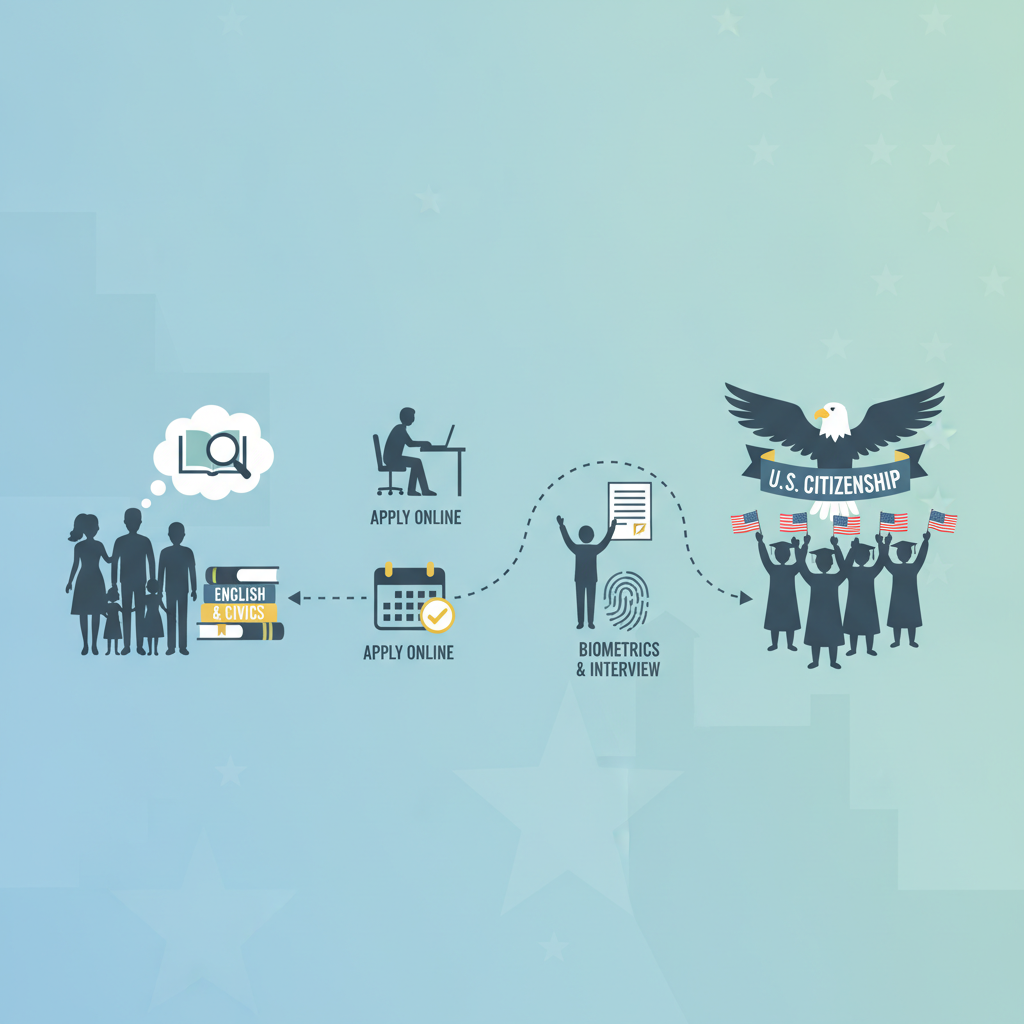
1) Confirm Your Eligibility and Gather Initial Documents
Before you even think about the test, ensure you meet all fundamental eligibility criteria. This includes your age, length of lawful permanent residency (typically 5 years, or 3 years if married to a U.S. citizen), continuous residence, physical presence, and good moral character.
Required Documents (Initial Assessment):
- Your Green Card (Form I-551)
- Current and expired passports (all countries)
- Marriage certificate (if applying under the 3-year rule)
- Divorce decrees or death certificates for any previous marriages (for you or your spouse)
- Birth certificates for your children (if applicable)
- Proof of Selective Service registration (if applicable)
- Tax returns for the past 5 years (or 3 years if applying under the spouse rule)
- Evidence of any significant absences from the U.S.
Tip: Create a checklist and a dedicated folder for all your documents. Organization from the start will save you time and stress later.
2) Complete and File Form N-400, Application for Naturalization
This is the official application form. Fill it out accurately and completely. Any errors or omissions can lead to delays or even denial. Be prepared to provide extensive personal information, including your residential history, employment history, marital history, and details about any trips outside the U.S. since becoming a permanent resident. The questions about "Good Moral Character" are particularly sensitive and require careful attention.
Required Documents (for Filing Form N-400):
- Copy of your Green Card (front and back)
- Copy of your marriage certificate (if applicable)
- Copies of any court orders, arrest records, or police reports (if applicable)
- Two passport-style photos (if filing by mail; online filers will upload)
- Application fee (or fee waiver request, Form I-912)
Important: The date you file your Form N-400 can determine which version of the test you take. If you file before the official effective date of the new test, you will likely take the current test. If you file on or after, or if your interview is scheduled far enough in the future, you will take the new test. Always check the latest USCIS announcements on their official website for transition dates.
3) Attend Your Biometrics Appointment
After filing Form N-400, USCIS will send you an appointment notice for biometrics (fingerprints, photograph, and signature). This is used for background and security checks. This appointment is mandatory, usually takes place at an Application Support Center (ASC), and is typically quick.
Required Documents (for Biometrics):
- Appointment Notice (Form I-797C)
- Photo identification (e.g., Green Card, state ID, driver's license)
4) Prepare for the New Civics Test (Focus on Understanding, Not Just Memorization)
This is where the 2026 changes will have the most significant impact. The new civics test is expected to be more conversational and analytical. Instead of simply memorizing 100 questions and answers, you should strive for a deeper understanding of U.S. history, government, and civic principles.
Preparation Strategies for the New Civics Test:
- Study Broad Topics: Focus on major historical periods (e.g., American Revolution, Civil War, Civil Rights Movement), branches of government (Executive, Legislative, Judicial), key documents (Constitution, Declaration of Independence), and fundamental rights and responsibilities of citizens.
- Understand "Why" and "How": Be prepared to explain why certain events happened, how the government functions, and what the implications of specific laws or amendments are.
- Practice Explaining: Engage in discussions about U.S. civics in English. Practice articulating your understanding in your own words.
- Utilize Official USCIS Resources: USCIS will release new study materials, including a revised civics test list and study guide, prior to the effective date. These will be your primary resources. Check USCIS official website regularly for updates.
- Join Study Groups/Classes: Many community centers and immigrant organizations in Orlando and Central Florida offer civics classes tailored to the naturalization test. Seek out those that are updating their curriculum for the new format.
- Stay Current: Be aware of current events and major political figures, as these may be used in conversational prompts.
5) Prepare for the English Test (Reading, Writing, Speaking)
While the civics test is undergoing significant changes, the English test components generally remain consistent. You will be tested on your ability to:
- Speak English: The immigration officer will assess your ability to speak English during the interview itself, from the moment you greet them until you leave.
- Read English: You will be asked to read one out of three sentences correctly.
- Write English: You will be asked to write one out of three sentences correctly.
Preparation Strategies for the English Test:
- Practice Conversational English: Engage in daily conversations, watch English-language news, and listen to podcasts. Focus on understanding and responding naturally.
- Read Aloud: Practice reading simple English sentences and passages. USCIS provides official vocabulary lists for reading and writing.
- Practice Writing Simple Sentences: Focus on basic sentence structure, capitalization, and punctuation.
- Utilize ESL Resources: Many libraries and community colleges in Orlando offer free or low-cost ESL classes.
6) Attend Your Naturalization Interview at the Orlando USCIS Field Office
This is where you will take the English and civics tests, and the USCIS officer will review your Form N-400 and supporting documents. Be honest, polite, and prepared. Bring all original documents you submitted copies of, and any updated information.
Required Documents (for Interview):
- Appointment Notice (Form I-797C)
- Green Card (original)
- All passports (current and expired)
- State-issued ID (e.g., Florida driver's license)
- Originals of all documents you submitted copies of with Form N-400 (e.g., marriage certificates, divorce decrees, tax returns, birth certificates of children)
- Any updated documents (e.g., new employment, change of address, recent tax returns)
- List of all trips outside the U.S. since filing your application
- Proof of selective service registration (if applicable)
Reminder: If your interview is scheduled after the effective date of the new test, be prepared for the new civics test format. The officer will clarify which test you are taking.
7) Receive a Decision and Attend the Oath of Allegiance Ceremony
If you pass the interview and tests, and USCIS approves your application, you will typically receive a decision notice (Form N-652) and an appointment for the Oath of Allegiance Ceremony (Form N-445). This is the final step where you officially become a U.S. citizen.
Important: Before the ceremony, you will need to complete the back of Form N-445, answering questions about any changes in your life since your interview. Be truthful, as any negative changes could delay or jeopardize your citizenship.
Practical Steps You Can Take Today
Even with the impending changes, there are many proactive steps you can take right now to prepare for your naturalization journey, particularly for those living in Orlando and Central Florida.
- Assess Your Eligibility: Use the USCIS N-400 page to review the current eligibility requirements. If you're unsure, consulting with an immigration attorney is the best first step.
- Start Gathering Documents: Don't wait until you're ready to file. Begin collecting all necessary documents, including your Green Card, passports, marriage certificates, tax records, and any court documents. Create a secure, organized system for these originals and copies.
- Improve Your English: Regardless of the test format, strong English skills are crucial. Enroll in ESL classes at local community colleges or libraries (like the Orange County Library System), practice speaking with native English speakers, and consume English media (news, TV, books).
- Begin Civics Study (Broadly): While the new questions aren't fully effective yet, start building a foundational understanding of U.S. history and government. Focus on key concepts like the Constitution, the three branches of government, and major historical events. This broad knowledge will serve you well, regardless of the test format.
- Review USCIS Updates Regularly: The official USCIS official website is your authoritative source for information on the new test. Check it periodically for updated study guides, effective dates, and transitional policies.
- Consult with an Immigration Attorney: This is perhaps the most critical step. An experienced attorney can clarify which test version you will likely take, help you understand the new civics requirements, review your Form N-400 for accuracy, and prepare you for the interview, including handling complex legal issues.
- Practice Interview Skills: Even before your actual interview, practice answering common questions about your application in English. This will build confidence for both the English speaking test and the general interview process.
Document Preparation Guidance
Meticulous document preparation is key to a smooth application. Here's what to keep in mind:
- Originals vs. Copies: Always send copies of documents unless USCIS specifically requests originals. Bring all originals to your interview.
- Translations: Any document not in English must be accompanied by a certified English translation.
- Organization: Arrange your documents in the order they are requested on Form N-400 or as guided by your attorney. Use tabs or dividers.
- Completeness: Ensure every question on the Form N-400 is answered. If a question doesn't apply, write "N/A." Don't leave blanks.
Timeline Expectations
The naturalization process can take time. While the new test changes are slated for late 2026 or early 2027, the overall timeline depends on several factors:
- Processing Times: USCIS processing times vary by field office and current caseload. You can check the estimated processing times for the Orlando USCIS Field Office on the USCIS Processing Times website.
- Application Complexity: Applications with criminal history, long absences from the U.S., or other complex issues will take longer.
- Interview Scheduling: After biometrics, it can take several months for an interview to be scheduled.
- Oath Ceremony: The Oath of Allegiance Ceremony usually occurs a few weeks after a successful interview, sometimes even on the same day.
Reminder: Given the upcoming
Related Topics
Need Legal Assistance?
Our experienced immigration attorneys are here to help with your case. Contact Imigrar today for a free consultation and let us guide you through the legal process with confidence.
📍 Orlando, Florida • Serving clients nationwide
📧 info@imigrar.com