
USCIS Processing Times & Updates 2026: A Florida Immigrant's
Stay informed on <strong>USCIS processing times</strong> for 2026. This guide from Imigrar helps Orlando and Florida immigrants understand updates, track applications, and navigate potential delays. Get expert advice and actionable steps.

For immigrants and their families, the journey to a new life in the United States is often marked by hope, determination, and, frequently, a significant amount of waiting. Understanding the nuances of USCIS processing times is not just helpful—it's absolutely critical for planning your future. As we navigate 2026, new updates and trends continue to shape how quickly immigration applications are processed, impacting countless lives across Florida and the entire nation.
At Imigrar, an immigration law firm rooted in Orlando, Florida, we understand the anxiety and uncertainty that come with these waiting periods. Our mission, "Keep Families Together," drives us to provide clear, actionable information, ensuring you are well-equipped to manage your immigration process effectively.
The reporting that sparked this guide
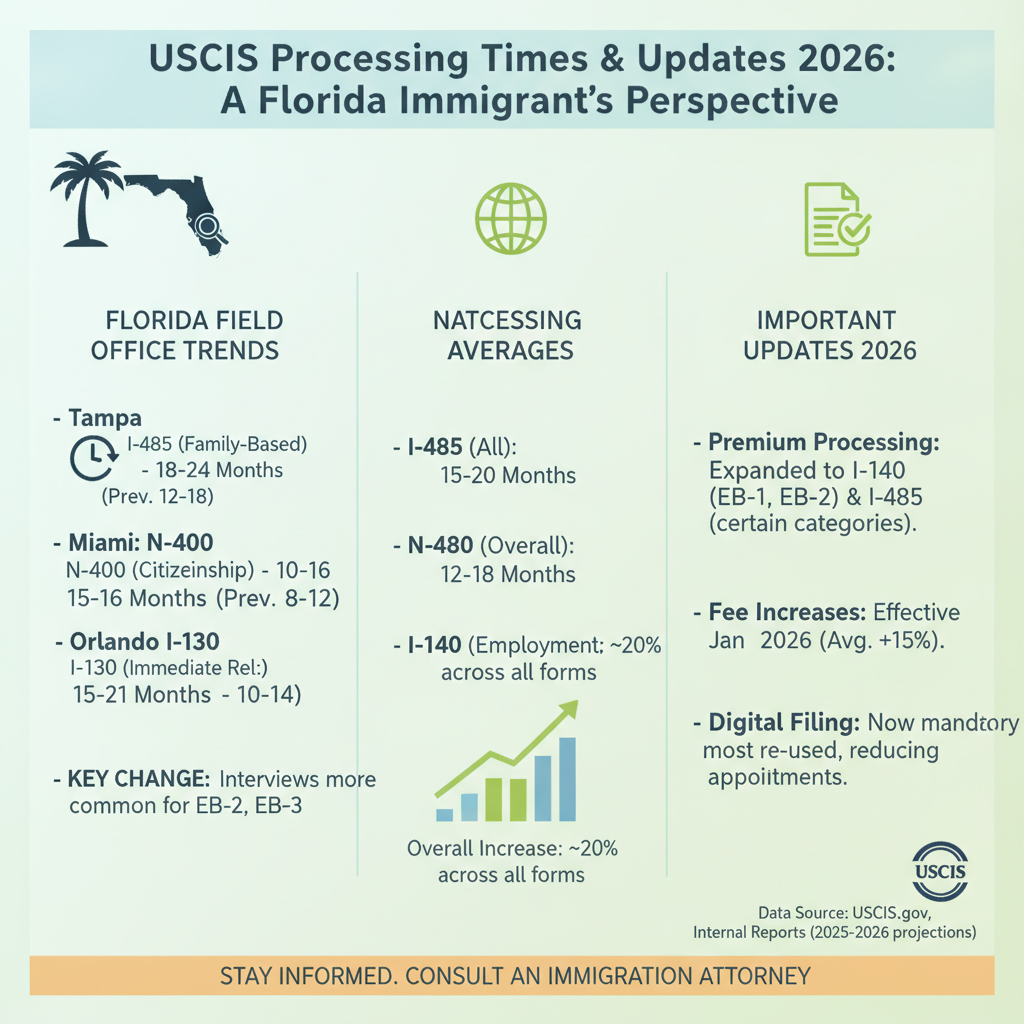
Our insights are informed by the latest information and trends reported by official government sources, including the USCIS Processing Times and Updates for 2026 (USCIS). These updates are vital for anyone with an active or prospective immigration case, offering a snapshot of current operational realities within the U.S. immigration system.
What This News Means for Immigrants in Orlando and Across Florida
The news regarding USCIS processing times is more than just a data point; it's a direct indicator of when your life can move forward. For immigrants residing in Orlando, across Central Florida, and throughout the Sunshine State, these updates have tangible implications.
Why this news is showing up now
The issue of USCIS processing times is a perennial concern, but why does it seem to be a recurring news item, particularly in 2026? Several factors contribute to the ongoing fluctuations and the continuous need for updates:
- Increased Application Volume: The demand for immigration benefits often outpaces USCIS's capacity, leading to backlogs. Economic conditions, political changes, and global events can all influence the number of applications filed.
- Resource Allocation: USCIS's operational efficiency is heavily dependent on funding, staffing levels, and technological infrastructure. Budgetary constraints or shifts in policy can directly impact how quickly cases are processed.
- Policy Changes: New immigration policies or directives from the current administration can introduce new layers of review, require updated forms, or shift priorities, all of which can slow down existing processes. For instance, enhanced vetting procedures or a focus on certain application types can divert resources.
- Digital Transformation Efforts: While USCIS is continually working to modernize its systems, the transition from paper-based to digital processing can sometimes introduce temporary delays as new systems are implemented and staff are trained.
- COVID-19 Aftermath: Even in 2026, the lingering effects of the pandemic, which caused office closures, staffing shortages, and interview backlogs, continue to influence overall processing capacity.
- Geopolitical Factors: Global crises, humanitarian parole programs, and refugee resettlement efforts can place additional strain on USCIS resources, indirectly affecting processing times for other application types.
These factors combine to create a dynamic environment where processing times are constantly shifting, making regular updates from USCIS not just helpful, but essential for transparency and planning.
How it can affect Florida residents
For individuals and families living in Florida, especially in populous areas like Orlando, Tampa, Miami, and Jacksonville, changes in USCIS processing times can have profound and specific effects:
- Uncertainty for Family Reunification: Many Floridians sponsor family members. Extended processing times for forms like Form I-130, Petition for Alien Relative, mean longer separations from loved ones. The tagline "Keep Families Together" resonates deeply with the challenges posed by these delays.
- Employment and Travel Restrictions: Delays in processing Form I-765, Application for Employment Authorization, can prevent individuals from working legally, impacting their ability to support themselves and their families. Similarly, delays with Form I-131, Application for Travel Document, can restrict essential travel, sometimes preventing individuals from attending family emergencies abroad or jeopardizing employment opportunities that require international travel.
- Impact on Local Economy: A significant portion of Florida's workforce includes immigrants. Delays in work permits or green cards can affect local businesses that rely on immigrant labor, particularly in sectors like hospitality, agriculture, and construction, which are vital to Florida's economy.
- Orlando USCIS Field Office Backlogs: If your case is handled by the Orlando USCIS Field Office, specific local backlogs or resource limitations can mean your application might take longer than the national average. This is especially true for interviews related to Adjustment of Status (Form I-485) or naturalization applications (Form N-400).
- Stress and Anxiety: The emotional toll of prolonged waiting periods cannot be overstated. Immigrants and their families in Central Florida often face immense stress, impacting mental health and overall well-being.
- Risk of Expired Documents: Longer processing times increase the risk of existing immigration documents (like EADs or travel permits) expiring before new ones are issued, potentially leading to a lapse in status or employment authorization if not proactively managed.
Understanding these potential impacts allows you to prepare more effectively and seek timely legal assistance, mitigating the negative consequences of prolonged processing times.
Feeling overwhelmed by immigration delays? Our Orlando immigration team is ready to assist. Call +1 786-791-3106 for a free consultation, or message us online. Se Habla Español.
What USCIS Processing Times Are (and Why They Matter)
The concept of USCIS processing times is central to virtually every immigration journey. It dictates the duration from when USCIS receives your application until they make a decision. Understanding this metric is crucial for managing expectations and planning your future.
A plain-English definition
Simply put, USCIS processing times refer to the estimated period it takes for U.S. Citizenship and Immigration Services to review and make a decision on an immigration application or petition. These times are not guarantees but rather averages or ranges, based on how long it has taken to process similar cases in the past. They can vary significantly depending on the type of form, the specific USCIS Service Center or Field Office handling the case, and other factors like workload and available resources.
Think of it like waiting in line at a very busy government office. The "processing time" is how long people ahead of you in line had to wait, and it gives you an idea of how long you might wait. This wait time is updated regularly to reflect current conditions.
Key terms you need to know
To navigate the world of USCIS processing times effectively, familiarity with specific terminology is essential:
- Receipt Date: This is the date USCIS officially received your application or petition. It's usually stamped on your Form I-797C, Notice of Action (your receipt notice). This date is critical because processing times are typically measured from your receipt date.
- Priority Date: Primarily relevant for family-sponsored and employment-based green card categories that are subject to annual quotas. The Priority Date is established when a visa petition (like Form I-130 or Form I-140) is properly filed. An immigrant visa number must be available for your Priority Date to become current before you can apply for a green card or receive an immigrant visa. This date is published monthly in the U.S. Department of State Visa Bulletin.
- Actual Processing Time: The specific time it takes for your individual case to be adjudicated. This can differ from the estimated times published online due to unique case complexities, requests for additional evidence, or other unforeseen circumstances.
- National Average: The average processing time for a particular form across all USCIS Service Centers and Field Offices. While useful, it may not accurately reflect the processing time for your specific location.
- Field Office Processing Time: For certain applications, particularly those requiring an interview (like Form I-485 for Adjustment of Status or Form N-400 for Naturalization), the processing time will depend on the specific USCIS Field Office responsible for your geographic area (e.g., the Orlando USCIS Field Office).
- Case Inquiry Date: This is the earliest date you can contact USCIS to inquire about your case if it has exceeded the normal processing times. USCIS publishes this date alongside the processing times.
- Request for Evidence (RFE): A notice from USCIS asking for more information or documentation to support your application. Responding promptly and thoroughly to an RFE is crucial to avoid further delays or denial.
- Notice of Intent to Deny (NOID): A notice from USCIS indicating their intention to deny your application unless you provide specific information or evidence to overcome their concerns. This is a serious notice requiring immediate attention.
- Adjustment of Status (AOS): The process by which an eligible immigrant already in the U.S. can apply for lawful permanent resident status (a green card) without having to return to their home country. This typically involves filing Form I-485.
Understanding these terms empowers you to interpret USCIS communications and online tools more accurately, giving you a clearer picture of your immigration journey.
Current Immigration Law: The Foundation
Understanding USCIS processing times requires a foundational knowledge of the laws and regulations that govern the U.S. immigration system. These laws dictate the types of visas available, eligibility criteria, and the procedural framework USCIS must follow, all of which indirectly influence processing durations.
Federal requirements
The primary body of law governing immigration in the United States is the Immigration and Nationality Act (INA). The INA, codified in Title 8 of the U.S. Code, establishes the framework for:
- Visa Categories: Defining who is eligible for various immigrant (green card) and non-immigrant (temporary) visas, such as family-sponsored visas (e.g., immediate relatives, family preference categories), employment-based visas, refugee and asylum status, and more.
- Application Procedures: Outlining the forms, supporting documentation, and steps required for different immigration benefits. For example, Form I-130, Petition for Alien Relative, is the initial step for many family-based green cards, while Form I-485, Application to Register Permanent Residence or Adjust Status, is used by those already in the U.S. to obtain a green card. Other critical forms include Form I-765, Application for Employment Authorization, and Form I-131, Application for Travel Document.
- Adjudication Standards: Setting the legal criteria USCIS officers must apply when reviewing applications. These standards ensure fairness and consistency but can also contribute to processing times if cases require extensive review.
- Annual Quotas: Many visa categories, particularly family preference and employment-based visas, are subject to annual numerical limits. These quotas, established by the INA, often result in long waiting lines (determined by Priority Dates and the Visa Bulletin), regardless of USCIS processing speed for the actual application.
- Agency Mandate: The INA empowers USCIS (part of the Department of Homeland Security) to administer lawful immigration. This includes collecting fees, conducting background checks, scheduling interviews, and issuing decisions. The agency's resources and efficiency in fulfilling this mandate directly affect processing times.
Specific regulations published in the Code of Federal Regulations (CFR), particularly Title 8, Chapter I, further detail how the INA is implemented by USCIS. These regulations outline the exact procedures, documentation, and eligibility requirements for each immigration benefit. Changes to these regulations, often published in the Federal Register, can have a significant impact on processing times by altering requirements or procedures.
For official information and to download forms, always refer to the USCIS official website and the USCIS Forms page.
Florida-specific considerations
While immigration law is federal, its application and impact can have state-level nuances, particularly in a state like Florida, which has a large and diverse immigrant population. Florida does not have its own immigration laws that supersede federal statutes, but certain state policies or demographic realities can indirectly affect the immigration experience:
- State-Level Initiatives: Florida's state legislature occasionally passes laws related to undocumented immigrants or public services, which, while not directly changing federal processing times, can create a more complex or challenging environment for immigrants residing in the state. For example, laws affecting driver's licenses or public benefits for non-citizens can influence an immigrant's ability to live and work while waiting for federal applications to process.
- High Volume of Cases: As a major destination for immigrants, Florida, especially its urban centers like Orlando, Miami, and Tampa, sees a high volume of applications processed through its local USCIS Field Offices and Application Support Centers. This high volume can sometimes contribute to longer local processing times compared to less populous regions. The Orlando USCIS Field Office, for instance, serves a broad and growing community, and its specific workload can impact interview scheduling and local adjudications.
- Diverse Immigrant Communities: Florida is home to diverse immigrant groups, each with unique needs. The large number of Venezuelan, Haitian, Cuban, and Central American immigrants, for example, often have complex asylum, parole, or family-based cases that can require more extensive review.
- Legal Support Infrastructure: The availability of qualified immigration legal counsel in Florida is robust, which is crucial given the complexities of the system. Firms like Imigrar, located in Orlando, specialize in navigating these federal laws for local residents, providing essential support during lengthy processing periods.
It's important to remember that while state policies might affect an immigrant's daily life in Florida, the actual processing and adjudication of federal immigration applications remain solely under the purview of USCIS and federal law.
Don't let legal complexities delay your future. Our Orlando immigration team is ready to assist. Call +1 786-791-3106 for a free consultation, or message us online. Se Habla Español.
How to Track and Potentially Expedite Your USCIS Application: A Complete Step-by-Step Guide
Navigating the waiting period for a USCIS decision can be daunting. However, there are proactive steps you can take to monitor your case and, in certain circumstances, inquire about or even expedite its processing. This guide outlines how to stay informed and act strategically.
1) Understand Your Application Type and Form Number
Before you can track your case, you need to know exactly what you filed. Every immigration benefit has a specific form number. This is the foundation of your inquiry.
- Action: Locate your Form I-797C, Notice of Action (receipt notice) or the copy of the application you submitted.
- Required Information:
- The specific Form Number (e.g., Form I-130, Form I-485, Form I-765, Form N-400).
- The Receipt Number (a 13-character code starting with three letters, e.g., EAC, WAC, LIN, SRC, NBC, MSC, or IOE). This is your primary case identifier.
- Why it matters: Each form type has different processing procedures and timelines. Knowing your form number directs you to the correct processing time information.
2) Find Your Receipt Date and Priority Date
These dates are crucial for determining where your case stands in the queue and when you might be eligible for a visa number.
- Action: Your Receipt Date is on your Form I-797C, Notice of Action. If you filed a family-sponsored or employment-based immigrant petition (like Form I-130 or Form I-140), your Priority Date will also be on that receipt notice.
- Required Information:
- Your exact Receipt Date.
- Your exact Priority Date (if applicable).
- Why it matters: The Receipt Date is used to check against published processing times. The Priority Date, when current in the U.S. Department of State Visa Bulletin, indicates when you can move forward with applying for a green card.
3) Check USCIS Processing Times Online
USCIS regularly updates its online processing times tool, which is your go-to resource for current estimates.
- Action: Visit the official USCIS Processing Times page.
- Steps:
- Select the Form Number you filed.
- Select the Field Office or Service Center that is processing your application. This information is usually found on your Form I-797C receipt notice (e.g., "Potomac Service Center," "Orlando Field Office").
- Click "Get processing time."
- What you'll see: The page will display a range of typical processing times. Crucially, it will also show the "Case Inquiry Date" – if your receipt date is earlier than this date, your case is outside normal processing times, and you can make an inquiry.
4) Understand Your Field Office or Service Center
Different USCIS locations have different workloads and processing speeds. It's vital to know which one is handling your case.
- Action: Identify the specific USCIS Service Center (e.g., California, Nebraska, Texas, Vermont, Potomac) for forms like Form I-130, or the local USCIS Field Office (e.g., Orlando Field Office) for interviews for Form I-485 or Form N-400. This is typically indicated on your Form I-797C.
- Why it matters: Processing times vary significantly by location. What might be a 6-month wait at one Service Center could be 18 months at another. For Central Florida residents, the Orlando Field Office processes many local applications, and its specific processing times are highly relevant.
5) Inquire About Your Case (Outside Normal Processing Times)
If your case has exceeded the published processing times, you are generally eligible to submit an inquiry.
- Action: If your Receipt Date is earlier than the "Case Inquiry Date" shown on the USCIS processing times page, you can submit an "e-Request" online or call the USCIS Contact Center.
- Required Information for Inquiry:
- Your Receipt Number.
- Your Form Type.
- Your Receipt Date.
- Your personal details (name, date of birth).
- A clear explanation of why you are inquiring (i.e., case is outside normal processing times).
- Important: Do not inquire before your case is outside the normal processing times, as it will likely not be reviewed and can add to system congestion.
6) Request Expedited Processing (If Applicable)
Expedited processing is rarely granted and is reserved for cases with severe circumstances.
- Action: You can request expedited processing by calling the USCIS Contact Center or by making a request during an in-person appointment at a USCIS Field Office.
- Criteria for Expedited Processing: USCIS considers requests based on strict criteria, which often include:
- Severe financial loss to a company or person.
- Urgent humanitarian reasons (e.g., life-threatening illness, critical medical needs).
- Compelling U.S. government interests (e.g., national security).
- Clear USCIS error.
- Required Documents/Information:
- Evidence supporting your claim for expedited processing (e.g., medical letters, job offer letters with specific deadlines, financial statements, death certificates).
- Your Receipt Number and case details.
- Warning: Gather strong, verifiable evidence. General inconvenience or simply wanting to get a decision faster is usually not enough.
7) Seek Legal Assistance
If your case is stalled, complex, or you're unsure about the next steps, an experienced immigration attorney can provide invaluable help.
- Action: Contact an immigration law firm like Imigrar.
- How an Attorney Helps:
- Review Case Status: Attorneys have access to specific liaison channels and can often gain more detailed information about your case.
- Identify Issues: They can spot potential errors in your application or reasons for delay that you might miss.
- Draft Inquiries: They can prepare professional and compelling inquiries to USCIS or the USCIS Ombudsman.
- Advocate for Expedite Requests: An attorney can help compile strong evidence and articulate a persuasive argument for expedited processing.
- File a Mandamus Action: In extreme cases of unreasonable delay, an attorney can file a lawsuit in federal court (a Writ of Mandamus) to compel USCIS to make a decision. This is a rare and serious step.
- Important: For Central Florida residents, contacting a local firm familiar with the Orlando USCIS Field Office can be particularly beneficial.

Practical Steps You Can Take Today
While waiting for USCIS, there are proactive measures you can take to manage your expectations, reduce stress, and ensure your application remains on track. These steps are crucial for anyone, especially those in Orlando and across Florida, navigating the immigration process in 2026.
- 1. Maintain Meticulous Records:
- Action: Keep a complete copy of every form, document, and piece of correspondence you send to or receive from USCIS, including your Form I-797C, Notice of Action. Organize these in a dedicated folder or digital file.
- Guidance: Include proof of mailing (e.g., certified mail receipts). This record serves as your backup in case of lost documents or discrepancies.
- 2. Monitor USCIS Processing Times Regularly:
- Action: Check the official USCIS Processing Times tool at least once a month.
- Guidance: Note the Case Inquiry Date for your specific form and Service Center/Field Office. This helps you know when you can legitimately inquire about your case.
- 3. Respond Promptly and Thoroughly to RFEs or NOIDs:
- Action: If you receive a Request for Evidence (RFE) or a Notice of Intent to Deny (NOID), address it immediately.
- Guidance: Gather all requested documents and information. If unsure, consult with an attorney. Missing deadlines or submitting incomplete responses will lead to further delays or denial. Many RFEs have a 90-day window for response, but some may be shorter.
Related Topics
Need Legal Assistance?
Our experienced immigration attorneys are here to help with your case. Contact Imigrar today for a free consultation and let us guide you through the legal process with confidence.
📍 Orlando, Florida • Serving clients nationwide
📧 info@imigrar.com