
Navigating USCIS Processing Times in 2026: A Comprehensive Guide
Understand the latest USCIS processing time updates for 2026. Learn how these changes affect your immigration application in Orlando and nationwide, with practical steps, official references, and expert advice from Imigrar.
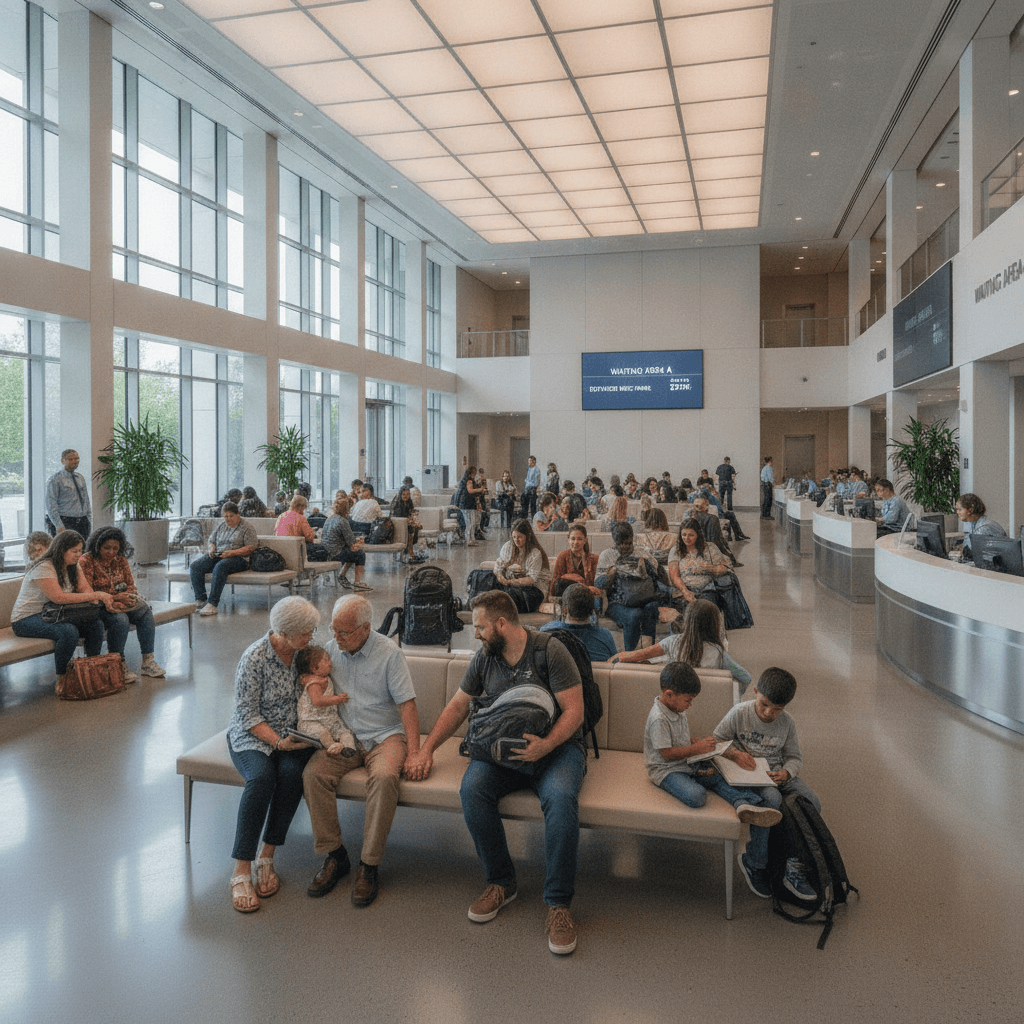
The reporting that sparked this guide: USCIS Processing Times and Updates for 2026 (USCIS)
What This News Means for Immigrants in Orlando and Across Florida

For individuals and families navigating the complex landscape of U.S. immigration, few things cause as much anxiety and uncertainty as the wait for an application to be processed by U.S. Citizenship and Immigration Services (USCIS). As of late 2026, new updates regarding processing times have emerged, directly impacting countless hopeful immigrants, including the vibrant and diverse communities throughout Orlando and the wider state of Florida.
Why this news is showing up now
USCIS processing times are not static; they are a constantly evolving metric influenced by a multitude of factors. The current news surfacing in late 2026 reflects USCIS's ongoing efforts to adjust to its workload, staffing levels, technological advancements, and policy directives. These updates are a regular occurrence, typically published monthly or quarterly, as the agency strives to provide transparency and manage expectations. However, specific "news" often highlights significant shifts, either improvements or setbacks, in particular application categories or service centers. Several key drivers contribute to these fluctuations:
- Workload Volume: The sheer number of applications received can overwhelm even the most efficient systems. Peaks in filings for certain visa categories, or a surge following a new policy, can dramatically extend wait times.
- Staffing and Resources: USCIS's ability to process cases is directly tied to its budget and the number of adjudicators it employs. Funding levels, hiring freezes, or increased operational costs can lead to backlogs.
- Policy Changes and Executive Orders: New governmental directives or changes in immigration policy can necessitate adjustments in processing protocols, requiring new training for officers or additional scrutiny for certain applications, thereby causing delays.
- Technological Infrastructure: Investments in digital processing and online tools can streamline some operations, but the transition itself can sometimes cause temporary slowdowns.
- Security Checks and Background Investigations: All applications are subject to thorough security and background checks, which involve coordination with various federal agencies. These checks are non-negotiable and can be a significant source of processing time variability.
In 2026, the specific updates likely reflect the cumulative effect of these factors, potentially indicating adjustments made to address backlogs from previous years, or new challenges emerging from evolving global and domestic circumstances. For applicants, understanding these underlying causes helps contextualize the numbers they see on the USCIS website.
How it can affect Florida residents
Florida, with its strategic geographic location, bustling international airports, and diverse population, is a hub for immigrants. The state is home to a significant number of individuals seeking various immigration benefits, from family-based green cards to asylum and naturalization. Consequently, any changes in USCIS processing times have a profound and direct impact on Florida residents.
- Orlando USCIS Field Office: For many Central Florida residents, the Orlando USCIS Field Office is the primary point of contact for interviews related to Adjustment of Status (Form I-485), naturalization (Form N-400), and other benefits. Delays at this specific office can mean extended waits for local applicants.
- High Volume of Applicants: Florida's large immigrant population means that local field offices and service centers handling Florida cases often experience higher volumes, which can translate into longer processing times compared to less populous states.
- Economic and Personal Uncertainty: Longer wait times mean extended periods of uncertainty for individuals and families. This can impact employment opportunities, educational plans, and the ability to travel or reunite with loved ones. For families in Orlando and across the state, the delay in receiving a green card or citizenship can mean postponing critical life decisions.
- Work Authorization Delays: Delays in processing Form I-765 (Application for Employment Authorization) can leave individuals unable to work or facing gaps in employment, creating significant financial hardship for families along the I-4 corridor and beyond.
- Travel Restrictions: Similarly, delays in Form I-131 (Application for Travel Document) can prevent individuals from traveling internationally, even for urgent family matters, creating immense stress for Florida's internationally connected communities.
- Impact on Local Businesses: Businesses that rely on immigrant workers, particularly in sectors like hospitality, agriculture, and healthcare that are prevalent in Florida, can also be affected by delays in work authorization or visa processing.
For these reasons, staying informed about USCIS processing updates is not just a matter of curiosity but a critical necessity for Florida's immigrant communities. At Imigrar, we understand these challenges and are dedicated to providing clear, actionable guidance to help you navigate these often-stressful periods.
Need Help? Our Orlando immigration team is ready to assist. Call +1 786-791-3106 for a free consultation, or message us online. Se Habla Español.
What USCIS Processing Times Are (and Why They Matter)
USCIS processing times represent the period it takes for the agency to make a decision on an immigration application or petition. These times are crucial because they dictate how long an applicant must wait for a life-altering decision, impacting everything from employment and travel to family reunification and residency status. Understanding these times is fundamental to managing expectations and planning your future.
A plain-English definition
Think of USCIS processing times as an estimated waiting period, much like how long a doctor tells you to expect to wait in their office, or how long a mechanic says your car repair will take. It’s not an exact science, but it gives you an idea. Specifically, USCIS calculates these times based on historical data – looking at how long it took to process similar applications over the past few months. They consider the type of form, the specific service center or field office handling it, and sometimes even the particular category of the application.
These times are usually presented as a range (e.g., "10 to 14 months"). This range reflects the variability in cases; some might be straightforward and processed quickly, while others might require additional review or information, thus taking longer. It's important to remember that these are estimates, not guarantees. Your individual case could be processed faster or slower than the posted times, depending on its unique complexities, the accuracy of your submission, and the current workload at USCIS.
Key terms you need to know
Navigating USCIS processing times requires familiarity with several important terms:
- Priority Date: This is the date USCIS or the Department of State receives your properly filed visa petition (e.g., Form I-130). For many visa categories, especially family-sponsored and employment-based, your ability to file for a green card (Form I-485) or receive an immigrant visa depends on your Priority Date becoming "current" according to the monthly Visa Bulletin. This is a critical factor influencing overall wait times, often far beyond the processing time of the petition itself.
- Filing Date: The date your application or petition is physically received by USCIS. This is distinct from the Priority Date for petitions that require one.
- Receipt Date: The date USCIS officially logs your application into their system and issues a Form I-797C, Notice of Action (Receipt Notice). This date is usually very close to the Filing Date. Your receipt number, found on this notice, is essential for tracking your case.
- Biometrics Appointment: A mandatory appointment where USCIS collects your fingerprints, photograph, and signature. These are used for background checks and identity verification. Delays in scheduling this appointment can impact overall processing.
- Request for Evidence (RFE): A formal letter from USCIS requesting additional documents or information to support your application. Failing to respond fully and on time can lead to denial. An RFE will inevitably extend your processing time.
- Notice of Intent to Deny (NOID): A notice from USCIS indicating that they intend to deny your application unless you provide specific information or evidence to overcome their concerns. This is a serious notice requiring immediate and skilled attention.
- Adjustment of Status (AOS): The process of applying for a green card while physically present in the United States (typically using Form I-485). This is distinct from Consular Processing.
- Consular Processing: The process of applying for an immigrant visa at a U.S. embassy or consulate abroad to enter the U.S. as a lawful permanent resident.
- Case Status Online: The USCIS online tool where you can track the progress of your application using your Receipt Number. This is your primary resource for real-time updates. You can access it at USCIS Case Status Online.
Understanding these terms is vital for anyone engaging with the U.S. immigration system, especially when monitoring the progress of your application in Orlando or anywhere else in the country.
Current Immigration Law: The Foundation
USCIS processing times are not arbitrary; they are a direct consequence of the legal framework governing immigration in the United States. The Immigration and Nationality Act (INA), along with subsequent legislation, regulations, and policy memoranda, establishes the categories of immigration benefits, the eligibility requirements, and the administrative procedures that USCIS must follow. Every step an application takes, from initial filing to final adjudication, is rooted in law.
Federal requirements
The entire U.S. immigration system operates under federal law. There are no state-specific immigration laws that dictate how USCIS processes applications. Key federal requirements that influence processing times include:
- Statutory Visa Caps: The INA sets annual limits on the number of immigrant visas available for certain categories, such as family-sponsored (INA Section 203(a)) and employment-based (INA Section 203(b)) visas. When demand exceeds these caps, visa bulletins are issued, creating backlogs based on Priority Dates that can last for years or even decades, regardless of how quickly USCIS processes the initial petition.
- Eligibility Criteria: Each immigration benefit (e.g., green card, citizenship, work permit) has specific eligibility requirements outlined in federal law and regulations. USCIS adjudicators must thoroughly review all evidence to ensure an applicant meets these criteria. This meticulous review, especially for complex cases, contributes to processing times.
- Background and Security Checks: Federal law mandates extensive background and security checks for nearly all applicants for immigration benefits. These checks involve collaboration with various federal agencies, including the FBI, Department of Homeland Security, and intelligence agencies. The time it takes to complete these checks is often outside USCIS's direct control but is a significant component of the overall processing time.
- Administrative Procedures Act (APA): The APA governs how federal agencies develop and issue regulations. It also sets standards for fair administrative adjudication, ensuring due process for applicants. While beneficial for protecting rights, adhering to these procedures can add to the time required for decision-making.
- Required Forms and Documentation: Each immigration benefit requires specific forms and supporting documentation. For example, a family-based green card typically involves Form I-130 (Petition for Alien Relative), followed by Form I-485 (Application to Register Permanent Residence or Adjust Status) or consular processing. Naturalization requires Form N-400 (Application for Naturalization). These forms, along with extensive supporting evidence like birth certificates, marriage certificates, financial documents, and police clearances, must be meticulously reviewed.
Reminder: All immigration forms, instructions, and official information are available on the USCIS official website. Always refer to the latest versions of forms and instructions.
Florida-specific considerations
While federal law dictates the rules, the practical application and experience can vary slightly depending on your location. For Florida residents, particularly those in Central Florida served by the Orlando USCIS Field Office, here are some considerations:
- Field Office Workload: The Orlando USCIS Field Office, like other field offices in major immigration hubs, handles a high volume of interviews for Adjustment of Status and naturalization. The local workload directly impacts interview scheduling and the final adjudication of these cases.
- Asylum Offices: Florida also has specific asylum offices (e.g., Orlando, Miami) that handle asylum claims, which have their own distinct processing queues and timelines.
- Diverse Case Types: Florida’s diverse immigrant population means that local offices process a wide array of case types, from Cuban Adjustment Act cases to Haitian Refugee Immigration Fairness Act (HRIFA) applications, alongside standard family and employment-based petitions. This diversity can sometimes lead to specialized processing streams.
- Legal Resources: Florida has a robust network of immigration legal services. While not directly affecting USCIS processing, access to experienced legal counsel in Orlando and other Florida cities can significantly improve the quality of submissions and help navigate potential delays or RFEs, which in turn can prevent further delays.
Understanding that your application is processed under federal law, but influenced by the administrative realities of local offices like the one in Orlando, is key to setting realistic expectations.
Need Help? Our Orlando immigration team is ready to assist. Call +1 786-791-3106 for a free consultation, or message us online. Se Habla Español.
How to Navigate USCIS Processing Times: A Complete Step-by-Step Guide
Managing the waiting period for a USCIS decision can be one of the most stressful parts of the immigration journey. While you cannot directly control USCIS's processing speed, you can proactively monitor your case, understand the process, and take steps to ensure your application is as strong as possible. This guide outlines how to effectively navigate and respond to USCIS processing times.
1) Understand Your Application Type and Category
Before you can even begin to track, you must know exactly what you've applied for. Different forms and categories have vastly different processing timelines. For instance, a Form I-130 petition filed by a U.S. citizen for an immediate relative (spouse, minor child, parent) typically moves faster than a petition for a preference category relative (e.g., adult married children or siblings), which are subject to annual visa caps and the Visa Bulletin. Similarly, an Adjustment of Status application (Form I-485) filed concurrently with a visa petition might have a different trajectory than one filed after a Priority Date becomes current. Identify:
- The specific USCIS form number (e.g., Form I-130, Form I-485, Form N-400, Form I-765).
- The type of benefit you are seeking (e.g., green card, work permit, citizenship).
- Your immigration category (e.g., family-sponsored F1, F2A, F2B, F3, F4; employment-based EB-1, EB-2, EB-3; asylum; DACA).
- The service center or field office processing your case (this is usually indicated on your Receipt Notice, Form I-797C).
Required Documents: Your Form I-797C, Notice of Action (Receipt Notice) is the most critical document for this step, as it contains your receipt number and often identifies the service center.
2) Locate and Interpret Your Specific Processing Times
USCIS provides an online tool to check processing times, which is updated regularly. This is your primary source of information.
- Visit the USCIS Processing Times page.
- Select the form number relevant to your application.
- Select the field office or service center processing your case. (This information is on your Form I-797C).
- Review the posted processing time range. USCIS provides a range (e.g., "10 to 14 months") and often indicates the "Net Processing Time" or "Cases Completed" within a certain timeframe.
Important: The "As of" date on the processing times page tells you when the data was last updated. Always check the most recent update. Understand that the range reflects the majority of cases; yours might fall outside it due to unique circumstances.
Required Documents: Your Form I-797C to identify your form type and processing location.
3) Track Your Case Status Online Regularly
Once you have your Receipt Number (a 13-character code usually starting with three letters like EAC, WAC, LIN, SRC, or IOE), you can track your case online.
- Go to USCIS Case Status Online.
- Enter your Receipt Number.
- You can also create a USCIS online account. This allows you to view your case history, receive electronic notifications, and communicate with USCIS more easily. For many newer filings (especially those starting with IOE), an online account is the most effective way to track.
What to look for:
- "Case Was Received": Your application is in the system.
- "Biometrics Appointment Was Scheduled": You will receive a notice for your appointment.
- "Request for Evidence Was Sent": USCIS needs more information.
- "Interview Was Scheduled": For certain applications (e.g., Form I-485, Form N-400).
- "New Card Is Being Produced" or "Case Was Approved": The final, positive outcome.
Warning: While helpful, the online status updates are sometimes generic and don't always reflect immediate changes. They are a snapshot, not a minute-by-minute tracker.
Required Documents: Your Form I-797C with your Receipt Number.
4) Know When and How to Submit an "Outside Normal Processing Times" Inquiry
If your case has been pending longer than the upper end of the posted processing time range for your form and service center/field office, you may be eligible to submit an inquiry. USCIS refers to this as an "e-Request."
- First, double-check the processing times tool to confirm your case is truly outside the normal range.
- Visit the USCIS e-Request page.
- Select "Case outside normal processing time."
- Provide your Receipt Number and other required information.
- Keep a record of your inquiry reference number.
Reminder: Do not submit an inquiry if your case is still within the posted processing times. This will not speed up your case and can add to USCIS's workload, potentially slowing down others.
Required Documents: Your Form I-797C and any previous correspondence from USCIS.
5) Respond Promptly to Requests for Evidence (RFEs) or Notices
An RFE is a common cause for delays. If USCIS sends you an RFE or any other notice (e.g., a Notice of Intent to Deny - NOID), it means they need more information to make a decision. Your response is critical.
- Read the RFE/NOID carefully and understand exactly what is being requested.
- Gather all requested documents and evidence. Ensure they are complete, accurate, and properly translated if necessary.
- Submit your response by the deadline specified in the notice. Typically, you have 30 to 90 days to respond. Missing this deadline can lead to denial.
- Make copies of everything you send to USCIS for your records.
- Consider seeking legal counsel immediately upon receiving an RFE or NOID. An experienced attorney, like those at Imigrar, can help ensure a complete and persuasive response.
Required Documents for RFE Response: The original RFE/NOID letter, all requested documents (original or certified copies as specified), a cover letter, and copies of your original application package.
6) Prepare for Interviews and Biometrics
For applications like Form I-485 (Adjustment of Status) and Form N-400 (Naturalization), an interview at a local USCIS field office (e.g., the Orlando USCIS Field Office) is often required. A biometrics appointment is also a standard step for many applications.
- Biometrics: Attend your appointment on time with the appointment notice and a valid photo ID. Failure to attend can lead to delays or even denial.
- Interview: When an interview is scheduled, review your entire application package. Gather all original documents you submitted, plus any new relevant documents (e.g., updated employment letters, new birth certificates for children, marriage certificates, divorce decrees, tax returns). Dress professionally, be punctual, and be honest and consistent in your answers.
- Legal Representation: You have the right to have an attorney present with you at your interview. For complex cases, or if you feel nervous, having legal counsel can be invaluable.
Required Documents for Biometrics: Appointment notice (Form I-797C) and a valid photo ID (e.g., passport, driver's license).
Required Documents for Interview: Interview notice, valid passport/photo ID, all original documents submitted with your application, copies of all submitted documents, and any additional documents requested in the interview notice or relevant to your case (e.g., tax returns, updated employment letters, proof of continued relationship for marriage-based cases).
7) Seek Legal Counsel for Delays or Complexities
If your case faces significant delays, receives an RFE, or encounters any other complexity, the best step is often to consult with an experienced immigration attorney. An attorney can:
- Analyze your specific situation and interpret USCIS communications.
- Advise on the best course of action for responding to RFEs or NOIDs.
- Help prepare and submit an "Outside Normal Processing Times" inquiry more effectively.
- Communicate directly with USCIS on your behalf via attorney inquiry channels.
- In extreme cases of unreasonable delay, an attorney can explore legal remedies such as a writ of mandamus, which is a lawsuit filed in federal court to compel USCIS to make a decision.
- Represent you at interviews, providing guidance and support.
Warning: Do not attempt to navigate significant delays or complex legal issues without professional guidance. The stakes are too high.

Practical Steps You Can Take Today to Manage Your Application
While the waiting game is largely out of your hands, there are proactive steps you can take to put yourself in the best possible position and minimize potential delays. Being organized, informed, and prepared can make a significant difference in your immigration journey.
Actionable Checklist:
- Keep Copies of Everything: Make a complete set of copies of every document you submit to USCIS, including the application forms, supporting evidence, and any correspondence you receive. Organize these in a dedicated folder or binder. This is invaluable if documents are lost, an RFE is issued, or during an interview.
- Organize Your Documents Meticulously: Before submitting your application, ensure all documents are well-organized, clearly labeled, and in the order specified by USCIS instructions. Use tabs, cover sheets, and a table of contents for complex submissions. For Florida residents, especially those dealing with diverse documentation from various countries, this is paramount.
- Sign Up for a USCIS Online Account: If you haven't already, create an account at my.uscis.gov. This allows you to link your paper-filed cases, track progress, receive alerts, and sometimes even respond to RFEs or submit inquiries online.
- Monitor Processing Times Regularly: Check the
Related Articles
You may also be interested in:
-
Mastering Your Green Card Interview: An Orlando Immigrant's
Navigating your green card interview in Orlando requires meticulous preparation. This comprehensive guide from Imigrar offers step-by-step advice, doc...
-
Master Your Green Card Interview: Essential Prep Tips
Prepare confidently for your Green Card interview with Imigrar's expert guide. Learn what to expect, gather documents, and ace your interview for a su...
-
USCIS Processing Times 2026: Your Guide to Updates & What to
Navigate USCIS processing times in 2026 with Imigrar's expert guide. Understand updates, timelines, and how to keep your family together in Orlando, F...
-
USCIS EAD Updates: Navigating Your Work Permit in Florida (2026)
Stay informed on the latest USCIS Employment Authorization Document (EAD) processing updates. Imigrar provides a comprehensive guide for immigrants in...
-
Mastering Your Green Card Interview: An Orlando Immigrant's
Related Topics
Need Legal Assistance?
Our experienced immigration attorneys are here to help with your case. Contact Imigrar today for a free consultation and let us guide you through the legal process with confidence.
📍 Orlando, Florida • Serving clients nationwide
📧 info@imigrar.com