
USCIS Processing Times 2026: Your Guide to Updates & What to
Navigate USCIS processing times in 2026 with Imigrar's expert guide. Understand updates, timelines, and how to keep your family together in Orlando, Florida.
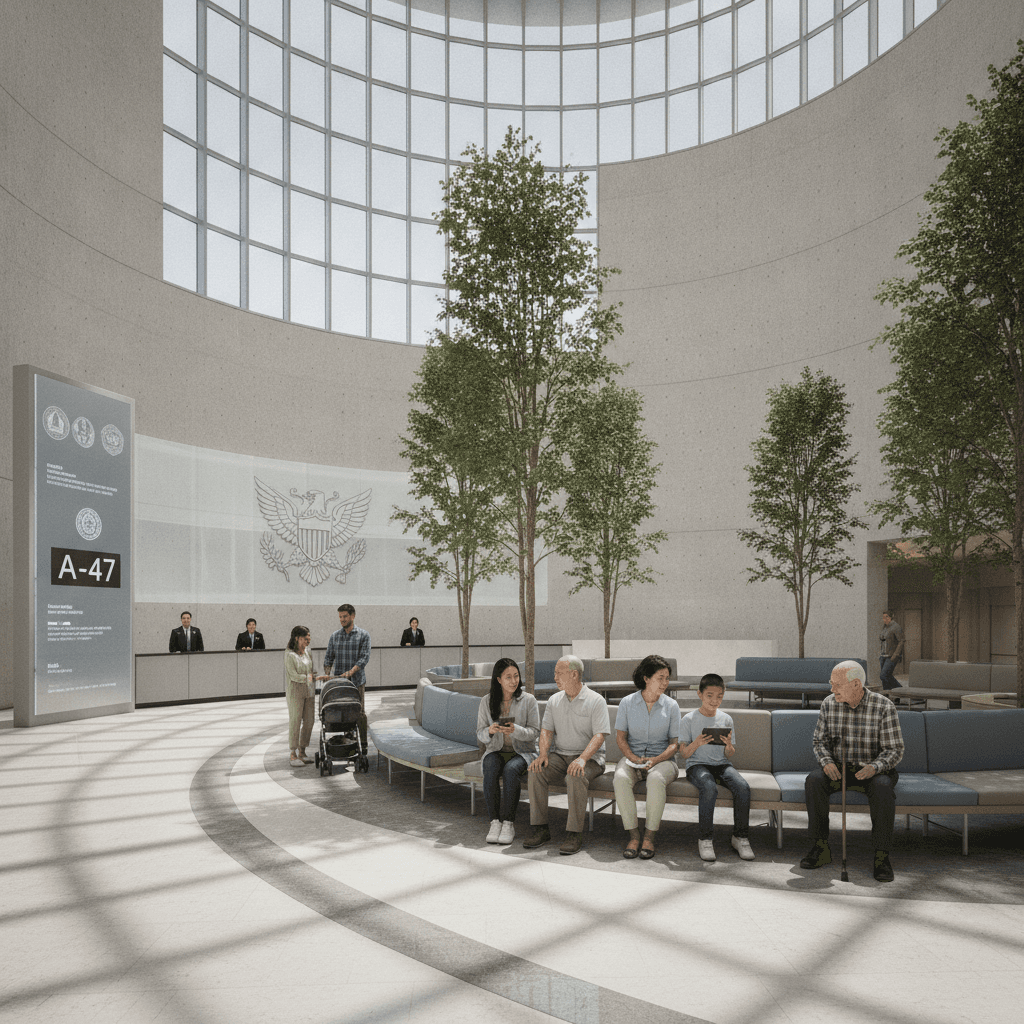
Navigating the U.S. immigration system can often feel like a journey through shifting sands, especially when it comes to understanding how long your application will take. For immigrants in Orlando, across Florida, and nationwide, USCIS processing times are a constant, critical concern. As of late 2026, new updates and ongoing trends continue to shape these timelines, impacting everything from family petitions to naturalization applications.
At Imigrar, an immigration law firm based in Orlando, Florida, our mission is to "Keep Families Together." We understand the anxiety and uncertainty that come with waiting for an immigration decision. This comprehensive guide, informed by the latest information available in October 2026, aims to demystify USCIS processing times, offer actionable advice, and highlight how our dedicated team can support you through every step.
Need Clarity on Your Case? Don't face USCIS processing times alone. Our Orlando immigration team is ready to assist. Call +1 786-791-3106 for a free consultation, or message us online. Se Habla Español.
NEWS SOURCE REFERENCE SECTION

The reporting that sparked this guide: USCIS Processing Times and Updates for 2026 (USCIS)
What This News Means for Immigrants in Orlando and Across Florida
The continuous updates from U.S. Citizenship and Immigration Services (USCIS) regarding processing times are more than just statistics; they are vital indicators that directly affect the lives, plans, and futures of countless individuals and families. For those living in Orlando, throughout Central Florida, and indeed nationwide, these updates dictate the pace of their immigration journey.
Why this news is showing up now
USCIS processing times are never static. They are a reflection of a complex interplay of factors, including application volume, staffing levels, budget allocations, technological infrastructure, and evolving government policies. Throughout 2026, USCIS has continued to implement strategies aimed at reducing backlogs, improving efficiency, and enhancing the overall customer experience. These efforts, alongside the natural ebb and flow of new applications, lead to periodic adjustments in reported processing times for various forms and case types. The agency is constantly analyzing its workload and resource distribution, leading to the regular publication of updated estimates. Furthermore, any new legislative changes or presidential directives, even minor ones, can trigger shifts in how cases are prioritized and processed, making regular updates essential for transparency.
How it can affect Florida residents
For Florida residents, particularly those in the diverse and rapidly growing Orlando metropolitan area, these processing time updates have profound implications. Central Florida is home to a significant immigrant population, encompassing a wide range of nationalities and immigration pathways. Longer processing times can mean extended periods of separation for families, delayed work authorizations, or prolonged uncertainty about one's legal status. For example, a delay in a Form I-485, Application to Register Permanent Residence or Adjust Status, could mean waiting longer for a green card, impacting job stability and travel plans. Similarly, extended waits for Form N-400, Application for Naturalization, can postpone civic participation and the ability to sponsor other family members. The Orlando USCIS Field Office, like others across the country, experiences its own unique workload dynamics, which can sometimes result in processing times that differ slightly from national averages reported by Service Centers. Understanding these local nuances is crucial for residents in Orange County and along the I-4 corridor.
Feeling Overwhelmed by Waiting? Imigrar can help you understand your specific timeline. Call +1 786-791-3106 for a free consultation, or message us online. Se Habla Español.
What USCIS Processing Times Is (and Why It Matters)
At its core, understanding USCIS processing times is about managing expectations and planning your life. These times are estimates of how long it takes USCIS to process a particular type of application or petition from the date it is received until a decision is made. They are not guarantees, but rather a guide based on historical data and current workloads.
A plain-English definition
Simply put, USCIS processing times tell you the estimated duration for your immigration application to be reviewed and decided upon by U.S. Citizenship and Immigration Services. When you submit a form, say a Form I-130, Petition for Alien Relative, USCIS provides a range of months (e.g., 10 to 14 months) during which they expect to complete similar cases. This estimate can vary significantly based on the type of application, the specific USCIS Service Center or Field Office handling your case, and various other factors. It's a snapshot of the agency's current workload and efficiency for that particular form at that specific location.
Key terms you need to know
To effectively track and understand your immigration application's progress, it's essential to be familiar with several key terms:
- Receipt Date: This is the date USCIS officially receives your application. It's usually indicated on the Form I-797C, Notice of Action, that you receive shortly after filing. This is the starting point for calculating processing times.
- Priority Date: Primarily relevant for visa categories subject to annual numerical limits (e.g., family-sponsored and employment-based visas). This is the date your petition (like an I-130 or I-140) was properly filed. Your place in line for a green card is determined by this date, as outlined in the U.S. Department of State's Visa Bulletin.
- Processing Time Frame: The estimated range of months USCIS provides for completing a specific form at a particular office. This is what you see when you check the USCIS Processing Times page.
- Case Inquiry Date: This is the earliest date you can submit an inquiry to USCIS about your case if it has been pending longer than the posted processing time for your specific form and office.
- Service Center: USCIS has several Service Centers (e.g., California, Nebraska, Texas, Vermont, Potomac) that process various types of petitions and applications. The center assigned to your case depends on the form type and your geographic location.
- Field Office: Local USCIS offices (like the Orlando USCIS Field Office) handle interviews for applications such as Adjustment of Status (Form I-485) and Naturalization (Form N-400), as well as other local services.
- National Benefits Center (NBC): The NBC often plays an intermediary role, processing certain forms like Form I-485 before transferring them to a local Field Office for an interview.
- Adjustment of Status (AOS): The process of applying for lawful permanent resident status (a green card) while physically present in the United States, typically using Form I-485.
- Consular Processing: The process of applying for an immigrant visa at a U.S. embassy or consulate abroad, typically after a petition (e.g., Form I-130) has been approved by USCIS.
Current Immigration Law: The Foundation
USCIS processing times are not arbitrary; they are governed by a complex framework of federal immigration laws, regulations, and administrative procedures. Understanding this legal foundation helps clarify why certain applications take longer than others and what factors USCIS must consider during adjudication.
Federal requirements
The primary legal authority for U.S. immigration law is the Immigration and Nationality Act (INA). The INA, along with its accompanying regulations (found in Title 8 of the Code of Federal Regulations), dictates eligibility criteria, filing requirements, and the adjudication process for nearly all immigration benefits. For instance:
- INA Section 201-204: These sections establish the categories of immigrants, the annual numerical limits for certain visa types (family-sponsored, employment-based), and the petitioning process (e.g., Form I-130 for family petitions, Form I-140 for employment petitions).
- INA Section 245: This critical section governs Adjustment of Status (Form I-485), outlining who is eligible to apply for a green card from within the U.S. and the conditions that must be met.
- INA Section 316: This section details the residency and physical presence requirements for Naturalization (Form N-400), including continuous residency, good moral character, and English/civics knowledge.
USCIS is mandated to process applications in accordance with these laws. While there are some statutory deadlines for certain types of cases (e.g., 90 days for certain asylum applications, though often not met due to backlogs), for most common petitions and applications, the law does not specify a precise processing timeframe. This allows USCIS flexibility but also contributes to the variability in processing times. The agency must ensure thorough vetting, including background checks and security clearances, which are often the most time-consuming aspects of the process. All forms, such as Form I-765, Application for Employment Authorization, and Form I-131, Application for Travel Document, are designed to collect the necessary information to meet these legal requirements.
For official information and to download forms, always refer to the USCIS official website.
Florida-specific considerations
While immigration law is federal, its implementation and impact often have local dimensions. For Florida residents, especially those in and around Orlando, several factors are worth considering:
- Orlando USCIS Field Office: This office handles interviews for Form I-485 (Adjustment of Status) and Form N-400 (Naturalization), among others. The workload and staffing at this specific office can influence the interview scheduling and final adjudication times for local applicants.
- Diverse Population: Central Florida's highly diverse immigrant population means the Orlando office processes a wide array of case types, from family-based petitions for Latin American immigrants to employment-based applications for professionals from various global regions. This diversity can contribute to varying processing complexities.
- State-Level Policies: While Florida cannot directly alter federal immigration law, state-level policies and sentiment can indirectly impact immigrant communities. For example, access to state resources or legal aid can influence an applicant's ability to properly prepare and submit their documentation, potentially reducing delays caused by incomplete filings.
It is important for applicants in Orlando and throughout Florida to consult the specific processing times for the Orlando Field Office when tracking their cases, in addition to the Service Center responsible for their initial petition.
Confused by Immigration Law? Imigrar's experts can simplify it for you. Call +1 786-791-3106 for a free consultation, or message us online. Se Habla Español.
How to Navigate USCIS Processing Times: A Complete Step-by-Step Guide
Understanding and proactively managing your immigration application requires a systematic approach. Here's a step-by-step guide to help you navigate USCIS processing times effectively in 2026.
1) Understand Your Application and Its Journey
Before you even check processing times, you need to know exactly what you've filed and what the typical path for that application entails. Different forms follow different routes. For example, a Form I-130 for a spouse typically goes to a Service Center, while a subsequent Form I-485 (if filed concurrently or later) may start at a Service Center (or the NBC) and then transfer to a local Field Office like the one in Orlando for an interview. Knowing your form type, the specific visa category (if applicable), and your Receipt Date is foundational. This clarity helps you identify the correct processing time information and anticipate the next steps.
Required Documents/Information for this step:
- Your copy of the filed application/petition.
- Form I-797C, Notice of Action (Receipt Notice) – contains your Receipt Number, Receipt Date, and the USCIS Service Center that received your case.
- Knowledge of the specific form number (e.g., Form I-130, Form I-485, Form N-400).
2) Regularly Check USCIS Processing Times Online
The official USCIS Processing Times website is your primary resource. You should check this page regularly, ideally once a month. To use it, you'll need to select your form type and the specific Service Center or Field Office that is handling your application. USCIS provides an estimated range of months for cases similar to yours. Remember that these are estimates, and individual cases can vary. Look for the "Case Inquiry Date" as well; this tells you when it might be appropriate to make an inquiry if your case falls outside the posted range.
Important: USCIS sometimes updates its methodology for calculating these times, so always check the official site directly rather than relying on third-party sources for current data.
Information needed for this step:
- Your specific USCIS form number (e.g., Form I-130).
- The Service Center or Field Office handling your case (e.g., Texas Service Center, Orlando Field Office). This information is usually on your Form I-797C.
3) Track Your Case Status Online
In addition to processing times, USCIS offers an online Case Status Online tool where you can enter your 13-character Receipt Number (found on your Form I-797C). This tool provides real-time updates on your specific case, such as "Case Was Received," "Request for Evidence Sent," "Interview Was Scheduled," or "Card Was Produced." While it doesn't tell you how much longer your case will take, it confirms that your application is moving through the system and alerts you to any actions USCIS has taken or requires from you.
Reminder: Always keep your contact information updated with USCIS to ensure you receive physical notices.
Information needed for this step:
- Your 13-character Receipt Number (e.g., EACXXXXXXXXXX, WACXXXXXXXXXX, LINXXXXXXXXXX, SRCXXXXXXXXXX, YSCXXXXXXXXXX, MSCXXXXXXXXXX).
4) Respond Promptly to Requests for Evidence (RFEs) or Notices
One of the most common reasons for delays in USCIS processing is an incomplete application or a slow response to an RFE. If USCIS sends you a Request for Evidence (RFE), a Notice of Intent to Deny (NOID), or any other official notice, it is paramount to respond thoroughly and promptly within the specified deadline. Failure to do so can lead to significant delays, a denial, or even abandonment of your application. Gather all requested documents, provide clear explanations, and consider seeking legal counsel to ensure your response is comprehensive and meets all legal requirements. This is particularly crucial for complex cases or those involving discretionary decisions.
Required Actions/Documents for this step:
- The original RFE or NOID notice.
- All requested documents (e.g., birth certificates, marriage certificates, financial records, affidavits, medical exam results).
- A cover letter explaining your response.
- Proof of mailing (e.g., certified mail with return receipt).
5) Consider Making a Case Inquiry If Beyond Normal Processing Times
If your case has been pending longer than the posted processing time for your specific form and office, and you have passed the "Case Inquiry Date," you are eligible to make an inquiry with USCIS. You can do this online through the USCIS e-Request tool or by calling the USCIS Contact Center. Be prepared to provide your Receipt Number and details about your application. While an inquiry doesn't guarantee immediate action, it formally alerts USCIS to your prolonged wait and can sometimes prompt a review of your case. For complex situations or if you don't receive a satisfactory response, an attorney can help escalate the inquiry.
Information needed for this step:
- Your Receipt Number.
- Details of your application (form type, filing date).
- Documentation showing that your case is outside normal processing times (e.g., screenshot of processing times page).
6) Seek Legal Counsel from an Experienced Immigration Attorney
Perhaps the most actionable step you can take is to consult with an experienced immigration attorney, especially if your case is complex, has faced delays, or if you are unsure about any part of the process. An attorney can:
- Review your application for accuracy and completeness before filing, preventing RFEs and delays.
- Help you interpret USCIS notices and understand processing times in the context of your specific situation.
- File inquiries on your behalf, including through congressional liaisons or by filing a Writ of Mandamus in federal court for unreasonably delayed cases.
- Represent you at interviews at the Orlando USCIS Field Office, ensuring you are prepared and your rights are protected.
- Advise on potential strategies to expedite your case if applicable.
For residents in Orlando and Central Florida, a local firm like Imigrar understands the specific dynamics of the local field office and can provide tailored advice.
Required Action for this step:
- Schedule a consultation with an immigration attorney.
- Bring all relevant immigration documents and notices to the consultation.
Ready to Move Your Case Forward? Imigrar is here to guide you. Call +1 786-791-3106 for a free consultation, or message us online. Se Habla Español.
Practical Steps You Can Take Today
While some aspects of USCIS processing are beyond your control, there are many proactive measures you can take to streamline your application and minimize potential delays. Being prepared and informed is your best defense against prolonged waiting periods.
Actionable Checklist (5+ items):
- Organize Your Documents Meticulously: Before filing, create a comprehensive checklist of all required documents. Make sure every form is signed, all supporting evidence is included, and copies are clear. Keep an organized copy of everything you send to USCIS.
- Monitor Your Case Status Regularly: Set a reminder to check the USCIS Case Status Online tool and the USCIS Processing Times page at least once a month. This helps you stay informed and know when to take action, such as filing an inquiry.
- Keep Your Address Updated: If you move, immediately update your address with USCIS using their online tool or by calling the contact center. Missing an RFE or interview notice due to an outdated address can lead to significant delays or even denial.
- Prepare for Interviews: If your application requires an interview at the Orlando USCIS Field Office, gather all original documents, review your application thoroughly, and practice answering potential questions. Consider having an attorney accompany you.
- Maintain Legal Status (If Applicable): If you are applying for Adjustment of Status (Form I-485), ensure you maintain your underlying nonimmigrant status until your green card is approved, unless you are "paroled" or have an approved work permit and travel document.
- Seek Professional Help Early: Don't wait until you encounter a problem. Consulting with an immigration attorney at the outset can prevent common mistakes and ensure your application is as strong as possible.
Document Preparation Guidance
Warning: Incomplete or incorrectly prepared documents are a leading cause of delays.
- Read Instructions Carefully: Always use the most current version of USCIS forms and read the instructions thoroughly. Instructions change frequently, so always download directly from the USCIS Forms page.
- Provide Certified Translations: Any document not in English must be accompanied by a complete and accurate English translation, certified by the translator.
- Submit Clear Copies: Unless originals are specifically requested, submit clear, legible photocopies of all supporting documents. Keep your originals safe.
- Organize Your Submission: Use fasteners, tabs, and cover letters to organize your application package logically. This helps USCIS officers process your case more efficiently.
Timeline Expectations
Important: USCIS processing times are estimates and can fluctuate.
- Short-Term: Some applications, like certain employment authorization documents (Form I-765), might be processed within several months. However, even these can experience delays.
- Medium-Term: Family petitions (Form I-130) and most Adjustment of Status (Form I-485) applications typically fall into the 1-3 year range, though some can be shorter or longer depending on the specific category and backlog.
- Long-Term: Certain preference categories for green cards, especially those with annual numerical limits, can involve waits of many years, depending on your Priority Date as reflected in the Visa Bulletin. Naturalization (Form N-400) usually takes 6-18 months, but this can vary by Field Office, including the Orlando USCIS Field Office.
Always base your expectations on the current posted processing times for your specific form and Service Center/Field Office, and factor in potential unforeseen delays.
How Imigrar Helps Immigrants in Orlando
At Imigrar, we understand that behind every application number is a family, a dream, and a future. Our firm is dedicated to providing expert legal guidance and compassionate support to immigrants and their families in Orlando, Central Florida, and across
Related Topics
Need Legal Assistance?
Our experienced immigration attorneys are here to help with your case. Contact Imigrar today for a free consultation and let us guide you through the legal process with confidence.
📍 Orlando, Florida • Serving clients nationwide
📧 info@imigrar.com