
Navigating USCIS Processing Times & 2026 Updates in Orlando, FL
Understand the latest USCIS processing time updates for 2026. This guide offers Orlando and Florida residents practical advice, timelines, and expert tips to manage your immigration application expectations.
The journey through the U.S. immigration system can often feel like navigating a complex maze, with one of the most significant challenges being the unpredictable nature of application processing times. For immigrants and their families in Orlando, across Florida, and nationwide, understanding these timelines is not just helpful—it’s absolutely critical for planning your future.
At Imigrar, we understand the anxiety and uncertainty that come with waiting. Our mission is to "Keep Families Together," and a crucial part of that is providing clear, accurate, and up-to-date information to empower our clients.
Today, we delve into the latest USCIS processing time updates for 2026, offering a comprehensive guide to help you understand what to expect, how to track your case, and what steps you can take to keep your application moving forward.
Feeling overwhelmed by USCIS processing times? Don't navigate the immigration system alone. Our experienced Orlando immigration team at Imigrar is here to provide clarity and support. Call +1 786-791-3106 for a free consultation, or message us online. Se Habla Español.
The reporting that sparked this guide:
USCIS Processing Times and Updates for 2026 (USCIS)
What This News Means for Immigrants in Orlando and Across Florida
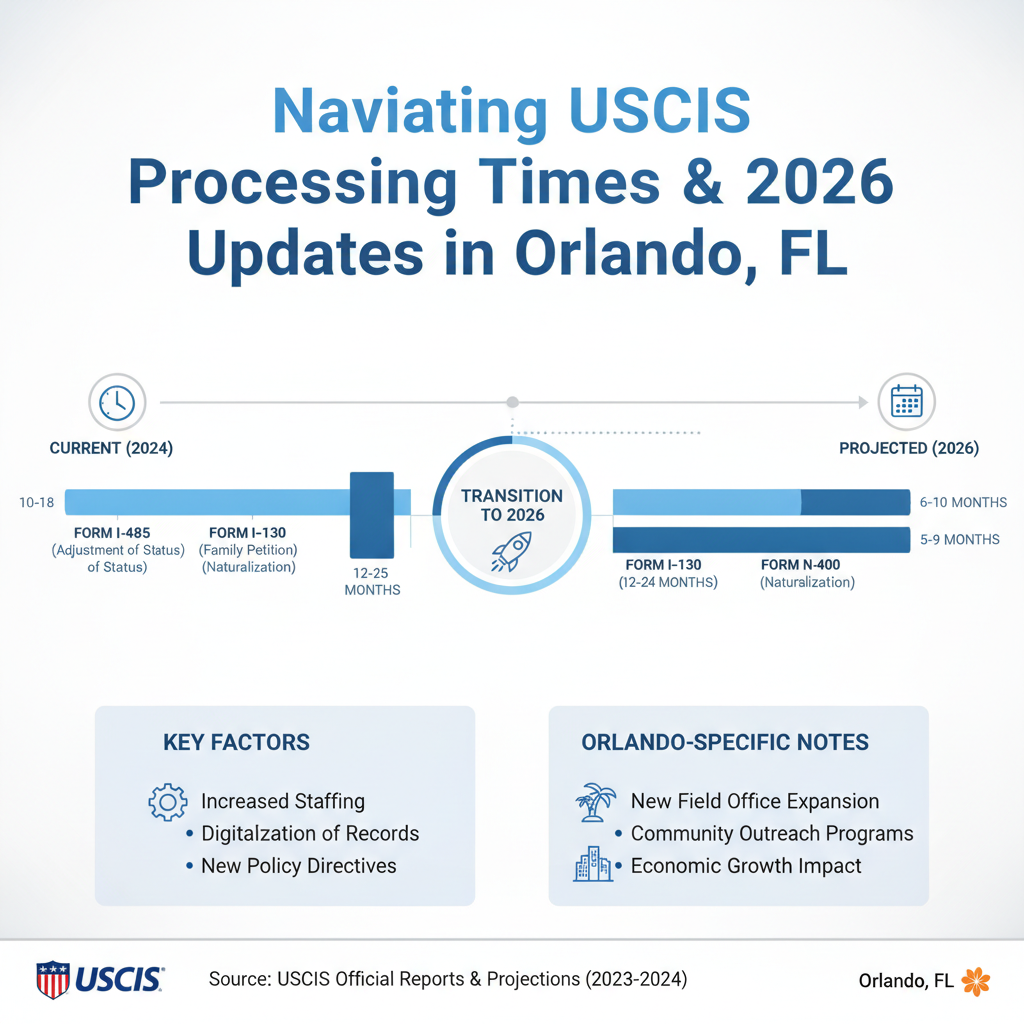
The U.S. Citizenship and Immigration Services (USCIS) is the federal agency responsible for processing immigration benefits. As of late 2026, new data and trends are emerging that directly impact how quickly applications are processed. These updates are a constant source of concern and hope for millions of applicants.
Why this news is showing up now
USCIS processing times are dynamic, constantly fluctuating due to a myriad of factors. As we approach the end of 2026, several elements contribute to the current state of affairs:
- Increased Caseloads: The demand for various immigration benefits, from family petitions to employment-based visas and naturalization, continues to grow. A higher volume of applications naturally puts pressure on processing capabilities.
- Staffing and Resources: USCIS's ability to process applications efficiently is directly tied to its staffing levels and allocated resources. Government budgets, hiring initiatives, and internal reorganizations can significantly impact how quickly cases move.
- Policy Changes: While immigration law itself is federal, administrative policies and priorities can shift, influencing which types of cases receive more immediate attention or how thoroughly certain applications are reviewed.
- Technological Advancements: USCIS continues to invest in modernizing its systems. While these efforts are designed to improve efficiency long-term, their implementation can sometimes lead to temporary adjustments in processing workflows.
- Backlog Reduction Efforts: Following periods of high backlogs, USCIS often implements strategies to reduce the queue. These efforts may initially cause some fluctuations but aim for overall improvement.
The news reports and official USCIS updates for 2026 reflect these ongoing operational adjustments and provide the most current estimates available to the public. It's an ongoing effort by the agency to be transparent, even as the numbers evolve.
How it can affect Florida residents
Florida, particularly Central Florida, is home to a vibrant and diverse immigrant community. The impact of USCIS processing times is keenly felt here:
- Local Field Office Impact: If your case requires an interview or a biometrics appointment, it will likely be scheduled at the Orlando USCIS Field Office. The workload and staffing levels at this specific office can directly influence the wait times for residents of Orlando, Orange County, and the broader I-4 corridor. Fluctuations in national processing times often trickle down to local offices.
- Family Reunification: For many Florida families, longer processing times mean extended periods of separation or uncertainty. This is especially true for those awaiting approval of Form I-130 (Petition for Alien Relative) and subsequent Adjustment of Status (Form I-485) or consular processing.
- Employment and Economic Stability: Delays in processing Form I-765 (Application for Employment Authorization) can prevent individuals from working legally, impacting their ability to support themselves and their families in Florida. Similarly, delays in employment-based visas can affect Florida businesses.
- Naturalization Delays: Aspiring citizens in the Sunshine State, often filing Form N-400 (Application for Naturalization), may experience longer waits for their interviews and oath ceremonies, postponing their full civic participation.
- Planning and Uncertainty: Whether you're planning to travel, start a new job, or simply make long-term financial decisions, prolonged processing times introduce significant uncertainty. For Central Florida residents, this can disrupt everything from housing plans to educational opportunities.
Important: While immigration law is federal, the practical implications of processing times are very much local. Understanding the national trends and how they specifically manifest at the Orlando Field Office is crucial for our clients.
What USCIS Processing Times Are (and Why They Matter)
At its core, "USCIS processing times" refers to the estimated duration it takes for the U.S. Citizenship and Immigration Services to adjudicate (make a decision on) a particular immigration application or petition.
A plain-English definition
Imagine USCIS as a massive administrative office. When you submit an application, it enters a queue. The processing time is essentially an estimate of how long that queue is and how quickly the office is moving through it. It's not a guaranteed deadline, but rather a projection based on historical data and current workload. Think of it like the estimated wait time at a busy restaurant – it gives you an idea, but it can change based on how many chefs are working or how many orders come in.
These times are published by USCIS on their official website to provide transparency and help applicants manage their expectations. They are typically presented as a range (e.g., 6 to 12 months) or a median time.
Key terms you need to know
To effectively navigate and understand USCIS processing times, familiarize yourself with these critical terms:
- Receipt Date: The date USCIS officially receives your application or petition. This is crucial for tracking your case. You'll find this on your Form I-797C, Notice of Action.
- Notice Date: The date USCIS issues a notice (like a receipt notice or approval notice). This is often the same as, or very close to, the receipt date for initial filings.
- Priority Date: For family-sponsored and employment-based immigrant visa petitions, this is the date your petition (usually Form I-130 or Form I-140) was properly filed with USCIS. This date determines your place in line for an available visa number, as per the U.S. Department of State's Visa Bulletin.
- Service Center: USCIS has several Service Centers (e.g., California, Nebraska, Texas, Vermont, Potomac) that process mail-in applications that do not require an interview. Your application is assigned to one of these based on your location or the type of form.
- Field Office: These are local USCIS offices (like the Orlando USCIS Field Office) that handle interviews, oath ceremonies, and some local filings. Processing times for forms requiring interviews (like Form I-485 for Adjustment of Status or Form N-400 for Naturalization) are typically tied to your local Field Office.
- Case Status: The current stage of your application, which you can check online using your receipt number. It can show "Case Was Received," "Biometrics Appointment Was Scheduled," "Interview Was Scheduled," or "Card Was Ordered," among others.
- Inquiry Date: The earliest date you can contact USCIS to inquire about your case if it is taking longer than the posted processing times. This is often listed on the processing times page itself.
- Biometrics Appointment: A scheduled appointment at an Application Support Center (ASC) to capture fingerprints, photos, and a signature for background checks.
- Interview: A meeting with a USCIS officer, usually at a Field Office, to review your application and supporting documents.
Understanding these terms empowers you to track your application more effectively and know when it's appropriate to take action, such as submitting an inquiry or seeking legal advice.
Current Immigration Law: The Foundation
All USCIS processing, including the timelines, is governed by the intricate framework of U.S. immigration law. The primary legislation is the Immigration and Nationality Act (INA), which dictates who is eligible for various immigration benefits, the procedures for applying, and the criteria for adjudication. While processing times are administrative estimates, they are ultimately tied to the legal requirements of each application.
Federal requirements
The INA and its accompanying regulations establish the core requirements for every immigration benefit. For instance:
- Family-Based Immigration (INA §§201, 203): These sections define who can petition for a family member (e.g., U.S. citizens for spouses, parents, children, siblings; green card holders for spouses and unmarried children) and establish the preference categories and annual visa limits that lead to Priority Dates and visa bulletin backlogs. Key forms include Form I-130 and Form I-485.
- Employment-Based Immigration (INA §203): This covers various categories for workers, investors, and professionals, often requiring a U.S. employer to petition on behalf of the immigrant. Forms like Form I-140 (Immigrant Petition for Alien Worker) are central here.
- Adjustment of Status (INA §245): This allows eligible individuals already in the U.S. to obtain lawful permanent resident status (a green card) without having to return to their home country for visa processing. This typically involves filing Form I-485.
- Naturalization (INA §§316, 319): These sections outline the eligibility criteria for becoming a U.S. citizen, including residency requirements, good moral character, and English/civics proficiency. The application is Form N-400.
- Asylum and Refugee Status (INA §§208, 209): These provisions protect individuals who fear persecution in their home countries.
Each form has specific eligibility criteria, required documents, and evidentiary standards that USCIS officers must follow. Any missing information or errors can lead to Requests for Evidence (RFEs) or even denials, significantly prolonging processing times. It is crucial to always refer to the USCIS official website for the most accurate and up-to-date form instructions and requirements.
Florida-specific considerations
While immigration law is federal, living in Florida can present unique circumstances and resources:
- Orlando USCIS Field Office: This office is a critical point for many Central Florida residents. Its specific workload and interview scheduling practices directly influence processing times for applications like Form I-485 and Form N-400. Knowledge of local office trends can be beneficial.
- Community Resources: Florida has numerous community organizations and non-profits that offer support services to immigrants, from language classes to legal aid referrals. While Imigrar provides comprehensive legal services, these local resources can complement your journey.
- State-Level Policies (Indirect Impact): Although Florida state laws do not directly dictate federal immigration eligibility, state policies related to driver's licenses for non-citizens, access to professional licenses, or public assistance can indirectly impact an immigrant's life while their federal application is pending. For example, the ability to obtain a Florida driver's license often depends on having a valid federal immigration status document.
- Economic Landscape: Florida's diverse economy, particularly in tourism, agriculture, and healthcare, creates specific demands for certain types of employment-based visas, which can influence regional processing patterns for those categories.
Reminder: Always ensure your address is current with USCIS, especially if you move within Florida or to another state, to avoid missing important notices. You can update your address via USCIS Change of Address.
Worried about current immigration laws affecting your case? Imigrar's team is constantly updated on federal requirements and local considerations. Get expert guidance for your application. Call +1 786-791-3106 for a free consultation, or message us online. Se Habla Español.

How to Navigate USCIS Processing Times: A Complete Step-by-Step Guide
Understanding and proactively managing your immigration application requires a systematic approach. Here's a detailed guide to help you navigate USCIS processing times effectively.
1) Understand Your Application Type and Form
Before you can track anything, you need to know exactly what you filed. Different applications have different processing pathways and timelines.
- Common Forms:
- Form I-130 (Petition for Alien Relative): Filed by a U.S. citizen or LPR for a family member.
- Form I-485 (Application to Register Permanent Residence or Adjust Status): Filed by an individual seeking a green card while in the U.S.
- Form I-765 (Application for Employment Authorization): Filed to obtain a work permit.
- Form I-140 (Immigrant Petition for Alien Worker): Filed by an employer for an alien worker.
- Form N-400 (Application for Naturalization): Filed by an LPR seeking U.S. citizenship.
- Form I-90 (Application to Replace Permanent Resident Card): To renew or replace a green card.
- Key Information Needed: Always keep a copy of your filed application and the Form I-797C, Notice of Action (receipt notice), which contains your 13-digit receipt number (e.g., EAC-26-XXX-XXXXX).
2) Locate Your Specific Processing Time
USCIS provides an online tool to check processing times, but it requires careful selection to get accurate estimates.
- Access the Tool: Go directly to the official USCIS Processing Times webpage.
- Select Your Form: Choose the specific Form I-XXX you filed from the dropdown menu.
- Select Your Form Category: For some forms, there are multiple categories (e.g., "Family-based" vs. "Employment-based" for Form I-485). Select the one that applies to your case.
- Select Your Field Office or Service Center:
- If your application is processed at a Service Center (e.g., I-130, I-140), select the Service Center indicated on your receipt notice.
- If your application requires an interview (e.g., I-485, N-400), select the Field Office that has jurisdiction over your residence (e.g., Orlando USCIS Field Office).
- Understand the Display: The tool will display the processing time as a range (e.g., "8 to 14 Months") or a median time. It also shows a "Case Inquiry Date" – this is the date on or after which you can inquire about your case if it's still pending.
3) Interpret the Posted Times
The numbers you see are estimates, not guarantees. It’s important to understand what they mean.
- Median vs. Range: Some pages show a median processing time (half of cases are processed faster, half slower), while others show a range. Always consider the upper end of the range as a potential wait time.
- "Case Inquiry Date": If your Receipt Date is *before* the listed Case Inquiry Date, your case is considered "outside normal processing times," and you may be eligible to submit an inquiry. If your receipt date is *after* the inquiry date, your case is still within the expected processing window.
- Fluctuations: Processing times can change monthly. What you see today might be different next month. This is why regular monitoring is crucial.
- Factors Affecting Your Individual Case: Your specific case might be faster or slower depending on its complexity, how well you submitted documents, or if an RFE was issued.
4) Monitor Your Case Status Online
Beyond processing times, you can check the specific status of your individual application.
- USCIS Case Status Tool: Visit the USCIS Case Status Online page.
- Enter Receipt Number: Input your 13-digit receipt number (e.g., EAC-26-XXX-XXXXX) into the search box.
- Review Status: The system will display the most recent action taken on your case (e.g., "Case Was Received," "Request for Evidence Was Sent," "Interview Was Scheduled," "Card Was Produced").
- Set Up Alerts: You can sign up for email and text message notifications for updates on your case. This is a highly recommended proactive step.
5) When to Make a Service Request (Outside Normal Processing Times)
If your case has exceeded the posted processing times, you may submit an inquiry.
- Eligibility: Your Receipt Date must be *before* the "Case Inquiry Date" listed on the USCIS processing times page for your specific form and office.
- How to Submit:
- Online: Use the USCIS online tool to submit an "e-Request" for a case outside normal processing times. You'll need your receipt number and personal information.
- By Phone: Call the USCIS Contact Center (1-800-375-5283). Be prepared for potentially long wait times.
- What to Expect: USCIS will review your request and typically provide a response within 15-30 days, often stating that your case is under review or providing a general update. This doesn't guarantee immediate action but formally flags your case.
- Required Information for Inquiry: Your full name, date of birth, receipt number, form type, filing date, and a clear explanation of why you are inquiring (i.e., outside normal processing times).
6) Preparing for Next Steps: RFEs, Biometrics, Interviews
Processing times also dictate when you can expect these crucial milestones.
- Requests for Evidence (RFEs): If USCIS needs more information, they will send an RFE. Respond promptly and thoroughly. Delays in responding will restart or further delay your case.
- Biometrics Appointments: These are usually scheduled within a few weeks or months after filing. Attend promptly.
- Interviews: For Form I-485 and Form N-400, an interview at the Orlando USCIS Field Office is common. Prepare all original documents, copies, and bring your attorney.
- Document Preparation for Interviews:
- Original documents: birth certificates, marriage certificates, passports, visa, I-94.
- Financial documents: tax returns, pay stubs, bank statements for sponsors.
- Proof of relationship: photos, joint accounts, leases, utility bills.
- Medical exam (Form I-693) in a sealed envelope.
7) Consulting an Attorney
While you can navigate some of these steps yourself, an experienced immigration attorney can be invaluable, especially if your case is complex or experiencing delays.
- Expert Guidance: An attorney can interpret complex legal requirements, advise on the best course of action, and prepare you for interviews.
- Intervention for Delays: If your case is significantly delayed or you've received an RFE, an attorney can intervene, communicate with USCIS on your behalf, and even explore advanced options like a Writ of Mandamus if delays are excessive and unlawful.
- Error Prevention: An attorney at Imigrar ensures your application is accurately prepared and complete, minimizing the risk of RFEs or denials.
Overwhelmed by the detailed steps? Let Imigrar guide you through every stage of your immigration journey. Our Orlando team provides personalized support to keep your case on track. Call +1 786-791-3106 for a free consultation, or
Related Topics
Need Legal Assistance?
Our experienced immigration attorneys are here to help with your case. Contact Imigrar today for a free consultation and let us guide you through the legal process with confidence.
📍 Orlando, Florida • Serving clients nationwide
📧 info@imigrar.com