
TPS Extension Confirmed: What It Means for Your Status in
Breaking news on Temporary Protected Status (TPS) extensions impacts thousands. Learn what this means for your work authorization, travel, and future in Florida, with actionable steps and expert guidance from Imigrar.

The reporting that sparked this guide: TPS (Temporary Protected Status) Extension News (Legal News)
What This News Means for Immigrants in Orlando and Across Florida
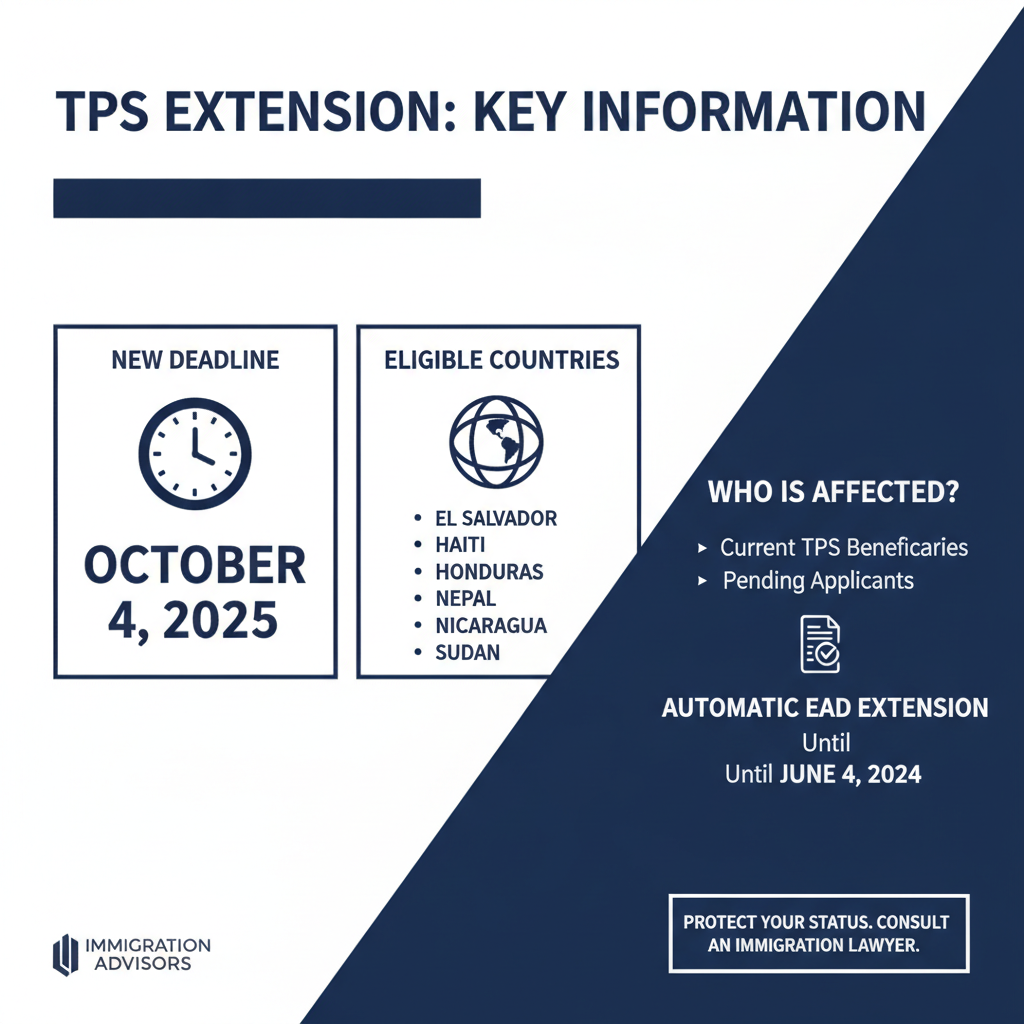
For thousands of individuals and families across the United States, particularly here in the vibrant communities of Orlando and Central Florida, recent news regarding Temporary Protected Status (TPS) extensions is a beacon of hope and a call to action. As of November 4, 2026, the immigration landscape has once again shifted, bringing both clarity and new responsibilities for those relying on TPS to live and work safely in the U.S. At Imigrar, we understand the profound impact these decisions have on your life and your family’s future. Our mission, "Keep Families Together," is more relevant than ever as we guide you through these crucial updates.
Why this news is showing up now
The announcement of TPS extensions isn't a random event; it's a critical part of the U.S. government's ongoing evaluation of humanitarian conditions in designated countries. Under the authority granted by the Immigration and Nationality Act (INA), the Secretary of Homeland Security (DHS) is mandated to periodically review the conditions in countries previously designated for TPS. This review assesses whether the temporary conditions (such as armed conflict, environmental disaster, or other extraordinary and temporary conditions) that led to the initial designation still persist. If the Secretary determines that these unsafe conditions have not sufficiently improved, they may decide to extend the TPS designation for a specific period, typically 18 months.
This cyclical process means that every few months, for one or more designated countries, a decision must be made regarding extension, redesignation, or termination. The current news reflects the latest outcome of these reviews, ensuring that those who cannot safely return to their home countries continue to receive protection and authorization to work in the U.S. This decision is often preceded by extensive analysis of reports from the U.S. Department of State, international organizations, and non-governmental organizations, ensuring a thorough assessment of the prevailing conditions.
How it can affect Florida residents
Florida, and particularly the Orlando metropolitan area, is home to a significant and diverse immigrant population. Many individuals and families from countries currently designated for TPS have established deep roots here, contributing to our economy, culture, and community fabric. This latest extension news directly impacts their lives in several critical ways:
- Continued Protection from Deportation: The most immediate and significant impact is the continuation of protection from removal from the United States. For TPS holders in Orlando, this means they can continue to live without the constant fear of being forced to return to dangerous conditions in their home countries.
- Work Authorization: An extension typically comes with an automatic extension of Employment Authorization Documents (EADs) for a period, or the opportunity to apply for a new EAD. This is vital for maintaining employment, supporting families, and contributing to Florida’s economy. Many businesses along the I-4 corridor and throughout Orange County rely on the stable workforce that TPS holders provide.
- Travel Authorization: With a valid Advance Parole Document (Form I-131), TPS holders can continue to travel outside the U.S. and return legally. This is crucial for visiting family members abroad or for urgent personal matters, though careful planning and legal consultation are always advised.
- Stability for Families: For families where some members hold TPS and others may have different immigration statuses, the extension provides much-needed stability. It allows parents to continue working, children to remain in school without disruption, and families to plan their futures with a greater sense of security.
- Re-registration Requirement: While the extension is good news, it almost always comes with a mandatory re-registration period. Florida residents with TPS must take proactive steps to re-register their status and apply for new EADs within the specified window to maintain their benefits. Failure to do so can lead to loss of TPS and potential deportation.
For Central Florida residents, understanding these changes and acting swiftly is paramount. The Orlando USCIS Field Office processes many of these applications, and knowing the local resources and legal guidance available can make all the difference. Imigrar is deeply rooted in the Orlando community, and we are here to ensure that you navigate these changes successfully.
Need Help? Our Orlando immigration team is ready to assist. Call +1 786-791-3106 for a free consultation, or message us online. Se Habla Español.
What Temporary Protected Status (TPS) Is (and Why It Matters)
Temporary Protected Status, or TPS, is a vital humanitarian immigration program designed to protect foreign nationals in the United States when conditions in their home countries make it unsafe for them to return. It’s a temporary relief, but one that offers profound stability and opportunities for hundreds of thousands of individuals and their families.
A plain-English definition
Imagine your home country is experiencing a major crisis – perhaps a devastating natural disaster like an earthquake or hurricane, an ongoing armed conflict, or other exceptionally difficult circumstances. If you are already in the U.S. when this crisis occurs, the U.S. government might designate your country for TPS. This means that for a temporary period, you are allowed to live and work legally in the United States, protected from deportation, because it would be unsafe for you to go back home.
Important: TPS is not a green card and does not automatically lead to permanent residency or U.S. citizenship. It is a temporary status that can be extended, terminated, or redesignated depending on the evolving conditions in the home country. However, while holding TPS, you can often apply for other immigration benefits for which you might be eligible.
Key terms you need to know
Navigating immigration law requires understanding specific terminology. Here are some key terms related to TPS:
- Designated Country: A country whose nationals are eligible for TPS due to specific, temporary conditions making return unsafe. The U.S. Secretary of Homeland Security makes this designation.
- Eligibility Criteria: The specific requirements an individual must meet to be granted TPS, including continuous physical presence and continuous residence in the U.S. since a certain date, and passing background checks.
- Re-registration Period: A specific timeframe, typically 60 days, during which current TPS beneficiaries must file their applications to maintain their status when an extension is announced. Missing this window can lead to loss of status.
- Employment Authorization Document (EAD): Also known as a work permit, this document allows TPS beneficiaries to legally work in the United States. When TPS is extended, EADs often need to be renewed or are automatically extended for a period.
- Advance Parole: A travel document (Form I-131) that allows a TPS beneficiary to travel outside the U.S. and return legally. Without it, leaving the country could result in the loss of TPS.
- Termination: The ending of a country's TPS designation, meaning beneficiaries would lose their protection and work authorization unless they have another valid immigration status.
- Extension: A decision by the DHS to continue a country's TPS designation for an additional period (e.g., 18 months), usually because unsafe conditions persist.
- Redesignation: A decision to grant TPS to a country again, often because conditions have worsened or a new crisis has emerged, allowing a new group of individuals (who meet specific criteria) to apply for TPS.
- USCIS: The U.S. Citizenship and Immigration Services, the government agency responsible for administering immigration and naturalization benefits, including TPS.
- DHS: The Department of Homeland Security, the federal executive department that oversees USCIS and ultimately makes TPS designation decisions.
Understanding these terms is crucial for anyone with TPS or considering applying. It empowers you to better comprehend official notices and communicate effectively with legal professionals. Imigrar is here to demystify these terms and ensure you are fully informed.
Current Immigration Law: The Foundation of TPS
Temporary Protected Status is not a discretionary program; it is firmly rooted in U.S. immigration law, specifically the Immigration and Nationality Act (INA). Understanding the legal framework provides clarity on why and how TPS is granted, extended, or terminated.
Reference specific laws and statutes
The authority for TPS stems from Section 244 of the Immigration and Nationality Act (INA), 8 U.S.C. § 1254a. This section outlines the conditions under which the Secretary of Homeland Security may designate a foreign country for TPS. The statute specifies three main categories of conditions that can trigger a designation:
- Ongoing Armed Conflict: Where there is an ongoing armed conflict within the state, and requiring the return of nationals to that state would pose a serious threat to their personal safety.
- Environmental Disaster: Where there has been an earthquake, flood, drought, epidemic, or other environmental disaster in the state resulting in a substantial, but temporary, disruption of living conditions, and the state is unable, temporarily, to handle the return of its nationals.
- Extraordinary and Temporary Conditions: Where there exist extraordinary and temporary conditions in the foreign state that prevent nationals of the state from returning in safety, unless the Secretary finds that permitting the aliens to remain in the United States is contrary to the national interest of the United States.
Each designation or extension is formally announced through a notice published in the Federal Register, which provides the specific dates for eligibility and the re-registration period. These notices are the official source of truth for all TPS-related matters.
Federal requirements
To be eligible for TPS, an individual must meet several federal requirements, regardless of their location in the U.S.:
- Nationality: Be a national of a country designated for TPS, or a person without nationality who last habitually resided in that designated country.
- Continuous Physical Presence (CPP): Have been continuously physically present in the United States since the effective date of the most recent TPS designation for their country.
- Continuous Residence (CR): Have been continuously residing in the United States since the effective date specified for their country's TPS designation.
- Timely Registration/Re-registration: Apply for TPS within the initial registration period or, for extensions, during the designated re-registration period. Limited exceptions for late registration exist, but they are very narrow.
- Admissibility: Meet general admissibility requirements for immigration, though some grounds of inadmissibility can be waived.
- Background Checks: Pass security and criminal background checks. Certain criminal offenses (e.g., two misdemeanors or one felony) can disqualify an applicant.
The primary forms used for TPS applications are Form I-821, Application for Temporary Protected Status, and if seeking work authorization, Form I-765, Application for Employment Authorization. For those needing to travel outside the U.S., Form I-131, Application for Travel Document (Advance Parole) is required.
You can find all official forms and instructions on the USCIS official website.
Florida-specific considerations
While TPS is a federal program, its implementation and the support available to beneficiaries have local nuances, especially in a state as diverse as Florida:
- Local USCIS Field Offices: If your case is in Orlando, your biometrics appointment or any potential interview (rare for TPS but possible) would likely be handled by the Orlando USCIS Field Office. Understanding local office procedures can sometimes be beneficial.
- Community Resources: Florida has numerous non-profit organizations and community centers that provide assistance to immigrants, including those with TPS. These organizations can offer language support, help with document gathering, and referrals to legal services.
- Legal Expertise: The complexity of TPS, especially when combined with other immigration pathways or potential eligibility issues, necessitates experienced legal counsel. An attorney familiar with Florida's immigrant communities, like those at Imigrar, can provide tailored advice. For Central Florida residents, our team is well-versed in the specific needs and challenges faced by immigrants in the region.
- State-Level Policies: While TPS itself is federal, state-level policies regarding driver's licenses, professional licenses, and access to certain state benefits can sometimes interact with one's TPS status. It's important to stay informed about these potential intersections.
Navigating the intricacies of federal immigration law from a local perspective requires diligence. Imigrar is committed to providing Orlando and Florida residents with accurate, up-to-date, and personalized legal guidance.
Need Help? Our Orlando immigration team is ready to assist. Call +1 786-791-3106 for a free consultation, or message us online. Se Habla Español.
How to Re-register for TPS Following an Extension: A Complete Step-by-Step Guide
When an extension of Temporary Protected Status is announced, it means you have a critical window to re-register to maintain your benefits. Missing this period can have severe consequences. This guide walks you through the essential steps to ensure your re-registration is successful.
1) Understand the Extension Announcement and Re-registration Period
The first and most crucial step is to carefully review the official announcement from USCIS. This will be published in the Federal Register and widely publicized on the USCIS website. Pay close attention to:
- The specific country for which TPS has been extended.
- The new expiration date of the TPS designation.
- The official re-registration period (e.g., a 60-day window from [Start Date] to [End Date]).
- Any automatic extensions of previous Employment Authorization Documents (EADs) and their validity dates.
- New eligibility requirements or changes, if any (though rare for extensions, always check).
Required Documents for this step:
- Access to the internet to visit USCIS official website and review the latest Federal Register Notice.
- A calendar or planner to mark key deadlines.
Warning: Do not rely solely on unofficial sources for this information. Always verify details on the USCIS website.
2) Gather Your Essential Documents
Before you even begin filling out forms, compile all necessary documents. Having everything ready saves time and prevents errors.
- Proof of Identity and Nationality:
- Passport or national identity card from your designated country.
- Birth certificate with photo identification.
- Any previous TPS approval notices (Form I-797).
- Previous EADs.
- Proof of Residence in the U.S. since the initial designation date: (e.g., utility bills, rent receipts, school records, employment records, medical records). For Orlando residents, this could include Orange County utility statements, local school enrollment records, or pay stubs from jobs along the I-4 corridor.
- Proof of Continuous Physical Presence (CPP) in the U.S.: Similar to residence documents, but specifically showing you have not left the U.S. since the required date.
- Updated Biographic Information: If your name, address, or other personal details have changed since your last TPS application, gather documents reflecting these changes (e.g., marriage certificate, court orders).
Reminder: Ensure all copies are clear and legible. If any documents are not in English, they must be accompanied by a certified English translation.
3) Complete and File Form I-821, Application for Temporary Protected Status
This is the core form for re-registration. Fill it out completely and accurately. Any blank fields should be marked "N/A" (not applicable) if truly irrelevant. Pay close attention to sections asking about your entry into the U.S., previous immigration history, and any criminal record.
- Download the latest version of Form I-821 from the USCIS Forms page.
- Read all instructions carefully before starting.
- Type or print clearly in black ink.
- Answer every question truthfully.
- Sign the form in blue or black ink. An unsigned form will be rejected.
Required Documents to submit with Form I-821:
- Copy of your previous Form I-797, Notice of Action, showing your TPS approval.
- Copies of all supporting identity and residence documents gathered in Step 2.
- Two passport-style photos (if required by the instructions for the specific extension).
Warning: Do not omit information, even if you think it's minor. Any misrepresentation can lead to denial and severe immigration consequences.
4) Complete and File Form I-765, Application for Employment Authorization (if needed)
If you wish to continue working legally in the U.S., you must also file Form I-765 to renew your Employment Authorization Document (EAD). Even if your EAD is automatically extended by the Federal Register notice, filing Form I-765 will get you a new card with the updated expiration date.
- Download the latest version of Form I-765 from the USCIS Forms page.
- Ensure the category code (e.g., (c)(10) for TPS) is correctly entered.
- Sign the form.
Required Documents to submit with Form I-765:
- Copy of your previous EAD (front and back).
- Copy of your previous TPS approval notice (Form I-797).
- Two passport-style photos (unless already submitted with I-821 and instructions say only one set needed).
Note: You can file Form I-821 and Form I-765 concurrently. In fact, USCIS often recommends this for efficiency.
5) Pay the Filing Fees or Request a Fee Waiver
There are fees associated with filing Form I-821 (sometimes waived for re-registrants, check the specific Federal Register notice), Form I-765, and the biometrics services fee. These fees can change, so always check the current amounts on the USCIS website.
- Filing Fees: Pay by money order, personal check, cashier's check, or by credit card using Form G-1450, Authorization for Credit Card Transactions. Make checks payable to "U.S. Department of Homeland Security."
- Fee Waiver: If you cannot afford the fees, you may be eligible for a fee waiver by filing Form I-912, Request for Fee Waiver. This requires providing evidence of your inability to pay, such as proof of public benefits, household income below 150% of the poverty level, or financial hardship.
Important: If you are filing Form I-912, do not send payment for the fees you are requesting to be waived. Include all supporting documentation for your fee waiver request with your application package.
6) Attend Your Biometrics Appointment (if required)
After filing, USCIS will send you an appointment notice (Form I-797C) for a biometrics services appointment at an Application Support Center (ASC). This appointment is for collecting your fingerprints, photograph, and signature.
- Bring your appointment notice and a valid photo identification (e.g., passport, state ID, driver's license).
- Arrive on time.
- If you are in Orlando, your appointment will likely be at the local ASC.
Reminder: Failure to attend your biometrics appointment can lead to denial of your application.
7) Monitor Your Case Status and Receive Your New EAD
Once you've submitted your application, USCIS will send you a receipt notice (Form I-797C). This notice contains a 13-character receipt number which you can use to track the status of your case online via the USCIS official website.
- Regularly check your case status.
- Respond promptly to any Requests for Evidence (RFEs) or Notices of Intent to Deny (NOIDs) from USCIS.
- Once your re-registration is approved, you will receive a new Employment Authorization Document (EAD) in the mail, valid until the new TPS expiration date.
Processing times for Form I-765 can vary significantly. You can check estimated processing times at USCIS Processing Times. Remember that often, the Federal Register notice announcing the TPS extension will automatically extend the validity of existing EADs for a certain period, which can provide continuity of employment while you await your new card.

Practical Steps You Can Take Today to Secure Your TPS
The news of a TPS extension is a relief, but it’s also a call to immediate action.
Related Topics
Need Legal Assistance?
Our experienced immigration attorneys are here to help with your case. Contact Imigrar today for a free consultation and let us guide you through the legal process with confidence.
📍 Orlando, Florida • Serving clients nationwide
📧 info@imigrar.com