
TPS Extension Alert 2026: Your Future in Florida and Beyond
Stay informed on the latest TPS extension news impacting immigrants in Orlando, Florida, and nationwide. Learn what it means for your status, work authorization, and how to navigate the re-registration process with expert guidance.

The reporting that sparked this guide: TPS (Temporary Protected Status) Extension News (Legal News)
What This News Means for Immigrants in Orlando and Across Florida
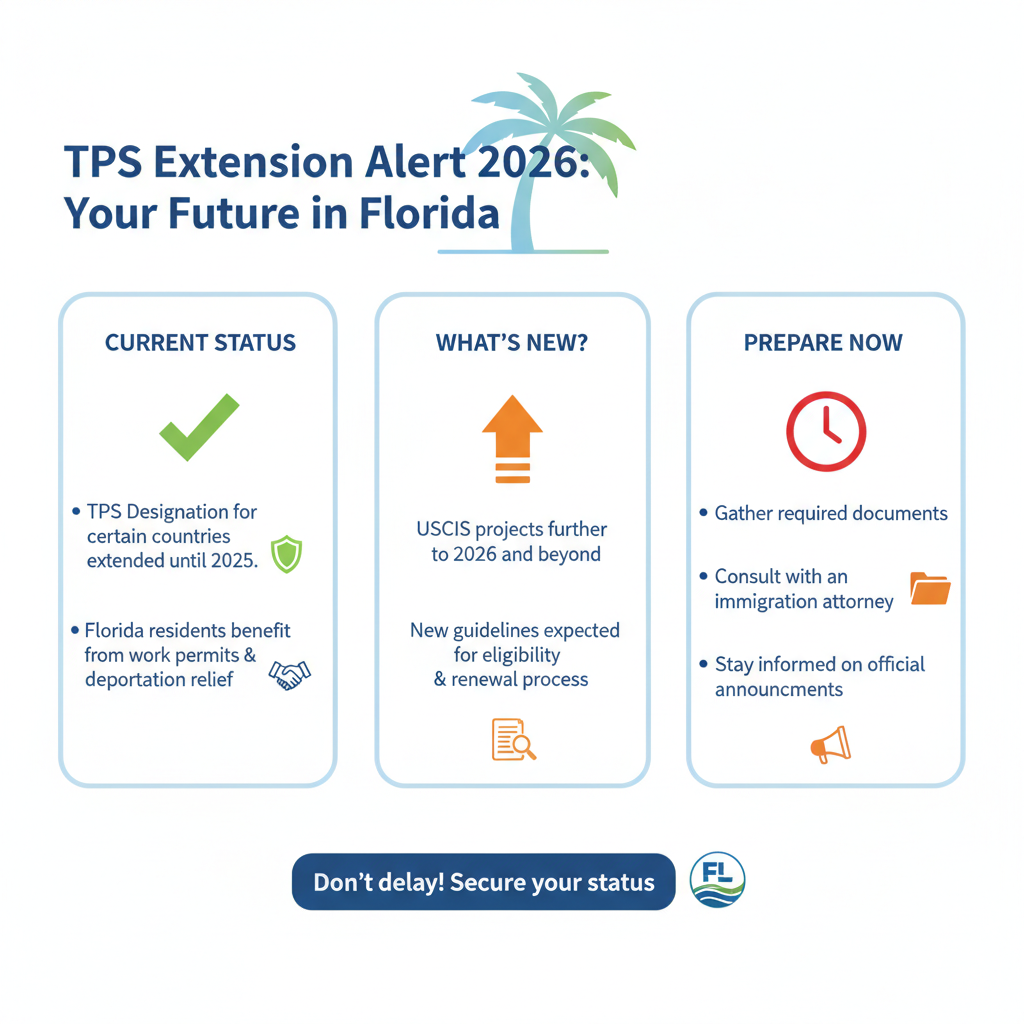
For hundreds of thousands of individuals and families across the United States, and particularly within the vibrant immigrant communities of Orlando and Florida, news regarding Temporary Protected Status (TPS) extensions is not just a headline—it's a lifeline. As of September 25, 2026, the immigration landscape continues to evolve, and recent announcements concerning TPS for various designated countries bring both relief and a renewed call to action for beneficiaries.
At Imigrar, an immigration law firm rooted in Orlando, Florida, our mission is to "Keep Families Together." We understand that these updates directly impact your ability to live, work, and contribute to your community without fear of immediate deportation. This comprehensive guide is designed to cut through the complexity, providing you with clear, actionable information on what the latest TPS extension news means for you and your loved ones.
Why this news is showing up now
Temporary Protected Status is, by its very nature, a temporary designation. It is granted by the Secretary of Homeland Security to eligible nationals of certain countries who are already in the U.S. and cannot safely return to their homeland due to ongoing armed conflict, environmental disaster, or other extraordinary and temporary conditions. The decision to designate or extend TPS for a country is typically made after a thorough review of the conditions in that nation. As these conditions persist, or new crises emerge, the U.S. government periodically reviews and often extends the TPS designation for affected countries, usually in increments of 6, 12, or 18 months.
The current news cycle reflects these periodic reviews. For many designated countries, the underlying humanitarian, environmental, or security crises have unfortunately not resolved. This necessitates extensions to prevent mass deportations to unsafe environments, allowing current TPS beneficiaries to maintain their lawful status and work authorization in the U.S. These announcements are crucial because they set new re-registration periods and expiration dates for employment authorization documents (EADs), dictating the next steps for beneficiaries.
How it can affect Florida residents
Florida is home to one of the largest and most diverse immigrant populations in the United States. Communities across the state, from Miami to Orlando, Tampa, and Jacksonville, include a significant number of individuals from countries that have been designated for TPS. Therefore, any news regarding TPS extensions has a profound and immediate impact on thousands of families here.
- Continued Legal Presence: For current TPS beneficiaries, an extension means they can continue to live and work legally in Florida and across the nation. This provides stability, allows families to remain united, and prevents the disruption of lives built over years or even decades.
- Work Authorization: Perhaps one of the most critical aspects of TPS is the accompanying work authorization. An extension typically means beneficiaries can renew their **Employment Authorization Document (EAD)**, allowing them to continue working legally, support their families, pay taxes, and contribute to Florida's economy. This is vital for countless businesses in Central Florida, from the hospitality sector along the I-4 corridor to agriculture and small businesses in Orange County.
- Educational and Social Stability: Children of TPS beneficiaries can continue their education without fear of their parents losing status. Families can plan for their future, access healthcare, and integrate more fully into their communities.
- Important: Even with an extension, beneficiaries must actively re-register within the specified window to maintain their status and work authorization. Failure to do so can lead to the loss of TPS benefits.
Need Help Understanding TPS Extensions? The details can be complex, and missing a deadline can have severe consequences. Our Orlando immigration team is ready to assist. Call +1 786-791-3106 for a free consultation, or message us online. Se Habla Español.
What Temporary Protected Status (TPS) Is (and Why It Matters)
Understanding TPS is the first step toward navigating its extensions. It's a unique and critically important form of humanitarian relief within U.S. immigration law, designed to offer a safe harbor to individuals whose home countries are experiencing severe, temporary crises.
A plain-English definition
Temporary Protected Status (TPS) is a temporary immigration benefit granted by the U.S. government to eligible nationals of certain countries. These individuals are already present in the United States and cannot safely return to their home countries because of extraordinary circumstances. These circumstances can include:
- Ongoing armed conflict (like a civil war).
- An environmental disaster (such as an earthquake, hurricane, or tsunami).
- Other extraordinary and temporary conditions (like an epidemic or widespread humanitarian crisis).
TPS provides beneficiaries with several key protections: they are not deportable from the U.S., they can obtain an Employment Authorization Document (EAD) allowing them to work legally, and they can apply for a travel document. It's crucial to remember that TPS is temporary; it does not automatically lead to permanent resident status (a Green Card) but offers a period of stability and protection.
Key terms you need to know
Navigating immigration law requires familiarity with specific terminology. Here are some essential terms related to TPS:
- Temporary Protected Status (TPS): The humanitarian immigration benefit itself, offering temporary protection from deportation and work authorization.
- Designated Country: A country whose nationals are eligible for TPS due to specific, temporary conditions identified by the Secretary of Homeland Security. The list of designated countries changes based on global events and government reviews.
- Re-registration Period: A specific window of time, usually 60 days, during which current TPS beneficiaries must apply to extend their status. Missing this deadline can result in the loss of TPS benefits.
- Employment Authorization Document (EAD) / Work Permit: A card issued by USCIS that proves an individual is authorized to work legally in the United States. TPS beneficiaries are eligible for an EAD.
- Form I-821, Application for Temporary Protected Status: The primary form used to apply for or re-register for TPS.
- Form I-765, Application for Employment Authorization: The form used to apply for or renew an EAD, often filed concurrently with **Form I-821** for TPS beneficiaries.
- Form I-131, Application for Travel Document: The form used by TPS beneficiaries who wish to travel outside the U.S. and return legally. Travel without this document can lead to denial of re-entry.
- USCIS (U.S. Citizenship and Immigration Services): The federal agency responsible for administering the country's lawful immigration system, including processing TPS applications and extensions. You can find official information and forms on the USCIS official website.
- Continuous Physical Presence (CPP): A requirement for TPS eligibility, meaning the applicant has been physically present in the U.S. since a specific date set for their country's designation.
- Continuous Residence (CR): Another requirement, meaning the applicant has continuously resided in the U.S. since a specific date, though brief, casual, and innocent absences are usually permitted.
Current Immigration Law: The Foundation of TPS
Temporary Protected Status is not a discretionary program; it is firmly rooted in federal immigration law. Understanding its legal basis helps clarify eligibility and the government's authority to grant and extend this crucial protection.
The authority for TPS is found in Section 244 of the Immigration and Nationality Act (INA), 8 U.S.C. § 1254a. This statute grants the Secretary of Homeland Security (formerly the Attorney General) the power to designate a foreign country for TPS if certain conditions are met. These conditions, as outlined above, include ongoing armed conflict, environmental disaster, or other extraordinary and temporary conditions that prevent nationals from safely returning.
Once a country is designated, the Secretary of Homeland Security also has the authority to extend the designation if the conditions persist, or to terminate it if conditions have improved to a point where safe return is deemed possible. These decisions are made after consultation with relevant government agencies and a thorough review of country conditions. The recent TPS extension news reflects the Secretary's determination that the statutory conditions continue to exist for specific designated countries.
Federal requirements for TPS eligibility
To be eligible for TPS, whether for an initial application or re-registration, individuals must meet several federal criteria:
- Nationality: Be a national of a country designated for TPS, or a person without nationality who last habitually resided in that country.
- Continuous Physical Presence (CPP): Have been continuously physically present in the U.S. since the effective date of the most recent designation or extension for their country.
- Continuous Residence (CR): Have been continuously residing in the U.S. since the date specified for their country's designation.
- Admissibility: Meet the admissibility requirements for TPS. Certain criminal offenses, national security grounds, or other bars to admissibility can disqualify an applicant.
- Timely Application: File their application within the initial registration period or, for extensions, within the specified re-registration period.
Warning: While TPS offers protection, it does not erase past immigration violations. However, some bars to admissibility may be waived for TPS applicants, making it critical to discuss your full immigration history with a qualified attorney.
Florida-specific considerations
While TPS is a federal immigration benefit, its impact is felt locally, especially in states like Florida with large immigrant populations. There are no Florida-specific laws regarding TPS eligibility, as it is solely governed by federal statute. However, there are practical considerations for TPS beneficiaries residing in the Sunshine State:
- Access to State Services: With a valid EAD and proof of TPS status, beneficiaries can often obtain a Florida driver's license or state ID card, access certain state and local services, and enroll children in public schools.
- Local Community Resources: Organizations in Orlando and across Central Florida often provide support for immigrant communities, including legal aid clinics, language classes, and social services. TPS beneficiaries can often leverage these resources.
- Employer Awareness: Many employers in Florida, particularly in sectors that rely on immigrant labor, are familiar with the **Employment Authorization Document (EAD)** issued to TPS beneficiaries. However, it's essential for both employees and employers to understand the temporary nature of the EAD and the need for timely renewal.
- Orlando USCIS Field Office: If your case is in Orlando, you may interact with the Orlando USCIS Field Office for biometrics appointments or interviews. Our firm is intimately familiar with the local procedures and personnel, offering a significant advantage to our Central Florida clients.
Don't Risk Your Status. The current immigration laws are complex. Imigrar is here to guide you through every step. Contact us today for a free consultation at +1 786-791-3106. Se Habla Español.
How to Re-Register for TPS: A Complete Step-by-Step Guide
If your country's TPS designation has been extended, the most critical action you must take is to re-register within the specified period. This process is essential to maintain your protected status and work authorization. Missing the deadline can have severe consequences, including loss of status and eligibility for an EAD. Here’s a detailed guide:
1) Determine Your Eligibility and Re-registration Period
First, confirm that your country has indeed been extended for TPS and identify the specific re-registration period. USCIS typically announces these details on their website. You must meet the continuous physical presence (CPP) and continuous residence (CR) requirements for your country's designation. If you have had any issues with continuous residence or physical presence, or if you have any criminal history, it is vital to consult with an immigration attorney before proceeding.
- Action: Check the USCIS TPS webpage for your country's specific extension announcement, re-registration window, and any updated eligibility criteria.
- Reminder: Re-registration windows are typically 60 days. Mark your calendar immediately upon the announcement!
2) Gather Required Documents
Thorough document preparation is key to a successful re-registration. Ensure you have all necessary proofs readily available. While you may have submitted many of these for your initial application or previous re-registrations, having them organized is crucial.
- Proof of Identity and Nationality:
- Passport or national identity document from your designated country.
- Birth certificate with photo identification.
- Any previous national identity documents with a photograph or fingerprint.
- Proof of Continuous Residence (CR) in the U.S. since the specified date:
- Rental receipts, utility bills, or mortgage statements.
- Employment records (pay stubs, W-2s, letters from employers).
- School records (transcripts, report cards).
- Medical records (hospital or doctor's visits).
- Affidavits from friends, relatives, or employers attesting to your residence.
- Bank statements or other financial records.
- Proof of Continuous Physical Presence (CPP) in the U.S. since the specified date:
- Entry stamps in your passport.
- I-94 arrival/departure record.
- Any other documents showing your physical presence in the U.S.
- Previous TPS Documentation:
- Copy of your previous **Form I-797C, Notice of Action**, showing approval of your prior TPS application.
- Copy of your most recent **Employment Authorization Document (EAD)**.
- Two Passport-Style Photos: Recent photos meeting USCIS specifications.
3) Complete and File Form I-821 (Application for Temporary Protected Status)
This is the cornerstone of your TPS re-registration. The form requires detailed personal information, immigration history, and declarations regarding your eligibility. Accuracy and completeness are paramount.
- Form: Form I-821, Application for Temporary Protected Status.
- Instructions: Read the official USCIS instructions carefully for your country's specific designation before filling out the form.
- Sections to Pay Close Attention To:
- Part 1: Information About You (ensure all names, addresses, and contact details are current).
- Part 2: Basis for Eligibility (confirm you are applying for re-registration).
- Part 3: Information About Your Entry and Residence (provide accurate dates).
- Part 4: Information About Criminal Offenses (be truthful and consult an attorney if you have any history).
- Important: If you've moved, ensure your address with USCIS is updated via **Form AR-11, Alien's Change of Address Card**, or through your USCIS online account. This ensures you receive all notices.
4) File Form I-765 (Application for Employment Authorization)
If you wish to continue working legally in the U.S., you must apply to renew your **Employment Authorization Document (EAD)**. This is typically filed concurrently with **Form I-821**.
- Form: Form I-765, Application for Employment Authorization.
- Eligibility Category: For TPS re-registration, your eligibility category will typically be (c)(19).
- Tip: USCIS often provides automatic EAD extensions for TPS beneficiaries who re-register on time, allowing continued work authorization for a period while the new EAD is processed. Check the specific extension notice for details on this automatic extension.
5) Consider Filing Form I-131 (Application for Travel Document)
If you anticipate needing to travel outside the United States while your TPS is valid, you must apply for and receive advance parole before you leave. Departing the U.S. without advance parole can result in the termination of your TPS and may bar you from re-entry, even if your TPS is extended.
- Form: Form I-131, Application for Travel Document.
- Purpose: Select "Application for Parole" and indicate you are a TPS applicant/beneficiary.
- Warning: Travel outside the U.S. without proper authorization is a common mistake that can jeopardize your TPS status. Always consult an attorney before planning international travel.
6) Pay the Required Fees (or Request a Fee Waiver)
Both **Form I-821** and **Form I-765** may require filing fees. The fee amounts can change, so always check the USCIS Forms and Fees webpage for the most current information. If you cannot afford the fees, you may be eligible for a fee waiver.
- Fees: Check the exact fees for **Form I-821** (if applicable for re-registration) and **Form I-765**. There is also a biometrics fee for all applicants aged 14-79.
- Fee Waiver: To request a fee waiver, you must file Form I-912, Request for Fee Waiver, along with supporting documentation demonstrating your inability to pay.
- Payment Method: Fees can be paid by money order, personal check, cashier's check, or by credit card using **Form G-1450, Authorization for Credit Card Transactions**.
7) Attend Biometrics Appointment (If Required) and Await Decision
After filing your application, USCIS will send you a receipt notice. Most applicants will also receive an appointment notice for biometrics (fingerprints, photograph, and signature) at a local Application Support Center (ASC). This appointment is mandatory.
- Biometrics: Attend your biometrics appointment as scheduled. This data is used for background checks.
- Receipt Notices: Keep all **Form I-797C, Notice of Action** documents from USCIS. These notices are proof that your application has been received and may include an automatic extension of your EAD.
- Processing Times: You can check the approximate processing times for your forms on the USCIS Processing Times page.
- Decision: USCIS will mail you a decision notice. If approved, you will receive a new **Employment Authorization Document (EAD)** and a new **Form I-797** approval notice for your TPS.
Practical Steps You Can Take Today to Secure Your TPS Extension
Proactivity is your best friend when it comes to immigration matters. Don't wait for the last minute to begin your re-registration process. Here are actionable steps you can take right now:
Actionable Checklist:
- Verify Your Country's Status: Immediately check the USCIS official website for the latest announcements regarding TPS extensions for your specific country. Note the re-registration deadline.
- Gather All Existing Documents: Locate your passport, birth certificate, previous TPS approval notices (**Form I-797**), and your current **Employment Authorization Document (EAD)**.
- Update Your Address with USCIS: If you have moved, file **Form AR-11, Alien's Change of Address Card**, online or by mail, and also update your address for any pending applications through your USCIS online account. This is critical for receiving important notices.
- Review Eligibility: Re-familiarize yourself with the eligibility requirements for TPS, especially regarding continuous residence and physical presence. Consider if any recent events in your life might impact your eligibility (e.g., certain arrests or travel).
- Start Compiling Proof of Residence: Gather documents that prove your continuous residence in the U.S. since the last required date. This includes utility bills, rent receipts, bank statements, and employment records.
- Consult with an Immigration Attorney: Even if your case seems straightforward, a free consultation can help identify potential issues, clarify requirements, and ensure your application is submitted correctly and on time.
- Organize Your Records: Create a dedicated folder for all your TPS-related documents, both original and copies. Keep everything in chronological order.
Document Preparation Guidance
- Copies, Not Originals: Generally, USCIS requires copies of supporting documents, not originals, unless specifically requested. Keep your original documents safe.
- Certified Translations: Any document not in English must be accompanied by a complete and accurate English translation, certified by the translator as competent to translate and that the translation is accurate.
- Keep Everything: Make a complete copy of your entire application package, including all forms and supporting documents, before mailing it to USCIS. This copy is your record.
Timeline Expectations
While USCIS strives for efficiency, processing times can vary significantly. Here’s what to expect:
- Re-registration Window: This is typically a strict 60-day window. You must file your application within this period.
- Receipt Notice: You should receive a **Form I-797C, Notice of Action**, acknowledging receipt of your application within a few weeks of mailing.
- Biometrics Appointment: An appointment notice for biometrics usually arrives within 1-3 months after filing.
- EAD Processing: Renewal of EADs can take several months. However, USCIS often issues automatic extensions of existing EADs for a certain period (e.g., 180 days or longer) for those who re-register on time. Check the specific TPS extension notice for details on this automatic extension.
- Final Decision: The overall processing time for your TPS re-registration can range from a few months to over a year, depending on USCIS backlogs and specific case complexities. Always check the USCIS Processing Times for the most current estimates.

How Imigrar Helps Immigrants in Orlando and Nationwide
At Imigrar, we understand that immigration law is more than just paperwork; it's about people, families, and futures. Our firm, based in Orlando, Florida, is dedicated to providing expert legal guidance and compassionate support to immigrants across the nation, with a special focus on our local Central Florida community.
Our experience and expertise
Our team of experienced immigration attorneys brings a wealth of knowledge to every case. We specialize in family-based immigration, humanitarian relief such as TPS, asylum, and deportation defense. We stay abreast of the latest changes in immigration law and policy, including frequent TPS updates, to ensure our clients receive the most current and effective advice.
We pride ourselves on:
- In-depth Knowledge of TPS: We have successfully guided numerous clients through initial TPS applications, re-registrations, and related processes, including EAD renewals and advance parole applications.
Related Topics
Need Legal Assistance?
Our experienced immigration attorneys are here to help with your case. Contact Imigrar today for a free consultation and let us guide you through the legal process with confidence.
📍 Orlando, Florida • Serving clients nationwide
📧 info@imigrar.com