
Green Card Interview Prep: Your Essential Guide to Success (2026)
Prepare for your Green Card interview with confidence. This comprehensive guide from Imigrar covers documents, questions, legal requirements, and expert tips for a successful outcome in Orlando and beyond.
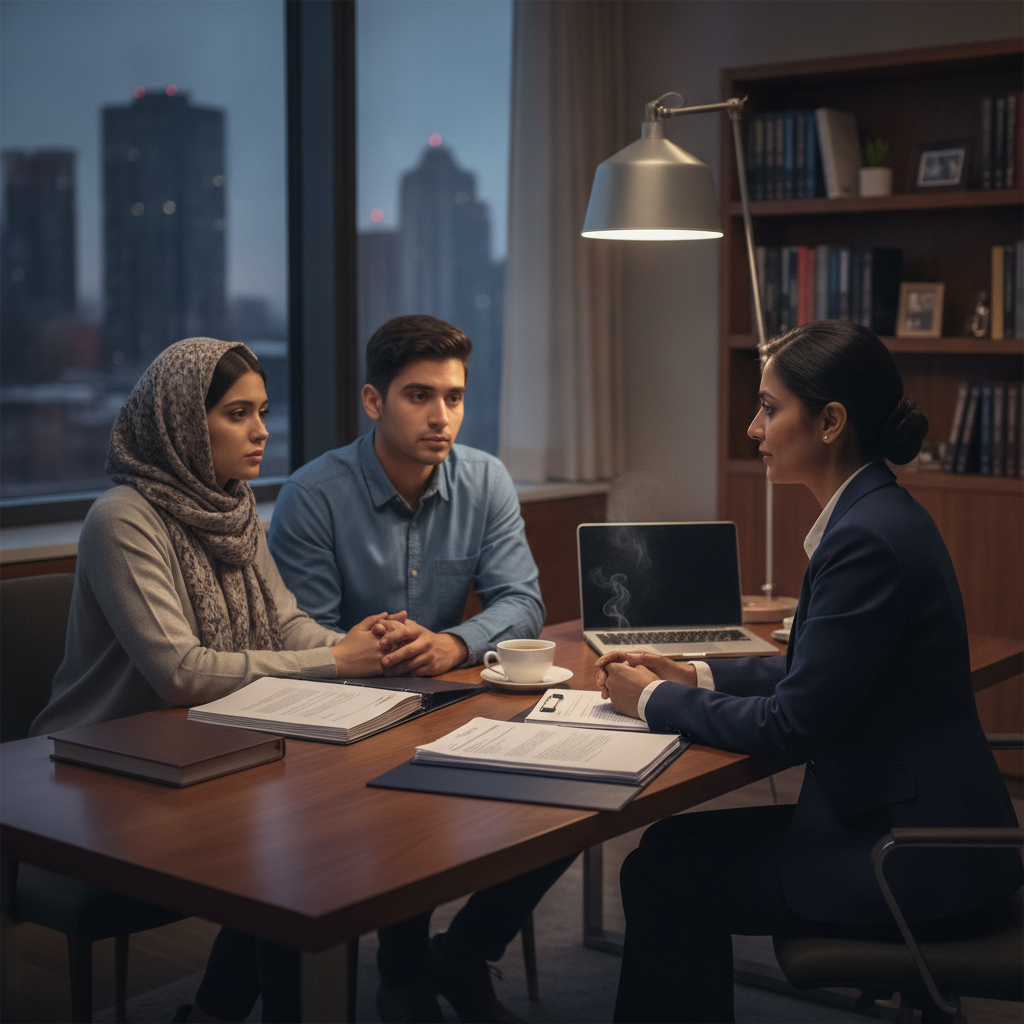
The journey to obtaining a Green Card, or lawful permanent residency, in the United States is a significant milestone for many immigrants and their families. While the application process itself involves extensive documentation and waiting periods, one of the most crucial stages is the Green Card interview. This interview is your opportunity to present your case directly to a USCIS officer, confirm the information in your application, and demonstrate your eligibility for permanent residency.
Given the importance of this interview, thorough preparation is not just recommended—it’s essential. Mistakes or a lack of preparation can lead to delays, requests for further evidence, or even denial. At Imigrar, we understand the stakes involved and are dedicated to helping our clients navigate this critical step with confidence.
Need Help? Our Orlando immigration team is ready to assist. Call +1 786-791-3106 for a free consultation, or message us online. Se Habla Español.
The reporting that sparked this guide
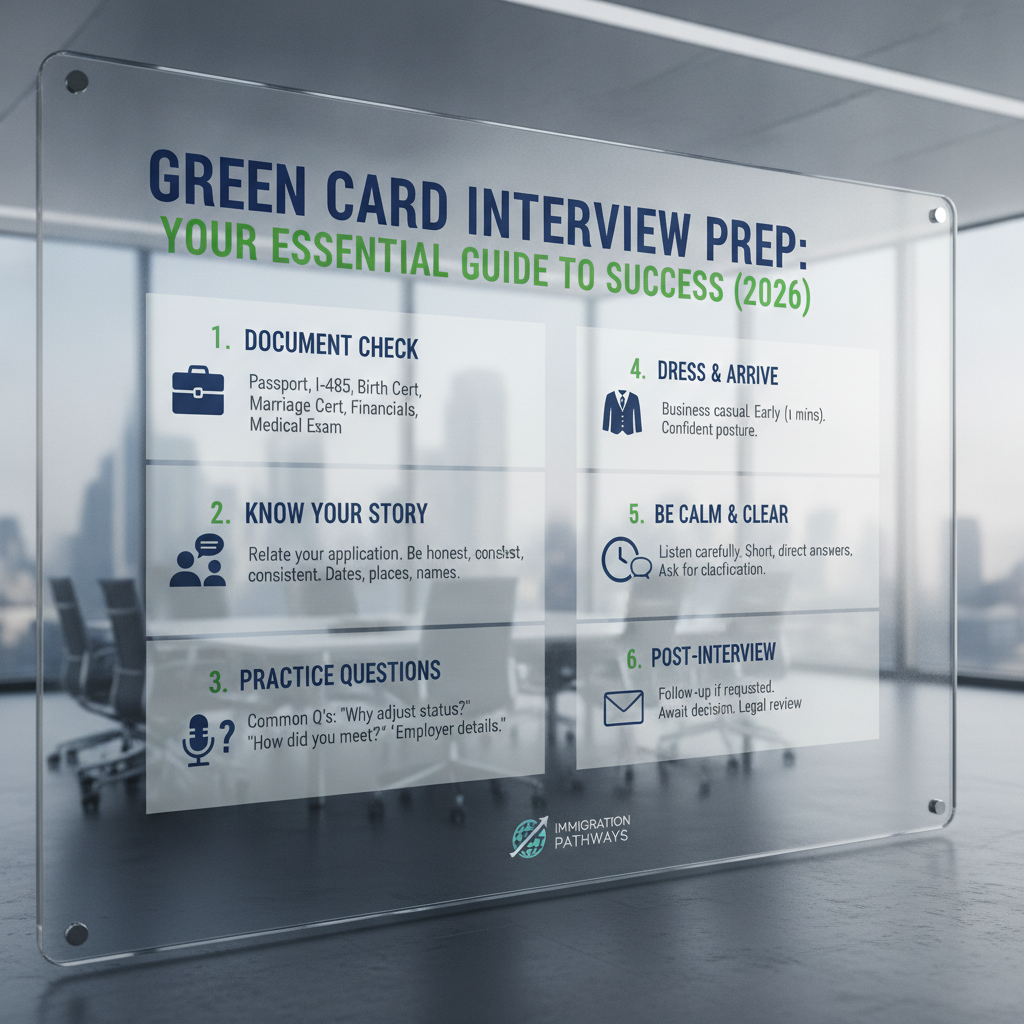
The topic of Green Card interview preparation is perennially relevant in immigration law, reflecting its critical role in the naturalization process. While there isn't one singular "breaking news" event, the continuous discussions and advice found in general Green Card Interview Preparation Tips (Immigration Law) news highlight the ongoing need for clear, actionable guidance. Immigration law and policy are constantly evolving, and staying informed about best practices for interviews is always a top priority for applicants and legal professionals alike. This guide is crafted to address that persistent need, offering up-to-date, comprehensive advice as of September 25, 2026.
What This News Means for Immigrants in Orlando and Across Florida
For individuals and families pursuing permanent residency in the U.S., the Green Card interview is a pivotal moment. The consistent focus on interview preparation in immigration news underscores its unchanging importance, regardless of shifts in policy or processing times. It serves as a reminder that proper preparation remains paramount for a successful outcome.
Why this news is showing up now
While the concept of a Green Card interview is not new, its prominence in immigration discourse is ongoing for several reasons:
- Consistent Application Volume: Thousands of immigrants apply for Green Cards every month, ensuring a continuous flow of interviews. Each applicant faces the same critical juncture, making preparation advice consistently valuable.
- Policy and Procedural Updates: While the core interview process remains, USCIS often updates its internal guidelines, interview formats, or evidentiary requirements. Attorneys and applicants constantly seek the latest information to adapt.
- Increased Scrutiny: In recent years, there has been an increased focus on the legitimacy of applications, particularly for marriage-based Green Cards. This heightened scrutiny means applicants must be even more prepared to demonstrate their eligibility and the bona fides of their relationships.
- Digitalization and Efficiency: USCIS continues to modernize its systems, which can impact how interview notices are issued, documents are submitted, and even how interviews are conducted (e.g., potential for virtual components, though typically in-person).
- Public Interest in Immigration: Immigration remains a central topic in national conversations, leading to sustained public and media interest in all aspects of the immigration process, including key steps like the Green Card interview.
How it can affect Florida residents
For the vibrant immigrant communities in Orlando, Tampa, Miami, and throughout Florida, the emphasis on Green Card interview preparation is particularly relevant:
- Orlando USCIS Field Office: Many Central Florida residents will have their interviews at the Orlando USCIS Field Office. Understanding the local office's procedures, typical interview styles, and common concerns can be highly beneficial. This office handles a large volume of cases, and being well-prepared can help streamline your experience.
- Diverse Caseload: Florida is home to a diverse immigrant population, leading to a wide array of Green Card applications, including family-based petitions, employment-based petitions, and asylum adjustments. Each type of case has unique interview considerations.
- Importance of Local Legal Counsel: Navigating federal immigration law can be complex, especially when local procedures might vary slightly. An Orlando-based immigration law firm like Imigrar has direct experience with the local USCIS office and can provide tailored advice.
- Language Access: Florida's large Spanish-speaking population means that many applicants may require interpreters. Proper planning for language needs is a critical part of interview preparation here. Se Habla Español at Imigrar ensures we can assist our Spanish-speaking clients effectively.
- Economic Impact: Successful Green Card interviews mean more individuals can work legally, contribute to the Florida economy, and integrate fully into their communities along the I-4 corridor and beyond.
Ultimately, this ongoing "news" about Green Card interview preparation is a vital call to action for all applicants: prioritize thoroughness, honesty, and professional guidance to ensure the best possible outcome.
What Green Card Interviews Are (and Why They Matter)
The Green Card interview is a mandatory step for most individuals seeking lawful permanent residency in the United States, whether through Adjustment of Status (applying from within the U.S.) or Consular Processing (applying from outside the U.S. at a U.S. embassy or consulate). It is a face-to-face meeting with an immigration officer from U.S. Citizenship and Immigration Services (USCIS) or a Consular Officer from the U.S. Department of State.
A plain-English definition
Think of the Green Card interview as your opportunity to personally verify all the information you've submitted in your application. The immigration officer's job is to ensure that you meet all the legal requirements for a Green Card, that the information in your forms is accurate and consistent, and that there are no issues that would make you inadmissible to the United States. For marriage-based Green Cards, a primary goal is to confirm that your marriage is genuine and not solely for immigration purposes.
It's not meant to be an interrogation, but a verification and clarification process. However, it can feel intimidating due to the high stakes involved.
Key terms you need to know
Understanding these terms will help you navigate the Green Card process:
- Green Card (Form I-551): The official identification card proving your status as a lawful permanent resident. It allows you to live and work permanently in the U.S.
- Adjustment of Status (AOS): The process of applying for a Green Card while physically present in the United States. This typically involves filing Form I-485, Application to Register Permanent Residence or Adjust Status.
- Consular Processing: The process of applying for a Green Card through a U.S. embassy or consulate in your home country (or another country where you have residence).
- USCIS (U.S. Citizenship and Immigration Services): The government agency responsible for processing immigration benefits, including Green Cards, within the United States.
- USCIS Field Office: The local offices where Green Card interviews for Adjustment of Status cases are typically held. For Central Florida residents, this is often the Orlando USCIS Field Office.
- Department of State (DOS): The government agency responsible for U.S. foreign policy, which oversees U.S. embassies and consulates abroad and handles Consular Processing.
- Petition (e.g., Form I-130): The initial application filed by a U.S. citizen or lawful permanent resident on behalf of a relative, or by an employer on behalf of an employee, to establish the basis for an immigrant visa. For family-based cases, this is typically Form I-130, Petition for Alien Relative.
- Affidavit of Support (Form I-864): A legally binding document signed by a sponsor (petitioner or joint sponsor) promising financial support to the immigrant to ensure they do not become a "public charge."
- Priority Date: The date your immigrant petition (e.g., Form I-130) was properly filed with USCIS. This date determines your place in the visa queue for certain preference categories.
- Inadmissibility: Grounds under immigration law that can prevent an individual from entering the U.S. or adjusting status, such as certain criminal convictions, health issues, or past immigration violations.
- Bona Fide Marriage: A marriage that is entered into in good faith, with the intention of establishing a life together, not solely for immigration benefits. This is a critical aspect of marriage-based Green Card interviews.
Current Immigration Law: The Foundation of Your Green Card Interview
The Green Card interview is conducted under the authority of the Immigration and Nationality Act (INA), the primary body of U.S. immigration law. The officer's role is to determine if you meet the eligibility criteria outlined in the INA and its corresponding regulations, and if there are any grounds of inadmissibility that would prevent you from becoming a lawful permanent resident.
Federal requirements
The core legal framework for Green Card eligibility is found in various sections of the INA, particularly:
- INA Section 201-204: These sections define who is eligible for immigrant visas, establish the preference categories (e.g., family-sponsored, employment-based), and outline the petition process (e.g., Form I-130).
- INA Section 212: This is a critical section that lists the "grounds of inadmissibility." An applicant may be found inadmissible for various reasons, including certain health-related issues, criminal history, security concerns, public charge concerns, misrepresentation, and prior immigration violations. The interview is a key stage where these grounds are assessed.
- INA Section 245: This section specifically governs the process of Adjustment of Status for individuals already in the United States. It outlines the general requirements, such as having been "inspected and admitted or paroled" into the U.S., being eligible for an immigrant visa, and being admissible to the U.S.
- INA Section 204(c): This section addresses marriage fraud, making it clear that a marriage entered into solely to gain an immigration benefit is not valid for immigration purposes. This is why marriage-based Green Card interviews focus heavily on proving the bona fides of the relationship.
During the interview, the USCIS officer will refer to these laws to ensure your application complies with all federal mandates. They will also verify that all information on forms like Form I-130, Form I-485, Form I-864, Affidavit of Support, and Form I-693, Report of Medical Examination and Vaccination Record, is accurate and complete.
You can always find the latest information and official forms directly on the USCIS official website.
Florida-specific considerations
While immigration law is federal, some practical aspects can be influenced by your location in Florida:
- Orlando USCIS Field Office Procedures: Each USCIS Field Office can have slight variations in its local procedures or preferred ways of handling certain documents. For example, some offices might prefer documents organized in a specific way, or have particular protocols for walk-ins (though walk-ins for interviews are generally not allowed without prior appointment). An attorney familiar with the Orlando USCIS Field Office can provide invaluable insights.
- Access to Resources: Florida has a robust network of community organizations and legal aid groups that can offer support, especially for low-income individuals. Imigrar frequently collaborates with these resources to ensure comprehensive support for our clients.
- Interpreter Availability: Given Florida's diverse population, USCIS offices are accustomed to providing interpreters if requested in advance, or allowing you to bring your own (who must be a disinterested party and fluent in both English and your native language). For our Spanish-speaking clients, we ensure language is never a barrier.
- Local Document Retrieval: If you need to retrieve state-specific documents, such as birth certificates from the Florida Department of Health or marriage licenses from Orange County, knowing the local processes can save time.
Reminder: While state-specific nuances exist, the fundamental immigration laws and requirements for a Green Card are federal and apply uniformly across the U.S.
Need Expert Guidance? Don't face your Green Card interview alone. Imigrar's experienced attorneys in Orlando can help you prepare every step of the way. Call +1 786-791-3106 today for a free consultation. Se Habla Español.
How to Prepare for Your Green Card Interview: A Complete Step-by-Step Guide
Preparing for your Green Card interview can feel overwhelming, but breaking it down into manageable steps can significantly reduce stress and increase your chances of success. This guide provides a comprehensive roadmap for applicants in Orlando and nationwide.
1) Understand Your Interview Notice (Form I-797C)
Your journey to interview day begins with receiving your interview notice, typically Form I-797C, Notice of Action. This document is critical and contains vital information:
- Date and Time: Mark your calendar immediately. Plan to arrive at least 30 minutes before your scheduled time.
- Location: For most Adjustment of Status cases in Central Florida, this will be the Orlando USCIS Field Office. Confirm the full address and plan your route, considering traffic, especially if you're traveling from outside Orange County.
- Required Documents: The notice will list specific original documents you must bring. Important: Do not rely solely on this list; always bring all documents you submitted with your application, plus any additional supporting evidence.
- Attendees: The notice will state who must attend. For marriage-based cases, both the petitioner (U.S. citizen or LPR spouse) and the beneficiary (immigrant spouse) must attend. For other family-based cases, only the beneficiary may be required, but the petitioner is often encouraged to attend.
Actionable Tip: As soon as you receive the notice, review it thoroughly. If anything is unclear, contact your attorney immediately. If you need an interpreter and did not request one on your initial application, contact USCIS or your attorney to arrange one.
2) Gather and Organize All Required Documents
This is arguably the most critical step. The USCIS officer will review your original documents and compare them against the copies you submitted. Create an organized folder or binder with clearly labeled sections.
Documents to bring to your interview:
- Interview Notice (Form I-797C).
- Government-Issued Photo Identification: Valid passport, driver’s license, or state ID.
- All Original Application Forms: Bring a copy of every form you submitted, including:
- Form I-130, Petition for Alien Relative (if applicable)
- Form I-485, Application to Register Permanent Residence or Adjust Status
- Form I-864, Affidavit of Support (with all supporting financial documents for the sponsor)
- Form I-693, Report of Medical Examination and Vaccination Record (if not already submitted, or if expired. Ensure it’s in a sealed envelope from the civil surgeon).
- Form I-765, Application for Employment Authorization (if applicable)
- Form I-131, Application for Travel Document (if applicable)
- Birth Certificates: Original birth certificates for both the applicant and petitioner (if applicable), and any children.
- Marriage Certificate: Original marriage certificate (for marriage-based cases).
- Divorce Decrees or Death Certificates: For any previous marriages of either spouse, proving their termination.
- Passports: Your current passport and any expired passports with visas or entry stamps.
- I-94 Arrival/Departure Record: If you entered the U.S. legally. You can retrieve this online from the CBP website.
- Financial Documents for Sponsor (Form I-864):
- Most recent federal income tax returns (IRS transcripts preferred) and W-2s/1099s.
- Proof of current employment (employment letter, pay stubs).
- Proof of assets (bank statements, property deeds), if used to meet income requirements.
- Evidence of Bona Fide Marriage (for marriage-based cases): This is crucial. Bring originals and copies of:
- Joint bank accounts, credit cards, or investment accounts.
- Joint leases or mortgage statements, property deeds.
- Utility bills in both names at the same address.
- Health, life, or auto insurance policies showing both spouses.
- Birth certificates of children born to the marriage.
- Photos of the couple together over time (wedding, vacations, holidays with family/friends).
- Affidavits from friends or family confirming the relationship (optional, but helpful).
- Correspondence addressed to both spouses (mail, cards).
- Travel itineraries and tickets for trips taken together.
- Any other evidence demonstrating you share a life together.
- Police Certificates/Court Records: From any country where you lived for 6+ months since age 16, and certified copies of all arrest records, court dispositions, and police reports, even if charges were dismissed or expunged.
- Medical Examination Report (Form I-693): In a sealed envelope from a USCIS-approved civil surgeon.
- Translations: Any document not in English must be accompanied by a certified English translation.
Warning: Failure to bring required original documents or certified translations can lead to delays or even denial. The officer may issue a Request for Evidence (RFE), extending your processing time.
3) Review Your Application Forms
The immigration officer will have your entire application file in front of them. You must be intimately familiar with every piece of information you submitted. Review all forms (Form I-130, Form I-485, Form I-864, etc.) thoroughly.
- Consistency is Key: Ensure your answers during the interview are consistent with what you wrote on your forms. Discrepancies, even minor ones, can raise red flags.
- Dates and Addresses: Memorize key dates (birth dates, marriage dates, entry dates into the U.S.) and all past addresses.
- Criminal History: Be prepared to discuss any arrests, charges, or convictions, even if they were minor or occurred a long time ago. Honesty is paramount.
- Immigration History: Review your travel history, past visa applications, and any previous interactions with immigration authorities.
Actionable Tip: Read through your entire application packet several times. Highlight areas you might be asked about. If you identified any errors in your application after submission, inform your attorney so they can help you address them proactively at the interview.
4) Practice Answering Potential Questions
While you can't predict every question, many are standard. Practicing your answers aloud can help you feel more comfortable and confident.
Common interview questions:
- About You: Your full name, date of birth, place of birth, parents' names, current address, employment history, education.
- About Your Immigration History: How you entered the U.S., previous visas, any past immigration violations, travel history.
- About Your Petitioner (if applicable): Their full name, date of birth, place of birth, employment, relationship to you.
- For Marriage-Based Cases (most common questions):
- How and when did you meet?
- When and where did you get married?
- Describe your wedding day.
- Where do you live? Who pays the bills?
- What are your spouse’s daily routines? (e.g., what do they eat for breakfast, what time do they go to work?)
- What activities do you enjoy together?
- What are your spouse’s hobbies, likes, and dislikes?
- Have you met each other's families?
- Do you have joint bank accounts, insurance, or property?
- What are your plans for the future together?
- About Grounds of Inadmissibility: Questions regarding criminal history, health issues, intent to commit fraud, or becoming a public charge.
Important: Answer truthfully and directly. Do not volunteer unnecessary information. If you don't know an answer, say so. If you don't understand a question, ask for clarification.
5) Dress Appropriately and Arrive Early
Your appearance and punctuality reflect your respect for the process and the officer. Treat this as a professional meeting.
- Dress Code: Wear conservative, business-casual attire. Avoid overly casual clothing.
- Punctuality: Plan to arrive at the Orlando USCIS Field Office (or other designated location) at least 30 minutes before your scheduled time. This allows for parking, security checks, and finding the correct waiting area without feeling rushed. Being late can lead to rescheduling or even denial.
- Bring Comfort Items (if allowed): A bottle of water, a book, or quiet entertainment for children if they are attending.
6) What to Expect During the Interview
Knowing the typical flow can help ease anxiety:
- Check-in: Upon arrival, you'll check in at the reception desk, show your interview notice and ID, and then proceed to a waiting area.
- Call to Interview Room: An officer will call your name. You'll proceed to their office or interview room.
- Oath: The officer will ask you to raise your right hand and swear to tell the truth.
- Review and Questions: The officer will review your application, ask questions, and examine your original documents. They will likely take notes. For marriage-based cases, they will often alternate questions between spouses to check for consistency.
- Fingerprints/Photos: In some cases, fingerprints or photos may be retaken.
- Decision: The officer may tell you if your case is approved on the spot, or they may say a decision will be mailed. They might also issue an RFE or schedule a second interview if more information is needed.
Reminder: Maintain a respectful and calm demeanor throughout. If your attorney is present, they will be there to advise you, but generally, you should answer the questions yourself.
7) Post-Interview Steps
The interview is over, but the process might not be.
- Approval: If approved, you will receive a welcome notice. Your Green Card will typically be mailed to you within a few weeks.
- Request for Evidence (RFE): If the officer needs more information, they will issue an RFE, providing a deadline (e.g., 87 days). Respond promptly and comprehensively with the help of your attorney.
- Notice of Intent to Deny (NOID): This is more serious and means USCIS intends to deny your application unless you can provide compelling reasons otherwise within a specified timeframe. Immediate legal counsel is crucial.
- Denial: If your application is denied, you may have options to appeal or refile, depending on the reason for denial. Consult an experienced immigration attorney immediately.
Feeling Prepared? Let Imigrar finalize your Green Card interview readiness. Contact our Orlando office for personalized assistance and peace of mind. Call +1 786-791-3106 now! Se Habla Español.

Practical Steps You Can Take Today for Interview Success
Don't wait until the last minute to prepare. Here’s an actionable checklist to start your preparation right away:
- Consult an Attorney: Even before you receive your interview notice, an initial consultation with an immigration attorney can help you understand the process and identify potential issues. Imigrar offers free consultations.
- Create a Document Checklist: Based on the list above and your specific case, create a detailed checklist of every document you need. Mark them off as you gather them.
- Start a "Bona Fide Marriage" Folder (if applicable): Begin collecting evidence of your relationship continuously – photos, joint bills, cards, travel documents. Don't just rely on what you submitted initially; gather new evidence too.
- Review Your Application Packet: Read through every form you submitted. If you don't have copies, request them from your previous attorney or USCIS.
- Practice Q&A: Have a trusted friend or family member (or your attorney) conduct a mock interview with you, focusing on consistency and clarity of answers.
- Check USCIS Processing Times: While not directly related to interview prep, knowing the current processing times for your local office (e.g., Orlando USCIS Field Office) can help manage expectations. Check USCIS Processing Times regularly.
- Confirm Civil Surgeon Status: If you need a new medical exam or your existing one is nearing expiration (valid for two years from the civil surgeon's signature), find a USCIS-approved civil surgeon near you.
- Arrange for Interpreter (if needed): If you are not fluent in English and did not request an interpreter on your application, make arrangements immediately.
Document preparation guidance
- Originals vs. Copies: Always bring original documents, but also bring high-quality copies. The officer will typically review the originals and keep the copies.
- Organize, Organize, Organize: Use clear folders, dividers, and labels. Group similar documents together (e.g., all birth certificates, all financial documents, all marriage
Related Topics
Need Legal Assistance?
Our experienced immigration attorneys are here to help with your case. Contact Imigrar today for a free consultation and let us guide you through the legal process with confidence.
📍 Orlando, Florida • Serving clients nationwide
📧 info@imigrar.com