
Naturalization Test Changes 2026: Your Imigrar Guide to U.S.
Understand the upcoming Naturalization Test changes in 2026. Imigrar provides comprehensive guidance for immigrants in Orlando and nationwide, ensuring you're prepared for U.S. citizenship.
The journey to U.S. citizenship is a profound step for many immigrants, symbolizing a commitment to a new home and a future filled with opportunity. As an immigration law firm dedicated to helping families achieve their American dream, Imigrar understands the significance of this path. It’s why we’re closely monitoring crucial updates from U.S. Citizenship and Immigration Services (USCIS), particularly those impacting the naturalization process.
The reporting that sparked this guide
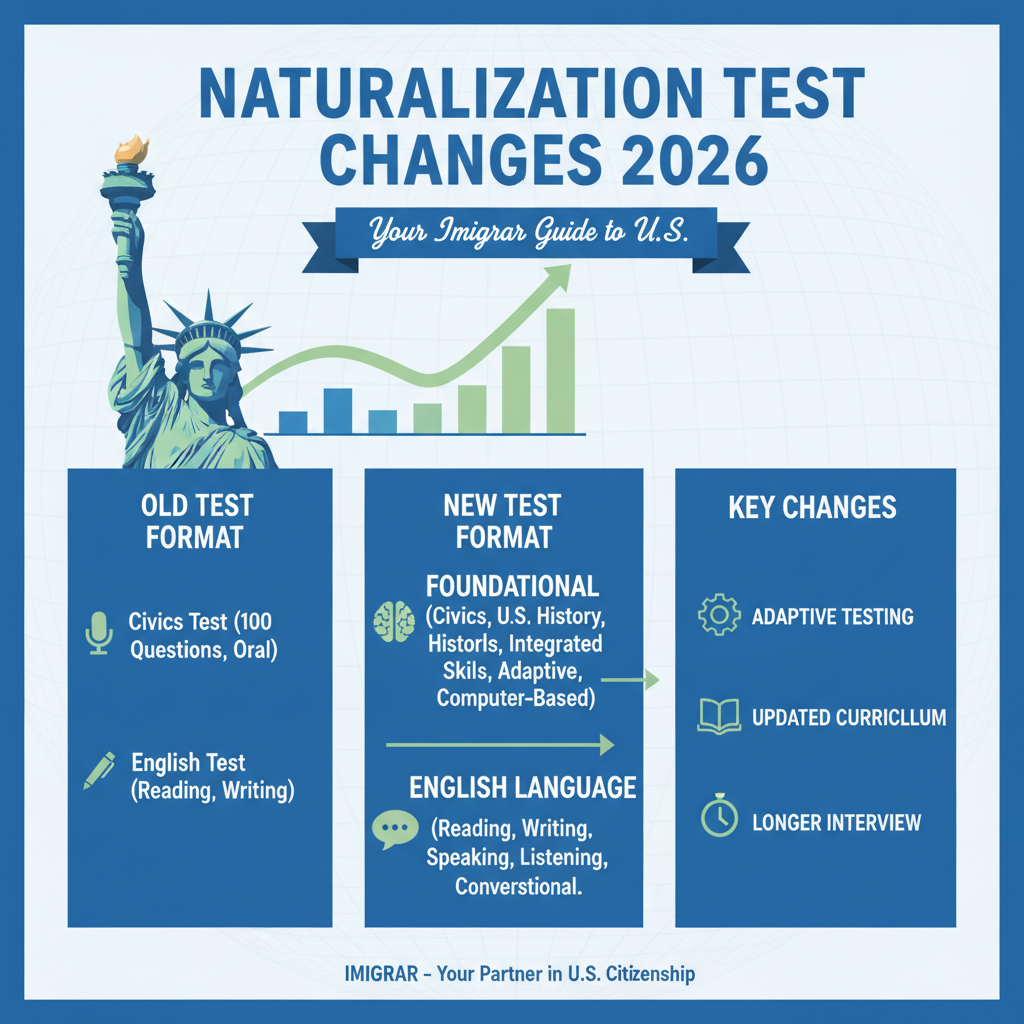
Recent news indicates significant revisions are on the horizon for the U.S. naturalization test. This development has understandably raised questions and concerns among aspiring citizens. We refer to reports such as: Naturalization Test Changes Coming in 2026 (Citizenship).
What This News Means for Immigrants in Orlando and Across Florida
The announcement of upcoming changes to the Naturalization Test in 2026 carries substantial weight for individuals and families pursuing U.S. citizenship. For immigrants residing in Orlando, across Central Florida, and throughout the entire state, understanding these modifications is not just helpful—it’s essential for successful naturalization.
Why this news is showing up now
USCIS periodically reviews and updates its naturalization process, including the English and civics tests. These revisions are typically aimed at ensuring the test remains relevant, comprehensive, and effectively assesses an applicant's understanding of U.S. history, government, and civic principles. The last significant civics test revision was introduced in 2020 and then reverted to the 2008 version in 2021. This upcoming 2026 change signals a renewed effort by USCIS to implement a more robust and potentially interactive test format. The agency often provides advance notice to allow applicants and legal representatives ample time to prepare for the new requirements. This proactive disclosure helps prevent a sudden disruption in the naturalization pipeline and allows educational resources to be developed.
How it can affect Florida residents
Florida is home to a vibrant and diverse immigrant population, with many individuals actively pursuing citizenship. For those in Orlando, Tampa, Miami, and other communities along the I-4 corridor and beyond, these changes mean that the preparation strategy for the civics test may need to adapt. Here’s how it can affect you:
- Preparation Strategy: If you plan to apply for naturalization in 2026 or later, you will likely encounter a different test format and potentially new questions. This means your study materials and methods will need to align with the revised test content.
- Increased Complexity: While details are still emerging, past discussions around test revisions have often focused on moving beyond rote memorization to a more scenario-based or analytical approach. This could mean a more challenging test requiring a deeper understanding of civic concepts rather than just factual recall.
- Timeline Considerations: If you are eligible for naturalization now, you might consider applying sooner rather than later to take the current version of the test. Conversely, if you are not yet eligible, you will have more time to prepare for the new test.
- Local Resources: Community organizations and educational institutions in Orange County and surrounding areas that offer citizenship preparation classes will need to update their curricula. Imigrar, with our deep roots in Orlando, will be at the forefront of understanding and advising on these changes.
- Legal Guidance: Navigating these changes without expert help can be daunting. An experienced immigration attorney can provide clarity on what to expect, help you understand the new requirements, and ensure your application is submitted correctly and on time, regardless of when you apply.
Important: Staying informed is your first line of defense against potential delays or issues. Imigrar is committed to keeping our clients updated on all developments related to the 2026 Naturalization Test changes.
Need Help Navigating Naturalization? Don't let upcoming changes deter you. Our Orlando immigration team is ready to assist with your citizenship journey. Call +1 786-791-3106 for a free consultation, or message us online. Se Habla Español.
What Naturalization Test Changes Are (and Why They Matter)
Naturalization is the process by which a foreign citizen or national can become a U.S. citizen. A critical component of this process is the naturalization test, which assesses an applicant’s knowledge of U.S. history and government (civics) and their ability to read, write, and speak English.
A plain-English definition
When we talk about "Naturalization Test Changes Coming in 2026," it means that USCIS plans to update the format, content, or administration of the tests you must pass to become a U.S. citizen. These changes are not about making citizenship harder to obtain for eligible individuals, but rather about refining the assessment to better reflect civic knowledge and English proficiency deemed necessary for new citizens. For example, past discussions have included making the civics test more interactive, possibly including multiple-choice questions or scenario-based questions that require a deeper understanding of government functions, rather than simply memorizing facts.
Key terms you need to know
- Naturalization: The process by which a lawful permanent resident (green card holder) obtains U.S. citizenship.
- Naturalization Test: Comprises two main parts: an English test and a civics test.
- English Test: Assesses an applicant's ability to read, write, and speak basic English.
- Civics Test: Assesses an applicant's knowledge and understanding of U.S. history, government, and civics.
- USCIS (U.S. Citizenship and Immigration Services): The government agency responsible for overseeing lawful immigration to the United States, including naturalization. You will interact with USCIS throughout your citizenship application.
- Form N-400, Application for Naturalization: The primary form you must file to apply for U.S. citizenship.
- Oath of Allegiance: The final step in the naturalization process, where an applicant formally pledges loyalty to the United States.
- Lawful Permanent Resident (LPR): An individual who has been granted the privilege of residing permanently in the U.S. and holds a "green card."
- Good Moral Character: A legal requirement for naturalization, meaning an applicant must demonstrate adherence to community standards of morality and lawfulness for a specific period leading up to their application.
Understanding these terms is fundamental to comprehending the naturalization process and any changes that may impact it. The changes coming in 2026 are specifically targeting the content and possibly the format of the English and Civics Tests, not the overall eligibility requirements for naturalization.
Current Immigration Law: The Foundation for Naturalization
The naturalization process is governed by federal law, primarily the Immigration and Nationality Act (INA). While the test content may evolve, the underlying legal requirements for eligibility remain consistent, providing a stable framework for aspiring citizens.
Federal requirements
To be eligible for naturalization, applicants must generally meet several federal requirements outlined in the INA. These are foundational and will not change with the upcoming test revisions:
- Age: Be at least 18 years old at the time of filing Form N-400.
- Lawful Permanent Residency: Be a Lawful Permanent Resident (green card holder) for a specific period.
- Generally, this means holding a green card for at least 5 years.
- If married to and living with a U.S. citizen for the entire period, this requirement can be reduced to 3 years, provided other conditions are met.
- Certain military service members have different, more expedited pathways.
- Continuous Residence and Physical Presence:
- Demonstrate continuous residence in the U.S. for at least 5 years (or 3 years, if applicable) immediately preceding the date of filing Form N-400. This means you have maintained your status as a resident and not abandoned it.
- Be physically present in the U.S. for at least half of that 5-year or 3-year period (e.g., 30 months out of 5 years, or 18 months out of 3 years).
- Reside for at least 3 months in the state or USCIS district where you file your application. For those in Orlando, this would typically be within the jurisdiction of the Orlando USCIS Field Office.
- Good Moral Character: Demonstrate good moral character during the statutory period (5 years or 3 years) before filing your application and up to the time of naturalization. This involves having no criminal record of certain offenses and adhering to societal norms.
- Attachment to the U.S. Constitution: Show an attachment to the principles of the U.S. Constitution and be well-disposed to the good order and happiness of the United States.
- English Language Proficiency: Be able to read, write, and speak basic English. There are exceptions for applicants who are elderly and have been LPRs for a long time (e.g., 50 years old and an LPR for 20 years, or 55 years old and an LPR for 15 years).
- Knowledge of U.S. History and Government (Civics): Pass the civics test demonstrating an understanding of U.S. history and government.
- Oath of Allegiance: Be willing to take the Oath of Allegiance to the United States.
These requirements are strictly enforced by USCIS. Any discrepancies or issues in meeting them can lead to delays or denial of your naturalization application. For official information and details on these requirements, always refer to the USCIS official website.
Florida-specific considerations
While naturalization is a federal process, meaning the core requirements are the same nationwide, there are practical considerations for Florida residents:
- USCIS Field Office: If you reside in Orlando or the surrounding Central Florida region, your naturalization interview will typically be scheduled at the Orlando USCIS Field Office. Knowing your local office is important for scheduling and understanding regional processing times.
- Local Resources: Florida has numerous community organizations and adult education centers, particularly in diverse areas like Orlando and Miami, that offer English language and civics classes designed to help prepare for the naturalization test.
- Legal Support: Imigrar, located in Orlando, is intimately familiar with the local USCIS procedures and the specific needs of Florida's immigrant communities. We can provide tailored advice and representation for residents across the state, from Orange County to the entire I-4 corridor.
Form N-400 is the application form for naturalization. It's comprehensive and requires detailed personal information, travel history, marital history, and criminal history. Accuracy and completeness are paramount when filling out this form. You can find the latest version and instructions on the USCIS Forms page.
Worried About Your Eligibility? Don't leave your naturalization to chance. Imigrar's experienced attorneys can assess your unique situation and guide you through every step. Call +1 786-791-3106 for a free consultation. Se Habla Español.
How to Prepare for Naturalization (and the Upcoming Test Changes): A Complete Step-by-Step Guide
The path to U.S. citizenship involves several critical steps. Preparing effectively, especially with the upcoming test changes in mind, is crucial for success. Here’s a comprehensive guide:
1) Determine Your Eligibility
Before you even begin filling out forms, confirm you meet all the foundational requirements. This is the most important first step.
- Check your green card status: Ensure you have been a Lawful Permanent Resident for the required period (generally 5 years, or 3 years if married to a U.S. citizen).
- Calculate physical presence: Review your travel records to ensure you meet the physical presence requirements within the U.S.
- Assess good moral character: Honestly evaluate your criminal history, if any. Certain offenses can bar you from naturalization. Seek legal advice if you have any doubts.
- Age and residency: Confirm you are 18 or older and have resided for at least 3 months in your current state/USCIS district (e.g., Central Florida for the Orlando USCIS Field Office).
Required Documents for Eligibility Assessment (for your reference, not to submit yet):
- Your Permanent Resident Card (Green Card)
- Travel records (entry/exit stamps, passport pages, travel itineraries)
- Marriage certificate (if applying under the 3-year rule)
- Divorce decrees or death certificates (if applicable for previous marriages)
2) Prepare and File Form N-400, Application for Naturalization
This form is extensive and requires meticulous attention to detail. Any errors or omissions can lead to delays or denial.
- Gather all necessary documents: Collect every document required to support your application. This includes personal identification, residency proof, and financial records.
- Complete Form N-400: Fill out the form accurately and completely. Be truthful about all questions, especially regarding your travel history, marital history, and any encounters with law enforcement.
- Collect supporting documents: Attach copies of all required supporting documents. Do NOT send originals unless specifically requested by USCIS.
- Pay the filing fee: Include the correct filing fee and biometrics fee. Check the USCIS website for current fees, as they can change. Fee waivers may be available for eligible applicants.
- Mail your application: Send your completed application package to the correct USCIS Lockbox facility. The address depends on where you live and whether you’re using postal service or courier.
Required Documents for Form N-400 Submission:
- Copy of your Permanent Resident Card (front and back)
- Copy of your current and any previous marriage certificates (if applicable)
- Copies of divorce decrees or death certificates for previous spouses (if applicable)
- Copies of tax returns for the past 5 (or 3) years (USCIS may request originals later)
- Travel records (dates of all trips outside the U.S. since becoming an LPR)
- Court dispositions or police records for any arrests or citations, even if expunged or dismissed
- Proof of selective service registration (for males aged 18-26)
- Copies of any official name change documents (if applicable)
- Two passport-style photos (if filing by mail; check current instructions for digital submission)
- Fee payment (check, money order, or Form G-1450 for credit card)
3) Attend Your Biometrics Appointment
After filing Form N-400, USCIS will send you an appointment notice (Form I-797C, Notice of Action) for a biometrics appointment at an Application Support Center (ASC).
- Receive appointment notice: This notice will specify the date, time, and location of your appointment.
- Attend the appointment: Go to the ASC as scheduled. USCIS will take your fingerprints, photograph, and signature. This data is used for background checks.
Required Documents for Biometrics Appointment:
- Appointment notice (Form I-797C)
- Valid photo identification (e.g., green card, driver's license, passport)
4) Prepare for the Naturalization Interview and Tests
This is where the upcoming 2026 changes become particularly relevant. Effective preparation is key.
- English Test Preparation: Practice reading, writing, and speaking English. Focus on basic vocabulary and grammar. You'll be asked to read simple sentences and write a dictated sentence.
- Civics Test Preparation (Current & Future):
- Current Test: Study the 100 civics questions and answers provided by USCIS. At your interview, you will be asked up to 10 questions from this list and must answer 6 correctly to pass.
- 2026 Test Changes: As news of the new test format emerges, begin to incorporate updated study materials. This may involve focusing on understanding concepts rather than just memorizing facts, and practicing with potential new question types (e.g., multiple-choice, scenario-based). Imigrar will provide updates and resources as they become available.
- Interview Preparation: Review your Form N-400 thoroughly. Be prepared to answer questions about every detail of your application, including your travel, employment, family, and good moral character history.
Resources for Test Preparation:
- USCIS Study Materials for the English and Civics Test
- Flashcards, online quizzes, and citizenship classes offered in communities like Orlando.
5) Attend Your Naturalization Interview
This is your opportunity to demonstrate your eligibility and civic knowledge to a USCIS officer.
- Bring required documents: Arrive at the Orlando USCIS Field Office (or your assigned office) with your appointment notice, green card, passport, and all original supporting documents you sent copies of, plus any updated documents (e.g., recent tax returns, new marriage certificate).
- Be truthful and clear: Answer all questions honestly and to the best of your ability. If you don't understand a question, ask the officer to repeat or rephrase it.
- Take the tests: You will undergo the English reading, writing, and speaking tests, followed by the civics test.
Required Documents for Interview:
- Your appointment notice
- Your Permanent Resident Card (Green Card)
- All passports and travel documents
- State-issued identification (e.g., driver's license)
- Originals of all documents submitted with Form N-400 (e.g., marriage certificates, divorce decrees, court dispositions)
- Updated documents (e.g., most recent tax returns, proof of current employment, updated travel records since filing)
6) Receive a Decision and Attend the Oath Ceremony
After your interview, USCIS will make a decision on your application.
- Decision notice: You will typically receive a decision notice (Form N-652, Naturalization Interview Results) at the end of your interview, stating whether your application is recommended for approval, continued, or denied.
- Oath Ceremony: If approved, you will receive a notice (Form N-445, Notice of Naturalization Oath Ceremony) for your Oath of Allegiance ceremony. This is the final step where you formally become a U.S. citizen.
- Return your green card: At the ceremony, you will surrender your green card and receive your Certificate of Naturalization.
Important: Immediately after becoming a citizen, consider applying for a U.S. passport to have proof of your new citizenship. This is often more convenient than carrying your Certificate of Naturalization.
Practical Steps You Can Take Today
Even with changes on the horizon for 2026, there are many proactive steps you can take now to ensure a smooth naturalization process.
Actionable Checklist:
- Review Your Eligibility: Go through the requirements listed in Step 1 above. If you have any questions or potential issues (e.g., long trips abroad, minor criminal history), consult an immigration attorney immediately.
- Start Studying (Current Test): Begin studying the current 100 civics questions and answers available on the USCIS website. This foundational knowledge will still be highly relevant, even if the test format changes. Improving your general knowledge of U.S. history and government will serve you well regardless.
- Improve Your English: Practice speaking, reading, and writing English daily. Watch English news, read books, and engage in conversations. Consider joining an ESL class in Orlando or online.
- Gather Documents Proactively: Start collecting all required documents, even if you’re not filing Form N-400 yet. This includes your green card, passports, marriage/divorce certificates, and tax returns for the last 5 years.
- Track Your Travel: Maintain a detailed log of all your international travel, including exact dates of departure and return. This is crucial for proving continuous residency and physical presence.
- Maintain Good Moral Character: Avoid any actions that could negatively impact your good moral character, such as arrests, unpaid taxes, or false statements.
- Consult with Imigrar: Schedule a free consultation with our Orlando immigration attorneys. We can help you understand the current requirements, assess your eligibility, and provide strategic advice concerning the upcoming 2026 test changes.
Document Preparation Guidance:
- Organize Digitally and Physically: Create a dedicated folder for your naturalization documents. Scan all important papers and save them in a secure digital location. Keep physical copies organized and easily accessible.
- Certify Translations: If any of your supporting documents are not in English (e.g., foreign marriage certificates), you will need certified English translations.
- Get Certified Copies: For documents like birth certificates or marriage licenses issued by foreign governments, you'll need certified copies from the issuing authority, along with translations.
- Keep Originals Safe: Never send original documents to USCIS unless specifically requested. Always send high-quality photocopies. Keep your originals in a safe place, as you’ll need to present them at your interview.
Timeline Expectations:
The naturalization process can take time. Current processing times for Form N-400 vary significantly by USCIS field office and can range from 6 months to over 2 years, depending on caseloads and individual case complexities. For example, processing times at the Orlando USCIS Field Office can fluctuate. You can check current estimates on the USCIS Processing Times page. Remember, these are estimates and not guarantees. Starting early and preparing thoroughly can help avoid unnecessary delays.
How Imigrar Helps Immigrants in Orlando and Beyond
At Imigrar, our mission is to "Keep Families Together" by providing expert, compassionate immigration legal services. With the naturalization test changes coming in 2026, having a knowledgeable legal partner is more important than ever.
Our experienced immigration attorneys in Orlando specialize in naturalization cases, serving clients not just in Central Florida but across the entire nation. We understand the nuances of USCIS policies and procedures, and we stay abreast of all regulatory changes, including the upcoming revisions to the naturalization test.
Our expertise includes:
- Eligibility Assessment: We conduct a thorough review of your immigration history and personal circumstances to confirm your eligibility and identify any potential issues that could impact your application.
- Comprehensive Application Preparation: We meticulously prepare and review your Form N-400 and all supporting documentation, ensuring accuracy, completeness, and adherence to all USCIS requirements.
- Test Preparation Guidance: We provide tailored advice and resources for both the English and Civics tests, helping you prepare for the current format and strategize for the anticipated 2026 changes.
- Interview Preparation: We thoroughly prepare you for your naturalization interview, conducting mock interviews and reviewing potential questions to build your confidence.
- Representation at Interview: While not always required, our attorneys can attend your naturalization interview with you at the Orlando USCIS Field Office or other locations, providing support and addressing any issues that may arise.
- Problem Solving: If your application encounters delays, requests for evidence (RFEs), or even a denial, we are here to advocate on your behalf and work towards a positive resolution.
Don't navigate the complexities of naturalization, especially with upcoming changes, alone. Let Imigrar be your trusted guide. We offer a free consultation to discuss your naturalization goals and how we can help you achieve U.S. citizenship. Se Habla Español. Our team is fluent in both English and Spanish, ensuring clear and effective communication throughout your journey.
Ready to Become a U.S. Citizen? Imigrar is here to guide you through every step, including the upcoming naturalization test changes. Contact our Orlando office today for a free consultation. Call +1 786-791-3106 or reach out online. Se Habla Español.
Frequently Asked Questions About Naturalization and the Test Changes
Q: Who is eligible to take the naturalization test?
A: Generally, you are eligible to take the naturalization test if you are at least 18 years old, have been a Lawful Permanent Resident for 5 years (or 3 years if married to a U.S. citizen), have maintained continuous residence and physical presence in the U.S., demonstrate good moral character, and meet other specific requirements. There are exceptions for certain military personnel and individuals with medical conditions. It's crucial to review all eligibility criteria on the USCIS official website or consult an attorney.
Q: How will the 2026 Naturalization Test changes impact my immigration status if I'm already a green card holder?
A: The upcoming test changes in 2026 do not directly impact your current Lawful Permanent Resident (green card holder) status. Your green card remains valid. However, if you plan to apply for naturalization in or after 2026, you will be subject to the new test requirements. It's essential to prepare for the revised test to successfully achieve citizenship. If you apply before the changes take effect, you
Related Topics
Need Legal Assistance?
Our experienced immigration attorneys are here to help with your case. Contact Imigrar today for a free consultation and let us guide you through the legal process with confidence.
📍 Orlando, Florida • Serving clients nationwide
📧 info@imigrar.com