
H-1B Lottery Changes for FY2027: What Immigrants in Florida Need
New H-1B visa lottery rules for Fiscal Year 2027 are here, impacting highly skilled foreign workers and employers nationwide. Understand the beneficiary-centric selection process, increased fees, and enhanced integrity measures now. Imigrar helps keep families together.

Navigating the complex landscape of U.S. immigration law can be challenging, especially when significant changes are introduced to critical programs like the H-1B visa. For Fiscal Year 2027 (FY2027), the U.S. Citizenship and Immigration Services (USCIS) has implemented notable adjustments to the H-1B lottery process, profoundly impacting foreign workers and employers across the nation, including those right here in Orlando and throughout Florida.
At Imigrar, our mission is to Keep Families Together, and that includes ensuring highly skilled professionals have the opportunity to contribute to the U.S. economy and build their lives here. Understanding these new H-1B rules is paramount for anyone considering this path.
Need Help? Our Orlando immigration team is ready to assist. Call +1 786-791-3106 for a free consultation, or message us online. Se Habla Español.
NEWS SOURCE REFERENCE SECTION
The reporting that sparked this guide: H-1B Visa Lottery Changes for FY2027 (Legal News)
What This News Means for Immigrants in Orlando and Across Florida
The H-1B visa program is a cornerstone of the U.S. economy, enabling American employers to temporarily employ foreign workers in specialty occupations. These are professions that generally require a bachelor's degree or higher in a specific field. For many years, the demand for H-1B visas has far outstripped the annual supply of 85,000 visas (65,000 regular cap + 20,000 for those with a U.S. master's degree or higher), leading to an annual lottery system.
Why this news is showing up now
The changes impacting the H-1B lottery for FY2027 are the culmination of USCIS's efforts to enhance program integrity, reduce fraud, and ensure a more equitable selection process. Historically, some employers (or "registrants") would submit multiple H-1B registrations for the same beneficiary, artificially inflating their chances of selection. This practice undermined the fairness of the lottery and imposed significant burdens on USCIS. The new rules, primarily the shift to a beneficiary-centric selection process, were initially proposed and finalized in previous years but are now fully entrenched and operational for lotteries like the one for FY2027. This news is "showing up now" because the actual impact and implications of these finalized rules are becoming clearer as the FY2027 H-1B cycle unfolds, and beneficiaries and employers alike must fully adapt to the new standard operating procedures. The increased focus on program integrity also means USCIS is actively monitoring and enforcing these new regulations, making compliance more critical than ever.
How it can affect Florida residents
Florida, particularly the Orlando and Central Florida region, is a hub for innovation, technology, healthcare, and tourism. These industries heavily rely on skilled foreign talent to fill critical positions. For Florida residents who are foreign nationals on F-1 OPT/CPT, J-1, or other nonimmigrant statuses, and aspiring to work in a specialty occupation in the U.S., these changes directly affect their future employment prospects. Employers in major Florida cities like Orlando, Tampa, Miami, and Jacksonville, who seek to sponsor H-1B workers, must also understand and comply with the new registration and petitioning requirements.
- For Beneficiaries: If you are an international student graduating from a Florida university (like UCF, UF, USF) or a professional working in the state, the new rules mean a fairer chance in the lottery if you have multiple job offers, as each unique beneficiary will only be counted once. However, it also means your employer must be diligent in following the rules, as any misstep could jeopardize your selection.
- For Employers: Florida companies, from tech startups along the I-4 corridor to major healthcare systems in Orange County, must adapt their H-1B sponsorship strategies. The focus shifts from the number of registrations an employer submits to the unique beneficiary identified. This requires meticulous coordination and strict adherence to USCIS guidelines to avoid issues that could lead to denials or investigations.
Understanding these adjustments is not just about compliance; it's about strategizing effectively to secure one of the most sought-after work visas in the United States. Imigrar is here to guide you through every step.
What H-1B Visa Lottery Changes for FY2027 Is (and Why It Matters)
The H-1B visa program allows U.S. employers to temporarily employ foreign workers in specialty occupations. These occupations generally require a bachelor's degree or higher in a specific field. Due to statutory limits on the number of H-1B visas issued annually (the "cap"), USCIS conducts a lottery if the number of eligible registrations exceeds the available visas. The changes for FY2027 are significant because they fundamentally alter how this lottery is conducted, aiming for greater fairness and integrity.
A plain-English definition
Think of the H-1B visa as a special work permit for highly skilled professionals. Every year, more people want this permit than are available, so USCIS holds a random drawing, like a lottery. For FY2027, the big change is how this lottery works: instead of counting each application an employer sends in, USCIS now counts each *person* (the beneficiary). This means if you, as an individual, have multiple job offers and multiple companies want to sponsor you, you still only get one "ticket" in the lottery. This makes the lottery much fairer for everyone, as it prevents companies from trying to game the system by submitting many applications for the same person. It also comes with updated fees and stricter rules to catch and prevent fraud.
Key terms you need to know
- H-1B Visa: A nonimmigrant visa that allows U.S. employers to temporarily employ foreign workers in specialty occupations.
- USCIS (U.S. Citizenship and Immigration Services): The government agency responsible for administering immigration and naturalization benefits. Link: USCIS official website.
- Petitioner: The U.S. employer filing the H-1B petition on behalf of a foreign worker.
- Beneficiary: The foreign worker for whom the H-1B petition is being filed.
- Cap-Subject H-1B: An H-1B petition that is subject to the annual numerical limit (the "cap").
- Cap-Exempt H-1B: An H-1B petition not subject to the annual cap, typically for employment at institutions of higher education, non-profit research organizations, or government research organizations.
- LCA (Labor Condition Application): Form ETA-9035, certified by the Department of Labor, confirming that the employer will pay the H-1B worker at least the prevailing wage or the actual wage paid to similarly qualified workers, whichever is higher, and provide working conditions that will not adversely affect other workers.
- Prevailing Wage: The average wage paid to similarly employed workers in a specific occupation in the area of intended employment.
- Specialty Occupation: An occupation that requires theoretical and practical application of a body of highly specialized knowledge, and a bachelor's degree or higher in the specific specialty (or its equivalent) as a minimum for entry into the occupation in the United States.
- H-1B Lottery: The random selection process conducted by USCIS when the number of H-1B registrations exceeds the annual cap.
- FY (Fiscal Year): The U.S. government's fiscal year runs from October 1st to September 30th. For example, FY2027 begins on October 1, 2026.
- Beneficiary-Centric Selection: The new process where each unique beneficiary is entered into the lottery only once, regardless of how many employers register on their behalf. This is the most significant change for FY2027.
- Form I-129: Petition for a Nonimmigrant Worker, the primary form filed by an employer to classify a foreign worker as an H-1B nonimmigrant.
Current Immigration Law: The Foundation
The H-1B visa program is authorized by the Immigration and Nationality Act (INA), specifically Section 214(g), which sets the annual cap on the number of H-1B visas. The regulations governing the H-1B program are found in 8 CFR Part 214.2(h). These foundational laws and regulations establish the eligibility criteria for both employers and beneficiaries, the application process, and the terms of H-1B employment.
The recent changes for FY2027 are administrative adjustments made by USCIS under its existing authority to manage the H-1B program, primarily focusing on the integrity of the lottery process and fee structures. These changes do not alter the core statutory requirements for an H-1B visa but rather refine the operational aspects of the program.
Federal requirements
To qualify for an H-1B visa, both the petitioner (employer) and the beneficiary (employee) must meet specific federal requirements:
- For the Employer (Petitioner):
- Must offer employment in a specialty occupation.
- Must file and receive certification for a Labor Condition Application (LCA), Form ETA-9035, from the U.S. Department of Labor. This ensures the employer will pay the H-1B worker at least the prevailing wage and provide acceptable working conditions.
- Must have a bona fide job offer for the beneficiary.
- Must submit an H-1B registration for the beneficiary (if cap-subject) during the designated registration period.
- For the Employee (Beneficiary):
- Must possess a bachelor's degree or its equivalent, or a license in a specialty occupation field, or work experience equivalent to a bachelor's degree.
- The position must require someone with a bachelor's degree (or higher) in a specific field.
- Must be qualified to perform services in the specialty occupation.
- Must have a valid passport.
The H-1B visa is a "dual intent" visa, meaning that an H-1B holder can simultaneously intend to apply for lawful permanent residency (a green card) without jeopardizing their H-1B status. This flexibility makes it a popular pathway for many skilled foreign workers.
Florida-specific considerations
While federal law governs the H-1B program, its impact is felt differently across states based on their economic landscapes. Florida has no state-specific H-1B laws that differ from federal regulations. However, the state's robust economy and diverse industries create a strong demand for H-1B workers. The Orlando area, in particular, with its growing tech sector, world-renowned tourism industry, and expanding healthcare facilities, attracts a significant number of H-1B visa holders.
- Tech Sector: Companies along the I-4 corridor and in research parks often seek H-1B professionals in software development, engineering, and IT.
- Healthcare: Hospitals and medical groups in Orange County and surrounding areas regularly sponsor physicians, nurses, and other medical specialists.
- Tourism & Hospitality: While less common for the H-1B, certain specialized roles in tourism management, data analytics, or international marketing within large corporations may qualify.
The Orlando USCIS Field Office primarily handles interviews for family-based petitions and Adjustment of Status cases, not typically initial H-1B petition adjudications. However, local compliance and understanding of federal regulations are crucial for employers and beneficiaries residing in Central Florida. Imigrar, based in Orlando, has extensive experience navigating these federal requirements for our local and nationwide clients.
Reminder: All H-1B petitions, regardless of where the beneficiary resides or works, are processed by USCIS service centers, not local field offices. However, local legal counsel is invaluable for preparing and filing robust petitions.
Need Help? Our Orlando immigration team is ready to assist. Call +1 786-791-3106 for a free consultation, or message us online. Se Habla Español.
How to Navigate the New H-1B Lottery Rules: A Complete Step-by-Step Guide
The H-1B lottery process, particularly for FY2027, demands careful attention to detail and strict adherence to new regulations. Here’s a comprehensive guide to understanding and navigating the updated steps:
1) Employer and Beneficiary Preparation
Before the H-1B registration period even opens, both the prospective employer and the beneficiary must undertake significant preparation. This step is critical under the new rules, particularly for verifying eligibility and preparing for the beneficiary-centric selection process.
- For the Beneficiary:
- Verify Eligibility: Ensure your educational background (bachelor's degree or higher in a specialty occupation field, or equivalent experience) meets H-1B requirements.
- Secure Job Offers: If you have multiple potential employers, confirm their willingness to sponsor an H-1B. Under the new rules, each employer can submit a registration for you, but you will only have one entry in the lottery.
- Gather Personal Documents:
- Valid passport (ensure it's not expiring soon).
- Educational degrees, diplomas, and academic transcripts.
- Foreign degree evaluations (if applicable).
- Professional licenses or certifications.
- Resume/CV detailing work experience.
- Any previous U.S. visa documents (e.g., F-1, J-1, OPT EAD).
- For the Employer (Petitioner):
- Confirm Specialty Occupation: Ensure the job offered genuinely qualifies as a specialty occupation.
- Determine Wage: Research the prevailing wage for the position in the intended area of employment.
- Counsel: Engage with an experienced immigration attorney (like Imigrar) to assess eligibility, understand the new rules, and plan the strategy.
- Internal Review: Ensure the company has the financial stability and operational capacity to support an H-1B worker and meet all regulatory obligations.
Important: Under the new rules, the focus is on the unique beneficiary. Employers must ensure they have a genuine job offer for the beneficiary and the intent to employ them upon H-1B approval. USCIS is scrutinizing multiple registrations more closely to detect fraud.
2) H-1B Electronic Registration Period
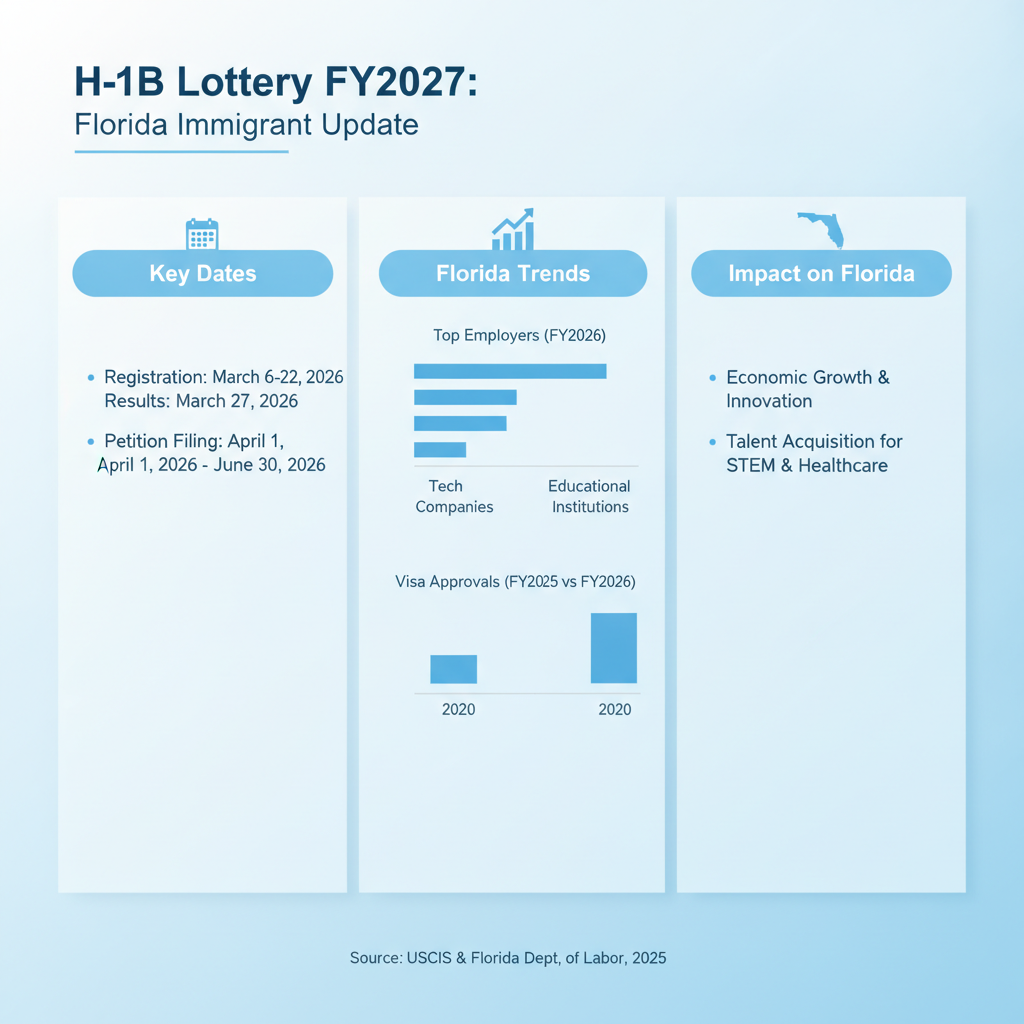
This is the initial phase where employers register prospective H-1B beneficiaries with USCIS. This period typically opens in early March for a few weeks, preceding the fiscal year for which the visas are sought (e.g., March 2026 for FY2027).
- Create/Access USCIS Online Account: The employer (or their authorized legal representative, such as Imigrar) must create a "registrant" account on the USCIS H-1B Electronic Registration page.
- Submit Registration for Each Beneficiary: For each prospective H-1B worker, the employer must submit an electronic registration, providing basic information about the company and the beneficiary.
- Required Beneficiary Information: Full legal name, date of birth, country of birth, country of citizenship, passport number.
- Required Petitioner Information: Legal name, Federal Employer Identification Number (FEIN), mailing address.
- Attorney/Representative Information: If applicable, details of the legal counsel (e.g., Imigrar) assisting with the registration using Form G-28.
- Pay Registration Fee: A non-refundable fee (which has increased for FY2027 registrations) must be paid for each registration.
Warning: The new beneficiary-centric selection process means that if multiple employers submit registrations for the same beneficiary, USCIS will consolidate these into a single entry for that beneficiary in the lottery. This significantly reduces the incentive for employers to collaborate on multiple registrations for one individual and makes it easier for USCIS to identify and reject fraudulent multiple registrations.
3) H-1B Lottery Selection and Notification
After the registration period closes, USCIS conducts the electronic lottery. This typically happens within a few weeks of the registration period closing.
- Random Selection: USCIS randomly selects enough registrations to meet the annual H-1B cap. The selection process prioritizes those with U.S. master's degrees or higher for the advanced degree exemption before selecting from the general pool.
- Notification: USCIS notifies selected registrants through their online accounts. The status will change from "Submitted" to "Selected." Non-selected registrations will eventually show "Not Selected" or "Denied."
- What to Expect:
- If selected, the employer receives a selection notice allowing them to file an H-1B petition for that beneficiary.
- The selection notice will include a specific filing window (typically 90-day window) during which the employer must file the complete Form I-129 petition.
Reminder: Selection in the lottery does not guarantee H-1B approval; it only grants the opportunity to file the full petition.
4) Filing the H-1B Petition (Form I-129)
Once a registration is selected, the employer must prepare and file a comprehensive H-1B petition package with USCIS within the specified filing window.
- Prepare LCA: The employer must file and obtain certification for a Labor Condition Application (LCA), Form ETA-9035, with the U.S. Department of Labor. This must be certified *before* filing Form I-129.
- Complete Form I-129: The employer, with legal counsel, completes Form I-129, Petition for a Nonimmigrant Worker, and its accompanying H-1B supplement.
- Assemble Supporting Documents: This is a critical step requiring extensive documentation:
- Certified LCA.
- Copies of the beneficiary's passport, visa, I-94, and other immigration documents.
- Beneficiary's educational degrees, transcripts, and foreign degree evaluations.
- Beneficiary's resume and letters of experience.
- Job offer letter and detailed job description.
- Employer's business license, tax IDs, financial statements, and organizational charts.
- Evidence that the position qualifies as a specialty occupation (e.g., industry standards, previous hires).
- Copies of the H-1B registration selection notice.
- Attorney's Form G-28, if applicable.
- Pay Filing Fees: Several fees are required, which have also seen increases for FY2027:
- Form I-129 filing fee.
- American Competitiveness and Workforce Improvement Act (ACWIA) fee.
- Fraud Prevention and Detection Fee.
- Public Law 114-113 fee (for employers with 50+ employees, with over 50% in H-1B/L-1 status).
- Premium Processing fee (optional, for expedited processing).
- Mail Petition: The complete package is mailed to the appropriate USCIS Service Center as indicated on the selection notice.
Important: The new rules emphasize that the employer must have a genuine need for the H-1B worker and a legitimate employer-employee relationship. USCIS is actively conducting site visits and scrutinizing petition details to combat fraud.
5) USCIS Adjudication and Request for Evidence (RFE)
After filing, USCIS reviews the petition. This can take several months, or even longer, especially without Premium Processing.
- Receipt Notice: USCIS sends a receipt notice (Form I-797C) confirming receipt of the petition.
- Adjudication: An immigration officer reviews the petition and supporting documents.
- Request for Evidence (RFE): If the officer needs more information or clarification, they will issue an RFE. Common RFEs include questions about:
- Whether the position qualifies as a specialty occupation.
- Whether the beneficiary's degree is directly related or equivalent.
- The employer-employee relationship, especially for third-party placements.
- Availability of work for the entire H-1B period.
- Responding to RFE: A timely and robust response to an RFE is crucial. This often involves submitting additional documents, expert opinions, and legal arguments.
6) Petition Approval or Denial
The final stage is USCIS's decision on the H-1B petition.
- Approval: If approved, USCIS sends an approval notice (Form I-797A/B).
- If the beneficiary is already in the U.S. and eligible for a change of status, the approval notice will include an I-94 card reflecting H-1B status, typically effective October 1st of the fiscal year.
- If the beneficiary is outside the U.S. or needs to obtain the visa stamp, they will use the approval notice to apply for an H-1B visa at a U.S. embassy or consulate abroad.
- Denial: If denied, USCIS provides a reason for the denial.
- Options may include filing a motion to reconsider/reopen or exploring other visa categories.
Important: The new rules, particularly the increased fees and the focus on integrity, mean that a denial can be a costly and time-consuming setback. Seeking expert legal counsel from the outset is the best way to minimize risks.

Practical Steps You Can Take Today
The H-1B lottery changes for FY2027 require proactive planning. Here are practical steps you can take now, whether you are a potential beneficiary or an employer in Orlando or elsewhere in Florida:
- Understand the New Rules: Familiarize yourself with the beneficiary-centric selection process and the updated fee structure. USCIS regularly updates its official website (USCIS H-1B Page) with the latest guidance.
- Consult an Experienced Immigration Attorney:
Related Topics
Need Legal Assistance?
Our experienced immigration attorneys are here to help with your case. Contact Imigrar today for a free consultation and let us guide you through the legal process with confidence.
📍 Orlando, Florida • Serving clients nationwide
📧 info@imigrar.com