
H-1B Visa Lottery FY2027 Changes: What Orlando Immigrants Need
Understand the new H-1B visa lottery rules for FY2027 and how they impact you. Imigrar provides expert guidance for immigrants and employers in Florida and nationwide.

The landscape of U.S. immigration is constantly evolving, and staying informed is crucial for anyone pursuing their American dream. At Imigrar, your trusted immigration law firm in Orlando, Florida, we are dedicated to keeping you abreast of the latest developments, especially those that can directly impact your future.
Today, we're diving deep into significant changes affecting the H-1B visa lottery for Fiscal Year 2027. These updates, driven by efforts to modernize the process and combat fraud, carry substantial implications for both prospective H-1B beneficiaries and their sponsoring employers across the nation, including our vibrant community here in Central Florida.
Navigating the New H-1B Rules? Don't face the complexities alone. Our Orlando immigration team is ready to assist. Call +1 786-791-3106 for a free consultation, or message us online. Se Habla Español.
Our goal with this comprehensive guide is to break down the new H-1B visa lottery changes, explain what they mean for you, and provide actionable steps to prepare for the upcoming FY2027 lottery season. We believe in keeping families together by providing clear, accurate, and timely legal guidance.
NEWS SOURCE REFERENCE SECTION
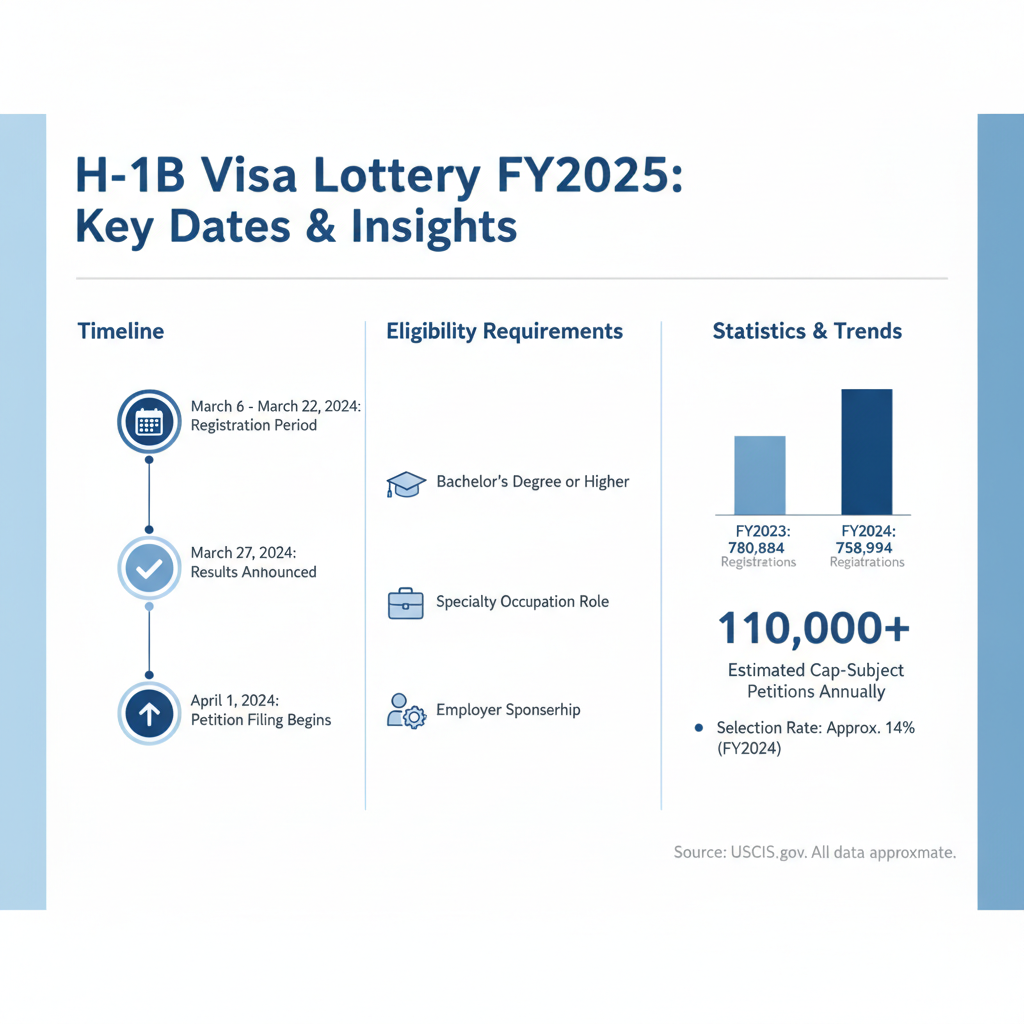
The reporting that sparked this guide: H-1B Visa Lottery Changes for FY2027 (Legal News)
What This News Means for Immigrants in Orlando and Across Florida
The H-1B visa program is a cornerstone of the U.S. economy, enabling American companies to employ highly skilled foreign workers in specialty occupations. With a statutory annual cap of 85,000 visas (65,000 for the regular cap and 20,000 for the U.S. master's cap), demand consistently far outstrips supply, leading to an annual lottery system. Any changes to this system are critical for thousands of individuals and businesses.
Why this news is showing up now
The H-1B visa lottery operates on a fiscal year basis. Fiscal Year 2027 (FY2027) begins on October 1, 2026. However, the lottery registration period typically occurs in March of the preceding calendar year (March 2026 for FY2027). U.S. Citizenship and Immigration Services (USCIS) often announces significant changes to the lottery process well in advance to allow employers and prospective beneficiaries to prepare. The recent changes, which aim to reform the lottery selection process, were initially proposed and finalized earlier, taking effect for previous fiscal years. The "news" now reflects how these established changes will continue to impact the upcoming FY2027 lottery, solidifying their presence and emphasizing continued vigilance against fraud. This continued focus on transparency and fairness means that discussions and guidance about these rules remain highly relevant as we approach the next registration window.
How it can affect Florida residents
Florida, particularly the Orlando metropolitan area and the I-4 corridor, is a hub for growing industries like technology, healthcare, aerospace, and tourism. These sectors heavily rely on skilled foreign talent, making the H-1B visa crucial for many local businesses and their employees. For Florida residents who are prospective H-1B beneficiaries, including international graduates from universities like the University of Central Florida (UCF), the University of Florida, and the University of South Florida, these changes directly impact their chances of securing a work visa. Furthermore, employers in Orlando, Tampa, Miami, and other parts of the state must adapt their hiring and sponsorship strategies to comply with the new rules. A more equitable lottery system, for instance, could mean a fairer chance for individuals previously disadvantaged by multiple employer registrations, while increased scrutiny on registrations means employers must be meticulous. This is especially pertinent for those working in STEM fields or for large corporations with multiple subsidiaries.
What H-1B Visa Lottery Changes for FY2027 Is (and Why It Matters)
The H-1B visa lottery is the primary mechanism by which USCIS selects petitions for processing when the number of eligible registrations exceeds the annual cap. For FY2027, the most significant change, which was implemented in prior years but remains critical, is the shift to a **beneficiary-centric selection process**. This fundamental alteration aims to enhance fairness and reduce the potential for fraud within the lottery system.
A plain-English definition
Imagine a raffle where many people want to win a prize. Before the change, one person could have multiple tickets if different friends bought tickets for them. This meant some people had a much higher chance of winning. Now, with the new rules, each person can only be entered into the raffle once, no matter how many friends want to buy them a ticket. If multiple friends try to buy tickets for the same person, only one entry counts for that person. The prize is still limited, but everyone has an equal chance based on their individual entry.
In H-1B terms, this means that USCIS now selects **registrations based on the unique beneficiary**, not on the individual employer registrations. If a beneficiary has multiple registrations submitted on their behalf by different employers, they are still only entered into the lottery once. If selected, all employers who registered that beneficiary are notified, and any of them can then file a petition for that beneficiary. This prevents a single individual from gaining an unfair advantage through multiple job offers and aims to ensure that each eligible individual has an equal chance, regardless of how many employers registered them.
Key terms you need to know
- H-1B Visa: A nonimmigrant visa that allows U.S. employers to temporarily employ foreign workers in specialty occupations. These occupations generally require a bachelor's degree or higher in a specific specialty.
- Specialty Occupation: An occupation that requires theoretical and practical application of a body of highly specialized knowledge and a bachelor's or higher degree in the specific specialty (or its equivalent) as a minimum for entry into the occupation.
- Annual Cap: The legal limit on the number of H-1B visas issued each fiscal year. Currently, this is 65,000 for the regular cap and an additional 20,000 for those with a U.S. master's degree or higher (the "master's cap").
- H-1B Lottery (or Selection Process): The mechanism USCIS uses to select registrations when the number of eligible registrations exceeds the annual cap.
- Beneficiary: The foreign national worker who is the subject of the H-1B petition.
- Petitioner: The U.S. employer who files the H-1B petition on behalf of the foreign national.
- H-1B Registration: The electronic process where prospective petitioners (employers) submit basic information about the company and the beneficiary to USCIS during a designated period. Only selected registrations can proceed to file a full H-1B petition.
- Fiscal Year (FY): The U.S. government's accounting year, which runs from October 1 to September 30. FY2027 begins October 1, 2026.
- Labor Condition Application (LCA): Form ETA-9035, certified by the U.S. Department of Labor (DOL), which attests that the employer will pay the H-1B worker at least the prevailing wage for the occupation in the area of employment and will provide working conditions that will not adversely affect other workers. This must be certified before filing the H-1B petition.
- Premium Processing: An expedited service offered by USCIS for certain petitions, including H-1B, for an additional fee. It guarantees processing within a specific timeframe (usually 15 calendar days).
- Request for Evidence (RFE): A notice from USCIS asking for additional documentation or information to support an H-1B petition.
Current Immigration Law: The Foundation
The H-1B visa program is governed primarily by the Immigration and Nationality Act (INA) and its corresponding regulations. Understanding these foundational laws is crucial for compliance.
Federal requirements
The H-1B nonimmigrant classification is found under Section 101(a)(15)(H)(i)(b) of the **Immigration and Nationality Act (INA)**. Further detailed regulations are codified in **8 CFR 214.2(h)**. Key federal requirements for an H-1B petition include:
- Specialty Occupation: The job must qualify as a specialty occupation, meaning it requires a bachelor's degree or higher in a specific field.
- Employer-Employee Relationship: A valid employer-employee relationship must exist between the petitioner and the beneficiary, as defined by USCIS.
- Wage Requirements: The employer must agree to pay the H-1B worker at least the prevailing wage for the occupation in the area of employment, or the actual wage paid to other employees with similar experience and qualifications, whichever is higher. This is attested to in the **Labor Condition Application (LCA)**, **Form ETA-9035**, certified by the U.S. Department of Labor.
- Education/Experience: The beneficiary must meet the minimum educational and/or experience requirements for the specialty occupation. This typically means a bachelor's degree or its foreign equivalent, or a license, or experience equivalent to a bachelor's degree.
- Annual Cap: As mentioned, the H-1B program is subject to an annual cap, necessitating the lottery process when demand exceeds supply.
The recent changes to the lottery system are implemented under existing regulatory authority to improve the integrity of the H-1B program. The beneficiary-centric selection process aims to address concerns about fraud, particularly related to multiple registrations by different employers for the same individual, which inflated selection rates in previous years.
For more detailed information on H-1B regulations and policies, always refer to the USCIS official website.
Florida-specific considerations
While H-1B visa laws are federal, their impact is felt locally. Florida's economy, with its diverse industries, benefits significantly from the H-1B program. The state's burgeoning tech sector, particularly in cities like Orlando, Tampa, and Miami, relies on international talent to fill critical roles in IT, engineering, and software development. Healthcare systems across the state also frequently sponsor H-1B workers. For Central Florida residents, the Orlando USCIS Field Office serves as an important local resource, though H-1B petitions are processed at service centers, not field offices. Employers in Orange County and along the I-4 corridor should be particularly mindful of prevailing wage requirements specific to their metropolitan statistical area, as these can vary significantly from national averages. The robust presence of higher education institutions in Florida also means a large pool of international students (F-1 visa holders) who are potential H-1B beneficiaries, many of whom seek to transition from Optional Practical Training (OPT) to H-1B status. The new lottery rules mean that these students, if registered by multiple employers, will still have a single, fair shot in the lottery.
Considering an H-1B Visa? The rules are complex. Let Imigrar simplify them for you. Call +1 786-791-3106 for a free consultation. Our Orlando team is ready to help. Se Habla Español.
How to Navigate the New H-1B Lottery Rules: A Complete Step-by-Step Guide
Successfully securing an H-1B visa, especially with the new beneficiary-centric lottery rules, requires meticulous planning and execution. Here’s a detailed step-by-step guide for both employers and prospective beneficiaries.
1) Employer Registration for the H-1B Lottery
The first critical step in the H-1B process for FY2027 is the electronic registration. This typically opens in early March of the calendar year the fiscal year begins (e.g., March 2026 for FY2027) and lasts for a few weeks.
- Action: The prospective employer (petitioner) must create a USCIS online account if they don't already have one. They then submit a separate registration for each beneficiary they intend to sponsor. Under the new rules, if multiple employers register the same beneficiary, USCIS will consolidate these registrations and enter the beneficiary only once into the lottery.
- Required Information for Registration:
- Employer's legal name, EIN (Employer Identification Number), and mailing address.
- Employer's authorized signatory information.
- Beneficiary's full legal name, date of birth, country of birth, country of citizenship, passport number.
- Beneficiary's gender.
- Whether the beneficiary holds a U.S. master's or higher degree (for eligibility in the master's cap).
- Beneficiary's unique identifier (e.g., passport number, travel document number).
- Fee: A non-refundable registration fee (currently $10) per registration must be paid.
- Important: Ensure all information is accurate and consistent across any multiple registrations for the same beneficiary. USCIS has increased its focus on fraud detection.
2) Lottery Selection and Notification
After the registration period closes, USCIS conducts the lottery. Under the new beneficiary-centric system, selection is based on unique beneficiaries. USCIS selects enough unique beneficiaries to meet the annual cap. If a beneficiary is selected, all employers who registered for that beneficiary will be notified.
- Action: USCIS will announce the lottery results, usually by the end of March or early April. Employers will receive a notification in their USCIS online account indicating whether their registration(s) have been "Selected," "Not Selected," or "Denied" (due to duplicate submissions by the same employer for the same beneficiary, or other issues).
- Timeline: Expect notifications within a few weeks after the registration period closes. USCIS will also announce the filing window for selected petitions.
- Reminder: If your beneficiary is selected, any employer who registered them can proceed with filing an H-1B petition.
3) Labor Condition Application (LCA) Filing and Certification
Before an H-1B petition can be filed with USCIS, the employer must obtain a certified **Labor Condition Application (LCA)** from the U.S. Department of Labor (DOL).
- Action: The employer files **Form ETA-9035** (LCA) with the DOL. This form details the H-1B worker's job title, duties, wage, work location, and employer attestations regarding working conditions and prevailing wages.
- Required Documents/Information for LCA:
- Employer's Federal Employer Identification Number (FEIN).
- Job title and duties for the H-1B position.
- Proposed wage for the H-1B worker.
- Exact work location(s).
- Prevailing wage determination for the specific occupation and geographic area (often obtained from DOL's Foreign Labor Certification Data Center).
- Timeline: LCA processing typically takes 7-10 calendar days, but can sometimes be longer if there are issues or audits. It's crucial to start this process immediately upon lottery selection.
4) Filing the H-1B Petition (Form I-129)
Once the LCA is certified, the employer can prepare and file the full H-1B petition with USCIS. This is the most extensive part of the application process.
- Action: The employer files **Form I-129**, Petition for a Nonimmigrant Worker, along with all required supporting documentation and fees, to the USCIS service center specified in the lottery selection notice.
- Required Documents for Form I-129:
- Certified **LCA (Form ETA-9035)**.
- Employer's letter of support describing the job, the company, and why the beneficiary is qualified.
- Beneficiary's educational documents (degrees, transcripts, evaluations of foreign degrees).
- Beneficiary's resume/CV.
- Evidence of beneficiary's professional experience (e.g., employment letters, pay stubs).
- Beneficiary's passport, visa, and I-94 records.
- Employer's organizational documents (e.g., articles of incorporation, business licenses, tax returns).
- Photos of the beneficiary.
- Any other relevant documents proving the specialty occupation nature of the job and the beneficiary's qualifications.
- **Form G-28**, Notice of Entry of Appearance as Attorney or Accredited Representative (if represented by Imigrar).
- Fees:
- Form I-129 filing fee (currently $460).
- American Competitiveness and Workforce Improvement Act (ACWIA) fee (currently $750 for employers with 1-25 FTE employees, or $1,500 for employers with 26+ FTE employees).
- Fraud Prevention and Detection Fee (currently $500).
- Public Law 114-113 fee (for employers with 50 or more employees and more than 50% of their U.S. workforce in H-1B or L-1 status, currently $4,000).
- Optional Premium Processing fee (currently $2,805).
- Warning: The filing window is strict. Missed deadlines will result in rejection.
5) USCIS Processing and Potential Requests for Evidence (RFEs)
After filing, USCIS reviews the petition. This stage can involve requests for additional information.
- Action: USCIS will issue a receipt notice (**Form I-797C**) acknowledging receipt of the petition. During processing, USCIS may issue an **RFE** if they need more evidence to determine eligibility. Responding to an RFE correctly and thoroughly is critical.
- Timeline: Processing times vary widely by service center and can be checked on the USCIS Processing Times page. Premium Processing guarantees a response within 15 calendar days.
- Reminder: If an RFE is issued, work closely with your attorney to gather and submit all requested documents within the specified deadline.
6) Petition Approval and Change of Status/Consular Processing
Upon approval, the beneficiary will either change status within the U.S. or apply for an H-1B visa at a U.S. consulate abroad.
- Action: If the petition is approved, USCIS issues an approval notice (**Form I-797**).
- For beneficiaries in the U.S. (e.g., F-1 OPT): If a change of status was requested and approved, the H-1B status typically becomes effective on October 1st of the fiscal year.
- For beneficiaries outside the U.S.: They will need to schedule an interview at a U.S. consulate or embassy in their home country to obtain an H-1B visa stamp in their passport. They can then enter the U.S. in H-1B status.
- Documents for Consular Processing:
- Original **Form I-797** approval notice.
- DS-160 confirmation page.
- Passport valid for at least six months beyond the intended period of stay.
- Passport-style photographs.
- Interview appointment confirmation.
- Proof of ties to home country.
- Employer's support letter and LCA.
- Educational and professional documents.
- Important: Consular processing involves a separate interview and security checks.
Practical Steps You Can Take Today
Even though the FY2027 lottery registration is months away, proactive preparation is key to success under the new rules.
Actionable Checklist:
- Consult an Experienced Immigration Attorney: This is the most crucial step. An attorney from Imigrar can assess your eligibility, guide your employer, and ensure compliance with all new regulations.
- Verify Employer's Commitment and Eligibility: If you are a beneficiary, ensure your prospective employer is fully committed to sponsoring you and understands their obligations under the new rules, especially regarding the beneficiary-centric selection.
- Gather Essential Documents: Start compiling all necessary personal and professional documents now. This includes academic transcripts, diplomas, previous employment letters, passport copies, and any past immigration documents. Ensure foreign degrees are evaluated for U.S. equivalency if needed.
- Understand the New Beneficiary-Centric Process: For both employers and beneficiaries, grasp that multiple registrations for the same individual no longer increase selection odds. Focus on quality, not quantity, of registrations.
- Monitor USCIS Announcements: Stay updated on any further USCIS announcements regarding the FY2027 lottery, including exact registration dates and any fee adjustments. The USCIS official website is your primary source.
- Review Job Descriptions for Specialty Occupation Fit: Employers should review job descriptions to ensure they clearly meet the "specialty occupation" criteria and align with the beneficiary's qualifications.
- Address Any Immigration Status Gaps: If you are in the U.S. on an F-1 OPT, plan for potential cap-gap eligibility if your H-1B is selected.
Document Preparation Guidance:
- Organization: Create a digital and physical folder for all immigration-related documents. Label everything clearly.
- Translations: Ensure all non-English documents are accompanied by certified English translations.
- Copies: Always keep copies of everything submitted to USCIS and the DOL.
- Degree Evaluations: If your degree is from outside the U.S., obtain a credential evaluation from a reputable service well in advance.
Timeline Expectations:
- Prior to March 2026: Initial consultations, document gathering, employer preparation.
- March 2026: H-1B electronic registration period (typically the first two weeks).
- Late March/Early April 2026: Lottery selection notifications released.
- April 1, 2026 – June 30, 2026 (approx.): Petition filing period for selected beneficiaries.
- April 2026 – September 2026: USCIS processing of petitions, potential RFEs.
- October 1, 2026: Start date for approved H-1B petitions for FY2027.
How Imigrar Helps Immigrants in Orlando
At Imigrar, we understand the stakes involved in the H-1B visa process. For immigrants in Orlando, across Florida, and nationwide, the H-1B lottery represents a pivotal moment in their professional and personal lives. Our firm is dedicated to providing expert, compassionate, and effective legal representation to help you navigate these complex waters.
Our experience and expertise:
Our team of dedicated immigration attorneys has years of experience successfully guiding clients through the intricacies of U.S. immigration law, including the H-1B lottery. We stay on the cutting edge of policy changes and regulatory updates, ensuring that our advice is always current and accurate. We assist both employers in preparing robust registrations and petitions, and beneficiaries in understanding their rights and responsibilities. Our deep understanding of USCIS procedures, RFE trends, and the new beneficiary-centric selection process positions us uniquely to maximize your chances of success.
Free consultation offer:
We believe that access to legal guidance should be a right, not a privilege. That's why Imigrar offers a **free, no-obligation consultation** to discuss your H-1B visa prospects and answer your initial questions. Whether you're an individual seeking sponsorship or an Orlando-based employer looking to hire international talent, we invite you to speak with one of our attorneys. We will assess your specific situation, explain the new FY2027 lottery rules in detail, and outline a clear strategy tailored to your needs.
Se Habla Español: Our team is fully bilingual, ensuring that language is never a barrier to receiving the legal support you deserve. We are proud to serve the diverse communities of Florida and beyond, providing clear and accessible communication in both English and Spanish.
Ready to Discuss Your H-1B Case? Imigrar is here to help. Call +1 786-791-3106 today for your free consultation. We serve clients in Orlando, across Florida, and nationwide. Se Habla Español.
Frequently Asked Questions
Q: How does the new beneficiary-centric selection process for FY2027 actually work?
A: Under the new rule, USCIS identifies each unique beneficiary by their passport number or other designated travel document number. If multiple employers submit registrations for the same beneficiary, all those registrations are linked to that single unique beneficiary. When the lottery is run, only the unique beneficiary is entered into the selection pool once. If that unique beneficiary is selected, USCIS then notifies *all* employers who submitted a registration for that selected beneficiary. Any of those employers can then proceed to file an H-1B petition on behalf of the selected beneficiary. This ensures that a single individual doesn't gain an unfair advantage through multiple entries.
Related Topics
Need Legal Assistance?
Our experienced immigration attorneys are here to help with your case. Contact Imigrar today for a free consultation and let us guide you through the legal process with confidence.
📍 Orlando, Florida • Serving clients nationwide
📧 info@imigrar.com