
TPS Extension News 2026: Crucial Updates for Florida Immigrants
Breaking news on TPS extensions impacts thousands of immigrants in Orlando and across Florida. Learn if your country is affected, how to navigate re-registration, and secure your future with Imigrar's expert legal guidance.
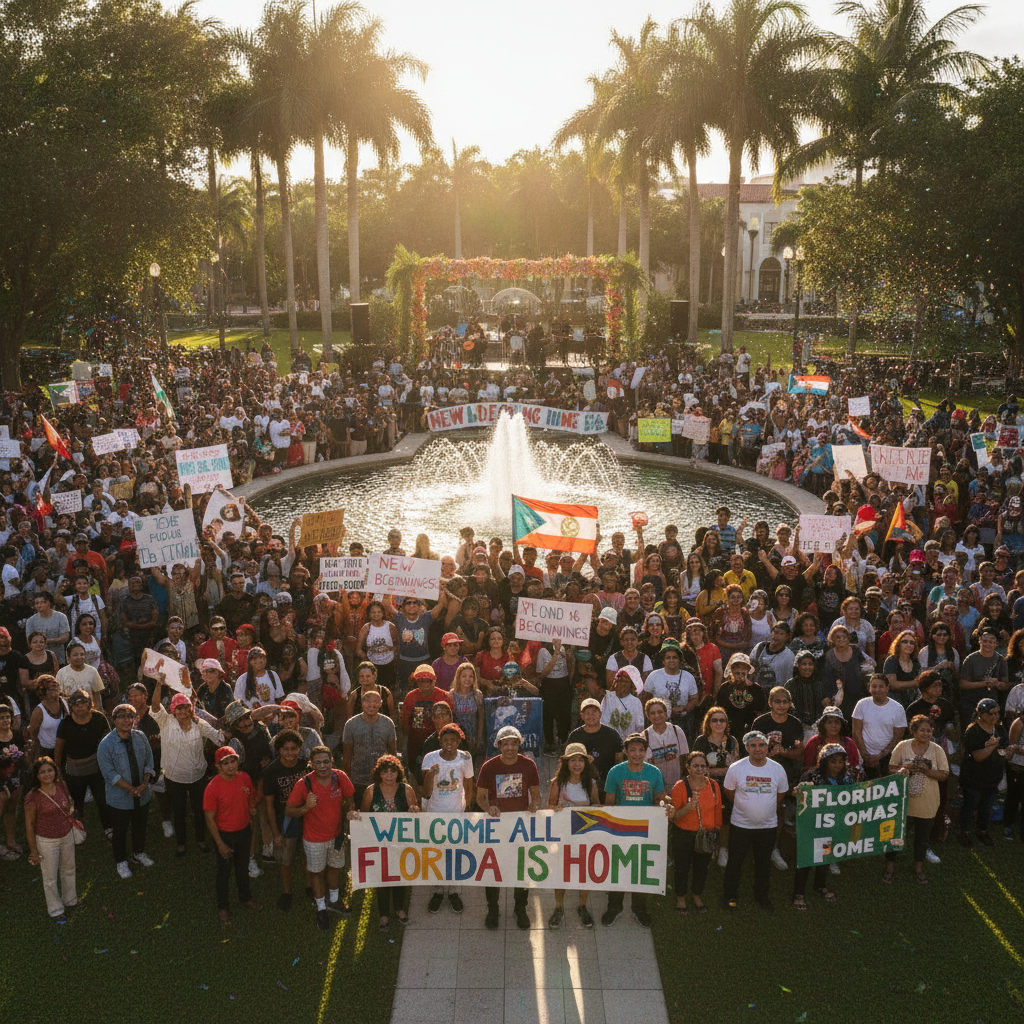
The landscape of U.S. immigration law is constantly evolving, with policy changes and extensions frequently impacting the lives of countless individuals and families. At Imigrar, your trusted immigration law firm in Orlando, Florida, we understand that staying informed is paramount. That's why we closely monitor breaking news to bring you timely, accurate, and actionable information.
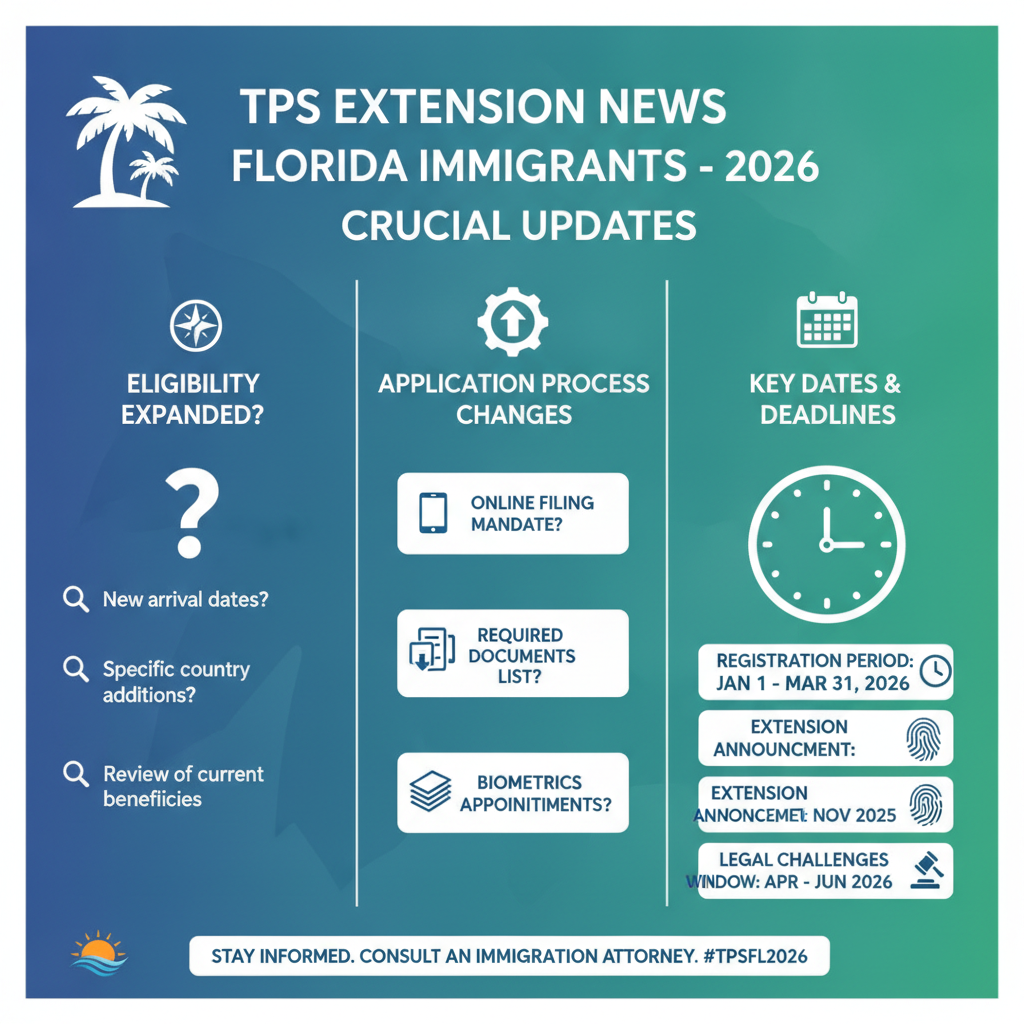
What This News Means for Immigrants in Orlando and Across Florida
The recent reports regarding extensions of Temporary Protected Status (TPS) for several designated countries are incredibly significant. For thousands of individuals and families living in Orlando, throughout Florida, and nationwide, these extensions offer a renewed sense of security, stability, and hope. This isn't just bureaucratic news; it directly impacts the ability to live, work, and contribute to our communities without constant fear of deportation.
Why this news is showing up now
As of September 21, 2026, the discussion around TPS extensions is particularly timely due to several converging factors. Firstly, the original designation or most recent extension periods for a number of countries are approaching their expiration dates. U.S. law mandates that the Secretary of Homeland Security review conditions in designated countries at least 60 days before the expiration of TPS to determine whether the conditions supporting the designation continue to exist. This often leads to announcements of extension or termination around this time.
Secondly, ongoing humanitarian crises, political instability, natural disasters, and armed conflicts in various parts of the world continue to make safe return impossible for many. Countries such as Haiti, Venezuela, Ukraine, Afghanistan, El Salvador, Honduras, Nicaragua, Sudan, Syria, and others have faced or continue to face conditions that warrant continued protection under TPS. The U.S. government is continually assessing these situations, leading to these critical decisions.
Finally, there is often advocacy from immigrant rights groups, community leaders, and even members of Congress, urging the administration to extend TPS for countries where conditions have not substantially improved. This collective voice ensures that the plights of affected communities remain at the forefront of policy discussions.
How it can affect Florida residents
Florida is home to a vibrant and diverse immigrant population, including a significant number of individuals from countries currently designated for TPS. For residents in Orlando and other areas across Central Florida, these extensions are nothing short of life-changing:
- Continued Protection from Deportation: The most immediate and critical effect is the continued protection from removal from the United States. This means TPS beneficiaries can remain in the U.S. legally, without fear of being separated from their families.
- Work Authorization: Extensions typically come with an automatic extension of Employment Authorization Documents (EADs), allowing beneficiaries to continue working legally. This is vital for supporting families, contributing to Florida’s economy, and maintaining financial stability. Without this, many would face economic hardship and potential exploitation.
- Travel Authorization: In many cases, TPS beneficiaries can apply for Advance Parole, allowing them to travel outside the U.S. and return legally. This can be crucial for visiting ailing family members or attending to urgent matters abroad, though careful legal advice is always recommended before traveling.
- Community Stability: For cities like Orlando, which benefit greatly from the contributions of immigrant communities, TPS extensions mean continued stability. Children can remain in school, families can plan for their futures, and communities can thrive without the constant threat of disruption. Many TPS holders have established deep roots in Orange County and surrounding areas, owning homes, businesses, and contributing significantly to the local fabric.
- Access to State Services: While TPS is a federal designation, its continuation often impacts access to state-level services, such as driver's license renewals in Florida. The ability to maintain legal status simplifies interactions with state agencies and ensures continuity in daily life.
Important: While these extensions are a cause for relief, it is crucial for all TPS beneficiaries to understand the re-registration process and deadlines to ensure their continued protection. Missing a deadline or submitting an incomplete application can lead to the loss of status.
Need Help Navigating TPS Extensions? Don't risk your status. Our Orlando immigration team at Imigrar is ready to assist you with every step of the re-registration process. Call +1 786-791-3106 for a free consultation, or message us online. Se Habla Español.
What TPS Is (and Why It Matters)
Temporary Protected Status (TPS) is a humanitarian immigration benefit provided by the United States government. It offers temporary legal status to eligible nationals of certain countries who are already in the U.S. when their home country experiences conditions that prevent their safe return.
A plain-English definition
Imagine your home country suddenly becomes unsafe due to a massive natural disaster like an earthquake, a devastating hurricane, an ongoing armed conflict, or an extraordinary temporary condition that makes it extremely dangerous to return. If you were already in the U.S. when this happened, and your country was officially designated for TPS by the U.S. government, then TPS allows you to legally remain in the U.S. for a temporary period. It's not a path to a Green Card directly, but it provides protection from deportation, allows you to work legally, and in some cases, travel outside the U.S. and return.
The Secretary of Homeland Security makes these designations, which typically last for periods of 6, 12, or 18 months. Before a designation expires, the Secretary reviews the conditions in the country to decide whether to extend, redesignate, or terminate TPS. The recent news of extensions means that for certain countries, the Secretary has determined that the unsafe conditions persist, and beneficiaries will continue to receive protection.
Key terms you need to know
Understanding these terms is crucial when dealing with TPS:
- Temporary Protected Status (TPS): The legal immigration status granted to eligible nationals of designated countries, providing protection from deportation and work authorization.
- Designated Country: A country for which the Secretary of Homeland Security has determined that conditions prevent its nationals from safely returning, thus making them eligible for TPS. Examples include El Salvador, Haiti, Honduras, Nepal, Nicaragua, Sudan, South Sudan, Syria, Venezuela, Yemen, Ukraine, Afghanistan, Cameroon, and Myanmar.
- Re-registration: The process by which current TPS beneficiaries must re-apply to extend their temporary status and work authorization when their country's TPS designation is extended. This is not automatic.
- Employment Authorization Document (EAD): Also known as a work permit, this card proves your authorization to work legally in the U.S. TPS beneficiaries apply for this using Form I-765.
- Advance Parole: A travel document issued by USCIS that allows certain non-citizens, including TPS beneficiaries, to travel abroad and re-enter the U.S. without abandoning their current immigration application or status. Applied for using Form I-131.
- Prima Facie Eligible: This term means that based on the initial evidence provided, it appears that an applicant meets the basic eligibility requirements for a benefit.
- Termination: The ending of a country's TPS designation, meaning beneficiaries from that country will no longer have TPS protection beyond a specified wind-down period. This is often a complex and highly litigated issue.
- Redesignation: When a country's TPS status is extended, and at the same time, the eligibility criteria are broadened to include more individuals (e.g., those who arrived after the initial designation date, but before a new cut-off date).
Reminder: TPS does not lead directly to a Green Card or U.S. citizenship. However, for some individuals, having TPS can provide a basis for applying for other forms of immigration relief if they become eligible.
Current Immigration Law: The Foundation
Temporary Protected Status is authorized by Section 244 of the Immigration and Nationality Act (INA), found at 8 U.S.C. § 1254a. This federal law grants the Secretary of Homeland Security the authority to designate countries for TPS under specific conditions.
Federal requirements
For a country to be designated for TPS, the Secretary of Homeland Security must find that:
- There is an ongoing armed conflict within the state, posing a serious threat to the personal safety of nationals if they were to return.
- There has been an earthquake, flood, drought, epidemic, or other environmental disaster resulting in a substantial, but temporary, disruption of living conditions, and the foreign state is unable to handle the return of its nationals adequately.
- There exist extraordinary and temporary conditions in the foreign state that prevent nationals from returning safely.
Individuals seeking TPS must meet specific eligibility criteria, which include:
- Being a national of a country designated for TPS (or a person without nationality who last habitually resided in that country).
- Having been continuously physically present in the U.S. since the effective date of the most recent designation or redesignation.
- Having continuously resided in the U.S. since a date specified by the Secretary.
- Meeting other eligibility requirements, such as undergoing security checks and not being inadmissible under certain grounds (e.g., certain criminal offenses, persecution of others).
Ineligibility for TPS: You may be ineligible if you:
- Have been convicted of any felony or two or more misdemeanors committed in the U.S.
- Are found inadmissible under certain grounds, including drug trafficking, national security, or terrorism-related grounds.
- Are subject to certain mandatory bars to asylum.
- Fail to meet the continuous physical presence and continuous residence requirements.
- Fail to register for TPS during the initial registration period or any re-registration period without good cause.
All applications for TPS are processed by U.S. Citizenship and Immigration Services (USCIS). The primary form for initial registration and re-registration is Form I-821, Application for Temporary Protected Status. If you wish to work, you must also file Form I-765, Application for Employment Authorization. If you wish to travel internationally, you must file Form I-131, Application for Travel Document.
For the most up-to-date information on TPS designations and specific requirements for each country, always refer to the USCIS official TPS website.
Florida-specific considerations
While TPS is a federal program, its impact is keenly felt at the state level in Florida. There are no Florida-specific laws regarding TPS eligibility or processing, as it falls under federal jurisdiction. However, TPS status does have practical implications for Florida residents:
- Driver's Licenses: TPS beneficiaries in Florida can generally apply for or renew a Florida driver's license or state identification card, provided their EAD and TPS status are valid. The Florida Department of Highway Safety and Motor Vehicles (FLHSMV) will verify your immigration status through the Systematic Alien Verification for Entitlements (SAVE) program.
- Access to Services: Holding valid TPS and an EAD allows individuals to access various services, open bank accounts, and participate in the economy of Orlando and other Florida cities without the legal barriers faced by undocumented immigrants.
- Local USCIS Office: For Central Florida residents, the Orlando USCIS Field Office may process certain aspects of your application, particularly if an interview or specific document submission is required. However, most TPS applications are processed centrally. Always check your USCIS notices for specific instructions.
- Community Support: Florida has a robust network of community organizations and legal aid groups that provide support to immigrant populations, including those eligible for TPS. Imigrar is proud to be part of this network, offering professional legal assistance to clients across the I-4 corridor and beyond.
Concerned about your TPS eligibility in Florida? Imigrar is here to help. Our compassionate legal team in Orlando provides clear, actionable advice. Call us at +1 786-791-3106 for a free consultation. Se Habla Español.
How to Re-Register for TPS: A Complete Step-by-Step Guide
If your country’s TPS designation has been extended, re-registration is a critical process to maintain your protected status. Do not assume your status is automatically extended. This guide outlines the essential steps to successfully re-register for TPS.
1) Understand the Designation/Extension Announcement
The very first step is to carefully read the official Federal Register notice from USCIS announcing the extension of TPS for your country. This notice is published by the Department of Homeland Security (DHS) and will contain vital information, including:
- The specific countries for which TPS has been extended or re-designated.
- The new expiration date for TPS.
- The exact re-registration period (usually a 60-day window) during which you must file your application.
- The new dates for continuous physical presence (CPP) and continuous residence (CR) for any re-designation.
- Instructions for the automatic extension of EADs and the validity period for these extensions.
Warning: Missing the re-registration deadline without good cause can result in the loss of your TPS. Mark your calendar immediately upon the announcement!
2) Gather Required Documents
Before you even touch a form, organize all necessary documents. This preparation will streamline your application process significantly. For re-registration, you generally need to prove your identity, nationality, and continued eligibility. Keep copies of everything you submit.
Required Documents Checklist:
-
Proof of Identity and Nationality:
- Copy of your passport from the designated country.
- Copy of your birth certificate with photo identification.
- Any national identity document from your country of origin with photo and/or fingerprint.
- Previous Form I-797 Approval Notice for TPS (if available).
-
Proof of Previous TPS Grant:
- Copy of your most recent Form I-797 Approval Notice for TPS.
- Copy of your previous EAD issued under TPS.
-
Proof of Continuous Physical Presence (CPP) and Continuous Residence (CR) (especially if there was a redesignation or if USCIS requests it):
- Employment records (pay stubs, W-2 forms, letters from employers).
- Rent receipts, utility bills, or mortgage statements.
- School records (transcripts, report cards).
- Medical records (hospital or doctor visits).
- Affidavits from friends, family, or employers attesting to your presence.
- Two passport-style photos: (If filing Form I-765 and Form I-131).
3) Complete the Forms
Accurate and complete form submission is critical. Use the latest versions of the forms from the USCIS Forms page.
-
Form I-821, Application for Temporary Protected Status:
- This is the primary form for re-registering for TPS.
- Answer all questions truthfully and completely. If a question doesn't apply, write "N/A."
- Pay special attention to questions about criminal history, as certain convictions can make you ineligible.
-
Form I-765, Application for Employment Authorization:
- File this form if you want an updated EAD. Even if your current EAD has an automatic extension, it's advisable to apply for a new one for clarity and easier employer verification.
- Ensure you use the correct eligibility category (usually (c)(19) for TPS).
-
Form I-131, Application for Travel Document (Optional):
- If you plan to travel outside the U.S., you MUST apply for Advance Parole. Do NOT leave the U.S. without an approved Advance Parole document, as you may not be allowed to re-enter and could lose your TPS.
- Clearly state your reason for travel.
Reminder: For Central Florida residents, if you have questions about specific sections of these forms, an attorney at Imigrar can provide tailored guidance.
4) Prepare Supporting Evidence
Attach copies (not originals, unless specifically requested) of all your supporting documents to your forms. Organize them clearly, perhaps with tabs or separators.
Supporting Evidence Checklist:
- Copies of all documents listed in Step 2.
- If you have had any arrests or convictions, include certified court dispositions and police reports. Even if charges were dismissed, you must disclose them.
- If you previously traveled with Advance Parole, include copies of your old Form I-512L (Advance Parole document) and entry stamps.
- Any documentation that supports continuous residence and physical presence, if USCIS has asked for it, or if you believe there might be a question about it.
5) Pay Fees (or Apply for a Waiver)
There are fees associated with filing Form I-821 and Form I-765. The fee for Form I-131 is separate.
- Form I-821 Filing Fee: There is no fee for filing Form I-821 for re-registration.
- Biometrics Services Fee: All TPS re-registrants must pay a biometrics services fee, regardless of age, unless they apply for and receive a fee waiver.
- Form I-765 Filing Fee: If you are applying for an EAD, you must pay the fee for Form I-765.
- Form I-131 Filing Fee: If you are applying for Advance Parole, you must pay the fee for Form I-131.
Fee Waivers: If you cannot afford the filing fees, you may be eligible for a fee waiver by filing Form I-912, Request for Fee Waiver. You must provide documentation demonstrating your inability to pay. USCIS will decide on your fee waiver request before processing your main application. If the waiver is denied, you will be given an opportunity to pay the fees.
Important: Check the USCIS website for current fees, as they can change.
6) Mail Your Application
Once all forms are completed, signed, and all supporting documents are gathered, assemble your package. Mail your application to the correct USCIS filing address. The address depends on your specific country’s TPS designation and sometimes your state of residence. Always refer to the Federal Register notice or the USCIS TPS filing addresses page for the most up-to-date information.
- Send your application via certified mail with a return receipt requested. This provides proof that you mailed it and that USCIS received it.
- Keep a complete copy of everything you send for your records.
7) Attend Biometrics Appointment & Await Decision
After USCIS receives your application, you will typically receive a receipt notice (Form I-797C). Subsequently, you will receive an appointment notice (Form I-797C) for a biometrics services appointment at an Application Support Center (ASC).
- Biometrics Appointment: This appointment is mandatory. You will have your fingerprints, photograph, and signature taken. This data is used for background and security checks. Be on time and bring your appointment notice, a valid photo ID, and your receipt notices. For Orlando residents, your appointment will likely be at the local ASC.
- Awaiting Decision: After biometrics, USCIS will process your application. You can check the status of your case online using the receipt number provided on your Form I-797C at the USCIS Case Status Online tool. Processing times can vary significantly, so regularly check the USCIS Processing Times page for your specific form and field office/service center.
- Decision: If approved, you will receive an approval notice for your Form I-821 and, if applied for, your new EAD and/or Advance Parole document.

Practical Steps You Can Take Today
Even before an official announcement or if you've just heard about an extension, there are proactive steps you can take to prepare for your TPS re-registration.
- Stay Informed: Regularly check official USCIS announcements and reputable legal news sources. Subscribe to email updates from USCIS. Imigrar also provides timely updates via our blog and social media.
- Locate Previous Records: Gather your previous TPS approval notices (Form I-797), EADs, and any documents related to your original TPS application or previous re-registrations.
- Update Your Contact Information: Ensure USCIS has your current mailing address. If you've moved, file Form AR-11, Alien's Change of Address Card, online or by mail, and update any pending applications separately. Incorrect addresses can lead to missed notices and significant delays.
- Review Your Eligibility: Reconfirm that you still meet all eligibility criteria, especially concerning criminal history. Any new arrests or convictions, even minor ones, must be disclosed and can affect your eligibility.
- Start Gathering Supporting Documents: Begin collecting proof of continuous physical presence and residence in the U.S. since your last TPS application. This includes utility bills, bank statements, school records, employment records, and medical records.
- Assess Your Financial Situation: Determine if you will need to pay the filing fees or apply for a fee waiver (Form I-912). Start gathering documents to support a fee waiver request if necessary, such as proof of income or receipt of means-tested benefits.
- Consult with an Attorney: The most crucial step. An experienced immigration attorney can assess your specific situation, help you prepare a complete and accurate application, and address any potential issues. This is especially important if you have any criminal history, prior immigration violations, or have traveled outside the U.S.
Document Preparation Guidance:
- Organize: Create a dedicated folder for your TPS documents. Use dividers for different categories (e.g., identity, previous TPS, residence proof, financial).
- Copies: Always send copies, never originals, unless USCIS specifically requests them. Keep the originals safe.
- Translations: Any documents not in
Related Topics
Need Legal Assistance?
Our experienced immigration attorneys are here to help with your case. Contact Imigrar today for a free consultation and let us guide you through the legal process with confidence.
📍 Orlando, Florida • Serving clients nationwide
📧 info@imigrar.com