
FY2027 H-1B Visa Lottery: New Rules for Immigrants in Orlando &
Navigating the new H-1B visa lottery rules for FY2027 is crucial. This comprehensive guide from Imigrar breaks down the changes, requirements, and how to prepare your petition for success.

The landscape of U.S. immigration law is constantly evolving, and for skilled foreign workers and their employers, few areas are as impactful as the H-1B visa program. As an Orlando-based immigration law firm dedicated to keeping families together, Imigrar closely monitors these changes to provide the most current and accurate guidance. Today, we delve into significant updates concerning the upcoming **FY2027 H-1B Visa Lottery** – changes that will profoundly affect how employers and beneficiaries approach this highly competitive process.
Need Help? Our Orlando immigration team is ready to assist. Call +1 786-791-3106 for a free consultation, or message us online. Se Habla Español.
The reporting that sparked this guide: H-1B Visa Lottery Changes for FY2027 (Legal News)
What This News Means for Immigrants in Orlando and Across Florida
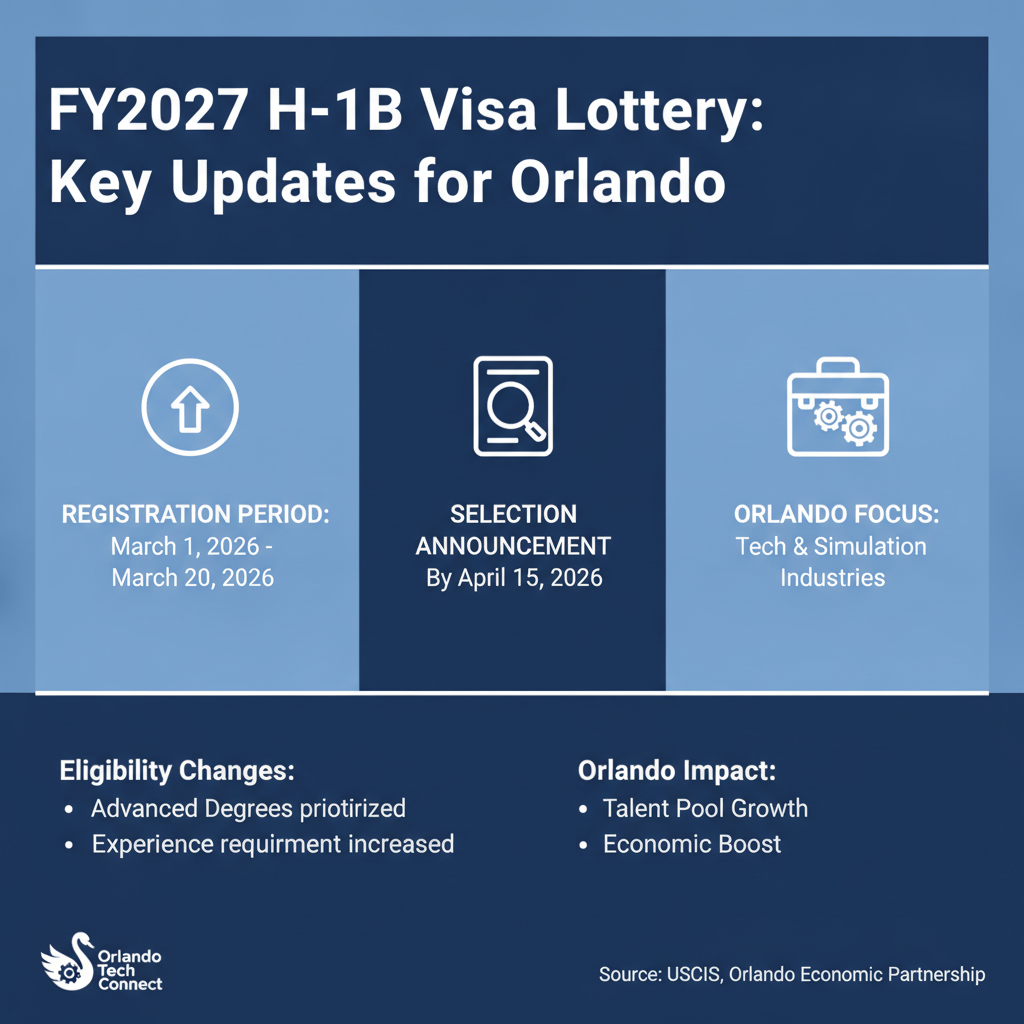
The H-1B visa program is a cornerstone for many U.S. employers seeking to fill critical roles in specialty occupations, from technology and engineering to healthcare and education. For foreign nationals aspiring to build their careers in the United States, it represents a vital pathway. The recent announcement of new rules for the **FY2027 H-1B Visa Lottery** is not just a procedural update; it's a recalibration of the entire system, designed to enhance fairness and combat the pervasive issue of fraud.
Why this news is showing up now
Immigration regulations, particularly those governing high-demand visa categories like the H-1B, are subject to periodic review and adjustment by U.S. Citizenship and Immigration Services (USCIS). These changes are often announced in the fall, ahead of the next fiscal year's lottery registration period, which typically opens in March. The purpose of these advanced announcements is to provide ample time for stakeholders – employers, beneficiaries, and legal representatives – to understand and adapt to the new requirements.
For the **FY2027 H-1B lottery**, the impetus for these changes stems largely from concerns over past practices, specifically the widespread issue of multiple registrations submitted by related entities on behalf of the same beneficiary. This practice, while not explicitly illegal under previous rules, was seen by many as undermining the integrity of the lottery, creating an unfair advantage for certain individuals and employers, and artificially inflating selection rates. USCIS has been under increasing pressure to address these loopholes and ensure that every eligible beneficiary has an equitable chance at selection. The new rules, therefore, are a direct response to these integrity concerns, aiming to create a more transparent and fraud-resistant process for the **H-1B cap-subject petitions**.
How it can affect Florida residents
Florida, and particularly the Orlando metropolitan area, is a hub of innovation, tourism, healthcare, and technology. Companies along the I-4 corridor, from Orlando to Tampa, rely heavily on skilled foreign talent to drive growth and maintain competitiveness. These new H-1B lottery rules will have a direct and significant impact on both employers and foreign workers across the Sunshine State:
- For Florida Employers: Companies in Orlando, Tampa, Miami, and beyond who frequently sponsor H-1B visas will need to adjust their internal strategies. While they can still register multiple times for a single beneficiary, they must understand that only one registration will be selected per beneficiary. This shifts the focus from quantity of registrations to the quality and legitimacy of each sponsorship. Employers must ensure all their registrations are truthful and accurately reflect a bona fide job offer.
- For Foreign Workers in Florida: Individuals working on OPT (Optional Practical Training) or other non-immigrant statuses in Central Florida and other regions, who are hoping for an H-1B visa, will find the playing field somewhat leveled. The new **beneficiary-centric selection process** means that their chances are now solely tied to their unique identity, regardless of how many employers register for them. This provides a clearer, albeit still competitive, path. It also means they need to be vigilant about which employers they allow to register for them, ensuring all registrations are legitimate.
- Impact on Key Industries: Florida's booming tech sector, especially in Orlando's "Medical City" and simulation industry, will feel these changes. Similarly, healthcare systems, educational institutions, and even advanced tourism management roles that qualify as **specialty occupations** will be affected. The changes underscore the need for meticulous preparation and strategic legal counsel to navigate the new landscape successfully.
For Central Florida residents and businesses, understanding these shifts is not just advisable, it's essential for successful immigration planning for **FY2027** and beyond.
What H-1B Visa Lottery Changes for FY2027 Is (and Why It Matters)
The H-1B visa program is one of the most sought-after non-immigrant work visas in the United States. It allows U.S. employers to temporarily employ foreign workers in **specialty occupations**. Due to high demand, the number of petitions often exceeds the annual cap set by Congress, necessitating a lottery system. The changes for **FY2027** are a direct response to issues of fairness and fraud that have plagued the lottery in recent years.
A plain-English definition
Imagine the H-1B visa as a special pass for talented individuals from other countries to work in specific, highly skilled jobs in the U.S. These jobs typically require at least a bachelor's degree in a specialized field, like engineering, IT, medicine, or finance. Each year, the government limits the number of these passes available – this is called the **annual cap**. Because many more people want these passes than are available, USCIS runs a computer-generated **lottery** to decide who gets a chance to apply. Previously, some individuals had multiple companies register for them, hoping to increase their odds. The new rules for **FY2027** essentially say: "We will only count *you*, the individual, once in the lottery, no matter how many companies register on your behalf." This is called a **beneficiary-centric selection process**, and it's designed to make the lottery fairer by giving everyone an equal, single chance at selection, preventing one person from effectively buying multiple lottery tickets.
Key terms you need to know
Navigating the H-1B process requires familiarity with specific terminology. Here are the key terms relevant to the **FY2027 H-1B Visa Lottery changes**:
- H-1B Visa: A non-immigrant visa category that allows U.S. employers to temporarily employ foreign workers in **specialty occupations**.
- Specialty Occupation: A job that requires the theoretical and practical application of a body of highly specialized knowledge, and a bachelor's degree or higher in a specific specialty, or its equivalent, as a minimum for entry into the occupation in the U.S.
- FY (Fiscal Year): The U.S. government's fiscal year runs from October 1 to September 30. The **FY2027** H-1B season is for visas that will become available starting October 1, 2026. The lottery and petition filing usually occur months before this start date.
- Annual Cap: The congressionally mandated limit on the number of H-1B visas issued each fiscal year. Currently, it's 65,000 for the regular cap, plus an additional 20,000 for those with a U.S. master's degree or higher (the "Master's cap").
- Lottery (Random Selection Process): The computer-generated drawing conducted by USCIS when the number of electronic registrations exceeds the annual cap.
- Registration Period: The designated timeframe, usually in March, during which prospective petitioning employers (or their authorized representatives) must electronically register beneficiaries for the H-1B lottery.
- Beneficiary: The foreign national worker for whom the H-1B petition is being filed.
- Petitioner: The U.S. employer filing the H-1B petition on behalf of the foreign worker.
- Beneficiary-Centric Selection: The core change for **FY2027**. Instead of selecting registrations based on the employer, USCIS will select registrations based on the unique **beneficiary**. If a beneficiary has multiple legitimate registrations submitted by different employers, they will only be selected once.
- USCIS (U.S. Citizenship and Immigration Services): The government agency responsible for adjudicating immigration petitions and administering the H-1B program. USCIS official website
- Cap-Subject: Refers to H-1B petitions that are subject to the annual numerical cap.
- Cap-Exempt: Refers to H-1B petitions filed by certain employers (e.g., institutions of higher education, non-profit research organizations) that are not subject to the annual cap.
These changes matter because they represent a significant shift in strategy for anyone involved in the H-1B process. Employers in Orlando and throughout Florida must understand that simply submitting multiple registrations for a single candidate no longer improves that candidate's odds. The focus is now squarely on the individual beneficiary and the legitimacy of each job offer.
Current Immigration Law: The Foundation
The H-1B visa program is governed primarily by the Immigration and Nationality Act (INA), specifically **INA §101(a)(15)(H)(i)(b)**, which defines the H-1B nonimmigrant classification, and **INA §214(g)(1)(A)**, which establishes the annual numerical cap. Further regulatory details are found in **8 CFR §214.2(h)**. These foundational laws and regulations outline the eligibility criteria, the application process, and the limitations of the H-1B visa.
Federal requirements
To qualify for an H-1B visa, both the employer and the beneficiary must meet stringent federal requirements:
- Specialty Occupation: The job offered must qualify as a **specialty occupation**. This means it must require a bachelor's degree or higher in a specific field (or its equivalent) as a minimum requirement. The employer must demonstrate that the duties are complex enough to necessitate such specialized knowledge.
- Educational Requirements: The beneficiary must possess a bachelor's degree or its equivalent, or a license in a specialty occupation field, or have work experience equivalent to a bachelor's degree.
- Employer-Employee Relationship: A valid employer-employee relationship must exist between the petitioning U.S. employer and the beneficiary.
- Prevailing Wage: The employer must agree to pay the beneficiary at least the prevailing wage for the occupation in the area of intended employment, or the actual wage paid to other employees with similar experience and qualifications, whichever is higher. This is certified through a **Labor Condition Application (LCA)**, **Form ETA 9035**, filed with the Department of Labor.
- Annual Cap: As mentioned, most H-1B petitions are subject to an annual cap of 65,000, with an additional 20,000 for those with a U.S. master's degree or higher. Petitions filed by cap-exempt organizations (e.g., universities, affiliated non-profits, government research organizations) are not subject to the cap.
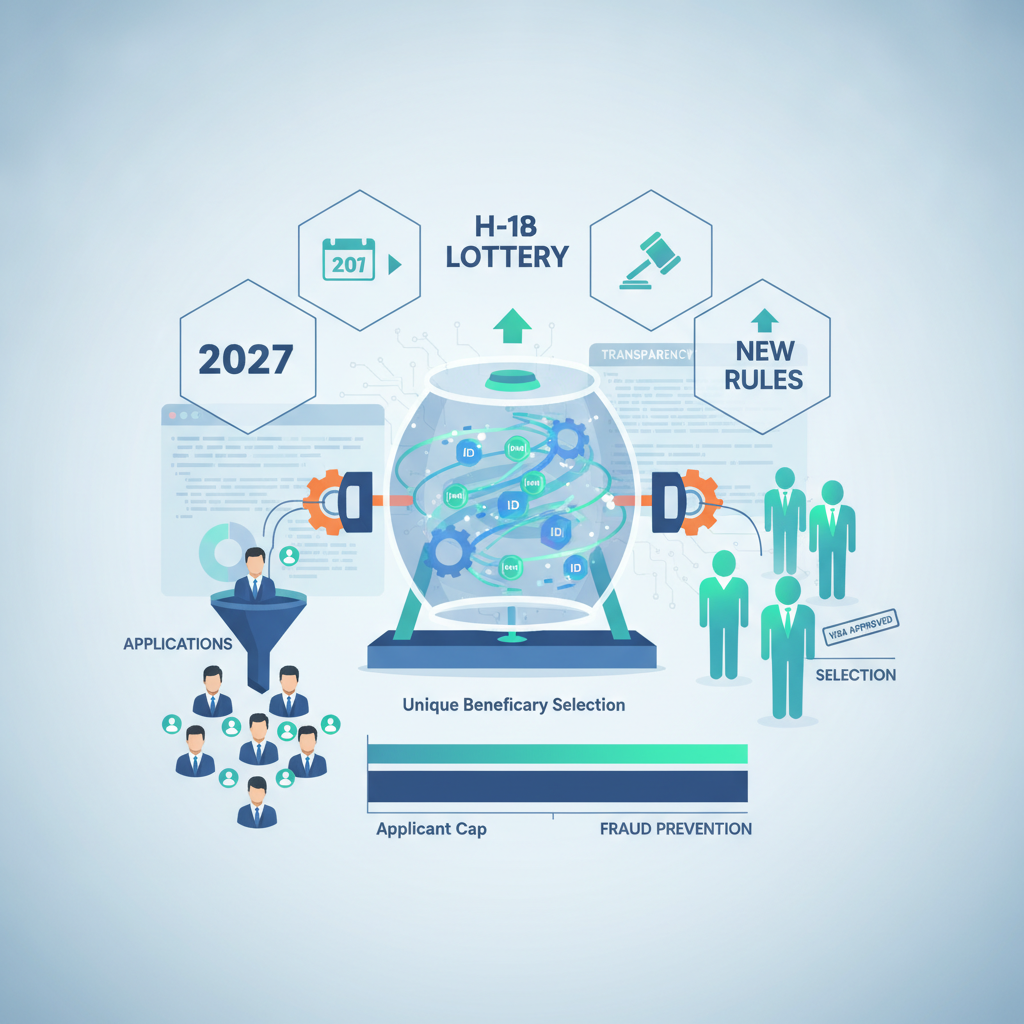
- New Lottery Rules for FY2027: The most critical change is the **beneficiary-centric selection process**. For the **FY2027 H-1B lottery**, USCIS will select registrations based on the unique **beneficiary**, rather than by registration. If a beneficiary has multiple registrations submitted by different employers, they will only be entered into the lottery once. If selected, only one petition can be filed on their behalf. This aims to eliminate the advantage gained by submitting multiple registrations for the same individual.
The primary form used for an H-1B petition is **Form I-129, Petition for a Nonimmigrant Worker**. This form is extensive and requires detailed information about the employer, the beneficiary, the job offer, and compliance with all H-1B regulations.
Important: All information provided to USCIS must be accurate and truthful. Misrepresentation or fraud can lead to severe penalties, including denial of the petition, future visa ineligibility, and criminal charges.
Florida-specific considerations
While H-1B law is federal, its application has practical implications for Florida residents and businesses:
- Licensing Requirements: For certain professions in Florida, such as nursing, engineering, or architecture, state licensing is required to practice. For an H-1B petition, the beneficiary must demonstrate that they either possess the required license or will obtain it promptly upon H-1B approval, if it's a pre-requisite for the job.
- Prevailing Wage Determinations: The prevailing wage for a **specialty occupation** can vary significantly across different metropolitan areas within Florida. For example, the prevailing wage for a software developer in Orlando might differ from that in Miami or Jacksonville, impacting employer costs.
- Orlando USCIS Field Office: While H-1B petitions are processed at regional service centers, the Orlando USCIS Field Office may handle certain related matters, such as interviews for **Adjustment of Status** if a beneficiary is later seeking a green card. For non-immigrant matters, this office primarily handles services like biometrics appointments.
- Economic Impact: The H-1B program is vital for Florida's economy, supporting growth in sectors like advanced manufacturing, aerospace, simulation, and medical technology. The new lottery rules impact how these industries can access global talent.
Understanding both the federal framework and Florida's specific nuances is crucial for a successful H-1B application. For comprehensive guidance, visit the USCIS official website and the USCIS Forms page.
How to Navigate the FY2027 H-1B Lottery Changes: A Complete Step-by-Step Guide
The **FY2027 H-1B Visa Lottery** introduces a pivotal change with its **beneficiary-centric selection process**. This guide outlines the steps involved, emphasizing how to prepare for and navigate these new rules effectively.
1) Understand the New Rules and Prepare
Before any action is taken, both employers and beneficiaries must fully grasp the implications of the **beneficiary-centric selection**. This means that regardless of how many legitimate employers register a beneficiary, that individual will only be selected once in the lottery. The focus shifts to ensuring each registration is legitimate and robust. Start preparing early, potentially 6-12 months before the anticipated March 2027 registration period.
- Review Official Guidance: Consult the latest USCIS announcements and final rules regarding the **FY2027 H-1B lottery**. This is critical to ensure compliance.
- Assess Beneficiary Eligibility: Ensure the foreign national meets the educational and experiential requirements for a **specialty occupation**. Verify their degrees, transcripts, and any professional evaluations.
- Employer Readiness: The petitioning employer must confirm they have a bona fide job offer for a **specialty occupation** and are prepared to pay the **prevailing wage**.
- Documents to Prepare:
- Beneficiary's valid passport and travel history.
- All academic degrees, transcripts, and foreign degree evaluations (if applicable).
- Beneficiary's resume/CV and professional experience letters.
- Employer's Federal Employer Identification Number (FEIN).
- Detailed job description outlining **specialty occupation** duties.
2) Employer Registration for the Lottery
The electronic registration process is the first critical step for cap-subject H-1B visas. This typically occurs in early March of the calendar year for the fiscal year starting October 1st. For **FY2027**, expect the registration window in March 2027.
- Create/Access USCIS Online Account: The U.S. employer, or their authorized attorney (like Imigrar), must have a registrant account with USCIS.
- Input Beneficiary Information: For each prospective H-1B worker, the employer must submit accurate beneficiary information, including full
Related Topics
Need Legal Assistance?
Our experienced immigration attorneys are here to help with your case. Contact Imigrar today for a free consultation and let us guide you through the legal process with confidence.
📍 Orlando, Florida • Serving clients nationwide
📧 info@imigrar.com