
H-1B Lottery Changes FY2027: Your Guide to New Rules & Impact
Understand the critical H-1B visa lottery changes for FY2027. Imigrar offers expert guidance for immigrants in Orlando and nationwide.

Navigating the complex landscape of U.S. immigration law can be challenging, especially when significant policy changes are introduced. For many skilled professionals seeking to work in the United States, the H-1B specialty occupation visa represents a crucial pathway. Each year, the demand for H-1B visas far exceeds the available supply, leading to a highly competitive lottery system. For Fiscal Year 2027 (FY2027), which commenced on October 1, 2026, new rules have been implemented that fundamentally alter this process, aiming to enhance fairness and combat fraud.
At Imigrar, an immigration law firm based in Orlando, Florida, we understand the profound impact these changes have on individuals and families hoping to build a future in the U.S. Our mission is to "Keep Families Together" by providing expert, compassionate legal guidance. This comprehensive guide will break down the H-1B visa lottery changes for FY2027, explaining what they mean for you, the step-by-step process, and how our team can help you navigate this evolving landscape. Se Habla Español.
Need Help? Our Orlando immigration team is ready to assist. Call +1 786-791-3106 for a free consultation, or message us online. Se Habla Español.
The reporting that sparked this guide
H-1B Visa Lottery Changes for FY2027 (Legal News)
What This News Means for Immigrants in Orlando and Across Florida
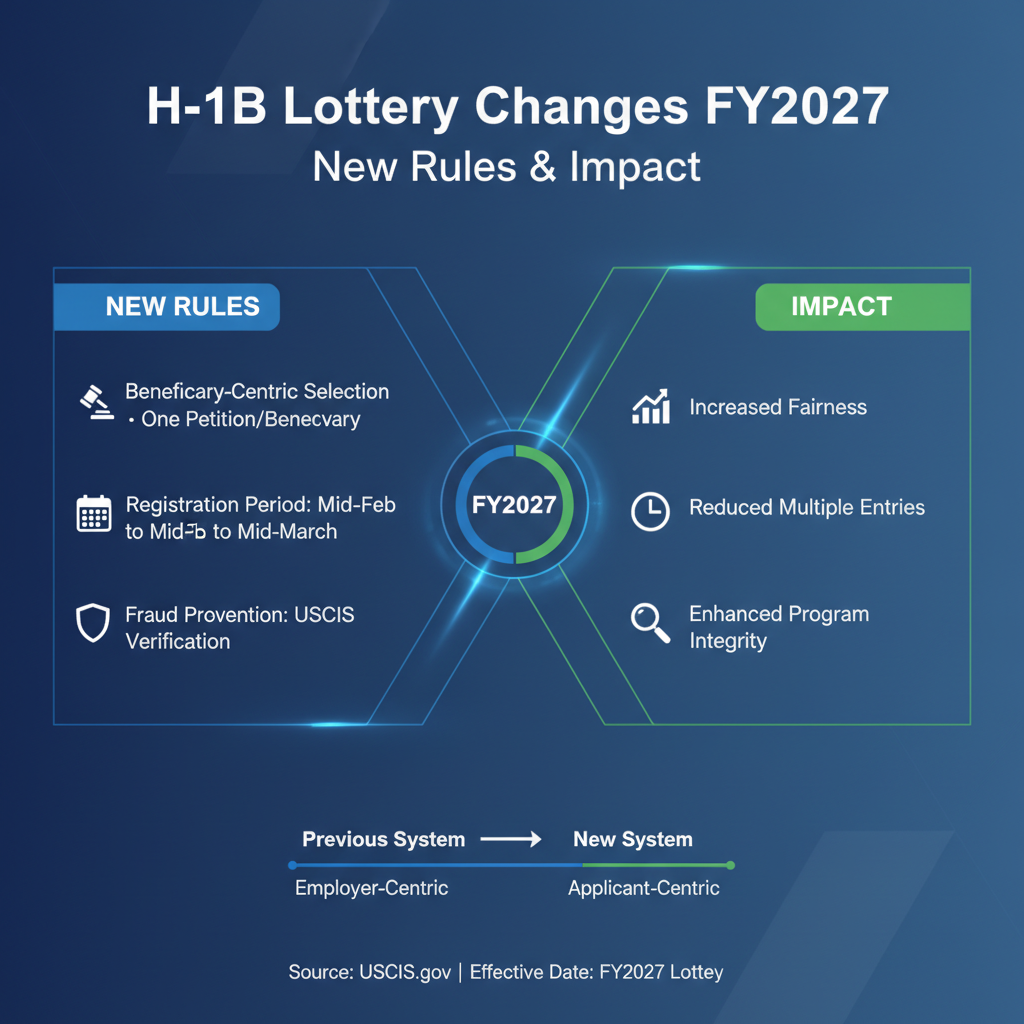
The recent announcements regarding the H-1B visa lottery for FY2027 have sent ripples through the immigration community, particularly for skilled workers and the employers who seek to hire them. These aren't minor tweaks; they represent a significant overhaul designed to address long-standing issues within the system.
Why this news is showing up now
The H-1B visa program operates on a fiscal year basis, with FY2027 beginning on October 1, 2026. The lottery registration for FY2027 typically concludes in March of the calendar year (i.e., March 2026), with selections announced shortly thereafter. Given the date of October 1, 2026, the FY2027 lottery has concluded, and successful petitioners are now seeing their H-1B statuses become active. The "news" surfacing now pertains to the impact and effectiveness of these new rules, the lessons learned from the FY2027 cycle, and the implications for those preparing for future H-1B lotteries (like FY2028). USCIS has been actively working to combat fraud and ensure fairness, leading to these structural reforms. This news serves as a critical update for those whose petitions were selected for FY2027 and a vital warning for those planning to participate in subsequent lotteries.
How it can affect Florida residents
Florida, with its booming tech sector, growing healthcare industry, and vibrant tourism and hospitality businesses, is a significant hub for H-1B workers. Cities like Orlando, Tampa, and Miami attract a diverse pool of international talent. The new H-1B lottery rules for FY2027 have several direct implications for Florida residents and businesses:
- For Prospective H-1B Beneficiaries in Florida: If you are a student graduating from a Florida university (such as UCF, UF, or FIU) on an F-1 visa and seeking an H-1B, or a professional already working in Florida on another visa, these changes are critical. The shift to a beneficiary-centric registration process means your individual eligibility and integrity are paramount. It aims to reduce the chances of multiple employers submitting registrations on your behalf, which was a common, though often legitimate, practice that inflated selection odds.
- For Florida Employers: Companies across the I-4 corridor and throughout Orange County that rely on foreign talent for specialty occupations must adapt their recruitment and petitioning strategies. The new rules place a greater burden on employers to ensure the legitimacy of job offers and the absence of fraudulent registrations. This includes a more stringent attestation process during registration.
- Increased Scrutiny: USCIS has intensified its efforts to detect and deter fraud. This means petitions from Florida employers and beneficiaries might face increased scrutiny, leading to more Requests for Evidence (RFEs) or even denials if any red flags are raised regarding the bona fides of the job offer or the beneficiary's qualifications.
- Fairer Chances (Potentially): While the overall cap remains unchanged, the new rules are intended to give every eligible beneficiary an equal chance, regardless of how many job offers they may have received. This could level the playing field for individuals seeking their first H-1B visa.
Understanding these impacts is the first step in successfully navigating the H-1B process. Imigrar is deeply familiar with the unique economic landscape of Central Florida and can provide tailored advice.
What H-1B Visa Lottery Changes for FY2027 Is (and Why It Matters)
The H-1B visa program is a cornerstone of U.S. immigration for skilled foreign workers. It allows U.S. employers to temporarily employ foreign workers in specialty occupations, defined as jobs that require a bachelor's degree or higher in a specific field. The problem? Demand consistently outstrips supply, necessitating a lottery.
A plain-English definition
For Fiscal Year 2027, the U.S. Citizenship and Immigration Services (USCIS) introduced significant amendments to the H-1B cap registration process. Previously, an employer could submit multiple registrations for the same beneficiary if they had legitimate, separate job offers. While not illegal, this practice was perceived by some as inflating the odds of selection for certain individuals and contributing to lottery fraud. The core change for FY2027 is a shift from an "employer-centric" to a "beneficiary-centric" registration system. This means that each unique beneficiary (the foreign worker) can only have one registration submitted on their behalf in any given fiscal year's lottery, regardless of how many employers offer them a job. If multiple employers want to sponsor the same individual, they must coordinate to ensure only one registration is submitted for that individual. If multiple registrations for the same beneficiary are identified, all registrations for that beneficiary will be deemed invalid and rejected.
This change is critical because it aims to:
- Combat Fraud: Directly targets schemes where individuals or entities collude to submit numerous registrations for the same person without a genuine job offer, solely to increase selection chances.
- Increase Fairness: Ensures that every unique beneficiary has an equal shot in the lottery, rather than those with multiple offers having a statistically higher chance.
- Streamline Processing: Potentially reduces the administrative burden on USCIS by eliminating duplicate entries.
Important: These changes apply specifically to the registration phase of the H-1B cap lottery. Once a registration is selected, the subsequent petition filing process (Form I-129) largely remains the same, though USCIS will be scrutinizing the bona fides of the employer-employee relationship more closely.
Key terms you need to know
To fully grasp the H-1B lottery changes, familiarize yourself with these essential terms:
- H-1B Cap: The annual limit on the number of H-1B visas issued. The current annual cap is 65,000 for the regular category and an additional 20,000 for the U.S. Master's cap (for those with a U.S. master's degree or higher).
- H-1B Lottery (or Cap Lottery): The random selection process USCIS uses when the number of H-1B registrations exceeds the annual cap.
- Beneficiary: The foreign national worker who is seeking the H-1B visa. Under the new rules, the beneficiary is at the center of the registration process.
- Petitioner: The U.S. employer who files the H-1B petition on behalf of the beneficiary.
- H-1B Registration Period: A specific window (typically in March) during which prospective H-1B petitioners (employers) must electronically register beneficiaries for the lottery. This is a crucial deadline.
- Master's Cap (or Advanced Degree Exemption): The additional 20,000 visas reserved for beneficiaries who have earned a U.S. master's degree or higher. These individuals participate in a separate, initial lottery for these 20,000 spots, and if not selected, they are then entered into the regular 65,000 cap lottery.
- Cap-Exempt: Certain employers (e.g., universities, non-profit research organizations) and certain beneficiaries (e.g., those already counted against the cap within the last 6 years) are not subject to the annual H-1B cap and do not need to go through the lottery.
- Duplicate Filings (under new rules): Refers to multiple H-1B registrations submitted for the same unique beneficiary in a single fiscal year's lottery. Under the FY2027 changes, these are now explicitly prohibited and will result in the invalidation of all registrations for that individual.
- Effective Date: For H-1B visas selected in the lottery, the earliest start date for employment is October 1st of the fiscal year (e.g., October 1, 2026, for FY2027).
- FY2027 (Fiscal Year 2027): The U.S. government's fiscal year, running from October 1, 2026, to September 30, 2027.
Need Help? Our Orlando immigration team is ready to assist. Call +1 786-791-3106 for a free consultation, or message us online. Se Habla Español.
Current Immigration Law: The Foundation
The H-1B visa program is authorized under the Immigration and Nationality Act (INA), specifically INA §101(a)(15)(H)(i)(b), and further defined by regulations found in Title 8 of the Code of Federal Regulations (8 CFR). These legal frameworks dictate who is eligible, what constitutes a specialty occupation, and the procedural requirements for obtaining an H-1B visa.
Federal requirements
To qualify for an H-1B visa, both the petitioner (employer) and the beneficiary (employee) must meet specific federal requirements:
For the Employer (Petitioner):
- Specialty Occupation: The job must qualify as a specialty occupation, meaning it requires at least a U.S. bachelor's degree or its equivalent in a specific field. The employer must demonstrate that the duties are sufficiently complex and specialized.
- Employer-Employee Relationship: A valid employer-employee relationship must exist, meaning the petitioner has the right to control the beneficiary's work.
- Prevailing Wage: The employer must pay the H-1B worker at least the prevailing wage for the occupation in the area of intended employment or the actual wage paid to other employees with similar experience and qualifications, whichever is higher. This is determined by the Department of Labor's (DOL) wage data.
- Labor Condition Application (LCA): Before filing the H-1B petition, the employer must submit and have certified a Form ETA-9035, Labor Condition Application, with the DOL. The LCA attests to meeting wage and working condition requirements.
For the Employee (Beneficiary):
- Qualifications for Specialty Occupation: The beneficiary must meet one of the following criteria:
- Hold a U.S. bachelor's or higher degree required by the specialty occupation from an accredited college or university.
- Hold a foreign degree that is equivalent to a U.S. bachelor's or higher degree in the specialty occupation.
- Possess an unrestricted state license, registration, or certification which authorizes him or her to fully practice the specialty occupation and be engaged in that specialty occupation in the state of intended employment.
- Have work experience equivalent to a U.S. bachelor's degree in the specialty occupation. (Generally, three years of specialized experience is considered equivalent to one year of college education).
- Licensure (if applicable): If the occupation requires a state license (e.g., doctors, nurses, architects), the beneficiary must possess it.
The annual cap for H-1B visas remains 65,000, with an additional 20,000 for those with U.S. master's degrees or higher. These caps are statutory and have not changed with the FY2027 lottery reforms. For more detailed information on H-1B requirements, you can always refer to the USCIS official website.
Florida-specific considerations
While federal law governs the H-1B program, there are practical considerations unique to Florida. The Orlando USCIS Field Office primarily handles adjustment of status applications and interviews, but our local knowledge is invaluable for H-1B petitions originating from Central Florida. Employers in Florida's rapidly expanding sectors, such as aerospace (e.g., Space Coast), tech (Orlando's "Silicon Swamp"), and advanced manufacturing, frequently utilize the H-1B program. This high demand means competition is fierce for Florida-based positions, making accurate and compliant filings even more critical.
For Central Florida residents and employers, understanding the prevailing wage for specific occupations within Orange County and surrounding areas is crucial. The Department of Labor provides wage data by geographical area, and ensuring compliance here is a common point of scrutiny for USCIS. Moreover, if a beneficiary's H-1B status is approved while they are already in the U.S. (e.g., on an F-1 OPT visa), their change of status will be handled by USCIS, and their immigration records will be tied to their Florida address.

How to Navigate the H-1B Visa Lottery Changes for FY2027: A Complete Step-by-Step Guide
Successfully navigating the H-1B lottery, especially with the new FY2027 changes, requires meticulous planning and strict adherence to procedures. Here's a detailed guide:
1) Understand the New Lottery Registration Process and Rules
The most significant change for FY2027 is the beneficiary-centric registration. This means that instead of multiple employers registering the same beneficiary, only one registration per beneficiary is permitted. If multiple registrations are submitted for the same beneficiary, USCIS will invalidate all of them. This is a critical departure from previous years.
- Key Action: If you are a beneficiary with multiple job offers, you must communicate with your potential employers to ensure only one registration is submitted on your behalf. Discuss which employer offers the strongest case or best aligns with your long-term goals.
- Employer Attestation: Each employer submitting a registration must now sign an attestation confirming that the registration is for a legitimate job offer and that they have not colluded with other employers to submit multiple registrations for the same individual. This enhances accountability.
2) Employer and Beneficiary Preparation
This phase is crucial and occurs well before the registration window opens.
- For the Employer:
- Job Analysis: Confirm the position qualifies as a specialty occupation.
- Wage Determination: Research the prevailing wage for the occupation in the specific geographic area (e.g., Orlando, FL).
- Legal Counsel: Engage an experienced immigration attorney, like Imigrar, to review job descriptions, beneficiary qualifications, and guide through the process.
- Internal Coordination: Identify the specific beneficiary and ensure all internal stakeholders are aware of the new rules regarding duplicate registrations.
- For the Beneficiary:
- Document Gathering: Collect all academic credentials (transcripts, diplomas), foreign degree evaluations, professional licenses, and an updated resume.
- Passport Validity: Ensure your passport is valid and will remain so for the foreseeable future.
- Communication: If you have multiple job offers, communicate clearly with all potential employers about the new "one registration per beneficiary" rule. Decide which employer will submit the registration.
- Proof of Status: If in the U.S., gather current immigration documents (e.g., Form I-20 for F-1 students, Form I-797 for other nonimmigrant statuses).
3) H-1B Registration Submission
This step occurs during the designated USCIS H-1B electronic registration period (typically in March).
- Online Registration: The prospective petitioner (employer), or their authorized representative (attorney), must create a USCIS online account and submit an electronic registration for each beneficiary.
- Required Information:
- Employer's legal name, address, and Employer Identification Number (EIN).
- Beneficiary's full name, date of birth, country of birth, country of citizenship, passport number.
- Beneficiary's gender.
- Whether the beneficiary has a U.S. master's or higher degree (for the Master's cap).
- Attorney or representative information (if applicable).
- Registration Fee: A non-refundable fee (e.g., $10 for FY2027) per registration.
- New Unique Beneficiary Identifier: USCIS assigns a unique identifier to each beneficiary at the time of registration. This helps USCIS track and prevent duplicate registrations.
- Attestation: The employer must digitally sign the attestation, confirming the legitimacy of the job offer and compliance with the new anti-fraud rules.
- Warning: Submitting multiple registrations for the same beneficiary will lead to the invalidation of all registrations for that individual.
4) Lottery Selection and Petition Filing
After the registration period closes, USCIS conducts the lottery.
- Selection Notification: USCIS notifies selected registrants through their online accounts. This typically happens a few weeks after the registration period closes. Unselected registrants are also notified.
- Petition Filing Window: If selected, the employer receives a selection notice and a specific 90-day window during which they must file the full H-1B petition (Form I-129, Petition for a Nonimmigrant Worker) with USCIS.
- Required Documents for Form I-129:
- Certified Form ETA-9035, Labor Condition Application (LCA).
- Employer's letter of support outlining the job duties, beneficiary qualifications, and why the position is a specialty occupation.
- Beneficiary's educational documents (degrees, transcripts, foreign evaluations).
- Beneficiary's resume and professional experience letters.
- Evidence of employer's ability to pay the prevailing wage.
- Copies of beneficiary's passport, visa, Form I-94 (Arrival/Departure Record), and current immigration documents (e.g., Form I-20, EAD).
- Organizational charts, client letters, and project details (especially for IT consulting firms) to demonstrate a legitimate employer-employee relationship and specialty occupation.
- USCIS filing fees.
- Premium Processing: Employers can opt for premium processing for an additional fee, which guarantees USCIS will take action on the petition within 15 calendar days.
5) USCIS Adjudication and Decision
USCIS reviews the filed petition and supporting documents.
- Initial Review: USCIS verifies all forms and fees are correctly submitted.
- Request for Evidence (RFE): It's common for USCIS to issue an RFE if they need more information or clarification on any aspect of the petition (e.g., specialty occupation, employer-employee relationship, beneficiary qualifications). Responding to an RFE accurately and promptly is critical.
- Approval (Form I-79
Related Topics
Need Legal Assistance?
Our experienced immigration attorneys are here to help with your case. Contact Imigrar today for a free consultation and let us guide you through the legal process with confidence.
📍 Orlando, Florida • Serving clients nationwide
📧 info@imigrar.com