
EAD Processing Updates: Your 2026 Guide to Work Permits in the
Stay informed on the latest Employment Authorization Document (EAD) processing updates from USCIS. Imigrar provides a comprehensive guide for immigrants in Orlando and nationwide, covering applications, renewals, eligibility, and crucial tips to secure your work authorization.

Working legally in the United States is a cornerstone of building a new life for many immigrants. The Employment Authorization Document (EAD), often called a work permit, is the key to unlocking this opportunity. For foreign nationals across Orlando, Florida, and the entire nation, staying current on the latest processing updates from U.S. Citizenship and Immigration Services (USCIS) is not just important—it's essential for maintaining continuous work authorization.
As an immigration law firm dedicated to helping families "Keep Families Together," Imigrar understands the critical role an EAD plays in your ability to support yourself and your loved ones. Recent developments at USCIS regarding EAD applications and renewals have brought both challenges and opportunities. This comprehensive guide will break down these updates, explain what they mean for you, and provide actionable steps to navigate the process successfully in 2026.
The reporting that sparked this guide:
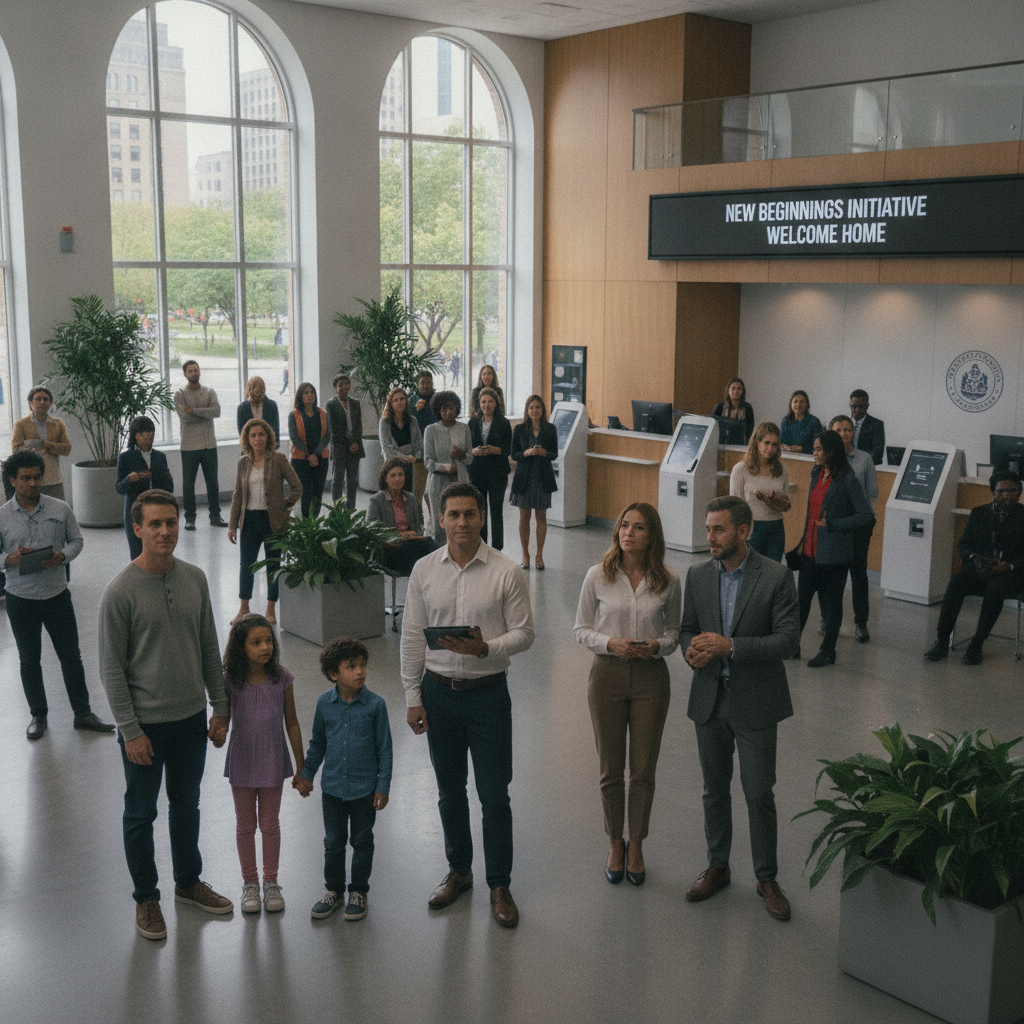
The information and advice in this article are inspired by ongoing discussions and official updates regarding Employment Authorization Document Processing (USCIS), reflecting USCIS's continuous efforts to address application backlogs and streamline procedures for various immigration benefits.
What This News Means for Immigrants in Orlando and Across Florida
USCIS is constantly working to improve efficiency, reduce backlogs, and adapt to evolving immigration patterns and legislative changes. These efforts directly impact the processing of critical documents like the EAD. Understanding these shifts is vital for anyone applying for or renewing their work authorization.
Why this news is showing up now
Immigration processes are dynamic. USCIS frequently issues policy alerts, guidance memos, and updates to its operational procedures in response to several factors:
- Backlog Reduction Efforts: Following periods of unprecedented application volumes and operational challenges (such as those experienced during the recent global health crisis), USCIS has been under immense pressure to reduce processing times for all benefit requests, including EADs.
- Technological Advancements: USCIS is continually exploring and implementing new technologies, such as online filing options and digital processing, to enhance efficiency and improve the applicant experience.
- Policy Adjustments: Changes in administration priorities, legislative actions, or judicial decisions can lead to policy shifts that affect EAD eligibility, processing, or validity periods.
- Stakeholder Feedback: USCIS often engages with immigration advocates, attorneys, and the public to identify pain points and implement improvements.
These ongoing adjustments mean that what was true for EAD processing last year might not be entirely accurate today. Staying informed, therefore, is paramount.
How it can affect Florida residents
Florida is a vibrant hub for immigrants, with diverse communities and industries relying heavily on a legal workforce. For residents in Orlando and throughout the state, these EAD processing updates can have significant implications:
- Employment Stability: Delays in EAD processing can lead to gaps in employment, causing financial hardship for individuals and families. Conversely, improved processing times can offer greater job security.
- Economic Impact: Florida's economy, particularly in sectors like hospitality, agriculture, healthcare, and technology, benefits immensely from immigrant workers. Efficient EAD processing ensures that these industries have access to the workforce they need.
- Local USCIS Field Office Workload: While EAD applications are generally processed at service centers, local field offices like the Orlando USCIS Field Office may handle certain related interviews or requests, and their overall workload can influence local processing environments.
- Family Planning: For many families along the I-4 corridor and across Orange County, an EAD is not just about individual work; it's about the family's financial well-being and ability to plan for the future.
Understanding these updates allows you to plan more effectively, minimize potential disruptions, and ensure that you remain compliant with U.S. immigration laws.
Need Help Navigating EAD Updates? The landscape of immigration law is complex and constantly changing. Our Orlando immigration team at Imigrar is ready to assist you with the latest EAD processing updates. Call +1 786-791-3106 for a free consultation, or message us online. Se Habla Español.
What Employment Authorization Document (EAD) Is (and Why It Matters)
For many foreign nationals aspiring to work legally in the United States, the Employment Authorization Document (EAD) is a critical piece of identification. Without it, most non-citizens are not permitted to accept employment in the U.S.
A plain-English definition
An Employment Authorization Document (EAD) is a government-issued card (similar to a driver's license) that proves you are authorized to work in the United States. It's often referred to simply as a "work permit." This document is generally available to individuals who have an underlying immigration status or application that allows them to be present in the U.S., but who do not yet have a green card or certain nonimmigrant visas that automatically confer work authorization (like H-1B or L-1 visas).
The EAD card will have your photo, name, date of birth, country of birth, fingerprint, and a validity date. Employers are required to verify your work authorization using this card (along with other identity documents) when you complete Form I-9, Employment Eligibility Verification.
Key terms you need to know
Navigating the EAD process involves understanding several specific terms:
- USCIS (U.S. Citizenship and Immigration Services): The federal agency responsible for administering immigration and naturalization benefits, including EAD applications. You will file your Form I-765 with USCIS.
- Form I-765, Application for Employment Authorization: This is the primary form you must file with USCIS to request an EAD. It's crucial to complete this form accurately and thoroughly.
- Eligibility Category: This refers to the specific immigration status or application you have that makes you eligible for an EAD. Examples include individuals with a pending Adjustment of Status application, asylum seekers, certain nonimmigrant spouses (like H-4 spouses), students on Optional Practical Training (OPT), and those with Temporary Protected Status (TPS).
- Adjustment of Status (AOS): The process by which an eligible foreign national already in the United States can apply for lawful permanent resident status (a green card) without having to return to their home country to complete visa processing. Individuals with a pending Form I-485, Application to Register Permanent Residence or Adjust Status, are often eligible for an EAD.
- Asylum Seeker: An individual who has applied for asylum in the U.S. and whose application has been pending for at least 150 days may be eligible for an EAD.
- H-4 EAD: Certain spouses of H-1B nonimmigrants (H-4 visa holders) are eligible to apply for an EAD, provided the H-1B principal has an approved Form I-140, Immigrant Petition for Alien Worker, or has been granted an extension of stay beyond the sixth year.
- F-1 OPT/STEM OPT: F-1 student visa holders can apply for an EAD for Optional Practical Training (OPT) after completing their studies, and those in STEM fields may be eligible for a 24-month STEM OPT extension, both requiring an EAD.
- Temporary Protected Status (TPS): A temporary immigration status granted to eligible nationals of certain countries designated by the Secretary of Homeland Security due to conditions that prevent their safe return. TPS beneficiaries are eligible for an EAD.
- Request for Evidence (RFE): A letter from USCIS requesting additional information or documentation to support your application. Responding promptly and thoroughly to an RFE is critical.
- Automatic EAD Extension: For certain eligibility categories, if you file your EAD renewal application on time, your existing EAD may be automatically extended for a specific period (currently up to 540 days) while your renewal is pending. This is a vital provision to prevent gaps in work authorization.
- Biometrics Appointment: An appointment at a local Application Support Center (ASC) where USCIS collects your fingerprints, photograph, and signature. This data is used for background checks.
Current Immigration Law: The Foundation for Your Work Permit
The ability to obtain an Employment Authorization Document (EAD) is rooted in federal immigration law, primarily the Immigration and Nationality Act (INA). While there isn't a single "EAD law," various sections of the INA and corresponding regulations establish the eligibility criteria for different categories of foreign nationals to apply for work authorization.
Federal requirements
The core federal requirements for an EAD revolve around establishing your eligibility under one of the specific categories defined in 8 CFR § 274a.12. These categories are diverse and reflect various stages of the immigration process or specific humanitarian circumstances. Some of the most common federal eligibility categories include:
- Applicants for Adjustment of Status (AOS): Individuals with a pending Form I-485, Application to Register Permanent Residence or Adjust Status, are eligible to apply for an EAD under category (c)(9). This allows them to work while their green card application is processed.
- Asylum Applicants: Individuals who have filed Form I-589, Application for Asylum and for Withholding of Removal, and whose application has been pending for at least 150 days, are eligible under category (c)(8).
- Refugees and Asylees: Granted asylum or refugee status automatically receive work authorization and can apply for an EAD under category (a)(3) or (a)(5).
- F-1 Students on Optional Practical Training (OPT): F-1 visa holders who have completed their academic program and are engaging in post-completion or STEM OPT are eligible under category (c)(3)(i), (c)(3)(ii), or (c)(3)(iii).
- H-4 Spouses: Certain H-4 nonimmigrant spouses of H-1B visa holders can apply for an EAD under category (c)(26), provided the H-1B principal meets specific criteria (e.g., has an approved Form I-140 or has received an extension of stay beyond the six-year limit).
- Individuals with Temporary Protected Status (TPS): Beneficiaries of TPS are eligible for an EAD under category (a)(12) or (c)(19).
- U Nonimmigrant Status Applicants: Victims of certain crimes who are cooperating with law enforcement may be eligible for an EAD while their U visa application is pending or after approval, under category (a)(14) or (c)(14).
- VAWA Self-Petitioners: Certain abused spouses, children, and parents of U.S. citizens or lawful permanent residents who have self-petitioned under the Violence Against Women Act (VAWA) are eligible under category (c)(31).
- Parolees: Individuals granted parole into the U.S. for humanitarian reasons or significant public benefit may be eligible under category (c)(11).
Each category has specific requirements, documentation, and sometimes different processing procedures. It is crucial to correctly identify your eligibility category when filing Form I-765. For detailed information on all eligibility categories, always refer to the USCIS official website.
Florida-specific considerations
While EADs are federal documents issued by USCIS, their practical application in Florida can involve state-level considerations, particularly concerning employment verification:
- E-Verify Requirements: Florida law mandates that most public and private employers use the E-Verify system to confirm the employment eligibility of new hires. An EAD card, along with a valid identity document, is acceptable proof of work authorization for E-Verify purposes.
- State Licensing: Certain professions in Florida (e.g., healthcare, teaching, cosmetology) require state-issued licenses. While an EAD grants work authorization, you must also meet all state-specific licensing requirements, which may include educational qualifications, examinations, and background checks.
- Diverse Workforce Needs: Florida's robust tourism, agriculture, construction, and healthcare sectors rely heavily on a diverse workforce. Efficient EAD processing directly impacts the ability of these industries to staff appropriately and maintain economic growth in areas like Orlando, Tampa, and Miami.
Reminder: Your EAD allows you to work anywhere in the U.S. and is not limited to Florida. However, understanding state-specific employer requirements is part of being employment-ready in the Sunshine State.

How to Apply for or Renew Your EAD: A Complete Step-by-Step Guide
Applying for or renewing your Employment Authorization Document (EAD) can seem daunting, but by following a clear, structured process, you can navigate it successfully. Here’s a detailed guide to help you through each step.
1) Determine Your Eligibility Category
Before you even touch Form I-765, you must identify which eligibility category applies to your situation. Your eligibility category dictates the specific documents you'll need, the filing fee (or waiver eligibility), and sometimes even the processing location.
- Common Categories:
- (c)(9): Adjustment of Status applicants (pending Form I-485).
- (c)(8): Asylum applicants (pending Form I-589, 150 days elapsed).
- (a)(5): Asylees.
- (c)(3)(A): F-1 student, Pre-Completion OPT.
- (c)(3)(B): F-1 student, Post-Completion OPT.
- (c)(3)(C): F-1 student, STEM OPT Extension.
- (c)(26): H-4 spouse of an H-1B nonimmigrant (with approved Form I-140 or extension beyond 6 years).
- (a)(12) / (c)(19): Temporary Protected Status (TPS) beneficiaries.
- (c)(14): U nonimmigrant status applicants.
- (c)(31): VAWA self-petitioners.
- Action: Review the USCIS eligibility categories page thoroughly. If you are unsure, consult with an experienced immigration attorney.
2) Gather Required Documents
This is a critical step where attention to detail prevents delays. The exact documents vary significantly by eligibility category. However, a general list includes:
- Two identical passport-style photographs: Taken within 30 days of filing, unmounted, full-face, white background. Write your name and A-number (if applicable) lightly on the back.
- Copy of your last EAD card (front and back): If you are renewing.
- Copy of your most recent Form I-94, Arrival/Departure Record: Print from CBP website.
- Copy of your passport identity page(s): Showing your photo, name, and date of birth.
- Copy of your visa (if applicable): The page in your passport.
- Proof of your underlying immigration status or application:
- For (c)(9) AOS: Copy of Form I-485 receipt notice.
- For (c)(8) Asylum: Copy of Form I-589 receipt notice.
- For (c)(26) H-4 EAD: Copy of H-1B spouse's Form I-797 Approval Notice for Form I-140 or proof of H-1B extension beyond 6 years, and marriage certificate.
- For F-1 OPT: Copy of Form I-20 endorsed for OPT, academic transcripts, and degree.
- For TPS: Copy of your TPS approval notice or proof of filing.
- Proof of identity: Driver's license or state ID.
- Birth Certificate: Copy of your birth certificate (with certified translation if not in English).
- Marriage Certificate: If applicable (e.g., for H-4 EAD, or if applying as a spouse).
- Any previous EADs: Copies of all prior EADs issued to you.
- Previous Form I-765 approval notices: If applicable.
Important: Always check the specific instructions for Form I-765 and your eligibility category on the USCIS Forms page to ensure you have all required documents.
3) Complete Form I-765 Accurately
This form is the heart of your application. Accuracy is paramount. USCIS rejects thousands of applications each year due to incomplete or incorrect information.
- Download the latest version: Always download Form I-765 directly from the USCIS Forms page. Do not use outdated versions.
- Read instructions carefully: Go through the entire instruction booklet before you start filling out the form.
- Fill out completely: Answer every question. If a question does not apply, write "N/A" (Not Applicable) or "None." Do not leave blanks.
- Use black ink: If filling out by hand, use black ink and print clearly. Typing the form is highly recommended.
- Specific sections to pay attention to:
- Part 2, Item 27: Eligibility Category: This is where you enter your specific eligibility code (e.g., c9, c8, c26). Double-check this against your situation.
- Part 2, Item 28 & 29: Specific Category Questions: Depending on your category, additional questions will appear. Answer these fully. For example, H-4 EAD applicants will need to provide their spouse's A-number and I-797 receipt number.
- Part 3, Applicant's Statement: Ensure you sign and date the form. An unsigned form will be rejected.
Warning: Any false statements or omissions can lead to severe immigration consequences, including denial of your application and future immigration benefits.
4) Pay the Filing Fee (or Request a Fee Waiver)
Most EAD applications require a filing fee. Check the current fee on the USCIS I-765 page or in the form instructions. Fees can change, so verify the amount just before filing.
- How to Pay:
- Check or Money Order: Payable to "U.S. Department of Homeland Security." Write your A-number (if any) on the memo line.
- Credit Card (Form G-1450): If filing by mail, you can include Form G-1450, Authorization for Credit Card Transactions.
- Online: If you are filing Form I-765 online, you can pay with a credit card, debit card, or by direct debit from a U.S. bank account.
- Fee Waivers: Certain applicants may be eligible for a fee waiver if they can demonstrate an inability to pay. To request a fee waiver, you must file Form I-912, Request for Fee Waiver, along with your Form I-765 and supporting documentation (e.g., proof of receiving means-tested benefits, household income below 150% of federal poverty guidelines, or financial hardship). Not all EAD categories are eligible for fee waivers.
5) Assemble and File Your Application Package
Proper assembly and mailing are crucial to ensure your application reaches USCIS correctly and avoids delays.
- Organize your documents:
- Place your check/money order or Form G-1450 on top.
- Then, your signed Form I-765.
- Follow with all supporting documents, organized and clearly labeled. Use tabs or separators for different document types.
- Include a cover letter listing all the documents included in your package.
- Make copies: Make a complete copy of your entire application package for your records before mailing. This is invaluable if documents are lost or if USCIS requests further information.
- Where to File: The filing address depends on your eligibility category and whether you are filing alone or concurrently with another form (e.g., Form I-485). Check the "Where to File" section on the USCIS I-765 page.
- For Central Florida residents, your filing address will typically be a USCIS Lockbox facility, not the Orlando USCIS Field Office, which primarily handles interviews.
- Mailing: Use a reputable mail service (USPS, FedEx, UPS) that provides tracking and delivery confirmation. This creates a record of when and where your application was sent.
- Online Filing: For certain categories, USCIS offers the option to file Form I-765 online. This can often be faster and provides immediate confirmation. Check if your category is eligible for online filing on the USCIS website.
6) Attend Biometrics Appointment (If Required)
After filing, USCIS will send you a notice for a biometrics appointment at a local Application Support Center (ASC).
- What to bring: Your appointment notice (Form I-797C) and a valid photo ID (e.g., passport, driver's license).
- What to expect: At the ASC, your fingerprints, photograph, and signature will be collected. This data is used for background checks and to produce your EAD card.
- Importance: Attending this appointment is mandatory. Failure to appear can lead to your application being denied. If you cannot attend, you must request to reschedule immediately, following the instructions on your notice.
- For Orlando residents: Your biometrics appointment will likely be at the Orlando ASC.
7) Monitor Your Case Status and Respond to RFEs
The waiting period can be anxious, but staying proactive is key.
- Check case status online: Once USCIS accepts your application, they will send a receipt notice (Form I-797C) with a 13-character receipt number. Use this number to track your case status on the USCIS Case Status Online tool.
- Processing Times: You can also check estimated processing times for Form I-765 based on your service center and eligibility category on the USCIS Processing Times page.
- Respond to RFEs: If USCIS needs more information, they will send a Request for Evidence (RFE). This letter will specify what documents are needed and provide a deadline (usually 30-87 days). Respond promptly and completely. Failure to respond by the deadline will likely lead to a denial.
- Address Changes:
Related Topics
Need Legal Assistance?
Our experienced immigration attorneys are here to help with your case. Contact Imigrar today for a free consultation and let us guide you through the legal process with confidence.
📍 Orlando, Florida • Serving clients nationwide
📧 info@imigrar.com