
Your 2026 Guide to Family-Based Immigration Petitions in
Navigate the complex world of family-based immigration with Imigrar's comprehensive 2026 guide. Learn eligibility, steps, and how to reunite with loved ones in Orlando and nationwide.

At Imigrar, we understand that nothing is more important than keeping families together. For many, the path to family reunification in the United States seems daunting, filled with complex forms, strict deadlines, and ever-evolving regulations. As an immigration law firm based in Orlando, Florida, serving clients nationwide, we are dedicated to demystifying this process and guiding you every step of the way. Today, on September 26, 2026, we're diving deep into the essential topic of Family-Based Immigration Petitions.
Need Help? Our Orlando immigration team is ready to assist. Call +1 786-791-3106 for a free consultation, or message us online. Se Habla Español.
The reporting that sparked this guide
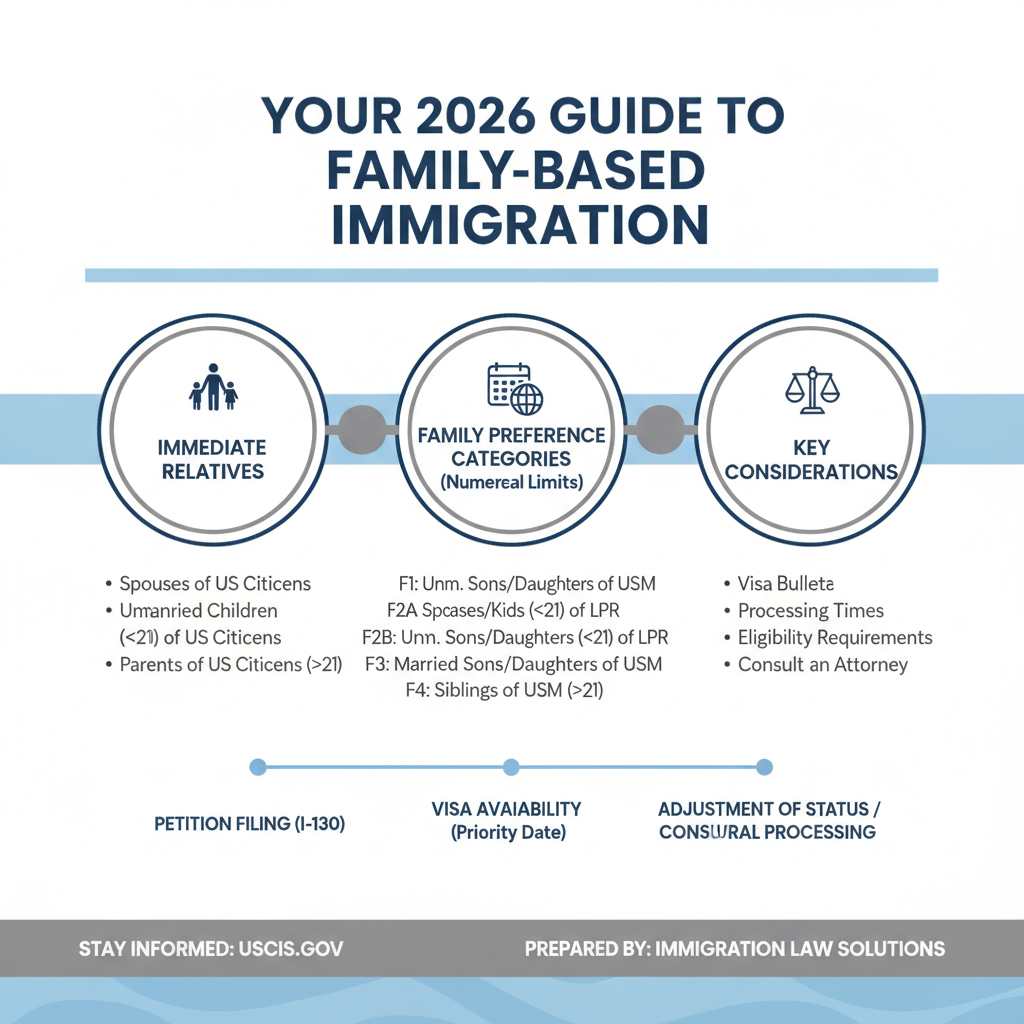
The ongoing conversation around family reunification and immigration policy consistently garners significant attention. The need for clear, actionable information is constant, especially given the complexities of U.S. immigration law. This comprehensive guide is inspired by the continuous reporting on immigration law and the vital role of family petitions in the national discourse.
Family-Based Immigration Petition Guide (Immigration)
What This News Means for Immigrants in Orlando and Across Florida
Why this news is showing up now
The concept of family-based immigration isn't "new" in itself; it's a cornerstone of U.S. immigration policy, codified in the Immigration and Nationality Act (INA) for decades. However, its prominence in news cycles remains constant for several reasons:
- Ongoing Policy Debates: There are always discussions in Washington D.C. about potential reforms, backlogs, and visa allocations, keeping family immigration in the spotlight.
- Processing Backlogs: Despite best efforts, agencies like USCIS and the Department of State often face significant processing backlogs, leading to longer wait times and continuous calls for efficiency improvements.
- Economic and Social Impact: Family reunification has profound economic and social benefits, contributing to vibrant communities and a strong workforce. Its importance to the fabric of American society is regularly highlighted.
- Legal Complexities: The immigration legal landscape is intricate and subject to frequent updates through policy memos, judicial decisions, and regulatory changes. This necessitates ongoing expert guidance for applicants.
For individuals and families, staying informed is critical, as even minor procedural changes can impact an application's success or timeline. Our goal is to provide clarity amidst this dynamic environment.
How it can affect Florida residents
Florida, particularly Central Florida and the Orlando metropolitan area, is home to a vast and diverse immigrant population. This makes family-based immigration an incredibly relevant topic for hundreds of thousands of residents. Here's how it directly affects you:
- High Demand for Services: With a large immigrant community, the demand for family-based petitions in Florida is consistently high. This means local USCIS Field Offices, such as the one in Orlando, are actively processing these cases.
- Local Resources: Understanding the local context, including the specific requirements or common practices of the Orlando USCIS Field Office, can be invaluable. For residents across the I-4 corridor and greater Orange County, having local legal representation that understands these nuances is a significant advantage.
- Economic Contributions: Immigrant families contribute immensely to Florida's economy, from small businesses to major industries. Facilitating family reunification strengthens these contributions and integrates new residents into the community.
- Community Support: Florida's diverse communities often rely on family networks for support, cultural preservation, and economic stability. The ability to reunite families directly impacts the well-being and growth of these communities.
Whether you're in Orlando, Miami, Tampa, or anywhere else in Florida, the principles of family-based immigration apply, but local expertise can make a difference in navigating the process efficiently.
What Family-Based Immigration Petitions Are (and Why They Matter)
A plain-English definition
At its heart, a Family-Based Immigration Petition is a formal request filed with U.S. Citizenship and Immigration Services (USCIS) by a U.S. citizen or lawful permanent resident (Green Card holder) to sponsor a qualifying foreign national family member for a Green Card. This petition is the foundational step towards allowing a loved one to live permanently in the United States.
It "matters" because it's the primary legal pathway for millions of people to achieve permanent residency and reunite with their families in the U.S., upholding the long-standing American value of family unity.
Key terms you need to know
Navigating immigration law requires understanding specific terminology. Here are the key terms for family-based petitions:
- Petitioner: The U.S. citizen or lawful permanent resident who files the immigration petition on behalf of their foreign national family member.
- Beneficiary: The foreign national family member who wishes to immigrate to the U.S. and for whom the petition is filed.
- Immediate Relative: A specific category of family members who are not subject to annual visa quotas, meaning there is no waiting list for their Green Card availability once the petition is approved. This includes:
- Spouses of U.S. citizens
- Unmarried children under 21 of U.S. citizens
- Parents of U.S. citizens (if the U.S. citizen is at least 21 years old)
- Family Preference Categories: These categories are for family members who are subject to annual visa quotas, leading to potential waiting periods. They include:
- First Preference (F1): Unmarried sons and daughters (21 years of age or older) of U.S. citizens.
- Second Preference (F2A): Spouses and children (unmarried and under 21) of lawful permanent residents.
- Second Preference (F2B): Unmarried sons and daughters (21 years of age or older) of lawful permanent residents.
- Third Preference (F3): Married sons and daughters of U.S. citizens.
- Fourth Preference (F4): Brothers and sisters of U.S. citizens (if the U.S. citizen is at least 21 years old).
- Priority Date: This is the date USCIS receives your Form I-130 petition. For Family Preference Categories, this date determines your place in the visa queue. You must wait until your Priority Date becomes "current" according to the Visa Bulletin before you can apply for a Green Card. Immediate Relatives do not have a Priority Date waiting period.
- Adjustment of Status (AOS): The process of applying for a Green Card while physically present in the United States. This is generally available if the beneficiary entered the U.S. lawfully and is eligible to adjust their status.
- Consular Processing: The process of applying for an immigrant visa (Green Card) through a U.S. embassy or consulate abroad. This is used when the beneficiary is outside the U.S. or is ineligible for Adjustment of Status.
- Affidavit of Support (Form I-864): A legally binding document signed by the petitioner, promising to financially support the beneficiary(s) if they immigrate to the U.S. This ensures the beneficiary does not become a public charge.
Current Immigration Law: The Foundation
The legal framework for family-based immigration is primarily found in the Immigration and Nationality Act (INA). This comprehensive law outlines who can petition for whom, the categories of family members, and the general requirements for obtaining an immigrant visa or Green Card. Understanding these foundational laws is crucial for a successful petition.
Federal requirements
At the federal level, the following are the core requirements for family-based immigration:
- Qualifying Relationship: The petitioner must prove a valid family relationship with the beneficiary as defined by the INA. This is the bedrock of the entire process.
- For spouses: a legally valid marriage.
- For children: biological, adopted, or step-child relationship.
- For parents: biological or adoptive parent relationship.
- For siblings: common parentage.
- Petitioner's Status: The petitioner must be either a U.S. citizen or a lawful permanent resident (Green Card holder). The specific relationship categories available depend on the petitioner's status.
- Financial Sponsorship: The petitioner must meet specific income requirements to sponsor their family member, demonstrating they can financially support the immigrant at 125% of the federal poverty guidelines (or 100% for active military members petitioning for their spouse or child). This is done through Form I-864, Affidavit of Support. If the petitioner's income is insufficient, a joint sponsor may be required.
- Admissibility: The beneficiary must be "admissible" to the United States. This means they must not fall under any grounds of inadmissibility, such as certain criminal convictions, health issues, or prior immigration violations. Waivers may be available in some cases.
- Proper Documentation: All applications must be accompanied by accurate and complete supporting documents, translated into English if necessary, and properly authenticated.
The primary form for initiating this process is Form I-130, Petition for Alien Relative, which establishes the qualifying family relationship. Depending on whether the beneficiary is in the U.S. or abroad, additional forms like Form I-485, Application to Register Permanent Residence or Adjust Status, or forms for consular processing will be required.
For detailed information and all official forms, always refer to the USCIS official website.
Florida-specific considerations
While federal law governs immigration, certain practical aspects can be influenced by your location in Florida:
- Orlando USCIS Field Office: If you are applying for Adjustment of Status while residing in Central Florida (e.g., Orlando, Kissimmee, Sanford, Lakeland), your interview will likely take place at the Orlando USCIS Field Office. Familiarity with this office's procedures and common interview questions can be beneficial.
- State ID and Driver's Licenses: Once approved, new Green Card holders in Florida will need to apply for a Florida driver's license or state ID. Understanding the local DMV requirements and necessary documents is part of the post-approval process.
- Community Resources: Florida, especially in areas like Orlando, Miami, and Tampa, has numerous non-profit organizations and community centers that provide support services to immigrants. While not legal advice, these can be valuable resources for integration.
- Marriage Laws: For spousal petitions, the marriage must be legally valid according to the laws of the state or country where it took place. Florida's marriage laws are straightforward, but ensuring your marriage certificate and related documents are in order is crucial.
Confused by the forms? Don't risk denial. Our experienced Orlando immigration lawyers can help you prepare and file all necessary documents accurately. Call +1 786-791-3106 for a free consultation. Se Habla Español.
How to File a Family-Based Immigration Petition: A Complete Step-by-Step Guide
The family-based immigration process can be lengthy and intricate. Following these steps carefully is vital for success.
1) Determine Eligibility and Category
Before filing, confirm that both the petitioner and beneficiary meet the basic eligibility criteria and identify the correct visa category.
- Petitioner's Status: Are you a U.S. citizen or a lawful permanent resident?
- Relationship: Is the relationship between the petitioner and beneficiary one recognized for immigration purposes (e.g., spouse, child, parent, sibling)?
- Beneficiary's Location: Is the beneficiary currently inside or outside the U.S.? This determines whether they will pursue Adjustment of Status or Consular Processing.
- Visa Category: Identify if the beneficiary is an Immediate Relative or falls under a Family Preference Category. This impacts waiting times.
Required Documents for Eligibility Assessment (for your review, not submission yet):
- Petitioner's Proof of U.S. Citizenship (U.S. passport, birth certificate, naturalization certificate) or Green Card.
- Proof of Relationship (marriage certificate, birth certificates, adoption decrees).
- Any prior divorce decrees or death certificates for previous marriages of either party.
2) File Form I-130, Petition for Alien Relative
This is the initial and most crucial step, establishing the qualifying family relationship with USCIS.
- Complete Form I-130: Fill out all sections accurately. Any inconsistencies or missing information can lead to delays or denials.
- Gather Supporting Documents:
- Proof of Petitioner's Status: Copy of U.S. passport, birth certificate, naturalization certificate, or Green Card.
- Proof of Relationship:
- For spouses: Marriage certificate, joint financial documents (bank statements, tax returns), joint property deeds, photos together, affidavits from friends/family attesting to the bona fides of the marriage.
- For children/parents: Birth certificates showing parentage. If adopted, adoption decree.
- For siblings: Birth certificates for both showing common parentage.
- Proof of Termination of Prior Marriages: Divorce decrees or death certificates for both petitioner and beneficiary, if applicable.
- Passport-style photos for both petitioner and beneficiary (check USCIS photo requirements).
- File with USCIS: Mail the completed Form I-130 and all supporting documents to the correct USCIS lockbox facility. Pay the filing fee (currently $535, as of 2026-09-26, but always check USCIS for current fees).
Important: Keep copies of everything you submit for your records. You will receive a receipt notice (Form I-797C) from USCIS confirming receipt of your petition and providing a receipt number. Use this number to track your case online.
3) Wait for Petition Approval and Priority Date to Become Current (if applicable)
After filing Form I-130, USCIS will review it. If approved, you will receive an I-797 Notice of Approval.
- Immediate Relatives: Once Form I-130 is approved, the beneficiary can immediately proceed to the next step (Adjustment of Status or Consular Processing), as visas are always available.
- Family Preference Categories: This is where the Priority Date becomes critical. Your petition's approval does not mean a Green Card is immediately available. You must wait for your Priority Date to become current according to the U.S. Department of State Visa Bulletin. This waiting period can range from a few years to over a decade, depending on the category and the beneficiary's country of birth.
Reminder: The Visa Bulletin is updated monthly. It is essential to monitor it closely if you are in a preference category.
4) Choose Processing Path: Adjustment of Status (AOS) or Consular Processing
Once the Form I-130 is approved and a visa is available (for preference categories), the beneficiary can apply for the Green Card.
- Adjustment of Status (AOS) - If Beneficiary is in the U.S.:
- File Form I-485, Application to Register Permanent Residence or Adjust Status.
- File Form I-864, Affidavit of Support (by the petitioner).
- File Form I-765, Application for Employment Authorization (optional, allows work permit while AOS is pending).
- File Form I-131, Application for Travel Document (optional, allows travel outside U.S. while AOS is pending, also known as Advance Parole).
- Attend a biometrics appointment (fingerprints and photos).
- Gather Supporting Documents for AOS:
- Copy of approved Form I-130.
- Copy of beneficiary's birth certificate.
- Copy of marriage certificate (if applicable).
- Copies of passport pages, visa, and I-94 arrival/departure record.
- Medical examination report (Form I-693) completed by a USCIS-approved civil surgeon.
- Financial documents for Form I-864 (tax returns, W-2s, employment verification letters).
- Police clearances from countries lived in (if applicable).
- Passport-style photos.
- Consular Processing - If Beneficiary is Outside the U.S.:
- The approved Form I-130 is sent by USCIS to the National Visa Center (NVC).
- The NVC will instruct the petitioner and beneficiary to submit immigrant visa application forms (DS-260), pay fees, and submit civil documents (birth certificates, marriage certificates, police certificates, etc.) and the Form I-864, Affidavit of Support.
- The NVC will schedule an interview at the U.S. embassy or consulate in the beneficiary's home country.
- Beneficiary must complete a medical examination with a panel physician approved by the embassy/consulate.
Warning: Improperly choosing the processing path or attempting Adjustment of Status when ineligible can lead to severe immigration consequences.
5) Attend Interview
Whether it's an Adjustment of Status interview at the Orlando USCIS Field Office or a consular interview abroad, this is a critical step.
- Preparation: Review your applications and supporting documents thoroughly. Be prepared to answer questions about your relationship (for spousal petitions), your background, and your immigration history.
- Required Documents for Interview:
- Originals of all documents previously submitted (birth certificates, marriage certificates, passports).
- Any additional evidence requested by USCIS or the NVC.
- For marriage-based petitions, bring additional proof of bona fide marriage (recent photos, joint leases, utility bills, correspondence).
- If the petitioner is present (recommended for AOS), their proof of identity and status.
- Conduct: Answer truthfully and directly. If you don't understand a question, ask for clarification.
6) Receive Decision and Green Card/Visa
After a successful interview, the final decision is typically made.
- Adjustment of Status: If approved, you will usually receive a stamp in your passport as temporary proof of permanent residence, and your physical Green Card will be mailed to you within a few weeks.
- Consular Processing: If approved, the beneficiary will receive an immigrant visa stamp in their passport. They must then travel to the U.S. before the visa expires (usually within 6 months) and pay the USCIS Immigrant Fee upon entry. The Green Card will be mailed to their U.S. address.
Congratulations! Upon receiving the Green Card, the beneficiary is a lawful permanent resident of the United States.
Practical Steps You Can Take Today
Even before you formally begin the petition process, there are crucial steps you can take to ensure a smoother journey.
- Consult with an Immigration Attorney: This is the most important step. A free consultation with an experienced firm like Imigrar can clarify your eligibility, identify potential issues, and outline a clear strategy. Se Habla Español.
- Gather Essential Documents: Start collecting birth certificates, marriage certificates, divorce decrees, passports, and any other identity or relationship documents. Ensure they are originals or certified copies.
- Organize Financial Records: Collect tax returns (past 3 years), W-2s, employment letters, and bank statements to prepare for the Affidavit of Support (Form I-864).
- Review Your Immigration History: Be prepared to discuss all past entries, exits, visas, and any prior immigration applications or issues for both the petitioner and beneficiary. Transparency is key.
- Establish a Bona Fide Relationship (for spouses): If petitioning for a spouse, begin collecting evidence of your genuine relationship now: joint bank accounts, joint leases/mortgages, utility bills in both names, shared insurance policies, photos together, travel itineraries, cards, and letters.
- Understand Timelines: While specific timelines vary wildly, educate yourself on the general processing times for your category using the USCIS Processing Times tool. This helps manage expectations.
- Learn About Medical Exam Requirements: For Adjustment of Status, research USCIS-approved civil surgeons in the Orlando area. For consular processing, understand the medical exam requirements for the embassy abroad.
Document Preparation Guidance:
- Translations: Any document not in English must be accompanied by a complete and certified English translation. The translator must certify that they are competent to translate and that the translation is accurate.
- Copies: Always submit copies of documents unless USCIS specifically requests originals. Keep your originals safe.
- Organization: Arrange your documents neatly, perhaps with tabs or separators, and include a cover letter listing the contents. This helps USCIS officers process your application efficiently.
Timeline Expectations:
Processing times can vary significantly based on the visa category, the specific USCIS service center, and the workload. For Immediate Relatives, the process from filing Form I-130 to receiving a Green Card can take anywhere from 10 months to 2 years for Adjustment of Status, or 12-18 months for Consular Processing (after NVC processing). For Family Preference Categories, the waiting period for the Priority Date to become current can add several years, or even over a decade, to the overall timeline.
Important: Check USCIS Processing Times regularly for the most up-to-date estimates.
How Imigrar Helps Immigrants in Orlando
The journey to family reunification is deeply personal and often complex. At Imigrar, we stand by our tagline: "Keep Families Together." Based in Orlando, Florida, we extend our expertise to clients nationwide, offering compassionate and professional legal guidance.
Our experienced team specializes in family-based immigration. We have a deep understanding of USCIS regulations, interview procedures at the Orlando USCIS Field Office, and the nuances of consular processing. We have successfully guided countless families through the intricate immigration system, helping them navigate everything from basic petition filings to complex waiver applications.
We provide:
- Personalized Strategy: Every family's situation is unique. We develop a tailored plan that addresses your specific needs and goals.
- Expert Document Preparation: We meticulously prepare all forms and supporting documents, ensuring accuracy and completeness to minimize delays and avoid common pitfalls.
- Interview Preparation: We thoroughly prepare you for your USCIS or consular interview, giving you the confidence to answer questions effectively.
- Ongoing Communication: We keep you informed at every stage of the process, providing clear explanations and prompt updates.
- Problem Solving: If challenges arise, such as Requests for Evidence (RFEs) or potential inadmissibility issues, we are equipped to address them strategically.
We offer a free consultation to discuss your specific situation, assess your eligibility, and outline the best path forward. Don't face this journey alone.
Se Habla Español. We are proud to serve our Spanish-speaking community with the same level of dedication and expertise.
Ready to reunite with your family? Imigrar is here to help. Contact our Orlando office at +1 786-791-3106 for your free consultation today. Schedule online. Se Habla Español.

Frequently Asked Questions
Q: Who can sponsor a family member for a Green Card?
A: Only U.S. citizens and lawful permanent residents (Green Card holders) can sponsor family members. U.S. citizens can sponsor spouses, unmarried children (under and over 21), married children, and parents (if the citizen is at least 21 years old), and siblings (if the citizen is at least 21 years old). Lawful permanent residents can sponsor spouses and unmarried children (under and over 21). The specific relationship determines the visa category and potential waiting period.
Q: What is the difference between an "Immediate Relative" and a "Family Preference Category"?
A: An Immediate Relative (spouses, unmarried children under 21, and parents of U.S. citizens) is not subject to annual visa quotas, meaning a Green Card is immediately available once their petition is approved. Family Preference Categories (e.g., adult children of U.S. citizens, spouses/children of Green Card holders, siblings of U.S. citizens) are subject to annual quotas, meaning there is a waiting period (determined by your Priority Date and the Visa Bulletin) before a Green Card becomes available.
Q: How long does the family-based immigration process take?
A: Processing times vary greatly. For Immediate Relatives, the process can take from 10 months to 2 years for those
Related Topics
Need Legal Assistance?
Our experienced immigration attorneys are here to help with your case. Contact Imigrar today for a free consultation and let us guide you through the legal process with confidence.
📍 Orlando, Florida • Serving clients nationwide
📧 info@imigrar.com