
USCIS Processing Times & Updates 2026: Your Essential Guide for
Navigating USCIS processing times for 2026 can be complex. Imigrar provides crucial updates and a step-by-step guide for immigrants in Orlando and nationwide to keep families together.

The reporting that sparked this guide: USCIS Processing Times and Updates for 2026 (USCIS)
What This News Means for Immigrants in Orlando and Across Florida
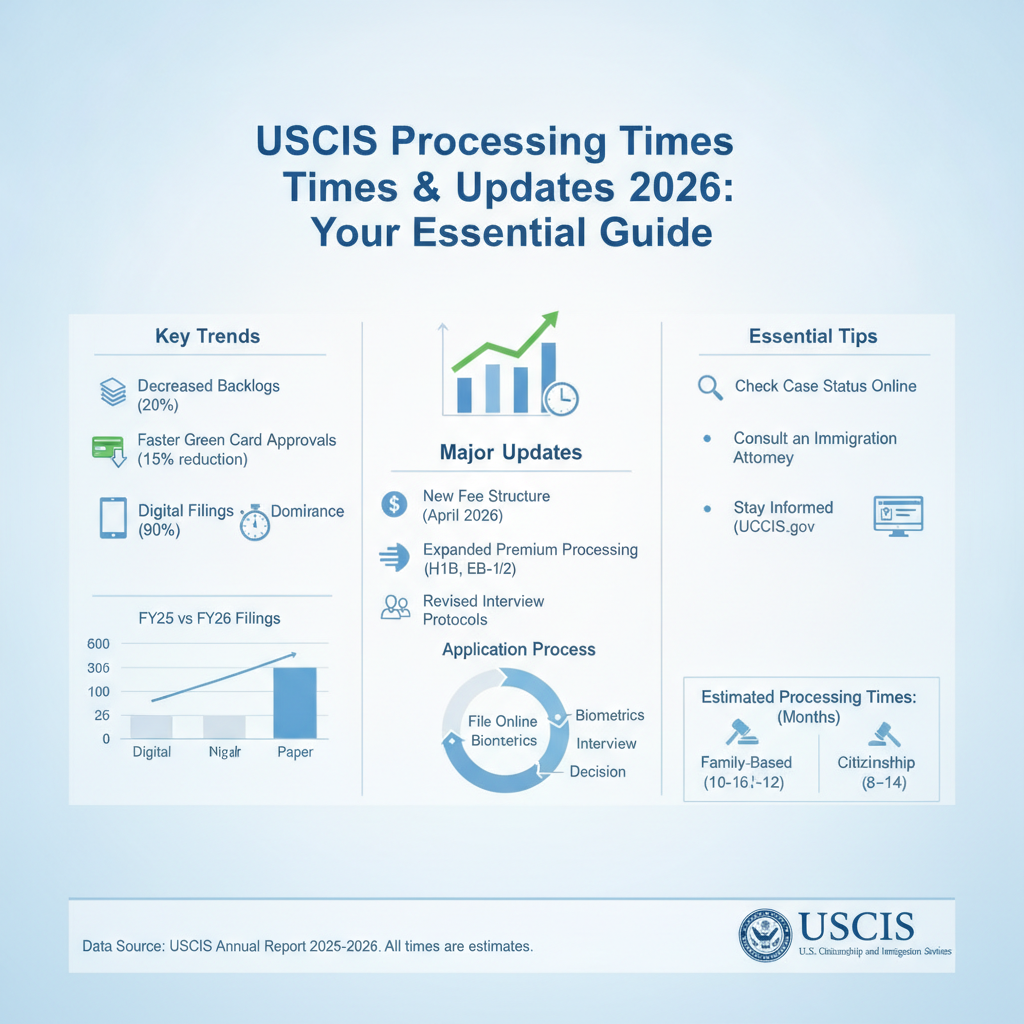
As of October 9, 2026, United States Citizenship and Immigration Services (USCIS) continues its efforts to streamline operations and address application backlogs, a trend that has been ongoing since the post-pandemic recovery. Recent updates from USCIS indicate a dynamic landscape for processing times across various immigration benefit requests. For immigrants and their families in Orlando, Central Florida, and throughout the nation, understanding these changes is not just important—it’s critical to planning your future and managing expectations.
At Imigrar, we understand that waiting for a decision on your immigration case can be one of the most stressful periods in your life. Our mission is to "Keep Families Together," and that means providing you with the most current, accurate information to help you navigate this complex journey.
Why this news is showing up now
The constant stream of news regarding USCIS processing times isn't new, but its prominence in 2026 reflects several ongoing factors. USCIS has been under immense pressure to reduce application backlogs that accumulated during previous years due to various operational challenges, including staffing shortages, policy shifts, and increased application volumes. In response, the agency has implemented new initiatives aimed at improving efficiency, digitizing processes, and adjusting staffing levels at its service centers and field offices.
These initiatives, while promising, often result in fluctuating processing times as the agency pivots and adapts. What might be a faster processing time for one type of application today could change next quarter. This constant evolution makes it imperative for applicants and their legal representatives to stay informed, as these updates directly impact strategic planning for everything from family petitions to employment-based visas and naturalization applications. The current news cycle highlights USCIS's continued commitment to transparency regarding these efforts, even as the journey to optimal efficiency continues.
How it can affect Florida residents
For immigrants residing in Florida, particularly those in the bustling Orlando metropolitan area and along the I-4 corridor, USCIS processing time updates have direct and significant implications. The Orlando USCIS Field Office, like others nationwide, processes a high volume of cases, including interviews for Adjustment of Status, naturalization, and certain asylum claims. Delays or accelerations at this local office, or at the national service centers that handle initial processing (like the California, Nebraska, Texas, or Vermont Service Centers), directly impact the daily lives of thousands of Floridians.
Consider a family in Orange County awaiting approval of a Form I-130, Petition for Alien Relative, or an individual in Kissimmee applying for Adjustment of Status using Form I-485. The time it takes for these applications to be processed can dictate when a family reunites, when an individual can legally work (via Form I-765, Application for Employment Authorization), or when they can travel internationally (via Form I-131, Application for Travel Document). Longer processing times can mean extended periods of uncertainty, financial strain, and separation from loved ones. Conversely, improvements can bring relief and open new opportunities sooner than expected. Keeping abreast of these updates allows you to anticipate potential wait times, plan your finances, and make crucial life decisions with greater confidence.
Need Help? Our Orlando immigration team is ready to assist. Call +1 786-791-3106 for a free consultation, or message us online. Se Habla Español.
What USCIS Processing Times Are (and Why They Matter So Much)
USCIS processing times refer to the estimated duration it takes for the agency to make a decision on an immigration application or petition, from the date of submission to the date of approval, denial, or request for more information. These times are not static; they fluctuate based on various factors including the type of application, the specific USCIS service center or field office handling the case, caseload volumes, staffing levels, and policy changes. Understanding these times is paramount because they directly impact your ability to live, work, and build a future in the United States.
A plain-English definition
Think of USCIS processing times as a waiting line. When you submit an immigration application, it enters a queue. The "processing time" is USCIS's best estimate of how long it will take for your application to reach the front of that queue and be reviewed by an officer. USCIS publishes these estimates online, usually showing a range (e.g., "5.5 months to 8 months"). This range indicates that 80% of cases of that type are completed within that period. The remaining 20% might take longer or shorter. It’s important to remember that these are estimates, not guarantees. Your individual case might fall outside this range due to its unique complexities or unforeseen circumstances.
Key terms you need to know
Navigating USCIS processing times requires familiarity with specific terminology:
- Receipt Date: This is the date USCIS officially receives your application. It's crucial because processing times are measured from this date. Always keep your Form I-797C, Notice of Action, which confirms this date.
- Priority Date: For certain visa categories (especially family-sponsored and employment-based green cards), this is the date your petition (e.g., Form I-130 or Form I-140) was properly filed with USCIS. This date determines your place in line for an available visa number, as outlined in the monthly Visa Bulletin published by the U.S. Department of State.
- Current Date: This refers to the date listed in the Visa Bulletin for your specific visa category and country of chargeability. If your Priority Date is earlier than the Current Date, a visa number is available for you, and you can proceed with your application (e.g., filing Form I-485 for Adjustment of Status).
- Service Center: These are the four main USCIS processing hubs (California, Nebraska, Texas, Vermont) that handle the initial review of petitions and applications that don't require an interview. Your case will be assigned to one of these based on your application type and mailing address.
- Field Office: These are local USCIS offices (like the Orlando USCIS Field Office) that handle interviews for applications like Adjustment of Status (Form I-485), naturalization (Form N-400), and certain other processes.
- Case Status Online: USCIS provides an online tool where you can track the status of your application using the receipt number provided on your Form I-797C. This tool offers real-time updates on your case's progress.
- Request for Evidence (RFE): A notice from USCIS asking for additional documents or information to support your application. Responding promptly and thoroughly is critical to avoid delays or denials.
- Notice of Intent to Deny (NOID): A notice from USCIS indicating their intent to deny your application unless you provide specific information or explanation within a set timeframe. This is a serious notice requiring immediate attention.
- Expedite Request: A request to USCIS to process your application faster than usual due to urgent circumstances, such as severe financial loss, urgent humanitarian reasons, or national interest.
Current Immigration Law: The Foundation of Processing Times
While USCIS processing times are administrative estimates, they are fundamentally rooted in the complex framework of U.S. immigration law, primarily the Immigration and Nationality Act (INA). The INA defines who is eligible for various immigration benefits, the procedures for applying, and the limitations (such as annual visa quotas) that directly impact how long it takes for a case to be processed and a visa to become available.
Federal requirements
The INA sets forth the eligibility criteria for nearly all immigration benefits. For instance, sections of the INA define family relationships eligible for sponsorship (e.g., spouses, children, parents of U.S. citizens and permanent residents), employment-based categories, asylum eligibility, and naturalization requirements. Each application type, such as Form I-130 for family petitions, Form I-485 for Adjustment of Status, or Form N-400 for naturalization, requires applicants to meet specific federal statutory and regulatory criteria.
Processing times are influenced by the inherent complexity of these legal requirements. For example, a petition requiring a background check, multiple interviews, or the review of extensive evidence will naturally take longer than a simpler application. Furthermore, annual limits on certain visa categories, as dictated by the INA, mean that even if an application is processed quickly, the applicant may still have to wait years for a visa number to become available based on their Priority Date and the Visa Bulletin.
The federal government, through USCIS, is responsible for adjudicating these applications. All forms and procedures are federally mandated. You can find all official forms and instructions on the USCIS Forms page.
Florida-specific considerations
While immigration law is federal, the experience of navigating it can have localized nuances, especially concerning processing times. For Florida residents, particularly those in the Orlando area, the operations of the Orlando USCIS Field Office play a direct role. This office conducts interviews for a significant number of Adjustment of Status and naturalization applicants from Central Florida. The efficiency, staffing, and caseload of the Orlando office can directly impact the wait times for these crucial final steps in the immigration process.
Moreover, local resources and community support networks can indirectly affect processing times. For example, access to qualified legal counsel like Imigrar, document translation services, and community organizations can help applicants submit complete and accurate applications, thereby reducing the likelihood of RFEs and subsequent delays. Florida does not have its own immigration laws; all immigration matters are governed by federal statutes. However, understanding the local operational dynamics of federal agencies is key.
Important: Always refer to the USCIS official website for the most accurate and up-to-date information regarding forms, instructions, and processing times.
Need Help? Our Orlando immigration team is ready to assist. Call +1 786-791-3106 for a free consultation, or message us online. Se Habla Español.
How to Navigate USCIS Processing Times: A Complete Step-by-Step Guide
Effectively managing your immigration case means understanding and actively monitoring USCIS processing times. This guide provides actionable steps to help you stay informed and proactive.
1) Understand Your Application Type and Relevant Forms
Before you can track your case, you must know exactly what you’ve applied for. Each immigration benefit has specific forms and processing pathways. Misidentifying your application type or the relevant forms can lead to confusion and incorrect processing time estimates.
- Action: Identify the exact USCIS form you filed (e.g., Form I-130, Form I-485, Form N-400, Form I-765, Form I-131).
- Required Documents/Information:
- Your copy of the filed application/petition.
- Form I-797C, Notice of Action (Receipt Notice) from USCIS, which confirms the form type, Receipt Date, and the service center handling your case.
2) Check Current USCIS Processing Times Regularly
USCIS updates its processing times estimates monthly. These estimates are crucial for setting realistic expectations and determining when it might be appropriate to make an inquiry about your case.
- Action: Visit the USCIS Processing Times page. Select your form type, the specific application/petition, and the service center or field office where your case is being processed.
- Important: Be sure to select the correct office. For example, if you live in Orlando, your Adjustment of Status interview might be at the Orlando Field Office, but the initial processing of your Form I-485 could be at a service center. Your Form I-797C will indicate which office has jurisdiction.
- Required Documents/Information:
- Your Form I-797C to identify the form number and the USCIS service center or field office.
- Your Receipt Date to compare against the published processing times.
3) Monitor Your Case Status Online
The USCIS Case Status Online tool provides specific updates on your individual application, including when it was received, when an RFE was sent, or when a decision was made. This is different from the general processing times, as it tracks your unique case.
- Action: Go to the USCIS Case Status Online page and enter your 13-character receipt number (e.g., EAC-XX-XXX-XXXXX).
- Reminder: Check this tool periodically, especially if you expect an update or have recently responded to an RFE. Enable email notifications if available.
- Required Documents/Information:
- Your 13-character receipt number from your Form I-797C.
4) Understand the Visa Bulletin (If Applicable)
For family-sponsored and employment-based green card categories with annual limits, your ability to proceed with Adjustment of Status (Form I-485) or immigrant visa processing is dependent on your Priority Date becoming "current" according to the Visa Bulletin. This is distinct from USCIS processing times for the forms themselves.
- Action: Review the monthly Visa Bulletin published by the U.S. Department of State. Find your visa category and country of chargeability, and compare your Priority Date to the "Dates for Filing" and "Final Action Dates" charts.
- Important: USCIS will announce each month which chart (Dates for Filing or Final Action Dates) applicants should use for filing Form I-485. Always check the USCIS website for this announcement.
- Required Documents/Information:
- Your Priority Date (from an approved Form I-130 or Form I-140).
- Your visa preference category (e.g., F1, F2A, EB1, EB2).
- Your country of birth/chargeability.
5) Submit an Inquiry for Cases Beyond Normal Processing Times
If your case has been pending longer than the upper range of the published processing times for your specific application, you may be eligible to submit an "Outside Normal Processing Times" inquiry.
- Action: Visit the USCIS website's inquiry tool. You'll need your receipt number and Receipt Date. Be prepared to explain why your case is outside normal processing.
- Warning: Do NOT submit an inquiry prematurely. Doing so can burden the system and may not yield a faster result. Wait until your case is genuinely outside the normal range.
- Required Documents/Information:
- Your 13-character receipt number.
- Your Receipt Date.
- Details of your application type and the service center/field office.
6) Respond to RFEs and NOIDs Promptly and Thoroughly
Receiving a Request for Evidence (RFE) or a Notice of Intent to Deny (NOID) can add significant time to your case. However, a swift and complete response can prevent further delays or outright denial.
- Action: If you receive an RFE or NOID, read it carefully. Gather ALL requested documents and information. If you're unsure, consult an attorney immediately. Submit your response well before the deadline (typically 30 to 90 days).
- Important: Do not just send some of the requested documents. Ensure your response is comprehensive and directly addresses every point raised by USCIS. Keep copies of everything you send.
- Required Documents/Information:
- The original RFE or NOID letter.
- All requested supporting evidence (e.g., birth certificates, marriage certificates, financial records, medical exams, affidavits).
- A cover letter detailing the contents of your submission.
7) Seek Legal Counsel from Experienced Immigration Attorneys
Navigating USCIS processing times, understanding the Visa Bulletin, and responding to complex inquiries can be overwhelming. An experienced immigration attorney can provide invaluable guidance, interpret complex regulations, and represent your best interests.
- Action: If you're struggling to understand your case status, received an RFE/NOID, or believe your case is unduly delayed, schedule a consultation with an immigration law firm like Imigrar.
- Reminder: While you can file applications yourself, the complexities of immigration law and the potential for long delays or denials make professional legal assistance a wise investment.
- Required Documents/Information (for consultation):
- All USCIS notices (Form I-797C, RFE, NOID).
- Copies of your filed application/petition.
- Any communication you've had with USCIS.

Practical Steps You Can Take Today to Manage Processing Times
While you cannot directly control USCIS processing times, you can take proactive steps to ensure your application progresses as smoothly as possible and to manage your expectations.
Need Help? Our Orlando immigration team is ready to assist. Call +1 786-791-3106 for a free consultation, or message us online. Se Habla Español.
Actionable Checklist for Proactive Management:
- Organize and Digitize Your Documents: Keep a well-organized file of all your immigration documents, including copies of everything you submitted to USCIS, all receipt notices (Form I-797C), and any correspondence. Consider digitizing these for easy access.
- Keep Copies of Everything: Before mailing any application or response to USCIS, make a complete copy for your records. This is critical if documents are lost or if USCIS requests duplicates.
- Monitor USCIS Website Regularly: Check the USCIS Processing Times page and your Case Status Online at least once a month. If applicable, also check the Visa Bulletin.
- Update Your Address with USCIS: If you move, even within Orlando or Central Florida, immediately update your address with USCIS using their online tool and by calling the USCIS Contact Center. Failure to do so can result in missed notices, RFEs, or interview appointments, leading to significant delays or even denial.
- Prepare for Potential Interviews: For applications like Adjustment of Status or naturalization, an interview at the Orlando USCIS Field Office is often the final step. Review your application, supporting documents, and be ready to answer questions about your eligibility.
- Consult an Immigration Attorney: If you are unsure about any step, if your case is outside normal processing times, or if you receive an RFE/NOID, seek legal advice. An attorney can help you understand your options and ensure you respond correctly.
Document Preparation Guidance:
The single biggest factor in avoiding delays is submitting a complete and accurate application from the outset. USCIS requests for additional evidence (RFEs) are a major cause of extended processing times. To minimize this risk:
- Follow Instructions Precisely: Read the instructions for each form carefully, multiple times. Do not skip any sections.
- Provide All Required Evidence: Ensure you include every document listed in the form instructions and any additional evidence that supports your case.
- Organize and Label: Present your documents in an organized manner, using cover sheets for each section and clearly labeling exhibits.
- Translations: Any document not in English must be accompanied by a certified English translation.
- Photocopies vs. Originals: Generally, USCIS requests photocopies of documents unless specifically asking for an original. Never send original documents unless explicitly instructed.
Timeline Expectations:
While specific timelines vary widely, here’s a general idea of what to expect:
- Initial Receipt: You should receive a Form I-797C, Notice of Action (receipt notice), typically within 2-4 weeks of filing. This confirms USCIS has received your
Related Topics
Need Legal Assistance?
Our experienced immigration attorneys are here to help with your case. Contact Imigrar today for a free consultation and let us guide you through the legal process with confidence.
📍 Orlando, Florida • Serving clients nationwide
📧 info@imigrar.com