


The journey through the U.S. immigration system can often feel like navigating a complex maze, and one of the most significant challenges is understanding and anticipating USCIS processing times. For families and individuals dreaming of a future in the United States, particularly those in Orlando and across Florida, knowing what to expect regarding how long an application will take is paramount. Today, we delve into the latest USCIS processing time updates for 2026, offering clarity and actionable advice.
At Imigrar, we understand the anxiety that comes with waiting. Our mission is to "Keep Families Together," and that means providing you with the most current, accurate, and helpful information to guide you through every step of your immigration process.
Need Help? Our Orlando immigration team is ready to assist. Call +1 786-791-3106 for a free consultation, or message us online. Se Habla Español.
The reporting that sparked this guide:
USCIS Processing Times and Updates for 2026 (USCIS)
What This News Means for Immigrants in Orlando and Across Florida
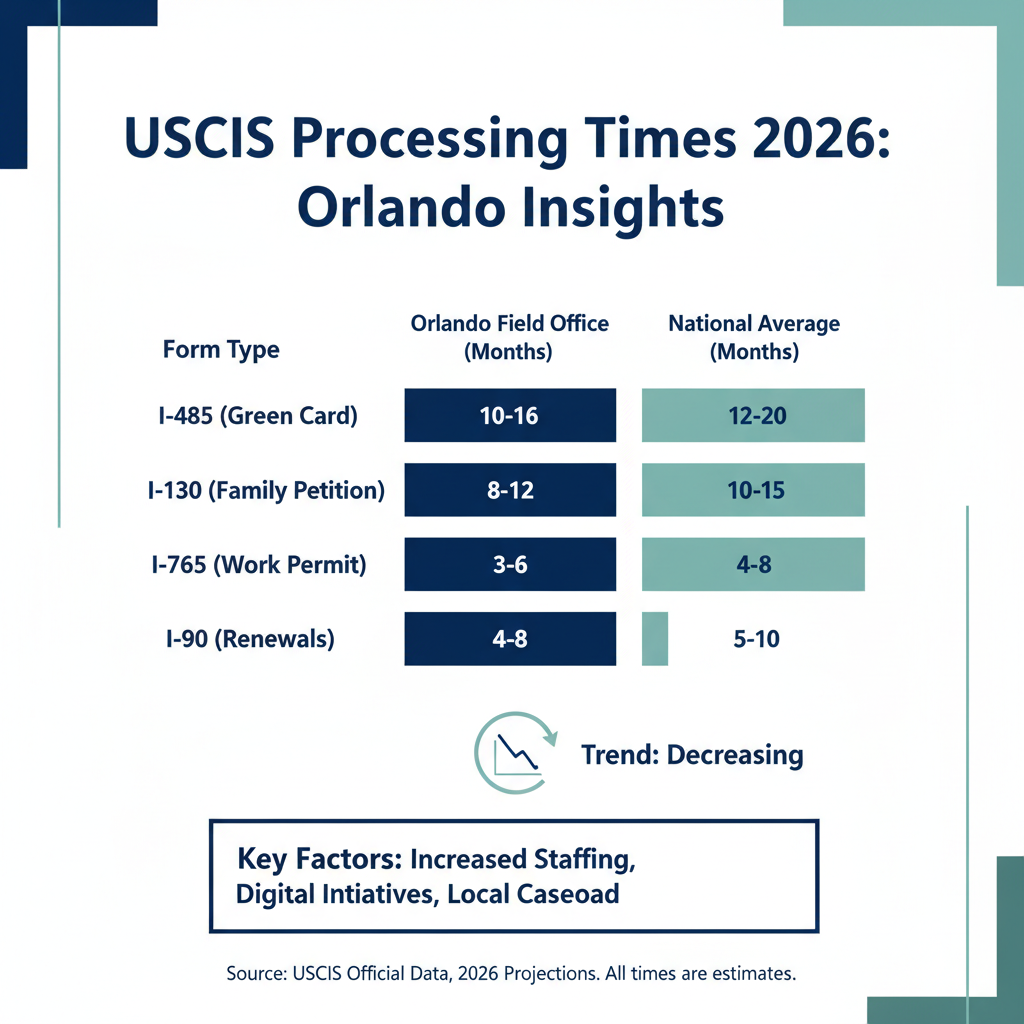
Recent reports and ongoing discussions surrounding USCIS processing times highlight a critical area of concern and focus for both the agency and immigration advocates. For immigrants in Orlando, across Florida, and indeed nationwide, these updates are more than just statistics; they represent the timeline for their hopes, dreams, and family reunification.
Why this news is showing up now
USCIS processing times are a dynamic and constantly evolving metric. They are influenced by a multitude of factors, including the volume of applications received, staffing levels at various service centers and field offices, technological advancements (or lack thereof), and legislative changes. In early 2026, the discussion around processing times remains prominent for several key reasons:
- Post-Pandemic Backlogs: While significant efforts have been made, the lingering effects of the COVID-19 pandemic, which caused office closures and reduced operations, continue to impact processing queues. Many application types still face longer-than-pre-pandemic wait times.
- Increased Demand: The demand for immigration benefits has remained consistently high, leading to a continuous influx of new applications that add to existing backlogs.
- Operational Efficiency Initiatives: USCIS regularly announces new initiatives aimed at improving efficiency and reducing processing times. These announcements often generate news as stakeholders assess their potential impact.
- Budgetary and Staffing Fluctuations: Congressional funding and USCIS's fee-based operational model mean that budgetary constraints and staffing levels directly affect processing capacity. Discussions around these factors frequently make headlines.
- Technological Upgrades: USCIS is continually working to modernize its systems, including transitioning to online filing for more forms. Updates on these transitions and their effect on processing are often newsworthy.
- Policy Changes: While immigration law is federal, administrative policy changes within USCIS can significantly alter how applications are processed, which forms are prioritized, and how long various stages take.
These combined factors ensure that USCIS processing times are a perpetual topic of discussion and an area where applicants constantly seek the most current information.
How it can affect Florida residents
For individuals and families residing in Florida, particularly in densely populated areas like Orlando, Tampa, and Miami, USCIS processing times have a direct and profound impact. Florida is home to a vast and diverse immigrant population, making it one of the most affected states by these processing delays and updates:
- Local Field Office Impact: The Orlando USCIS Field Office serves applicants for interviews related to adjustment of status (Form I-485), naturalization (Form N-400), and other benefits for residents of Central Florida, including Orange County. Longer processing times at this specific office can mean extended waits for critical interviews and final decisions for our neighbors along the I-4 corridor.
- Economic Implications: Delays in work authorization (Form I-765) or green card approvals can prevent individuals from working legally, impacting their ability to support themselves and their families in Florida's economy.
- Family Separation: For those undergoing consular processing or family-based petitions (Form I-130), lengthy processing times can prolong family separation, causing immense emotional and financial strain on Florida families waiting for loved ones to join them.
- Uncertainty and Stress: The prolonged uncertainty associated with long wait times can significantly impact the mental well-being of immigrants and their families. Planning for the future, whether it's buying a home, starting a business, or simply enrolling children in school, becomes incredibly difficult without a clear timeline.
- Need for Local Legal Expertise: The complexities of processing times, coupled with the potential for RFEs (Requests for Evidence) or NOIDs (Notices of Intent to Deny), underscore the critical need for experienced local legal counsel. An Orlando immigration attorney can help navigate these challenges, whether dealing with the Orlando Field Office or a national service center.
Understanding these impacts is the first step toward effectively planning your immigration journey. Imigrar is here to help you navigate these realities with expert guidance.
What USCIS Processing Times Are (and Why They Matter)
USCIS processing times refer to the period it takes for U.S. Citizenship and Immigration Services to process an immigration application or petition from the date it receives the submission until a decision is made. These times are crucial because they dictate how long an applicant must wait for a work permit, a green card, or even U.S. citizenship. They are not fixed deadlines but rather estimates based on historical data and current caseloads.
A plain-English definition
Imagine you've sent an important letter to a big government office. "Processing time" is simply how long it takes that office to open your letter, read it, decide on it, and send you a response. For USCIS, it's the time from when they get your application (like a request for a green card or citizenship) until they tell you "yes," "no," or "we need more information." These times can vary greatly depending on the type of application, the specific office handling it, and how many other applications they have. It’s essentially a waiting period that everyone goes through.
Key terms you need to know
Navigating USCIS processing times requires understanding several key terms:
- Receipt Date: This is the exact date USCIS officially received your application or petition. It's crucial because processing times are calculated from this date. You'll find it on your Form I-797C, Notice of Action.
- Priority Date: For certain visa categories, especially family-sponsored and employment-based green cards, the Priority Date is the date your petition (e.g., Form I-130 or Form I-140) was properly filed with USCIS. This date determines your place in the queue for an immigrant visa.
- Visa Bulletin: Published monthly by the U.S. Department of State, the Visa Bulletin shows which priority dates are "current" for different visa categories and countries. Your green card application (Form I-485 or consular processing) cannot be approved until your priority date is current.
- Service Center: USCIS operates several service centers (e.g., California, Nebraska, Texas, Vermont) that process various application types. Your application is typically sent to a specific service center based on the form type and your location.
- Field Office: These local offices (like the Orlando USCIS Field Office) handle interviews for adjustment of status, naturalization, and other benefits, especially after initial processing at a service center.
- Adjustment of Status (AOS): This is the process of applying for lawful permanent resident status (a green card) while physically present in the United States, typically using Form I-485.
- Consular Processing: This is the process of applying for an immigrant visa at a U.S. embassy or consulate abroad, typically for individuals who are outside the U.S.
- Request for Evidence (RFE): A notice from USCIS asking for additional documents or information to support your application. Failing to respond promptly can lead to denial.
- Notice of Intent to Deny (NOID): A notice from USCIS indicating their intention to deny your application unless you provide compelling evidence to overcome their concerns.
- Case Status Online: An online tool on the USCIS website where you can track the status of your application using the receipt number from your Form I-797C.
Understanding these terms is fundamental to interpreting USCIS processing times and planning your immigration strategy effectively. USCIS processing times matter immensely because they directly impact your life, including your ability to work, travel, and live permanently in the U.S. They can dictate when you can reunite with family, start a new job, or gain the stability that comes with a permanent immigration status.
Feeling overwhelmed by immigration jargon? Our team at Imigrar speaks your language. Contact us for clear, concise advice on your case. Call +1 786-791-3106 today. Se Habla Español.
Current Immigration Law: The Foundation
The U.S. immigration system is primarily governed by federal law, specifically the Immigration and Nationality Act (INA). The INA, along with subsequent legislation, regulations, and court decisions, establishes who is eligible for immigration benefits, the procedures for applying, and the grounds for inadmissibility or deportability. USCIS operates under the authority granted by these federal laws.
Federal requirements
At the federal level, immigration law is complex and detailed. Here are some fundamental aspects:
- Eligibility Criteria: Every immigration benefit, from a temporary visa to U.S. citizenship, has specific eligibility requirements outlined in federal law. These can relate to family relationships, employment skills, humanitarian grounds, or other factors. For example, a U.S. citizen must be at least 21 years old to petition for certain family members using Form I-130.
- Application Procedures: Federal regulations dictate which forms must be filed (e.g., Form I-130 for family petitions, Form I-485 for adjustment of status, Form N-400 for naturalization, Form I-765 for work authorization, Form I-131 for travel documents), where they must be sent, the required supporting documentation, and the filing fees.
- Admissibility and Grounds for Denial: The INA specifies various grounds under which an individual may be deemed inadmissible to the U.S. or ineligible for certain benefits. These include health-related grounds, criminal grounds, security grounds, public charge considerations, and prior immigration violations.
- Visa Categories and Limits: Federal law establishes different visa categories (family-sponsored, employment-based, diversity lottery, etc.) and, for many, sets annual numerical limits. These limits are why priority dates and the Visa Bulletin are so critical for many green card applicants.
- Asylum and Refugee Law: The INA also provides the framework for individuals seeking protection in the U.S. based on persecution in their home countries.
All applications are adjudicated based on these federal laws and regulations, ensuring a uniform (though often complex) standard nationwide. USCIS is the primary federal agency responsible for administering these laws regarding immigration benefits.
Florida-specific considerations
It's important to clarify that immigration law itself is federal; states like Florida do not have their own immigration laws that govern who can enter, reside, or become a citizen of the U.S. However, state-level actions and policies can certainly impact the lives of immigrants within Florida:
- State Legislation Affecting Immigrants: While Florida cannot create its own immigration system, it can pass laws that affect immigrants' daily lives. Examples might include laws related to driver's licenses, access to state services, or regulations concerning local law enforcement's interaction with federal immigration authorities. It's crucial for immigrants in Florida to stay informed about such state-level developments.
- Local Enforcement: While immigration enforcement is primarily federal, some local law enforcement agencies in Florida may cooperate with federal immigration authorities through agreements or information sharing, which can have implications for non-citizens.
- Access to Resources: Florida, especially metropolitan areas like Orlando, has numerous non-profit organizations and community services dedicated to assisting immigrants. These resources, while not part of the legal framework, are vital for support and integration.
- The Orlando USCIS Field Office: For Central Florida residents, the Orlando USCIS Field Office plays a significant role in the final stages of many immigration processes, particularly interviews for adjustment of status and naturalization. Understanding its specific operations and potential local backlogs is a key Florida-specific consideration.
For official federal information on immigration laws and forms, always refer to the USCIS official website. Our firm, Imigrar, helps clients nationwide, including those in Florida, navigate these federal laws and any relevant local considerations.
How to Navigate USCIS Processing Times: A Complete Step-by-Step Guide
Understanding and managing expectations around USCIS processing times is crucial for any applicant. Here’s a comprehensive guide to help you stay informed and proactive.
1) Understand Your Application and Service Center
Before you can check processing times, you need to know exactly what you've filed and where it's being processed. Your Form I-797C, Notice of Action, is your most important document after filing. It contains your receipt number, the type of form filed (e.g., Form I-130, Form I-485, Form I-765), and the USCIS service center or field office that is processing your case.
- Identify Your Form Type: Different forms have different processing timelines.
- Locate Your Receipt Number: This 13-character code (e.g., EAC, WAC, LIN, SRC, MSC, IOE followed by numbers) is vital for tracking.
- Determine Your Processing Location: The first three letters of your receipt number usually indicate the service center (e.g., EAC for Vermont, WAC for California, LIN for Nebraska, SRC for Texas, MSC/IOE for National Benefits Center). For interview-based cases (like Adjustment of Status or Naturalization), your local Orlando USCIS Field Office will eventually become relevant.
Required Documents/Information: Your Form I-797C, Notice of Action.
2) Check Official USCIS Processing Times Online
USCIS provides estimated processing times on its official website. This is your primary source of information.
- Visit the Official Page: Go to the USCIS Processing Times page.
- Select Your Form: Choose the specific form you filed (e.g., "I-130, Petition for Alien Relative").
- Select Your Field Office or Service Center: Based on your receipt number, select the correct service center (e.g., "Texas Service Center") or the Orlando USCIS Field Office if your case is interview-based and local.
- Review the Range: USCIS will display a range of processing times (e.g., "12.5 to 19.5 Months"). This range represents the time it took to process 80% of completed cases over the past six months.
Important: These are estimates. Some cases may be processed faster, others slower.
3) Decipher Your Receipt Date and Priority Date
Once you know the estimated processing time, you need to compare it to your own application's timeline.
- Receipt Date: Find your Receipt Date on your Form I-797C. If your receipt date falls within the "receipt date for a case inquiry" on the USCIS processing times page, it means your case is outside normal processing times, and you may be able to submit an inquiry.
- Priority Date (for visa-restricted categories): If you are applying for a family-sponsored or employment-based green card (where annual limits apply), your application cannot be approved until your Priority Date becomes "current" according to the Visa Bulletin. This is a separate wait from the processing time itself.
Reminder: Your Priority Date is established when your immigrant petition (like Form I-130) is properly filed. This date generally does not change.
4) Monitor the Visa Bulletin (If Applicable)
For family-sponsored and employment-based categories subject to annual numerical limits, monitoring the monthly Visa Bulletin is crucial.
- Check Monthly: The U.S. Department of State publishes the Visa Bulletin around the middle of each month, indicating which priority dates are current for the following month.
- Understand the Charts: There are two main charts: "Dates for Filing" and "Final Action Dates." For Adjustment of Status applicants in the U.S., USCIS typically announces which chart to use each month. For consular processing, the "Dates for Filing" chart is usually used for initial processing, and "Final Action Dates" for visa issuance.
- Locate Your Category: Find your specific visa category (e.g., F1, F2A, F2B, EB-1, EB-2, EB-3) and country of chargeability.
Warning: If your Priority Date is not current, even if your application has been processed, USCIS cannot approve your green card until it becomes current.
5) What to Do If Your Case is Outside Normal Processing Times
If your case has been pending longer than the upper end of the displayed processing time range on the USCIS website, you can take action.
- Submit an E-Request: You can submit an "e-Request" online through the USCIS website for cases outside normal processing times. You will need your receipt number and other case details.
- Contact USCIS by Phone: You can call the USCIS Contact Center (1-800-375-5283) to inquire about your case status. Be prepared for potentially long wait times.
- Infopass Appointment (Limited): While largely replaced by phone and online inquiries, in some situations, an Infopass appointment at your local Orlando USCIS Field Office might be available, though these are rare for general status inquiries.
Important: Only inquire if your case is genuinely outside the published processing times. Premature inquiries typically do not expedite processing.
6) Respond Promptly to RFEs and NOIDs
If USCIS needs more information or intends to deny your application, they will send you an RFE or NOID. Your timely and accurate response is critical.
- Read Carefully: Understand exactly what information or documents USCIS is requesting.
- Gather Evidence: Collect all requested documents, ensuring they meet USCIS's specifications.
- Submit on Time: Pay close attention to the deadline provided in the RFE or NOID (often 30 to 90 days). Missing this deadline can lead to denial.
- Keep Copies: Always keep a complete copy of everything you send to USCIS.
Tip: If you receive an RFE or NOID, it is highly advisable to consult with an experienced immigration attorney. They can help you formulate the strongest possible response.
7) Seek Professional Legal Guidance
Navigating processing times, RFEs, and the complexities of immigration law can be daunting. An immigration attorney can provide invaluable assistance.
- Case Strategy: An attorney can help you understand your specific timeline, potential challenges, and overall strategy.
- Inquiries and Follow-ups: Attorneys can submit inquiries on your behalf and follow up with USCIS more effectively.
- RFE/NOID Responses: They can help you prepare comprehensive and legally sound responses to RFEs and NOIDs.
- Problem Solving: If your case encounters unusual delays or issues, an attorney can intervene and advocate on your behalf.
Actionable Advice: Don't wait until there's a problem. Consult with a qualified immigration attorney in Orlando, like Imigrar, from the outset of your application.
Practical Steps You Can Take Today
While you wait for USCIS to process your application, there are several proactive steps you can take to manage the process and reduce stress.
Actionable Checklist:
- Organize Your Documents: Keep all original documents, copies of applications, receipt notices (Form I-797C), and any correspondence from USCIS in a secure, organized manner. Create both physical and digital backups.
- Maintain Legal Status: If you are in the U.S. and your underlying nonimmigrant status is still active, ensure you maintain it, especially if your Adjustment of Status application is still pending. Consult an attorney if you have questions about maintaining status.
- Update Your Address: If you move, you *must* inform USCIS of your new address within 10 days of moving using Form AR-11, Alien's Change of Address Card, or online. Failure to do so can result in missed notices and even denial of your application. This is particularly important for those moving within or to Central Florida.
- Monitor Case Status Online: Regularly check your case status using the USCIS online tool with your receipt number. This is the fastest way to see updates.
- Prepare for Potential Interviews: If your application requires an interview (e.g., for a green card at the Orlando USCIS Field Office or for naturalization), start preparing. Review your application, supporting documents, and be ready to answer questions about your eligibility.
- Stay Informed: Follow official USCIS news releases and updates. While we provide summaries, direct information from USCIS is always the most accurate.
- Consult an Attorney Regularly: Even if your case is straightforward, periodic check-ins with your immigration lawyer can provide peace of mind and ensure you're aware of any new developments or potential issues.
Document Preparation Guidance:
- Create a Master File: Dedicate a binder or digital folder to your immigration case.
- Label Everything Clearly: Use dividers or clear file names for different application forms, supporting documents, and correspondence.
- Make Copies: Always submit copies of documents to USCIS unless they specifically request originals. Keep your originals safe.
- Translate Documents: Any foreign language documents must be accompanied by a certified English translation.
Timeline Expectations:
While USCIS provides estimates, actual timelines can vary. Be prepared for:
- Short-term waits (a few weeks to months): For receipt notices, biometrics appointments (often within 30-90 days of filing), and initial work permit/travel document (EAD/AP) approvals (ranging from 3-12 months).
- Medium-term waits (several months to over a year): For interview scheduling at the Orlando USCIS Field Office, or for final decisions on some petitions (like Form I-130) and Adjustment of Status applications.
- Long-term waits (multiple years): For applicants in visa categories with significant backlogs (e.g., certain family-sponsored categories from specific countries). This is where the Priority Date and Visa Bulletin become critical.
Warning: Do not make irreversible life plans (like selling property or quitting a job) based solely on USCIS processing time estimates. Always have contingency plans.
How Imigrar Helps Immigrants in Orlando and Across the Nation
At Imigrar, we understand that the immigration process is deeply personal and often challenging. Our firm is dedicated to providing expert legal guidance and compassionate support to immigrants and their families, both in Orlando, Central Florida, and throughout the United States. Our tagline, "Keep Families Together," is at the core of everything we do.
Our experience and expertise
Our team of skilled immigration attorneys possesses extensive experience across a broad spectrum of immigration law. We regularly handle:
- Family-Based Petitions: Guiding U.S. citizens and lawful permanent residents through the process of sponsoring relatives, including Form I-130 petitions, Adjustment of Status (Form I-485), and consular processing.
- Work Visas and Employment-Based Immigration: Assisting professionals, skilled workers, and investors in securing appropriate visas and green cards.
- Naturalization and Citizenship: Helping eligible individuals achieve U.S. citizenship through the Form N-400 application process.
- Removal Defense: Representing individuals facing deportation or removal proceedings, striving to protect their right to remain in the U.S.
- Humanitarian Relief: Assisting clients with asylum claims, VAWA petitions, U-visas, and other forms of protection.
- Navigating Processing Times: Providing strategic advice on how to manage expectations, track cases, and respond to USCIS inquiries


