

Welcome to Imigrar's comprehensive guide on Employment Authorization Document (EAD) processing. As your trusted immigration law firm in Orlando, Florida, we understand that the ability to work legally in the U.S. is not just about a job – it's about stability, dignity, and keeping families together. With constant updates from U.S. Citizenship and Immigration Services (USCIS), staying informed is crucial. This article will break down the latest developments, explain the EAD process, and provide actionable steps for immigrants in Orlando, across Florida, and nationwide.
The reporting that sparked this guide

The information and guidance in this article are inspired by ongoing discussions and updates concerning Employment Authorization Document Processing (USCIS) within the broader immigration law landscape. USCIS regularly issues policy alerts, processing time adjustments, and procedural changes that directly impact EAD applicants and renewals. Our goal at Imigrar is to translate these developments into clear, practical advice for you.
Need Help? Our Orlando immigration team is ready to assist. Call +1 786-791-3106 for a free consultation, or message us online. Se Habla Español.
What This News Means for Immigrants in Orlando and Across Florida
The landscape of immigration law is dynamic, with USCIS frequently adjusting its procedures to address backlogs, streamline operations, and respond to legislative or administrative priorities. For anyone seeking to work legally in the United States, especially those in Central Florida, understanding these changes is paramount.
Why this news is showing up now
In recent years, USCIS has faced unprecedented challenges, including significant application backlogs and fluctuating processing times across various benefit types, including the Employment Authorization Document (EAD), also known as a work permit. To combat these issues, USCIS has been implementing a series of operational updates, policy changes, and technological enhancements. These initiatives are designed to improve efficiency, reduce processing delays, and provide more clarity to applicants. For example, USCIS has been adjusting the validity periods for certain EAD categories and expanding premium processing options where feasible. While these efforts are ongoing, they frequently lead to new announcements, revised guidance, and shifts in processing priorities, making EAD application and renewal a constantly evolving area.
How it can affect Florida residents
For immigrants residing in Florida, particularly those in the vibrant and diverse community of Orlando and surrounding areas like Orange County, these USCIS updates have direct and significant implications:
- Employment Stability: Delays or changes in EAD processing can directly impact your ability to start a new job, continue existing employment, or renew your professional licenses. A lapse in EAD validity can lead to job loss, financial hardship, and immense stress for families along the I-4 corridor.
- Economic Impact: Florida's economy relies heavily on a diverse workforce. Timely EAD processing ensures that individuals can contribute to local businesses, pay taxes, and support their families, bolstering the state's economic health.
- Planning and Uncertainty: With fluctuating processing times, planning for future employment or travel becomes challenging. This uncertainty can be particularly stressful for families attempting to establish long-term roots in Florida.
- Local USCIS Field Office Impact: The Orlando USCIS Field Office and other regional offices are directly affected by national processing trends. While EAD applications are primarily processed at service centers, local field offices may handle related interviews or requests for evidence for underlying applications (like Form I-485, Application to Register Permanent Residence or Adjust Status) that grant EAD eligibility.
- Employer Compliance: Florida employers must comply with federal immigration laws regarding employment verification, including the proper review of EADs. Delays or confusion around EAD validity can create compliance challenges for businesses.
At Imigrar, we are committed to helping you navigate these changes. Our firm, conveniently located in Orlando, monitors USCIS announcements closely to provide the most current and effective legal strategies for our clients.
What Employment Authorization Documents (EADs) Are (and Why It Matters)
An Employment Authorization Document (EAD), often referred to as a "work permit," is a card issued by USCIS that provides temporary authorization for certain non-citizens to work legally in the United States. It's a crucial document for many immigrants, allowing them to support themselves and their families while pursuing more permanent immigration solutions.
A plain-English definition
Simply put, an EAD is your official permission slip from the U.S. government to be employed in the country. It’s a physical card, similar to a driver’s license, that you can show to employers to prove you are authorized to work. It includes your photo, name, category under which you are authorized, and an expiration date. Without a valid EAD (or other work authorization like a Green Card or certain visas), working in the U.S. is illegal and can have serious consequences for your immigration status.
Key terms you need to know
- Form I-765, Application for Employment Authorization: This is the official form you must file with USCIS to request an EAD or renew an existing one.
- EAD Category: When you apply for an EAD, you must specify a category that describes your immigration status or the basis for your eligibility to work. Examples include asylum applicants (c)(8), adjustment of status applicants (c)(9), F-1 students seeking Optional Practical Training (OPT) (c)(3)(A)/(B)/(C), and spouses of certain visa holders.
- Concurrent Filing: This refers to filing an EAD application (Form I-765) at the same time as an underlying immigration benefit application, such as Form I-485 (Adjustment of Status) or Form I-130 (Petition for Alien Relative). Many applicants for adjustment of status file their EAD and Travel Document (Form I-131) concurrently with their Green Card application.
- Automatic EAD Extension: Certain EAD categories are eligible for an automatic extension of their expiring EAD for up to 540 days (as of the most recent temporary rule, though it typically used to be 180 days) when they file a timely renewal application. This is a critical provision that prevents gaps in employment authorization.
- Advance Parole (Form I-131): Often filed concurrently with an EAD for adjustment of status applicants, Advance Parole allows you to travel outside the U.S. and return without abandoning your Green Card application. It's important to note that EAD and Advance Parole are sometimes issued on a single "combo card."
- Biometrics Appointment: After filing certain applications, including Form I-765, USCIS may require you to attend a biometrics appointment to provide fingerprints, photographs, and a signature. This data is used for background checks.
- Prima Facie Eligibility: In some EAD categories, particularly for asylum seekers, you may need to demonstrate "prima facie" eligibility for the underlying benefit to be granted an EAD.
Understanding these terms is vital for accurately completing your application and navigating the process successfully. An EAD is more than just a piece of plastic; it is a gateway to financial independence and integration into American society, fulfilling Imigrar’s mission to "Keep Families Together."
Current Immigration Law: The Foundation of Your Right to Work
The authority for USCIS to grant Employment Authorization Documents stems from the Immigration and Nationality Act (INA), the overarching body of U.S. immigration law, and subsequent regulations codified in the Code of Federal Regulations (CFR). While the INA establishes the framework, specific regulations detail the eligibility criteria and procedures for EADs.
Federal requirements
The primary federal regulation governing EADs is 8 CFR § 274a.12, "Classes of Aliens Authorized to Accept Employment." This section lists the various categories of non-citizens who are eligible for employment authorization, with or without needing to apply for an EAD. For those who do need an EAD, the application process is outlined in 8 CFR § 274a.13.
Key federal requirements include:
- Eligibility Category: You must fit into one of the specific EAD categories defined by USCIS. These categories are often tied to your current immigration status or the status of an underlying application (e.g., asylum applicant, adjustment of status applicant, DACA recipient, certain visa holders' spouses).
- Proper Form Filing: Submission of a complete and accurate Form I-765, Application for Employment Authorization, along with all required supporting documentation and the correct filing fee (unless eligible for a fee waiver).
- Timeliness: For renewals, applying well in advance of your current EAD's expiration date is critical. USCIS recommends filing renewals 120-180 days before expiration, although with the automatic extension rule for certain categories, you have more leeway, but early filing is always best practice.
- Biometrics: Compliance with any request for biometrics appointments.
- No Inadmissibility Grounds: Generally, applicants must not have certain criminal convictions or other grounds of inadmissibility that would disqualify them from the underlying immigration benefit that makes them EAD eligible.
Important: The specific requirements and necessary evidence vary significantly depending on your EAD category. Always refer to the USCIS instructions for Form I-765 for your specific category.
Florida-specific considerations
While the EAD is a federal document issued by USCIS, and the eligibility criteria are set at the federal level, there are some Florida-specific considerations that applicants and employers should be aware of:
- Employer Verification (E-Verify): Florida has state laws that mandate the use of E-Verify for certain employers, particularly public employers and contractors. E-Verify is an internet-based system that allows employers to confirm the eligibility of their employees to work in the United States. An EAD is a primary document used in the I-9 and E-Verify process.
- State-Issued Licenses: Many professional licenses (e.g., medical, real estate, teaching) in Florida require proof of work authorization. A valid EAD will generally satisfy this requirement, but applicants should check with the specific licensing board for any unique rules.
- Local Economic Environment: The job market in Orlando and Central Florida is diverse, with opportunities in tourism, technology, healthcare, and logistics. Having a valid EAD opens doors to these sectors, contributing to the local economy.
- Legal Support: For Central Florida residents, having access to experienced immigration attorneys like Imigrar is crucial to navigate the federal EAD process effectively, especially when state-level employment laws or local employer practices intersect.
For official forms and detailed instructions, always visit the USCIS official website.
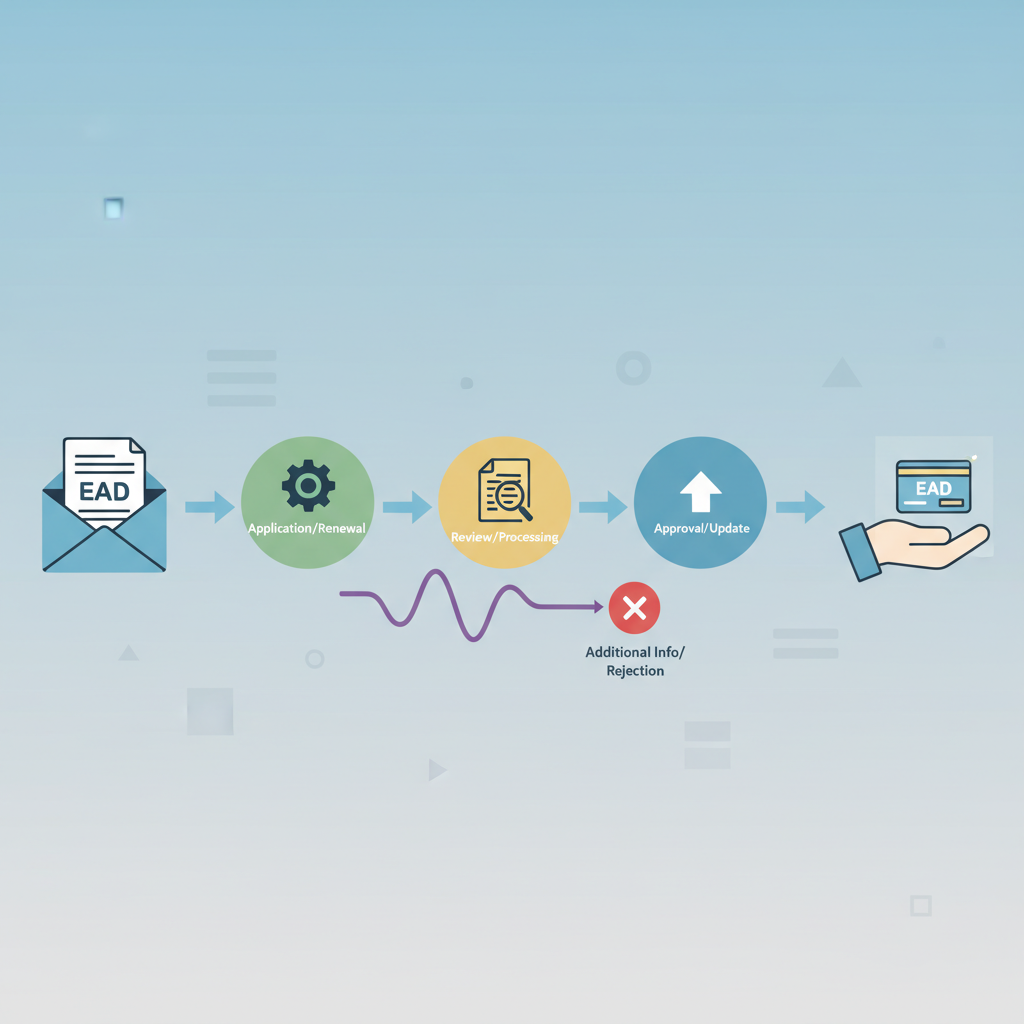
How to Apply for or Renew Your EAD: A Complete Step-by-Step Guide
Applying for or renewing an EAD can seem daunting, but by following a structured approach, you can significantly improve your chances of a smooth process. This guide provides general steps; always consult the specific instructions for Form I-765 based on your eligibility category.
1) Determine Your EAD Eligibility Category
Before you do anything else, you must confirm that you are eligible for an EAD and identify the correct category. Eligibility depends on your current immigration status or the status of an underlying application. Common categories include:
- (c)(9): Adjustment of Status applicants (Form I-485 pending)
- (c)(8): Asylum applicants (pending asylum application)
- (a)(5): Asylees and Refugees
- (c)(3): F-1 students seeking Optional Practical Training (OPT)
- (a)(17): Spouses of E-1/E-2/E-3 visa holders
- (c)(26): H-4 spouses of H-1B visa holders (in certain circumstances)
- (c)(33): DACA recipients
Required Documents for Eligibility Determination:
- Your current immigration documents (e.g., I-94, visa stamp, previous EAD, receipt notices for pending applications like Form I-485 or Form I-589).
- Any approval notices related to your status (e.g., Form I-797C for H-1B, L-1, etc.).
- Your birth certificate and passport.
Tip: If you are unsure of your category, consulting with an immigration attorney from Imigrar is highly recommended.
2) Gather All Required Supporting Documents
Once you know your category, collect all necessary supporting documents. This is a critical step, as missing documents are a common cause of delays or denials. Always provide copies, not originals, unless specifically requested by USCIS.
General Required Documents:
- Two passport-style photos (taken within 30 days of filing).
- Copy of your last EAD (front and back), if applicable.
- Copy of Form I-94 (Arrival/Departure Record).
- Copy of your birth certificate and passport identity page.
- Copy of any government-issued identification (e.g., driver’s license).
- Proof of your eligibility category (e.g., Form I-485 receipt notice, Form I-589 receipt notice, marriage certificate for spouses, academic transcripts for OPT).
- Previous EAD cards (for renewal).
- If eligible for an automatic extension, evidence of timely filing (e.g., receipt notice for renewal).
Category-Specific Documents (Examples):
- For Adjustment of Status (c)(9): Copy of your Form I-485 receipt notice or a copy of the concurrently filed Form I-485.
- For H-4 Spouses (c)(26): Copy of your spouse’s Form I-797 approval notice for H-1B, your marriage certificate, and your spouse’s most recent pay stubs.
- For STEM OPT (c)(3)(C): Copy of your diploma, I-20 with STEM OPT recommendation, and academic transcripts.
Warning: Ensure all documents are clear, legible, and translated into English by a certified translator if they are in another language. Attach the translation and a certificate of translation.
3) Complete Form I-765, Application for Employment Authorization
Fill out Form I-765 completely and accurately. You can download the latest version from the USCIS Forms page. You can also file online for certain categories. Pay close attention to every question and ensure consistency with other immigration documents.
Key Sections to Focus On:
- Part 1: Reason for Applying: Indicate if it's an initial application, renewal, or replacement.
- Part 2: Information About You: Provide your full legal name, address, date of birth, country of birth, and A-Number (if you have one). Ensure your mailing address is accurate for receiving notices.
- Part 2, Item 27: Eligibility Category: This is where you enter the correct EAD category you determined in Step 1 (e.g., c9, c8, a5, c3C).
- Part 3: Applicant's Statement, Contact Information, Declaration, and Signature: Double-check that all information is correct and sign the form. An unsigned form will be rejected.
Reminder: If filing by mail, use black ink and type or print clearly. If filing online, follow the prompts carefully.
4) Calculate and Pay the Filing Fee
The filing fee for Form I-765 can change, so always check the USCIS website for the current fee. Some categories are exempt from the fee, and some applicants may qualify for a fee waiver (by filing Form I-912, Request for Fee Waiver). If filing online, you will pay electronically. If filing by mail, you can pay with a money order, personal check, cashier’s check, or credit card using Form G-1450, Authorization for Credit Card Transactions.
Important: Make checks payable to "U.S. Department of Homeland Security." Do not abbreviate.
5) File Your Application with USCIS
Once you have completed Form I-765, gathered all supporting documents, and prepared the fee, it's time to file. The filing location depends on your eligibility category and whether you are filing concurrently with another application.
- Online Filing: For certain categories, USCIS allows online filing of Form I-765. This can sometimes lead to faster processing.
- Mail Filing: If filing by mail, send your application package to the correct USCIS lockbox facility. The mailing address varies based on your eligibility category and the state you reside in. Always check the "Where to File" section on the Form I-765 page on the USCIS website.
Recommendation: Use a mailing service that provides tracking (e.g., USPS Certified Mail with Return Receipt, FedEx, UPS) so you have proof of delivery. Keep a complete copy of everything you submit for your records.
6) Attend Your Biometrics Appointment (If Required)
After USCIS accepts your application, you will typically receive a receipt notice (Form I-797C, Notice of Action). For many EAD categories, USCIS will then send a biometrics appointment notice (Form I-797C) with the date, time, and location of your appointment at an Application Support Center (ASC). For Orlando residents, this would likely be the ASC in Orlando.
- Attend your appointment as scheduled, bringing the appointment notice and a valid photo ID.
- Your fingerprints, photograph, and signature will be taken. This data is used for background checks.
Note: Not all EAD applicants require a biometrics appointment, especially for renewals where biometrics are already on file.
7) Track Your Application Status and Respond to RFEs
After filing, you can track the status of your application online using the receipt number provided on your Form I-797C. Visit the USCIS Case Status Online tool.
- Receipt Notice: You should receive a receipt notice within a few weeks of filing.
- Request for Evidence (RFE): USCIS may send an RFE if they need additional information or documents. Respond promptly and thoroughly by the deadline provided. Failure to respond can lead to denial.
- Approval Notice: If your EAD is approved, you will receive an approval notice (Form I-797C) and your EAD card will be mailed to you.
Warning: Keep your mailing address updated with USCIS if you move. You can do this by submitting Form AR-11, Alien's Change of Address Card, online or by mail.
Need Expert Guidance? The EAD process can be complex. Let Imigrar simplify it for you. Contact us today for a free consultation at +1 786-791-3106. Se Habla Español.
Practical Steps You Can Take Today for Your EAD Application
Proactive preparation is key to a successful EAD application or renewal. Here are practical steps you can take right now:
Actionable Checklist:
- Verify Eligibility: Double-check your eligibility category using the official USCIS website or by consulting an attorney.
- Review Expiration Dates: If renewing, note your current EAD's expiration date. Mark your calendar for 120-180 days before it expires to begin your renewal process, taking advantage of any automatic extension eligibility.
- Gather Core Documents: Start collecting copies of your passport, birth certificate, previous EADs, I-94, and any relevant immigration notices.
- Update Photos: Get two new, passport-style photos taken within the last 30 days.
- Confirm Mailing Address: Ensure your current mailing address is accurate with USCIS and on your application form.
- Check Filing Fees: Verify the current filing fee for Form I-765 on the USCIS website.
- Consult an Attorney: If you have any doubts about your eligibility, required documents, or the application process, schedule a free consultation with Imigrar.
Document Preparation Guidance:
- Organize: Create a physical or digital folder for your EAD application documents. Label everything clearly.
- Copies are Key: Always submit copies of documents, never originals unless specifically requested. Keep your originals safe.
- Legibility: Ensure all copies are clear and easy to read. If a document is faint, get a better copy.
- Translations: For any document not in English, provide a complete and certified English translation. The translator must provide a statement attesting to their competence and the accuracy of the translation.
- Consistency: Ensure names, dates, and other identifying information are consistent across all documents. Discrepancies can lead to RFEs.
Timeline Expectations:
EAD processing times can vary significantly based on the service center, the EAD category, and current USCIS workloads. While USCIS aims to process EADs within reasonable timeframes, delays are common.
- USCIS Processing Times: Always check the USCIS Processing Times tool online. Select Form I-765 and your specific service center/category to get an estimate.
- Receipt Notice: Expect to receive a receipt notice (Form I-797C) within 2-4 weeks after filing.
- Biometrics: If required, a biometrics appointment notice typically arrives 3-8 weeks after the receipt notice. The appointment itself usually occurs 2-4 weeks after the notice.
- Approval: After biometrics (or receipt, if no biometrics), approval can take anywhere from a few months to over a year, depending on the category and current backlogs.
- Automatic Extension: For eligible categories, your timely filed renewal application can automatically extend your EAD for up to 540 days. This is a crucial safety net against employment gaps.
Warning: Do not make job offers or travel plans assuming a specific processing timeline. Always wait for your EAD card or approval notice before making commitments that depend on work authorization.
How Imigrar Helps Immigrants in Orlando and Beyond
At Imigrar, we understand that navigating the complexities of U.S. immigration law, especially concerning employment authorization, can be overwhelming. Our mission, "Keep Families Together," drives our commitment to providing expert, compassionate legal assistance to immigrants in Orlando, across Florida, and throughout the nation.
Our experience and expertise
Our team of dedicated immigration attorneys possesses extensive experience in all facets of EAD applications and renewals. We stay abreast of the latest USCIS policy updates, processing changes, and legal precedents to ensure our clients receive the most accurate and effective representation. Whether you are applying for your initial EAD as an asylum seeker in Central Florida, renewing your work permit while awaiting adjustment of status, or navigating complex STEM OPT regulations, we have the knowledge and expertise to guide you.
We routinely assist clients with:
- Determining the correct EAD eligibility category.
- Preparing and reviewing Form I-765 and all supporting documentation.
- Strategizing concurrent filings for EAD, Advance Parole (Form I-131), and Green Card (Form I-485) applications.
- Responding to Requests for Evidence (RFEs) from USCIS.
- Monitoring processing times and communicating with USCIS on your behalf.
- Addressing issues related to automatic EAD extensions and preventing employment gaps.
- Providing guidance on E-Verify and employer compliance for Florida businesses.
Our firm prides itself on meticulous attention to detail and a proactive approach to prevent common mistakes that can lead to delays or denials.
Free consultation offer
We believe that everyone deserves access to quality legal advice. That’s why Imigrar offers a free initial consultation to discuss your EAD application or renewal. During this consultation, we will:
- Assess your current immigration situation and EAD eligibility.
- Explain the specific requirements and potential challenges for your case.
- Outline the steps involved and provide an estimated timeline.
- Answer your questions and provide clear, actionable advice.
This no-obligation consultation is an opportunity for you to understand your options and how Imigrar can assist you in securing your right to work. Don't face the immigration system alone. Our team is here to support you every step of the way.
Se Habla Español: We are proud to serve our diverse community and offer our services in both English and Spanish, ensuring clear and effective communication for all our clients.
Call us today at +1 786-791-3106 to schedule your free consultation, or visit our website to learn more about how Imigrar can help you achieve your immigration goals.
Frequently Asked Questions About EADs
Q: Who is eligible for an Employment Authorization Document (EAD)?
A: Eligibility for an EAD depends on your specific immigration status or the


