

The journey through the U.S. immigration system can often feel like navigating a complex maze, with one of the most significant challenges being the unpredictable nature of application processing times. For immigrants and their families in Orlando, across Florida, and nationwide, understanding these timelines is crucial for planning futures and maintaining peace of mind. As we move further into 2026, staying informed about the latest updates from U.S. Citizenship and Immigration Services (USCIS) is more important than ever.
Feeling overwhelmed by USCIS wait times? Our Orlando immigration team at Imigrar specializes in guiding clients through every step. Call +1 786-791-3106 for a free consultation to discuss your specific case, or message us online. Se Habla Español.
NEWS SOURCE REFERENCE SECTION
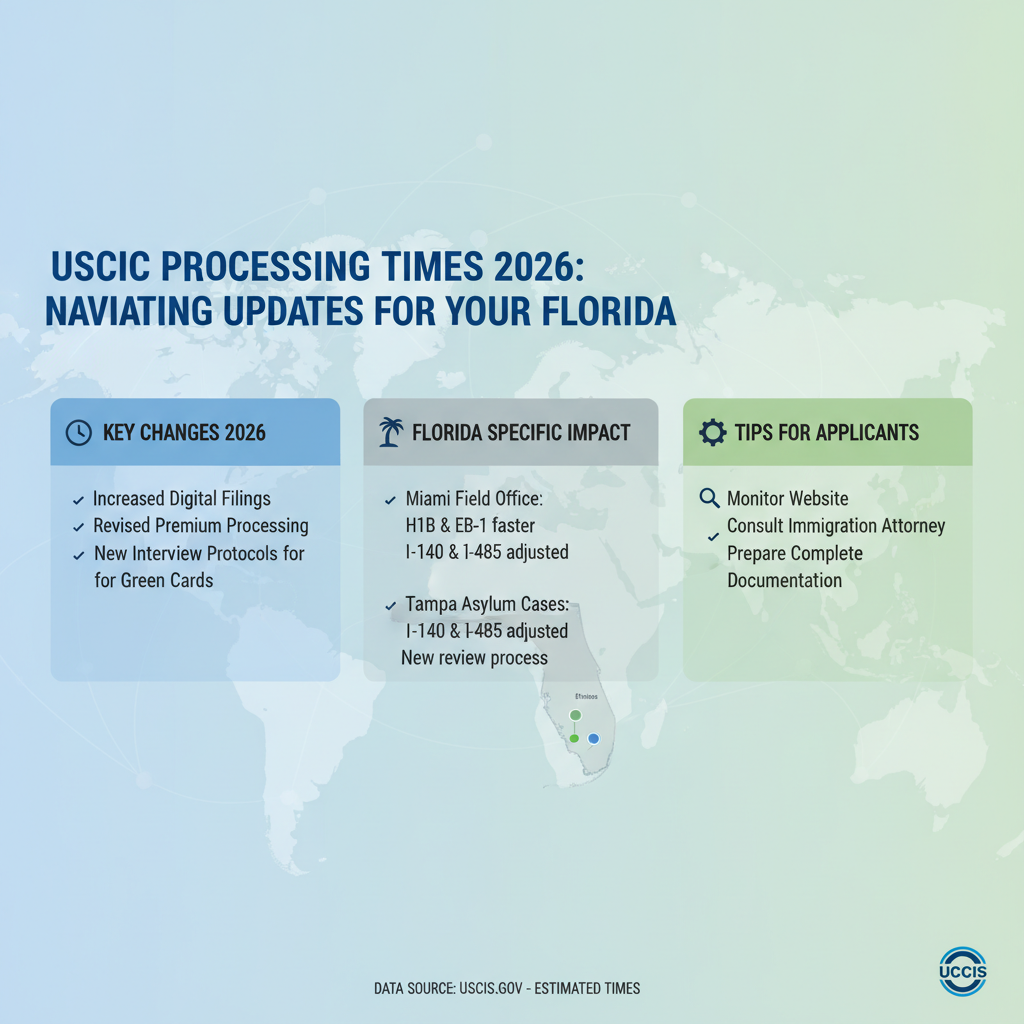
The reporting that sparked this guide: USCIS Processing Times and Updates for 2026 (USCIS)
What This News Means for Immigrants in Orlando and Across Florida
The continuous flow of information regarding USCIS processing times isn't just bureaucratic jargon; it directly impacts the lives, livelihoods, and hopes of millions. For immigrants and their families, particularly those making their homes in vibrant communities like Orlando and throughout Florida, these updates dictate everything from when a family can reunite to when an individual can begin a new job or travel internationally.
Why this news is showing up now
Updates on USCIS processing times are not a one-time event but a regular occurrence, often influenced by a dynamic interplay of factors. As we proceed into 2026, several elements contribute to the current focus on these timelines:
- Increased Caseloads: The sheer volume of applications submitted to USCIS fluctuates. Periods of increased demand, often tied to policy changes or economic conditions, can naturally extend processing queues.
- Staffing and Resources: USCIS's capacity to process applications is directly tied to its staffing levels and available resources. Budget allocations, hiring initiatives, and internal efficiency measures constantly evolve, impacting how quickly cases move through the system.
- Technological Modernization: USCIS is continually working to modernize its systems, including transitioning to online filing and digital case management. While intended to improve efficiency long-term, these transitions can sometimes cause temporary shifts in processing times.
- Policy Adjustments: Changes in immigration policy, legislative mandates, or even internal agency directives can lead to new procedures or increased scrutiny for certain application types, affecting their processing speed.
- Public Scrutiny and Transparency: There's ongoing public and congressional interest in USCIS efficiency. The agency regularly publishes processing times to maintain transparency, and these updates become news as they reflect ongoing operational status.
For individuals tracking their immigration journey, these updates serve as critical benchmarks, helping them understand current trends and anticipate potential wait times. They reflect the agency's ongoing efforts to manage a vast and complex system while adapting to changing demands.
How it can affect Florida residents
Florida, a melting pot of cultures and a primary destination for immigrants, feels the impact of USCIS processing times acutely. For residents of Orlando and the broader Central Florida area, these updates carry specific implications:
- Local Field Office Caseloads: The Orlando USCIS Field Office (located at 5449 Forbes Pl, Orlando, FL 32812) handles many interviews and local adjustments of status applications (e.g., Form I-485, Application to Register Permanent Residence or Adjust Status). If this office experiences higher local demand or staffing shortages, it can directly affect processing times for residents of Orange County and surrounding areas along the I-4 corridor.
- Economic Impact: Delays in processing work permits (Form I-765, Application for Employment Authorization) can prevent individuals from entering the workforce, impacting families and the local economy. Similarly, delays in green card processing can affect long-term stability and career progression.
- Family Reunification: Florida has a large population of immigrant families. Delays in family-based petitions (e.g., Form I-130, Petition for Alien Relative) can prolong painful separations, affecting the emotional and financial well-being of families across the state.
- Travel Restrictions: For those awaiting travel documents (e.g., Advance Parole, often filed with Form I-131), extended processing times can mean missed opportunities to visit family abroad or attend critical events.
- Uncertainty and Stress: Long and unpredictable wait times contribute significantly to stress and anxiety for applicants and their families. This uncertainty can make it difficult to plan for housing, schooling, and other essential life decisions in communities like Kissimmee, Sanford, and Lakeland.
Understanding these impacts underscores the importance of not just knowing the processing times, but also strategizing effectively and having expert legal guidance. Imigrar, based in Orlando, is uniquely positioned to assist Florida residents through these challenges.
Worried about your immigration application's timeline? Our experienced team at Imigrar can provide clarity and support. Contact us at +1 786-791-3106 for a free consultation. We serve clients nationwide, with a strong presence in Orlando and Central Florida. Se Habla Español.
What USCIS Processing Times Are (and Why They Matter)
For many immigrants, the term "USCIS processing times" can evoke a mix of anxiety and confusion. It's a critical concept that directly impacts how long you'll wait for a decision on your immigration application. Let's break down what it means in plain English and why it's so important.
A plain-English definition
Simply put, USCIS processing times refer to the estimated period it takes for U.S. Citizenship and Immigration Services to process an immigration application or petition from the date they receive it until they make a decision. These times are not fixed guarantees but rather statistical averages or ranges based on historical data for similar cases.
USCIS generally provides processing times in two ways:
- Median Processing Time: This indicates that 50% of cases for a particular form type, filed at a specific service center or field office, were processed within that time frame.
- Processing Time Range: This shows a range, for example, from the time it takes to complete 80% of cases to the time it takes to complete 93% of cases. Your case is generally considered "outside normal processing times" if it has been pending longer than the upper end of this range.
These times are influenced by many factors, including the specific form type (e.g., Form I-130 for family petitions, Form I-485 for adjustment of status, Form N-400 for naturalization), the USCIS Service Center or Field Office handling the case, the completeness of the application, and the current workload of the agency. They are constantly updated and can fluctuate significantly.
Key terms you need to know
Navigating USCIS processing times requires understanding a few key terms:
- Priority Date: This is the date USCIS or the Department of State "received" your petition (e.g., Form I-130 or Form I-140). It's crucial for visa categories with annual limits and determines your place in the visa queue. You can only move forward with certain steps (like filing Form I-485) when your Priority Date becomes current according to the Visa Bulletin.
- Filing Date: This is the exact date USCIS physically receives your application. It's often the date stamped on your receipt notice (Form I-797C).
- Receipt Date: Similar to the Filing Date, this is the date USCIS officially logs your application into their system and sends you a Form I-797C, Notice of Action. This is the date from which processing times are typically calculated.
- Processing Time Frame: The estimated duration, as published by USCIS, for a specific form at a particular service center or field office.
- Case Status: An online tool on the USCIS website where you can track the progress of your individual application using your Receipt Number. This can tell you if your application has been received, is being reviewed, or if a decision has been made.
- Service Center: One of several large facilities (e.g., Nebraska, Texas, California, Vermont) that process petitions and applications that do not require an interview.
- Field Office: Local USCIS offices (like the Orlando USCIS Field Office) that handle interviews, naturalization ceremonies, and other local services, especially for adjustment of status cases.
- Request for Evidence (RFE): A notice from USCIS requesting additional documents or information to make a decision on your case. Responding to an RFE accurately and promptly is crucial.
- Notice of Intent to Deny (NOID): A notice from USCIS indicating that they intend to deny your application unless you provide specific information or evidence to overcome the grounds for denial. This is a serious notice requiring immediate attention.
Understanding these terms empowers you to track your application more effectively and recognize when it might be time to take further action or seek legal assistance. For instance, knowing your Priority Date and checking the U.S. Department of State Visa Bulletin is essential for family-based or employment-based green card applicants.
Current Immigration Law: The Foundation of Processing
The entire framework for USCIS processing times is built upon a complex foundation of federal immigration laws and regulations. These laws dictate who is eligible for what benefits, what evidence is required, and, indirectly, the procedural steps that USCIS must follow, all of which impact how long an application takes.
Federal requirements
The primary legislative act governing immigration in the U.S. is the Immigration and Nationality Act (INA). The INA, along with subsequent amendments and regulations published in the Code of Federal Regulations (CFR), establishes:
- Eligibility Criteria: Each immigration benefit (e.g., green card, visa, naturalization) has specific eligibility requirements outlined in the INA. USCIS must review every application against these statutory and regulatory criteria.
- Required Documentation: The law dictates what documents are necessary to prove eligibility. If an application lacks required evidence, USCIS may issue an RFE, which pauses processing.
- Application Forms: The specific forms you must file (e.g., Form I-130, Form I-485, Form I-765, Form I-140, Form N-400) are mandated by regulation, and each form has detailed instructions outlining the information and evidence needed.
- Annual Quotas: For many visa categories, particularly family-sponsored and employment-based green cards, the INA sets annual limits. This creates backlogs and the need for Priority Dates, which significantly extend overall wait times, regardless of how fast USCIS processes individual petitions.
- Adjudication Standards: USCIS officers must follow specific legal standards when adjudicating cases. This ensures fairness but also means each case requires thorough review.
While the law doesn't explicitly state "Form I-485 must be processed in 10 months," it creates the procedural requirements and caseloads that ultimately determine processing speed. Any changes to the INA or immigration regulations can dramatically shift these timelines. You can always refer to the USCIS official website for the latest policy updates and form instructions.
Florida-specific considerations
While immigration law is federal, its implementation and impact can vary regionally. For Florida residents, especially those in the Orlando area, specific local factors can influence processing:
- Orlando USCIS Field Office Workload: The Orlando USCIS Field Office serves a large and diverse population. Its specific workload for interviews related to Adjustment of Status (Form I-485), naturalization interviews (Form N-400), and other local services can differ from other field offices. A surge in local applications or staffing changes at this office can lead to longer or shorter wait times for Central Florida residents.
- Local Legal Landscape: Florida has a dynamic legal environment. While federal law is supreme, local legal aid organizations, community resources, and the presence of experienced immigration law firms like Imigrar can help applicants navigate the system more effectively, potentially reducing errors that lead to delays.
- Demographic Factors: Florida's diverse immigrant communities – particularly from Latin America and the Caribbean – often rely on specific visa categories (e.g., family-based petitions). High concentrations of these applications can contribute to specific backlogs within the state's processing centers.
- State-Level Policies: Although state laws cannot override federal immigration law, state-level policies or political climates can sometimes indirectly affect how federal agencies operate or how immigrants interact with local services, which might have tangential effects on their immigration processes.
Important: It's crucial to remember that your location in Florida means your case will be routed to specific USCIS Service Centers and eventually, for interviews, to the Orlando USCIS Field Office. Monitoring the processing times for *your specific office* is key.
Don't let legal complexities delay your immigration journey. Imigrar helps clients throughout Florida, including Orlando, understand federal requirements and local considerations. Call +1 786-791-3106 for a free consultation. Se Habla Español.
How to Navigate USCIS Processing Times: A Complete Step-by-Step Guide
Understanding and tracking USCIS processing times is a proactive step every applicant should take. While you cannot directly control how fast USCIS processes your case, you can be informed and take appropriate action if delays occur. Here’s a complete step-by-step guide:
1) Understand Your Application Type and Relevant Forms
Before you can check processing times, you need to know exactly what you've filed. This involves identifying the specific USCIS form number and the category under which your application falls. For example:
- Family-Based Petitions: Often starts with Form I-130 (Petition for Alien Relative).
- Adjustment of Status (Green Card): Typically Form I-485 (Application to Register Permanent Residence or Adjust Status), often filed concurrently with Form I-765 (Application for Employment Authorization) and Form I-131 (Application for Travel Document).
- Employment-Based Petitions: Commonly Form I-140 (Immigrant Petition for Alien Worker).
- Naturalization (Citizenship): Form N-400 (Application for Naturalization).
- Work Permits: Standalone Form I-765.
Required Documents (for this step):
- Your copy of the submitted application form(s).
- The USCIS Form I-797C, Notice of Action (Receipt Notice) for each form you filed. This notice contains your Receipt Number and confirms the application type.
2) Locate Your USCIS Service Center or Field Office
The processing time varies significantly depending on where your application is being processed. For petitions and applications that don't require an interview, your case is typically handled by one of the USCIS Service Centers (e.g., California, Nebraska, Texas, Vermont). For applications requiring an interview, such as Form I-485 or Form N-400, your case will eventually be transferred to your local USCIS Field Office, such as the Orlando USCIS Field Office if you reside in Central Florida.
Reminder: Your Form I-797C (Receipt Notice) will usually indicate which Service Center is handling your case. If your case is transferred to a Field Office, subsequent notices may indicate this.
Required Documents (for this step):
- Your Form I-797C, Notice of Action (Receipt Notice).
3) Check Current Processing Times Online
USCIS provides an official online tool to check processing times. This is the most authoritative source for this information.
Steps:
- Go to the USCIS Processing Times page.
- Select the "Form" you filed (e.g., "I-485, Application to Register Permanent Residence or Adjust Status").
- Select the "Form Category" (e.g., "Family-Based Adjustment of Status").
- Select the "Field Office or Service Center" (e.g., "Orlando Field Office" or "Texas Service Center").
- Click "Get Processing Time."
The tool will display a processing time range. For example, it might say "80% of cases are completed within 10.5 months to 15.5 months."
Required Documents (for this step):
- None, but have your form type, category, and Service Center/Field Office ready.
4) Understand Your Priority Date and Filing Date
Your Receipt Date (the date USCIS received your application) is critical for comparing against the published processing times. For certain visa categories, your Priority Date is also paramount, as you cannot proceed with Adjustment of Status (Form I-485) or immigrant visa processing until your Priority Date becomes "current" in the monthly Visa Bulletin published by the U.S. Department of State.
Required Documents (for this step):
- Your Form I-797C (Receipt Notice) to confirm your Receipt Date and Priority Date (if applicable).
5) What to Do if Your Case is Outside Normal Processing Times
If your case has been pending longer than the upper end of the published processing time range for your specific form, category, and office, you can submit an "e-request" or Service Request to USCIS.
Steps:
- Go to the USCIS Case Inquiry page.
- Select "Case outside normal processing time."
- Provide your Receipt Number, application type, and personal information.
- USCIS will typically respond within 30 days, often with an update on your case or an explanation for the delay.
Warning: Do not submit an e-request if your case is still within the posted processing times, as this can sometimes further delay your case or divert resources.
Required Documents (for this step):
- Your Receipt Number from Form I-797C.
6) Expedite Requests (If Applicable)
In limited circumstances, you may be able to request that USCIS expedite the processing of your application. This is granted only for urgent humanitarian reasons or severe financial loss.
Criteria for Expedite Requests (examples):
- Severe financial loss to a company or person.
- Urgent humanitarian reasons.
- Compelling U.S. government interests.
- Clear USCIS error.
How to Request:
- Call the USCIS Contact Center (1-800-375-5283).
- Explain your compelling reason and be prepared to provide evidence.
- USCIS will review your request and may ask for additional documentation via fax or mail.
Important: Expedite requests are rarely granted and require strong, verifiable evidence. Consulting an attorney before making such a request is highly recommended.
Required Documents (for this step):
- Evidence supporting your expedite request (e.g., medical records, financial statements, letters from employers).
- Your Receipt Number.
7) Seek Legal Counsel
If your case remains stalled, you receive an RFE or NOID, or you simply feel overwhelmed, it's time to consult an experienced immigration attorney. An attorney can:
- Analyze your specific situation and identify potential issues.
- Communicate with USCIS on your behalf.
- Assist with complex expedite requests or inquiries.
- Represent you in interviews or appeals.
- Help you understand complex legal nuances.
For Central Florida residents, Imigrar provides expert guidance through these challenging situations.
Required Documents (for this step):
- All original USCIS notices (Form I-797C, RFEs, NOIDs).
- Copies of your entire application package.
- Any correspondence with USCIS.
Practical Steps You Can Take Today
While waiting for USCIS to process your application, there are several proactive steps you can take to ensure your case is handled as smoothly as possible and to mitigate potential delays. Being prepared is key to navigating the immigration process successfully.
Actionable Checklist:
- Organize and Digitize All Documents: Create both physical and digital copies of every single document related to your immigration case. This includes all submitted forms, supporting evidence, receipt notices (Form I-797C), RFEs, and correspondence from USCIS. Store them securely.
- Keep Your Contact Information Current: If you move, you MUST update your address with USCIS within 10 days of moving using the USCIS online change of address tool or Form AR-11. Failure to do so can result in missed notices, RFEs, or interview appointments, leading to significant delays or even denials.
- Monitor Your Case Status Online Regularly: Use the "Check My Case Status" tool on the USCIS website with your Receipt Number. This allows you to see the latest updates on your specific application. Don't check daily, but a weekly or bi-weekly check is prudent.
- Stay Informed About Processing Times: Regularly check the USCIS Processing Times page for your specific form and Service Center/Field Office. This helps manage expectations and informs you when it's appropriate to submit an inquiry.
- Prepare for Potential RFEs: Anticipate that USCIS might request additional evidence. Review your submitted application and supporting documents. If there are any potential gaps or areas that could be unclear, start gathering relevant documents now so you can respond quickly if an RFE arrives.
- Understand Your Priority Date and Visa Bulletin: If you're applying for a family-sponsored or employment-based green card, regularly check the U.S. Department of State Visa Bulletin to see if your Priority Date is current. This dictates when you can move forward with certain steps.
- Consult an Immigration Attorney: If you have any doubts, concerns, or if your case is outside normal processing times, seek legal advice. An attorney can provide personalized guidance, intervene on your behalf, and help you understand complex legal issues.
Document Preparation Guidance
The quality and completeness of your documentation are paramount to smooth processing:
- Accuracy is Key: Double-check all forms for accuracy. Even minor errors can lead to RFEs or delays.
- Completeness: Ensure every single required document is included. Refer to the form instructions on the USCIS Forms page.
- Translations: Any document not in English must be accompanied by a complete and accurate English translation, along with a certification from the translator stating their competence.
- Copies, Not Originals (Generally): Unless specifically requested, submit photocopies of documents. Always keep your originals and a complete set of copies for your records.
- Organize and Label: Present your documents in a neat, organized fashion. Use cover letters, tabs, and labels to make it easy for USCIS officers to review your submission.
Timeline Expectations
Warning: USCIS processing times are always estimates and can change without notice. Do not make irreversible plans based solely on published processing times.
- Variability: Expect significant variability. One Form I-485 might take 10 months at the Orlando Field Office, while another similar case could take 18 months.
- Factors Influencing Timelines: Your application type, the specific Service Center/Field Office, the completeness of your application, your immigration history, and current USCIS workload all play a role.
- "Outside Normal Processing Times": Only consider your case delayed if it exceeds the *upper end* of


