
TPS Extension News 2026: What It Means for Immigrants in Florida
Stay informed on the latest TPS (Temporary Protected Status) extensions and designations affecting immigrants in Orlando and nationwide. Imigrar provides crucial updates, eligibility requirements, and a step-by-step guide to protect your status.
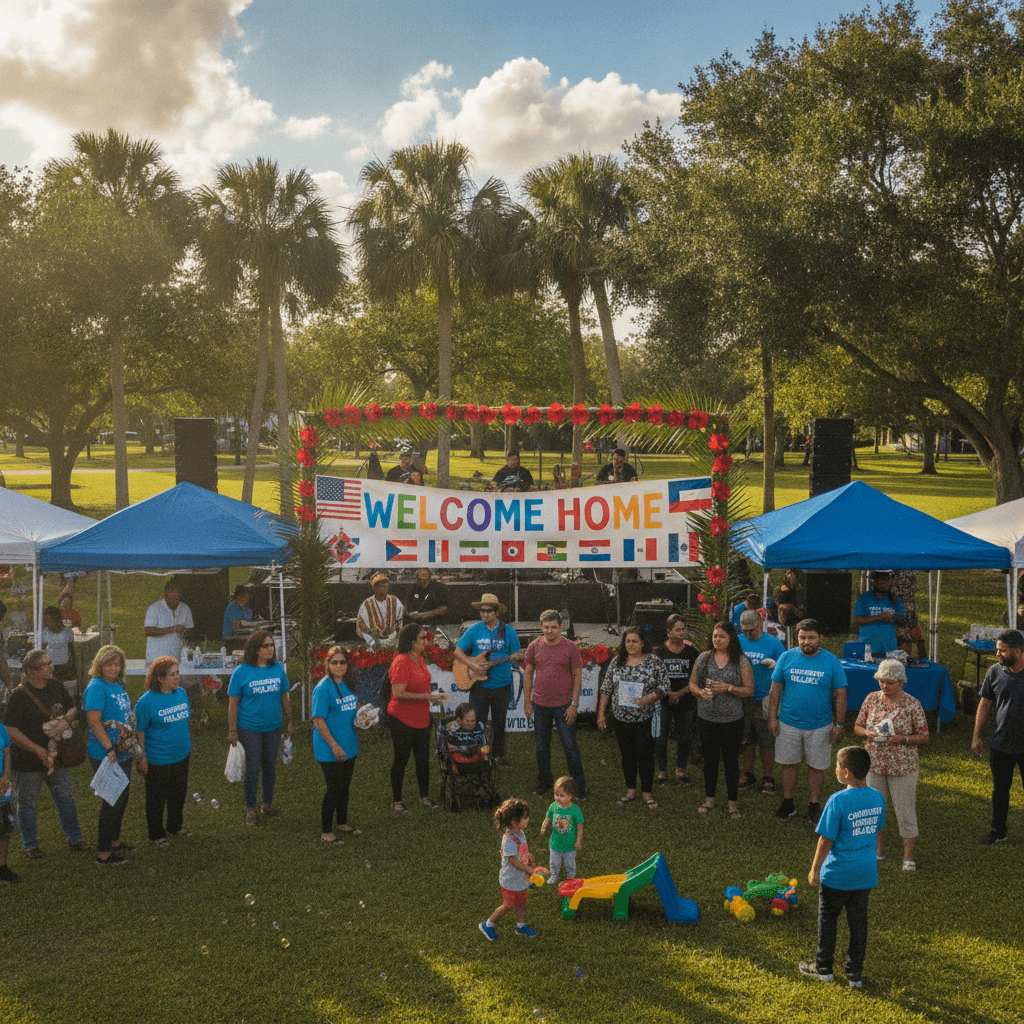
The reporting that sparked this guide: TPS (Temporary Protected Status) Extension News (Legal News)
What This News Means for Immigrants in Orlando and Across Florida
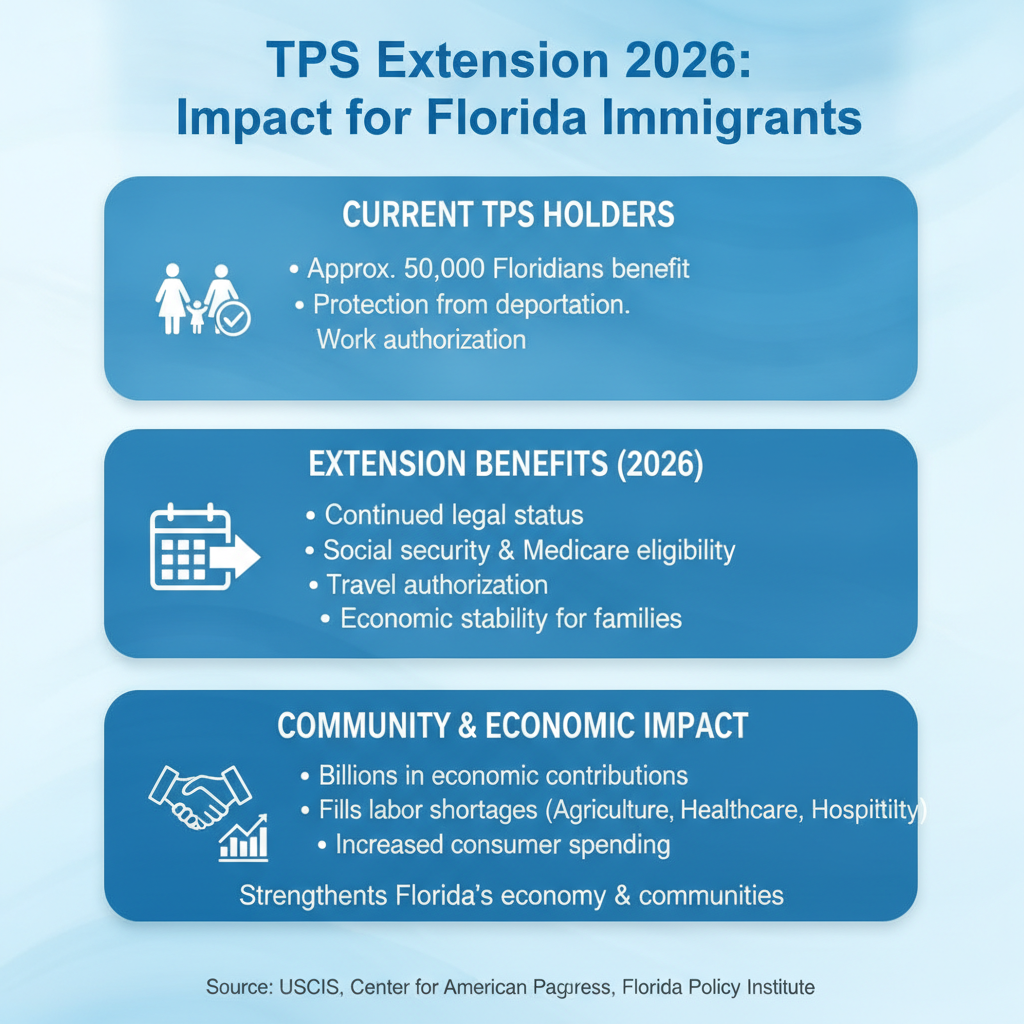
As of October 10, 2026, the landscape of Temporary Protected Status (TPS) continues to evolve, bringing both relief and new responsibilities for thousands of immigrants residing in Florida and across the United States. Recent announcements regarding TPS extensions and, in some cases, new designations for various countries have significant implications for individuals and families who have found refuge and built lives here. At Imigrar, "Keep Families Together" is not just our tagline; it's our mission, and staying abreast of these developments is crucial for our community.
Why this news is showing up now
The United States government, through the Department of Homeland Security (DHS), periodically reviews the conditions in countries currently designated for TPS. These reviews are mandated by law and consider ongoing armed conflict, environmental disasters, or other extraordinary and temporary conditions that prevent nationals from safely returning to their home countries. Given the dynamic global environment, such reviews lead to decisions on whether to extend a country's TPS designation, redesignate a country, or, in some instances, terminate it. The news you’re seeing now reflects the outcomes of these latest evaluations, often announced with a specific re-registration period and an effective date for the extension.
These decisions are not made lightly. They involve careful analysis of reports from the Department of State, international organizations, and other sources to assess the safety and security situation on the ground. For countries facing continued instability, natural disaster recovery, or persistent conflict, an extension of TPS provides a vital lifeline, allowing nationals to remain in the U.S. legally, work, and contribute to their communities without fear of deportation.
How it can affect Florida residents
Florida, particularly Central Florida with cities like Orlando, is home to a vibrant and diverse immigrant population. Many individuals and families from TPS-designated countries have established deep roots here, contributing significantly to our economy and culture. For these residents, TPS extensions are not abstract legal announcements; they are decisions that directly impact their ability to work, drive, attend school, and plan for their future. An extension means continued legal presence, renewed work authorization (Employment Authorization Document - EAD), and the opportunity to maintain stability for their families. It allows parents to continue working to support their children, students to complete their education, and community members to continue their valuable contributions.
Conversely, for individuals from countries whose TPS designation might be nearing termination (though this is less common with recent trends, it's always a possibility), the news can be a source of immense anxiety. It underscores the temporary nature of the status and the need to explore alternative immigration pathways. For those eligible for new designations, it opens a critical window to apply for protection and begin a new chapter of stability.
The Orlando USCIS Field Office, located conveniently for Central Florida residents, processes many of these applications. Understanding the specific requirements and deadlines is paramount. Whether you're a long-time TPS holder in Orange County needing to re-register or a recent arrival from a newly designated country along the I-4 corridor, staying informed and taking timely action is crucial.
Need Help? Our Orlando immigration team is ready to assist. Call +1 786-791-3106 for a free consultation, or message us online. Se Habla Español.
What Temporary Protected Status (TPS) Is (and Why It Matters)
Temporary Protected Status (TPS) is a humanitarian immigration benefit granted by the United States government to eligible nationals of certain countries who are unable to return safely to their home countries due to specific conditions. Established under the Immigration and Nationality Act (INA), TPS offers a temporary reprieve from deportation and provides work authorization, allowing beneficiaries to live and work legally in the U.S. for a designated period.
A plain-English definition
Think of TPS as a temporary safe haven. If your home country is experiencing a major crisis—like a devastating earthquake, a widespread epidemic, or a civil war—the U.S. government might decide it's too dangerous for its citizens to return. In such cases, the Secretary of Homeland Security can designate that country for TPS. This means people from that country who are already in the U.S. (or who arrive during a specific window for new designations) can apply for temporary permission to stay and work here. It's not a path to a Green Card directly, but it provides legal status and protection from deportation until conditions improve in their home country, or until the designation expires or is terminated.
For someone holding TPS, it means they can get an Employment Authorization Document (EAD), often called a work permit, allowing them to legally earn a living. They can also apply for a travel document, known as an Advance Parole Document, to travel outside the U.S. and return without risking their TPS status. This stability is invaluable for individuals and families, allowing them to rebuild their lives and contribute to their communities in Florida without the constant fear of being sent back to an unsafe situation.
Key terms you need to know
- Temporary Protected Status (TPS): A temporary immigration status granted to eligible nationals of designated countries, protecting them from removal and providing employment authorization.
- Designation: The act by the Secretary of Homeland Security of identifying a country whose nationals are eligible for TPS due to specific, temporary, and extraordinary conditions.
- Redesignation: When a country already designated for TPS experiences new or worsening conditions, leading DHS to announce a new period of eligibility for TPS, often allowing individuals who missed the initial registration or arrived later to apply. This usually comes with a new registration period.
- Extension: When DHS determines that the conditions in a TPS-designated country continue to meet the statutory requirements, and extends the existing TPS designation for a specific period (typically 6, 12, or 18 months). Existing TPS holders must re-register during the specified window.
- Re-registration: The process by which current TPS beneficiaries apply to extend their status and work authorization when their country's designation is extended. This typically involves filing Form I-821 and Form I-765.
- Employment Authorization Document (EAD): Also known as a work permit, this document (Form I-766) allows TPS beneficiaries to work legally in the United States.
- Statutory Conditions: The specific criteria outlined in Section 244 of the Immigration and Nationality Act (INA) that must be met for a country to be designated for TPS. These include ongoing armed conflict, environmental disaster, or other extraordinary and temporary conditions.
- Initial Registration Period: The specific timeframe during which nationals of a newly designated or redesignated country can apply for TPS for the first time.
- Registration Period for Extension: The specific timeframe during which current TPS beneficiaries must apply to re-register for their status to be extended. Important: Missing this deadline can lead to loss of status.
Current Immigration Law: The Foundation of TPS
Temporary Protected Status is a humanitarian relief program established under Section 244 of the Immigration and Nationality Act (INA), 8 U.S.C. § 1254a. This section of federal law provides the legal framework for the Secretary of Homeland Security to designate countries for TPS based on specific statutory criteria. These criteria primarily involve:
- Ongoing Armed Conflict: Where returning nationals would face a serious threat to their personal safety due to the conflict.
- Environmental Disaster: Such as an earthquake, hurricane, flood, or epidemic, resulting in a substantial, but temporary, disruption of living conditions, and the foreign state is unable to handle the return of its nationals adequately.
- Other Extraordinary and Temporary Conditions: That prevent nationals from safely returning, and it would be contrary to U.S. national interests to require their return.
Once a country is designated, eligible individuals who are already present in the U.S. can apply for TPS. It's important to remember that TPS is a temporary benefit, and its continuation depends on the ongoing assessment of conditions in the designated country by DHS. The law requires periodic reviews to determine if conditions still warrant the designation or extension.
Federal requirements for TPS
To be eligible for TPS, applicants must meet several federal requirements:
- Nationality: Be a national of a country designated for TPS, or a person without nationality who last habitually resided in that designated country.
- Continuous Physical Presence (CPP): Have been continuously physically present in the U.S. since the effective date of the most recent TPS designation or redesignation for their country.
- Continuous Residence (CR): Have been continuously residing in the U.S. since the date specified for their country's designation.
- Timely Application: Apply for TPS during the initial registration period or during a re-registration period for an extension. There are limited exceptions for late initial filing.
- Admissibility: Meet general admissibility requirements, meaning you must not be inadmissible under certain grounds, such as certain criminal offenses or national security threats. Certain minor immigration violations might be waived, but serious issues could lead to denial.
- No Disqualifying Factors: Not have been convicted of any felony or two or more misdemeanors committed in the United States. Not be found to be a persecutor of others, or subject to certain other mandatory bars to asylum.
Reminder: Even if you meet these general criteria, the specific dates for CPP and CR vary by country designation. Always check the most recent Federal Register notice for your country’s TPS designation or extension.
Florida-specific considerations for TPS holders
While TPS is a federal immigration status, its benefits and implications often interact with state-level policies and services. For TPS holders in Florida, understanding these interactions is important:
- Driver's Licenses: With a valid Employment Authorization Document (EAD) and other supporting identity documents, TPS beneficiaries in Florida are generally eligible to apply for or renew a Florida driver's license or state identification card. The validity period of the license will typically align with the expiration date of the EAD.
- In-State Tuition: Depending on specific state laws and university policies, TPS holders who meet residency requirements may be eligible for in-state tuition rates at Florida's public colleges and universities. This can significantly reduce the cost of higher education.
- Social Services: TPS holders are generally eligible for certain public benefits, though eligibility can vary. Access to services like emergency Medicaid or certain forms of assistance for children is often possible.
- Employment: The EAD issued to TPS beneficiaries allows legal employment throughout the U.S., including in Florida. This means TPS holders can work in any sector, contributing to Florida’s economy, from agriculture to tourism, healthcare, and technology.
- Local Law Enforcement: Holding TPS status provides legal protection from deportation. While local law enforcement agencies typically do not enforce federal immigration laws, having valid status and documents can be important in any interaction, ensuring your rights are protected.
It is essential for Florida residents with TPS to keep all their immigration documents, including their Form I-797 (Notice of Action) for TPS approval and their EAD, current and readily accessible. The Orlando USCIS Field Office serves a large population, and understanding local procedures can smooth the process for re-registration or initial application.
For detailed information on TPS and all related forms, always refer to the USCIS official website. Specifically, look for information on Form I-821, Application for Temporary Protected Status, and Form I-765, Application for Employment Authorization.
Facing a complex TPS application? Don't navigate the process alone. Imigrar offers expert guidance for immigrants in Orlando and nationwide. Call +1 786-791-3106 for your free consultation today. Se Habla Español.
How to Re-register for TPS or Apply for Initial TPS: A Complete Step-by-Step Guide
Whether you are re-registering for an existing TPS designation or applying for initial TPS under a new country designation or redesignation, the process requires meticulous attention to detail. This guide outlines the essential steps to ensure a successful application.
1) Determine Your Eligibility and Application Type
Before gathering any documents, confirm your eligibility. This is the most critical first step. Check the USCIS TPS page for the latest Federal Register notices for your specific country. These notices will specify:
- Whether your country's TPS has been extended, redesignated, or newly designated.
- The specific Continuous Physical Presence (CPP) and Continuous Residence (CR) dates you must meet.
- The exact registration period (often a 60-day window for initial applications, or a longer period for re-registration).
- Whether you are applying for initial TPS or re-registering.
For Re-registration: You must have already been granted TPS under the previous designation and meet the CPP and CR requirements for the extension. For Initial Application (New Designation/Redesignation): You must be a national of the designated country (or a person without nationality who last habitually resided there), have been continuously physically present and residing in the U.S. since the specified dates, and apply within the initial registration period.
Required Documents for Eligibility Check (Internal Review):
- Proof of nationality (passport, birth certificate with national identity card).
- Proof of entry to the U.S. and continuous residence since the specified date (e.g., entry stamp, I-94, utility bills, rental agreements, school records, employment records).
2) Gather All Required Documents and Evidence
A complete application package is vital. Missing documents are a leading cause of delays or denials. Organize your documents carefully.
Required Documents for Form I-821, Application for Temporary Protected Status:
- Proof of Identity and Nationality:
- Passport from your country of nationality (with entry stamp, if available).
- Birth certificate with photo identification.
- National identity document with photo and/or fingerprint.
- Any other national identity document from your country of origin.
- Proof of Date of Entry into the U.S.:
- Form I-94, Arrival/Departure Record (electronic version can be obtained from CBP website).
- Copy of passport page with U.S. entry stamp.
- Proof of Continuous Residence (CR) in the U.S. since the specified date: (Provide documents covering the entire period)
- Employment records (pay stubs, W-2s, employment verification letters).
- Rent receipts, utility bills, mortgage statements.
- School records (transcripts, attendance records).
- Hospital or medical records.
- Affidavits from friends, family, or employers (with their contact information and notarized signatures).
- Bank statements.
- Birth certificates of children born in the U.S.
- Tax records.
- Two passport-style photos.
Required Documents for Form I-765, Application for Employment Authorization (if applying for or renewing an EAD):
- Copy of your last EAD (if renewing).
- Copy of your government-issued identification (e.g., driver's license).
- Two passport-style photos (even if already submitted with I-821, send separate photos for I-765).
Important: All documents not in English must be accompanied by a complete and accurate English translation certified by a competent translator. Keep copies of everything you submit.
3) Complete and Prepare Forms I-821 and I-765
Download the latest versions of Form I-821, Application for Temporary Protected Status, and Form I-765, Application for Employment Authorization, from the USCIS Forms page.
- Form I-821: Fill out every section completely and accurately. If a section does not apply, write "N/A" (Not Applicable).
- Form I-765: If you want to work legally in the U.S., you must file this form concurrently with or after your I-821. On Part 2, Item 27, specify your eligibility category as (c)(19) for TPS.
- Form I-601, Application for Waiver of Grounds of Inadmissibility: If you have any inadmissibility issues (e.g., certain criminal convictions, misrepresentations), you may need to file this form. This is highly complex and requires legal advice.
- Form I-912, Request for Fee Waiver: If you cannot afford the filing fees, you may apply for a fee waiver.
Review all forms multiple times for errors or omissions. An incomplete form can lead to rejection or significant delays.
4) Calculate and Pay All Applicable Fees (or Apply for a Fee Waiver)
There are several fees associated with TPS applications:
- Form I-821 Filing Fee: This fee varies based on age and whether it's an initial application or re-registration. For initial applicants aged 14 and older, there is an application fee. For re-registrants, there is usually no I-821 fee directly, but a biometrics fee is often required.
- Biometrics Services Fee: Required for all applicants 14 years or older. This fee covers the cost of fingerprinting and background checks.
- Form I-765 Filing Fee: Required if you are applying for an Employment Authorization Document (EAD).
Important: Check the USCIS Fee Schedule for the most current fees. Fees change periodically. You can pay fees by money order, personal check, cashier's check, or by credit card using Form G-1450, Authorization for Credit Card Transactions. Make checks payable to "U.S. Department of Homeland Security." Do not send cash.
If you cannot afford the fees, you may apply for a fee waiver by submitting Form I-912, Request for Fee Waiver, along with supporting documentation demonstrating your inability to pay. If the fee waiver is denied, your application will be rejected.
5) Submit Your Application Package
Once your forms are complete, signed, and all supporting documents and fees are prepared, assemble your package carefully. USCIS provides specific mailing addresses for TPS applications, which vary depending on your country of nationality and the state you reside in (e.g., Florida residents often send to a specific Lockbox facility). Always check the USCIS filing addresses page for the correct mailing address.
Recommendation: Send your application via certified mail with a return receipt requested. This provides proof of mailing and delivery, which can be crucial if there are any disputes about the filing date. Keep a complete copy of your entire application package for your records.
6) Attend Your Biometrics Appointment and Monitor Your Case Status
After USCIS accepts your application, you will receive a Form I-797C, Notice of Action, acknowledging receipt. This notice will also contain a receipt number that you can use to track the status of your case online via the USCIS Case Status Online tool.
Within a few weeks or months, you will receive a separate appointment notice for biometrics (fingerprints, photos, and signature) at a local Application Support Center (ASC). Important: It is mandatory to attend this appointment. Failure to do so can lead to denial of your application. After your biometrics appointment, USCIS will process your application. Processing times can vary significantly. You can check estimated processing times on the USCIS Processing Times page. During this waiting period, if your previous EAD is expiring, USCIS often provides an automatic extension of your EAD and TPS status for a certain period, as stated in the Federal Register notice for your country's extension. This allows you to continue working legally while your new EAD is being processed. Keep the Federal Register notice and your I-797C receipt notice with your expired EAD as proof of employment authorization.
Don't risk delays or denials. Imigrar's experienced immigration attorneys in Orlando can meticulously prepare and submit your TPS application. Schedule your free consultation by calling +1 786-791-3106. Se Habla Español.

Practical Steps You Can Take Today to Protect Your TPS Status
The key to maintaining your TPS status and work authorization is proactivity. Here are practical steps you can take starting today, especially for those in Orlando and the wider Central Florida region:
Actionable Checklist:
- Confirm Your Country's Status: Immediately check the USCIS TPS page or the latest Federal Register notices for your country's designation, extension, or redesignation. Note the specific dates for continuous residence, continuous physical presence, and the re-registration/initial registration window.
- Locate and Organize Existing Documents: Gather all previous TPS approval notices (Form I-797), EADs, passports, birth certificates, and any other identity or immigration documents. Ensure they are easily accessible.
- Update Your Address with USCIS: If you have moved, even within Orlando or to a different part of Florida, file Form AR-11, Alien's Change of Address Card, online or by mail within 10 days of moving. This is crucial for receiving important notices from USCIS.
- Start Gathering Proof of Continuous Residence (CR): Begin collecting documents that show your presence in the U.S. from the specified date until now. This includes utility bills, bank statements, employment records, school records, medical records, and rental agreements. Aim for at least one document per quarter or year to cover the entire period.
- Consult with an Immigration Attorney: This is especially important if you have any criminal history, prior immigration violations, or if you are unsure about your eligibility or the application process. An attorney can help identify potential issues and ensure a strong application.
- Set Reminders for Deadlines: Mark the re-registration or initial registration deadline prominently on your calendar. Missing this deadline is a common and often fatal mistake. Set multiple reminders.
- Review and Understand Fee Requirements: Check the current USCIS fee schedule. If you plan to apply for a fee waiver (Form I-912), start preparing the necessary financial documentation immediately.
Document Preparation Guidance:
- Originals vs. Copies: Never send original documents unless specifically requested by USCIS. Always send clear photocopies. Keep your originals safe.
- Translations: For any document not in English, provide a complete and accurate English translation, certified by the translator. The certification must state that the translator is competent to translate from the foreign language into English and that the translation is complete and accurate.
- Organization: Assemble your application package neatly. Use tabs, dividers, or paper clips to separate different forms and categories of evidence. Include a cover letter listing all the contents of your submission.
- Retention: Make a complete copy of the entire application package (forms, supporting documents, checks, cover letter) before mailing it. This will be your personal record.
Timeline Expectations:
- Re-registration/Initial Registration Window: Typically, USCIS provides a 60-day window for initial registration and often a longer period (e.g., 180 days) for re-registration following an extension announcement. It is crucial to file within this period.
- Receipt Notice (I-797C): You should receive an official receipt notice from USCIS within 2-4 weeks after they receive your application.
- Biometrics Appointment Notice: This typically arrives 4-8 weeks after your receipt notice. The appointment itself is usually scheduled a few weeks later at your local ASC, such as the one serving the Orlando area.
- Processing Times for I-821 and I-765: Processing times can vary widely, from a few months to over a year, depending on the service center workload and the complexity of your case. Check the USCIS Processing Times page regularly for updates.
- Automatic EAD Extension: If your country’s TPS is extended, the Federal Register notice will
Related Topics
Need Legal Assistance?
Our experienced immigration attorneys are here to help with your case. Contact Imigrar today for a free consultation and let us guide you through the legal process with confidence.
📍 Orlando, Florida • Serving clients nationwide
📧 info@imigrar.com