
Navigating EAD Processing: Updates & Your Path to Work
Stay informed on the latest EAD processing updates from USCIS. Learn how to apply for or renew your Employment Authorization Document, understand timelines, and protect your right to work in the U.S.

In the dynamic landscape of U.S. immigration, staying current with processing times and policy changes from U.S. Citizenship and Immigration Services (USCIS) is paramount, especially when it comes to the ability to work legally. For many immigrants and their families, an Employment Authorization Document (EAD)—often referred to as a work permit—is the key to financial stability and integration into American society. At Imigrar, we understand that these documents are more than just cards; they represent hope, opportunity, and the ability to keep families together.
Recent updates from USCIS regarding EAD application and renewal processing have significant implications for individuals nationwide, including the vibrant immigrant communities across Orlando and Florida. These changes can affect everything from how quickly you receive your authorization to the strategies you should employ when preparing your application. Our goal at Imigrar is to cut through the complexity, providing you with clear, actionable information so you can navigate this critical process with confidence.
This comprehensive guide delves into the latest developments, offering practical advice, detailing requirements, and outlining timelines to help you secure or renew your EAD. Whether you’re applying for the first time, facing an expiring work permit, or simply seeking to understand the current environment, Imigrar is here to help. Our dedicated team in Orlando is committed to guiding you every step of the way, ensuring your path to employment authorization is as smooth as possible. Se Habla Español.
Need Expert EAD Guidance? Don't navigate complex USCIS updates alone. Our Orlando immigration team is ready to assist. Call +1 786-791-3106 for a free consultation, or message us online. Se Habla Español.
The reporting that sparked this guide
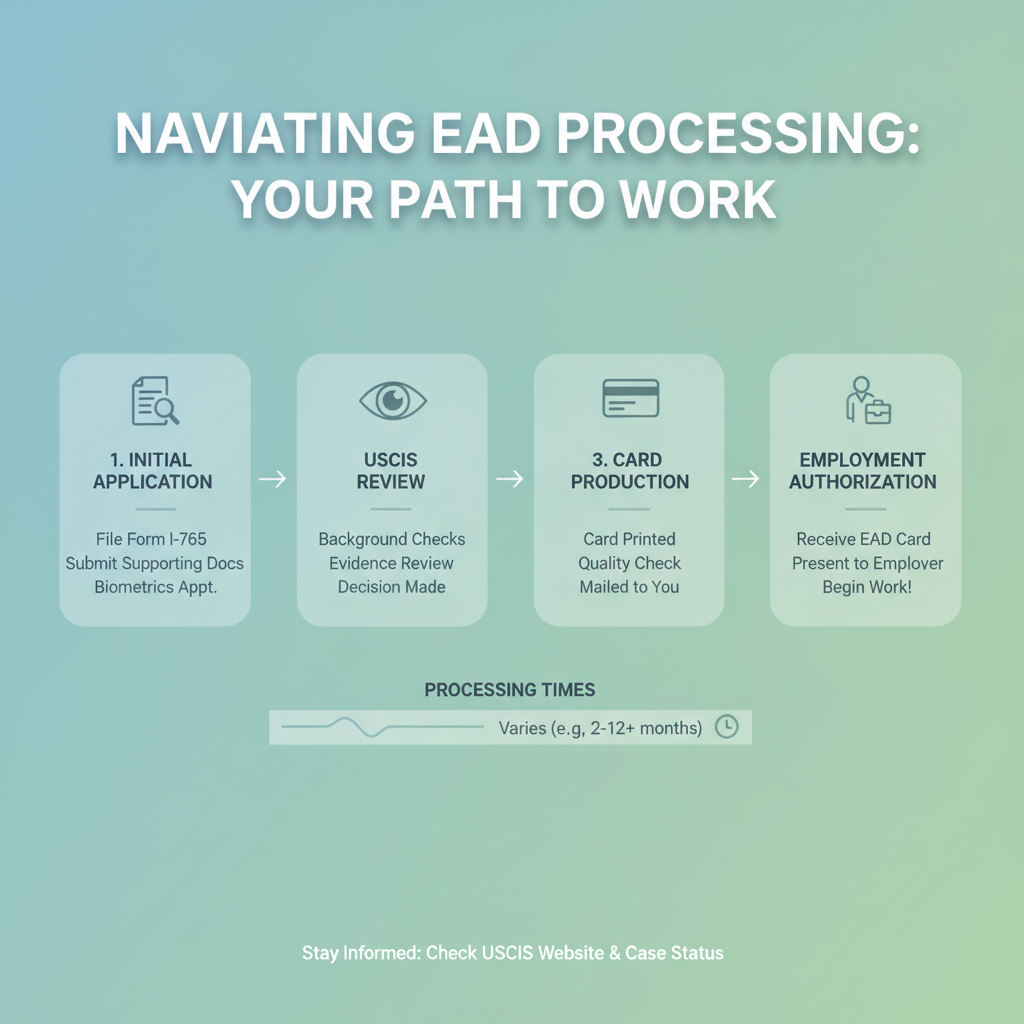
The information and guidance in this article are informed by ongoing developments and reports concerning Employment Authorization Document Processing (USCIS), which can be tracked via general immigration news sources. While specific, singular "news" might vary day-to-day, the overarching theme of USCIS continually updating, streamlining, and adjusting its processes for EAD applications and renewals is a constant. We monitor these trends to provide the most current and relevant advice.
Employment Authorization Document Processing (USCIS)What This News Means for Immigrants in Orlando and Across Florida
For individuals living and working in Orlando, Central Florida, and across the Sunshine State, updates from USCIS regarding EAD processing are more than just administrative changes; they directly impact livelihoods, family stability, and future planning. Understanding these developments is crucial for anyone relying on a work permit.
Why this news is showing up now
As of late 2026, USCIS continues to grapple with the aftermath of pandemic-era backlogs, increased application volumes, and the implementation of new digital processing initiatives. While significant strides have been made to reduce processing times for many benefit types, Employment Authorization Documents remain a high-volume category subject to continuous refinement. The "news" around EAD processing is less about a single event and more about USCIS's ongoing efforts to optimize efficiency, adapt to legislative nuances, and address persistent challenges. This includes:
- Policy Adjustments: USCIS frequently issues policy alerts or updates to its Policy Manual, which can affect eligibility criteria, required evidence, or adjudicatory procedures for EADs.
- Technological Enhancements: The agency is continually investing in technology to improve processing, including expanding online filing options and internal system upgrades.
- Backlog Management: Despite improvements, certain EAD categories still experience longer-than-desired processing times, prompting USCIS to implement temporary measures or reallocate resources.
- Public Engagement: USCIS often holds stakeholder engagements or releases public statements to provide transparency on processing goals and challenges.
These ongoing efforts mean that the landscape for EAD applicants is always evolving, necessitating vigilance and accurate information to successfully navigate the system.
How it can affect Florida residents
For those residing in Florida, particularly in densely populated areas like Orlando, Miami, and Tampa, the implications of EAD processing updates are direct and tangible:
- Employment Opportunities: Delays in EAD processing can mean prolonged periods of inability to work, affecting financial stability for families in Orange County and beyond. Conversely, faster processing can open up immediate job prospects.
- Renewal Timelines: For those with expiring EADs, understanding current processing times is vital to ensure continuous work authorization. Florida residents must plan their renewals well in advance to avoid gaps in employment eligibility.
- Local Economy Impact: A robust and efficiently processed EAD system contributes to Florida’s workforce and economy. Delays can impact various sectors, from hospitality along the I-4 corridor to agriculture and healthcare.
- Legal Strategy: Changes in processing or policy may influence the best legal strategy for an applicant. For example, if certain categories are prioritized, it might inform how an attorney advises a client on concurrent filings or other immigration pathways.
- Orlando USCIS Field Office: While EAD applications are primarily processed by service centers, local field offices like the Orlando USCIS Field Office may handle related interviews or requests for evidence for underlying applications (like Adjustment of Status) that grant EAD eligibility. Understanding their operational status and local procedures is beneficial.
At Imigrar, we specialize in understanding these nuances, offering tailored advice to our clients across Florida to mitigate potential negative impacts and capitalize on favorable changes. Our local presence in Orlando means we are acutely aware of the specific challenges and opportunities for Central Florida residents.
What Employment Authorization Document (EAD) Processing Is (and Why It Matters)
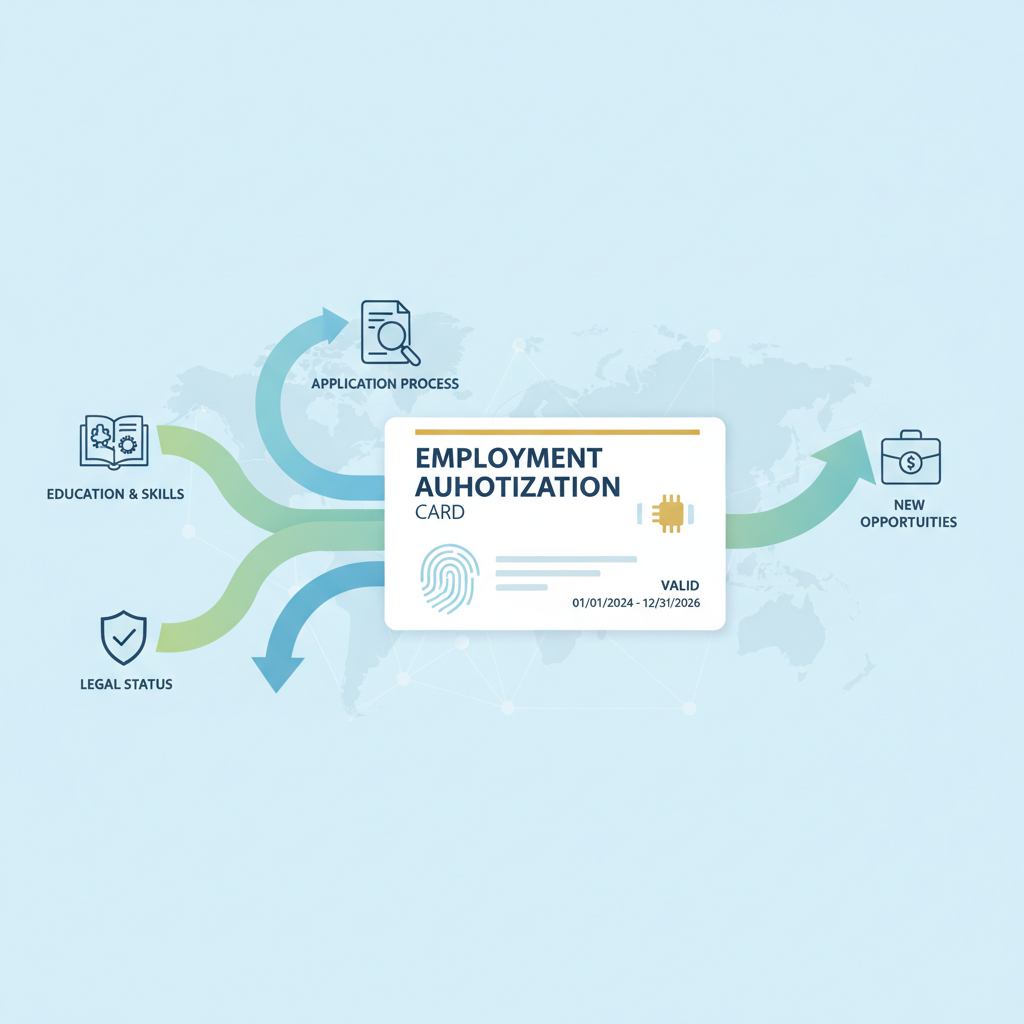
The Employment Authorization Document (EAD) is a critical piece of identification for many non-citizens in the United States. It serves as official proof that an individual is authorized by the U.S. government to work legally in the country for a specific period.
A plain-English definition
Simply put, an EAD is your work permit. It’s a physical card, similar to a driver’s license, issued by USCIS, indicating that you are allowed to be employed in the U.S. It specifies an expiration date, after which you would typically need to apply for a renewal to continue working legally. Without a valid EAD (or another form of work authorization, such as a green card or certain visas), it is illegal for most non-citizens to work in the United States.
The process of obtaining this document, from filing the application to receiving the card, is known as EAD processing. This involves USCIS reviewing your eligibility based on your immigration status or pending application, conducting background checks, and ultimately adjudicating your request.
Key terms you need to know
Navigating the EAD process requires familiarity with several key terms:
- Employment Authorization Document (EAD): The official name for the work permit card.
- Form I-765, Application for Employment Authorization: The specific USCIS form you must file to request an EAD. This is the cornerstone of the application process.
- USCIS: U.S. Citizenship and Immigration Services, the federal agency responsible for processing immigration benefits, including EADs. You can always find official information on the USCIS official website.
- Eligibility Category: A specific code (e.g., (c)(9), (c)(3)(A), (a)(12)) on Form I-765 that indicates the basis for your eligibility to work. Different immigration statuses or pending applications correspond to different categories.
- Concurrent Filing: When you submit your Form I-765 along with another primary immigration application, such as Form I-485 (Application to Register Permanent Residence or Adjust Status).
- Automatic EAD Extension: For certain eligibility categories, if you file a timely renewal application for your EAD before it expires, your existing EAD may be automatically extended for a specific period (e.g., up to 540 days as per current policy for some categories) while your renewal is pending. This is a critical provision to prevent gaps in employment authorization.
- Receipt Notice: A notice from USCIS confirming they have received your application. For EAD renewals, this notice is often crucial for demonstrating automatic extension eligibility.
- Biometrics Appointment: An appointment at an Application Support Center (ASC) where USCIS collects your fingerprints, photograph, and signature for background checks.
- Processing Times: The estimated time it takes USCIS to process an application from the date of receipt to a decision. These vary significantly by form type, eligibility category, and service center. You can check current processing times on the USCIS Processing Times page.
Understanding these terms is essential for correctly completing your application and knowing what to expect throughout the process. An incorrectly filed form or a misunderstanding of your eligibility can lead to significant delays or even denial, underscoring the importance of careful preparation.
Current Immigration Law: The Foundation for Work Permits
The ability to obtain an Employment Authorization Document is rooted in federal immigration law, primarily the Immigration and Nationality Act (INA) and corresponding regulations in the Code of Federal Regulations (CFR). These laws define who is eligible for work authorization and under what conditions.
Federal requirements
The authority for USCIS to grant employment authorization stems from Section 274A(h)(3) of the INA, and the specific regulations governing EADs are found in 8 CFR Part 274a.12. This section outlines the various categories of non-citizens who are eligible for employment authorization. Eligibility is generally tied to a specific immigration status or a pending application for an immigration benefit.
Common federal requirements and eligibility categories include:
- Asylees and Refugees: Individuals granted asylum or refugee status are generally authorized to work.
- Asylum Applicants: Those with a pending asylum application (Form I-589) who have waited at least 150 days since filing.
- Adjusting Status Applicants: Individuals who have filed Form I-485, Application to Register Permanent Residence or Adjust Status, are typically eligible to apply for an EAD concurrently or thereafter. This is a very common category, often denoted as (c)(9).
- Spouses of Certain Visa Holders: Spouses of E, L-1, and J-2 visa holders, among others, may be eligible for their own EADs.
- Students with Optional Practical Training (OPT): F-1 students seeking employment in their field of study (often requiring an endorsement from their Designated School Official).
- DACA Recipients: Individuals granted Deferred Action for Childhood Arrivals.
- Certain Battered Spouses, Children, and Parents: Under the Violence Against Women Act (VAWA), certain self-petitioners may be eligible.
- Temporary Protected Status (TPS) Beneficiaries: Individuals granted TPS are authorized to work.
Each category has specific requirements regarding documentation, filing procedures, and validity periods. It is crucial to correctly identify your eligibility category on Form I-765, as an incorrect selection can lead to delays or denial. All official forms and detailed instructions can be found on the USCIS Forms page.
Overwhelmed by Federal Immigration Law? Imigrar provides clarity and expert assistance. Contact our Orlando office at +1 786-791-3106 for a free consultation. Se Habla Español.
Florida-specific considerations
While immigration law is federal, certain state-level considerations can indirectly affect employment authorization in Florida:
- E-Verify Requirements: Florida is one of many states that mandates certain employers to use E-Verify, an internet-based system operated by USCIS that allows businesses to determine the eligibility of their employees to work in the United States. While E-Verify does not replace the EAD, it uses the information from your EAD (and other identity documents) to confirm work authorization. For Central Florida businesses, compliance with E-Verify is a critical aspect of hiring.
- State Occupational Licensing: Some professions require state-specific occupational licenses (e.g., healthcare, teaching). While an EAD grants general work authorization, it does not automatically qualify you for these licenses. Immigrants must meet all state-level educational, experience, and sometimes background check requirements in addition to having federal work authorization.
- Public Benefits: Eligibility for certain state-funded public benefits in Florida may be tied to immigration status and work authorization.
It’s important to remember that state laws cannot contradict federal immigration law. However, they can create additional hurdles or requirements for immigrants seeking employment or certain benefits within Florida. Imigrar is knowledgeable about both federal immigration law and its interplay with Florida-specific regulations, ensuring our clients receive comprehensive advice.
How to Apply for or Renew Your EAD: A Complete Step-by-Step Guide
Applying for or renewing your Employment Authorization Document (EAD) involves careful preparation and adherence to USCIS guidelines. This step-by-step guide will walk you through the process, helping you avoid common pitfalls and ensuring a smoother application journey.
1) Determine Your Eligibility and Category
Before you even touch Form I-765, you must accurately determine your eligibility category. This is the most crucial first step, as it dictates the documents you need and sometimes the fee you pay. Refer to the USCIS instructions for Form I-765 for a complete list of eligibility categories and their specific requirements.
- Initial Application: Are you applying for the first time based on a pending Adjustment of Status (c)(9), asylum application (c)(8), or another qualifying status?
- Renewal Application: Is your current EAD expiring soon? If so, note your category to ensure you file correctly for renewal. Remember, for certain categories, a timely filed renewal application can grant you an automatic EAD extension.
- Replacement Application: If your EAD is lost, stolen, or damaged, you'll apply for a replacement, often under the same category.
Important: If you are unsure of your eligibility category, seek legal advice. An incorrect category can lead to delays or denial.
2) Gather Required Documents
The documents you need will vary based on your eligibility category. However, a common set of documents is typically required. Start gathering these well in advance to avoid last-minute stress.
- Proof of Identity and Nationality:
- Copy of your passport biographical page
- Copy of your birth certificate (with certified translation if not in English)
- Copy of any government-issued ID (e.g., driver's license, if available)
- Proof of Immigration Status:
- Copy of your most recent Form I-94, Arrival/Departure Record (electronic version from CBP website)
- Copy of your visa (if applicable)
- Copy of your previous EAD card (front and back, if renewing or replacing)
- Copy of your Green Card (if applying for a replacement)
- Copies of all previous Form I-797, Notice of Action for other immigration applications (e.g., I-485, I-130, I-140, I-589)
- Evidence of Eligibility for EAD:
- For (c)(9) Adjustment of Status applicants: Copy of your Form I-485 Receipt Notice.
- For (c)(8) Asylum applicants: Copy of your Form I-589 Receipt Notice and evidence of continuous pending status for 150 days.
- For F-1 OPT: Copy of your Form I-20 with the DSO recommendation.
- For J-2 spouses: Copy of the J-1 principal's Form DS-2019 and proof of relationship (marriage certificate).
- Any other specific evidence required by your category (e.g., marriage certificates, birth certificates for dependents, evidence of financial need for certain categories).
- Photos: Two identical, passport-style color photographs taken within 30 days of filing. Write your name and Alien Registration Number (A-Number) lightly in pencil on the back of each photo.
Reminder: Always provide copies, not originals, unless USCIS specifically requests originals. Ensure all documents not in English are accompanied by a certified English translation.
3) Complete Form I-765, Application for Employment Authorization
This form is crucial and requires meticulous attention to detail. You can download the latest version from the USCIS website. You may also be able to file online for certain categories.
- Read Instructions Carefully: Before filling out anything, read the entire instructions packet for Form I-765.
- Personal Information: Fill in your full legal name, address, date of birth, country of birth, and A-Number (if you have one). Ensure consistency with other immigration documents.
- Eligibility Category: This is where your initial research pays off. Enter the correct category code (e.g., (c)(9), (c)(3)(A)).
- Previous EAD Information: If renewing, provide information about your last EAD.
- Signature: Do not forget to sign the form. An unsigned form will be rejected.
- Online Filing Option: For certain categories, USCIS offers online filing. If you qualify, this can sometimes lead to faster receipt notices and tracking. Check the USCIS website for current eligibility for online filing.
Warning: Any inaccuracies, omissions, or inconsistencies on Form I-765 can lead to delays, Requests for Evidence (RFEs), or even denial.
4) Prepare Your Application Package
Once you have completed Form I-765 and gathered all supporting documents, assemble your application package in the correct order.
- Payment: Include the correct filing fee. As of late 2026, USCIS fees are subject to change. Always verify the current fee on the Form I-765 page or USCIS Fee Schedule. Payment must be by money order, personal check, cashier’s check, or credit card using Form G-1450, Authorization for Credit Card Transactions. Make checks payable to "U.S. Department of Homeland Security." Certain categories are exempt from fees, so confirm if this applies to you.
- Order of Documents: USCIS often recommends a specific order for documents. Generally, this is:
- Payment (on top)
- Form I-765
- Two passport-style photos in an envelope clipped to the form
- Copies of supporting documents (organized by type or chronological order)
- Copy of any previous EAD (if renewing)
- Cover Letter (Optional but Recommended): A cover letter listing the contents of your package can be helpful for both you and the USCIS officer.
- Make Copies: Make a complete copy of your entire application package for your records before mailing.
5) File Your Application
The filing address depends on your eligibility category and sometimes your residence. Always check the "Where to File" section in the Form I-765 instructions.
- Mail Delivery: Send your package via certified mail with return receipt requested, or through a courier service that provides tracking. This provides proof of mailing and delivery.
- Online Filing: If you are eligible for and choose to file online, follow the instructions on the USCIS website. You will upload your supporting documents digitally.
- Concurrent Filing: If you are filing Form I-765 concurrently with another application (like Form I-485), send them together to the address specified for the primary application.
After filing, you will receive a Receipt Notice (Form I-797C) from USCIS, usually within 2-4 weeks. This notice contains your receipt number, which you can use to track your case online at USCIS Case Status Online.
6) Biometrics Appointment & Interview (if applicable)
Most EAD applicants will receive an appointment notice for biometrics collection at a local Application Support Center (ASC).
- Biometrics: Attend your biometrics appointment as scheduled. This is where your fingerprints, photograph, and signature are taken for background and security checks. Bring your appointment notice, a valid photo ID, and your Receipt Notice. For Central Florida residents, your appointment will likely be at an ASC in Orlando or a nearby city.
- Interviews: While EAD applications generally do not require an interview, if your EAD is based on a pending application that requires an interview (such as Adjustment of Status), that interview will cover all aspects of your case, including your eligibility for employment authorization.
7) Receive Decision and EAD Card
Once USCIS processes your application, they will mail you a decision notice.
- Approval: If approved, you will receive your new EAD card in the mail shortly after the approval notice. Verify all information on the card is correct.
- Request for Evidence (RFE): If USCIS needs more information, they will send an RFE. Respond promptly and thoroughly to avoid delays or denial.
- Denial: If your application is denied, the notice will explain the reasons. You may have options to appeal or refile, depending on the reason for denial. This is a critical point to consult with an immigration attorney.
Important: Keep your EAD card safe. It is a vital document for employment and identification.
Practical Steps You Can Take Today for Your EAD Application
Proactive preparation is key to a successful and timely EAD application or renewal. Here are practical steps you can take starting today:
Actionable Checklist:
- Check Your EAD Expiration Date: If you have an existing EAD, note its expiration date. Mark your calendar for 180 days before expiration to begin the renewal process. Some categories allow filing up to 6 months in advance.
- Verify Your Eligibility Category: Reconfirm your specific EAD eligibility category and its requirements using the latest Form I-765 instructions on the USCIS website.
- Review USCIS Processing Times: Regularly check the USCIS Processing Times page for the service center handling your type of application. This helps set realistic expectations.
- Gather Essential Documents: Start collecting all necessary documents now, including identity proofs, immigration status documents, and evidence specific to your eligibility category.
- Obtain New Passport Photos: Get two new, compliant passport-style photos taken within the last 30 days.
- Update Your Address with USCIS: If you have moved, especially if you're a Central Florida resident who recently moved within Orlando or to a nearby county, ensure your address is updated with USCIS using Form AR-11, Change of Address, and through your online account if applicable.
- Consult with an Attorney: If you have any doubts about your eligibility, required documents, or the application process, schedule a consultation with an experienced immigration attorney.
Document Preparation Guidance:
- Organize: Use folders or binders to keep your original documents separate from the copies you intend to submit.
- Translate: Ensure all non-English documents are accompanied by a certified English translation.
- Clarity: Make sure all copies are clear, legible, and complete. Illegible documents can cause delays.
- Review: Double-check every form and document for accuracy, completeness, and consistency before mailing.
Timeline Expectations:
While USCIS aims for efficiency, EAD processing times can fluctuate significantly. Historically, times can range from a few months to over a year, depending on the service center, eligibility category, and current workload.
- Initial Receipt: Expect a Receipt Notice within 2-4 weeks after filing.
- Biometrics: A biometrics appointment notice usually arrives within 1-2 months after the receipt notice. The appointment itself will be scheduled shortly thereafter.
- Decision: The time to a final decision varies widely. Always refer to the USCIS Processing Times page for the most current estimates.
- Automatic Extension: If you qualify for an automatic EAD extension, ensure you have your Receipt Notice for your renewal application, as this is your proof of continued work authorization. This extension is currently up to 540 days for many categories, a significant improvement designed to prevent gaps in employment.
Important: Do not book travel or make major financial commitments based on estimated processing times. Always allow for potential delays.
Facing EAD Delays or Uncertainty? Imigrar's Orlando team provides
Related Topics
Need Legal Assistance?
Our experienced immigration attorneys are here to help with your case. Contact Imigrar today for a free consultation and let us guide you through the legal process with confidence.
📍 Orlando, Florida • Serving clients nationwide
📧 info@imigrar.com