


The reporting that sparked this guide
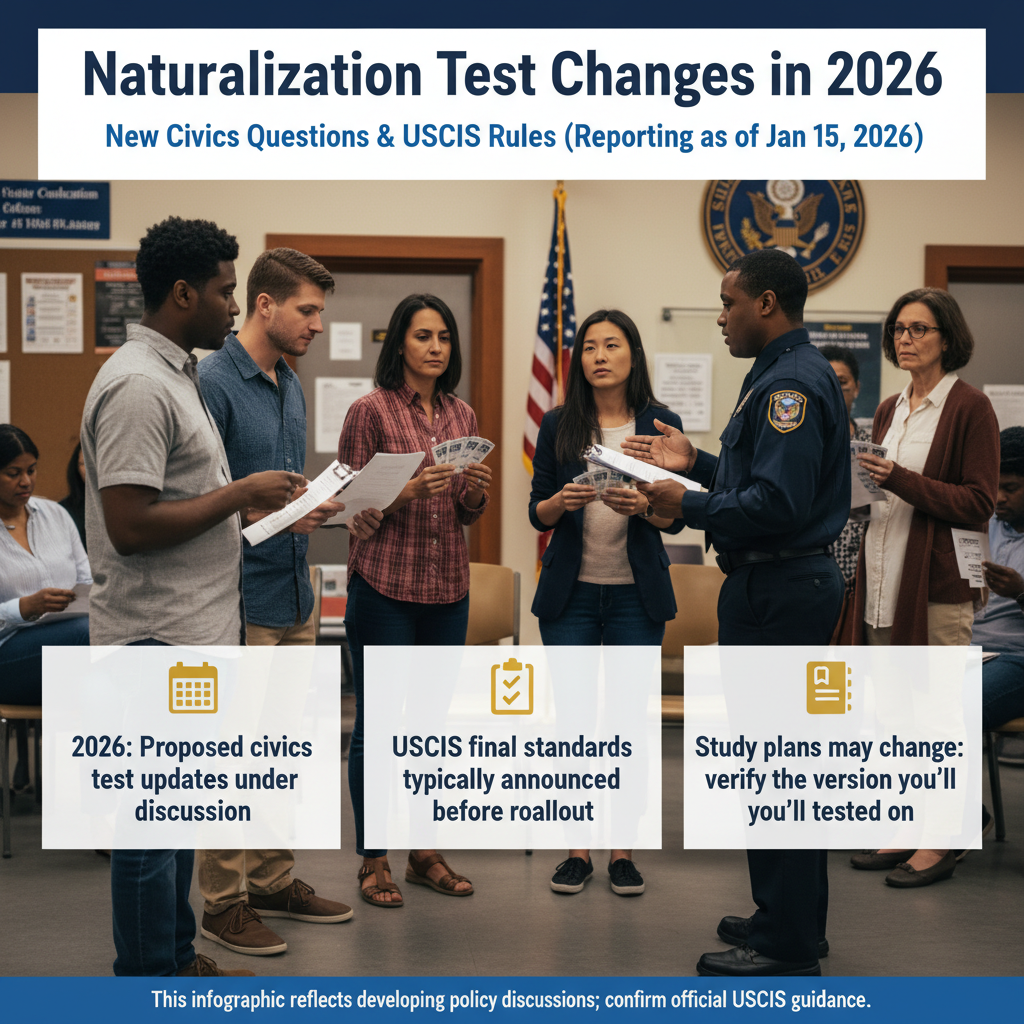
The reporting that sparked this guide: Naturalization Test Changes Coming in 2026 (Citizenship)
Important: As of today (2026-01-15), many “2026 naturalization test change” headlines reflect developing policy discussions and early reporting. USCIS typically announces final testing standards through official updates, policy manuals, and implementation guidance. This article explains what changes usually mean in practice, how to prepare safely, and how to reduce risk if you plan to file Form N-400.
Need Help? Our Orlando immigration team is ready to assist. Call +1 786-791-3106 for a free consultation, or message us online. Se Habla Español.
What This News Means for Immigrants in Orlando and Across Florida
Why this news is showing up now
Naturalization test updates tend to become “trending” when USCIS signals a modernization effort—often tied to changes in administration priorities, civic education standards, or feedback from stakeholders about fairness, consistency, and clarity. When the civics test changes, it affects:
- People preparing for the English and civics portions of the naturalization interview
- Adult learners in ESL and citizenship preparation programs
- Applicants deciding whether to file now or wait
- Families trying to coordinate timelines (for example, one spouse naturalizing before filing Form I-130 for a relative)
Reminder: USCIS has changed the civics test before. The key issue is usually which version applies to your application based on your filing date and the effective date of the new test.
How it can affect Florida residents
For Florida residents—especially those in Central Florida and the I-4 corridor (Orlando, Kissimmee, Sanford, Winter Park, and surrounding Orange County communities)—naturalization demand can surge when test changes are announced. That can lead to:
- Longer waits for biometrics and interviews at the Orlando USCIS Field Office
- More competition for community citizenship class seats
- Increased stress and misinformation online about “new requirements”
If your case is in Orlando, a test update can matter even more because local appointment availability and interview scheduling can shift quickly. You can monitor processing trends at USCIS Processing Times.
What Naturalization Test Changes Coming in 2026 Is (and Why It Matters)
A plain-English definition
“Naturalization test changes” generally means USCIS updates the questions, format, scoring, or study materials for the civics test (and sometimes clarifies how the English test is administered) during the naturalization interview for Form N-400 applicants.
Most applicants must pass:
- English test: speaking, reading, and writing
- Civics test: U.S. history and government
Why it matters: Passing the test is a make-or-break step. A new test version can change what you study, how you practice, and how you plan your filing timeline.
Key terms you need to know
- Naturalization: The process to become a U.S. citizen after meeting eligibility requirements.
- Form N-400: The application for naturalization filed with USCIS.
- Civics test: Oral questions asked by a USCIS officer during the interview.
- English exemptions: Certain applicants may qualify for exceptions based on age and years as a lawful permanent resident (LPR).
- Medical disability exception: Some applicants may request an exception to English/civics requirements due to a qualifying medical condition (typically with Form N-648).
- Oath ceremony: The final step where you take the Oath of Allegiance and become a citizen.
Warning: The internet often mixes up “test changes” with “eligibility changes.” A new civics test does not usually change who qualifies to apply. Eligibility is governed by federal law—primarily the Immigration and Nationality Act (INA)—and USCIS regulations.
Current Immigration Law: The Foundation
Naturalization is governed by federal law, not state law. However, where you live affects logistics such as interview location, local processing patterns, and access to community resources.
Federal requirements
The main legal framework comes from the Immigration and Nationality Act (INA), including:
- INA § 316 (general naturalization requirements, including good moral character and continuous residence)
- INA § 319 (naturalization through marriage to a U.S. citizen; the 3-year rule)
- INA § 312 (English and civics requirements, and exceptions)
In practice, most applicants must show:
- Lawful permanent resident status (green card holder)
- Continuous residence and physical presence
- Ability to read, write, and speak basic English (unless exempt)
- Knowledge of U.S. history and government (unless exempt)
- Good moral character during the statutory period (often 5 or 3 years)
The official place to confirm current requirements, forms, and study materials is the USCIS official website and the USCIS Forms page.
Important: This article focuses on naturalization, but many families plan citizenship alongside other processes like Form I-130 (family petition) and Form I-485 (Adjustment of Status). Timing can matter because a petitioner’s citizenship can change categories, reduce backlogs, and affect a relative’s Priority Date.
Florida-specific considerations
Florida does not set naturalization rules, but it can affect your experience:
- The Orlando USCIS Field Office typically handles interviews for many Central Florida residents.
- For Central Florida residents along the I-4 corridor, travel time and scheduling can be a real factor—plan time off work and childcare early.
- Florida’s high volume of immigrants means citizenship classes and nonprofit services can fill quickly after major news.
If you have immigration court proceedings (removal/deportation), naturalization may be impacted by jurisdictional issues. Court information and resources are available through the Executive Office for Immigration Review.
For applicants who travel internationally, it is wise to review travel documentation and passport timelines via the U.S. Department of State.
Need Help? Our Orlando immigration team is ready to assist. Call +1 786-791-3106 for a free consultation, or message us online. Se Habla Español.
How to Prepare for the 2026 Naturalization Civics Test Update: A Complete Step-by-Step Guide
This step-by-step guide is designed for applicants who are eligible (or soon eligible) to file Form N-400 and want to reduce risk if USCIS introduces new civics questions or requirements in 2026.
1) Confirm your eligibility and choose the right filing strategy
Before you study a single question, confirm you are eligible to apply—and whether you should file sooner rather than later.
- 5-year rule: Most green card holders can apply after 5 years of permanent residence.
- 3-year rule: Some spouses of U.S. citizens can apply after 3 years (with additional requirements).
- 90-day window: USCIS generally allows early filing up to the 90-day window before you meet the 3- or 5-year residence requirement.
Reminder: If you file before a new test takes effect, you may be “grandfathered” into the current version—depending on how USCIS structures the rollout. This is why strategy matters.
Documents to gather for Step 1:
- Front and back of your green card
- All passports (current and expired) used during your LPR period
- Travel history (dates of departures/returns)
- Marriage certificate and spouse’s proof of U.S. citizenship (if applying under the 3-year rule)
- Selective Service registration proof (if applicable)
- Certified court dispositions for any arrests/citations (even if dismissed)
2) Track which civics test version USCIS will apply to your case
USCIS typically specifies which test applies based on your Form N-400 filing date and the implementation date of the new test. When changes occur, USCIS usually publishes:
- Updated study materials and question lists
- Transition rules (who takes which test)
- Training guidance for officers
Check the USCIS official website and the naturalization/civics test pages regularly. Also monitor USCIS Processing Times because longer queues can push interviews into a new test period.
Documents to gather for Step 2:
- Your N-400 receipt notice (once filed)
- USCIS announcements or printouts of policy updates (helpful for your records)
- Interview notice when issued (it may include testing instructions)
3) Build a study plan that works even if questions change
If USCIS introduces new questions, the safest approach is to master the fundamentals rather than memorize only one list. Focus on:
- Foundational civics concepts (Constitution, branches of government, rights and responsibilities)
- Current officials (President, Governor, Senators/Representatives)—these can change even without a new test
- Reading and writing practice (simple sentences used in USCIS materials)
For Central Florida residents, local libraries and adult education programs often offer citizenship prep. If your case is in Orlando, plan your study schedule around realistic interview timing—often several months after filing.
Documents to gather for Step 3:
- USCIS civics study materials (download/print)
- Notebook with your weak areas and practice scores
- Audio practice tools if English listening is challenging
4) Prepare your N-400 package carefully (and avoid “test-change panic” filings)
When test changes hit the news, many applicants rush to file. Filing quickly can be smart—but only if your application is accurate and complete. Inaccurate answers can lead to delays, requests for evidence, or denials.
Warning: “Hurry up and file” is not a strategy if you have issues like long trips abroad, prior immigration violations, unpaid taxes, or criminal history. Those require careful legal review.
Documents to gather for Step 4:
- Tax transcripts or returns (recommended)
- Proof of marital union (if applying under 3-year rule): joint lease/mortgage, joint bank statements, children’s birth certificates
- Evidence of name change (court order or marriage certificate)
- Any prior immigration documents (old receipts/approvals)
5) Get ready for biometrics, the interview, and the civics/English tests
After filing, most applicants attend biometrics (fingerprints/photo) and later the naturalization interview. The officer will review your N-400, test English (unless exempt), and administer the civics test.
If USCIS rolls out a new civics test in 2026, the interview may include:
- New question pool or updated wording
- Different pass/fail thresholds (USCIS would announce this)
- More emphasis on understanding rather than rote memorization
Documents to gather for Step 5 (bring to interview):
- Interview appointment notice
- Green card
- State ID/driver’s license
- All passports and travel documents
- Marriage/divorce documents (if applicable)
- Certified court dispositions (if any)
- Updated evidence of marital union (if applying under 3-year rule)
6) Know what happens if you don’t pass on the first try
Many applicants don’t realize that failing the English or civics test at the interview is not always the end. USCIS often provides a second opportunity (a re-test) within a set period.
If a 2026 change increases difficulty or introduces unfamiliar topics, a re-test may become more common. The key is to leave the interview knowing:
- Which parts you passed/failed
- What you must study for the re-test
- Whether USCIS needs additional documents
Documents to gather for Step 6:
- Any written notice from USCIS about re-examination
- Your updated study notes and practice tests
- Any requested evidence (RFE-style items)
7) Finish strong: oath ceremony, Certificate of Naturalization, and next steps
After approval, you’ll be scheduled for the oath ceremony. Once you take the oath, you become a U.S. citizen and receive your Certificate of Naturalization.
After that, many new citizens:
- Apply for a U.S. passport through the U.S. Department of State
- Update Social Security records
- Register to vote
- Consider family immigration options (often involving Form I-130, Form I-485, and Priority Date planning)
Documents to gather for Step 7:
- Oath ceremony notice
- Green card (you typically surrender it at the ceremony)
- Certificate of Naturalization (keep it safe; consider a secure storage plan)
- Passport application materials (photos, fees, proof of citizenship)
Practical Steps You Can Take Today
Whether the 2026 changes are finalized tomorrow or later in the year, you can take steps now that help under any test version.
Actionable checklist
- 1) Do a “timeline audit” of your eligibility. Identify your LPR start date and whether you qualify under the 3- or 5-year rule. Remember the 90-day window.
- 2) Build a travel log. List every trip outside the U.S. with dates. Long absences can raise continuous residence issues.
- 3) Request tax transcripts. Tax compliance can affect good moral character. If you owe taxes, get a payment plan and proof.
- 4) Start civics study using USCIS materials. Even if the questions change, core topics remain consistent.
- 5) Practice English daily. Short reading/writing drills are more effective than cramming.
- 6) If you have medical issues, discuss Form N-648 early. These cases require careful documentation and timing.
- 7) Get legal screening if you have any arrests or immigration complications. A naturalization filing can trigger review of your entire immigration history.
Document preparation guidance
Create a “citizenship folder” (digital and paper) with:
- Green card copy (front/back)
- All passports
- Marriage/divorce documents
- Proof of address history for the last 5 years
- Tax transcripts
- Court-certified dispositions (if applicable)
Important: If you changed your name, make sure every document matches or you have proof linking the names (marriage certificate or court order).
Timeline expectations
Naturalization timelines vary. Many cases take months from filing to interview, and local demand can affect scheduling.
- Check current estimates at USCIS Processing Times.
- If your case is in Orlando, plan for the possibility that your interview date could land after a new test effective date—especially during high-volume periods.
Reminder: A test change can create a surge in filings, which can extend waits even further.
Need Help? Our Orlando immigration team is ready to assist. Call +1 786-791-3106 for a free consultation, or message us online. Se Habla Español.
How Imigrar Helps Immigrants in Orlando
At Imigrar, we help clients in Orlando, Orange County, and across the I-4 corridor—and we serve families nationwide. Our mission is simple: Keep Families Together.
When civics test rules change, the biggest risks are usually not the new questions—it’s the confusion, rushed filings, and missed eligibility issues. We help by:
- Confirming eligibility and the safest filing timeline (including the 90-day window)
- Identifying red flags (travel, taxes, prior immigration history, criminal issues)
- Preparing a clean, consistent Form N-400 package
- Preparing you for the interview with practical, realistic coaching
- Planning family immigration after citizenship (including Form I-130, Form I-485, Adjustment of Status, and Priority Date strategy)
Call us at +1 786-791-3106 for a free consultation. Se Habla Español.
Frequently Asked Questions
Q: Will the 2026 naturalization test changes affect my eligibility to apply for citizenship?
A: Usually, no. Test changes typically affect how USCIS evaluates civics knowledge, not whether you qualify. Eligibility is based on federal law (INA), including continuous residence, physical presence, and good moral character. However, if you delay filing because you’re worried about a new test, you could inadvertently create timeline issues (for example, extended travel). Consider confirming eligibility and filing strategy before the change takes effect.
Q: If I file Form N-400 now, will I take the old test or the new test?
A: It depends on the USCIS transition rule. In prior test transitions, USCIS has often applied the test version based on the Form N-400 filing date (and sometimes the interview date). Because interview scheduling can take months, applicants in Orlando and throughout Florida should plan for the possibility that a case filed today could be interviewed after a new test effective date. Monitor updates on the USCIS official website.
Q: Do naturalization test changes impact my green card or immigration status while my N-400 is pending?
A: A pending N-400 does not automatically change your lawful permanent resident status—you remain an LPR unless something else affects that status. But Warning: USCIS reviews your full immigration and criminal history during naturalization. If there are undisclosed arrests, fraud issues, or abandonment concerns, USCIS may take action beyond simply denying the N-400. If you have any concerns, get legal advice before filing.
Q: What documents should I bring to the citizenship interview, especially if the test changes?
A: Bring your interview notice, green card, state ID, all passports, and any documents related to your eligibility category (marriage certificate and spouse’s citizenship proof for the 3-year rule). If you have any arrests—even old or dismissed cases—bring certified dispositions. If you traveled frequently, bring a clear travel list. The test questions may change, but document requirements remain rooted in proving eligibility and credibility.
Q: How long does naturalization take in Florida, and will the 2026 changes slow it down?
A: Timelines vary by workload and field office. A major announcement can trigger a spike in filings, which may slow scheduling at the Orlando USCIS Field Office and other Florida offices. Check your category on USCIS Processing Times. If timing is critical (for example, you need citizenship to petition a relative sooner), discuss strategy early.
Q: How much does it cost to apply for citizenship, and will a new test increase the fee?
A: USCIS filing fees can change, but a civics test update does not automatically mean a fee increase. The cost to file Form N-400 is set by USCIS fee regulations and published on USCIS. Always confirm current fees directly on the USCIS official website or through the USCIS Forms page. Also budget for document fees (certified court records, translations) and potential legal help if your case has complications.
Q: What happens if USCIS denies my N-400 or I fail the civics test?
A: If you fail the civics or English test, USCIS often schedules a re-test rather than denying immediately. If USCIS denies the application, you may have options such as requesting a hearing (appeal) in certain cases. Important: A denial can sometimes expose underlying issues (like good moral character concerns). If you receive a denial, speak with an immigration attorney promptly to evaluate deadlines and next steps.
Common Mistakes (and How to Avoid Them)
Mistake #1: Filing “too fast” because of headlines
Test-change news can create panic. Applicants sometimes submit Form N-400 with errors or omissions just to “beat the new test.”
How to avoid it: Use a checklist, review every address/trip/date, and get legal screening if you have any red flags.
Mistake #2: Memorizing answers without understanding the question
If USCIS changes wording or adds scenario-based questions, memorization can fail.
How to avoid it: Learn concepts (branches of government, constitutional principles) and practice explaining them in simple English.
Mistake #3: Ignoring travel, taxes, or court history because “it’s just a test”
The interview is not only a test—it’s an eligibility review. Long absences, unpaid taxes, or unresolved court records can derail approval.
How to avoid it: Build a travel log, obtain tax transcripts, and collect certified dispositions early.
Need Help? Our Orlando immigration team is ready to assist. Call +1 786-791-3106 for a free consultation, or message us online. Se Habla Español.
Planning Beyond the Test: Why Citizenship Timing Can Help Your Family
Even though this news is about civics questions, many families pursue citizenship for bigger reasons—stability, voting rights, and family immigration options. In many cases, becoming a U.S. citizen can improve options for relatives, including:
- Faster or more flexible family categories (depending on the relationship)
- Different visa availability rules tied to a relative’s Priority Date
- Potential ability to pursue Adjustment of Status using Form I-485 in some situations
Important: Family cases can be complex. For example, some relatives may need consular processing through the U.S. Department of State, while others might qualify for Adjustment of Status. If you’re planning a family strategy, talk to counsel before you file so you don’t lose time.
If you or a loved one is in removal proceedings, the interaction between naturalization and court can be complicated. Court resources are available at the Executive Office for Immigration Review.
Reminder: We included Form I-130 and Form I-485 here because many families coordinate citizenship with petitions. Even if your immediate goal is the civics test, your long-term plan may depend on those forms and your Priority Date.
Warning: If you are considering travel while your case is pending, keep your trip lengths conservative and document everything. Long trips can raise continuous residence questions.
To verify any form edition or filing address, use the USCIS Forms page and the USCIS official website.
Note on deadlines: While naturalization doesn’t have a universal “must file by” date, some related immigration benefits do have strict timing rules (for example, responding to USCIS notices). Always calendar deadlines immediately. If you receive a request with a 180 days deadline (or any other stated period), treat it as non-negotiable and respond early.
Closing: Prepare Smart for 2026—Without Panic
Naturalization test changes can feel intimidating, but most applicants succeed with a clear plan: confirm eligibility, file accurately, study consistently, and prepare for the interview using official materials. If your case is in Orlando or anywhere in Central Florida, plan ahead for scheduling realities at the Orlando USCIS Field Office and avoid last-minute decisions driven by social media rumors.
If you want a personalized strategy—especially if you have travel history, prior arrests, tax issues, or you’re coordinating family petitions like Form I-130 and Form I-485—Imigrar can help you move forward with confidence.
Need Help? Our Orlando immigration team is ready to assist. Call +1 786-791-3106 for a free consultation, or message us online. Se Habla Español.


