


The reporting that sparked this guide
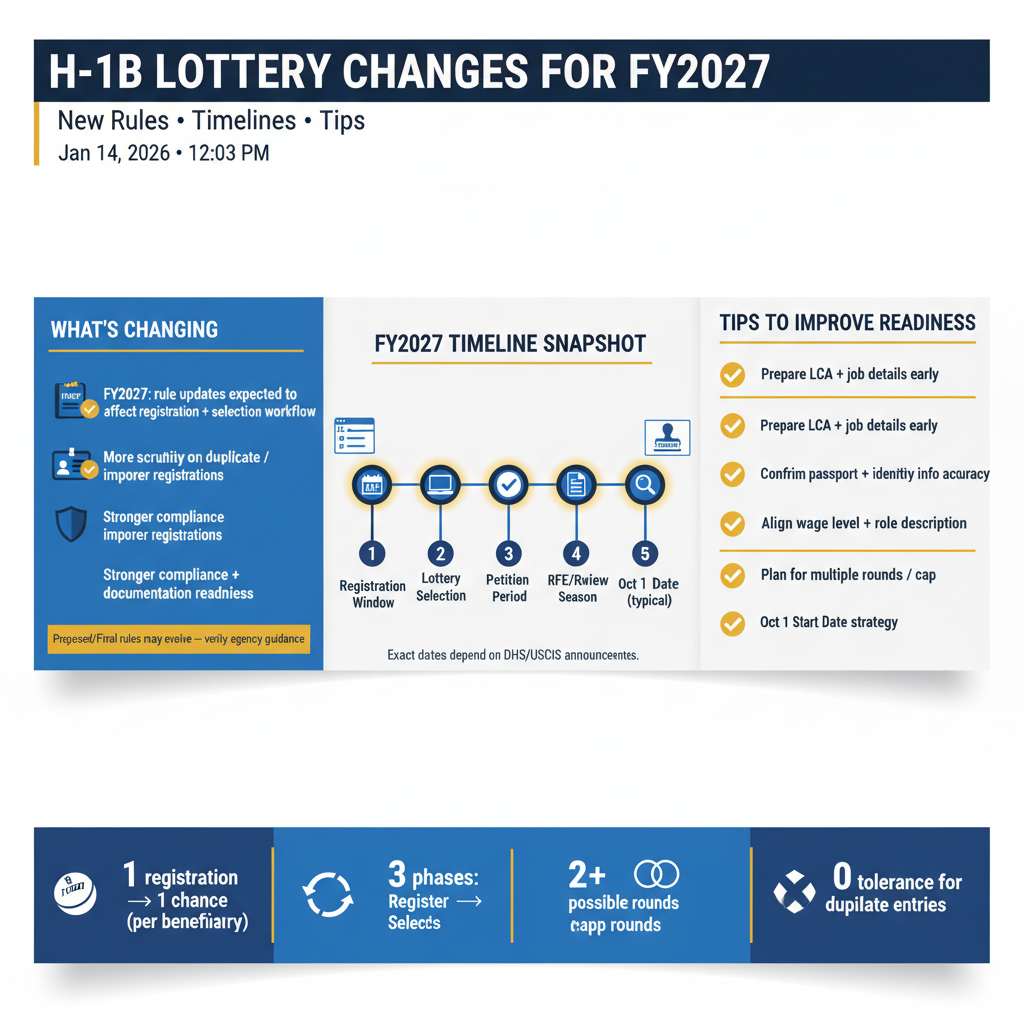
The reporting that sparked this guide: H-1B Visa Lottery Changes for FY2027 (Legal News)
Important: News coverage often summarizes proposed or newly finalized rules before agencies publish full implementation details. This article explains the most likely FY2027 H-1B lottery impacts based on current federal authority, recent USCIS rulemaking trends, and how H-1B selection has been administered in recent fiscal years. For the most current official updates, always check the USCIS official website.
Need Help? Our Orlando immigration team is ready to assist. Call +1 786-791-3106 for a free consultation, or message us online. Se Habla Español.
What This News Means for Immigrants in Orlando and Across Florida
Why this news is showing up now
H-1B “lottery change” headlines tend to surge when USCIS and the Department of Homeland Security (DHS) signal updates to the electronic registration system, selection methodology, anti-fraud measures, or employer compliance requirements. These topics trend because the H-1B cap is heavily oversubscribed and even small rule changes can shift who gets selected, how employers plan, and how workers maintain lawful status.
For FY2027, the practical concern is not only “Will I be selected?” but also:
- Whether the registration rules will reduce duplicate or coordinated filings and how USCIS will detect them.
- Whether selection will remain “beneficiary-centric” (one person, one chance) and how employers must document legitimate job offers.
- Whether USCIS will tighten scrutiny on specialty occupation, wage levels, third-party placement, and employer-employee relationship evidence.
- Whether timelines will compress, affecting the 90-day window many employers rely on to prepare petition packages after selection.
Reminder: The H-1B cap process is annual and time-sensitive. If you miss the registration window or your employer’s compliance documentation is weak, you may lose a full year of opportunity.
How it can affect Florida residents
Florida has a large and growing population of international students, STEM graduates, healthcare professionals, engineers, and IT workers—many of whom rely on F-1 OPT/STEM OPT as a bridge to H-1B. For Central Florida residents along the I-4 corridor (Orlando, Lake Mary, Sanford, Kissimmee, and beyond), H-1B changes can affect:
- F-1 students at UCF, Valencia College pathways, and private universities who need cap-gap planning.
- Employers in tech, hospitality analytics, healthcare, aerospace, and consulting who sponsor talent nationwide but operate in Orange County and surrounding counties.
- Families relying on H-4 status and H-4 EAD eligibility planning.
If your case is in Orlando, timing and documentation are especially important because H-1B often intersects with longer-term strategies like Adjustment of Status (for those pursuing a green card) and maintaining a clean record for future benefits. While H-1B petitions are generally adjudicated by USCIS service centers (not the local field office), your broader immigration journey may involve the Orlando area for biometrics, interviews, or related filings.
What H-1B Visa Lottery Changes for FY2027 Is (and Why It Matters)
A plain-English definition
The “H-1B lottery” is the selection process USCIS uses when more employers want to sponsor workers than the law allows under the annual H-1B cap. Employers first submit an electronic registration for each worker they want to sponsor. If USCIS receives more registrations than available cap numbers, USCIS runs a random selection process. Selected registrations can then be filed as full H-1B petitions.
“Lottery changes for FY2027” refers to updates that may affect one or more of the following:
- How registrations are submitted and validated
- How USCIS selects registrations (including steps to prevent multiple registrations for the same person)
- What employers must attest to
- How USCIS handles suspected fraud or misuse
- How quickly petitions must be filed after selection
Key terms you need to know
- H-1B cap: The yearly limit on new H-1B approvals subject to the cap (commonly 65,000 regular cap plus 20,000 U.S. master’s cap, with exemptions).
- Electronic registration: The online pre-registration employers submit before filing a full petition.
- Beneficiary: The foreign national worker the employer wants to sponsor.
- Cap-subject vs. cap-exempt: Cap-subject cases compete in the lottery; cap-exempt employers (certain universities, nonprofit research organizations, etc.) may file without the cap.
- LCA (Labor Condition Application): A Department of Labor certification required before filing most H-1B petitions, confirming wage and working conditions compliance.
- Specialty occupation: A job that normally requires at least a bachelor’s degree in a specific specialty (and the worker must have the required degree or equivalent).
- Premium processing: An optional fee-based USCIS service for faster adjudication for eligible forms and categories.
- Cap-gap: A rule that can extend certain F-1 students’ work authorization/status while an H-1B petition is pending/approved.
- Priority Date: A key concept in green card cases. Not an H-1B concept, but it matters if H-1B is part of a long-term plan toward permanent residence.
Warning: H-1B strategy is not only about “getting selected.” It’s also about proving a real job in a qualifying specialty occupation, meeting wage rules, and maintaining status from registration through October 1 start dates.
Current Immigration Law: The Foundation
H-1B visas are governed primarily by the Immigration and Nationality Act (INA) and DHS regulations. The cap and specialty occupation framework are rooted in:
- INA § 214 (nonimmigrant admissions and conditions)
- INA § 212(n) (Labor Condition Application requirements and enforcement)
- 8 C.F.R. § 214.2(h) (H classification regulations, including H-1B)
- 20 C.F.R. Part 655, Subparts H and I (Department of Labor LCA rules)
Federal requirements
Even if FY2027 introduces new lottery mechanics, the core legal requirements generally remain:
- A legitimate U.S. employer offering a specialty occupation position
- Worker meets degree/experience requirements
- Certified LCA (wage level, worksite, notice requirements)
- Proper petition filing with USCIS (typically Form I-129 for H-1B)
- Maintenance of status and compliance with the terms of employment
USCIS and DHS also rely on anti-fraud authorities and may request evidence to confirm the employer-employee relationship, availability of work, and compliance with the LCA.
Official resources you should bookmark: USCIS official website, USCIS Forms, USCIS Processing Times, U.S. Department of State.
Florida-specific considerations
Immigration is federal law, so Florida does not create separate H-1B eligibility rules. But Florida-specific realities can affect your case:
- Worksite documentation: Many Florida roles are hybrid, multi-site, or client-site. Your petition must accurately list worksites and comply with LCA posting/notice rules.
- Industry profiles: Central Florida has many consulting, staffing, and project-based roles—USCIS often scrutinizes these for specialty occupation and employer control.
- Local logistics: If you later file for Adjustment of Status using Form I-485, the Orlando USCIS Field Office may handle an interview depending on your case type and USCIS policy at the time.
Reminder: People often confuse H-1B steps with family-based steps. Family cases use forms like Form I-130 and may lead to Adjustment of Status via Form I-485. These are different pathways, but long-term planning sometimes involves both (for example, an H-1B worker later marries a U.S. citizen).
If your case is in Orlando and you are balancing work authorization, travel, and a future green card plan, it’s wise to coordinate timing so you don’t create gaps that could affect eligibility, especially around the 180 days rule concepts that can appear in other immigration contexts (such as certain portability or unlawful presence analyses depending on the benefit sought).
Need Help? Our Orlando immigration team is ready to assist. Call +1 786-791-3106 for a free consultation, or message us online. Se Habla Español.
How to Prepare for the FY2027 H-1B Lottery Changes: A Complete Step-by-Step Guide
The best way to handle rule changes is to build a strong, compliant case that can withstand scrutiny regardless of selection mechanics. Below is a practical roadmap employers and beneficiaries can follow.
1) Confirm whether you are cap-subject and map your immigration timeline
Start by identifying whether your case is subject to the H-1B cap and how it fits into your current status (F-1, STEM OPT, L-1, TN, etc.). This step helps you avoid last-minute surprises—especially for F-1 students relying on cap-gap.
Documents to gather:
- Passport biographic page and expiration date
- Current I-94 record (arrival/departure) if applicable
- Current status documents (I-20/OPT EAD, DS-2019, I-797 approvals, etc.)
- Resume/CV and degree evaluations (if needed)
- Prior immigration approval notices and any RFEs/denials
Important: If you are close to the end of OPT or STEM OPT, your employer must plan for the registration window and petition filing window so you can benefit from cap-gap where eligible.
2) Validate the job qualifies as a “specialty occupation” (before registration)
USCIS can deny an H-1B even after selection if the job description is too generic or the degree requirement is not clear. With increased scrutiny likely under FY2027 changes, this step is essential.
Documents to gather:
- Detailed job description (duties, tools/tech, reporting structure)
- Minimum requirements (degree field(s), experience, certifications)
- Organizational chart showing supervision and role placement
- Evidence of similar roles at the company (past postings, internal job frameworks)
- Client letters/SOWs (if third-party placement is involved)
Warning: “Computer-related” roles and analyst titles can be approvable, but USCIS often expects a strong explanation of why a specific specialty degree is normally required.
3) Prepare employer compliance and ownership documentation (anti-fraud readiness)
Lottery rule changes frequently come with stronger enforcement against improper multiple registrations, shell entities, or coordinated filings. Employers should prepare corporate documentation early.
Documents to gather:
- Articles of incorporation/organization and business licenses
- EIN confirmation letter
- Payroll records or proof of ability to pay (as appropriate)
- Company website, brochures, and proof of operations
- Ownership and affiliate/related entity information
Reminder: If multiple related companies want to register the same beneficiary, the legal analysis must be careful. USCIS may treat coordinated filings as improper if they are not truly separate job offers.
4) Plan the LCA strategy (wage level, worksite, and posting)
The LCA is a Department of Labor process, but it is central to USCIS adjudication. A strong LCA strategy supports credibility, especially for hybrid roles or multiple worksites across Florida and beyond.
Documents to gather:
- Worksite addresses (including remote work arrangement details)
- Prevailing wage data support (if used)
- Internal wage documentation and offered wage confirmation
- Posting notices and proof of posting (physical/electronic as applicable)
- Client site details and itinerary (if applicable)
For Central Florida residents, employers commonly list worksites in Orange County and throughout the I-4 corridor. Make sure addresses and remote policies are consistent across HR, LCA, and the petition.
5) Complete the electronic registration accurately and consistently
During registration, small mistakes can create big problems later (name spelling, passport details, duplicate entries, or mismatched information). FY2027 changes may increase validation checks, so consistency is critical.
Documents to gather:
- Beneficiary passport information (name format must match passport)
- Prior U.S. immigration history summary (for internal review)
- Employer signatory details and authorized representative info
- Internal approval memo showing legitimate job offer and salary
Important: If rules tighten around “one beneficiary, one chance,” submitting multiple registrations through related entities can backfire. A careful compliance review is often worth it.
6) If selected, file the H-1B petition package correctly and on time
Selection is not approval. Your employer must file a complete petition (typically Form I-129 with H supplement and supporting evidence) within the USCIS filing window stated on the selection notice.
Documents to gather:
- Certified LCA
- Signed offer letter and detailed support letter
- Company support documents (operations, contracts, organizational chart)
- Beneficiary degrees, transcripts, credential evaluation (if needed)
- Evidence of maintenance of status (I-94, I-20, paystubs, etc.)
Warning: Missing the filing window can mean losing the selection. Treat the selection notice deadline like a hard stop.
7) Plan for October 1 start date, travel, and long-term options
Cap-subject H-1B approvals generally begin October 1 of the fiscal year. If you are changing status in the U.S., travel before approval can disrupt the change of status. If you will consular process, plan the visa appointment timeline.
Documents to gather:
- Travel history and upcoming travel plans
- Prior visa stamps and I-797 approvals
- Dependents’ documents (marriage certificate, birth certificates)
- Future green card planning notes (PERM, I-140) if applicable
If your case is in Orlando and you’re also considering a family-based route (for example, through a U.S. citizen spouse), you may hear about Form I-130, Form I-485, Adjustment of Status, and your Priority Date. Those are separate processes, but timing and travel rules can overlap—so coordination matters.
Practical Steps You Can Take Today
Whether FY2027 changes are modest or major, preparation is the best defense. Here’s a checklist you can start right now.
- Checklist item 1: Ask your employer who will own the H-1B process (HR, legal, outside counsel) and confirm internal deadlines.
- Checklist item 2: Update your resume and gather transcripts/diplomas; order official transcripts early if needed.
- Checklist item 3: Confirm your passport validity (ideally 6+ months beyond the intended H-1B period).
- Checklist item 4: Prepare a clear job description that ties duties to a specific specialty degree.
- Checklist item 5: If you are on OPT/STEM OPT, review your EAD end date and discuss cap-gap timing.
- Checklist item 6: If you have prior RFEs/denials, prepare a strategy memo addressing prior issues.
- Checklist item 7: Keep copies of paystubs, W-2s, and I-94s—these are common maintenance-of-status evidence.
Timeline expectations: In most years, the registration period occurs in the spring, selections follow, and then employers file full petitions in a defined filing window. After filing, processing times vary by service center and whether premium processing is used. Track estimates at USCIS Processing Times.
Document preparation guidance: Create a single secure folder (digital and/or physical) with your identity documents, immigration history, education records, and employment records. Consistency across documents matters—names, dates, and addresses should match.
Reminder: If you are also pursuing a green card, keep a separate folder for immigrant petition items like Form I-130 or Form I-485 filings (if applicable), and track your Priority Date carefully.
Need Help? Our Orlando immigration team is ready to assist. Call +1 786-791-3106 for a free consultation, or message us online. Se Habla Español.
How Imigrar Helps Immigrants in Orlando
At Imigrar, we help workers, employers, and families navigate complex immigration rules with a focus on strategy, compliance, and long-term stability—because our mission is to Keep Families Together.
We can help you:
- Assess cap-subject vs. cap-exempt options and build a filing calendar
- Strengthen specialty occupation evidence and job descriptions
- Prepare employer documentation to reduce RFE/NOID risk
- Coordinate H-1B with family-based options (including Form I-130 and Form I-485 when appropriate)
- Plan travel and status maintenance to avoid accidental violations
For Central Florida residents, we understand the realities of hybrid worksites along the I-4 corridor and the documentation USCIS expects. While H-1B adjudications typically occur at USCIS service centers, the Orlando USCIS Field Office may become relevant for related processes—especially if you later pursue Adjustment of Status.
We offer a free consultation to help you understand your options and next steps. Se Habla Español.
Frequently Asked Questions
Q: Who is eligible to enter the H-1B lottery for FY2027?
A: Eligibility requires a U.S. employer willing to sponsor you for a specialty occupation role and your qualifications (typically at least a bachelor’s degree in a related field or equivalent). You do not “self-petition” for H-1B. The employer submits the registration and, if selected, files Form I-129. If you’re unsure whether your role qualifies, a legal review of the job duties and degree requirements is often the deciding factor.
Q: Will FY2027 lottery changes affect my current immigration status (F-1, OPT, STEM OPT, etc.)?
A: The lottery rules themselves don’t automatically change your current status, but they can affect your strategy and timing. For F-1 students, selection and timely filing can trigger cap-gap benefits in certain situations. Warning: If your OPT ends before an H-1B petition is properly filed (and eligible for cap-gap), you may need another plan to avoid a status gap.
Q: How long does the H-1B process take from registration to approval?
A: Timing varies each year. Generally, registration happens first, then selection, then a petition filing window. After filing, processing depends on USCIS workload and whether premium processing is used. Check current estimates at USCIS Processing Times. If you need an October 1 start date, plan backward and treat every deadline as firm.
Q: What documents are required after selection?
A: Common documents include: certified LCA; employer support letter; detailed job description; proof of company operations; beneficiary’s degree(s), transcripts, and evaluations (if needed); passport/I-94; and proof of maintenance of status (paystubs, I-20s, prior approvals). Reminder: Consistency across the LCA, support letter, and internal HR records is crucial.
Q: How much does an H-1B case cost?
A: Costs usually include USCIS filing fees (which can vary by employer size and category), optional premium processing, and legal fees if using counsel. Employers often pay required fees under the law; shifting certain fees to the worker can be prohibited. Because fee rules can change, confirm current amounts directly through the USCIS Forms page and consult counsel for a compliant payment structure.
Q: What happens if my H-1B petition is denied after selection?
A: A denial means the H-1B is not approved, and your next steps depend on your current status and timing. You may be able to remain in the U.S. if you still have valid underlying status, or you may need to depart or change plans. Sometimes a denial can be challenged with a motion/appeal, but strategy depends on the denial basis. Important: Don’t ignore deadlines—if your status is expiring, you may have limited time to act.
Q: Can multiple employers register me to improve my chances under FY2027 changes?
A: Multiple legitimate, unrelated employers may each register a beneficiary if each has a real job offer and an independent need. However, USCIS has increased scrutiny of duplicate/coordinated filings, and FY2027 changes may further restrict or penalize improper multiple registrations. Warning: If registrations are coordinated or not based on genuine job offers, it can lead to denial, revocation, or fraud findings.
Q: Does living in Orlando or Orange County change my H-1B case?
A: The core H-1B rules are federal, so your address does not change eligibility. But if your case is in Orlando, your worksite details, remote work arrangement, and later immigration steps (like Adjustment of Status using Form I-485) may connect you to local processes. For Central Florida residents, accurate worksite documentation along the I-4 corridor is a common compliance issue to get right.
Common Mistakes (and How to Avoid Them)
Mistake #1: Treating selection as approval
Being selected only means you can file the petition. USCIS can still deny for specialty occupation issues, weak employer-employee relationship evidence, or inconsistent documents. Avoid this by building the petition like it will be audited: detailed duties, clear degree nexus, and solid company proof.
Mistake #2: Inconsistent worksite and remote-work documentation
Hybrid work is common in Florida. If the LCA lists one location but internal HR documents, offer letters, or client paperwork suggest another, you may trigger an RFE or worse. Align the LCA, support letter, and real-world work arrangement. Keep posting/notice evidence.
Mistake #3: Risky multiple registrations or “gaming” the system
USCIS has signaled strong enforcement against improper duplicate filings. FY2027 changes may increase audits, denials, or referral actions. Only file registrations supported by real, independent job offers. Document the business need and recruitment rationale.
Additional Official Resources (Use These, Not Rumors)
Because implementation details can change quickly, rely on primary sources:
- USCIS official website
- USCIS Forms
- USCIS Processing Times
- U.S. Department of State
- Executive Office for Immigration Review
Reminder: EOIR primarily relates to immigration court proceedings; it’s not the agency that adjudicates H-1B. However, it can be relevant for people with removal proceedings or complex histories who must coordinate benefits carefully.
Need Help? Our Orlando immigration team is ready to assist. Call +1 786-791-3106 for a free consultation, or message us online. Se Habla Español.

Closing: Protect Your H-1B Strategy for FY2027
FY2027 H-1B lottery changes may reshape how employers register beneficiaries and how USCIS enforces compliance. The safest approach is to prepare early, document the job and company thoroughly, and avoid risky registration behavior that could trigger denials or fraud concerns.
If your case is in Orlando—or you’re anywhere in Florida or the U.S. and want a clear plan—Imigrar can help you build a compliant H-1B strategy and coordinate it with your long-term goals, including family-based options like Form I-130, Form I-485, Adjustment of Status, and tracking your Priority Date when applicable.
Need help now? Call Imigrar at +1 786-791-3106 for a free consultation or message us online. Se Habla Español.


