
Naturalization Test 2026: Your Guide to Upcoming Changes &
Prepare for the 2026 Naturalization Test changes with Imigrar. Understand new civics questions and requirements to achieve U.S. citizenship.

The journey to U.S. citizenship is a significant milestone for many immigrants and their families. It represents the culmination of years of hard work, dedication, and a commitment to building a new life in America. A critical step in this journey is passing the naturalization test, which assesses an applicant’s knowledge of U.S. history, government, and their ability to read, write, and speak English.
As an immigration law firm based in Orlando, Florida, Imigrar is dedicated to keeping our community informed about crucial updates that impact their path to citizenship. Today, we delve into significant changes coming to the naturalization test in 2026 – changes that will affect applicants nationwide, including those right here in Central Florida.
Need Help? Our Orlando immigration team is ready to assist. Navigating naturalization, especially with upcoming changes, can be complex. Call +1 786-791-3106 for a free consultation, or message us online. Se Habla Español.
The reporting that sparked this guide
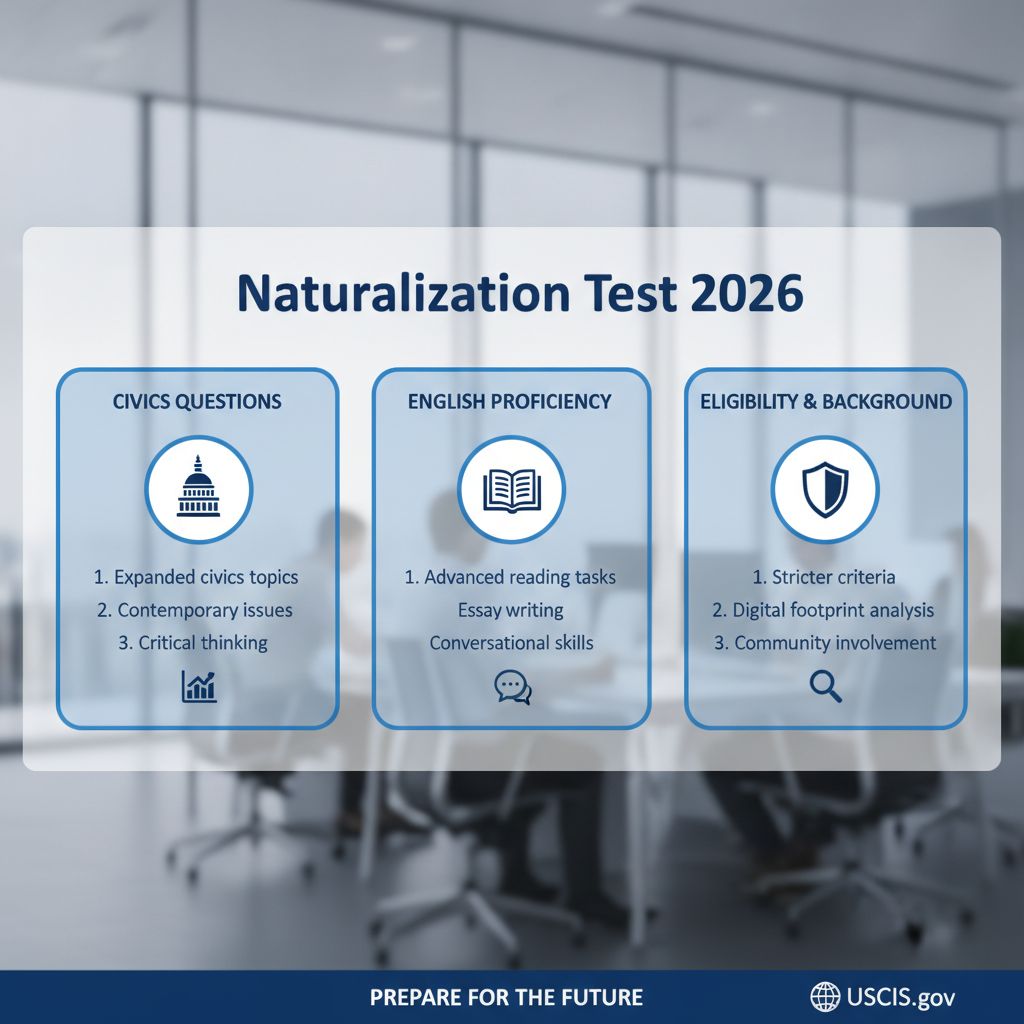
The news of impending adjustments to the U.S. Naturalization Test has been a trending topic in immigration circles, prompting many aspiring citizens to seek clarity and guidance. The core information driving this discussion stems from reports on the U.S. Citizenship and Immigration Services (USCIS) plans to update the civics and English proficiency components of the test. While the exact details are still being finalized, the direction of these changes has been clearly communicated through various official channels and pilot programs.
For more general news on immigration law, you can refer to sources like: Naturalization Test Changes Coming in 2026 (Citizenship)
What This News Means for Immigrants in Orlando and Across Florida
For the vibrant immigrant communities across Florida, from the bustling streets of Miami to the theme park capital of Orlando, and the serene beaches of Tampa, these upcoming naturalization test changes are a topic of immediate concern. The path to citizenship is a shared aspiration, and any modification to its requirements warrants careful attention and preparation.
Why this news is showing up now
USCIS periodically reviews and updates its naturalization policies and procedures to ensure they remain relevant, effective, and align with current educational and civic standards. The proposed changes for the 2026 naturalization test are the result of extensive research, pilot programs, and feedback gathered over several years. The aim is to create a more comprehensive and meaningful assessment of an applicant's understanding of U.S. civics and their ability to engage in everyday English conversations.
Historically, the naturalization test has undergone revisions, with the most recent significant update occurring in 2020 under the previous administration, which was later reverted to the 2008 version. These upcoming 2026 changes represent a proactive effort by USCIS to enhance the quality of the test, moving towards a more interactive and scenario-based approach rather than rote memorization. This shift is intended to better assess an applicant's critical thinking skills and practical understanding of American civics, as well as their functional English speaking abilities through more conversational methods.
How it can affect Florida residents
While naturalization is a federal process, its administration and impact are deeply felt at the local level. Florida, with its diverse population and numerous immigrant communities, will experience these changes directly. Here’s how:
- Increased Preparation Needs: Applicants will need to adjust their study methods. Instead of just memorizing facts, they may need to understand concepts more deeply and be prepared to discuss them in English. This could mean more intensive English language practice and civics education.
- Impact on USCIS Field Offices: The USCIS Field Offices in Florida, including the one in Orlando, Miami, and Tampa, will be implementing these new test formats. This may require their officers to undergo new training, potentially affecting interview scheduling or processing times during the transition period.
- Community Resources: Local community organizations, adult education centers, and legal aid services across Central Florida (e.g., in Orange County, Osceola County, or along the I-4 corridor) that offer citizenship classes will need to update their curricula to reflect the new test requirements.
- Legal Guidance: Immigration law firms like Imigrar in Orlando will play an even more crucial role in advising clients on the specifics of the new test, helping them prepare effectively, and ensuring their applications are robust. We anticipate a surge in demand for tailored preparation strategies.
- Timeline Considerations: For those on the cusp of applying, understanding the effective date of the changes will be critical. Some may choose to accelerate their application to take the current test, while others may benefit from the extended preparation time for the new format.
Regardless of where you are in Florida, from Orlando to Naples, these changes underscore the importance of staying informed and seeking professional guidance to navigate your naturalization journey successfully.
Considering applying for naturalization before the 2026 changes? Understanding your options is key. Contact Imigrar today at +1 786-791-3106 for expert advice tailored to your situation. We serve clients nationwide from our Orlando office. Se Habla Español.
What Naturalization Test Changes Are (and Why They Matter)
The naturalization test is a cornerstone of the U.S. citizenship application process. It ensures that aspiring citizens have a foundational understanding of the country's history, principles, and governance. The upcoming changes in 2026 are not merely cosmetic; they represent a shift in how this understanding is assessed, making it critical for all applicants to be aware.
A plain-English definition
Naturalization is the process by which a foreign citizen or national can become a U.S. citizen. To do this, most applicants must pass a two-part test: an English test and a civics test. The English test evaluates your ability to read, write, and speak basic English. The civics test assesses your knowledge of U.S. history and government.
The "Naturalization Test Changes Coming in 2026" refer to significant modifications that USCIS plans to implement for both the English and civics portions of this test. These changes are designed to move away from purely memorization-based questions towards a more interactive and comprehensive assessment of an applicant's understanding and ability to communicate in English about civics topics. It aims to ensure new citizens have a deeper, more practical grasp of their rights and responsibilities.
Key terms you need to know
- Naturalization: The process of granting U.S. citizenship to a foreign citizen or national after he or she has fulfilled the requirements established by Congress in the Immigration and Nationality Act (INA).
- Civics Test: The portion of the naturalization test that assesses an applicant's knowledge of U.S. history, government, and civics principles.
- English Test: The portion of the naturalization test that assesses an applicant's ability to read, write, and speak basic English. This includes reading a sentence, writing a sentence, and understanding questions asked by the USCIS officer during the interview.
- USCIS (U.S. Citizenship and Immigration Services): The government agency responsible for administering the country's lawful immigration system, including processing naturalization applications and conducting the naturalization test. You can find more information on the USCIS official website.
- Form N-400 (Application for Naturalization): The primary form used by eligible lawful permanent residents to apply for U.S. citizenship.
- Lawful Permanent Resident (LPR): Also known as a "green card" holder, an individual who has been granted the privilege of residing permanently in the United States. This is a prerequisite for most naturalization applicants.
- Oath of Allegiance: The final step in the naturalization process, where applicants publicly commit to the United States and renounce allegiance to any foreign state.
Understanding these terms is crucial as you navigate the naturalization process and prepare for the upcoming test changes. The modifications in 2026 are expected to make the civics test more conversational and analytical, potentially including scenario-based questions that require applicants to explain their reasoning or discuss the functions of government branches. The English speaking portion may also become more integrated, with officers assessing language proficiency through a more natural dialogue during the interview, rather than distinct, separate questions. This means a greater emphasis on comprehension and verbal expression.
Current Immigration Law: The Foundation for Naturalization
Before delving into the specifics of the 2026 test changes, it's essential to understand the current legal framework governing naturalization. The requirements for becoming a U.S. citizen are primarily established by federal law, specifically the Immigration and Nationality Act (INA).
Federal requirements
The INA sets forth the general eligibility criteria for naturalization. To apply for U.S. citizenship, most applicants must meet the following federal requirements:
- Age: Be at least 18 years old at the time of filing Form N-400.
- Lawful Permanent Residency: Be a lawful permanent resident (green card holder) for at least 5 years (or 3 years if married to a U.S. citizen and meet other requirements).
- Continuous Residence: Have maintained continuous residence in the U.S. for at least 5 years (or 3 years) immediately preceding the date of filing Form N-400 and up to the time of naturalization. This means you haven't left the U.S. for extended periods that would break your continuous residence.
- Physical Presence: Have been physically present in the U.S. for at least half of the required continuous residence period (e.g., 30 months for the 5-year period, or 18 months for the 3-year period).
- Residence in State/USCIS District: Have resided for at least 3 months in the state or USCIS district where you file your application. For those in Orlando, this means living within the jurisdiction of the Orlando USCIS Field Office.
- Good Moral Character: Be a person of good moral character for the statutory period (5 or 3 years) prior to filing the application and up to the time of naturalization. This involves reviewing your criminal record, tax history, and other factors.
- Attachment to the Constitution: Demonstrate an attachment to the principles of the U.S. Constitution and be well-disposed to the good order and happiness of the United States. This is primarily assessed through the civics test and your oath.
- English and Civics Knowledge: Be able to read, write, and speak basic English and have a basic understanding of U.S. history and government (civics). This is where the naturalization test comes in, and where the 2026 changes will have the most significant impact. Certain exemptions apply for age and length of permanent residency.
These requirements are non-negotiable and form the bedrock of any naturalization application. USCIS meticulously reviews each application to ensure all criteria are met.
Florida-specific considerations
While the naturalization laws are federal, the practical application and interview process occur at USCIS Field Offices across the country. In Florida, applicants typically interact with the USCIS Field Offices located in Orlando, Miami, and Tampa, depending on their residence.
- Orlando USCIS Field Office: If your case is in Orlando or the surrounding Central Florida region (including Orange, Seminole, Osceola, Volusia, Brevard, Lake, Marion, and Sumter counties), your interview and test will be conducted at the Orlando Field Office. Understanding the local office's procedures, even though they adhere to federal guidelines, can be beneficial.
- Interview Environment: The specific interview environment and the interviewing officer's style can vary, even within federal guidelines. However, the core requirements of the English and civics tests remain consistent across all offices until the 2026 changes take effect.
- Community Resources: Florida has a robust network of immigrant support organizations that offer citizenship preparation classes. For Central Florida residents, these resources will be vital for preparing for the new test format, especially those along the I-4 corridor.
It's important to remember that Florida does not have its own separate naturalization laws. The process is uniform nationwide, but local resources and office procedures can influence the applicant's experience. Staying updated on the USCIS Processing Times for your specific field office is always a good practice.
How to Apply for Naturalization: A Complete Step-by-Step Guide
Applying for naturalization is a detailed process that requires careful attention to detail and adherence to specific steps. With the 2026 test changes on the horizon, understanding the current process and preparing for future adjustments is paramount. Here is a comprehensive guide:
1) Determine Your Eligibility and Gather Initial Documents
Before you even fill out a form, you must confirm you meet all the federal eligibility requirements outlined above (age, continuous residence, physical presence, good moral character, etc.). This is the most crucial first step. If you are unsure about any aspect of your eligibility, consult with an immigration attorney.
- Required Documents (Initial Assessment):
- Your Permanent Resident Card (Green Card) (Form I-551)
- Travel history records (dates of all trips outside the U.S. since becoming an LPR)
- Marriage certificate (if applying under the 3-year rule)
- Divorce decrees or death certificates for previous spouses (if applicable)
- Birth certificates of children (if applicable)
- Selective Service registration number (if male, age 18-26)
- Tax returns for the past 5 (or 3) years
- Any criminal records, even minor offenses (arrests, citations, etc.), with certified court dispositions
Important: Be honest and thorough in gathering all relevant documentation, especially regarding your travel history and any encounters with law enforcement. Full disclosure is always the best policy.
2) Prepare and File Form N-400, Application for Naturalization
Once you've confirmed your eligibility and gathered your documents, the next step is to complete and file Form N-400. This form is extensive and requires accurate information about your personal history, residence, employment, family, and good moral character.
- Required Documents (with Form N-400):
- A copy of your Green Card (front and back)
- Two passport-style photos (if filing by mail; online filers will upload)
- A check or money order for the filing fee and biometric services fee (or a fee waiver request, Form I-912)
- Copies of any supporting documents relevant to your eligibility (e.g., marriage certificates, court dispositions, selective service registration proof, etc.)
Reminder: Review the official USCIS instructions for Form N-400 carefully. Filing online is often recommended for efficiency and to avoid common mailing errors. If you're in Orlando, ensure your address on the form is correct to receive communications from the Orlando USCIS Field Office.
3) Attend Your Biometrics Appointment
After USCIS accepts your Form N-400, you will receive an appointment notice (Form I-797C) to attend a biometrics appointment at a local Application Support Center (ASC). This appointment is typically scheduled a few weeks after filing.
- What to Bring:
- The appointment notice (Form I-797C)
- A valid photo identification (e.g., Green Card, driver's license, passport)
At the biometrics appointment, USCIS will collect your fingerprints, photograph, and signature. These are used to conduct background checks and verify your identity. This step does not involve an interview or test.
4) Prepare for and Attend Your Naturalization Interview (Current Test vs. 2026 Changes)
This is arguably the most critical stage. You will receive an interview notice (Form I-797C) scheduling you for an interview at a USCIS Field Office, such as the Orlando USCIS Field Office if you reside in Central Florida. During the interview, an officer will review your Form N-400, ask questions about your eligibility, and administer the English and civics tests.
- Current Test Format (Pre-2026):
- English Test:
- Speaking: Assessed through your answers to questions during the interview.
- Reading: You must read one out of three sentences correctly.
- Writing: You must write one out of three sentences correctly.
- Civics Test: You are asked up to 10 questions from a list of 100 civics questions. You must answer 6 out of 10 correctly to pass. The official USCIS website provides study materials for these questions.
- English Test:
- Preparing for 2026 Changes: While the exact implementation date and final format are pending, applicants should anticipate:
- More Conversational English Test: The speaking portion may be integrated more naturally into the interview, with the officer assessing your ability to discuss your application and civics concepts in English.
- Scenario-Based Civics Test: Instead of simple factual recall, you may be asked questions that require you to explain why a certain government structure exists, how it functions, or to apply civics principles to hypothetical situations. This requires a deeper understanding, not just memorization.
- Required Documents (Interview):
- Your interview notice
- Your Green Card (Form I-551)
- Your passport and any other travel documents
- State-issued identification (e.g., driver's license)
- All original documents that you submitted copies of with your Form N-400 (e.g., marriage certificates, divorce decrees, court dispositions, tax transcripts)
- Updated information regarding any changes since filing (e.g., new address, travel, arrests)
Warning: It is crucial to be prepared for both the current test format and the anticipated 2026 changes, especially if your interview is scheduled close to the implementation date. Imigrar can help you understand the most current requirements and prepare effectively.
5) Receive a Decision and Attend the Oath of Allegiance Ceremony
After your interview, the USCIS officer will either make a decision on your application immediately or notify you that a decision will be mailed later. If your application is approved, you will be scheduled for an Oath of Allegiance ceremony.
- What to Expect:
- You will receive a notice (Form N-445, Notice of Naturalization Oath Ceremony) with the date, time, and location of your ceremony.
- On the day of the ceremony, you will surrender your Green Card and take the Oath of Allegiance.
- You will receive your Certificate of Naturalization, which is proof of your U.S. citizenship.
Important: After receiving your Certificate of Naturalization, you can apply for a U.S. passport. Remember that your Green Card is no longer valid once you become a U.S. citizen.
6) What to Do if Changes are Implemented During Your Process
For those whose naturalization process spans the implementation of the 2026 changes, flexibility and quick adaptation will be key. USCIS typically provides guidance on transition periods, but it's essential to be proactive.
- Stay Informed: Regularly check the USCIS official website for updates on the effective date and specifics of the new test.
- Consult Legal Counsel: If your interview is scheduled for late 2025 or any time in 2026, discuss with your Imigrar attorney whether you should prepare for the current test, the new test, or both.
- Adjust Study Plan: Be ready to pivot your study strategy from rote memorization to a more conceptual understanding of civics and conversational English practice.
The transition period can be confusing, but with timely information and professional legal support, you can navigate it smoothly.
Practical Steps You Can Take Today
Even with changes on the horizon, there are many proactive steps you can take now to strengthen your naturalization application and prepare for the test, whether it’s the current version or the updated 2026 format.
Actionable Checklist (5+ items)
- Verify Eligibility: Double-check all naturalization eligibility requirements. Ensure your continuous residence and physical presence calculations are accurate.
- Gather Documents Early: Start collecting all necessary documents now. This includes birth certificates, marriage certificates, divorce decrees, tax returns, and any court or police records.
- Improve English Skills: Actively practice your English reading, writing, and speaking. Watch U.S. news, read English books, and engage in conversations. This will be invaluable for both current and future test formats.
- Study Civics Broadly: Begin studying U.S. history and government. While the current 100 questions are a good start, also focus on understanding the *concepts* behind them. For example, don't just memorize the three branches of government; understand their functions and how they check and balance each other.
- Review Your Criminal Record: Obtain a copy of your criminal record, if any, and gather certified court dispositions for all arrests, even those that were dismissed or occurred long ago.
- Consult an Immigration Attorney: Schedule a consultation with Imigrar to discuss your specific situation, review your eligibility, and develop a personalized preparation strategy for the naturalization test, taking into account the 2026 changes.
- Stay Informed: Bookmark the USCIS official website and regularly check for updates regarding the 2026 naturalization test changes.
Document Preparation Guidance
Thorough document preparation is key to avoiding delays or denials. Here's what to keep in mind:
- Originals vs. Copies: Always submit copies of documents unless USCIS specifically requests originals. Bring all originals to your interview.
- Translations: If any document is not in English, you must provide a certified English translation. The translator must certify that they are competent to translate and that the translation is accurate.
- Organization: Organize your documents clearly. Use tabs or labels for different categories (e.g., "Marriage Certificate," "Tax Returns"). This makes it easier for the USCIS officer during your interview.
- Completeness: Ensure every question on Form N-400 is answered honestly and completely. If a question doesn't apply, write "N/A" (Not Applicable).
Timeline Expectations
The naturalization process can take anywhere from 6 months to over 2 years, depending on the USCIS Field Office workload and individual case complexities. For Central Florida residents, you can check the USCIS Processing Times for the Orlando Field Office.
With the 2026 naturalization test changes, there might be additional factors to consider:
- Filing Before 2026: If you are eligible now and wish to take the current test, filing your Form N-400 as soon as possible is advisable. However, processing times mean an application filed in late 2025 might still lead to an interview in 2026, potentially under the new rules.
- Preparing for Both: If your eligibility window or processing time places your interview close to the 2026 implementation, prepare for both the current and the anticipated new test formats.
- Potential Delays: Any major policy change can sometimes lead to temporary processing delays as USCIS implements new training and procedures. Factor this into your expectations.
Important: The 90-day window rule allows you to file your Form N-400 up to 90 days before you meet the continuous residence requirement. For example, if you need 5 years of continuous residence, you can file when you have 4 years and 9 months. This can slightly accelerate your process.

How Imigrar Helps Immigrants in Orlando
At Imigrar, we understand that the path to U.S. citizenship is a deeply personal and often complex journey. With our firm based in Orlando, Florida, we are uniquely positioned to serve the diverse immigrant communities across Central Florida and nationwide. Our commitment, encapsulated by our tagline "Keep Families Together," drives us to provide compassionate, expert legal guidance every step of the way.
Our experience and expertise
Our team of dedicated immigration attorneys has extensive experience navigating the intricacies of U.S. immigration law, including all aspects of the naturalization process. We stay abreast of the latest legal
Related Topics
Need Legal Assistance?
Our experienced immigration attorneys are here to help with your case. Contact Imigrar today for a free consultation and let us guide you through the legal process with confidence.
📍 Orlando, Florida • Serving clients nationwide
📧 info@imigrar.com