
DACA Program Updates & Renewal 2026: Your Essential Guide for
Stay informed on the latest DACA updates and the critical renewal process for 2026. This guide offers practical advice, timelines, and expert insights for Dreamers in Orlando and across Florida. Learn how Imigrar can help you navigate these changes.

The landscape of immigration law is constantly evolving, and for those protected under the Deferred Action for Childhood Arrivals (DACA) program, staying abreast of the latest developments is not just important – it’s essential for maintaining your status and planning for the future. As an expert immigration law firm dedicated to helping families stay together, Imigrar understands the anxieties and uncertainties that come with these changes. This comprehensive guide aims to demystify the current DACA program, provide critical renewal information, and offer practical, actionable advice for DACA recipients in Florida and nationwide.
The reporting that sparked this guide
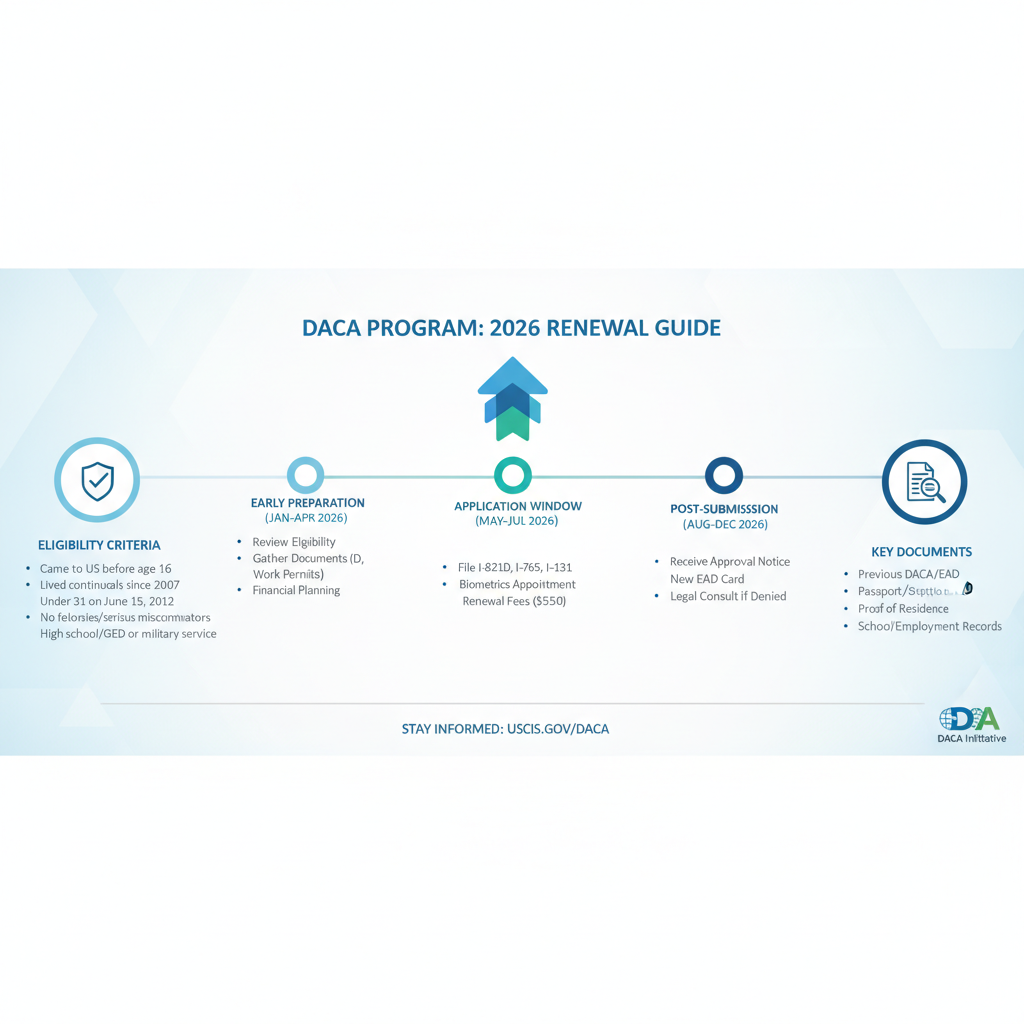
Recent discussions and administrative actions by USCIS regarding the DACA program have again brought this vital issue to the forefront. These updates underscore the ongoing need for DACA recipients to be diligent about their renewal process and to understand the program’s current legal standing.
DACA Program Updates and Renewal Information (USCIS)
What This News Means for Immigrants in Orlando and Across Florida
For hundreds of thousands of individuals who call the United States home under DACA, every piece of news from USCIS or the courts carries significant weight. In 2026, the program continues to operate under a cloud of ongoing legal challenges, making vigilance and timely action more crucial than ever.
Why this news is showing up now
The DACA program has been a subject of intense legal and political debate for over a decade. In the past few years, court rulings have significantly shaped its operational status. While a federal court ruling has generally allowed for the continuation of DACA renewals for existing recipients, new applications remain blocked. This creates a dual reality: long-time DACA beneficiaries must continue to renew, while those who might have otherwise been eligible are left in limbo. The news you’re seeing now likely reflects a combination of factors:
- Ongoing Legal Challenges: Courts continue to hear arguments and issue decisions that affect DACA's future, leading to periodic updates from government agencies.
- Administrative Updates: USCIS regularly issues guidance on processing procedures, eligibility clarifications, or fee changes, which are vital for current recipients.
- Political Discourse: Immigration remains a prominent topic in political discussions, leading to renewed public and media attention on programs like DACA.
- Renewal Cycle Reminders: Many DACA recipients are approaching their renewal deadlines, prompting USCIS and advocacy groups to issue reminders and guidance.
Reminder: The legal landscape for DACA is dynamic. What is true today regarding new applications versus renewals could change with future court decisions or legislative action. Staying informed through reliable sources like USCIS official website is paramount.
How it can affect Florida residents
Florida is home to a significant population of DACA recipients, often referred to as "Dreamers." The impact of DACA updates here is particularly profound:
- Employment Stability: DACA provides work authorization, allowing recipients to contribute to Florida's economy. Any disruption impacts individuals, families, and businesses.
- Educational Opportunities: Many DACA recipients attend colleges and universities across Florida, including institutions in Orlando and Central Florida. The stability of their status influences their ability to pursue higher education.
- Driver's Licenses: In Florida, DACA recipients are generally eligible to obtain a driver's license, which is crucial for daily life, commuting along the I-4 corridor, and accessing employment.
- Community Integration: DACA recipients are integral parts of their communities, contributing culturally and economically. Uncertainty about the program impacts their sense of belonging and long-term planning.
- Local USCIS Office Workload: The Orlando USCIS Field Office, along with other offices across the state, processes numerous DACA-related inquiries and applications. Updates can impact processing times and local resources.
For those living in Orlando, Kissimmee, Sanford, or anywhere in Orange County and surrounding areas, understanding these updates directly impacts your ability to live and work without fear. Imigrar is here to ensure you have the most current and accurate information to protect your status.
Need Help? Our Orlando immigration team is ready to assist. Call +1 786-791-3106 for a free consultation, or message us online. Se Habla Español.
What DACA Is (and Why It Matters)
To fully grasp the significance of DACA updates, it’s crucial to understand the program itself and the terminology surrounding it.
A plain-English definition
The Deferred Action for Childhood Arrivals (DACA) program was established in 2012 by the Department of Homeland Security (DHS) to protect certain young undocumented immigrants who came to the U.S. as children. It allows them to apply for deferred action from deportation and to be eligible for a renewable two-year Employment Authorization Document (EAD). This means that while DACA does not grant lawful permanent resident status or a pathway to citizenship, it provides a temporary reprieve from deportation and the ability to legally work in the U.S.
Essentially, DACA recipients are those who were brought to the U.S. without authorization as children, grew up here, attended schools, and know no other home. They are often referred to as "Dreamers," a term derived from the proposed but never passed "DREAM Act."
Key terms you need to know
- Deferred Action: This is a discretionary decision by the government to postpone deportation proceedings against an individual. It does not grant legal status but offers temporary protection from removal.
- Employment Authorization Document (EAD): Also known as a work permit, this card allows DACA recipients to legally work in the U.S. for the duration of their deferred action period.
- Dreamers: A commonly used term for young undocumented immigrants who were brought to the U.S. as children. Many DACA recipients fall into this category.
- USCIS: U.S. Citizenship and Immigration Services. This is the government agency responsible for administering DACA applications and renewals. You will interact with them for your forms and processing.
- DHS: Department of Homeland Security. The overarching federal department that USCIS operates under.
- EOIR: Executive Office for Immigration Review. This agency oversees the immigration court system, which handles deportation proceedings. DACA can protect individuals from being placed in these proceedings.
- Advance Parole: A document issued by USCIS that allows certain non-citizens to travel outside the U.S. and return without jeopardizing their immigration status. For DACA recipients, advance parole is granted only in very limited circumstances, such as for humanitarian, educational, or employment purposes.
- Renewal: The process of reapplying for DACA and employment authorization before your current period of deferred action expires. This is currently the primary action available for DACA recipients.
Current Immigration Law: The Foundation
DACA itself is not a law passed by Congress but an executive action. Its legal standing is rooted in the government's prosecutorial discretion and has been shaped by numerous court cases. As of September 17, 2026, the program continues to exist primarily for renewals, while new applications remain blocked by federal court orders.
Federal requirements
To be eligible for DACA renewal, you must continue to meet the original DACA requirements, which include:
- You were under the age of 31 as of June 15, 2012.
- You came to the United States before reaching your 16th birthday.
- You have continuously resided in the United States since June 15, 2007, up to the present time.
- You were physically present in the United States on June 15, 2012, and at the time of making your request for deferred action with USCIS.
- You had no lawful status on June 15, 2012.
- You are currently in school, have graduated or obtained a certificate of completion from high school, have obtained a general education development (GED) certificate, or are an honorably discharged veteran of the Coast Guard or Armed Forces of the United States.
- You have not been convicted of a felony, a significant misdemeanor, or three or more other misdemeanors, and do not otherwise pose a threat to national security or public safety.
Important: For renewals, USCIS is primarily looking to confirm that you continue to meet these criteria and that there haven't been any disqualifying changes (e.g., criminal convictions) since your last approval.
The forms typically involved in a DACA renewal are: Form I-821D (Consideration for Deferred Action for Childhood Arrivals), Form I-765 (Application for Employment Authorization), and Form I-765WS (Worksheet for Form I-765). These forms are critical to your application and must be filled out accurately and completely. You can find the latest versions of these forms and their instructions on the USCIS Forms page.
Florida-specific considerations
While DACA is a federal program, its impact and certain benefits can vary by state. In Florida:
- Driver's Licenses: DACA recipients in Florida are generally eligible to obtain a Florida driver's license upon presenting their EAD and other required identification documents. This is a significant benefit for mobility and employment, especially for those commuting along the busy I-4 corridor or in spread-out areas of Orange County.
- In-State Tuition: While DACA does not automatically grant in-state tuition across all Florida institutions, some state colleges and universities may have policies or waivers that allow DACA recipients to pay in-state tuition rates, particularly if they meet specific residency requirements. It's crucial to check with individual institutions, such as the University of Central Florida in Orlando or Valencia College.
- Professional Licenses: Eligibility for professional licenses (e.g., nursing, teaching) for DACA recipients can vary. It’s important to research the specific requirements for your desired profession in Florida.
Navigating these state-level considerations can be complex. Imigrar is familiar with Florida-specific nuances and can provide tailored advice.
Need Help? Our Orlando immigration team is ready to assist. Call +1 786-791-3106 for a free consultation, or message us online. Se Habla Español.
How to Renew Your DACA: A Complete Step-by-Step Guide
Renewing your DACA is a critical process that requires attention to detail and timely submission. Here’s a complete step-by-step guide to help you navigate it successfully.
1) Determine Your Eligibility and When to File
Before you begin, ensure you still meet all DACA eligibility criteria (as outlined in the "Federal requirements" section). The most crucial aspect of renewal is timing. USCIS recommends filing your DACA renewal application 120 to 150 days before your current DACA and Employment Authorization Document (EAD) expire. This 90-day window allows sufficient time for processing and helps prevent any lapse in your work authorization.
- Check Expiration Date: Locate your current I-797 DACA approval notice and your EAD card to confirm the exact expiration date.
- Calculate Filing Window: Count back 120-150 days from your expiration date to determine your optimal filing period. Filing too early (more than 150 days out) may result in rejection, and filing too late risks a lapse in your work authorization.
- Consult an Attorney: If you have any new criminal history, have traveled outside the U.S. without advance parole, or have had any significant changes in your life since your last approval, consult with an immigration attorney immediately.
2) Gather Required Documents
Even for a renewal, it’s essential to have all necessary supporting documents ready. While USCIS may not always request all original initial application documents, it’s best to be prepared and provide what’s necessary to prove continued eligibility. For renewals, the focus is often on proving continuous residence and good moral character.
- Previous DACA Approval Notices: Copies of your most recent Form I-797 approval notices for DACA and EAD.
- Current EAD Card: A copy of your expiring Employment Authorization Document.
- Identification Documents: Copies of your passport, birth certificate, or other government-issued ID.
- Proof of Continuous Residence: Although often not required for renewals unless there's a specific concern, it's wise to have documents ready that show you have continuously resided in the U.S. since your last DACA approval. Examples include:
- School records (transcripts, diplomas from Florida schools)
- Employment records (pay stubs, W-2s from Orlando employers)
- Utility bills (electric, water, gas bills in your name)
- Bank statements
- Medical records
- Lease agreements or mortgage statements
- Proof of Educational Status (if applicable): If you’ve completed a new educational milestone (e.g., graduated from a Central Florida high school or college) since your last application, include documentation.
- Criminal History Records (if applicable): If you have any new arrests, charges, or convictions, you MUST include certified court dispositions, even if the charges were dismissed. This is critical.
- Passport-style Photos: Two identical, color passport-style photographs taken within 30 days of filing. Write your name and A-number lightly on the back of each photo.
3) Complete the Forms Accurately
You will need to complete three forms for your DACA renewal:
a) Form I-821D, Consideration for Deferred Action for Childhood Arrivals
- Fill out every section completely. If a section does not apply, write "N/A" (not applicable).
- Pay close attention to Part 2, Information About Your Last Entry into the U.S., and Part 3, Information About Your Residence. Ensure consistency with previous applications unless there's a valid reason for a change.
- Part 4, Criminal History, is extremely important. Be truthful and disclose all arrests, charges, and convictions, regardless of the outcome. Failure to disclose can lead to denial and potential immigration consequences.
- Sign and date the form.
b) Form I-765, Application for Employment Authorization
- For DACA renewals, the category you will select is (c)(33).
- Ensure all personal information matches your other forms and previous applications.
- Sign and date the form.
c) Form I-765WS, Worksheet for Form I-765
- This worksheet helps USCIS determine if there is an economic need for you to work.
- Complete this form honestly and thoroughly, detailing your income, expenses, and assets.
- Remember, USCIS guidelines state that DACA applicants should demonstrate an economic need to work.
Warning: Always use the most current versions of the forms available on the USCIS official website. Outdated forms will be rejected.
4) Prepare Your Application Package
Organization is key to a successful submission. Assemble your application package in the following order:
- Your check or money order for the filing fees (on top).
- Form I-821D
- Form I-765
- Form I-765WS
- Supporting documents for Form I-821D (e.g., copies of previous approval notices, EAD, any new criminal records).
- Supporting documents for Form I-765 (e.g., passport-style photos).
Important: Do not staple documents together unless specifically instructed. Use paper clips to keep sections organized. Make a complete copy of your entire application package for your records before mailing it.
5) Pay the Fees
As of September 17, 2026, the DACA renewal filing fees consist of:
- Form I-821D: There is no fee for Form I-821D itself.
- Form I-765: The filing fee for Form I-765 is $410.
- Biometrics Fee: There is also a biometrics services fee of $85.
The total fee for a DACA renewal is currently $495 (subject to change by USCIS). You must pay these fees with a single check or money order made payable to "U.S. Department of Homeland Security." Do not send cash. Write your A-number on the check/money order. Fee waivers for DACA renewals are extremely rare and generally not available. If you cannot afford the fees, explore options through non-profit organizations that may offer assistance.
6) Mail Your Application
Once your package is complete and reviewed, mail it to the correct USCIS lockbox facility. The mailing address depends on your state of residence. For Florida residents, you will typically mail your application to the USCIS Dallas Lockbox facility.
- Check USCIS Website: Always verify the correct mailing address on the USCIS I-821D page or the Direct Filing Addresses for Form I-821D before sending your application, as addresses can change.
- Use Trackable Mail: Send your application via certified mail with a return receipt or through a private courier service (e.g., FedEx, UPS) that provides tracking information. This provides proof of delivery.
7) What Happens After You File
After USCIS receives your application, you will typically receive several notices:
- Receipt Notice (Form I-797C): Within a few weeks, you should receive a receipt notice confirming that USCIS has received your application. Keep this safe.
- Biometrics Appointment Notice: You will receive a separate notice scheduling you for a biometrics appointment at an Application Support Center (ASC). For Orlando residents, this would likely be at the Orlando ASC. You must attend this appointment to have your fingerprints, photograph, and signature taken.
- Case Status Updates: You can check the status of your case online using the receipt number provided on your I-797C notice on the USCIS Case Status Online tool.
- Approval or Request for Evidence (RFE): If your application is approved, you will receive new I-797 approval notices and your new EAD card. If USCIS needs more information, they will send a Request for Evidence (RFE). Respond to RFEs promptly and completely.
Timeline Expectations: Processing times for DACA renewals can vary significantly. While USCIS aims to process applications within 120 days, it can sometimes take longer. Check USCIS Processing Times for current estimates. This is why filing within the 120-150 day window is so important.
Practical Steps You Can Take Today
Even if your DACA renewal isn't due immediately, there are practical steps you can take now to ensure a smooth process when the time comes.
Actionable checklist
- Monitor Your Expiration Date: Set multiple reminders (on your phone, calendar, etc.) for your DACA and EAD expiration dates. Calculate your 120-150 day filing window well in advance.
- Organize Your Documents: Create a dedicated folder (physical and/or digital) for all your immigration documents. Keep copies of previous applications, approval notices, EAD cards, and any supporting evidence.
- Review Your Records: Check your personal records for any changes since your last DACA approval (e.g., new addresses, new educational achievements, any interactions with law enforcement).
- Save for Fees: The current renewal fee is $495. Start saving now to ensure you have the funds available when you need to file.
- Seek Legal Counsel: If you have any doubts about your eligibility, new criminal history, or simply want peace of mind, schedule a consultation with an experienced immigration attorney.
- Update Your Address with USCIS: If you move, you MUST update your address with USCIS within 10 days of moving using Form AR-11, Alien's Change of Address Card, or through your USCIS online account. Failure to do so can result in missed notices and even denial of your application. This is especially important for those moving within or to the Orlando area.
- Stay Informed: Regularly check the USCIS official website and reputable immigration news sources for any DACA policy changes or updates.
Document preparation guidance
- Keep Originals Safe: Never send original documents unless specifically requested by USCIS. Always send clear photocopies.
- Make Copies: Make a complete copy of everything you send to USCIS, including the signed forms and all supporting documents. Keep this copy for your records.
- Organize Clearly: If you have many supporting documents, use cover sheets or tabs to separate sections and clearly label what each document is.
- Proofread: Carefully proofread all forms for any typos, errors, or inconsistencies. Even small mistakes can cause delays or rejections.
Timeline expectations
- Filing Window: 120 to 150 days before your EAD expires.
- Receipt Notice: 2-4 weeks after filing.
- Biometrics Appointment: 3-8 weeks after filing (the appointment itself).
- Decision/EAD Card: Varies greatly, typically 3-6 months from the filing date. Check USCIS Processing Times for the most current estimates for your service center.
Warning: These timelines are estimates and can fluctuate. Filing early within the recommended window is your best strategy to avoid a lapse in employment authorization.
How Imigrar Helps Immigrants in Orlando
Navigating the complexities of DACA renewal, especially with its evolving legal status, can be overwhelming. At Imigrar, we are committed to providing expert, compassionate legal assistance to DACA recipients and their families in Orlando, Central Florida, and across the nation.
Our experienced immigration attorneys understand the nuances of DACA, the specific requirements for renewal, and the potential pitfalls that can lead to delays or denials. We pride ourselves on our attention to detail and our dedication to keeping families together.
- Expert Guidance: We provide clear, accurate advice tailored to your specific situation, ensuring you understand every step of the renewal process.
- Application Preparation: Our team meticulously prepares and reviews all necessary forms and supporting documents, minimizing errors and increasing the likelihood of a smooth approval.
- Criminal History Assessment: If you have any criminal history, we can assess its impact on your DACA eligibility and advise on the best course of action.
- Communication with USCIS: We can help you respond to Requests for Evidence (RFEs) and communicate with USCIS on your behalf.
- Peace of Mind: With Imigrar by your side, you can proceed with confidence, knowing that your DACA renewal is handled by professionals dedicated to your success.
We offer a free consultation to discuss your DACA renewal needs. Whether you're in Orlando, Kissimmee, or anywhere in Florida, our team is ready to help. Se Habla Español. Our tagline, "Keep Families Together," is not just a slogan; it's our mission.
Need Help? Our Orlando immigration team is ready to assist. Call +1 786-791-3106 for a free consultation, or message us online. Se Habla Español.

Frequently Asked Questions
Q: Am I still eligible for DACA if I have a minor traffic ticket?
A: Generally, minor traffic tickets that do not involve serious offenses (like DUI) are not considered "significant misdemeanors" and typically will not disqualify you for DACA renewal. However, it is crucial to disclose *all* arrests and convictions, no matter how minor, on your application. Provide certified court dispositions for any incidents. If you have multiple minor misdemeanors, or if the traffic ticket involved an arrest, it's best to consult with an immigration attorney at Imigrar to assess the potential impact.
Q: What impact does DACA renewal have on my immigration status long-term?
A: DACA provides temporary protection from deportation and work authorization. It does not grant legal immigration status (like a green card) and does not directly lead to a pathway to permanent residency or citizenship. However, maintaining DACA can be beneficial if future legislation or administrative actions create such a pathway. It keeps you "on the books" and allows you to continue building a life in the U.S. without fear of immediate deportation. It is a temporary solution, and its long-term future remains uncertain.
Q: How long does the DACA renewal process typically take, and when should I file?
A: USCIS recommends filing your DACA renewal application 120 to 150 days before your current DACA and Employment Authorization Document (EAD) expire. Processing times can vary, but generally, it can take anywhere from 3 to 6 months to receive a decision and your new EAD card. You can monitor current processing times
Related Topics
Need Legal Assistance?
Our experienced immigration attorneys are here to help with your case. Contact Imigrar today for a free consultation and let us guide you through the legal process with confidence.
📍 Orlando, Florida • Serving clients nationwide
📧 info@imigrar.com