
Naturalization Test 2026 Changes: What Immigrants in Florida
Prepare for the 2026 Naturalization Test changes. Our guide covers new civics questions, requirements, and how Imigrar helps you achieve U.S. citizenship. Stay informed and ready!

The journey to U.S. citizenship is a significant milestone for many immigrants, symbolizing a deep commitment to their new home. A critical step in this process is the Naturalization Test, designed to assess an applicant's knowledge of English and U.S. civics. As of late 2026, significant changes to this test are now rolling out, and understanding these updates is crucial for anyone planning to apply for naturalization.
At Imigrar, an immigration law firm based in Orlando, Florida, we are committed to helping families navigate complex immigration pathways. Our mission is to "Keep Families Together," and staying informed about changes like these is central to that commitment. This comprehensive guide will break down the 2026 Naturalization Test changes, explain what they mean for you, and provide actionable steps to prepare.
The reporting that sparked this guide
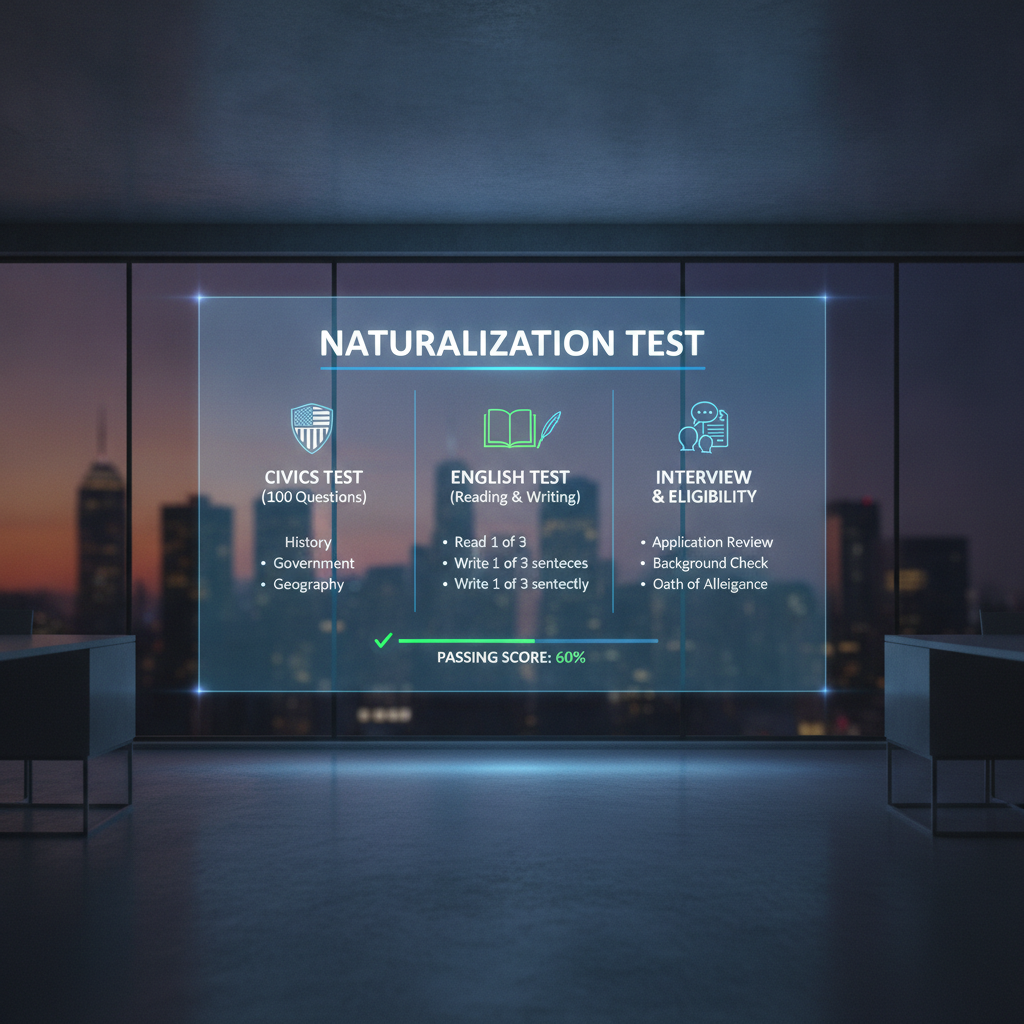
Our firm closely monitors all developments impacting our clients. The news regarding the Naturalization Test changes coming in 2026 has been widely reported by various sources, including:
Naturalization Test Changes Coming in 2026 (Citizenship)
What This News Means for Immigrants in Orlando and Across Florida
For immigrants residing in Orlando, Central Florida, and throughout the Sunshine State, the implementation of new Naturalization Test requirements in 2026 is a development that demands your attention. While the fundamental eligibility requirements for citizenship remain largely unchanged, the way your knowledge of American history, government, and the English language is assessed is evolving. This means that preparation strategies that worked for previous applicants may need to be adjusted.
Why this news is showing up now
The United States Citizenship and Immigration Services (USCIS) periodically reviews and updates its naturalization policies and tests to ensure they accurately reflect civic knowledge standards and adapt to evolving educational approaches. This isn't the first time the civics test has been modified; for example, a revised test was introduced in 2020 but later withdrawn in 2021, reverting to the prior 2008 version. These cycles of review and revision are part of USCIS's ongoing effort to refine the naturalization process.
The current 2026 changes are the result of another comprehensive review process, likely initiated to enhance the integrity and relevance of the test. USCIS often conducts pilot programs and gathers feedback before fully implementing new test formats. The goal is typically to create a more comprehensive and meaningful assessment of an applicant's understanding of U.S. civics and their ability to engage with American society through English. The lead-up to 2026 has involved developing and piloting these new questions and formats, and now, they are officially rolling out.
How it can affect Florida residents
For individuals living in Florida, especially those preparing to apply for citizenship or who have already filed their Form N-400, Application for Naturalization, the changes are significant. Here's how:
- Preparation Strategy: You can no longer rely solely on study guides based entirely on the previous 100 civics questions. New materials and a different study approach will be necessary to cover the updated civics questions and potentially revised English assessment components.
- Interview Experience: The naturalization interview at the Orlando USCIS Field Office, or any other field office across Florida, will incorporate these new test elements. Interviewers will be trained on the new format, and applicants will be expected to demonstrate proficiency according to the updated standards.
- Community Resources: Local community centers, adult education programs, and legal aid organizations in areas like Orange County and along the I-4 corridor that offer citizenship preparation classes will need to update their curricula. It's crucial to seek out programs that have already adapted to the 2026 changes.
- Application Timing: Depending on when you filed your Form N-400, you might be subject to the new test. USCIS typically announces a cutoff date for when the new test takes effect for all applicants, regardless of their filing date. It's vital to confirm this date and prepare accordingly.
Important: Do not delay your application if you are otherwise ready. Instead, focus on understanding and preparing for the new test format. Waiting could mean missing out on valuable time towards your citizenship journey.
Need Help? Our Orlando immigration team is ready to assist. Call +1 786-791-3106 for a free consultation, or message us online. Se Habla Español.
What Naturalization Test Changes Are (and Why They Matter)
The upcoming changes to the Naturalization Test are not merely cosmetic; they represent a significant shift in how USCIS evaluates an applicant's readiness for U.S. citizenship. Understanding these changes is the first step toward successful preparation.
A plain-English definition
At its core, the Naturalization Test is designed to ensure that individuals seeking to become U.S. citizens have a basic understanding of American civics (history, government, and geography) and can communicate effectively in English. The 2026 changes mean that the specific questions asked on the civics portion of the test, and potentially the methods used to assess English proficiency, have been updated.
Historically, the civics test involved answering 6 out of 10 questions correctly from a list of 100 possible questions. While the core themes of American democracy, rights, and responsibilities remain, the new civics test is expected to feature more analytical, scenario-based questions. Instead of rote memorization, applicants may need to demonstrate a deeper understanding of civic principles and how they apply in real-world situations. For example, instead of simply naming a branch of government, you might be asked to explain its function or how it interacts with another branch.
The English test assesses your ability to read, write, and speak basic English. While these components are likely to remain, there might be changes to the types of sentences you read, the complexity of sentences you write, or how your spoken English is evaluated during the interview. The goal is to ensure that new citizens can participate fully in American civic life.
These changes matter because they require a different approach to studying. Memorization alone may no longer be sufficient. Instead, a comprehensive understanding of the concepts behind the civics questions, and a more robust grasp of conversational and written English, will be key to passing.
Key terms you need to know
Navigating the naturalization process involves understanding several key terms:
- Naturalization: The process by which a foreign citizen or national can become a U.S. citizen.
- U.S. Citizenship and Immigration Services (USCIS): The government agency responsible for overseeing lawful immigration to the United States. They administer the naturalization process.
- Form N-400: The official application form for naturalization.
- Civics Test: The portion of the naturalization test that assesses an applicant's knowledge of U.S. history, government, and geography. The 2026 changes primarily impact this component.
- English Test: The portion of the naturalization test that assesses an applicant's ability to read, write, and speak basic English.
- Oath of Allegiance: The final step in the naturalization process, where approved applicants pledge loyalty to the United States.
- Lawful Permanent Resident (LPR): Also known as a "green card holder," an individual who has been granted the privilege of residing permanently in the United States. This is a prerequisite for most naturalization applicants.
- Continuous Residence: A requirement for naturalization, meaning an applicant must have maintained residence in the U.S. for a specified period (typically 5 years, or 3 years for spouses of U.S. citizens) without extended absences.
- Physical Presence: A requirement for naturalization, meaning an applicant must have been physically present in the U.S. for a specific cumulative period during their continuous residence.
- Good Moral Character: A crucial eligibility requirement, meaning an applicant must demonstrate adherence to certain moral standards during the statutory period prior to applying for citizenship.
Current Immigration Law: The Foundation for Naturalization
While the Naturalization Test is undergoing changes, the underlying federal immigration laws that govern eligibility for U.S. citizenship remain largely consistent. These laws are primarily found in the Immigration and Nationality Act (INA).
Federal requirements
The foundation for naturalization is laid out in various sections of the Immigration and Nationality Act (INA). The most relevant sections for naturalization applicants include:
- INA §312 (English Language and Civics Knowledge): This section mandates that naturalization applicants demonstrate an ability to read, write, and speak English and possess knowledge and understanding of the fundamentals of U.S. history and government. The 2026 changes specifically target how this requirement is assessed.
- INA §316 (General Requirements for Naturalization): This is the cornerstone for most applicants and outlines the primary eligibility criteria:
- Age: Be at least 18 years old.
- Lawful Permanent Resident Status: Be a Lawful Permanent Resident (green card holder).
- Continuous Residence: Have resided continuously in the U.S. as an LPR for at least 5 years immediately preceding the date of filing Form N-400 (or 3 years if married to and living with a U.S. citizen for that entire period).
- Physical Presence: Have been physically present in the U.S. for at least half of the required continuous residence period (e.g., 30 months for the 5-year requirement, 18 months for the 3-year requirement).
- Good Moral Character: Demonstrate Good Moral Character for the statutory period (typically 5 or 3 years) leading up to the application and until the oath of allegiance. This involves a clean criminal record and adherence to societal norms.
- Attachment to the Constitution: Demonstrate an attachment to the principles of the U.S. Constitution and a favorable disposition toward the good order and happiness of the United States.
- State Residence: Reside for at least 3 months in the state or USCIS district where the application is filed. For Florida residents, this means living in Florida for at least 3 months.
- INA §319 (Spouses of U.S. Citizens): Provides the 3-year continuous residence pathway for spouses of U.S. citizens, with specific requirements regarding marriage validity and living with the citizen spouse.
For official information, forms, and updates, always refer to the USCIS official website.
Florida-specific considerations
While federal law dictates the core requirements for naturalization, certain aspects are influenced by your location in Florida:
- USCIS Field Office: If your case is in Orlando, your interview will be conducted at the Orlando USCIS Field Office. Familiarity with this office's procedures and local staff (though staff rotates) can be beneficial.
- Processing Times: Processing times for Form N-400 can vary by field office. You can check current estimates for the Orlando office on the USCIS Processing Times page.
- Community Resources: Central Florida, including Orlando, Kissimmee, and Sanford, has numerous organizations offering citizenship classes and legal assistance. It's crucial to ensure these resources have updated their curriculum to reflect the 2026 Naturalization Test changes.
- State Residency Proof: When filing, you'll need to provide proof of your residency in Florida, such as utility bills, lease agreements, or driver's licenses, to meet the 3-month state residency requirement.
There are no Florida-specific state laws that add or subtract from the federal naturalization requirements. However, understanding the local context for resources and application processing is always beneficial.
Need Help? Our Orlando immigration team is ready to assist. Call +1 786-791-3106 for a free consultation, or message us online. Se Habla Español.

How to Apply for U.S. Citizenship: A Complete Step-by-Step Guide
Applying for U.S. citizenship is a multi-step process that requires careful attention to detail and thorough preparation. Here’s a complete guide, with a focus on preparing for the new 2026 Naturalization Test.
1) Determine Your Eligibility
Before you even consider filling out forms, you must ensure you meet all basic eligibility requirements. This is the most crucial first step.
- Check your age: You must be at least 18 years old at the time of filing Form N-400.
- Verify LPR status: You must be a Lawful Permanent Resident (green card holder).
- Calculate Continuous Residence: Most applicants need 5 years of continuous residence. If you are married to a U.S. citizen, you may qualify after 3 years. Ensure you haven't taken any trips outside the U.S. that break this continuity (e.g., typically absences of 6 months or more).
- Calculate Physical Presence: You must have been physically present in the U.S. for at least half of your continuous residence period (e.g., 30 months out of 5 years, or 18 months out of 3 years).
- Assess Good Moral Character: Review your history for any criminal offenses, tax issues, or other behaviors that might be deemed a lack of Good Moral Character during your statutory period. If you have any concerns, consult with an immigration attorney immediately.
- State Residence: Ensure you have lived in Florida (or the state where you are filing) for at least 3 months.
Required Documents for Eligibility Check:
- Your Green Card (Form I-551)
- Travel history (entry/exit dates)
- Marriage certificate (if applying under the 3-year rule)
- Divorce decrees/death certificates for prior marriages (if applicable)
- Criminal records, court dispositions, or arrest reports (if applicable)
2) Prepare and File Form N-400, Application for Naturalization
Once you’ve confirmed your eligibility, the next step is to accurately complete and file Form N-400. This form is extensive and requires detailed information about your personal history, residency, employment, family, and any interactions with law enforcement.
- Download the Form: Always use the most current version of Form N-400 from the USCIS Forms page.
- Gather Supporting Documents: Collect all necessary documents as listed in the form instructions. This includes copies of your Green Card, marriage certificates, birth certificates, tax returns, and any court documents related to arrests or convictions.
- Complete the Form Accurately: Answer every question truthfully and completely. Any omissions or misrepresentations can lead to delays or denial. If a question doesn't apply, write "N/A."
- Pay the Filing Fee: As of 2026, the filing fee for Form N-400 is subject to change, so always check the USCIS official website for the most current fee. There is also a biometrics fee. Fee waivers may be available for eligible low-income applicants.
- Mail Your Application: Send your completed form and supporting documents to the correct USCIS lockbox facility. The address depends on where you live and whether you are filing by mail or online.
Required Documents for Form N-400 Filing:
- Completed Form N-400
- Copy of your Green Card (front and back)
- Two passport-style photos (if filing by mail)
- Check or money order for the filing fee (unless filing online or requesting a fee waiver)
- Other supporting documents as required by your specific case (e.g., marriage certificates, court dispositions, tax transcripts)
3) Attend Biometrics Appointment
After USCIS receives your application, they will send you a receipt notice. Within a few weeks or months, you will receive an appointment notice (Form I-797C, Notice of Action) for a biometrics appointment at an Application Support Center (ASC).
- Purpose: At this appointment, USCIS will collect your fingerprints, photograph, and signature. These are used for background checks and to verify your identity.
- What to Bring: You must bring your appointment notice and a valid photo identification (e.g., Green Card, driver's license).
- Timeliness: Do not miss this appointment. If you have an unavoidable conflict, follow the instructions on the notice to reschedule, but be aware that rescheduling can cause significant delays.
Required Documents for Biometrics Appointment:
- Biometrics Appointment Notice (Form I-797C)
- Valid photo identification (e.g., Green Card, state ID, passport)
4) Prepare for the Interview and Tests (Focus on 2026 Changes)
This is where the 2026 Naturalization Test changes become paramount. Your naturalization interview will include both an English test and the updated civics test.
- English Test:
- Reading: You will need to read one out of three sentences correctly. The sentences are typically simple civic or historical statements.
- Writing: You will need to write one out of three sentences correctly. The sentences are dictated by the officer and are also typically simple civic or historical statements.
- Speaking: Your ability to speak English is assessed throughout the interview. The officer will ask you questions about your Form N-400 and personal history.
Reminder: While the basic structure remains, the complexity of the sentences or the topics discussed in the speaking portion may be adjusted with the 2026 changes. Practice understanding and responding to questions clearly.
- Civics Test (2026 Changes):
- Previous Test (2008 version): You were asked up to 10 questions from a list of 100, and you needed to answer 6 correctly. Questions were generally direct and fact-based (e.g., "Who is the current President?").
- New 2026 Test: The new test is expected to be more conceptual and analytical. While still covering key U.S. history, government, and geography topics, questions may require a deeper understanding rather than just memorization. For example, instead of "Name one branch of government," you might be asked "Explain the system of checks and balances and give an example." The number of questions and the passing score (e.g., 12 out of 20, or similar) might also be adjusted.
- Study Materials: USCIS has published new study materials reflecting the 2026 changes. It is absolutely critical to use these updated materials. Do not rely on old study guides.
Practical Tip: For Central Florida residents, many community organizations in Orlando offer citizenship preparation classes. Ensure any class you attend has fully integrated the 2026 test changes into their curriculum. Practice speaking English regularly, even with friends or family, to feel more comfortable during the interview.
5) Attend Your Naturalization Interview
You will receive an interview appointment notice (Form I-797C) indicating the date, time, and location (e.g., Orlando USCIS Field Office) of your interview.
- What to Bring: Bring your appointment notice, Green Card, passport, and all original documents you submitted copies of with your Form N-400. Also, bring any updated documents (e.g., new passport, updated marriage certificate, evidence of travel since filing).
- During the Interview: An USCIS officer will review your Form N-400, ask questions about your eligibility, and administer the English and civics tests (using the new 2026 format). Answer truthfully and directly. If you don't understand a question, politely ask the officer to repeat or rephrase it.
- Legal Representation: You have the right to have an attorney accompany you to your interview. An attorney from Imigrar can provide invaluable support, ensuring your rights are protected and helping you navigate complex questions.
Required Documents for Interview:
- Interview Appointment Notice
- Green Card (original Form I-551)
- All passports you have held
- Original supporting documents (birth certificates, marriage certificates, divorce decrees, court records, tax returns, selective service registration, etc.)
- Any updated information since filing (e.g., new address, recent travel, new employment)
6) Receive a Decision
After your interview, the USCIS officer will inform you of a decision or tell you that a decision will be mailed. There are typically three outcomes:
- Approved: Your application is approved. You will then receive a notice for the Oath of Allegiance ceremony.
Related Topics
Need Legal Assistance?
Our experienced immigration attorneys are here to help with your case. Contact Imigrar today for a free consultation and let us guide you through the legal process with confidence.
📍 Orlando, Florida • Serving clients nationwide
📧 info@imigrar.com