
H-1B Visa Lottery Shake-Up for FY2027: What Orlando Immigrants
Understand the new H-1B visa lottery changes for FY2027 and their impact on your immigration journey. Imigrar provides expert guidance for Florida residents.

Navigating the complex world of U.S. immigration law can be challenging, especially when new rules emerge that significantly alter established processes. For skilled professionals and the employers who seek to hire them, the H-1B visa program is a critical pathway to opportunity. However, recent changes to the H-1B visa lottery for Fiscal Year 2027 (FY2027) have introduced new complexities that demand careful attention.
At Imigrar, an immigration law firm based in Orlando, Florida, we are committed to keeping families together and helping individuals achieve their American dreams. We understand the anxieties and uncertainties that come with immigration changes, and our team is here to provide clarity, support, and expert legal representation.
The reporting that sparked this guide
This comprehensive guide is prompted by recent legal news concerning significant adjustments to the H-1B visa lottery. For detailed reporting, please refer to: H-1B Visa Lottery Changes for FY2027 (Legal News)
What This News Means for Immigrants in Orlando and Across Florida
The H-1B visa program is a lifeline for many talented individuals seeking to contribute their skills to the U.S. economy, particularly in technology, healthcare, and other specialized fields. Florida, with its booming tech sector, growing medical industry, and numerous universities, is a prime destination for H-1B professionals. The new rules for the FY2027 H-1B lottery directly impact both prospective H-1B beneficiaries and the Florida businesses hoping to employ them.
Why this news is showing up now
The United States Citizenship and Immigration Services (USCIS) regularly reviews and updates its immigration policies and procedures. The H-1B program, due to its high demand and limited annual cap, has been a frequent target for enhancements aimed at improving fairness and reducing fraud. The "new rules affecting H-1B visa applications" for FY2027 are a continuation of USCIS's efforts to modernize the lottery system and ensure its integrity. While the FY2027 lottery registration period (typically in March 2026) and initial selection have already occurred, the implications of these changes are still unfolding as petitions are adjudicated and future lotteries are anticipated. This news is relevant now because those who were selected under the new rules are currently in the petition filing and adjudication phase, and understanding the framework is crucial for future applicants and employers.
How it can affect Florida residents
For individuals residing in Orlando, Central Florida, or anywhere across the state, these changes have several critical implications:
- Increased Scrutiny: The new rules, particularly the shift to a beneficiary-centric selection process (first implemented for FY2025 and continuing for FY2027), aim to reduce multiple registrations for the same individual. This means a higher likelihood of legitimate registrations being selected, but also increased scrutiny on employers and beneficiaries to ensure compliance.
- Impact on Employers: Florida companies, from startups in Orlando's tech corridor to established corporations along the I-4 corridor, depend on the H-1B program to fill specialized roles. The changes require these employers to be even more diligent in their registration and petitioning processes to avoid issues.
- Fairer Chances for Genuine Applicants: The intent of these changes is to make the lottery fairer by preventing a single beneficiary from having multiple entries through different employers, which artificially inflates selection rates and reduces the chances for others.
- Legal Complexities: Understanding and adhering to the updated regulations requires expert legal guidance. Incorrect filings or misinterpretations of the new rules could lead to denials or delays, impacting both the individual's career and the employer's business operations.
Whether you're an international student graduating from a Florida university, a professional currently on an OPT visa, or a Florida-based employer, these H-1B lottery changes are directly relevant to your future.
Need Help Navigating H-1B Changes? Our Orlando immigration team is ready to assist. Call +1 786-791-3106 for a free consultation, or message us online. Se Habla Español.
What H-1B Visa Lottery Changes for FY2027 Is (and Why It Matters)
The H-1B visa is a nonimmigrant visa that allows U.S. employers to temporarily employ foreign workers in specialty occupations. A specialty occupation generally requires a bachelor's degree or higher in a specific field. Due to overwhelming demand and a statutory annual cap (currently 65,000 regular visas and an additional 20,000 for those with a U.S. master's degree or higher), USCIS conducts a lottery to select eligible registrations when the number of registrations exceeds the available visas.
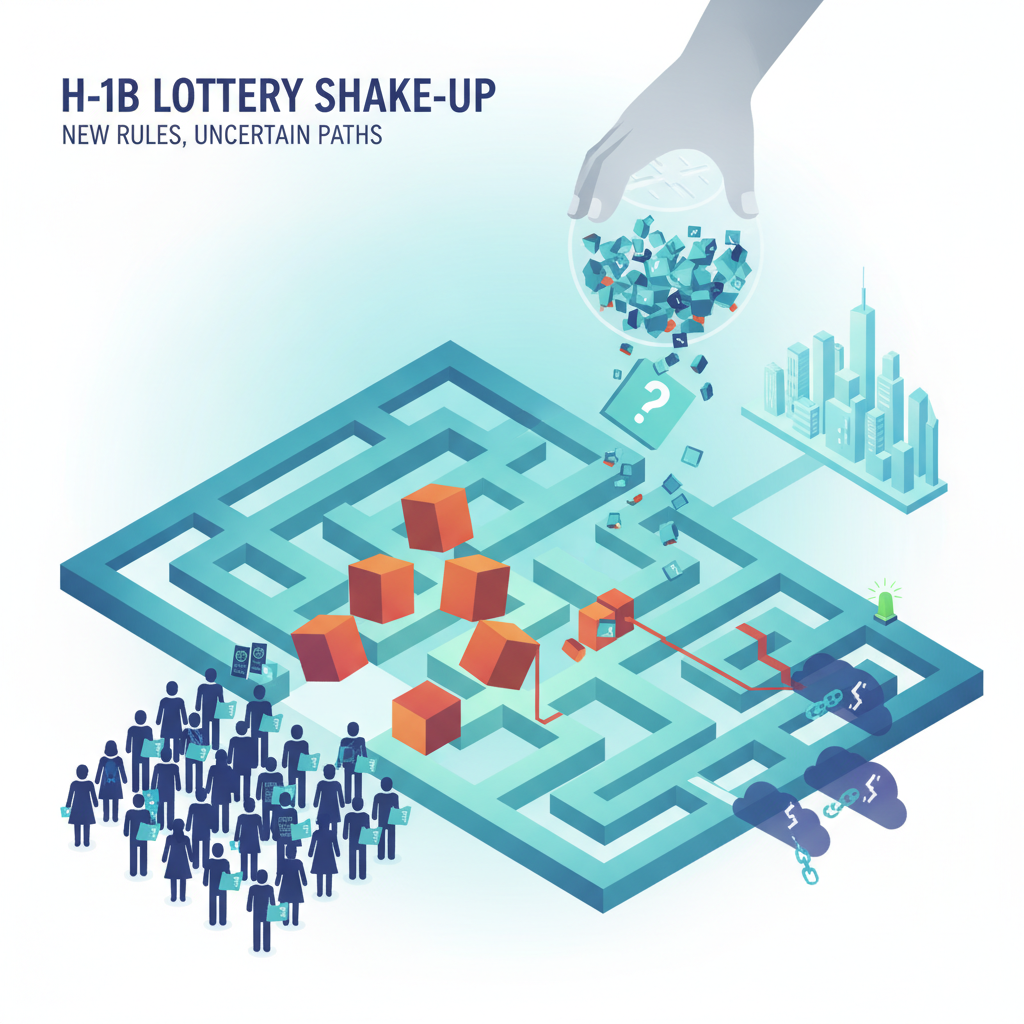
The "H-1B Visa Lottery Changes for FY2027" primarily refers to the shift in how USCIS conducts the lottery selection process. Previously, each employer could submit one registration per beneficiary. This led to a practice where a single beneficiary might have multiple registrations submitted on their behalf by different employers, thereby increasing their chances of selection. While this was technically allowed, it also created opportunities for fraud, where unscrupulous individuals or companies would submit multiple registrations for the same person without genuine job offers, simply to game the system.
For FY2027, USCIS has continued to implement a beneficiary-centric selection process. This means that selections are now based on unique beneficiaries, not on the number of registrations submitted on their behalf. If a beneficiary has multiple registrations filed by different employers, they are still only entered into the lottery once. If selected, all their legitimate prospective employers will be notified, and any of them can then file a petition on behalf of that selected beneficiary.
A plain-English definition
Imagine the H-1B lottery like a raffle for a limited number of prizes. Before, if you had multiple friends each buy you a ticket, you'd have multiple entries. Now, even if all your friends buy you tickets, your name only goes into the raffle drum once. If your name is drawn, any of those friends (who are actual employers with real job offers) can claim the prize for you. This makes the raffle fairer because it stops people from artificially boosting their chances by having many "friends" submit tickets for them without a real intention to give them a prize.
Key terms you need to know
- H-1B Visa: A nonimmigrant visa for temporary workers in specialty occupations.
- Cap-Subject H-1B: H-1B visas subject to the annual numerical limits set by Congress.
- Cap-Exempt H-1B: H-1B visas not subject to the annual cap, typically for employment at institutions of higher education, non-profit research organizations, or government research organizations.
- H-1B Lottery (or Registration): The electronic process USCIS uses to select enough beneficiaries to meet the annual cap from the pool of submitted registrations.
- Beneficiary: The foreign national who seeks to obtain H-1B status.
- Petitioner: The U.S. employer who files the H-1B petition on behalf of the beneficiary.
- Specialty Occupation: An occupation that requires theoretical and practical application of a body of highly specialized knowledge, and a bachelor's or higher degree in the specific specialty (or its equivalent) as a minimum for entry into the occupation in the United States.
- Employer-Employee Relationship: USCIS requires a valid employer-employee relationship to exist between the petitioner and the beneficiary.
- Labor Condition Application (LCA): Form ETA-9035. An application filed with the Department of Labor (DOL) that attests to the employer's compliance with specific wage and working condition requirements for H-1B workers. This must be certified before filing the H-1B petition.
- Prevailing Wage: The average wage paid to similarly employed workers in a specific occupation in the area of intended employment. Employers must pay H-1B workers at least the prevailing wage or the actual wage paid to other employees with similar experience and qualifications, whichever is higher.
- Duplicate Registrations: Multiple H-1B lottery registrations submitted for the same beneficiary in the same fiscal year by different employers. The new beneficiary-centric system largely nullifies the strategic advantage of this practice and can lead to fraud investigations if not handled legitimately.
- Fiscal Year (FY): The U.S. government's fiscal year runs from October 1 to September 30. H-1B visas become available on October 1 of the fiscal year for which they are requested (e.g., FY2027 visas become available on October 1, 2026).
Current Immigration Law: The Foundation
The H-1B visa program operates under specific sections of the Immigration and Nationality Act (INA) and corresponding federal regulations. Understanding these foundational laws is crucial for compliance.
Federal requirements
The primary legal framework for the H-1B visa is found in:
- Immigration and Nationality Act (INA):
- INA § 101(a)(15)(H)(i)(b): Defines the H-1B nonimmigrant classification.
- INA § 214(g): Establishes the annual cap on H-1B visas.
- Code of Federal Regulations (CFR):
- 8 CFR Part 214.2(h): Contains detailed regulations governing the H-1B nonimmigrant classification, including eligibility criteria, petition requirements, and extensions.
- 20 CFR Part 655: Pertains to the Labor Condition Application (LCA) process, administered by the Department of Labor (DOL).
Key federal requirements for an H-1B petition include:
- Specialty Occupation: The job must qualify as a specialty occupation, meaning it requires a bachelor's degree or its equivalent in a specific field.
- Beneficiary Qualifications: The beneficiary must possess the required degree or its equivalent for the specialty occupation.
- Employer-Employee Relationship: A valid employer-employee relationship must exist between the petitioning U.S. employer and the H-1B worker.
- Certified LCA: The employer must obtain a certified Labor Condition Application (LCA) from the Department of Labor (DOL) before filing the H-1B petition with USCIS. The LCA attests that the employer will pay the prevailing wage or actual wage (whichever is higher) and provide working conditions that will not adversely affect other workers.
- Prevailing Wage: The employer must pay at least the prevailing wage for the occupation in the area of intended employment.
- Cap-Subject vs. Cap-Exempt: Determine if the position is subject to the annual H-1B cap or if it qualifies for an exemption.
All H-1B petitions are filed with USCIS using Form I-129, Petition for a Nonimmigrant Worker. For up-to-date information and official forms, always consult the USCIS official website.
Florida-specific considerations
While H-1B law is federal, its impact is felt locally. Florida's vibrant economy, particularly in cities like Orlando, Tampa, and Miami, relies heavily on skilled foreign talent. Consider these Florida-specific points:
- Major Industries: Florida has strong sectors in aerospace, simulation, theme parks, tourism, healthcare, IT, and advanced manufacturing. These industries often require specialized skills that H-1B workers can provide.
- Universities and Research: Florida boasts numerous world-class universities (e.g., UCF in Orlando, UF, USF) that employ H-1B researchers, professors, and medical professionals, often under cap-exempt categories. Graduates from these institutions are also prime candidates for cap-subject H-1B roles.
- Orlando USCIS Field Office: While H-1B petitions are generally processed at service centers, the Orlando USCIS Field Office may handle certain related matters, such as interviews for adjustment of status if an H-1B worker later pursues a green card.
- Local Economy Impact: The H-1B program directly contributes to Florida's economic growth by bringing in high-skilled talent, fostering innovation, and creating jobs. Changes to the lottery can directly affect the talent pool available to Florida businesses.
How to Navigate the H-1B Lottery Changes: A Complete Step-by-Step Guide
The H-1B lottery process, especially with the FY2027 changes, requires meticulous planning and execution. This guide outlines the typical steps, emphasizing what to consider with the new beneficiary-centric approach.
1) Employer Registers for the H-1B Lottery
This is the initial phase where prospective H-1B employers submit electronic registrations for each beneficiary they intend to sponsor. This step typically occurs in March of the calendar year for the fiscal year starting October 1st (e.g., March 2026 for FY2027).
- Key Action: Employer (or their legal representative) creates a USCIS online account and submits registration(s).
- Important: Under the new beneficiary-centric rules, if multiple employers register the same beneficiary, that beneficiary will only have one entry in the lottery. USCIS will identify duplicate registrations for the same beneficiary and consolidate them for selection purposes.
- Required Documents (for registration):
- Basic employer information (FEIN, name, address).
- Basic beneficiary information (name, date of birth, country of birth, passport number, highest degree).
- Warning: Ensure all information is accurate. Errors can lead to disqualification.
2) USCIS Conducts the Lottery Selection
After the registration period closes, USCIS conducts the random lottery selection. This usually happens within a few weeks after the registration window. For FY2027, the selections were made in March 2026.
- Key Action: USCIS runs the lottery. Employers whose registrations are selected receive a "Selected" status notification in their USCIS online accounts.
- Reminder: With the beneficiary-centric system, if a beneficiary is selected, *all* employers who legitimately registered that beneficiary will receive a selection notice for that beneficiary. The beneficiary can then choose which employer's petition they wish to proceed with.
- Timeline: Selections are typically announced by the end of March.
3) Employer Files the H-1B Petition (Form I-129)
Only after a registration is selected can the employer proceed with filing the full H-1B petition. The filing window typically opens on April 1st of the calendar year (e.g., April 1, 2026, for FY2027) and lasts for a specific period, usually 90 days.
- Key Action: Prepare and file Form I-129, Petition for a Nonimmigrant Worker, along with all supporting documentation, to USCIS.
- Critical Step: Before filing Form I-129, the employer must first obtain a certified Labor Condition Application (LCA) (Form ETA-9035) from the Department of Labor (DOL). This process can take 7-10 business days.
- Required Documents (for Form I-129, illustrative list):
- Certified LCA (Form ETA-9035).
- Copy of the H-1B registration selection notice.
- Employer's Federal Employer Identification Number (FEIN).
- Employer's business license and financial statements.
- Detailed job description, including duties, responsibilities, and minimum requirements.
- Beneficiary's educational documents (degrees, transcripts, evaluations of foreign degrees).
- Beneficiary's professional licenses or certifications (if applicable).
- Beneficiary's resume and letters of experience.
- Beneficiary's passport copy, visa, and I-94 record.
- Employment offer letter and proposed wage.
- Evidence of a valid employer-employee relationship.
- Any previous immigration documents (e.g., OPT EAD, previous H-1B approvals).
- Form G-28, Notice of Entry of Appearance as Attorney or Accredited Representative (if represented by an attorney).
4) USCIS Adjudicates the Petition
Once the petition is filed, USCIS reviews it for compliance with all legal and regulatory requirements. This can involve requests for additional evidence (RFEs).
- Key Action: Respond promptly and comprehensively to any RFEs.
- Timeline: Processing times vary significantly. You can check current processing times on the USCIS Processing Times website. Premium processing (for an additional fee) guarantees a 15-calendar-day processing time for the initial decision.
- Possible Outcomes: Approval, Request for Evidence (RFE), or Denial.
5) Visa Stamping (for Beneficiaries Abroad) or Change of Status (for Beneficiaries in U.S.)
If the H-1B petition is approved, the next step depends on the beneficiary's location.
- For Beneficiaries Outside the U.S.: They will undergo consular processing at a U.S. embassy or consulate in their home country. This involves scheduling an interview, submitting required documents, and receiving an H-1B visa stamp in their passport.
- Required Documents (for Consular Processing):
- Approved Form I-797, Notice of Action (H-1B approval notice).
- DS-160 confirmation page.
- Passport valid for at least six months beyond the intended period of stay.
- Visa interview appointment confirmation.
- Photographs (meeting U.S. visa requirements).
- Original LCA.
- Employer's letter of support.
- Evidence of education and work experience.
- Any other documents requested by the consulate.
- External Link: U.S. Department of State for consular processing information.
- Required Documents (for Consular Processing):
- For Beneficiaries Inside the U.S. (e.g., on F-1 OPT or L-1): If a change of status was requested and approved with the Form I-129 petition, their status will automatically change to H-1B on October 1st. They will receive a new Form I-797 approval notice indicating the change of status.
- Important: If the change of status was not approved or requested, they may need to travel abroad for visa stamping.
6) Begin H-1B Employment
Upon approval and successful visa stamping or change of status, the beneficiary can begin working for the petitioning employer on or after the H-1B start date, typically October 1st.
- Key Action: Commence employment with the H-1B sponsoring employer.
- Reminder: H-1B status is employer-specific. Any change in employer requires a new H-1B petition.
Confused by the H-1B Process? Imigrar's experienced attorneys can guide you through every step, ensuring compliance with the latest regulations. Call +1 786-791-3106 for a free consultation. Se Habla Español.
Practical Steps You Can Take Today
Even if the FY2027 lottery has passed, there are crucial steps you can take to prepare for future H-1B opportunities or to manage your current petition.
Actionable Checklist
- Review Your Eligibility: Ensure you meet the educational and professional requirements for a specialty occupation.
- Gather Educational Documents: Collect all diplomas, transcripts, and any foreign degree evaluations.
- Update Your Resume: Ensure your resume accurately reflects your skills and experience relevant to specialty occupations.
- Research Sponsoring Employers: Identify potential employers in Florida (e.g., in Orlando's Lake Nona Medical City, the high-tech firms in Research Park) who sponsor H-1B visas.
- Consult with an Attorney: Discuss your individual situation and potential H-1B strategies with an immigration lawyer. This is especially important with the new lottery rules.
- Understand the New Lottery Rules: Familiarize yourself with the beneficiary-centric selection process and how it impacts your chances.
- Monitor USCIS Updates: Stay informed about any further announcements or clarifications from USCIS regarding the H-1B program.
Document Preparation Guidance
Proactive document preparation is key to a smooth H-1B process:
- Certified Translations: If any documents are not in English, obtain certified translations.
- Originals vs. Copies: Generally, USCIS requires copies, but keep originals safe. For consular processing, originals may be required.
- Degree Evaluations: If your degree is from outside the U.S., obtain a credential evaluation from a reputable service to demonstrate its U.S. equivalency.
- Letters of Experience: If you rely on work experience to substitute for a degree, gather detailed letters from previous employers.
- Passport and Visa History: Keep copies of all previous passports, visas, I-94 records, and immigration approval notices (e.g., EAD cards, I-797s).
Timeline Expectations
The H-1B process is lengthy and requires patience:
- LCA Certification: Approximately 7-10 business days.
- H-1B Lottery Registration: Typically a 2-week window in March.
- Lottery Selection Notification: By the end of March.
- Petition Filing Window: Usually April 1st for 90 days.
- USCIS Processing: Varies greatly, from a few weeks with premium processing to several months (6-12+ months) for regular processing. Check USCIS Processing Times.
- Consular Processing: Varies by embassy/consulate, including interview wait times.
- H-1B Start Date: Generally October 1st.
Warning: These are general timelines; individual cases may vary significantly. Plan accordingly and allow ample time for each step.
How Imigrar Helps Immigrants in Orlando
At Imigrar, our mission is to "Keep Families Together" by providing expert and compassionate immigration legal services. For immigrants in Orlando, across Central Florida, and nationwide, navigating the H-1B visa process, especially with the new FY2027 changes, can be daunting. We are here to simplify it for you.
Our experience and expertise: Our team of dedicated immigration attorneys possesses extensive experience in H-1B petitions, lottery registrations, and responding to complex Requests for Evidence (RFEs). We stay abreast of the latest USCIS regulations and policy changes, including the beneficiary-centric lottery system, to ensure our clients receive the most accurate and up-to-date advice.
We understand the local landscape, from the needs of tech companies in Orlando to the diverse international community in Orange County. Our firm is equipped to handle the intricacies of H-1B applications, helping both employers and beneficiaries achieve successful outcomes.
Free consultation offer: We believe everyone deserves access to quality legal advice. That's why we offer a free initial consultation to discuss your H-1B eligibility, the impact of the new lottery changes, and your best path forward. During this consultation, we'll assess your situation, explain the process in plain language, and outline how Imigrar can assist you.
Se Habla Español: We are proud to serve the diverse communities of Florida and beyond. Our team is fluent in both English and Spanish, ensuring that language is never a barrier to receiving comprehensive legal support. We are committed to making our services accessible and understandable for everyone.
Frequently Asked Questions
Q: How do the FY2027 H-1B lottery changes impact my eligibility?
A: The changes primarily affect the lottery selection process, not the fundamental eligibility criteria for an H-1B visa. You still need to qualify for a specialty occupation and possess the required educational background. However, the beneficiary-centric selection means that if multiple employers register you, you only get one chance in the lottery. This aims to reduce fraud and ensure that selections are based on unique individuals, potentially increasing the odds for genuinely qualified candidates who might have been crowded out by fraudulent multiple submissions in the past. It does not, however, change the underlying requirements for the job or your qualifications.
Q: What is the impact of these changes on my current immigration status (e.g., F-1 OPT)?
A: If you are currently in the U.S. on a different nonimmigrant status, such as F-1 OPT, the H-1B lottery changes do not directly alter your current status. However, they significantly impact your path to obtaining H-1B status. If you are selected in the lottery, the process for changing your status remains similar. The main difference is the increased scrutiny on registrations. If you were selected and your petition is approved, you would likely benefit from "cap-gap" relief, allowing you to remain in the U.S. and continue working until your H-1B status begins on October 1st, even if your OPT expires before then. Ensure your employer files a legitimate petition for you.
Q: What are the typical timelines and processing expectations for an H-1B petition under the new rules?
A: The overall timeline remains largely consistent with previous years, but with a renewed emphasis on timely and accurate initial registration. The lottery registration period is typically in March, with selections announced by
Related Topics
Need Legal Assistance?
Our experienced immigration attorneys are here to help with your case. Contact Imigrar today for a free consultation and let us guide you through the legal process with confidence.
📍 Orlando, Florida • Serving clients nationwide
📧 info@imigrar.com