
H-1B Lottery FY2027: New Rules & How to Prepare for Your
Major H-1B visa lottery changes for Fiscal Year 2027 are here. Learn what the new beneficiary-centric selection process means for you, how to prepare your application, and get expert guidance from Imigrar in Orlando.

The reporting that sparked this guide: H-1B Visa Lottery Changes for FY2027 (Legal News)
What This News Means for Immigrants in Orlando and Across Florida
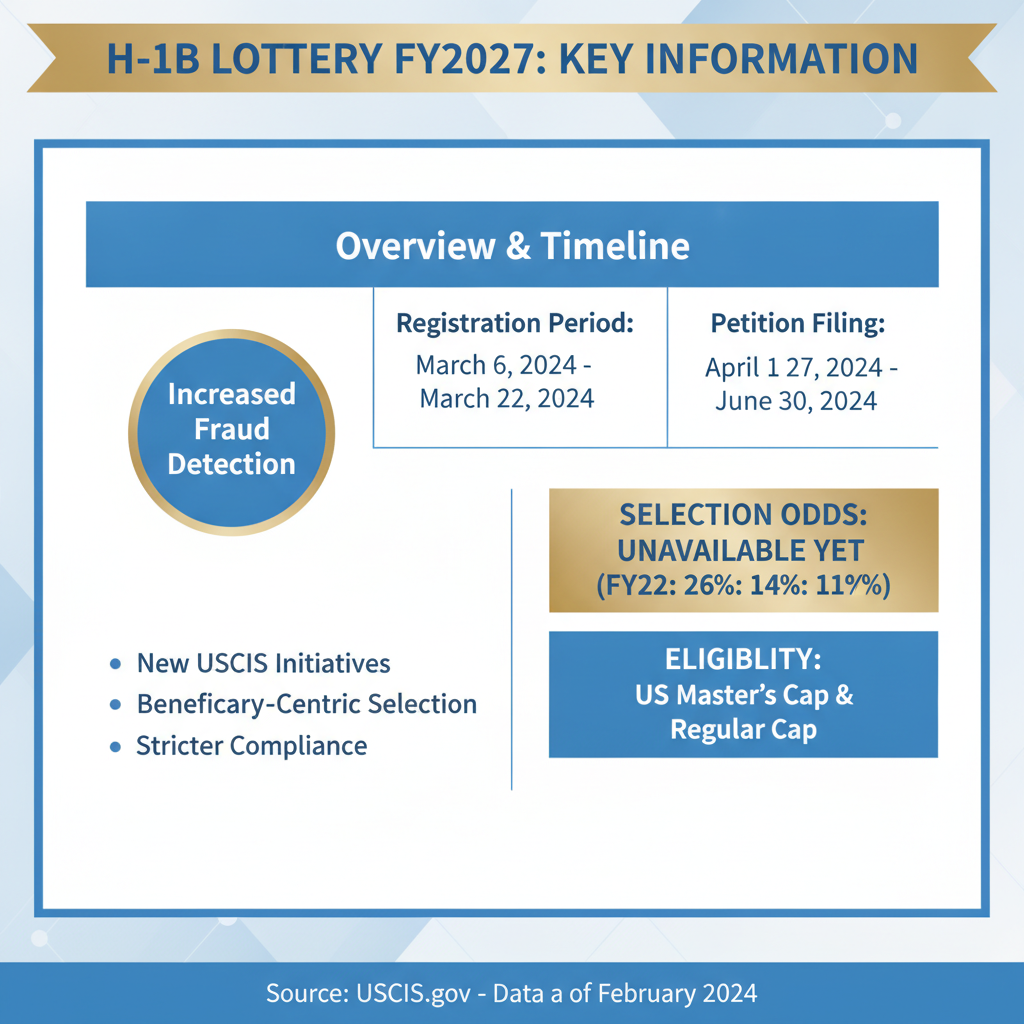
The H-1B visa program is a cornerstone for many skilled foreign workers seeking to contribute their talents to the U.S. economy, particularly in high-demand fields like technology, engineering, and healthcare. For businesses and aspiring professionals in Orlando, Central Florida, and across the nation, securing an H-1B visa can be a critical step towards achieving career goals and strengthening families. The recent news regarding significant changes to the H-1B visa lottery process for Fiscal Year 2027 (FY2027) is not just a technical update; it represents a pivotal shift that could impact thousands of lives and businesses.
Why this news is showing up now
Immigration law is dynamic, constantly evolving to address economic needs, national security concerns, and administrative efficiencies. The H-1B visa program, with its annual cap and high demand, has long been a subject of scrutiny, particularly concerning the fairness and integrity of its lottery system. In previous years, concerns arose about potential abuses where multiple employers might register the same beneficiary, artificially inflating their chances of selection. To combat these issues and ensure a more equitable distribution of H-1B visas, the U.S. Citizenship and Immigration Services (USCIS) has implemented a new rule, effective for the upcoming FY2027 lottery.
This new rule, often referred to as the "beneficiary-centric" selection process, aims to level the playing field. Instead of selecting registrations based on employer submissions, the system will now select individuals based on their unique passport or travel document number. This change is a direct response to past challenges and reflects a commitment to prioritizing legitimate petitions and reducing fraud. As we approach the registration period for FY2027, typically in March, this news is at the forefront of discussions for anyone involved in the H-1B process.
How it can affect Florida residents
Florida, particularly the Orlando metropolitan area and the I-4 corridor, is a hub for innovation, tourism, healthcare, and technology. Companies in these sectors heavily rely on skilled foreign talent to fill critical roles. For Florida residents who are aspiring H-1B visa beneficiaries, or for employers in Orange County looking to sponsor international talent, these changes have direct implications:
- Increased Fairness: The beneficiary-centric approach means that each eligible individual will have an equal chance of selection, regardless of how many employers register on their behalf. This could be particularly beneficial for candidates who previously felt disadvantaged by the perceived "multiple-registration" tactics of others.
- Reduced Fraud: For employers, this change brings greater integrity to the lottery. They can be more confident that if their candidate is selected, it's due to a fair process, not manipulation. This also reduces the administrative burden of dealing with fraudulent registrations.
- Employer Strategy Shift: Florida employers will need to adjust their H-1B recruitment and sponsorship strategies. The focus will now be solely on identifying highly qualified candidates and ensuring their registration is accurate and timely, rather than relying on multiple employer registrations to boost odds.
- Beneficiary Responsibility: For individuals in Central Florida awaiting H-1B sponsorship, it's more important than ever to understand the new rules and ensure their personal documentation (especially passports) is current and accurate, as this will be key to their unique identification in the lottery.
- Legal Guidance: Navigating these new rules requires expert legal counsel. Florida businesses and individuals must work closely with experienced immigration attorneys to ensure compliance and maximize their chances of success.
The changes for FY2027 represent a significant update to a highly competitive visa program. Understanding these shifts is crucial for anyone hoping to secure an H-1B visa or sponsor an H-1B worker in Florida.
Need Help? Our Orlando immigration team is ready to assist. Call +1 786-791-3106 for a free consultation, or message us online. Se Habla Español.
What H-1B Visa Lottery Changes for FY2027 Is (and Why It Matters)
The H-1B visa program is a nonimmigrant visa that allows U.S. employers to temporarily employ foreign workers in specialty occupations. These occupations generally require a bachelor's degree or higher in a specific specialty. Examples include IT professionals, engineers, scientists, architects, and certain medical professionals. The demand for H-1B visas consistently exceeds the annual cap set by Congress, leading to a lottery system for selection.
A plain-English definition
Historically, the H-1B visa lottery worked like this: an employer would register a potential foreign worker for the H-1B cap. If multiple employers registered the same worker, each registration counted as a separate entry, increasing that worker's statistical chance of being selected. This system, while not explicitly illegal, led to concerns about "gaming the system" and made it harder for smaller businesses or those with fewer resources to compete.
The H-1B Visa Lottery Changes for FY2027 essentially mean that the lottery is now focused on the *individual worker*, not the number of employers trying to sponsor them. USCIS will now identify each unique beneficiary (the foreign worker) by their valid passport or travel document number. If an individual has multiple registrations submitted on their behalf by different employers, they will still only have *one* chance in the lottery. If that individual is selected, then *any* of the employers who registered them can proceed with filing the H-1B petition. This is called a beneficiary-centric selection process.
Why it matters: This change is designed to create a fairer and more equitable lottery. It ensures that every eligible foreign worker has an equal opportunity for selection, rather than those with multiple employer registrations having an inflated advantage. For employers, it means focusing on finding the best talent and preparing a solid case, rather than worrying about the number of registrations. For beneficiaries, it simplifies the process by giving them one clear chance, while still allowing them to explore opportunities with multiple potential employers.
Key terms you need to know
- H-1B Visa: A nonimmigrant visa that allows U.S. employers to temporarily employ foreign workers in specialty occupations.
- Specialty Occupation: An occupation that requires theoretical and practical application of a body of highly specialized knowledge, and a bachelor's or higher degree in the specific specialty (or its equivalent) as a minimum for entry into the occupation in the United States.
- Annual Cap: The statutory limit on the number of H-1B visas issued each fiscal year. Currently, it is 65,000 for the regular cap and an additional 20,000 for those with a U.S. master's degree or higher (the "master's cap").
- Fiscal Year (FY): The U.S. government's fiscal year runs from October 1st to September 30th. FY2027 starts on October 1, 2026.
- H-1B Lottery (Cap Lottery): The process used by USCIS to select enough registrations to meet the annual cap when demand exceeds availability.
- Beneficiary: The foreign national who is seeking the H-1B visa.
- Petitioner: The U.S. employer who is sponsoring the foreign national for the H-1B visa.
- Beneficiary-Centric Selection: The new lottery method where selection is based on unique beneficiaries (identified by passport/travel document number) rather than the number of registrations submitted on their behalf.
- Employer-Centric Selection (Previous Method): The old lottery method where each registration submitted by an employer for a beneficiary counted as a separate entry.
- H-1B Registration: The electronic process where prospective petitioners (employers) submit basic information about the company and the beneficiary to USCIS during a designated registration period. This is the first step before the lottery.
- Cap-Exempt: Certain H-1B petitions are exempt from the annual cap, such as those filed by institutions of higher education, non-profit organizations affiliated with higher education, or governmental research organizations.
- Labor Condition Application (LCA): Form ETA-9035. An application filed with the Department of Labor (DOL) by the employer, attesting that they will pay the H-1B worker at least the prevailing wage or the actual wage, whichever is higher, and provide working conditions that will not adversely affect other workers. This must be certified before filing the H-1B petition.
- Form I-129, Petition for a Nonimmigrant Worker: The main form used by employers to petition for nonimmigrant workers, including H-1B visas.
Current Immigration Law: The Foundation
The H-1B visa program is governed primarily by the Immigration and Nationality Act (INA) and regulations found in Title 8 of the Code of Federal Regulations (CFR). Understanding these legal foundations is crucial for navigating the application process.
Federal requirements
The authority for the H-1B program is found in Section 101(a)(15)(H)(i)(b) of the INA, which defines the H-1B nonimmigrant classification. Further details regarding the cap and eligibility are outlined in INA Section 214(g) and regulations at 8 CFR 214.2(h). These statutes and regulations establish the core requirements for both the petitioner (employer) and the beneficiary (employee).
Key Federal Requirements for H-1B Visas:
- Specialty Occupation: The job offered must qualify as a specialty occupation. This means it typically requires a bachelor's degree or higher in a specific field.
- Educational/Experiential Qualification: The beneficiary must possess the required degree or its equivalent, or hold an unrestricted state license, or have work experience equivalent to a bachelor's degree in the specialty occupation.
- Employer-Employee Relationship: A valid employer-employee relationship must exist between the petitioner and the beneficiary.
- Labor Condition Application (LCA): The employer must file and have certified by the Department of Labor (DOL) a Form ETA-9035. This form attests to compliance with wage and working condition requirements to protect U.S. workers.
- Wage Requirements: The employer must agree to pay the H-1B worker at least the prevailing wage for the occupation in the area of intended employment or the actual wage paid to other employees with similar experience and qualifications, whichever is higher.
- Annual Cap Compliance: Unless cap-exempt, the petition must be filed under the annual H-1B cap, which is currently 65,000 regular visas and an additional 20,000 for those with a U.S. master's degree or higher. The H-1B lottery is used when registrations exceed these numbers.
The recent changes for FY2027 primarily modify the lottery selection process under 8 CFR 214.2(h)(8), specifically how registrations are evaluated and selected. While the underlying eligibility requirements for the H-1B visa remain the same, the method of initial selection has been fundamentally altered to prioritize unique beneficiaries.
For the most up-to-date information on H-1B regulations and policies, always refer to the USCIS official website.
Florida-specific considerations
While H-1B visa law is federal, its impact and practical considerations vary by location. For residents of Florida and businesses in the Sunshine State, several factors come into play:
- Industry Demand: Florida's booming tech sector (especially in Orlando, Tampa, and Miami), robust healthcare industry, and growing aerospace and engineering fields create high demand for H-1B talent. Companies in these sectors are frequent petitioners for H-1B visas.
- Local Prevailing Wages: The prevailing wage, a critical component of the LCA, is determined by the geographic area of employment. Wages in Orlando, for example, will differ from those in other parts of the country. Employers must ensure they are meeting or exceeding the specific prevailing wage for their location and occupation.
- USCIS Field Offices: While H-1B petitions are generally processed at USCIS service centers, local field offices like the Orlando USCIS Field Office may handle certain follow-up interviews or requests for evidence (RFEs) in specific scenarios, particularly if there's a change of status involved or if the beneficiary is already in the U.S.
- Florida Employers: Businesses throughout Florida, from startups in Gainesville to established corporations along the I-4 corridor, regularly participate in the H-1B lottery. Understanding the new beneficiary-centric system is vital for these employers to ensure their recruitment and sponsorship practices are compliant and effective.
- Educational Institutions: Florida boasts numerous universities and colleges that attract international students, many of whom may later seek H-1B sponsorship. These institutions themselves can be cap-exempt H-1B petitioners for their employees.
Navigating the H-1B process, especially with the new changes, requires a deep understanding of both federal law and local practicalities. Imigrar, based in Orlando, is uniquely positioned to assist Florida businesses and individuals with these complex matters.
Considering an H-1B Visa? The new rules mean expert guidance is more critical than ever. Contact Imigrar in Orlando for a free consultation. Call +1 786-791-3106 or reach out online. Se Habla Español.
How to Navigate the H-1B Visa Lottery Changes: A Complete Step-by-Step Guide
The H-1B visa process, particularly involving the annual cap and lottery, is complex. With the new beneficiary-centric selection process for FY2027, careful planning and execution are paramount. This guide outlines the essential steps for both employers and prospective employees.
1) Understand the New Beneficiary-Centric Selection Process
What it means: For FY2027, USCIS will conduct the lottery selection based on unique beneficiaries, identified primarily by a valid passport or travel document number. This means that if multiple employers register the same individual, that individual still only gets one entry into the lottery. If selected, any of the employers who registered them can proceed with filing the H-1B petition.
Action for Beneficiaries:
- Ensure your passport or travel document is valid and will remain valid for the foreseeable future. This is your unique identifier.
- Communicate clearly with all potential employers about your H-1B sponsorship status and the new rules.
- Understand that while multiple employers can register you, it does not increase your personal odds of selection.
Action for Employers:
- Verify the beneficiary's passport information meticulously during the registration phase. Any discrepancies could lead to issues.
- Focus on the quality of your candidate and the job offer, rather than attempting to boost odds through multiple registrations.
- Be prepared to file a full petition if your candidate is selected, regardless of whether other employers also registered them.
Official Reference: USCIS regularly updates its H-1B cap season announcements on its H-1B Cap Season page. Always consult the latest guidance.
2) Employer Registration Process
This is the crucial first step for employers seeking to sponsor H-1B workers subject to the annual cap. The registration period typically opens in early March.
Timeline Expectation: The H-1B electronic registration period usually runs for about two to three weeks in March. For example, for FY2026, it was March 1-17, 2025. Expect similar dates for FY2027 (e.g., March 2026).
Required Documents/Information for Registration (to be provided by employer and beneficiary):
- For the Petitioner (Employer):
- Employer's legal name, Federal Employer Identification Number (FEIN).
- Employer's mailing address.
- Employer's authorized signatory information (name, title, contact).
- Attorney or representative information (if applicable).
- For the Beneficiary (Prospective Employee):
- Beneficiary's full legal name.
- Beneficiary's date of birth.
- Beneficiary's country of birth and country of citizenship.
- Beneficiary's gender.
- Beneficiary's passport number or other valid travel document number. This is critical for the new beneficiary-centric selection.
- Whether the beneficiary has a U.S. master's or higher degree (for master's cap eligibility).
Step-by-Step Registration:
- Create a USCIS Online Account: Employers must have a "registrant" account on the USCIS online portal. Legal representatives can create "attorney/representative" accounts.
- Enter Information: During the registration period, enter the required employer and beneficiary information.
- Pay the Fee: Pay the non-refundable $10 H-1B registration fee for each beneficiary.
- Submit Registration: Electronically submit the registration.
Important: Each employer must submit only one registration per beneficiary. Multiple registrations by the same employer for the same beneficiary will be considered invalid. The new rules also aim to prevent multiple employers from registering the same beneficiary with fraudulent intent.
3) Preparing the H-1B Petition (If Selected)
If your registration is selected in the lottery, USCIS will notify the registrant (employer or attorney). You will then have a specific window, typically 90 days, to file the complete H-1B petition.
Key Pre-Petition Steps:
- Secure Certified LCA: The employer must file a Labor Condition Application (Form ETA-9035) with the U.S. Department of Labor (DOL) and receive certification. This process ensures compliance with wage and working condition requirements. This must be certified *before* filing the H-1B petition.
- Gather Employer Documents:
- Employer's business license, tax ID.
- Financial statements, annual reports, tax returns to demonstrate ability to pay the proffered wage.
- Organizational chart.
- Detailed job description, including duties, responsibilities, and required qualifications.
- Evidence of a valid employer-employee relationship (if applicable, especially for third-party placements).
- Gather Beneficiary Documents:
- Copy of current valid passport.
- Copies of all educational degrees, transcripts, and diplomas (translated into English if necessary).
- Any professional licenses or certifications.
- Resume/CV.
- Previous U.S. visa stamps, I-94 records, EADs, I-20s, DS-2019s (if applicable, for those already in the U.S.).
- Expert opinion letters for degree equivalency or specialized experience, if needed.
Warning: The LCA process can take several days to weeks. Plan accordingly to ensure you have a certified LCA before the petition filing deadline.
4) Filing the H-1B Petition (Form I-129)
This is the formal submission of the H-1B petition to USCIS.
Required Forms and Fees:
- Form I-129, Petition for a Nonimmigrant Worker: The main petition form.
- H-1B Data Collection and Filing Fee Exemption Supplement: Part of Form I-129.
- LCA (certified Form ETA-9035): Must be included.
- Filing Fees (as of current USCIS fee schedule, subject to change):
- Form I-129 filing fee.
- American Competitiveness and Workforce Improvement Act (ACWIA) fee (for employers with 25 or fewer full-time equivalent employees, or 26 or more).
- Fraud Prevention and Detection Fee.
- Public Law 114-113 Fee (if applicable, for employers with 50 or more employees, where more than 50% are H-1B or L-1 workers).
- Optional: Premium Processing fee (Form I-907) for expedited processing.
Filing Location: Petitions are filed with the appropriate USCIS Service Center based on the employer's address. Your attorney will determine the correct filing location.
Important: All supporting documents must be meticulously organized and presented. Errors or omissions can lead to Requests for Evidence (RFEs) or denials. For Central Florida residents, ensuring all documentation aligns with the job offer in Orlando is critical.
5) Post-Filing Procedures and Decision
After filing, USCIS will review the petition.
- Receipt Notice: USCIS will issue a Form I-797C, Notice of Action, acknowledging receipt of the petition.
- Processing Times: Standard processing can take several months. You can check estimated processing times on the USCIS Processing Times page.
- Request for Evidence (RFE): USCIS may issue an RFE if they need additional information or clarification. Responding thoroughly and timely is crucial.
- Approval (Form I-797B or I-797A): If approved, USCIS will send an approval notice.
- Form I-797B indicates approval but does not automatically grant a change of status if the beneficiary is outside the U.S. or needs to depart and re-enter.
- Form I-797A indicates approval and a change of status, meaning the beneficiary can begin working for the H-1B employer on October 1st (the start of the fiscal year) if they are already in the U.S. in a valid nonimmigrant status.
- Visa Stamping (Consular Processing): If the beneficiary is outside the U.S. or needs to travel, they will attend an interview at a U.S. embassy or consulate to get the H-1B visa stamp in their passport. This is managed by the U.S. Department of State.
- Start Date: H-1B cap-subject petitions generally have an effective start date of October 1st of the fiscal year for which they were approved (e.g., October 1, 2026, for FY2027).
6) What if Not Selected?
If your registration is not selected in the lottery, it's disappointing but not the end of the road.
- Explore Cap-Exempt Options: Check if the employer is cap-exempt (e.g., higher education institution, non-profit affiliated with one, or government research organization).
- Consider Other Visa Categories: Depending on the beneficiary's qualifications and the nature of the employment, other visa options might be available, such as O-1 (extraordinary ability), L-1 (intracompany transfer), TN (for Canadian and Mexican citizens), or E-3 (for Australian citizens).
- STEM OPT Extension: For F-1 students with STEM degrees, the 24-month STEM OPT extension can provide additional work authorization, allowing another chance in a future H-1B lottery.
- Re-enter Next Year: If eligible, the employer can register the beneficiary again in the subsequent fiscal year's lottery.
Navigating these options requires expert legal advice. The Imigrar team can help you assess alternatives.
Practical Steps You Can Take Today
Preparing for the H-1B lottery, especially with the new FY2027 changes, requires proactive planning. Here’s an actionable checklist to help you get started:
- Verify Beneficiary Passport/Travel Document:
- Action: For beneficiaries, ensure your passport is valid and won't expire soon. If you have multiple passports, decide which one will be used for registration and stick with it. For employers, obtain a clear, valid copy of the beneficiary's passport.
- Why: The new beneficiary-centric selection relies on this unique identifier. Any inconsistencies can lead to issues.
- Educate Yourself (and Your Team):
- Action: Read USCIS announcements and legal updates regarding the H-1B changes. Employers should inform their HR and recruiting teams about the new beneficiary-centric process.
- Why: Staying informed prevents misunderstandings and ensures compliance.
- Identify Potential H-1B Candidates and Job Roles:
- Action: Employers should identify foreign national employees or potential hires who will require H-1B sponsorship and confirm their eligibility for a specialty occupation.
- Why: Early identification allows ample time for document gathering and strategy development.
- Gather Beneficiary's Educational and Professional Documents:
- Action: Collect all academic transcripts, diplomas, and degree certificates. If applicable, gather professional licenses, certifications, and a detailed resume. Ensure all foreign documents are translated into English by a certified translator.
- Why: These are essential for proving the beneficiary's qualifications for a specialty occupation.
- Prepare Employer-Specific Information:
- Action: Employers should have their FEIN, business address, and authorized signatory details readily available. Prepare a detailed job description that clearly outlines the specialty occupation duties and requirements.
- Why: This information is required for both the H-1B registration and the subsequent petition.
- Consult with an Experienced Immigration Attorney:
- Action: Schedule a consultation with an immigration law firm like Imigrar well in advance of the registration period.
- Why: An attorney can assess eligibility, advise on the new rules, identify potential red flags, and manage the entire registration and petition process, significantly increasing your chances of success.
Document Preparation Guidance:
- Accuracy is Key: Double-check all names, dates, and numbers for accuracy. Small errors can cause significant delays or denials.
- Translations: Any document not in English must be accompanied by a complete English translation certified by a competent translator.
- Copies, Not Originals: Generally, USCIS requires copies of documents, not originals (unless specifically requested). Keep your originals safe.
- Organization: Organize documents logically, as per USCIS guidelines, to facilitate review.
Timeline Expectations (General, subject to USCIS announcements):
- November-
Related Topics
Need Legal Assistance?
Our experienced immigration attorneys are here to help with your case. Contact Imigrar today for a free consultation and let us guide you through the legal process with confidence.
📍 Orlando, Florida • Serving clients nationwide
📧 info@imigrar.com