

The reporting that sparked this guide
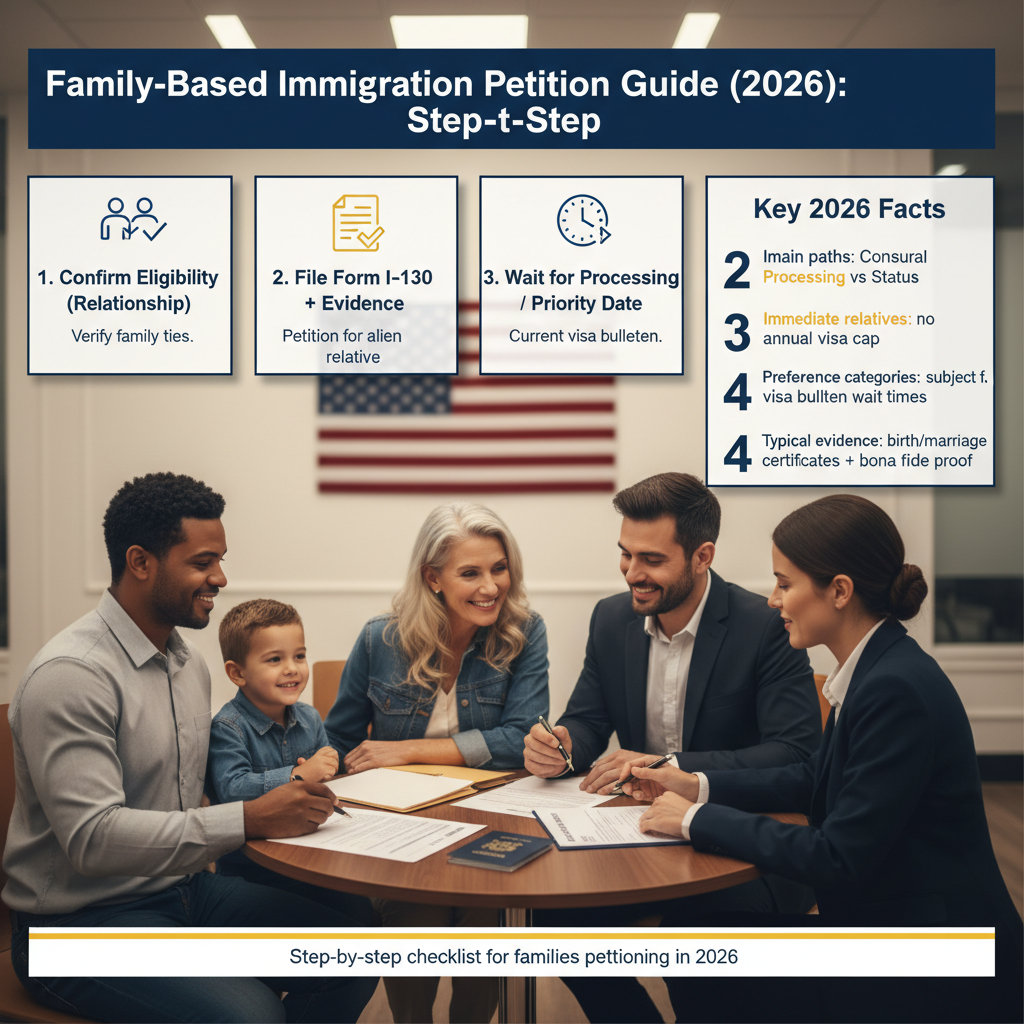
This step-by-step resource is inspired by recent trending coverage and search interest around family immigration processes, including:
Need Help? Our Orlando immigration team is ready to assist. Call +1 786-791-3106 for a free consultation, or message us online. Se Habla Español.
What This News Means for Immigrants in Orlando and Across Florida
Why this news is showing up now
Family-based immigration is consistently one of the most searched immigration topics in the U.S., but it tends to “trend” sharply when:
- USCIS updates forms, fees, or filing addresses (which can affect rejections and delays).
- Processing times shift and families look for realistic timelines and strategy.
- The Department of State Visa Bulletin moves forward or retrogresses, impacting waiting lines and Priority Date planning.
- More families pursue lawful pathways due to worksite enforcement, travel concerns, or changes in personal circumstances (marriage, births, aging-out children).
Reminder: Even when the law hasn’t changed, the “how” of filing—evidence, timing, and procedure—often changes enough to create real risk if you rely on outdated advice.
How it can affect Florida residents
Florida families—especially in Central Florida—often have mixed-status households and urgent needs (work authorization, travel planning, or preventing separation). If you live along the I-4 corridor (Orlando, Kissimmee, Sanford, Daytona) you may feel these issues quickly because:
- High demand can affect appointment availability and case pacing at local facilities.
- Many applicants need careful screening for Adjustment of Status eligibility versus consular processing.
- Past immigration history (entries, overstays, prior petitions) frequently determines whether a “simple” case becomes complex.
If your case is in Orlando, understanding the steps and building a clean, well-documented filing can reduce Requests for Evidence (RFEs), interview stress, and unnecessary delays.
What Family-Based Immigration Petition Guide Is (and Why It Matters)
A plain-English definition
A family-based immigration petition is the legal process where a U.S. citizen or lawful permanent resident (green card holder) asks the U.S. government to recognize a qualifying family relationship and allow that relative to apply for permanent residence (a green card).
In most cases, the process starts with Form I-130 (Petition for Alien Relative). After the I-130 is approved, the family member may:
- Apply for a green card from inside the U.S. through Adjustment of Status using Form I-485, or
- Apply from abroad through consular processing with the U.S. Department of State.
Why it matters: a correct strategy can keep families together, avoid unlawful presence traps, and shorten timelines. A wrong strategy can trigger denials, long separations, or bars to reentry.
Key terms you need to know
- Immediate Relative: Certain relatives of U.S. citizens (spouse, unmarried child under 21, parent of a U.S. citizen who is 21+). These categories are not subject to annual visa caps.
- Family Preference Categories: Categories subject to annual limits and waiting lines (e.g., F2A, F2B, F3, F4). This is where the Priority Date becomes critical.
- Priority Date: Usually the date USCIS receives your Form I-130. It’s your place in line when a visa is capped.
- Visa Bulletin: The monthly publication that helps determine when someone can move forward in preference categories. (Used heavily in family preference and employment cases.)
- Adjustment of Status: Applying for a green card while physically in the U.S. (typically filed with Form I-485).
- Consular Processing: Applying for an immigrant visa at a U.S. consulate abroad after I-130 approval and National Visa Center (NVC) processing.
- Affidavit of Support: The financial sponsorship requirement, usually Form I-864.
- RFE: Request for Evidence—USCIS asks for more documents before deciding.
Important: “Family petition approved” does not automatically mean “green card approved.” It means the relationship is recognized; the green card step still requires eligibility and admissibility screening.
Current Immigration Law: The Foundation
Family immigration is governed primarily by the Immigration and Nationality Act (INA). The petition process is administered by USCIS, with immigrant visa issuance handled by the Department of State and removals/immigration court handled by EOIR.
Federal requirements
Key legal authorities and practical “musts” include:
- INA provisions on family-based immigration categories and numerical limits (family preference caps).
- INA provisions on inadmissibility (criminal issues, immigration fraud/misrepresentation, unlawful presence, health-related grounds, public charge framework, etc.).
- Affidavit of Support requirements under INA § 213A (implemented through Form I-864).
- USCIS form and evidence requirements published at the USCIS official website and USCIS Forms.
Common USCIS forms you may see in family cases include:
- Form I-130 (Petition for Alien Relative)
- Form I-485 (Application to Register Permanent Residence or Adjust Status)
- Form I-765 (Employment Authorization)
- Form I-131 (Advance Parole/Travel Document)
- Form I-864 (Affidavit of Support)
- Form I-693 (Medical Exam and Vaccination Record)
- Form I-130A (Spouse Beneficiary information, when applicable)
Warning: Always download the newest edition of each form from USCIS Forms. Using an outdated edition can cause rejection and lost time.
To check how long cases are taking, rely on USCIS Processing Times rather than social media estimates.
Florida-specific considerations
Immigration is federal, so the core eligibility rules are the same in Florida as anywhere else. But Florida residents may face practical, location-based factors:
- The Orlando USCIS Field Office may handle interviews for Form I-485 filings based on your address in Orange County and nearby Central Florida communities.
- Address changes are common due to housing costs and job shifts along the I-4 corridor—timely AR-11 updates can prevent missed biometrics/interview notices.
- Florida has a large immigrant population and high filing volume; “perfecting” your initial filing can reduce delays caused by RFEs.
If your case is in Orlando and you move within Orange County (or to Osceola, Seminole, Lake, Volusia), confirm your address update with USCIS and keep proof of submission.
Need Help? Our Orlando immigration team is ready to assist. Call +1 786-791-3106 for a free consultation, or message us online. Se Habla Español.
How to File a Family Petition: A Complete Step-by-Step Guide
Below is a practical roadmap for many common cases (spouse, parent, child). Your exact steps depend on whether the beneficiary is inside the U.S. and eligible for Adjustment of Status, or outside the U.S. and needs consular processing.
1) Confirm the correct family category (and whether a visa is available)
Start by identifying (a) who the petitioner is (U.S. citizen vs. green card holder) and (b) the relationship (spouse, child, parent, sibling). This determines whether you are an “immediate relative” or a preference category with a waiting line and Priority Date.
For preference categories, you’ll track visa availability through the Department of State’s monthly Visa Bulletin (published at U.S. Department of State).
Documents to gather for this step:
- Petitioner’s proof of U.S. citizenship (U.S. passport, birth certificate, naturalization certificate) or green card
- Beneficiary’s identity documents (passport biographic page, birth certificate)
- Relationship proof (see Step 2)
- Any prior immigration paperwork (prior I-94s, approvals, denials, removal proceedings documents)
Important: If the beneficiary has ever been in immigration court, get records from Executive Office for Immigration Review before filing. Court history can change strategy dramatically.
2) Prepare and file Form I-130 with strong relationship evidence
Form I-130 establishes the qualifying relationship. A well-prepared I-130 package can reduce RFEs and interview issues later.
Typical evidence by relationship type:
- Spouse: marriage certificate; proof of termination of prior marriages; bona fide marriage evidence (joint lease/mortgage, joint bank statements, insurance, photos, travel records, affidavits from friends/family)
- Parent/Child: birth certificate listing parent; adoption decree (if applicable); legitimation documents in certain cases; evidence of name changes
- Siblings: both siblings’ birth certificates showing a common parent
Documents to gather for this step:
- Completed Form I-130 and (if applicable) Form I-130A
- Filing fee (check current fees on USCIS official website)
- Passport-style photos (if required by instructions)
- Proof of petitioner status (citizenship/green card)
- Proof of relationship (civil documents + supporting evidence)
- Certified translations for any non-English documents
Reminder: Follow the form instructions exactly, including signature rules and correct filing address. Many cases are rejected for technical reasons—not legal ineligibility.
3) Choose the correct green card path: Form I-485 (inside U.S.) or consular processing (outside U.S.)
After (or sometimes together with) the I-130, you decide how the beneficiary will apply for permanent residence:
- Adjustment of Status (AOS): file Form I-485 if the beneficiary is in the U.S. and eligible.
- Consular processing: proceed through the National Visa Center (NVC) and a consulate abroad.
When can you file I-130 and I-485 together?
Many immediate relatives of U.S. citizens can “concurrently file” Form I-130 and Form I-485 (assuming eligibility). Preference category applicants usually must wait until their Priority Date is current under the Visa Bulletin rules.
Documents to gather for this step:
- Proof of lawful entry (I-94 record, entry stamp), when required for AOS eligibility
- Copies of all passports used, visas, and travel history
- Prior immigration documents (EADs, approvals, denials)
- For consular processing: beneficiary’s police certificates and civil documents (later uploaded to NVC)
Warning: If the beneficiary entered without inspection (EWI) or has unlawful presence, you may need a different strategy (possibly consular processing with a waiver). Do not “guess”—get legal screening first.
4) File the AOS package (if eligible): Form I-485 + work permit + travel + financial sponsorship
A typical AOS filing includes:
- Form I-485 (green card application)
- Form I-864 (Affidavit of Support) from the petitioner and sometimes a joint sponsor
- Form I-765 (work permit) so the applicant can work while the case is pending
- Form I-131 (Advance Parole) for travel while the case is pending (if appropriate)
- Form I-693 medical exam (timing varies; follow current USCIS guidance)
Documents to gather for this step:
- Government-issued ID and passport biographic page
- Birth certificate (with certified translation if needed)
- Marriage certificate (if based on marriage) + divorce decrees/annulments/death certificates for any prior marriages
- I-94 record (if applicable), entry stamps, visa pages
- Two passport-style photos (if required)
- Form I-864 evidence: most recent tax return (and W-2/1099), pay stubs, employment letter, proof of lawful status of any joint sponsor
- If applicable: court dispositions for any arrests/charges (even if dismissed)
Important: Do not travel internationally after filing AOS unless you have the proper travel authorization. Leaving the U.S. without Advance Parole can result in the case being treated as abandoned in many scenarios.
Timeline note: Work and travel documents often arrive earlier than the green card decision, but timing varies widely. Check USCIS Processing Times for realistic ranges.
5) Attend biometrics, respond to RFEs, and prepare for the interview (Orlando-focused)
After filing, USCIS generally schedules biometrics (fingerprints/photo). Then, depending on the case, USCIS may issue an RFE or schedule an interview at your local field office.
For Central Florida residents, the interview may be scheduled at the Orlando USCIS Field Office depending on jurisdiction. If your case is in Orlando, plan ahead for:
- Time off work and childcare
- Parking/traffic patterns along the I-4 corridor
- Bringing originals and an organized copy set
Documents to gather for this step:
- Interview notice and government-issued IDs
- Original civil documents (birth, marriage, divorce, passports)
- Updated bona fide marriage evidence (if marriage-based): new leases, bank statements, insurance, children’s birth certificates, photos
- RFE response packet (if any), with tracking proof of delivery
- Updated financial evidence if requested
Reminder: If you receive an RFE, respond by the deadline. Missing it can lead to denial. Keep your response clear, tabbed, and indexed.
6) Get the decision, then protect your status (green card delivery, conditions, citizenship planning)
If USCIS approves the case, the applicant becomes a lawful permanent resident and receives the green card. Some spouses receive a conditional green card (valid for 2 years) if the marriage was less than 2 years old on the day residence is granted, and later must file to remove conditions.
Documents to gather for this step:
- Approval notice(s)
- Green card (when it arrives) and verify data accuracy
- Social Security updates (if needed)
- Travel records for future naturalization planning
Important: If you receive a conditional green card, you generally must file to remove conditions during a specific filing period. Many conditional residents hear “90-day window” because removal of conditions is typically filed in the 90 days before the card expires.
7) If the beneficiary is abroad: complete NVC + consular interview (and plan around travel risks)
If you choose consular processing, after I-130 approval the case goes to the National Visa Center (NVC) for fee payment, document upload, and affidavit of support review before the consulate schedules an interview.
Documents to gather for this step:
- Valid passport
- Birth certificate, marriage certificate, divorce decrees
- Police certificates (country-specific rules)
- Medical exam results from an authorized physician
- Form I-864 and financial evidence
- Proof of relationship and ongoing contact (especially for spouses)
Warning: If there is prior unlawful presence, removal, or misrepresentation, consular processing can trigger bars. A waiver may be required before (or after) the interview depending on the issue. Get a legal analysis before the beneficiary leaves the U.S.
Need Help? Our Orlando immigration team is ready to assist. Call +1 786-791-3106 for a free consultation, or message us online. Se Habla Español.
Practical Steps You Can Take Today
Whether you are just starting or already filed, these practical actions can reduce delays and protect your family.
Actionable checklist
- Create a shared folder (digital + paper) for every immigration document, including prior filings, notices, and delivery confirmations.
- Order certified copies of key civil documents (birth, marriage, divorce) and get certified translations ready.
- Collect relationship evidence monthly (bank statements, insurance, lease renewals, photos, travel receipts).
- Check your case receipt numbers and track updates through your USCIS account at USCIS official website.
- Review USCIS Processing Times monthly and set expectations with your family.
- If you moved, file your address update promptly and keep proof. Missing mail is a top cause of missed appointments.
- If any arrest ever occurred (even expunged/dismissed), request certified dispositions and talk to counsel before filing.
Document preparation guidance
- Make copies of everything you send to USCIS, including checks/money orders and shipping labels.
- Use a cover letter and table of contents for larger packets.
- Label exhibits clearly (e.g., “Exhibit A: Petitioner’s U.S. Passport,” “Exhibit B: Marriage Certificate”).
- Do not submit original civil documents unless instructions specifically require it.
Timeline expectations (real-world planning)
Timelines vary by category, location, and USCIS workload. As a planning framework:
- Form I-130 processing can range from months to longer depending on category and service center.
- Form I-485 cases may include biometrics within weeks to months, then an interview/decision later.
- Consular processing adds NVC document review time plus consulate scheduling.
Reminder: Some people hear “180 days” as a general expectation for certain interim benefits or case milestones, but there is no universal guarantee. Use official processing time tools and individualized legal guidance.
How Imigrar Helps Immigrants in Orlando
Imigrar is an immigration law firm based in Orlando, Florida, serving clients nationwide. Our mission is simple: Keep Families Together.
Family-based cases look straightforward on paper, but small details can make a major difference—entry history, prior marriages, financial sponsorship, criminal records, or past immigration filings. We help families by:
- Confirming the best strategy: Adjustment of Status vs. consular processing
- Preparing a strong Form I-130 package with organized evidence
- Filing Form I-485 and related benefits (work permit/travel) correctly the first time
- Handling RFEs and interview preparation for the Orlando field office
- Assessing inadmissibility risks and waiver options when needed
We offer a free consultation to help you understand your options and next steps. Se Habla Español.
Frequently Asked Questions
Q: Who is eligible to file a family petition?
A: Generally, U.S. citizens can petition for spouses, children (married or unmarried), parents (if the U.S. citizen is 21+), and siblings. Lawful permanent residents can petition for a spouse and unmarried children. Eligibility depends on proving the relationship and meeting all procedural requirements for Form I-130.
Q: Does my current immigration status affect whether I can get a green card?
A: Yes. Status and entry history can determine whether you can apply through Adjustment of Status using Form I-485 or whether you must do consular processing. Some issues (like unlawful presence, certain immigration violations, or prior removal orders) can create serious risks. If you have any prior immigration court history, consult records through Executive Office for Immigration Review and get legal advice before filing.
Q: How long does a family-based petition take in 2026?
A: It depends on the relationship category, whether you are an immediate relative, and whether you are filing inside the U.S. or abroad. Use USCIS Processing Times for the most reliable estimates. Preference category cases can take longer due to visa caps and Priority Date backlogs.
Q: What documents are required for Form I-130 and Form I-485?
A: For Form I-130, you typically need proof of petitioner status, proof of the relationship (marriage/birth certificates), and supporting evidence (especially for spouses). For Form I-485, you generally need identity documents, proof of entry (if applicable), civil documents, Form I-864 financial sponsorship evidence, and the medical exam (Form I-693) per USCIS guidance. Always confirm the latest requirements on the USCIS Forms page.
Q: How much does it cost to file a family petition?
A: Costs include USCIS filing fees (which vary by form and can change), medical exam fees, translation costs, and any travel costs for biometrics/interviews. Check current filing fees directly at the USCIS official website. If consular processing is involved, Department of State/NVC fees may also apply through U.S. Department of State.
Q: What happens if my case is denied?
A: The next steps depend on what was denied (the Form I-130, the Form I-485, or a waiver) and why. Some denials can be fixed by refiling with better evidence; others may involve motions, appeals, or alternative strategies. In certain situations, a denial can trigger removal proceedings—so it’s critical to speak with an attorney before filing if there are risk factors. If your case enters immigration court, information is handled through Executive Office for Immigration Review.
Q: If my spouse is abroad, can they visit the U.S. while the petition is pending?
A: Sometimes, but it’s risky and depends on the visa type and whether the person can show nonimmigrant intent (for visitor visas). Having a pending immigrant petition can raise questions at the border. For official guidance on consular processing steps and immigrant visa procedures, see U.S. Department of State.
Common Mistakes (and How to Avoid Them)
Mistake #1: Filing the wrong process (AOS vs. consular) without screening for unlawful presence or prior orders
Families often assume everyone can file Form I-485 inside the U.S. That’s not always true. A wrong filing can waste months and fees—or worse, expose someone to removal risk.
How to avoid it: get a full intake review of entries/exits, I-94 history, and any immigration court involvement via Executive Office for Immigration Review before choosing a strategy.
Mistake #2: Weak relationship evidence in marriage cases
USCIS looks for proof the marriage is real, not just a certificate. Sparse evidence can lead to RFEs or difficult interviews.
How to avoid it: submit a well-organized set of joint documents across time (not just one month) and keep building evidence until the interview.
Mistake #3: Missing deadlines or failing to update addresses
Missed biometrics or interview notices can lead to denial. Address changes are common for Central Florida residents.
How to avoid it: update addresses promptly, track mail, and keep copies of confirmations. Create calendar reminders for every notice and deadline. Important: respond to RFEs by the due date—late responses are often rejected.
Need Help? Our Orlando immigration team is ready to assist. Call +1 786-791-3106 for a free consultation, or message us online. Se Habla Español.
Closing: Keep Your Family’s Case Moving Forward
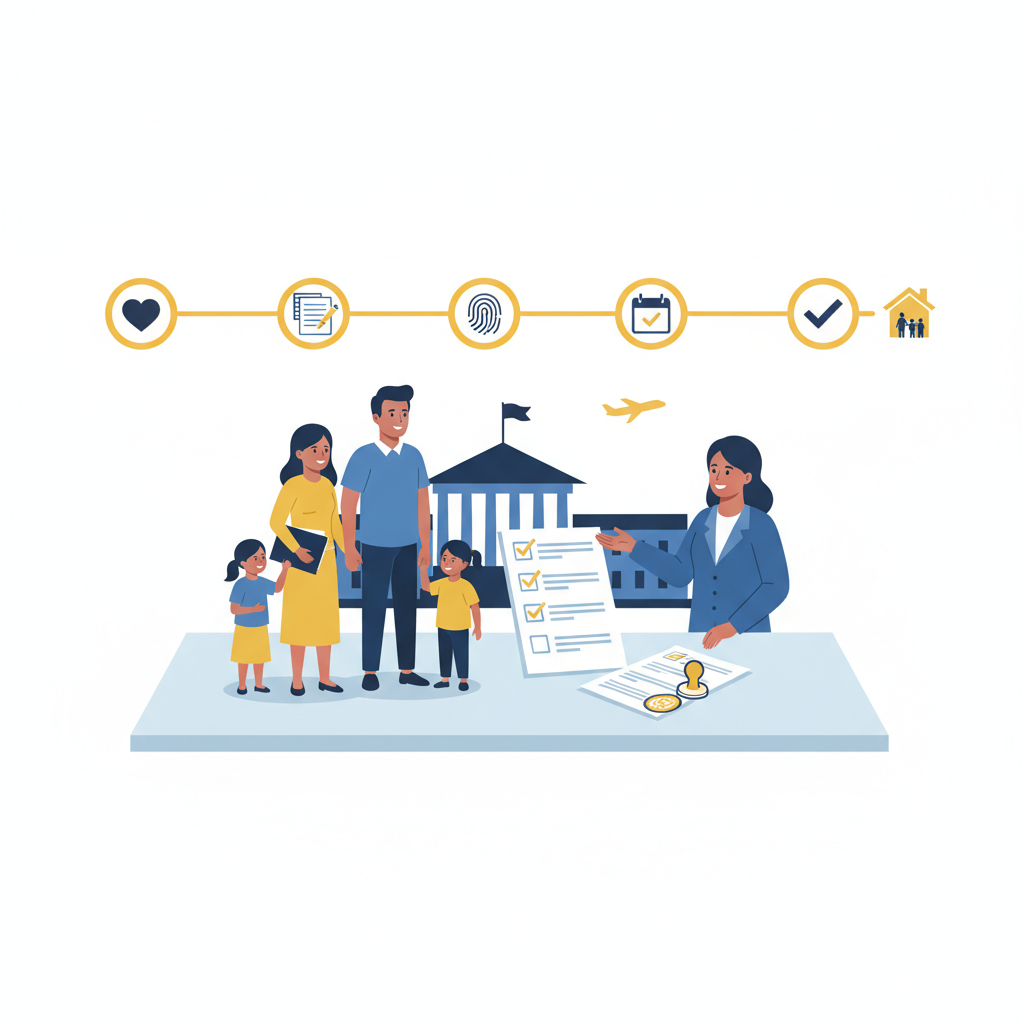
Family-based immigration can be life-changing—but it’s also document-heavy and deadline-driven. The best results usually come from a clear strategy, strong evidence, and proactive planning around Priority Date rules, interview readiness, and admissibility concerns.
For Central Florida residents, and especially if your case is in Orlando or will be handled by the Orlando USCIS Field Office, careful preparation can make the process smoother and reduce delays.
Need personalized help? Imigrar is here to support you from the first Form I-130 filing to the final green card approval—always focused on our mission to Keep Families Together.
Call +1 786-791-3106 for a free consultation, or message us online. Se Habla Español.


