
Family-Based Green Card Guide: Orlando Immigrants & Beyond
Navigate the family-based immigration petition process with Imigrar's comprehensive guide. Learn eligibility, steps, and key requirements for uniting families in Orlando, Florida, and nationwide.

At Imigrar, we understand that nothing is more important than keeping families together. For countless individuals and families in Orlando, Central Florida, and across the nation, the path to obtaining a Green Card often begins with a family-based immigration petition. This complex but vital process is the cornerstone of U.S. immigration, allowing citizens and lawful permanent residents to sponsor their loved ones for immigration to the United States.
Given the intricate legal requirements, extensive documentation, and often lengthy processing times, navigating family-based immigration can feel overwhelming. That’s why we’ve created this comprehensive guide: to demystify the process, provide clear, actionable steps, and empower you with the knowledge you need to pursue your family’s future in the U.S. This article leverages the latest insights and legal expertise to offer a practical roadmap for sponsoring your relatives.
Need Help? Our Orlando immigration team is ready to assist. Call +1 786-791-3106 for a free consultation, or message us online. Se Habla Español.
The reporting that sparked this guide
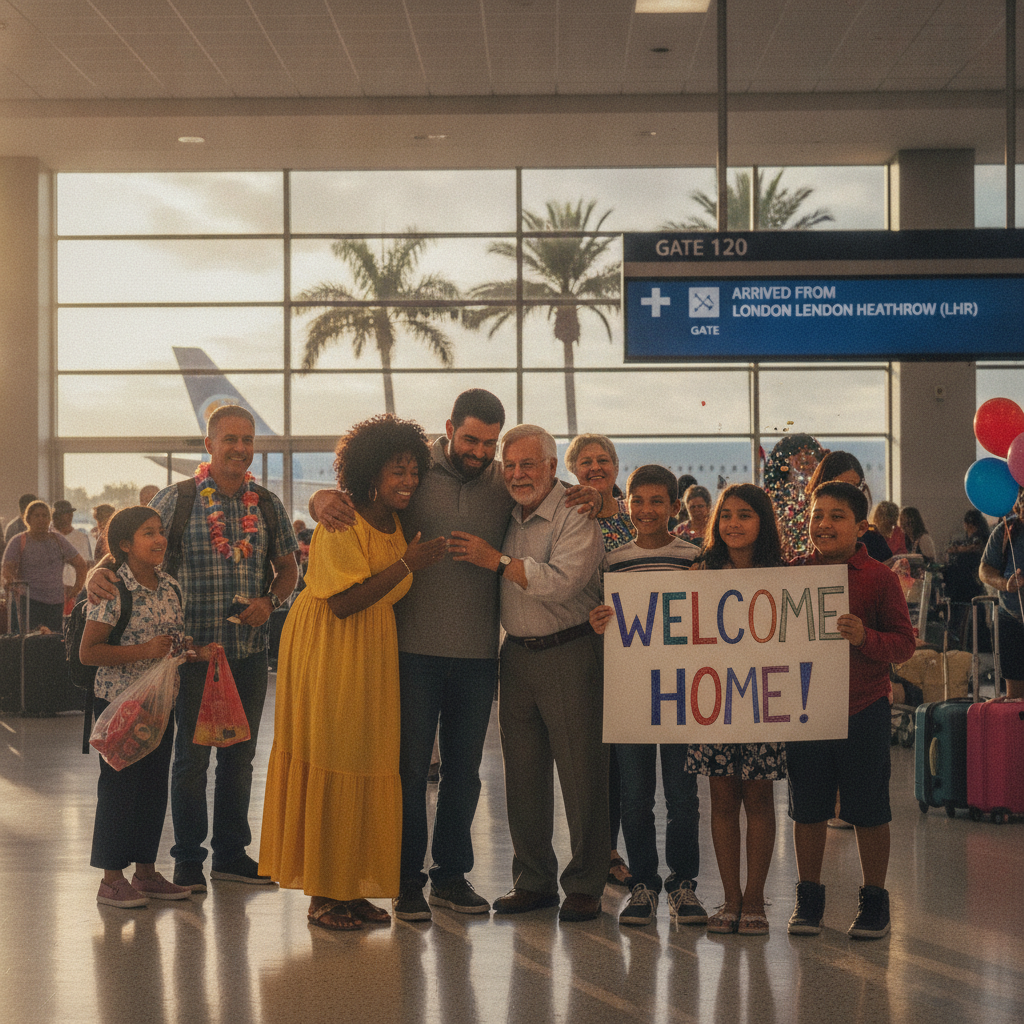
The continuous public interest and search for clear, reliable information on family-based immigration petitions highlight the ongoing need for accessible guides. The complexity of U.S. immigration law means that even fundamental processes like family sponsorship frequently become trending topics in the news as individuals seek clarity and updates. This demand for actionable information is precisely what prompted our in-depth guide.
Family-Based Immigration Petition Guide (Immigration)
What This News Means for Immigrants in Orlando and Across Florida
The consistent appearance of family-based immigration topics in news and search trends underscores a critical reality: the process of uniting families through immigration remains a central concern for millions. For immigrants and their families residing in Orlando, across Florida, and throughout the United States, staying informed about these pathways is not just beneficial—it’s essential.
Why this news is showing up now
Family-based immigration is not a new concept, but its trending nature reflects several factors:
- Constant Demand for Clarity: U.S. immigration law is notoriously complex and subject to interpretation. As families grow and circumstances change, the need for up-to-date, step-by-step guidance on how to navigate the system is perpetual. Many potential petitioners and beneficiaries find the official government websites dense and difficult to parse, leading them to seek clearer explanations.
- Evolving Policies and Procedures: While the core principles of family sponsorship remain, administrative procedures, processing times, and documentary requirements can shift. News outlets often report on these changes, prompting individuals to seek comprehensive guides that consolidate the latest information.
- Backlogs and Processing Delays: Long processing times, particularly for certain family preference categories, are a persistent challenge. When these backlogs are highlighted in the news, it generates a surge in searches for information on how to best prepare a petition to avoid further delays or common pitfalls.
- Increased Digital Literacy: More people are turning to online resources, including news articles and specialized legal blogs, to understand intricate legal processes. A trending guide signifies a collective effort by the immigrant community to educate themselves thoroughly.
How it can affect Florida residents
Florida is one of the most diverse states in the U.S., home to a vast and vibrant immigrant population. Cities like Orlando, Miami, and Tampa are melting pots where families from all over the world seek to build new lives. For these residents, news about family-based immigration is directly relevant:
- A Direct Path to Family Unity: For many Floridians, family-based petitions are the primary, and often only, pathway to bring spouses, children, parents, or siblings to the U.S. or to adjust their status while already here. Understanding this process is key to achieving family unity, which is often the driving force behind immigration.
- Local Impact of Federal Policy: While immigration law is federal, its impact is deeply felt at the local level. Changes in processing times, interview procedures at the Orlando USCIS Field Office, or specific documentation requirements directly affect residents in Orange County and the wider Central Florida region.
- Access to Resources: The demand for clear information means that legal firms like Imigrar, deeply rooted in the Orlando community, are crucial resources. We provide not just legal representation but also educational content like this guide to help our neighbors navigate complex immigration challenges.
- Economic and Social Integration: Successful family-based immigration leads to stronger communities. When families are united, they can better integrate into the social fabric and contribute to Florida’s economy, whether in the tourism sector along the I-4 corridor or in other burgeoning industries. News that highlights the mechanics of this process empowers more families to achieve this integration.
For Florida residents, especially those in Orlando, this guide serves as a critical tool. It aims to cut through the noise and provide concrete, reliable information specific to their needs, helping them to take confident steps towards securing their family’s future.
What Family-Based Immigration Petitions Are (and Why It Matters)
At its heart, family-based immigration is the legal mechanism through which U.S. citizens and lawful permanent residents (Green Card holders) can sponsor certain family members to come to live permanently in the United States. It's a cornerstone of American immigration policy, reflecting the nation's value on family unity.
A plain-English definition
A "family-based immigration petition" is essentially a formal request made to the U.S. government, specifically U.S. Citizenship and Immigration Services (USCIS), asking permission for a foreign national relative to receive an immigrant visa (often called a Green Card). The U.S. citizen or Green Card holder initiating this request is called the petitioner, and the foreign national relative is the beneficiary.
The process begins with the petitioner filing Form I-130, Petition for Alien Relative. This form establishes the qualifying family relationship between the petitioner and the beneficiary. Once approved, and assuming a visa is available (which depends on the relationship category), the beneficiary can then apply for their Green Card, either from within the U.S. (through Adjustment of Status) or from abroad (through Consular Processing).
Key terms you need to know
Understanding the following terms is crucial for navigating the family-based immigration process:
- Petitioner: The U.S. citizen or lawful permanent resident (LPR) who files Form I-130 on behalf of their foreign national relative.
- Beneficiary: The foreign national relative for whom the Form I-130 is filed, seeking to immigrate to the U.S.
- Immediate Relatives: This is a highly favorable category that includes spouses of U.S. citizens, unmarried children under 21 of U.S. citizens, and parents of U.S. citizens (if the U.S. citizen is 21 or older). Important: There are an unlimited number of visas available for Immediate Relatives, meaning they do not have to wait for a visa to become available once the Form I-130 is approved.
- Family Preference Categories: These categories are for specific, more distant family relationships, and unlike Immediate Relatives, they are subject to annual numerical limits on visas. This means beneficiaries in these categories often face significant waiting periods. The categories are:
- First Preference (F1): Unmarried sons and daughters (21 years of age or older) of U.S. citizens.
- Second Preference (F2A): Spouses and children (unmarried, under 21) of lawful permanent residents.
- Second Preference (F2B): Unmarried sons and daughters (21 years of age or older) of lawful permanent residents.
- Third Preference (F3): Married sons and daughters of U.S. citizens.
- Fourth Preference (F4): Brothers and sisters of U.S. citizens (if the U.S. citizen is 21 or older).
- Priority Date: For Family Preference Categories, this is the date USCIS receives your properly filed Form I-130 petition. It establishes your place in the visa queue. You can track your priority date against the Visa Bulletin, published monthly by the U.S. Department of State, to see when a visa number might become available.
- Visa Bulletin: A monthly publication that summarizes the availability of immigrant visas for the various preference categories. It tells you which priority dates are "current," meaning a visa number is available for those individuals.
- Adjustment of Status (AOS): The process of applying for a Green Card from within the United States. This is generally available if the beneficiary is already in the U.S. and meets certain eligibility criteria (e.g., entered legally, no serious immigration violations). It involves filing Form I-485, Application to Register Permanent Residence or Adjust Status.
- Consular Processing: The process of applying for an immigrant visa at a U.S. embassy or consulate abroad. This is for beneficiaries who are outside the United States or are ineligible for Adjustment of Status.
- Affidavit of Support: A legally binding document (Form I-864) signed by the petitioner (and sometimes a joint sponsor) promising to financially support the beneficiary(ies) once they immigrate to the U.S. This demonstrates that the immigrant will not become a "public charge."
Understanding these terms is your first step towards confidently navigating the family-based immigration journey. It clarifies who can sponsor whom and what to expect in terms of processing and visa availability.
Current Immigration Law: The Foundation
Family-based immigration is deeply rooted in the Immigration and Nationality Act (INA), the primary body of U.S. immigration law. The INA establishes the categories of family relationships that qualify for sponsorship and outlines the procedures and requirements for obtaining an immigrant visa or Green Card.
Federal requirements
The foundational principles for family-based immigration are found primarily in sections of the INA:
- INA Section 201: Defines the categories of immigrants, including Immediate Relatives (spouses, minor children, and parents of U.S. citizens) who are not subject to numerical limits, and the family-sponsored preference categories which are numerically limited.
- INA Section 203: Outlines the annual numerical limitations for family-sponsored preference categories and establishes the order in which visas are allocated (the preference system).
- INA Section 204: Details the petitioning process, specifically the requirement for a U.S. citizen or LPR to file a petition (Form I-130) to establish the qualifying relationship.
- INA Section 212(a): Lists grounds of inadmissibility, which are reasons a foreign national might be denied a visa or Green Card (e.g., certain health issues, criminal history, security concerns, prior immigration violations, or likelihood of becoming a public charge). Waivers may be available for some grounds.
- INA Section 213A: Mandates the Affidavit of Support (Form I-864), requiring petitioners to demonstrate sufficient financial means to support the sponsored immigrant(s) at 125% of the federal poverty guidelines. This is a critical component to overcome the public charge ground of inadmissibility.
These federal laws and regulations are administered by two primary government agencies:
- U.S. Citizenship and Immigration Services (USCIS): Part of the Department of Homeland Security, USCIS processes the initial petitions (like Form I-130 and Form I-485) and other applications for benefits within the U.S. You can find all official forms and instructions on the USCIS Forms page and general information on the USCIS official website.
- U.S. Department of State (DOS): Administers immigrant visa processing at U.S. embassies and consulates abroad through its Bureau of Consular Affairs. It also publishes the monthly Visa Bulletin.
Commonly used USCIS forms for family-based immigration include:
- Form I-130, Petition for Alien Relative: The initial petition filed by the U.S. citizen or LPR to establish the family relationship.
- Form I-130A, Supplemental Information for Spouse Beneficiary: Required when sponsoring a spouse.
- Form I-485, Application to Register Permanent Residence or Adjust Status: Filed by beneficiaries *inside* the U.S. seeking to adjust their status to a lawful permanent resident.
- Form I-864, Affidavit of Support: Filed by the petitioner (and potentially joint sponsors) to demonstrate financial ability.
- Form I-765, Application for Employment Authorization: Often filed concurrently with Form I-485 to allow the beneficiary to work while their Green Card application is pending.
- Form I-131, Application for Travel Document: Often filed concurrently with Form I-485 to allow the beneficiary to travel internationally while their Green Card application is pending (Advance Parole).
- Form DS-260, Immigrant Visa Electronic Application: Used for *Consular Processing* by beneficiaries *outside* the U.S.
Florida-specific considerations
While immigration law is federal, its application and impact vary regionally. For Florida residents, particularly those in Orlando, several aspects are worth noting:
- USCIS Field Offices: Florida hosts several USCIS Field Offices, including one in Orlando, Miami, and Tampa. If your case involves an interview for Adjustment of Status, it will likely be scheduled at the Orlando USCIS Field Office (for Central Florida residents) or a nearby office. Familiarity with local office procedures and typical interview questions can be beneficial.
- Diverse Population, Diverse Needs: Florida’s large and diverse immigrant population means that immigration services are in high demand. This can sometimes affect processing times or the availability of appointments for services like biometrics. However, it also means a strong network of legal and community support is often available.
- State-Specific Support: While the state of Florida does not enact its own immigration laws, local non-profits and legal aid organizations in Orange County and surrounding areas often provide support and resources for immigrants navigating federal processes.
- Jurisdictional Nuances: Depending on where you reside in Florida, your case might be handled by different USCIS service centers (e.g., Nebraska Service Center, Texas Service Center) before potentially being transferred to a local field office. An experienced Orlando immigration attorney can help you understand these nuances.
Understanding these foundational laws and the specific forms involved is critical. It provides the framework for every step you will take in the family-based immigration journey. For precise guidance tailored to your situation, consulting with an immigration attorney is always recommended.
Need Help? Our Orlando immigration team is ready to assist. Call +1 786-791-3106 for a free consultation, or message us online. Se Habla Español.

How to File a Family-Based Immigration Petition: A Complete Step-by-Step Guide
The family-based immigration process can be broken down into distinct stages. While the exact steps might vary slightly depending on whether the beneficiary is in the U.S. or abroad, this guide covers the general flow.
1) Determine Eligibility and Category
Before filing anything, the petitioner must confirm they are eligible to sponsor a relative and identify the correct immigration category for their beneficiary. This is the most crucial first step, as it dictates the forms, documents, and waiting times involved.
- Petitioner's Status: The petitioner must be either a U.S. citizen or a lawful permanent resident (Green Card holder). U.S. citizens can sponsor a broader range of relatives than LPRs.
- Qualifying Relationship: Verify that the relationship between the petitioner and beneficiary is recognized by USCIS for immigration purposes.
- U.S. Citizen can sponsor: Spouses, unmarried children under 21, unmarried sons/daughters 21 or older, married sons/daughters of any age, parents (if the U.S. citizen is 21 or older), and brothers/sisters (if the U.S. citizen is 21 or older).
- LPR can sponsor: Spouses and unmarried children of any age.
- Immediate Relative vs. Preference Category: This distinction determines visa availability.
- Immediate Relatives (IR): Spouses, unmarried children under 21, and parents of U.S. citizens. Visas are always available, meaning no long wait for a priority date to become current.
- Family Preference Categories (F1, F2A, F2B, F3, F4): All other eligible relationships. These categories have annual limits, leading to waiting lists and the need to track the Visa Bulletin for your Priority Date to become current.
Required Documents (for initial eligibility assessment):
- Proof of petitioner’s U.S. citizenship (e.g., U.S. birth certificate, naturalization certificate, U.S. passport) or LPR status (e.g., Green Card copy).
- Proof of relationship to the beneficiary (e.g., marriage certificate, birth certificates, adoption decrees).
2) File Form I-130, Petition for Alien Relative
This is the official start of the immigration process. The U.S. citizen or LPR petitioner files Form I-130 with USCIS to establish the legitimate family relationship. This form must be accurately completed and supported by substantial evidence.
- Complete Form I-130: Fill out every section carefully. If sponsoring a spouse, also complete Form I-130A, Supplemental Information for Spouse Beneficiary.
- Gather Supporting Documents: Collect all necessary evidence to prove your relationship and petitioner status.
- Pay Filing Fees: Check the current USCIS filing fees as they can change. Fee waivers are rarely granted for Form I-130.
- Mail the Petition: Send the complete package to the correct USCIS lockbox facility, as specified in the Form I-130 instructions. The address depends on where the petitioner lives and whether concurrent filing (filing Form I-130 and Form I-485 together) is applicable.
Required Documents (for Form I-130 package):
- Completed and signed Form I-130 and Form I-130A (if applicable).
- Proof of U.S. citizenship or LPR status of the petitioner (copy of birth certificate, naturalization certificate, U.S. passport, or Green Card).
- Proof of qualifying relationship:
- For spouses: Marriage certificate, evidence of bona fide marriage (e.g., joint bank accounts, joint leases/mortgages, utility bills, photos together, affidavits from friends/family).
- For children: Child's birth certificate listing petitioner as parent. If adopted, adoption decree.
- For parents: Petitioner's birth certificate listing parent as beneficiary.
- For siblings: Petitioner's and beneficiary's birth certificates showing at least one common parent.
- Passport-style photos of both petitioner and beneficiary.
- Any name change documents (e.g., marriage certificate, court order).
- Proof of termination of prior marriages (if applicable, e.g., divorce decrees, death certificates).
Warning: Missing documents or incomplete forms are common reasons for delays or denials. Ensure all copies are legible and follow USCIS guidelines for photo specifications.
3) Wait for Petition Approval and Priority Date (if applicable)
Once USCIS receives your Form I-130, they will send a receipt notice (Form I-797C, Notice of Action). This notice will contain your Priority Date if you are in a Family Preference Category. USCIS will then review the petition to determine if the relationship is legitimate and qualifies under immigration law.
- Receive Receipt Notice: Within a few weeks, you should receive a receipt notice from USCIS. Keep this safe, as it contains your case number and priority date.
- Monitor Processing Times: Check the USCIS Processing Times tool online using your form type and the service center processing your case.
- Request for Evidence (RFE): USCIS may send an RFE if they need more information or documents to make a decision. Respond promptly and thoroughly.
- Approval Notice: If approved, USCIS will send an approval notice (Form I-797, Notice of Action). For Immediate Relatives, this often means the next step can begin relatively quickly. For Family Preference Categories, this means you now wait for your Priority Date to become current in the Visa Bulletin.
Important: The wait for a priority date to become current can range from a few years to over a decade, depending on the country of origin and the preference category. Regularly consult the Visa Bulletin.
4) Choose Path: Adjustment of Status (Form I-485) or Consular Processing (Form DS-260)
Once the Form I-130 is approved and a visa number is available (immediately for Immediate Relatives, or when the Priority Date is current for Preference Categories), the beneficiary can apply for their Green Card. The path depends on whether the beneficiary is physically present in the U.S. and eligible to adjust status.
Option A: Adjustment of Status (for beneficiaries in the U.S.)
If the beneficiary is in the U.S. and entered legally, they may be eligible to apply for Adjustment of Status to a lawful permanent resident. This involves filing a package of forms with USCIS.
- Concurrent Filing: Immediate Relatives can often file Form I-130 and Form I-485 concurrently (at the same time), which can expedite the process.
- Gather Documents: Collect all required forms and supporting documents for the Adjustment of Status package.
- Biometrics Appointment: After filing, USCIS will schedule a biometrics appointment at a local Application Support Center (ASC), typically in Orlando for Central Florida residents. Fingerprints, photos, and signatures are collected.
- Employment Authorization Document (EAD) & Advance Parole (AP): Beneficiaries can apply for an EAD (work permit) and AP (travel permit) concurrently with Form I-485 using Form I-765 and Form I-131. This allows them to work and travel while the Green Card application is pending.
Required Documents (for Adjustment of Status package):
- Completed and signed Form I-485, Application to Register Permanent Residence or Adjust Status.
- Completed and signed Form I-864, Affidavit of Support (from petitioner and any joint sponsor).
- Completed and signed Form I-765, Application for Employment Authorization (optional).
- Completed and signed Form I-131, Application for Travel Document (optional).
- Copy of the Form I-130 approval notice.
- Beneficiary's birth certificate.
- Marriage certificate (if applicable).
- Passport-style photos of the beneficiary.
- Copy of beneficiary's passport biographic page and visa stamp (if applicable).
- Copy of Form I-94, Arrival/Departure
Related Topics
Need Legal Assistance?
Our experienced immigration attorneys are here to help with your case. Contact Imigrar today for a free consultation and let us guide you through the legal process with confidence.
📍 Orlando, Florida • Serving clients nationwide
📧 info@imigrar.com