

The ability to work legally in the United States is a cornerstone of building a new life for many immigrants. An Employment Authorization Document (EAD), often called a work permit, is the key to unlocking this opportunity. Recent updates from U.S. Citizenship and Immigration Services (USCIS) regarding EAD application and renewal processing have brought both hope and new considerations for individuals and families across the nation.
The reporting that sparked this guide
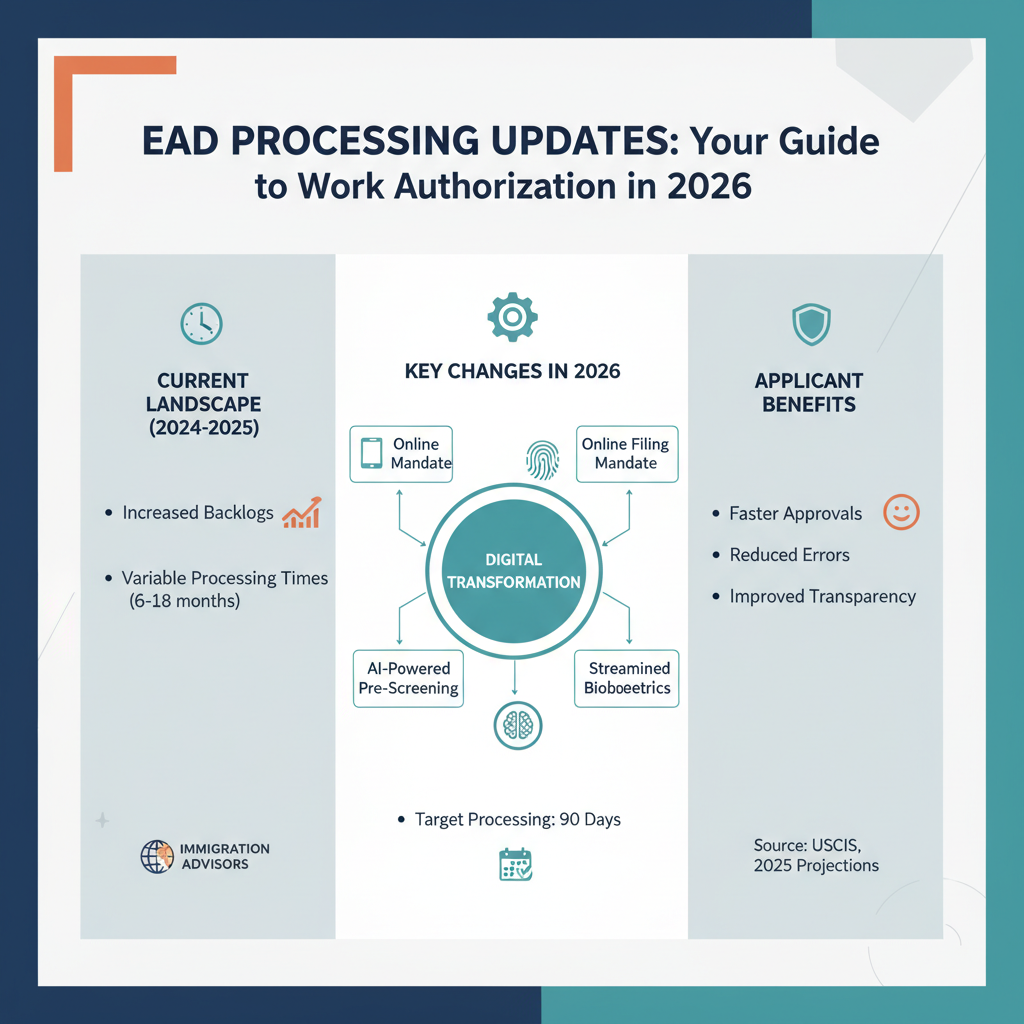
We monitor immigration news constantly to provide our community with the most current and actionable information. The insights for this guide stem from general reporting and official announcements regarding:
Employment Authorization Document Processing (USCIS)What This News Means for Immigrants in Orlando and Across Florida
Understanding the nuances of immigration law can be challenging, especially when federal agencies like USCIS implement changes to their processes. For immigrants striving to contribute to the U.S. economy and support their families, updates concerning the Employment Authorization Document (EAD) are critically important. These changes can directly impact your ability to work, your family's financial stability, and your overall peace of mind.
Why this news is showing up now
USCIS is continually working to improve the efficiency of its operations and reduce backlogs that have plagued various immigration processes in recent years. The current focus on EAD processing reflects a broader effort to streamline applications, reduce wait times, and provide clearer guidance to applicants. These updates often come in response to public feedback, policy reviews, and the ongoing need to adapt to evolving caseloads and technological capabilities. For instance, USCIS has been exploring ways to expand online filing options, improve data management, and potentially issue longer validity periods for EADs in certain categories. While specific legislative changes might not be frequent, procedural adjustments and policy interpretations by USCIS are constant, leading to these crucial updates.
How it can affect Florida residents
Florida, and particularly Central Florida with its vibrant immigrant communities, is significantly impacted by these EAD processing updates. Thousands of individuals in Orlando, Kissimmee, Tampa, and Miami rely on timely EAD approvals to maintain their employment, secure new jobs, and provide for their families. Faster processing times could mean less anxiety and fewer gaps in employment for those renewing their EADs. Conversely, any slowdowns or new requirements could create significant hardship. For example:
- Economic Stability: Timely EADs mean continued income for families, allowing them to pay rent, buy groceries, and contribute to the local economy. Delays can lead to job loss and financial distress.
- Employer Confidence: Employers in Orlando and throughout Florida need clarity on their employees' work authorization. Consistent and predictable EAD processing helps businesses retain valuable talent and comply with federal regulations.
- Community Integration: The ability to work legally fosters greater integration into the community, enabling immigrants to build credit, obtain driver's licenses (if eligible), and fully participate in societal life.
- Access to Services: An EAD is often a necessary document for obtaining other essential services, such as opening bank accounts or applying for professional licenses.
At Imigrar, we understand that these federal changes have very real, local consequences. Our team in Orlando is dedicated to helping Florida residents navigate these updates, ensuring they understand their rights and the best path forward for their EAD applications and renewals.
Need Help? Our Orlando immigration team is ready to assist. Call +1 786-791-3106 for a free consultation, or message us online. Se Habla Español.
What Employment Authorization Document (EAD) Processing Is (and Why It Matters)
The Employment Authorization Document, commonly known as an EAD or a work permit, is a critical document issued by USCIS that grants certain non-citizens permission to work legally in the United States for a specific period. It is distinct from a visa or green card, though it may be a step on the path to permanent residency for many individuals.
A plain-English definition
Think of an EAD as your official permission slip from the U.S. government to get a job. If you’re not a U.S. citizen or a lawful permanent resident (green card holder), and you want to work here, you generally need an EAD. It’s a physical card, similar to a driver’s license, that proves you are authorized to be employed in the U.S. for a certain timeframe. This document is essential for proving your eligibility to employers and for completing the I-9 employment verification process.
Key terms you need to know
Navigating the EAD process requires familiarity with several key terms:
- Employment Authorization Document (EAD): The official name for the work permit card.
- USCIS (U.S. Citizenship and Immigration Services): The government agency responsible for processing EAD applications. You can find more information on the USCIS official website.
- Form I-765, Application for Employment Authorization: The specific form you must file with USCIS to request an EAD.
- Eligibility Category: This refers to the specific immigration status or circumstance that qualifies you for an EAD. Examples include asylum seekers, refugees, adjustment of status applicants (those applying for a green card), certain nonimmigrant visa holders (like F-1 OPT or J-2 spouses), and DACA recipients. Each category has its own requirements.
- Concurrent Filing: When you file your Form I-765 at the same time as another primary application, such as Form I-485 (Application to Register Permanent Residence or Adjust Status). This is common for many green card applicants.
- EAD Validity Period: The duration for which your EAD is valid, typically one or two years, though some categories may receive longer validity.
- Automatic Extension: For certain EAD categories, if you file a timely renewal application, your existing EAD may be automatically extended for a specific period (e.g., up to 540 days) beyond its expiration date while your renewal is pending. This is a critical provision to prevent gaps in employment.
- Biometrics Appointment: A scheduled appointment at an Application Support Center (ASC) where USCIS collects your fingerprints, photograph, and signature for background checks.
- Receipt Notice (Form I-797C): The official confirmation from USCIS that they have received your application. It includes your receipt number, which you can use to track your case status.
Understanding these terms is the first step toward successfully applying for or renewing your EAD. The process can be complex, and even small errors can lead to delays or denials, underscoring the importance of careful preparation.
Current Immigration Law: The Foundation of Your Work Authorization
The legal framework for employment authorization in the United States is primarily governed by the Immigration and Nationality Act (INA) and its implementing regulations, found in Title 8 of the Code of Federal Regulations (CFR). These laws define who is eligible for an EAD and under what conditions.
Federal requirements
The authority to grant employment authorization stems from various sections of the INA and is detailed in 8 CFR Part 274a. Specifically, 8 CFR § 274a.12 lists the categories of aliens who are eligible for employment authorization. These categories are broad and encompass a wide range of immigration statuses. Some of the most common categories include:
- Asylum Seekers and Asylees: Individuals who have filed for asylum (c)(8) or have been granted asylum (a)(5).
- Refugees: Individuals admitted as refugees (a)(3).
- Applicants for Adjustment of Status (Green Card Applicants): Those who have filed Form I-485 to adjust their status to lawful permanent resident (c)(9). This is a very common category.
- Spouses of Certain Nonimmigrants: Such as J-2 spouses of J-1 exchange visitors (c)(5) or E-1/E-2 treaty trader/investor spouses (a)(17).
- Students with Optional Practical Training (OPT): F-1 students seeking post-completion or STEM OPT (c)(3)(i), (c)(3)(ii), (c)(3)(iii).
- Temporary Protected Status (TPS) Holders: Individuals granted TPS (a)(12) or (c)(19).
- DACA Recipients: Individuals granted deferred action under DACA (c)(33).
- U-Visa Applicants: Victims of certain crimes who have filed Form I-918 (a)(14).
Each category has specific requirements regarding eligibility, timing of application, and required supporting documentation. For example, an applicant for Adjustment of Status (Form I-485) can typically file their Form I-765 concurrently or anytime while their adjustment application is pending. Asylum applicants, however, generally must wait 150 days after filing their asylum application before they can apply for an EAD, and then wait for the 180-day clock to tick without their delay. It is crucial to identify your correct eligibility category on Form I-765 to avoid delays or denials.
The law also specifies the validity periods for EADs and the conditions under which they can be renewed. The concept of "automatic extension" for certain categories, for example, is a regulatory provision designed to prevent gaps in employment authorization for those who have filed a timely renewal application. This provision is vital for many, allowing them to continue working legally while USCIS processes their new EAD card.
Florida-specific considerations
While EADs are federal documents issued by USCIS, there are indirect ways federal immigration laws interact with state-level regulations in Florida:
- E-Verify: Florida employers are subject to federal and, in some cases, state E-Verify mandates. E-Verify is an internet-based system that allows businesses to determine the eligibility of their employees to work in the United States. A valid EAD is a primary document used to complete the I-9 form and pass E-Verify.
- State ID and Driver's Licenses: With a valid EAD, individuals may be able to obtain a Florida state identification card or driver's license, depending on their underlying immigration status and the validity period of their EAD. This is essential for daily life, including commuting on the I-4 corridor or within Orange County.
- Professional Licenses: Many professions in Florida require state-issued licenses. While an EAD grants work authorization, specific professional licenses may have additional requirements, including educational qualifications and background checks.
It's important to remember that Florida state law cannot override federal immigration law regarding work authorization. However, state laws can affect how an EAD holder lives and works within the state. For Central Florida residents, understanding these interplays is crucial. Always consult the USCIS Forms page for the latest versions and instructions.
Don't risk delays or denials! Let Imigrar guide your EAD application. Our experienced Orlando team speaks English and Spanish. Call +1 786-791-3106 today for your free consultation. Se Habla Español.
How to Apply for or Renew Your EAD: A Complete Step-by-Step Guide
Applying for or renewing an Employment Authorization Document (EAD) involves careful attention to detail and adherence to USCIS requirements. This step-by-step guide will help you navigate the process, whether you are in Orlando or elsewhere in the U.S.
1) Determine Your Eligibility Category and Gather Required Documents
The very first and most crucial step is to correctly identify your eligibility category. This will dictate which specific documents you need to submit and any particular rules that apply to your case. Review the USCIS instructions for Form I-765 carefully, as they list all eligible categories and their respective requirements.
Required Documents (General, specific to your category):
- Proof of Identity: Copy of your birth certificate, passport, or national identity document.
- Proof of Immigration Status: Copy of your most recent I-94 Arrival/Departure Record, visa stamp, or other immigration documents (e.g., I-797 approval notices for underlying petitions like Form I-130, asylum application receipt, TPS designation).
- Previous EAD Card (if renewing): A copy of the front and back of your current or most recent EAD card.
- Two Passport-Style Photos: Taken within 30 days of filing, with a white background. Write your name and A-number (if applicable) lightly on the back.
- Proof of Relationship (if applicable): For dependent spouses (e.g., J-2, L-2, E-2), a marriage certificate.
- Evidence for Specific Category:
- For Adjustment of Status (c)(9): Copy of Form I-485 receipt notice.
- For Asylum Applicants (c)(8): Copy of Form I-589 receipt notice.
- For F-1 OPT (c)(3)(i): Copy of I-20 with Designated School Official (DSO) endorsement for OPT, academic transcripts, previous EADs (if any).
- For TPS (c)(19): Copy of TPS approval notice.
- Social Security Card (optional): If you want USCIS to issue a Social Security card, mark the appropriate box on Form I-765.
Important: Ensure all copies are clear and legible. Do not send original documents unless specifically requested by USCIS.
2) Complete Form I-765, Application for Employment Authorization
Download the latest version of Form I-765 from the USCIS Forms page. Read the instructions thoroughly before filling out the form. You can fill it out electronically and print it, or print it and fill it out neatly in black ink.
- Personal Information: Provide your full legal name, address, date of birth, country of birth, and A-Number (if you have one).
- Application Type: Indicate if you are applying for initial permission, a renewal, or a replacement.
- Eligibility Category: This is critical. Enter the correct three-character code (e.g., (c)(9), (c)(8), (c)(3)(i)).
- Part 3. Applicant's Statement: Answer all questions accurately.
- Signature: Sign the form in ink. An unsigned form will be rejected.
Warning: Any inaccuracies or omissions can lead to delays or rejection. If you're unsure about any part, it's best to consult with an immigration attorney.
3) Calculate and Pay the Filing Fee
Check the current filing fee for Form I-765 on the USCIS website. Fees can change, so always verify the amount. Some categories may be exempt from the fee, or eligible for a fee waiver (by filing Form I-912, Request for Fee Waiver). If you are filing Form I-765 concurrently with Form I-485, the EAD fee might be included in the Form I-485 filing fee. Confirm this with the latest USCIS fee schedule.
Payment Methods:
- Personal check, cashier's check, or money order payable to "U.S. Department of Homeland Security."
- Credit card using Form G-1450, Authorization for Credit Card Transactions.
Reminder: Do not staple your payment to the form. Write your A-number on the memo line of your check or money order.
4) Assemble and Mail Your Application Package
Once you have completed Form I-765, gathered all supporting documents, and prepared your payment, assemble your package in the correct order. USCIS often provides specific mailing addresses based on your eligibility category and location. Use the "Where to File" section on the Form I-765 instructions page on the USCIS official website.
Mailing Tips:
- Organizer: Use a binder clip or rubber band to keep documents together. Do not staple the entire package.
- Cover Letter (Optional but Recommended): A simple cover letter listing the contents of your package can be helpful.
- Send via Certified Mail: Use a service that provides a tracking number and delivery confirmation (e.g., USPS Certified Mail with Return Receipt, FedEx, UPS). This provides proof of mailing and delivery.
For Central Florida residents, your filing address will depend on your specific eligibility category. Always double-check the USCIS website for the most current information.
5) Attend Your Biometrics Appointment (if required)
After USCIS receives your application, they will send you a Form I-797C, Notice of Action, confirming receipt. If required for your case, you will then receive a separate appointment notice for biometrics (fingerprints, photograph, signature) at a local Application Support Center (ASC). This is usually scheduled within a few weeks to a few months after filing.
What to Bring:
- Your appointment notice.
- A valid photo ID (e.g., passport, driver's license).
Important: Do not miss your biometrics appointment. If you have a valid reason to reschedule, follow the instructions on your notice immediately.
6) Monitor Your Case Status and Respond to Requests
After your biometrics appointment, USCIS will process your application. You can track your case status online using the receipt number from your Form I-797C on the USCIS Processing Times tool. USCIS may send a Request for Evidence (RFE) if they need more information or clarification. Respond to RFEs promptly and completely.
Timeline Expectations: EAD processing times vary significantly by eligibility category and USCIS service center. They can range from a few months to over a year. The USCIS Processing Times tool provides estimates, but these are not guarantees.
7) Receive Your EAD Card
If your application is approved, USCIS will mail your EAD card to the address you provided. The card will include your photo, A-number, eligibility category, and validity dates. Upon receipt, carefully review all information on the card for accuracy. If there are any errors, contact USCIS immediately to request a correction.
Reminder: Keep your EAD card safe, as it is a vital document for employment verification.
Practical Steps You Can Take Today for Your EAD Application
The EAD application process can feel overwhelming, but taking proactive steps can significantly improve your chances of a smooth and timely approval. Here’s an actionable checklist and guidance to help you get started today.
Actionable Checklist:
- Confirm Your Eligibility: Double-check your immigration status and ensure you fall into one of the eligible EAD categories. Review the Form I-765 instructions thoroughly.
- Gather Key Documents: Start collecting all necessary supporting documents immediately. This often includes identity proof, immigration status proof, and specific evidence for your eligibility category. Don't wait until the last minute.
- Download the Latest Form I-765: Always use the most current version of Form I-765 from the USCIS website. Older versions will be rejected.
- Review USCIS Processing Times: Check the USCIS Processing Times page for your specific eligibility category and service center. This will give you a realistic expectation of how long your application might take.
- Set Up a Filing System: Create a dedicated folder for your EAD application documents, both originals and copies. This helps ensure nothing is missed and makes it easy to track your progress.
- Consult an Immigration Attorney: If you have any doubts about your eligibility, required documents, or how to fill out the form, seek legal advice. A small investment now can save significant time and money later.
Document Preparation Guidance:
- Make Copies: Always make a complete copy of your entire application package before mailing it to USCIS. This copy is your record.
- Organize Clearly: Arrange your supporting documents in the order listed in the Form I-765 instructions or in your cover letter. Use tabs or labels for easy identification.
- High-Quality Copies: Ensure all copies of documents are clear, legible, and full-size. Blurry or cut-off copies can lead to RFEs or denials.
- Translations: If any document is not in English, you must include a complete English translation certified by the translator. The certification must state that the translator is competent to translate from the foreign language into English and that the translation is complete and accurate.
Timeline Expectations:
While USCIS aims for efficiency, EAD processing times can vary widely. As of early 2026, processing can range from a few months to over a year, depending on the category and the workload of the specific service center handling your case.
- Filing to Receipt Notice: Typically 2-4 weeks.
- Receipt Notice to Biometrics Appointment: Typically 4-8 weeks (if required).
- Biometrics to Decision: This is the longest variable period. Check the USCIS Processing Times tool frequently.
- EAD Card Mailing: If approved, the card is usually mailed within 7-10 days of approval.
Important: If you are renewing your EAD, it is generally recommended to file your renewal application at least 180 days before your current EAD expires. This allows ample time for processing and helps you qualify for the automatic extension provision if applicable to your category.
How Imigrar Helps Immigrants in Orlando Navigate EAD Processing
At Imigrar, we understand that navigating the U.S. immigration system can be a complex and often stressful journey. Our mission, "Keep Families Together," extends to ensuring that individuals can work legally and support their loved ones while pursuing their American dream. For immigrants in Orlando, across Central Florida, and nationwide, we offer dedicated and expert legal assistance with Employment Authorization Document processing.
Our experience and expertise
Our team of experienced immigration attorneys has a deep understanding of the ever-changing USCIS regulations and procedures concerning EAD applications and renewals. We stay updated on the latest policy changes, processing times, and eligibility requirements to provide accurate and effective guidance. We have successfully assisted countless clients with their Form I-765 applications across various eligibility categories, including:
- Adjustment of Status applicants concurrently filing with Form I-485.
- Asylum seekers.
- Students pursuing Optional Practical Training (OPT).
- Individuals with Temporary Protected Status (TPS).
- Spouses of certain nonimmigrant visa holders.
We know the Orlando USCIS Field Office procedures and understand the local context that might impact your case. Our expertise allows us to anticipate potential challenges, prepare robust applications, and respond effectively to Requests for Evidence (RFEs), significantly increasing your chances of a timely approval.
Comprehensive EAD Support Includes:
- Eligibility Assessment: We help you accurately determine your correct EAD eligibility category and confirm you meet all requirements.
- Document Preparation: We guide you through gathering and organizing all necessary supporting documents, ensuring completeness and accuracy.
- Form I-765 Completion: Our attorneys meticulously prepare your Form I-765, ensuring every section is correctly filled out to avoid common mistakes and delays.
- Application Review: We conduct a thorough review of your entire application package before submission.
- Filing and Tracking: We assist with proper filing procedures and help you track your case status with USCIS.
- RFE Response: If USCIS issues a Request for Evidence, we will prepare and submit a comprehensive and timely response on your behalf.
- Automatic Extension Guidance: We provide clear advice on automatic EAD extensions, helping you understand if you qualify and what steps to take to maintain work authorization.
Free consultation offer
We believe that everyone deserves access to quality legal advice. That's why Imigrar offers a free consultation to discuss your EAD application or renewal. This is an opportunity to speak directly with an attorney, understand your options, and get clear answers to your questions without any obligation. Whether you're in Orlando, navigating the I-4 corridor, or anywhere else in Florida, our team is ready to provide the support you need.
Se Habla Español. We are proud to serve the diverse communities of Florida and ensure that language is never a barrier to receiving expert legal assistance. Our bilingual staff is here to help you every step of the way.

Frequently Asked Questions About EADs
Q: Who is eligible to apply for an EAD?
A: Eligibility for an EAD is tied to specific immigration statuses or situations. Common eligible categories include applicants for Adjustment of Status (green card applicants), asylum seekers, refugees, individuals with Temporary Protected Status (TPS), certain nonimmigrant visa holders (like F-1 students on OPT, J-2 spouses), and DACA recipients. You must fit into one of the designated categories listed in the Form I-765 instructions. If you're unsure, consulting with an immigration attorney from Imigrar can help you determine your specific eligibility.
Q: How does my immigration status impact my EAD application?
A: Your immigration status is the foundation of your EAD eligibility. Different statuses (e.g., asylum applicant vs. adjustment of status applicant) have different EAD categories, processing rules, and sometimes different fees or validity periods. For instance, an EAD based on a pending Form I-485 (Adjustment of Status) is often tied to the approval of that underlying application. If your underlying status changes or is denied, it can directly affect your EAD. It's crucial that your EAD application accurately reflects your current immigration status and aligns with the correct eligibility category.
Q: What are the typical timelines for EAD processing, and can I expedite it?
A: EAD processing times vary significantly by eligibility category and the USCIS service center handling your application, ranging from a few months to well over a year. You can check estimated times on the USCIS Processing Times website. Expedite requests are rarely granted and only under very specific, urgent circumstances, such as severe financial loss to a company or person, urgent humanitarian reasons, or national interest. You must provide compelling evidence to support an expedite request, and USCIS has sole discretion in approving or denying such requests.
Q: What documents are required for an EAD application or renewal?
A: Generally, you will need Form I-765, two passport-style photos,


