


The reporting that sparked this guide
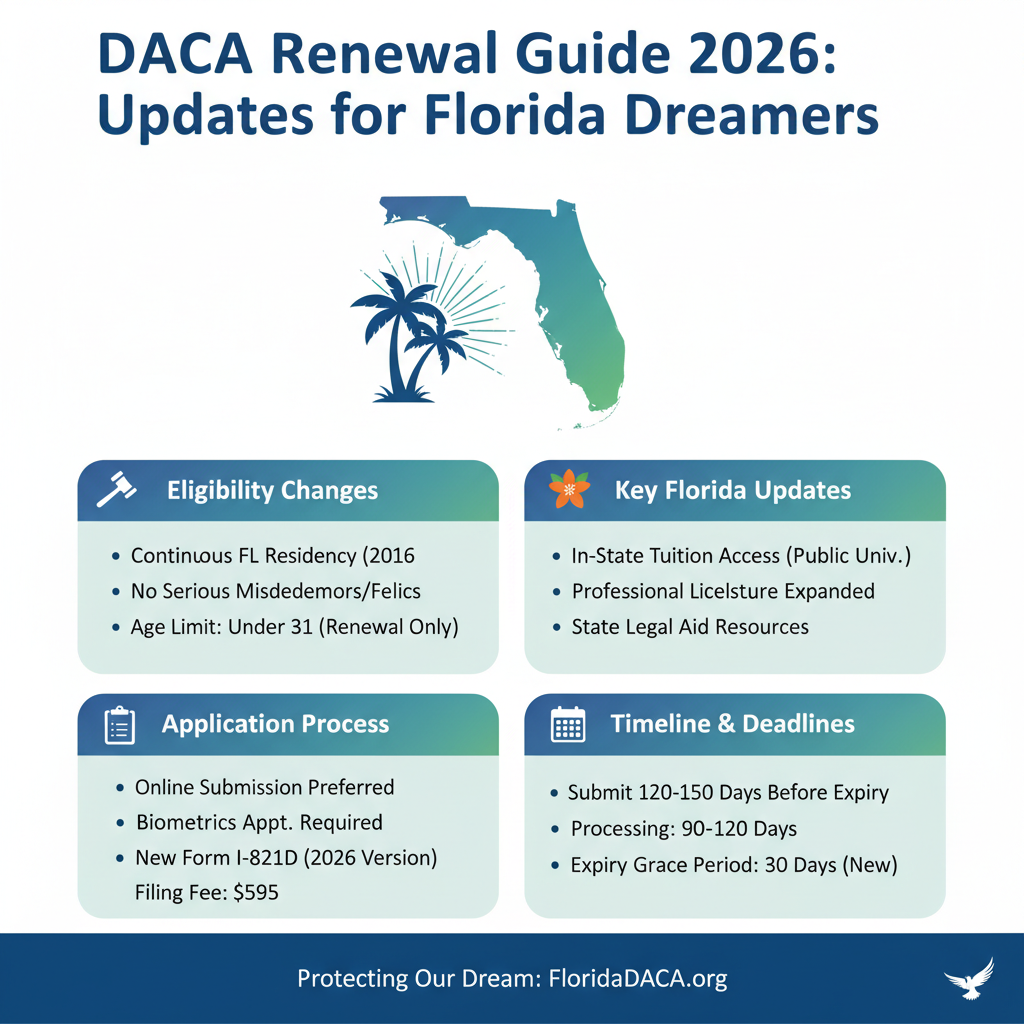
We've observed a renewed interest and ongoing discussion surrounding the Deferred Action for Childhood Arrivals (DACA) program, particularly concerning its future and the critical need for current recipients to understand their renewal options. The persistent legal challenges and policy debates keep DACA a trending topic, making comprehensive, up-to-date guidance essential for the community. This guide is informed by the latest discussions and updates from official channels, including those referenced through broad searches like: DACA Program Updates and Renewal Information (USCIS).
What This News Means for Immigrants in Orlando and Across Florida
The DACA program, while facing continuous legal and political scrutiny, remains a vital lifeline for hundreds of thousands of young people across the United States, including a significant population right here in Florida. For those living in Orlando, Central Florida, and beyond, understanding the latest developments and ensuring timely renewal of your DACA status is not just important – it's crucial for your future and stability.
Why this news is showing up now
The DACA program has been in a state of flux for years, navigating court challenges, administrative changes, and legislative stalemates. Periodically, new court rulings, policy memos, or even legislative discussions bring DACA back into the spotlight. As of early 2026, the program continues to operate under specific injunctions and orders, meaning that while new applications are generally not being processed, renewals for existing recipients are still accepted and highly encouraged. The continuous legal battles, particularly the ongoing litigation in the Fifth Circuit Court of Appeals and potential appeals to the Supreme Court, mean that the program's long-term future is always subject to change. This constant state of uncertainty generates a perpetual need for clear, current information for DACA recipients and their families.
Moreover, as current DACA grants approach their two-year expiration dates, recipients naturally become concerned about the renewal process, potential changes in requirements, and the overall stability of the program. This recurring cycle of renewals, coupled with the ever-present legal landscape, ensures that DACA updates remain a persistent and critical topic in immigration news.
How it can affect Florida residents
For the estimated tens of thousands of DACA recipients living in Florida, these updates have direct and profound consequences. Florida is home to a large and vibrant immigrant community, and many DACA recipients contribute significantly to our economy and culture. The ability to renew DACA means maintaining work authorization, which allows individuals to continue their jobs, support their families, and contribute to local economies in Orlando, Miami, Tampa, and throughout the state. It also means retaining eligibility for a driver's license in Florida, which is essential for daily life, commuting to work, and accessing services.
Beyond employment and transportation, DACA status can impact educational opportunities. While DACA does not grant federal financial aid, some DACA recipients in Florida may be eligible for in-state tuition at public colleges and universities, provided they meet certain residency requirements. The loss or lapse of DACA status could jeopardize these educational pathways, creating significant barriers to pursuing higher education and achieving career goals.
Furthermore, DACA status provides a measure of protection from deportation. Without a valid DACA grant, individuals could become subject to removal proceedings, leading to immense personal and familial distress. For families striving to "Keep Families Together" – a core mission of Imigrar – maintaining DACA status is paramount. The legal landscape of DACA can be complex, and understanding how federal court decisions or administrative policies specifically impact operations at the Orlando USCIS Field Office or local immigration courts is vital for Central Florida residents. Staying informed and proactively managing your DACA renewal is the best defense against potential disruptions to your life and livelihood in Florida.
Need Help? Our Orlando immigration team is ready to assist. Navigating DACA renewals can be complex, especially with ongoing legal changes. Call +1 786-791-3106 for a free consultation, or message us online. Se Habla Español.
What DACA Is (and Why It Matters)
The Deferred Action for Childhood Arrivals (DACA) program is a critical U.S. immigration policy that has provided temporary relief to hundreds of thousands of young undocumented immigrants. It has allowed them to live and work in the country without immediate fear of deportation, fostering stability and opportunity for a generation of individuals who often know no other home than the United States.
A plain-English definition
At its core, DACA is an exercise of "prosecutorial discretion" by the U.S. government. This means that while these individuals are technically deportable under current immigration laws, the government has chosen to defer, or postpone, any action to remove them. When someone is granted DACA, they receive two main benefits: deferred action from deportation for a period of two years, and an Employment Authorization Document (EAD), which allows them to legally work in the United States for the same two-year period. DACA recipients are often referred to as "Dreamers," a term derived from the proposed but never passed "DREAM Act" legislation that would have created a pathway to citizenship for these individuals.
It's crucial to understand that DACA is not a path to citizenship or legal permanent residency. It does not grant lawful immigration status; it simply provides temporary protection from deportation and work authorization. This distinction is vital, as DACA recipients generally do not have a direct route to a Green Card through DACA itself, although some may qualify through other avenues (e.g., marriage to a U.S. citizen).
Key terms you need to know
- DACA (Deferred Action for Childhood Arrivals): The program itself, offering temporary protection from deportation and work authorization.
- Deferred Action: A discretionary decision by the government to postpone deportation proceedings against an individual. This does not confer lawful status.
- EAD (Employment Authorization Document): Also known as a "work permit," this card allows DACA recipients to legally work in the U.S.
- Dreamers: A commonly used term for young undocumented immigrants brought to the U.S. as children, often associated with DACA and the DREAM Act.
- USCIS (U.S. Citizenship and Immigration Services): The government agency responsible for administering DACA applications and renewals. Its official website is a key resource: USCIS official website.
- ICE (U.S. Immigration and Customs Enforcement): The agency responsible for enforcing immigration laws, including deportations. Deferred action means ICE generally will not pursue deportation against DACA recipients unless specific conditions are met (e.g., criminal activity).
- Non-immigrant Status: DACA does not provide non-immigrant status. It provides a temporary administrative grace period. This is important for understanding limitations related to travel and other immigration benefits.
- Continuous Residence: A key eligibility criterion for DACA, requiring the applicant to have continuously resided in the U.S. for a specified period.
- Significant Misdemeanor/Felony: Certain criminal offenses can disqualify an individual from DACA eligibility or renewal.
Current Immigration Law: The Foundation
The legal foundation of DACA is complex and has been subject to extensive litigation. It was established through an executive memorandum by the Secretary of Homeland Security in 2012. Since then, its legality has been challenged multiple times in federal courts, leading to a dynamic and often uncertain operational status.
Federal requirements
As of early 2026, due to court injunctions, USCIS is generally not processing initial DACA requests. However, it continues to accept and process DACA renewal requests from individuals who have previously been granted DACA. The core federal requirements for DACA renewal remain largely consistent with the original guidelines, focusing on continuous residence, age at arrival, education, and lack of serious criminal history.
To be eligible for DACA renewal, an individual must:
- Have previously been granted DACA.
- Not have departed the United States on or after August 15, 2012, without advance parole.
- Have continuously resided in the United States since the date they submitted their most recent DACA request that was approved.
- Not have been convicted of a felony, a significant misdemeanor, or three or more other misdemeanors, and not otherwise pose a threat to national security or public safety.
The relevant forms for DACA renewal are: Form I-821D, Consideration of Deferred Action for Childhood Arrivals, and Form I-765, Application for Employment Authorization. Additionally, applicants must include Form I-765WS, Worksheet for Form I-765, to explain their economic need for employment.
It is critical to note that the legal challenges to DACA mean that its future is uncertain. The current court orders (particularly from the U.S. District Court for the Southern District of Texas and the Fifth Circuit Court of Appeals) have halted new applications but allow renewals. Any changes in these court orders or new legislative action could alter the program's scope or existence. For the most up-to-date information, always refer to the USCIS official website.
Florida-specific considerations
While DACA is a federal program, its impact is felt locally, and there are state-specific considerations for recipients in Florida. For instance:
- Driver's Licenses: In Florida, DACA recipients with a valid Employment Authorization Document (EAD) are generally eligible to apply for a Florida driver's license or state identification card. This is a crucial benefit for mobility and daily life, especially in sprawling areas like Orlando and its surrounding counties (e.g., Orange County, Seminole County). The validity of your driver's license will typically align with the expiration date of your EAD, making timely DACA renewal essential to avoid a lapse in driving privileges.
- In-State Tuition: Florida Statute § 1009.26 allows certain non-U.S. citizens, including DACA recipients, who meet specific residency requirements to be eligible for in-state tuition rates at Florida public colleges and universities. This can significantly reduce the cost of higher education. To qualify, individuals usually need to show they attended a Florida high school for at least three consecutive years immediately before graduation and apply for admission to a state university or Florida College System institution within 24 months of high school graduation. Maintaining DACA status is often a practical prerequisite for meeting these residency and legal presence requirements for tuition purposes.
- Professional Licenses: While DACA provides work authorization, eligibility for certain state-issued professional licenses (e.g., nursing, teaching) can vary by profession and specific state regulations. Some licenses may require U.S. citizenship or lawful permanent residency, while others may accept DACA-based work authorization. It's important for DACA recipients pursuing professional careers in Florida to research the specific licensing board requirements for their chosen field.
- Local Engagement: DACA recipients are integral parts of communities across Florida, from the vibrant neighborhoods of Orlando to agricultural areas. Local advocacy and community support networks play a significant role in ensuring DACA recipients feel supported and informed about changes that could affect them.
The stability provided by DACA is particularly valuable in a state like Florida, where a lapse in status could impact everything from employment to educational pursuits along the I-4 corridor and beyond. Imigrar understands these local nuances and helps clients navigate both federal requirements and Florida-specific considerations.
Need Expert Guidance on DACA Renewal? Don't risk a lapse in your work authorization or protection. Our experienced immigration lawyers in Orlando are here to help you through every step. Call +1 786-791-3106 for a free consultation. Se Habla Español.
How to Renew Your DACA: A Complete Step-by-Step Guide
Renewing your DACA is a critical process that requires attention to detail and timely action. USCIS recommends filing your renewal application between 120 and 150 days before your current DACA and EAD expire. Filing too early (more than 150 days) might result in rejection, and filing too late risks a lapse in your work authorization and protection from deportation.
1) Assess Your Eligibility for Renewal
Before you begin preparing your application, confirm you still meet the DACA renewal criteria. This is the first and most crucial step.
- Previously Granted DACA: You must have been previously granted DACA. USCIS is generally not accepting initial DACA requests.
- Continuous Residence: You must have continuously resided in the United States since you submitted your most recent DACA request that was approved.
- No Significant Departures: You must not have departed the United States on or after August 15, 2012, without having obtained advance parole. If you departed with advance parole, ensure you have all documentation related to your departure and re-entry.
- Clean Record: You must not have been convicted of a felony, a significant misdemeanor, or three or more other misdemeanors. Additionally, you must not otherwise pose a threat to national security or public safety. Review your criminal record carefully. If you have any arrests or convictions, even minor ones, consult with an immigration attorney immediately.
Important: Even minor offenses can impact your eligibility. When in doubt, seek legal counsel.
2) Gather Required Documents
Thorough documentation is key to a successful renewal. Organize your documents well in advance.
- Previous DACA Approval Notices: Your most recent Form I-797, Approval Notice for DACA and EAD.
- Most Recent EAD Card: A copy of both sides of your expiring Employment Authorization Document.
- Identification Documents:
- Copy of your passport biographical page (if available).
- Copy of your birth certificate with translation (if applicable).
- Copy of any government-issued photo ID (e.g., Florida driver's license).
- Proof of Continuous Residence (since your last DACA approval): While USCIS may not always request extensive proof for renewals if you haven't traveled, it's wise to have it ready. Examples include:
- School transcripts or diplomas.
- Employment records, pay stubs, W-2 forms.
- Medical records.
- Bank statements.
- Rental agreements, utility bills.
- Tax returns.
- Dated photographs.
- Affidavits from witnesses.
- Proof of Educational Status (if applicable): High school diploma, GED certificate, college transcripts.
- Criminal History Records (if applicable): If you have any arrests or convictions since your last DACA approval, you must include certified copies of court dispositions and arrest records.
- Passport-Style Photos: Two identical, unmounted, color passport-style photographs taken within 30 days of filing. Write your name and Alien Registration Number (A-Number) lightly in pencil on the back of each photo.
Reminder: For any documents not in English, you must include a complete English translation certified by a translator, along with a copy of the original document.
3) Complete Forms I-821D, I-765, and I-765WS
These are the core forms for your DACA renewal application. Download the most current versions directly from the USCIS Forms page.
- Form I-821D, Consideration of Deferred Action for Childhood Arrivals:
- Fill out every section completely and accurately. If a section does not apply to you, write "N/A" (Not Applicable) or "None."
- Pay close attention to Part 3, "Information About Your Departure from the United States," and Part 4, "Criminal, National Security, and Public Safety Information." Be honest and thorough.
- Sign the form in blue ink.
- Form I-765, Application for Employment Authorization:
- Complete all sections. For question 27, "Eligibility Category," enter (c)(33).
- For questions about your current immigration status, you should indicate "DACA."
- Sign the form in blue ink.
- Form I-765WS, Worksheet for Form I-765:
- This form is mandatory and explains your economic need for employment. Provide a clear and concise explanation of why you need to work.
- Sign the form in blue ink.
Warning: Incomplete forms or forms with errors are a common reason for rejection or delays. Double-check all information.
4) Prepare Supporting Evidence
While USCIS generally requires less supporting documentation for renewals than initial applications (especially regarding continuous residence and entry), it's crucial to include any evidence that has changed or needs clarification since your last approval, particularly if you've had new arrests or extended travel.
- Copies of all forms and supporting documents: Keep a complete copy of your entire application package for your records.
- New criminal records: If applicable, certified court dispositions for any arrests or convictions since your last DACA approval.
- Proof of identity: As mentioned in Step 2.
- Previous DACA approval notices: As mentioned in Step 2.
5) Calculate and Prepare Fees
The DACA renewal process involves filing fees that must be paid correctly. As of early 2026, the fee structure is:
- Form I-821D: There is no fee for filing Form I-821D.
- Form I-765: The fee for Form I-765 is $410.
- Biometrics Services Fee: The biometrics services fee is $85.
- Total Fee: The total filing fee for a DACA renewal application is $495 (as of late 2023, subject to change).
How to Pay:
- You can pay by money order, personal check, cashier's check, or by credit card using Form G-1450, Authorization for Credit Card Transactions.
- Make checks or money orders payable to "U.S. Department of Homeland Security." Do not use abbreviations.
- If paying by check, ensure your name and A-Number are written on the memo line.
- Fee Waivers: Fee waivers are generally not available for DACA renewal applications. Very limited exceptions may apply for those facing extreme financial hardship, but these are rare. Consult an attorney if you believe you qualify for an exception.
Important: Always verify the current fees on the USCIS website before submitting your application, as fees can change.
6) Mail Your Application
Once your application is complete, organized, and all fees are prepared, it's time to mail it to the correct USCIS lockbox facility. The correct filing address depends on your state of residence.
- For Florida residents: You will mail your DACA renewal application to the USCIS Chicago Lockbox.
- For U.S. Postal Service (USPS):
USCIS
Attn: DACA
P.O. Box 805284
Chicago, IL 60680-5284 - For FedEx, UPS, and DHL deliveries:
USCIS
Attn: DACA (Box 5284)
131 S. Dearborn St., 3rd Floor
Chicago, IL 60603-5517
- For U.S. Postal Service (USPS):
- Recommended Mailing Method: Always send your application via a method that provides tracking and delivery confirmation (e.g., USPS Certified Mail with Return Receipt, FedEx, UPS). This provides proof of mailing and delivery, which is invaluable if there are any issues.
- Organize Your Package: Place your documents in the following order: check/money order or Form G-1450 on top, followed by Form I-821D, then Form I-765, then Form I-765WS, and finally, all supporting documents and photos.
Reminder: Do not staple or bind your application. Use paper clips to secure sections.
7) What to Expect After Filing
The process doesn't end once you mail your application. Here's what to anticipate:
- Receipt Notices: Within a few weeks, you should receive a Form I-797C, Notice of Action, confirming that USCIS has received your application and accepted your payment. This notice will include your receipt number. Keep this number safe, as it allows you to check your case status online.
- Biometrics Appointment: Most DACA renewal applicants will receive a notice for a biometrics (fingerprinting) appointment at an Application Support Center (ASC). For Central Florida residents, this might be at the Orlando USCIS Field Office or another ASC in the region. Attend this appointment as scheduled.
- Request for Evidence (RFE): USCIS may send an RFE if they need more information or clarification. Respond to RFEs promptly and completely. Failure to do so can lead to denial.
- Approval and EAD Delivery: If your application is approved, you will receive an approval notice for both your DACA and your EAD. Your new EAD card will be mailed to you separately.
- Processing Times: DACA renewal processing times vary. You can check current estimates on the USCIS Processing Times page. While USCIS aims to process renewals before expiration, delays can occur. This is why filing within the 120-150 day window is crucial.
Important: If your current EAD expires and you have not received your new EAD, you cannot legally work until your new card arrives. Plan accordingly.
Practical Steps You Can Take Today
Don't wait until the last minute to begin your DACA renewal process. Proactive planning can prevent stress and potential lapses in your status.
Confused about the DACA renewal process? Imigrar's team is here to simplify it for you. We provide personalized support to ensure your application is complete and accurate. Call us today at +1 786-791-3106 for a free consultation. Se Habla Español.
Actionable checklist with 5+ items
- Check Your Expiration Dates: Immediately locate your current DACA approval notice and EAD card. Note their expiration dates. Set a reminder to start preparing your renewal application 150 days before the earliest expiration date.
- Review Your Eligibility: Reflect on your activities since your last DACA approval. Have you traveled outside the U.S. without advance parole? Have you been arrested or convicted of any crimes, even minor ones? Be honest with yourself. If there are any potential issues, seek legal advice now.
- Gather Key Documents: Start collecting your previous DACA approval notices, your current EAD, and any new identity documents. If you have had any criminal interactions, obtain certified court dispositions.
- Update Your Address with USCIS: If you have moved since your last DACA application, file Form AR-11, Alien's Change of Address Card, online or by mail within 10 days of moving. This ensures you receive all correspondence from USCIS. For Central Florida residents, this is especially important if moving across county lines (e.g., from Orange County to Osceola County).
- Save for Fees: The total fee for DACA renewal is currently $495. Start saving this amount now so you are not caught off guard. Remember, fee waivers are rarely granted for DACA renewals.
- Consult with an Attorney: If you have any concerns about your eligibility, criminal history, travel history, or simply want peace of mind, schedule a consultation with an experienced immigration attorney. They can review your case and help you prepare a strong application.
Document preparation guidance
- Organize Everything: Create a dedicated folder for your DACA renewal documents. Use dividers for different categories (e.g., Forms, ID, Previous Approvals, Proof of Residence, Criminal Records).
- Make Copies: Before mailing, make a complete, identical copy of your entire application package for your personal records. This includes copies of all forms, checks, and supporting documents.
- No Originals (Unless Requested): Never send original documents unless USCIS specifically requests them. Always send clear photocopies. The only "original" items you send are the completed forms, photos, and payment.
- Translations: For any document not in English, provide a certified English translation along with a copy of the original document. The translator must sign a statement certifying that they are competent to translate and that the translation is accurate.
- Photos: Ensure your passport-style photos meet USCIS specifications (2x2 inches, white background, no glasses, taken within 30 days).
Timeline expectations
- 150-120 Days Before Expiration: This is the ideal


